Review: The Royal Ballet at the Nervi Festival celebrating Ashton and Paris Opera Ballet’s Signature Pieces
Graham Spicer sees The Royal Ballet and Paris Opera Ballet at the Nervi Festival, with the London company pulling aces out of its sleeve.
| Title | A Celebration of the Works of Frederick Ashton Signature Pieces |
| Company | The Royal Ballet / Paris Opera Ballet |
| Venue | Nervi Festival |
| Date | 4 and 13 July 2025 |
| Reviewer | Graham Spicer |
The Royal Ballet came to the Nervi Festival with an all-Ashton programme. Frederick Ashton’s ballets – unlike those of Kenneth MacMillan, who took over from Ashton as artistic director of The Royal Ballet in 1970 – are not well-known in Italy, so it was a brave choice of repertoire by the festival’s new director, dancer Jacopo Bellussi.
The excited ovations from the audience who were, for the most part, seeing these pieces for the first time, hopefully will give a nudge to La Scala’s director Frédéric Olivieri (who was in the audience, applauding enthusiastically) to introduce some of Ashton’s works to Milan. Ashton created his ballet La Valse for La Scala in 1958. It was seen during the following two seasons, then once in 1971, but never again. It would be good to bring it home.
Nervi is just a short drive outside Genoa along the Ligurian coast and boasts a large park by the sea where a stage is built to host the festival. There are two main risks associated with performing at this outdoor venue: when the sun goes down, the humidity can be high, making the stage slippery, and then there are the increasingly violent summer storms. The Paris Opera Ballet had 80% humidity on the evenings it performed and the company cancelled half of its planned programme, and The Royal Ballet had storm warnings for its second day, and so the company gave that performance at Genoa’s opera house, Teatro Carlo Felice.
The outside location creates an atmospheric evening, but the indoor performance had the benefit of raked seating, air conditioning and a nonslip dance floor! Then came the announcement… because of an injury during a warmup 45 minutes before curtain, Ashton’s Voices of Spring could not be performed. Groans quickly gave way to smiles as it was announced that Mayara Magri, (who had been whisked back to her hotel in Nervi to collect a costume that she had used the previous week) would dance Ashton’s Five Brahms Waltzes in the Manner of Isadora Duncan. The Paris Opera Ballet, which had far more time to consider alternative programming, just cut sections. The Royal Ballet more than compensated for the impossibility of performing its announced programme… Paris 0, London 1.


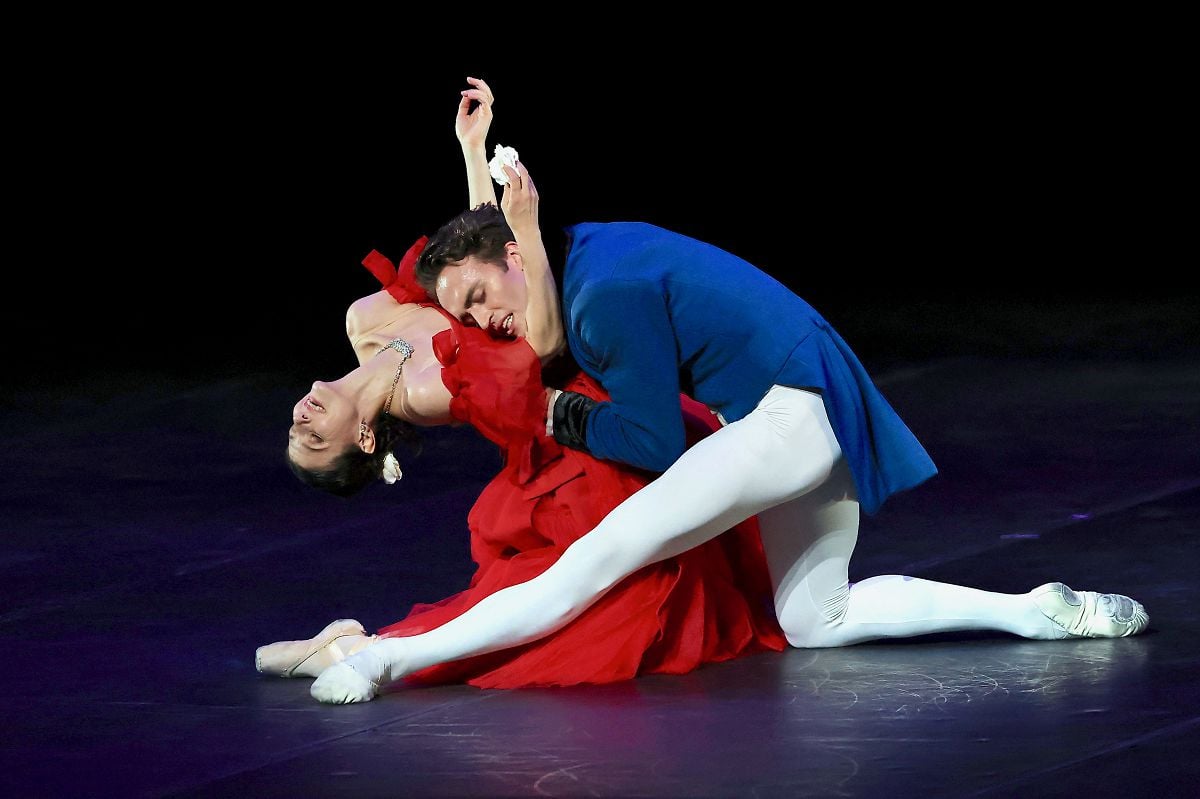
The Royal Ballet had another ace up its sleeve. When Lauren Cuthbertson fell ill a few days before the Italian performances, Alina Cojocaru was invited to replace her to dance Marguerite and Armand with Matthew Ball. It was 12 years ago that she left the company, and she has been missed. It was a magical performance. Cojocaru created a big impact with the smallest of gestures – simple, almost minimalistic. She was fragile in her illness yet sparkling in the party scenes. Ball showed yet again what a wonderful actor he is… an actor who just happens to have an exceptional ballet technique. Both aspects were impressive, but the sparks really flew when the two dancers came together, bouncing intense emotions off each other. They both took a long time to descend from the peak they had climbed, and Ball especially looked slightly traumatised during the curtain call.
Gary Avis was authoritative as Armand’s Father, treading the fine line between being stern and kind. He was also in the delightful Tango Pasodoble from Façade, which was one of the four short pieces in the first part of the programme. Avis doesn’t miss a trick… every flick of the wrist, twitch of his moustache, suave tilt of the head is maximised for comic effect, yet he maintains an innate elegance. He was joined by Olivia Findlay, a Royal Ballet Artist in her early twenties, who has tons of personality and is surely going places.
Although the women in the opening Pas de Quatre from Swan Lake were a little unsure, they were more than compensated for by Harrison Lee and Martin Diaz who showed dazzling turns in perfect synchrony. Outstanding too were Marianna Tsembenhoi and Joseph Sissens in Oberon and Titania’s reconciliation pas de deux from The Dream – pure ‘Royal Ballet’, with elegant lines, fluid transitions, and ease of execution.
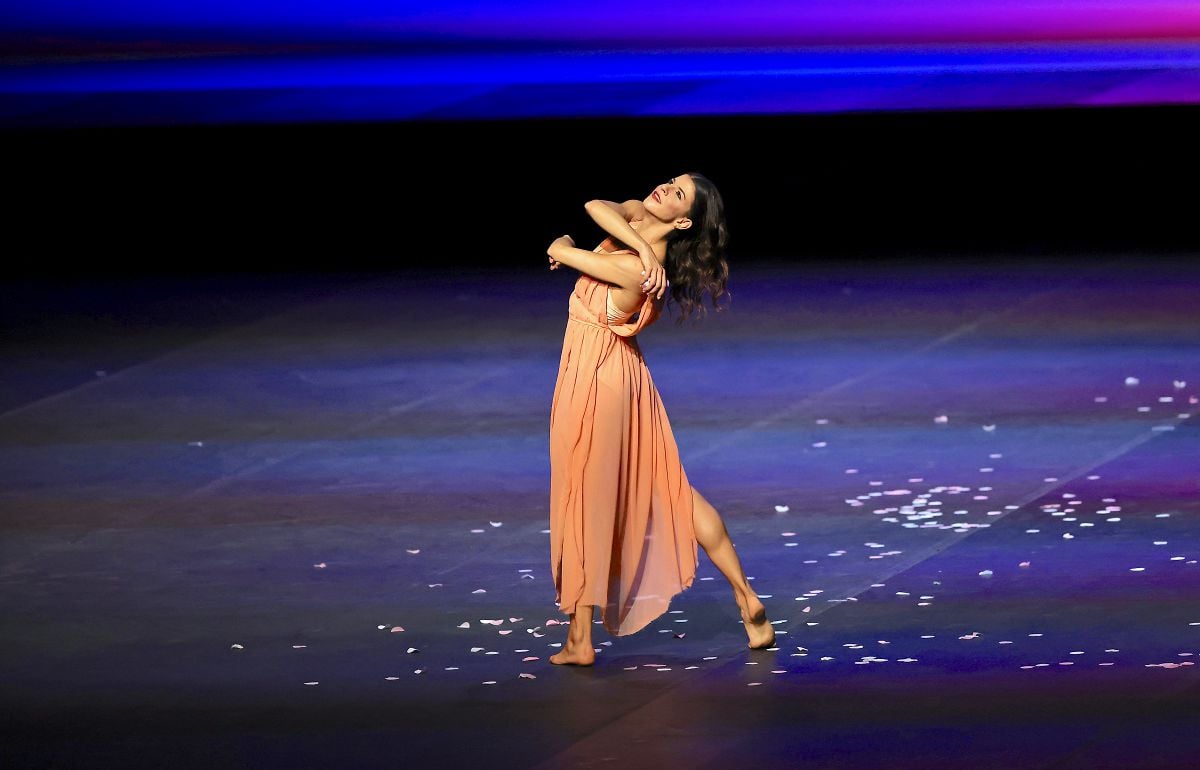
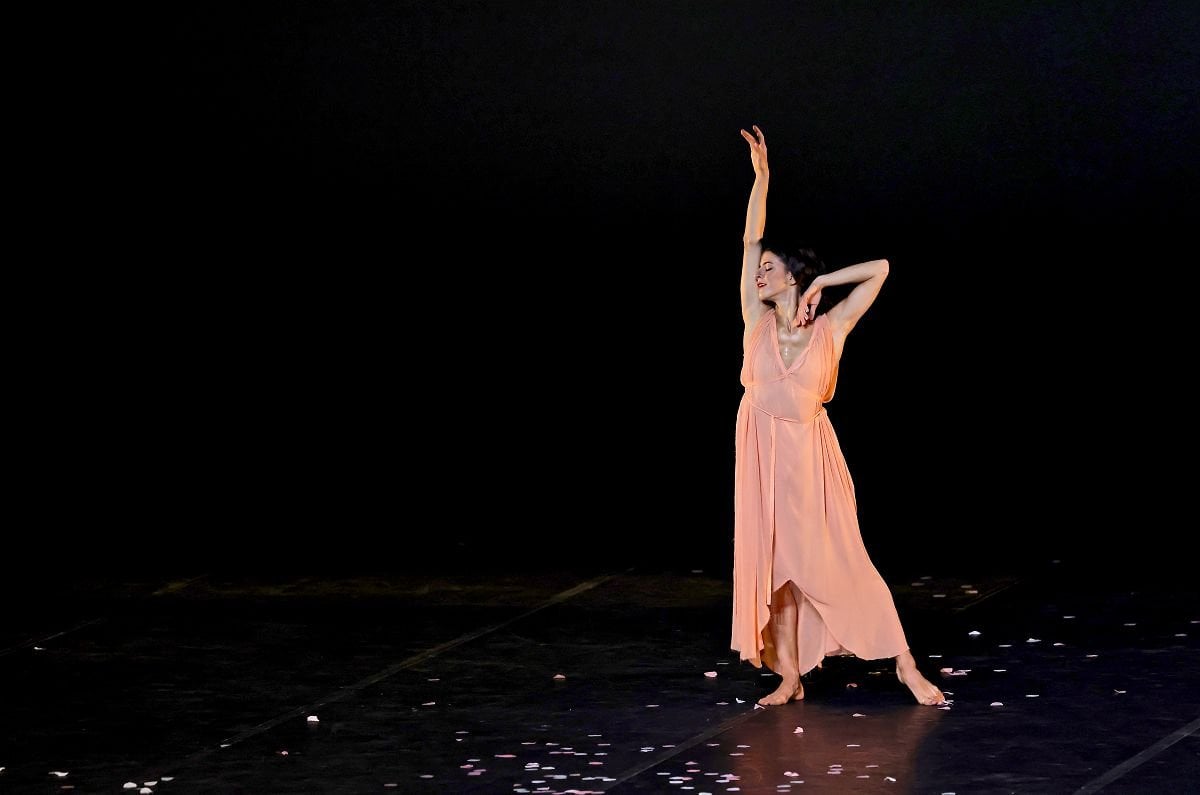
Mayara Magri closed the first part with Five Brahms Waltzes, Ashton’s 1976 tribute to Isadora Duncan, one of the pioneers of free, expressive dance. It is a glorious challenge for a dancer – full of contrast with intimate, still gestures alongside bold, loose-limbed jumps. Magri seemed to divest herself of her classical control and made each new section appear improvised and spontaneous.
The evening closed with Ashton’s last major work, Rhapsody, from 1980. It was choreographed for Mikhail Baryshnikov and Lesley Collier, so Ashton put in every conceivable step to showcase their talents, especially Baryshnikov’s showy virtuosity. Daichi Ikarashi was stunningly good, and although his 540 jumps and barrel turns brought the house down, his performance was also shaded with nuanced humour. Sae Maeda entered as though she were the queen of The Royal Ballet, with regal poise and an elegant port de bras, though maybe Ashton would have insisted on more use of épaulement. It was a star pairing and we would have liked to illustrate it in this review, but the Nervi press office supplied an odd selection of photos, so no photos of Ikarashi/Maeda, Avis/Findlay, Sissens/Tsembenhoi or the Swan Lake pas de quatre. Luckily, the photographer did choose to capture Cojocaru, Ball and Magri.
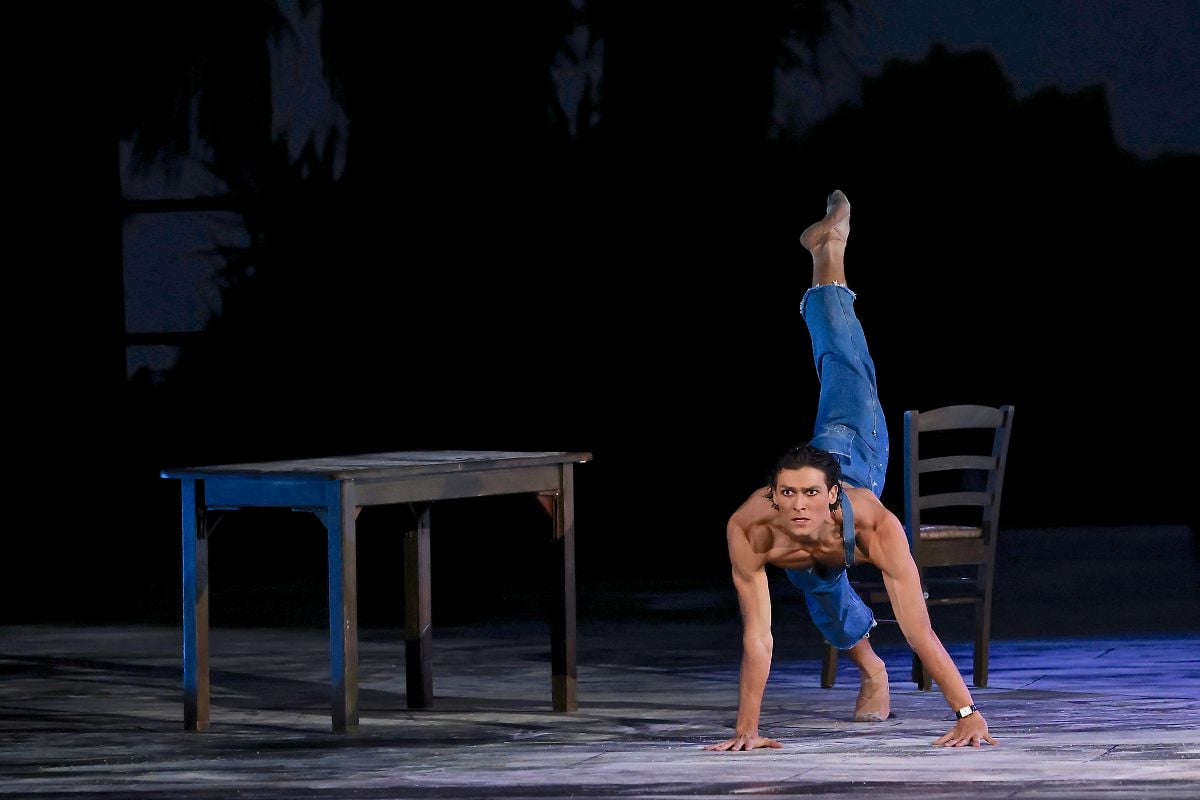
The 5-star Royal Ballet evening followed a 3-star Paris Opera Ballet mini programme the previous weekend. The POB’s programming disaster was certainly not all their fault, but some inventiveness could have saved the day, and easily won over the audience – everyone enjoys being part of a triumph-over-adversity story. However, slippery stage or not, Hugo Marchand was magnificent in Le jeune homme et la mort, as were two former étoiles, Ludmila Pagliero and Mathieu Ganio in Le Parc. Bleuenn Battistoni and Francesco Mura danced the Grand Pas Classique, which wasn’t a memorable performance but a perfectly capable one. To replace Jerome Robbins‘ 20-minute In the Night was Dorothée Gilbert as The Dying Swan. It’s certainly not her party-piece role, but it was sincere.



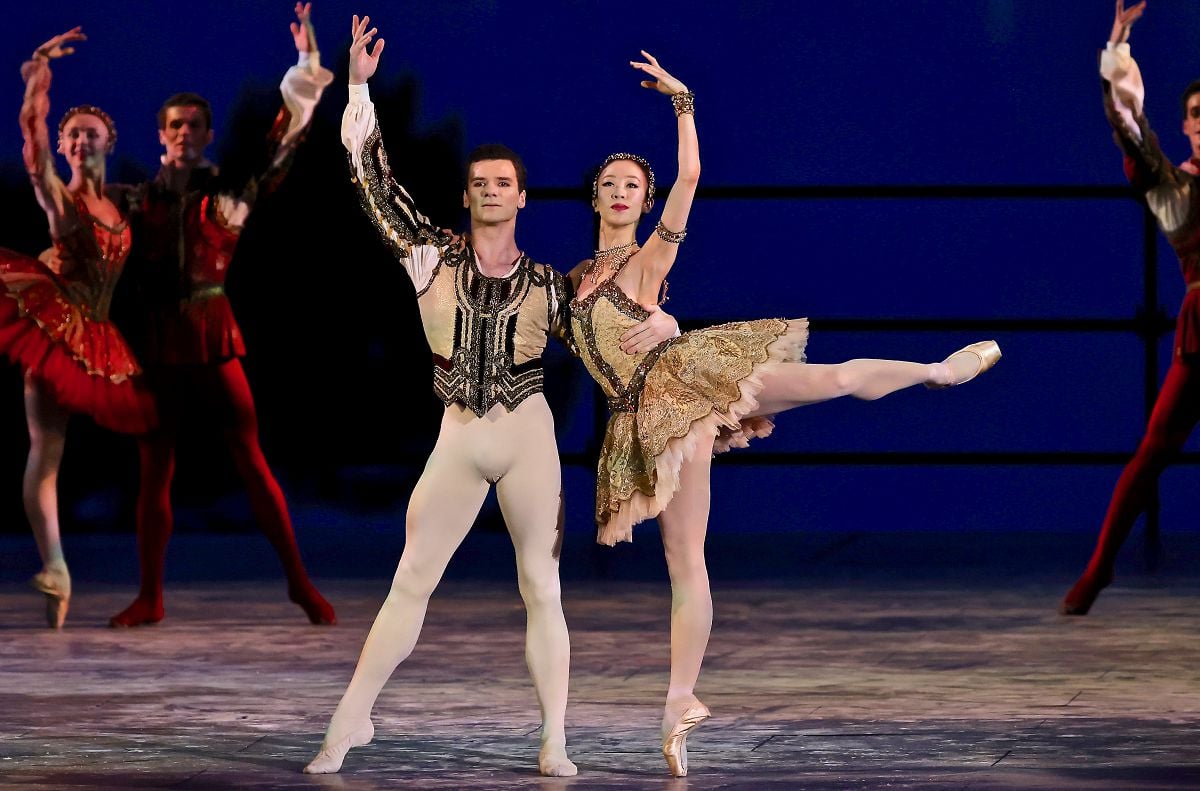
Seeing the Raymonda third-act extract was to be a highlight. Eight couples entered in Nicholas Georgiadis’ sumptuous costumes, then after the entrée, étoiles Sae Eun Park and Paul Marque entered, shimmering in gold as darkness enveloped the stage and the stage lighting made them pop out from the sky. Then… then? Well, that was it. The Grand adage finished, and the company stood in line for the ‘curtain’ call – no variations, no coda. It felt as though we’d all come to the wedding, but the cake and champagne had been forgotten. We gave them our gifts anyway, applauding these great dancers with warmth.
All photos by Marcello Orselli, Nervi Festival 2025