
Review: Giselle with the National Ballet of Japan at the Royal Ballet and Opera in London
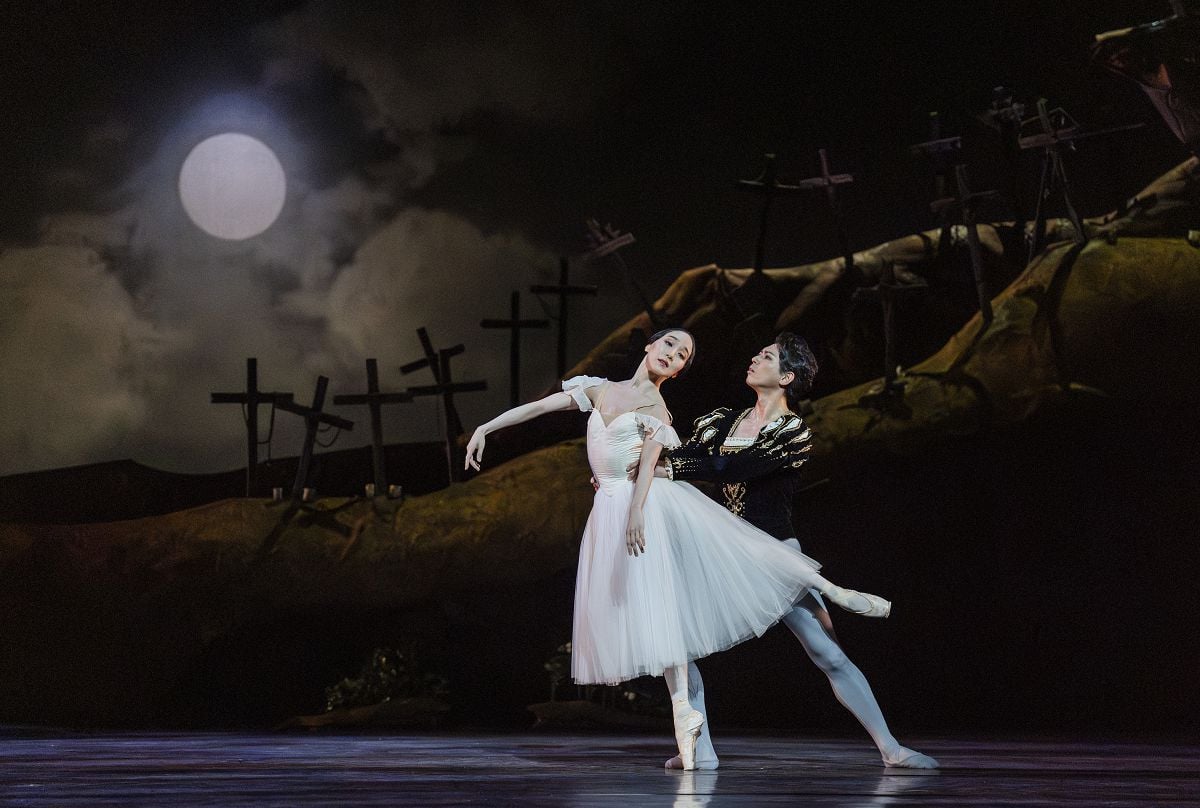
Jonathan Gray sees the National Ballet of Japan’s “triumphant” opening in London – excellent dancers in an impressive company debut.
| Title | Giselle |
| Company | National Ballet of Japan |
| Venue | Royal Ballet and Opera |
| Date | 24 July 2025 |
| Reviewer | Jonathan Gray |
The National Ballet of Japan (NBJ) made a triumphant UK debut at the Royal Ballet and Opera on 24th July. Directed since 2020 by Miyako Yoshida, the greatly admired former principal of Birmingham Royal Ballet and The Royal Ballet, NBJ presented a new production of Giselle in London and proved themselves an ensemble that could stand comparison with the world’s best – quite an achievement for a company barely 30 years old.
Rather surprisingly – because Japan trains so many of today’s top-class dancers – the country does not have a state-run ballet school of its own, and so NBJ is made up of artists who have studied at the nation’s many private ballet schools. The ensemble could, therefore, be disparate, but, on the evidence of this single performance, NBJ has instilled into its dancers a unity of style that is remarkable, with every movement by the corps de ballet perfectly aligned and harmonious. The company did not make a wrong step all evening and, moreover, they were completely immersed in the drama in which they were performing on stage.
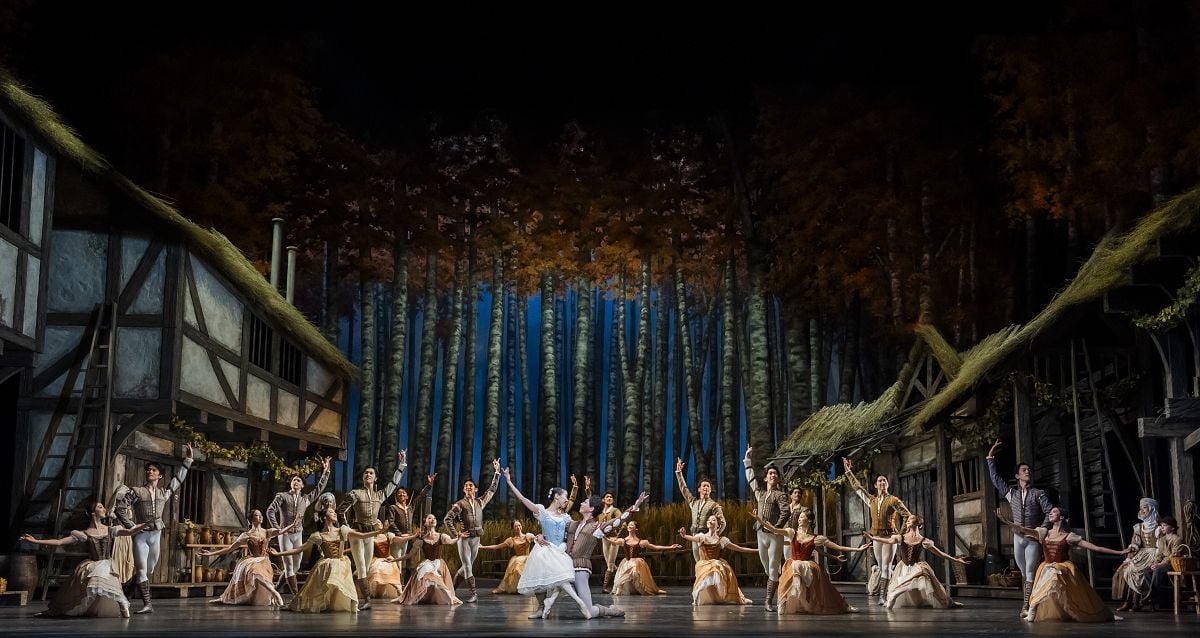
This shared sense of purpose and dedication was amply displayed in Yoshida’s staging of Giselle, which draws on many traditional elements of this great Romantic ballet that are familiar to audiences in Britain, most notably the production staged by Peter Wright for The Royal Ballet in which Yoshida herself danced on many occasions. Her new version, which has some additional choreography by Alastair Marriott, seldom springs surprises, but it does have a great sense of theatricality, and it reproduces the traditional choreography (by Marius Petipa after Jean Coralli and Jules Perrot) with a clarity that allows the principal dancers to make strong individual interpretations of the central roles.
Set very firmly in medieval Europe (there has been no attempt to transpose the ballet into a Japanese setting), the designer Dick Bird has placed the action of the first act within a half-timbered village on the edge of a forest that is grander than the usual simple peasant cottage for Giselle and hut in which the aristocratic Albrecht hides his cloak and sword from the villagers. The second act is set in a forest clearing festooned with wooden crosses where, chillingly, the malevolent Wilis emerge from under the roots of the trees as if they are rising from the depths of the earth. Bird’s traditional style costumes are in mainly autumnal colours in the first act, and chilly white in the second, and if they are not distinctive, they do look handsome. The entire production has been wonderfully lit by the designer Rick Fisher.


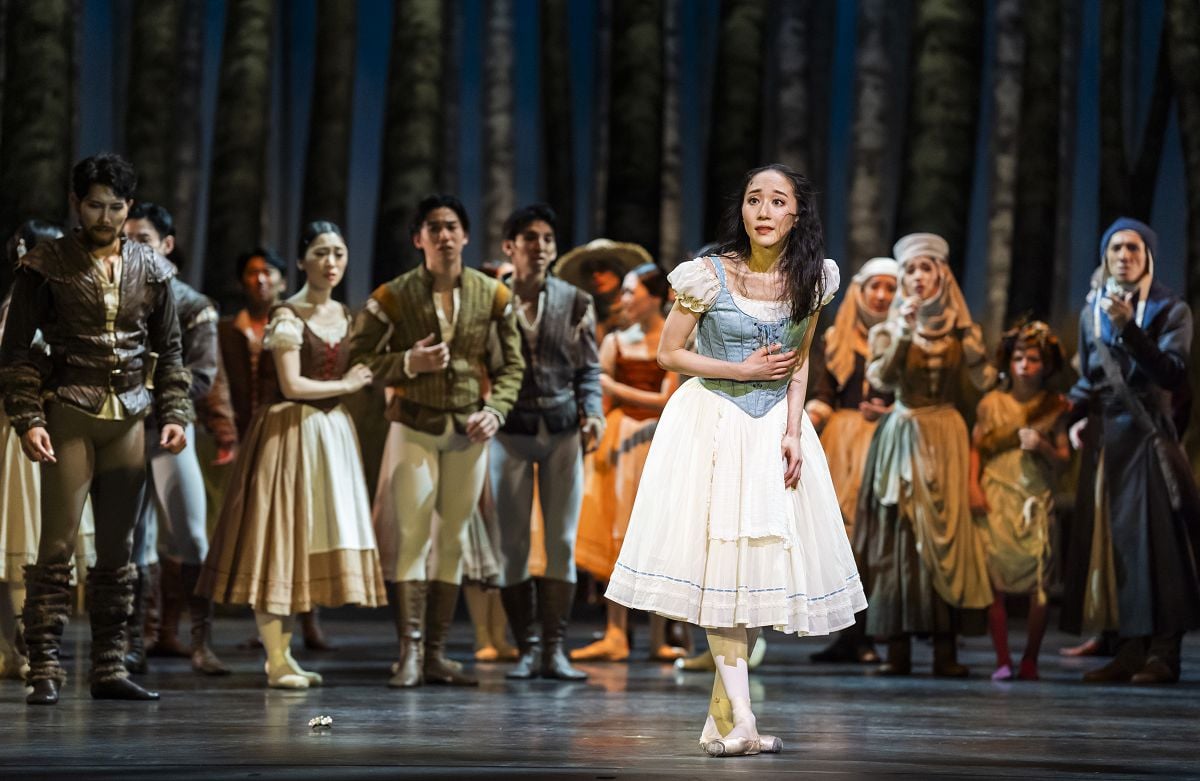
The opening performance was led by Yui Yonezawa as Giselle and Shun Izawa as Albrecht. Yonezawa was a sweet Giselle, who danced lightly, precisely and prettily and, above all, acted the role with vivid sincerity. I was impressed by how she used her eyes to express, at first, her excitement at meeting Albrecht and, later, her great distress when she discovers he has betrayed her. She took a little stumble at her first entrance in the second act, which unfortunately seemed to unnerve her, but she quickly recovered and produced some fine dancing that was notable for its lack of affectation. It was a simple, touching performance.
Likewise, Izawa danced with beautiful, unshowy control throughout, and was especially impressive during the second act in the many leaps and beaten jumps that are choreographed to demonstrate Albrecht’s growing exhaustion at the hands of the Wilis. Izawa’s acting was also simple and affecting, and if he does not yet rank as one of the greatest interpreters of Albrecht, he is a very credible one.

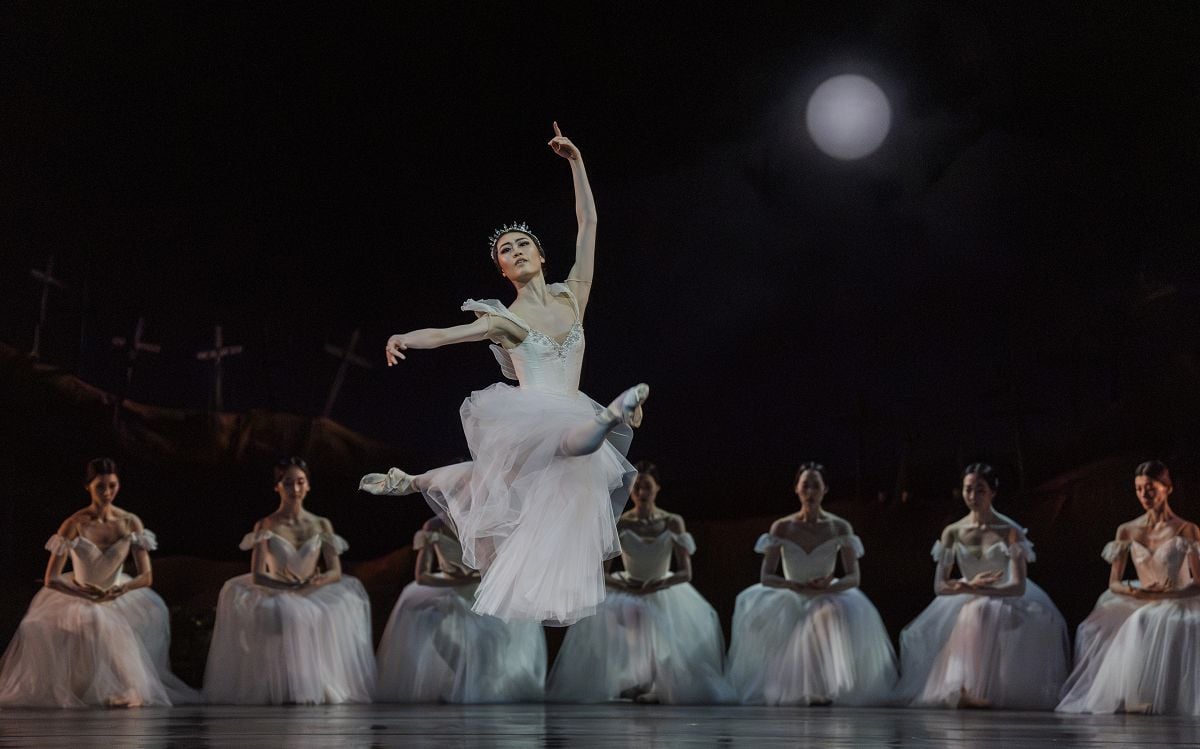


Mashiro Nakaya, a dancer of tremendous strength and personality, was a compelling and sympathetic Hilarion, and although Akari Yoshida, as Myrtha, Queen of the Wilis, didn’t quite have the huge, soaring jumps we often associate with the role, she did portray a formidably malign presence, and produced a series of beautiful, floating, ghostly pas de bourrées.
After such an impressive company debut in London, let’s hope the National Ballet of Japan can return to the UK in the not too-distant future in a more varied repertoire that can demonstrate not only the strengths of the excellent dancers, but also their range and versatility. Bravi!


Graham Spicer, aka ‘Gramilano’, is a writer, director and photographer based in Milan. He was a regular columnist for Opera Now magazine and wrote for the BBC until transferring to Italy. His articles have appeared in various publications from Woman’s Weekly to Gay Times, and he wrote the Danza in Italia column for Dancing Times magazine. Graham was the historical advisor on Codice Carla, the 2023 documentary on Italian ballerina Carla Fracci.
Graham also works as a dance photographer, and his photos have appeared in many books, theatre programmes, and magazines, including Dancing Times, Dance Spirit and Ballet2000, as well as all the major Italian newspapers.
He is a member of the Dance Section of The Critics’ Circle.





Thank you for this good review – couldn’t be there on this occasion but hope to see their performances in London next time !