Review: The Royal Ballet School Summer Performance – 100 years producing dancers of the very highest calibre
Jonathan Gray sees the Summer Performance, celebrating The Royal Ballet School a century after its formation by Ninette de Valois.
| Title | Summer Performance: Swan Lake Act III, Proceedings, Beauchamp’s Garden, A Line in Reflection, Checkmate suite, Of Strength and Grace, The First Voice, Christening Suite, Grand Défilé |
| Company | The Royal Ballet School |
| Venue | Royal Ballet and Opera, London |
| Date | 18 July 2026 |
| Reviewer | Jonathan Gray |
2026 is a significant year in the history of British ballet. It is a century since the formation, by Ninette de Valois, of the school that would eventually become known as The Royal Ballet School (RBS). From that tiny seedling in 1926 grew not only the mighty British oak that would become The Royal Ballet company, but a veritable forest of other schools and companies that would spread their roots around the world, most notably in Australia, Canada, New Zealand and Turkey.
It was through de Valois’ foresight that the RBS would become a leading centre for the training of ballet dancers, producing over the years countless dancers and choreographers of the highest calibre, and it was entirely right that Iain Mackay, the school’s director and himself a former graduate, chose to celebrate “100 years of nurturing exceptional talent” with a performance that offered “a moment to reflect on our legacy and look ahead to the future of our art form, through the extraordinary artists of today.” In a front-curtain speech during the school’s annual matinée at the Royal Ballet and Opera on 18 July, Mackay paid passionate tribute to each and every individual who had played a part, no matter how small, in the school’s success, be it students, teachers, parents, supporters, sponsors or governors. Above all, he thanked Ninette de Valois for her vision and determination.
The performance, on the whole, was a well-judged programme that saw not only a lengthy extract from a 19th-century classical ballet, but a work by Ninette de Valois herself, pieces by choreographers – David Bintley, Kristen McNally, Andrew McNicol, Cathy Marston and Christopher Wheeldon – who had studied at the RBS, and a new ballet by American choreographer Jessica Lang. It displayed the school in a wide range of styles and gave the students (and one notable former graduate) plenty of opportunities to shine.
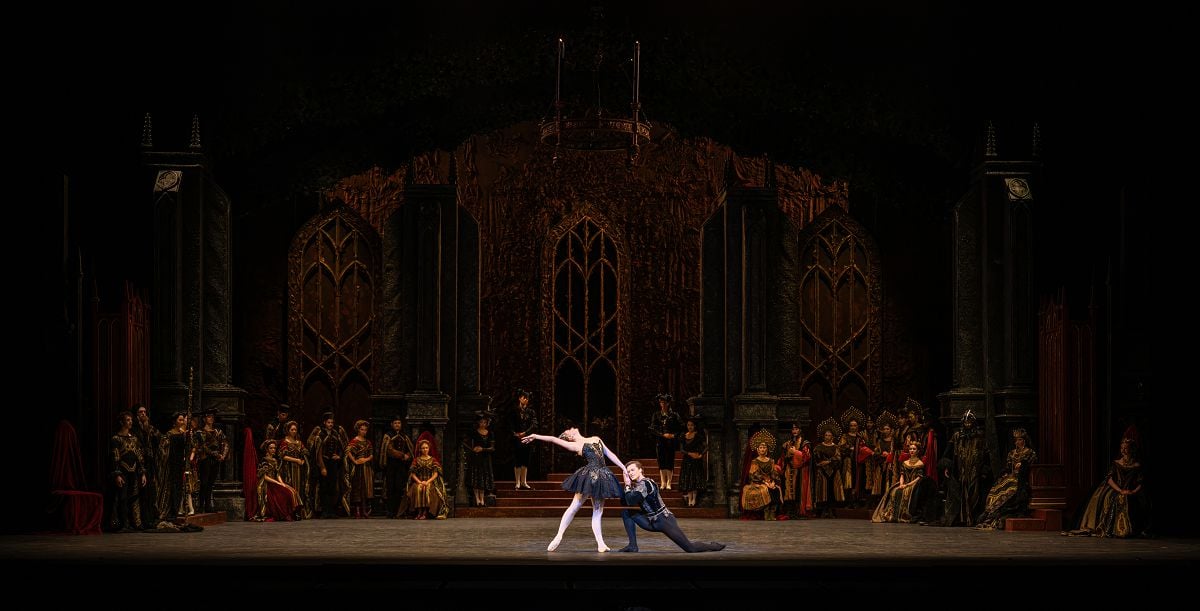

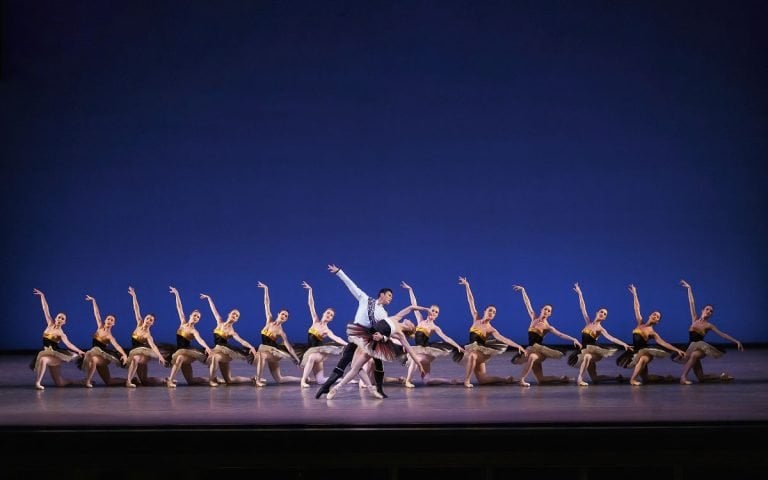
The afternoon opened with a very fine account of Act III of Swan Lake in the staging made in 1981 by Peter Wright (who also celebrates his 100th year in 2026) and Galina Samsova for Birmingham Royal Ballet. Not only does this version include four national dances, which were very well taken by the young dancers (though without quite the “weight” and theatricality that more experienced artists can bring to them), but also classical solos for three princesses and, of course, the “Black Swan” pas de deux.
As the Hungarian Princess, Addison Partlow impressed with her firm dancing and strongly held poses (she joins Birmingham Royal Ballet next season), whilst Emma Lucano bubbled with personality and style as the Polish Princess, and Nanoha Shigeoka (who is joining the Hungarian National Ballet) performed the Italian Princess solo with dazzling speed and dexterity. The roles of Odile and Siegfried were shared by Sophie Schulten and Ivan Malaguti in the entrance and adagio of the pas de deux, whilst Samantha Stripling and Fabrizzio Ulloa Cornejo performed the solos and coda. I’m not keen on the splitting up of roles like this, but it did display the strength and technique of both Odiles, the highly accomplished partnering of Malaguti and the simply thrilling dancing of Cornejo, who made even the most difficult sequences of pirouettes, turns, jumps and tours en l’air look like the easiest things in the world. Schulten, Malaguti and Cornejo, as well as Lucano, join The Royal Ballet next season as part of the Aud Jebsen Young Dancers Programme, whilst Stripling joins Boston Ballet 2. Also catching my eye for her wonderful vivacity and stage presence in the Neapolitan Dance was Aislynn Loptson, who joins Junior Ballet Antwerp.


Lucano and Malaguti also shone as a leading couple in David Bintley’s new Beauchamp’s Garden, danced to Poulenc’s Concerto for Two Pianos and Orchestra, as did Alecsia Maria Lazarescu and Millán de Benito (both joining The Royal Ballet). This is a charming neo-classical work, very much in the Royal Ballet traditions of musicality and refinement, speedy footwork and lavish épaulement, and it has a lovely pas de deux for Lazarescu and de Benito. The ensemble dancing was spontaneous, precise and fresh. Quite often, works for school performances don’t enjoy a long life, but surely Beauchamp’s Garden will be one to keep for the future? I hope so. Swan Lake Act III and Beauchamp’s Garden sandwiched Kristen McNally’s Proceedings, a huge ensemble work for the pupils of Years 7, 8 and 9 of the Lower School. Danced to Saint-Saëns Danse macabre, it stayed on just the right side of sweetness without becoming twee.
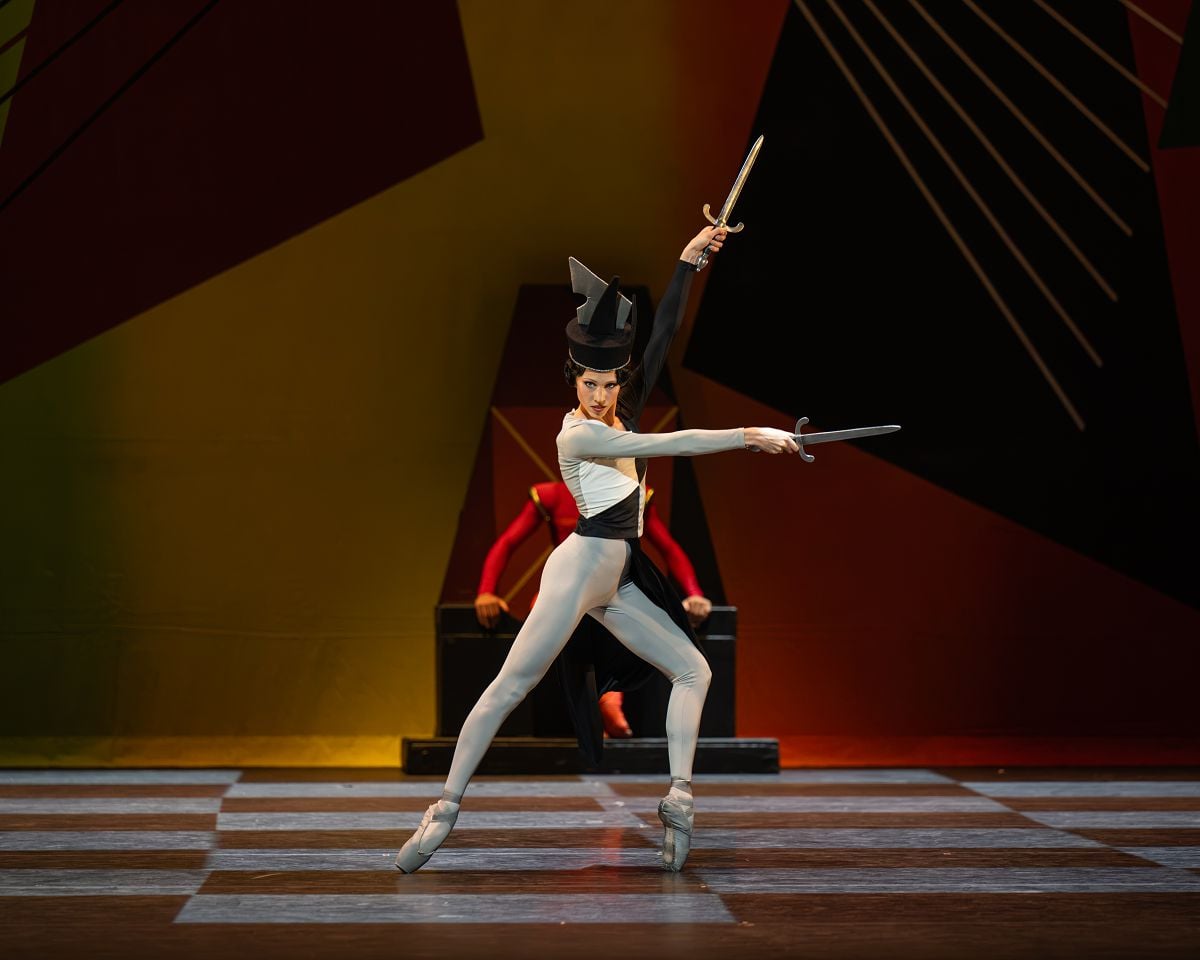
The second half of the programme, no matter how well danced, suffered from being a little too “samey” in mood and style, with perhaps too much in the way of poignant reflection. The exception to this was the suite of dances drawn from de Valois’ highly theatrical Checkmate, created as long ago as 1937. Danced in E McKnight Kauffer’s distinctive set and costumes, the Red Pawn ensemble was enchanting, and the quartet of Four Knights – Noah Campbell, Elliott Martin, Yusuke Otake and Denis Teixeira – was one of the strongest I have seen. Best of all was the Red Knight solo, effortlessly taken by Wendel Vieira Teles dos Santos (he joins American Ballet Theatre Studio Company), and the striking Anna Nouvenne (Ballet Zürich Junior Company) as a tremendous Black Queen. It was such a tantalising performance that I longed to see the complete ballet again.


In Cathy Marston’s A Line in Reflection, danced to the second movement of Errollyn Wallen’s violin concerto, former Royal Ballet principal Deborah Bull, now Baroness Bull, wandered amongst a group of young dancers seemingly reflected in a mirror, who practise ballet steps and exercises. Like a remembrance of a past life, Bull touchingly reaches out to the memories of her past as the dancers, unaware of her presence, continue with their activities. At the end, Bull herself is “reflected” by a very young dancer who “mirrors” her movements. It is a tender work, and it was wonderful to see how Deborah Bull, now in her sixties, has lost none of her power as a communicative artist.
Rather more sentimental, to my taste at least, was Jessica Lang’s The First Voice, an ensemble work in soft shoes danced to recordings of poems by Ninette de Valois spoken by Darcey Bussell, Monica Mason and Kevin O’Hare, and to music by Beethoven. The actions of the dancers rather too literally corresponded with the words of the poems, and there was much rushing to and fro in groups and patterns to the music. Like the Marston work, I presumed The First Voice was intended to be poignant, but it left a more muted impression.


Finally, two works of pure dancing from Andrew McNicol and Christopher Wheeldon. McNicol’s Of Strength and Grace, danced to music by Grieg by Years 10 and 11 of the Lower School, was lyrical and flowing and showed the influence of George Balanchine. A large-scale ensemble work, it included some nicely judged dancing from Janis Gruar, Jolie Lavaux and Cagan Aydin. Wheeldon’s Christening Suite, to music by Johan Halvorsen, was a tutu ballet also demonstrating the undoubted influence of Balanchine. Danced by the graduate year students, the work was attractive and well crafted, though not very memorable, and proved a technical display case for dancers who included Sophia Koo (going to Birmingham Royal Ballet) and de Benito in the pas de deux, and Martha Savin (Birmingham Royal Ballet), Shigeoka, dos Santos and Cornejo as demi-soloists. The entire cast, however, proved themselves all more than ready to take on a professional career.
For many, the highlight of the Royal Ballet School matinée will always be the Grand Défilé that brings every student on the stage for an exhilarating finale. It never fails to bring the audience to its feet, and it did so again in 2026. Thrilling as it is, however, more exciting for this observer is to see how the school continues to produce, year after year, dancers of the very highest calibre. With Iain Mackay firmly in charge, I am convinced the excellent standard achieved by the school will continue for many years to come.