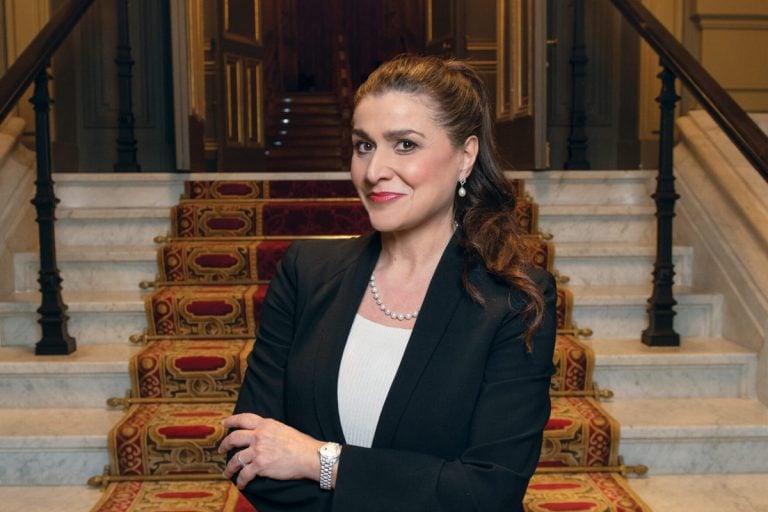
Review: Cecilia Bartoli’s sweet, tormented Love Songs in Rimini

Graham Spicer sees Cecilia Bartoli in concert with ‘Si dolce è ‘l tormento – Canzoni d’amore’, still weaving the Bartoli magic.
| Title | Si dolce è ‘l tormento – Canzoni d’amore |
| Company | Cecilia Bartoli & Les Musiciens du Prince |
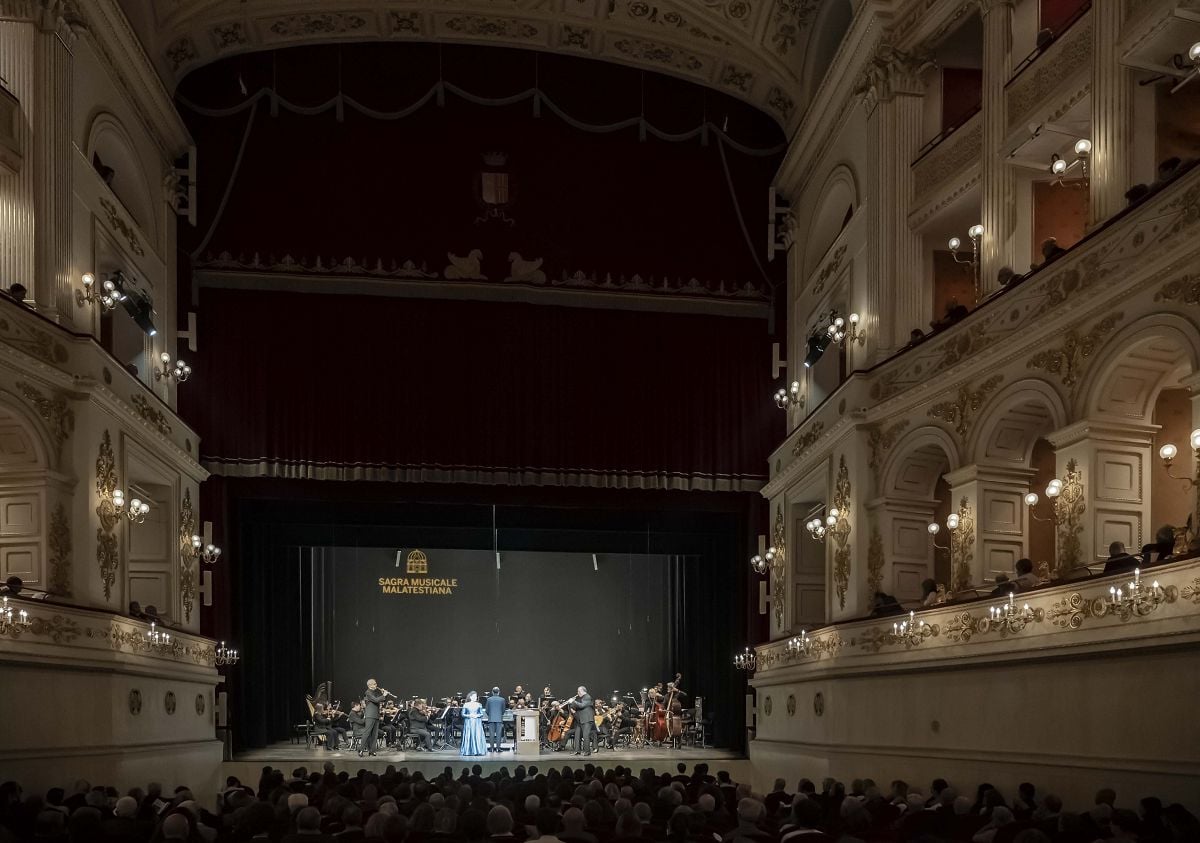
| Venue | Teatro Galli, Rimini |
| Date | 28 September 2025 |
| Reviewer | Graham Spicer |
It was New Year’s Eve in 1988 when I first heard Cecilia Bartoli sing.
I was in Lyon, France, to hear a tenor friend sing in Il barbiere di Siviglia. A tiny girl in a fluffy white coat was introduced to me; she was Cecilia Bartoli, and, together with her mother and teacher Silvana Bazzoni, we crammed into the back of a very small car, with the coat taking up most of the room. On New Year’s Eve, Bartoli and her mother had arranged drinks on stage for a cin-cin before we headed off in different directions to welcome in the new year. In 2026, Bartoli will be sixty and her mother 90, yet Bazzoni was sitting next to me in Rimini, still her daughter’s number one fan and, I guess, her most exacting critic. When Bartoli sang Ernesto De Curtis’s song ‘Ti voglio tanto bene’ (I Love You so Much), her mother slightly held her arms out, as if to reply, “So do I…” (And what fun to hear the double basses, played with baroque bows, swoon with 1930’s portamento!)
In Lyon, Bartoli was Rosina, and the young girl, who was my age, was quite extraordinary – her whole body twitching to the music, even when she wasn’t singing. Her voice impressed for its warm colour and ultrafast coloratura, and a distinctive vibrato. ‘Una voce poco fa’ brought the house down, as it did in Rimini last week… 37 years later.
Already won over after the Lyon performance, her colleagues told me that the following year, her first recordings were to be released. This is how Bartoli’s career was launched so quickly:
At the end of 1985, the 19-year-old Bartoli appeared on the Italian television show Fantastico, where she sang ‘Una voce poco fa’. She also sang the Barcarolle from Offenbach’s Les Contes d’Hoffmann with Katia Ricciarelli, the wife of the programme’s presenter, Pippo Baudo. Riccardo Muti saw her on TV and offered her the role of Rosina in Il barbiere di Siviglia with Rome Opera in 1987. The production toured to East Berlin, which marked her international debut, yet she was still a student at the Conservatorio Santa Cecilia in Rome at the time.
Also in 1987, she sang in the Callas Opera Gala at the Opéra Garnier in Paris. The gala was televised, and this time it was Daniel Barenboim who noticed her, and he invited Bartoli to audition for him. Soon after, Herbert von Karajan phoned Barenboim, asking whether he’d heard of a new mezzosoprano, Cecilia Bartoli. Karajan then asked her to sing in Bach’s B-Minor Mass at the Salzburg Festival, though sadly the project didn’t come about as it was cancelled after Karajan’s death.
In 1988, Decca signed her to an exclusive contract – she was 22 – and she recorded Il Barbiere di Siviglia with Leo Nucci, and her first recital disc, Rossini Arias. They were both released on CD in 1989, and a worldwide audience was then introduced to the new Italian singer.
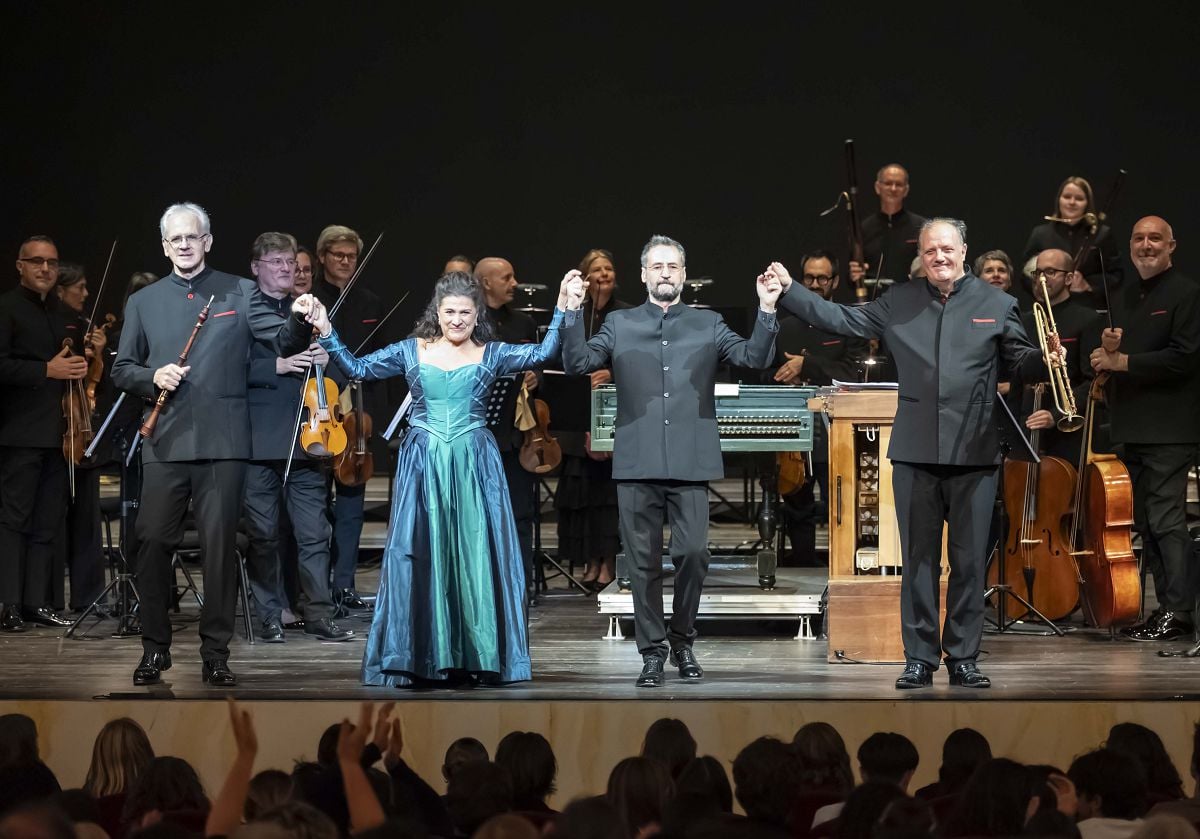
It is rare that an opera singer can sing the same repertoire after nearly four decades. Teresa Berganza was one. Other singers with long careers, such as Mirella Freni and Renata Scotto, changed repertoire as their voices changed. Bartoli still takes her voice high into the soprano stratosphere as well as maintaining those rich low notes – a range of about two and a half octaves – and amazingly, her voice hasn’t snapped in the middle. For her concert at Teatro Galli in Rimini, she was vocally a little nervous at the start – though that happened too with the first concerts of her fiendishly difficult Sacrificium programme of castrati arias back in 2009 – but she soon started to weave the Bartoli magic throughout a generous programme.
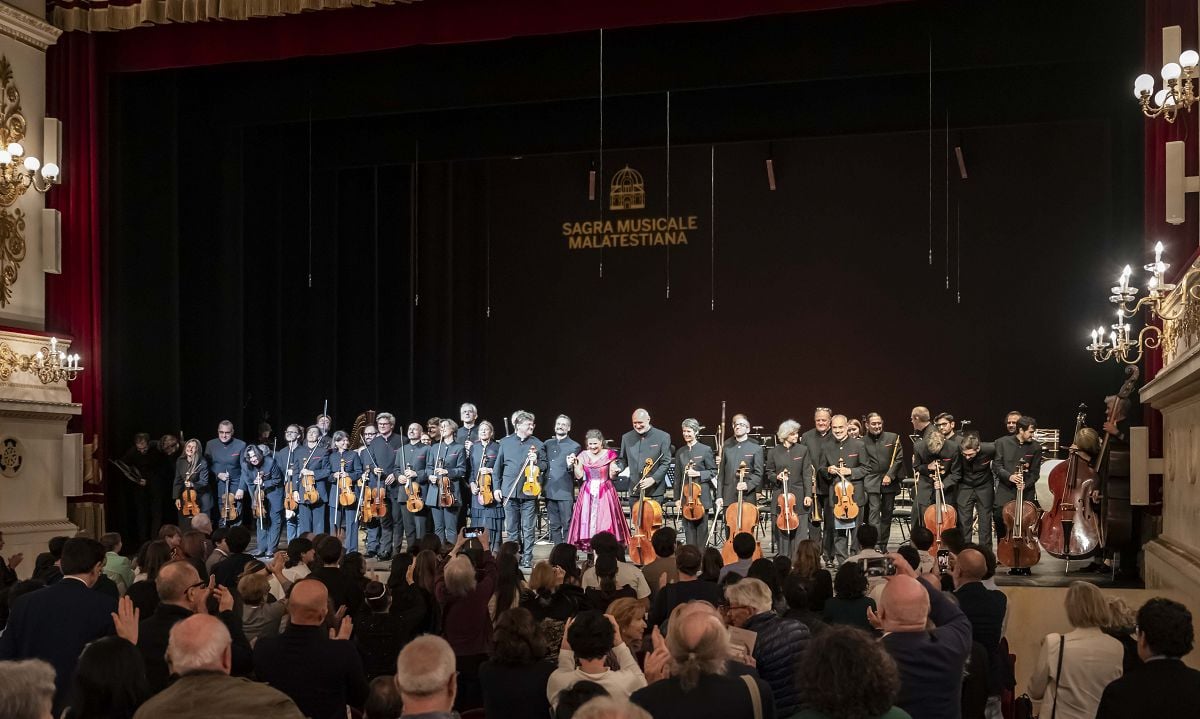
If the twitching of her face muscles faded away years ago, her fingers still betray how the music invades her, and never more so than in arias such as ‘A facile vittoria’ from Steffani’s Tassilone, with their martial sounds leading to a battle of variations between her voice and the trumpet. The personable musicians of Les Musiciens du Prince (playing with Gianluca Capuano’s vibrant conducting) joined her many times as soloists – flute, oboe, mandolin, harp – showing their easy rapport.
If it was the coloratura that initially impressed me, my favourite Bartoli interpretations are when she is singing pianissimo, yet not softly but with a haunting intensity – her well-known recordings of Vivaldi’s ‘Gelido in ogni vena’ are excellent examples of this. For the Rimini concert, she sang Lucio’s aria ‘Non ti lusinghi’ from Vivaldi’s Tito Manlio – piano, yes, but with forceful dignity. It was a memorable account.
Bartoli’s programme travelled from Monteverdi to Rossini, with brief overtures giving her time to change – from a trouser suit for Sesto’s aria ‘Parto, parto’ from La clemenza di Tito, to a white gown for a moving account of Desdemona’s Willow Song from Rossini’s Otello and to a shorter Spanish-flavoured dress for Rosina. The Spanish theme continued with the first two encores – Carmen’s Seguidilla (cue Bartoli on the castanets) and Cherubino’s aria ‘Voi che sapete’ from Le nozze di Figaro. Another ‘bis’ was a return to ‘A facile vittoria’ with more playful ‘improvised’ variations for the singer-trumpet face-off, and which ended with Bartoli winningly segueing into Gershwin’s ‘Summertime’.
Among her generous five encores was the De Curtis song ‘Non ti scordar di me’ (Don’t Forget Me) – there’s not much chance of that.

Graham Spicer, aka ‘Gramilano’, is a writer, director and photographer based in Milan. He was a regular columnist for Opera Now magazine and wrote for the BBC until transferring to Italy. His articles have appeared in various publications from Woman’s Weekly to Gay Times, and he wrote the Danza in Italia column for Dancing Times magazine. Graham was the historical advisor on Codice Carla, the 2023 documentary on Italian ballerina Carla Fracci.
Graham also works as a dance photographer, and his photos have appeared in many books, theatre programmes, and magazines, including Dancing Times, Dance Spirit and Ballet2000, as well as all the major Italian newspapers.
He is a member of the Dance Section of The Critics’ Circle.