Review: Astana Opera’s production of Rossini’s La scala di seta
Graham Watts sees La scala di seta (The Silken Ladder) in Kazakhstan – a performance of unbridled joy.
| Title | La scala di seta |
| Company | Astana Opera |
| Venue | Kulyash Baiseitova Chamber Hall, Astana, Kazakhstan |
| Date | 19 October 2025 |
| Reviewer | Graham Watts |
Gioachino Rossini was just 20 when he composed his one-act comic opera La scala di seta (The Silken Ladder), written quickly amongst a stream of five operas in a few months of 1812. It is so rarely performed that many esteemed opera critics of my acquaintance have never seen it live (a single DVD recording exists from a performance in 1990). So, consider me lucky, since a trip to Astana for ballet coincided with this opening night of the enterprising Piccolo Theatre season in Astana Opera’s Kulyash Baiseitova Chamber Hall.
Completed just thirteen years ago, Astana Opera is amongst the grandest and most imposing opera houses although paradoxically, this Chamber Hall on one of the upper floors provides the most intimate of spaces. This tiny gem of a theatre inside the humungous opera house made for a vibrant, rich performance of this exceptional opera buffa, allowing the audience to become immersed in both music and drama.
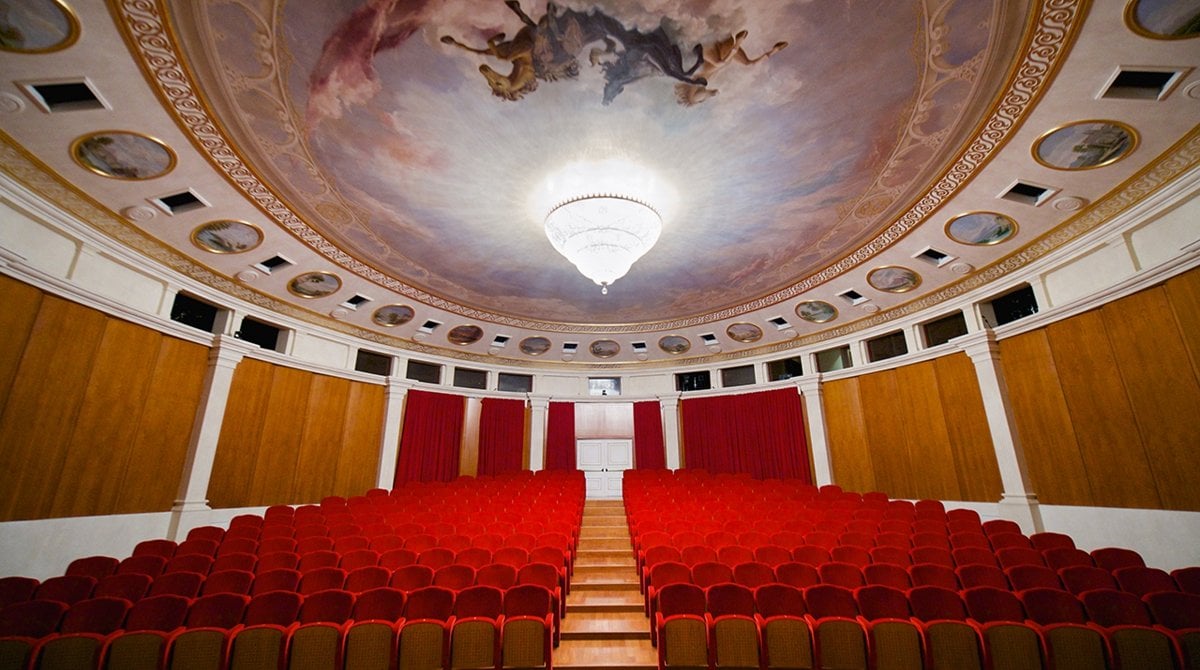
My seat was adjacent to the animated conductor, Ruslan Baimurzin, who necessarily performed seated so as not to obscure the view, directing the Astana Opera’s (significantly female) Chamber Orchestra. It was fascinating to watch their own enjoyment of the music from such close quarters, especially during the sparkling overture of such timbral richness that it set the scene perfectly for the cheerfulness to come. Unsurprisingly, it is often performed as a stand-alone concert piece.
One of the wind instrumentalists was so carried away by the experience that, when not playing, she couldn’t resist frequently turning to look at the performers onstage, nor lip-synching to the most melodious of the arias. I’m sure that some purists would frown upon such an affront to the fourth wall, but, for me, her enthusiasm accentuated the unbridled joy in this performance.
The Piccolo Theatre project has acted as a creative laboratory for emerging talent since 2019. Singers have been honing their skills on this smaller stage, demonstrating that opera can be just as captivating and refined in a much-reduced format. All the performers onstage are far closer to the audience than they would be in any normal circumstance, allowing an up-close-and-personal experience of their emotions and theatricality.
A clear appreciation of the facial expressions of these outstanding actors was crucial to absorbing this opera’s comic narrative (sung in Italian with Kazakh surtitles, which in any event were too far to the sides to be worth reading even if I could understand the language). There is a special connection between performers and audience because of this level of close exposure that might otherwise only be possible through opera glasses.
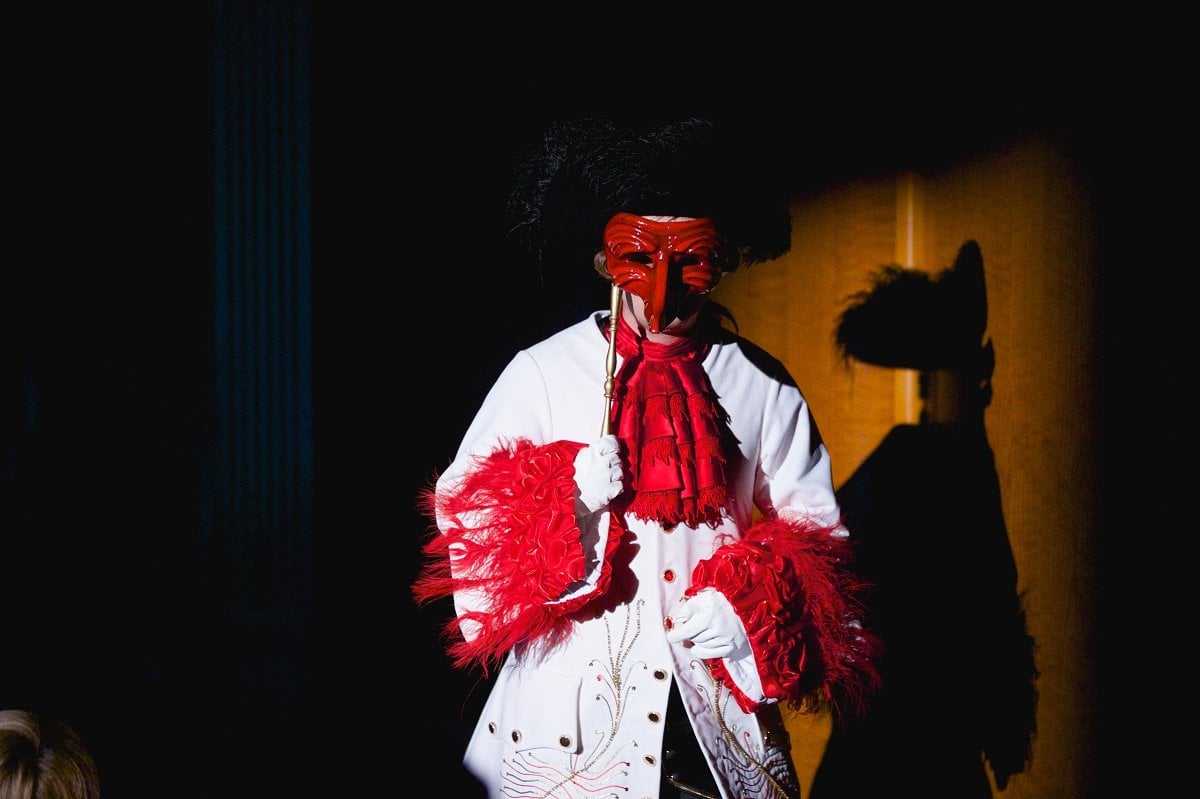
The costumes and setting of La scala di seta transport the audience into the heart of 18th-century Venice (although I believe it was originally set in Paris), complete with its masquerades, intrigues, courtly elegance and romance, all cloaked in that joyful atmosphere. The bright, evocative costumes and enigmatic masks, designed by Manana Gunia, emphasised that Venetian aura, enabling the characters to draw their audience deeply into this farcical comedy.
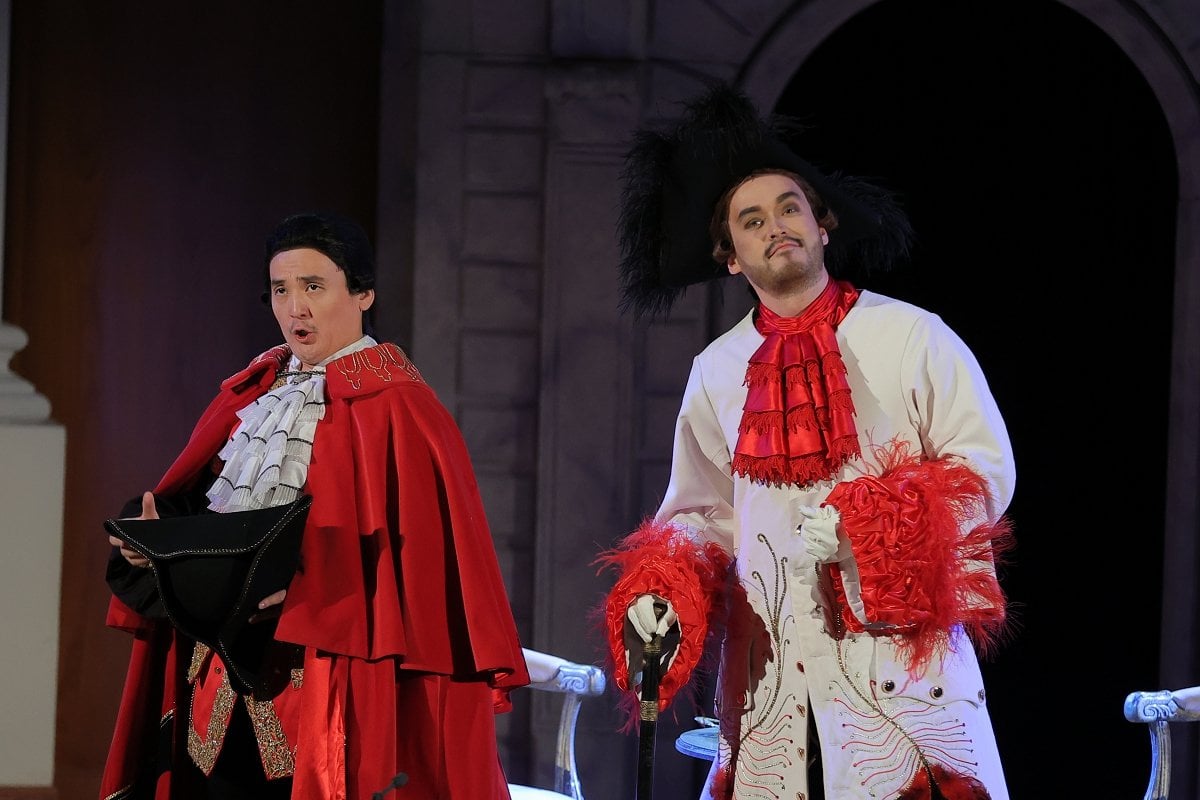
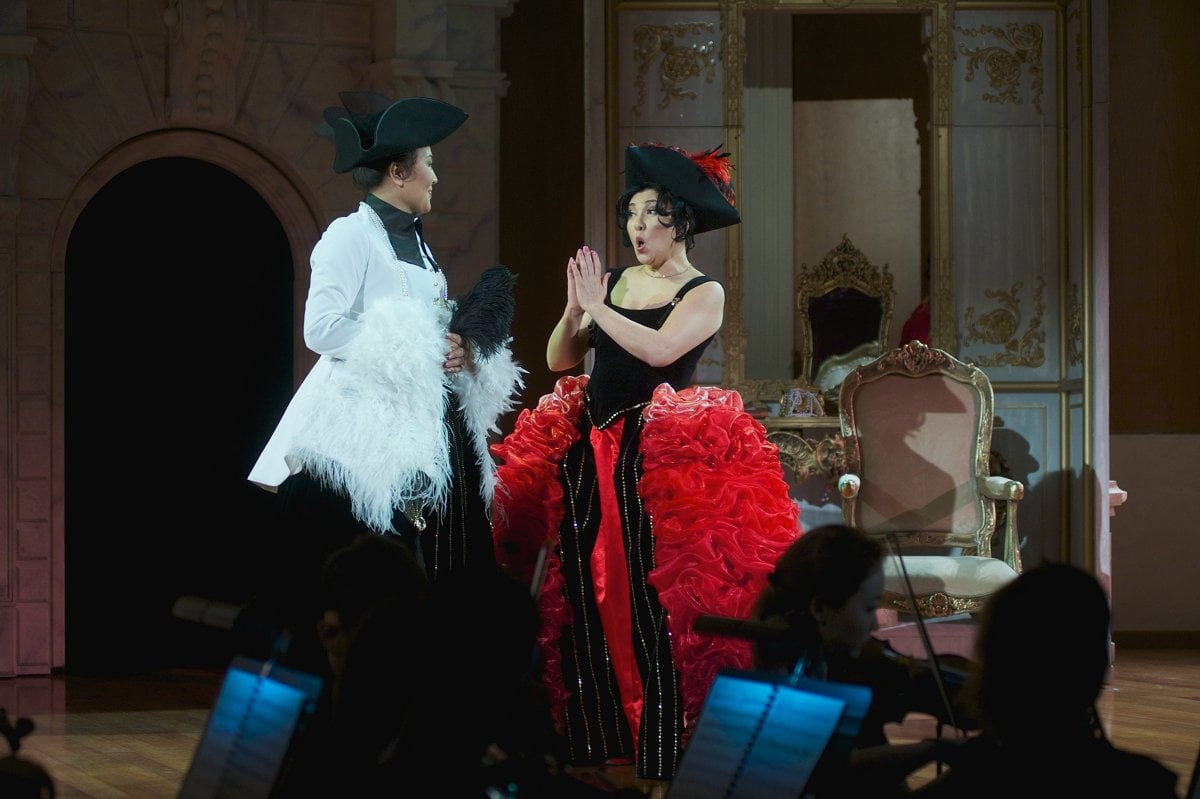
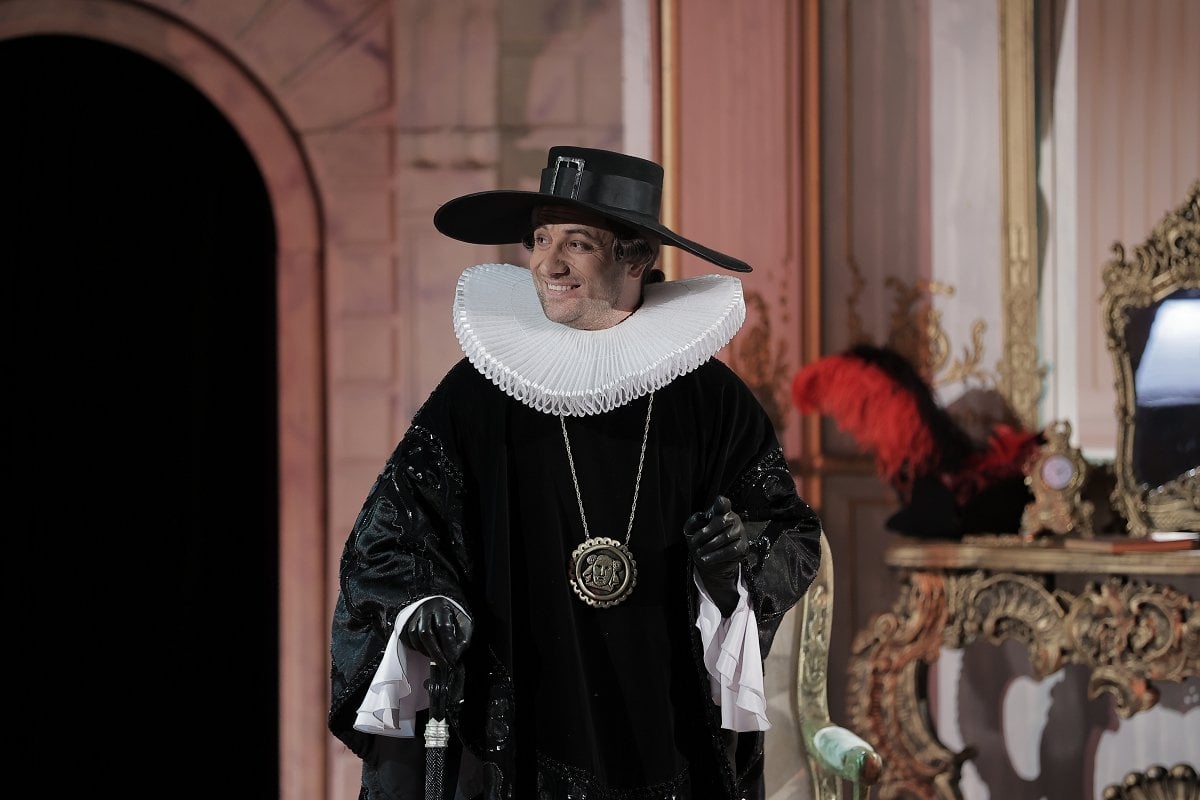
Giulia has secretly married Dorvil, who surreptitiously climbs into her bedroom each evening via the silken ladder of the title; however, her guardian, Dormont, is determined to marry Giulia to Blansac who in turn is loved by Giulia’s cousin, Lucilla. There follows an age-old farce of serial misunderstandings, aided and abetted by the guileless servant, Germano, which – naturally – ends in a denouement that brings the right lovers together.
The performers’ artistry is tested to its limits in the combined requirements of delivering impeccable vocal technique while also eliciting laughter by their ability to communicate with the audience through expression and body language.
The whole cast successfully delivered this dual achievement, and each character was realised with an assured confidence.
Zhannat Baktay’s commanding portrayal of Giulia succeeded in achieving that tricky balance of comedic guile and exceptional soprano singing, routinely embellished with elaborate coloratura. She was ably supported by another excellent soprano, Saltanat Muratbekova, as Lucilla, such that I found it difficult to distinguish one from the other for the first few minutes. The pleasing tenor vocal skills and strong expressive performance of Artur Gabdiyev gave an impressive characterisation of Dorvil, and he enjoyed excellent operatic chemistry with Baktay as the secret spouses. The bass performance of Rassul Zharmagambetov was aligned with slapstick humour as the hapless busybody, Germano; and the bass baritone, Yerzhan Saipov brought a necessary autocratic edge to Blansac with Ramzat Balakishiyev’s Dormont mixing attempted authoritarian guardianship with the reality of doddery and easily muddled aristocrat.
The Piccolo Theatre project will continue through the autumn and winter with other intimate examples of the bel canto and baroque eras in Gaetano Donizetti‘s Don Pasquale and Il Campanello, Domenico Cimarosa’s Il Matrimonio Segreto, and Antonio Vivaldi’s Orlando Furioso. There are several cultural reasons to visit Astana more often and these mouthwatering prospects are high up the list.