
Review: Kenneth MacMillan’s The Sleeping Beauty with English National Ballet
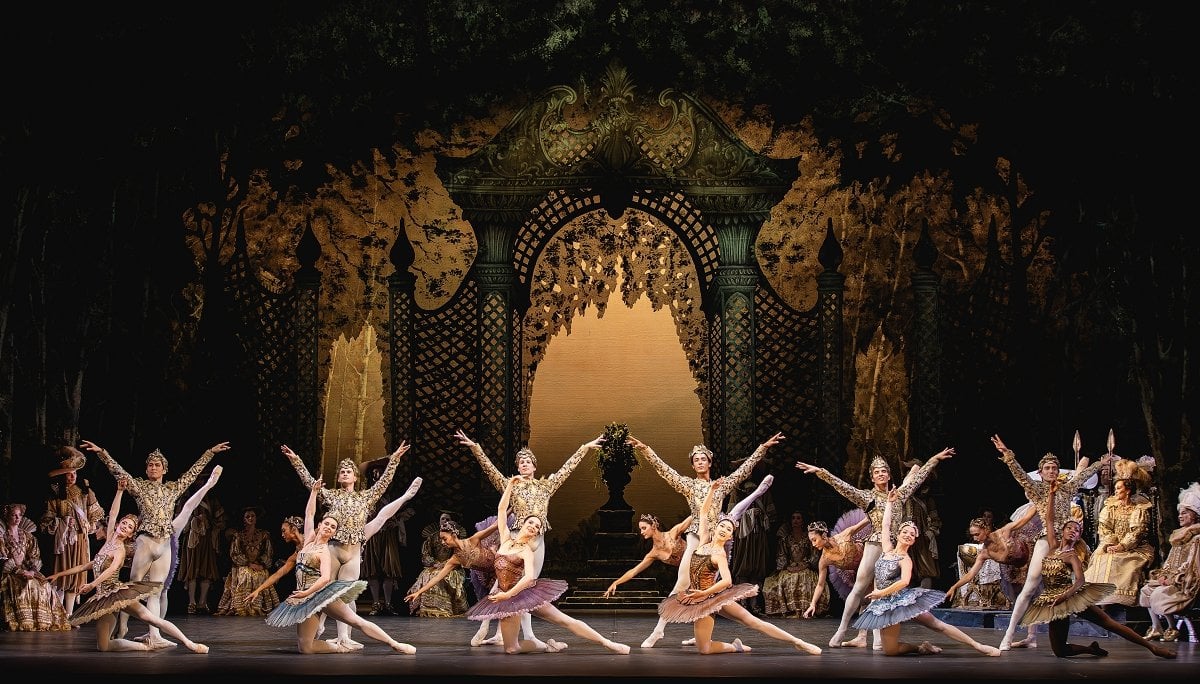
Lily Hyde sees English National Ballet in Kenneth MacMillan’s 1987 version of The Sleeping Beauty, created for American Ballet Theatre.
| Title | The Sleeping Beauty |
| Company | English National Ballet |
| Venue | Mayflower Theatre, Southampton, UK |
| Date | 27 November 2025 |
| Reviewer | Lily Hyde |
Kenneth MacMillan and Imperial Ballet do not feel like the most natural of partnerships. Indeed, MacMillan only adapted Swan Lake once, and his attempts at adapting The Sleeping Beauty created mixed results. His 1967 production for Deutsche Oper (now Staatsballett Berlin) had critics asking why MacMillan leaned so heavily on Petipa’s original choreography when his was demonstrably stronger, but MacMillan’s 1973 production for The Royal Ballet was hailed by The New York Times’ dance critic Clive Barnes as “a vulgar and provincial travesty of a great classic, and its production is the biggest disaster to strike the Royal Ballet in its entire 42-year history”.
However, it is MacMillan’s third attempt at the ballet, created in 1987 for American Ballet Theatre, that English National Ballet is currently touring, which will culminate in a run at the Royal Albert Hall next year. Staged after Marius Petipa in the grand Russian tradition, MacMillan’s choreographic voice is mostly absent from the ballet, but that’s not to say that its presence isn’t felt. Unfortunately, when it does appear, it is loud and somewhat jars with the delicacy of Tchaikovsky’s score. This is rather noticeable in the prologue, particularly in the fairies’ solos, but it is in the ballet’s first act that the piece really comes to life.
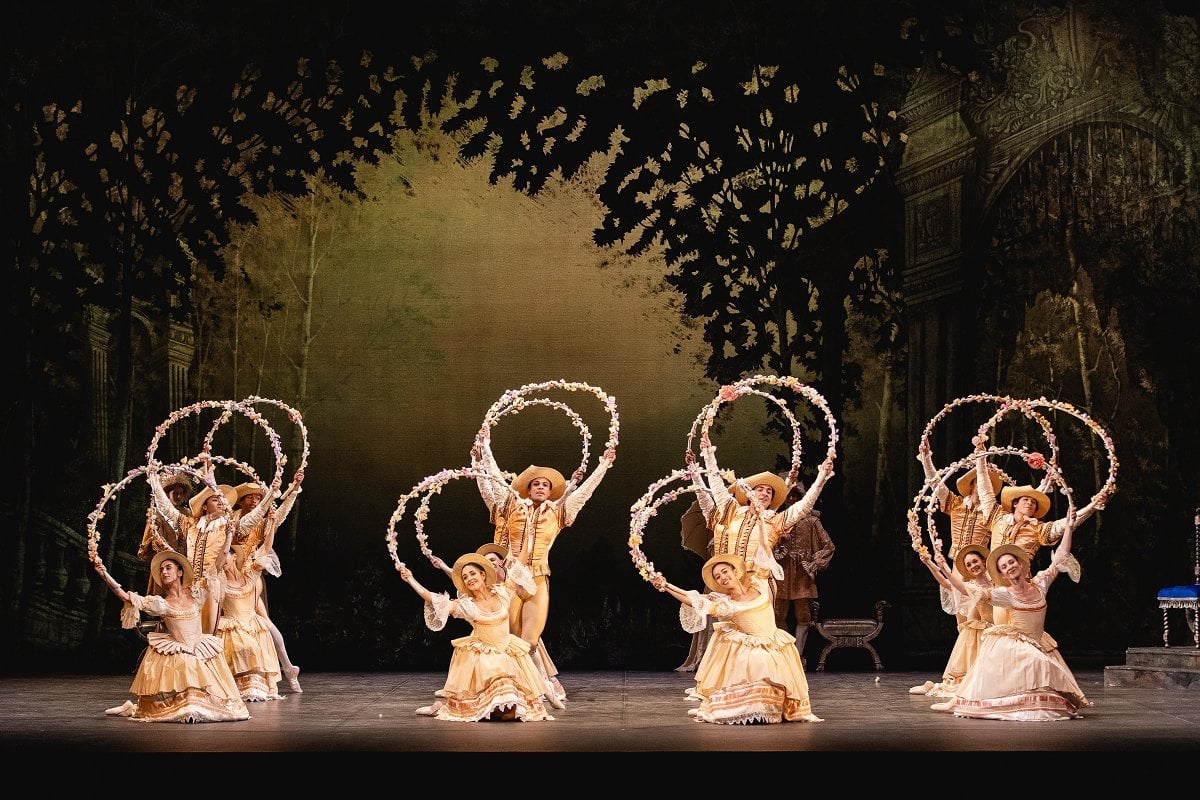
First Soloist Ivana Bueno dazzles as Princess Aurora, bringing an ebullient feistiness similar to that of Natalia Osipova. Her Rose Adage is exhilarating to watch, with a steely confidence and beautiful extensions. Regal and flirtatious, Bueno’s Aurora is entirely in control with her suitors, and even when she pricks her finger, such is her confidence in dismissing any concern that, for a moment, one genuinely believes all will be well. When she does fall into an enchanted slumber, she does so with a devastating grace.
Thanks to this revival’s abridged runtime, Soloist Elvis Nudo as Prince Désiré has little space to make an impression, but he commands the stage, bringing a suitable despondency to his troubled Prince, and a sweet chemistry with Bueno. Taela Graff, recently joined from Houston Ballet, is an imposing yet graceful presence as the Lilac Fairy, bringing a soulfulness and exquisite control of her long limbs to her performance. Hopefully, she will be dancing Aurora soon.
First Soloist Junor Souza brings an unnerving composure to his Carabosse, which makes the moments of aggression all the more terrifying. However, the production’s use of mime, which seemingly belongs to neither Petipa nor MacMillan, is undermined by a clear lack of ownership and seems random and meandering. The corps was on fine form, but again, due to this production being streamlined, it gives them fewer opportunities to shine, and considering the strength and synchronicity displayed in Act II’s vision scene and Act III’s Grand Polonaise, they feel slightly wasted.


The cuts made for this revival are more effective in some places than others – the wedding in Act III, which has never been for the faint of heart, feels reasonably concise, but some cuts, like getting rid of the knitting women in Act I and Act II’s hunting games, deprive the already paper-thin plot of both action and character beats.
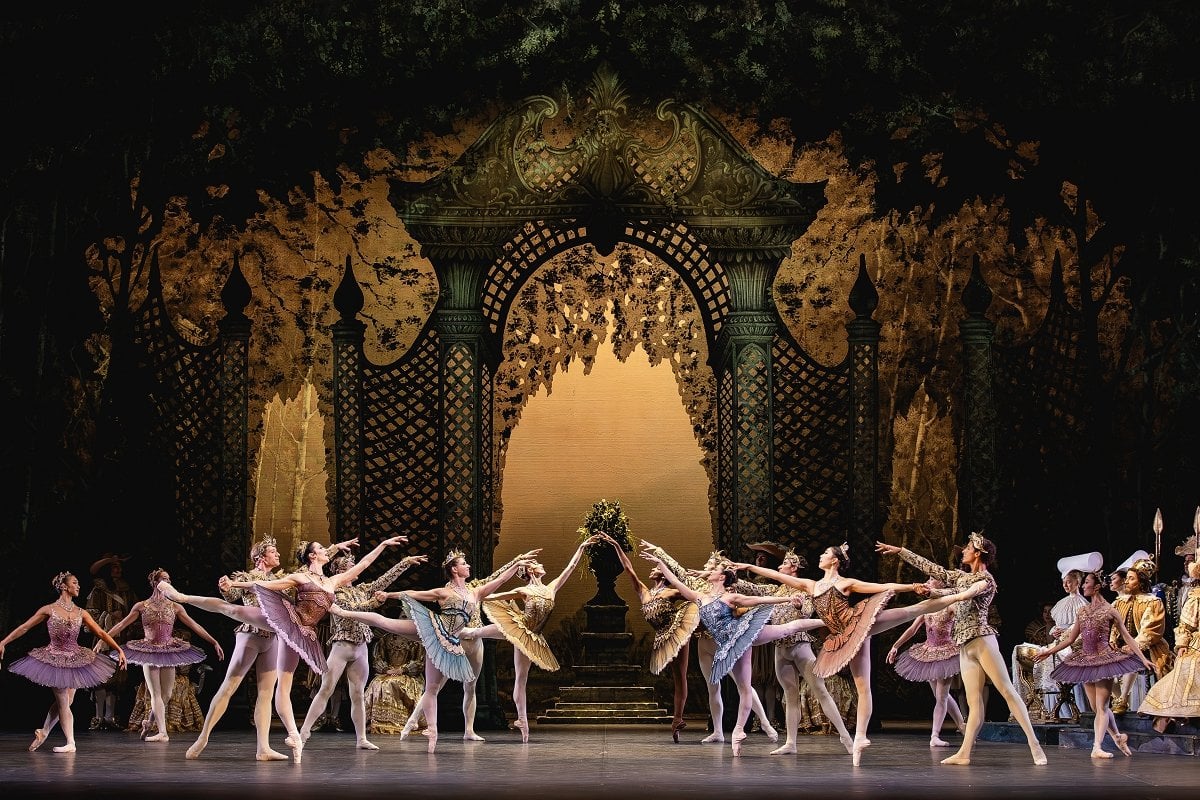
That’s not to say it isn’t compelling. For a ballet usually drenched in pastels, the darkness of MacMillan’s adaptation gives it depth. Peter Farmer’s shadowy set, a Le Nôtre-inspired garden with high hedgerows, gives the stage a confined feel, and Nicholas Georgiadis’s clothes are earth-toned and muted. The hunting party at the start of Act II are all wearing black, suggesting a death has occurred, and Aurora later appears to Prince Désiré more like a phantom than a vision. It is, as the programme claims, still more light-hearted than any of MacMillan’s original works, but one does wonder what kind of world he would have created if he had followed the suggestion of the critics back in 1967 and staged a full-length adaptation featuring only his choreography.
Of course, there is still a happy ever after, and one drenched in sequins at that. I do not need to state the genius of Nicholas Georgiadis, but I appreciate that this is one of the few productions to actually mark the passing of time with the costuming. Standout performances from the wedding include Precious Adams (soon to join The Australian Ballet) as Diamond and Jakob Wheway Hughes as Gold. Accompanied by Carolyne Galvao as Princess Florine, Thiago Silva’s debut as Bluebird was weightless, virtuosic and charming. The ending coda felt earned, and as the curtain dropped, I was sad to leave MacMillan’s world.
Considering that more than fifty years have passed since their premieres, it seems unlikely that Staatsballett Berlin or The Royal Ballet will ever revive their versions of Kenneth MacMillan’s The Sleeping Beauty, but English National Ballet, in an age where other ballet companies are introducing surge pricing and limited repertoires full of big-name productions, is boldly positioning itself as a champion of the lesser-known and the rare, and this revival, and the rapturous applause at the end vindicates this decision entirely.
English National Ballet has proven there is a place for Kenneth MacMillan’s The Sleeping Beauty – well, they do say the third time’s a charm.
Production photos with the cast reviewed here are not available: L-R Ivana Bueno, Elvis Nudo, Taela Graff, and Junor Souza.



Lily Hyde is a cultural and dance writer based in London. Her writing has appeared in The Fence and The Creative Independent, and she runs the cultural newsletter, Falling Upwards. She is currently writing her first novel.


Excellent review!