Review: Trailer Park – TanzMainz scrolls through our digital lives at MILANoLTRE
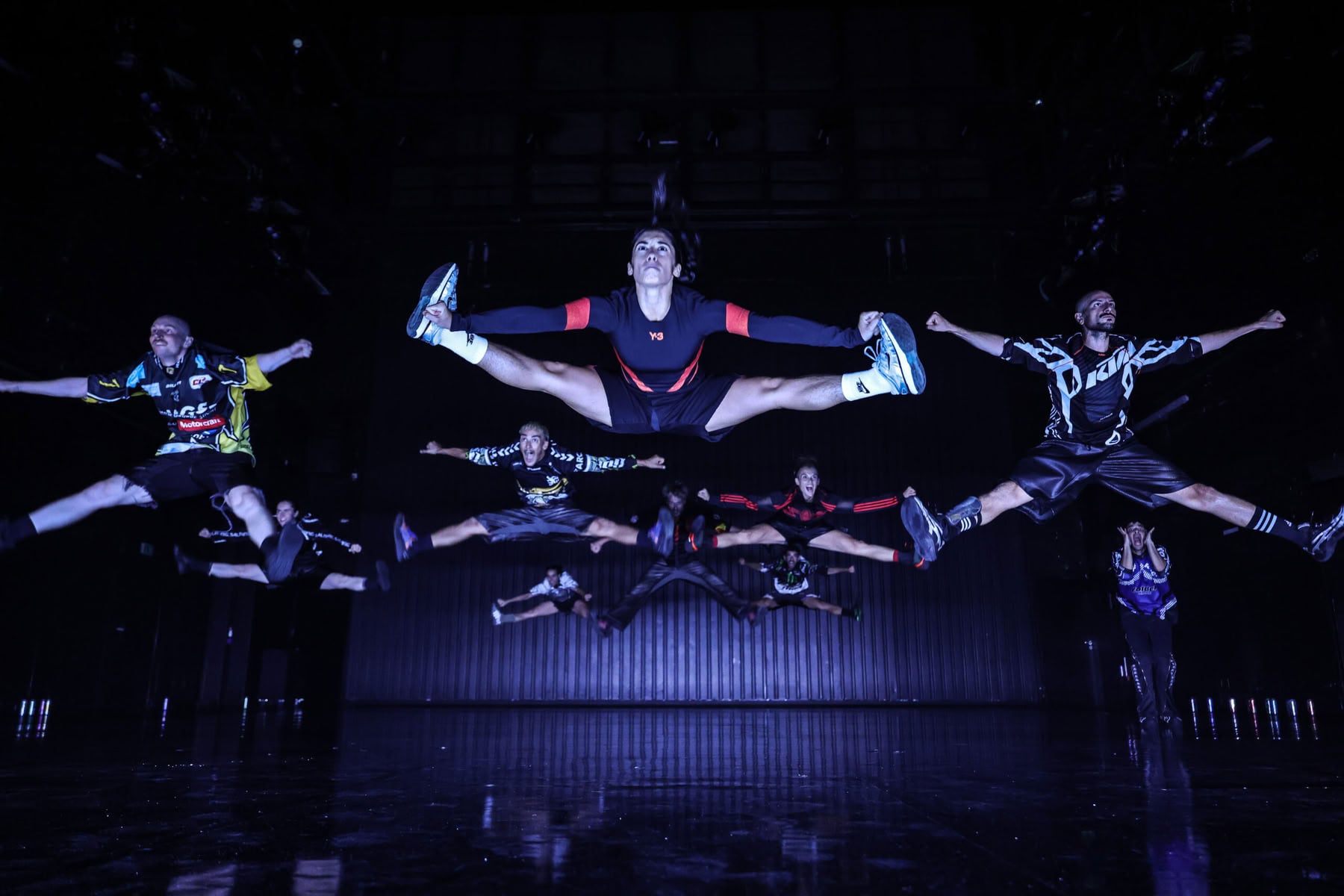
Moritz Ostruschnjak’s hour-long work races from Bo Burnham to Freddie Mercury, its nine vivid dancers posing a question that bites harder in the age of AI.
| Title | Trailer Park |
| Company | TanzMainz |
| Venue | MilanOltre | Teatro Elfo Puccini |
| Date | 30 September 2026 |
| Reviewer | Graham Spicer |
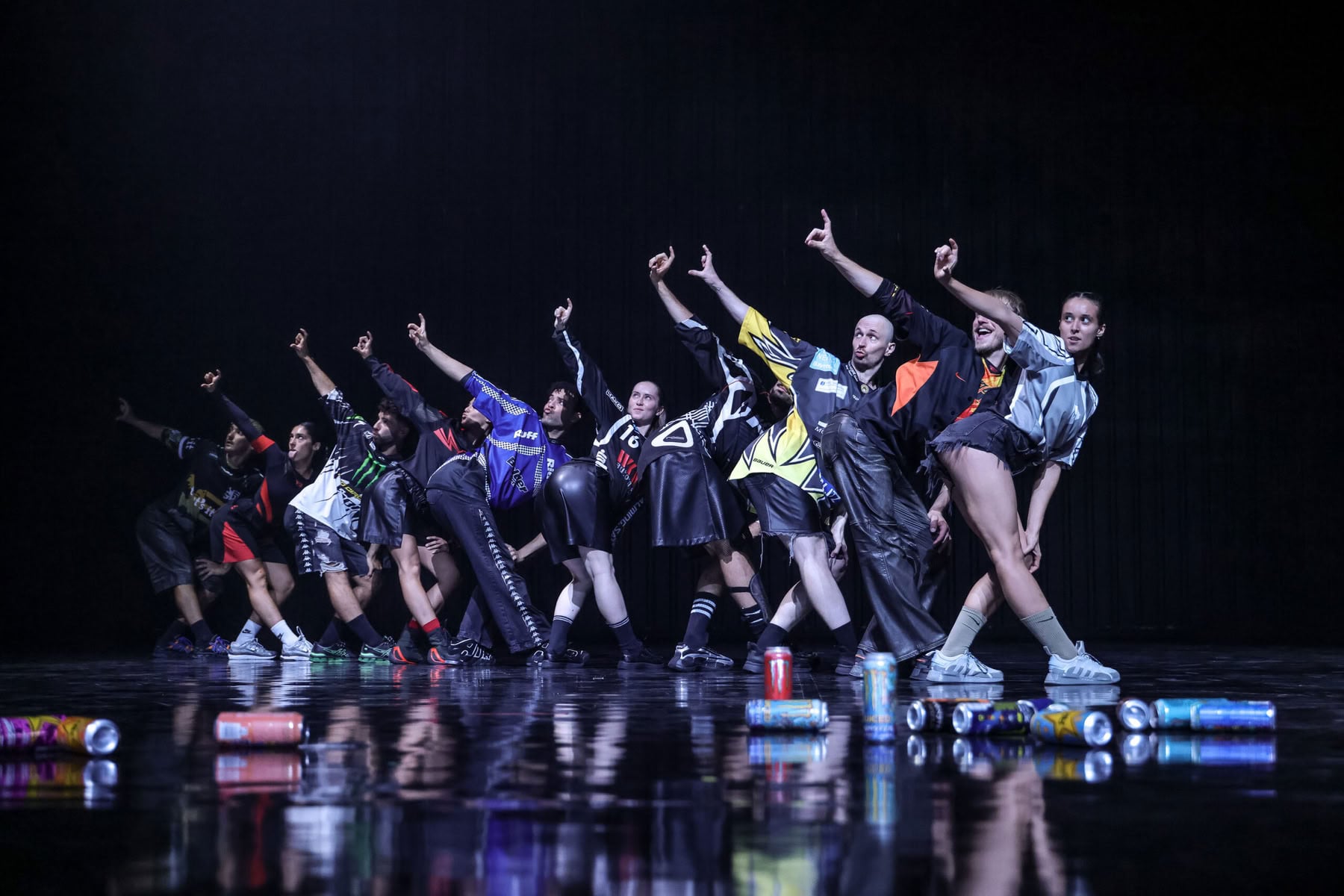
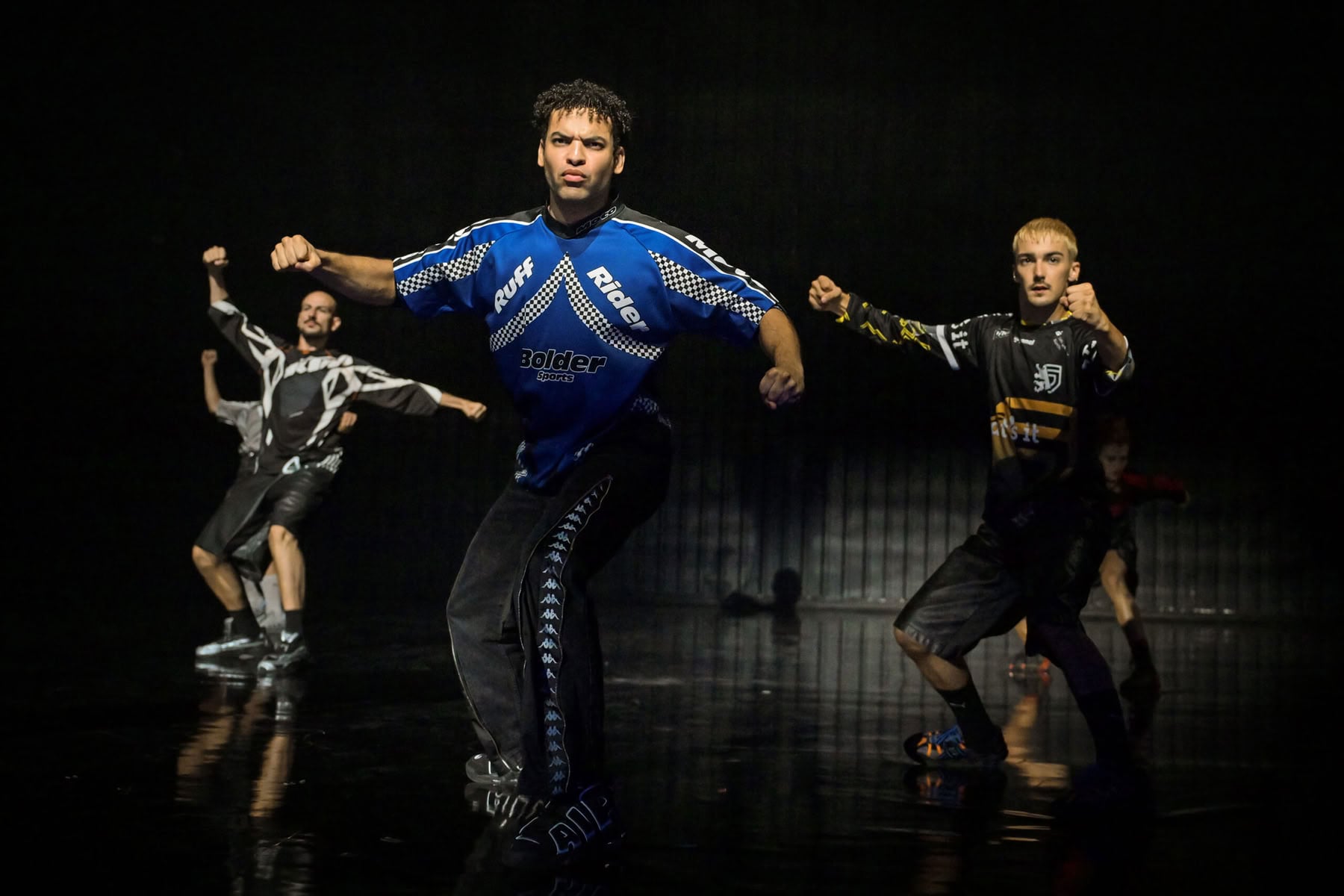
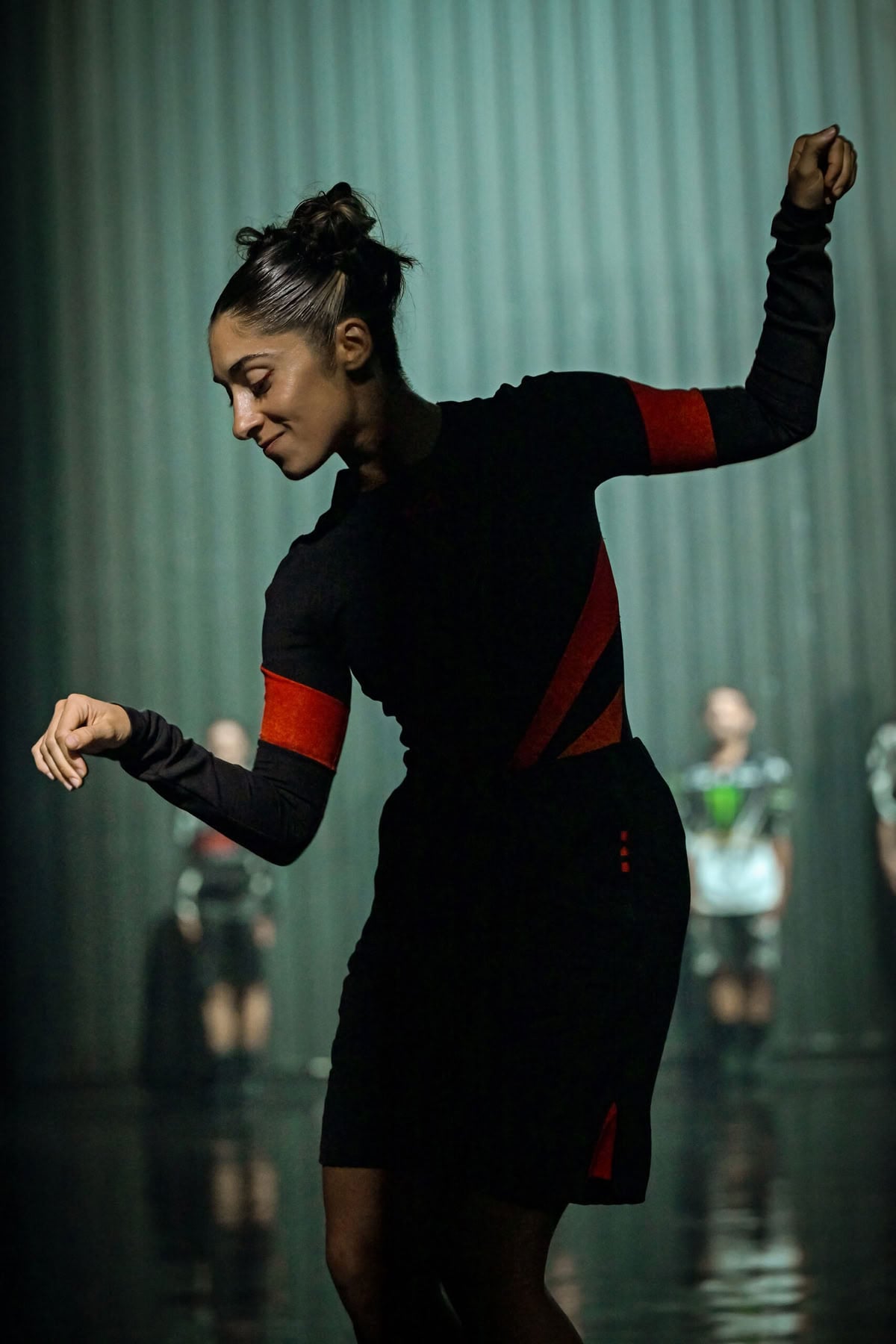
The nine dancers of TanzMainz have such distinct personalities that each one feels familiar within just five minutes. They are an exceptionally talented group, with wacky solos dissolving into highly coordinated group sections. It is a piece rehearsed to the hilt.
Trailer Park is performed to an eclectic soundtrack of almost entirely text-based pieces, songs (mainly in English) and some archival spoken-word recordings. The music ranged from the spot-on observations of Bo Burnham’s witty “Welcome to the Internet” to “So Long, Farewell” from the soundtrack of The Sound of Music. At one point, two of the dancers, carefully balanced on drink cans (energy drinks?), sang a disjointed acapella version of “Over the Rainbow” (and both had extraordinarily good voices).
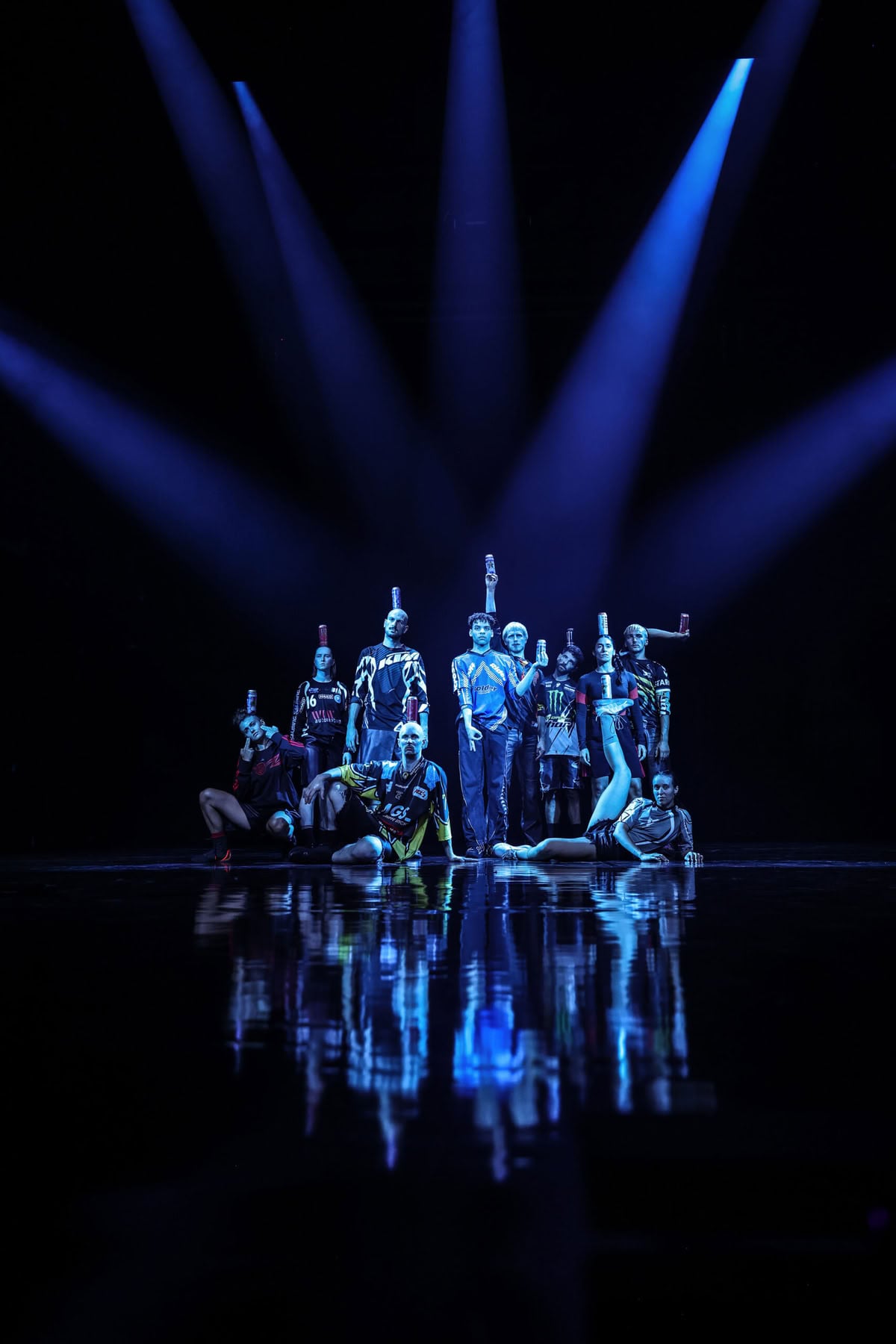
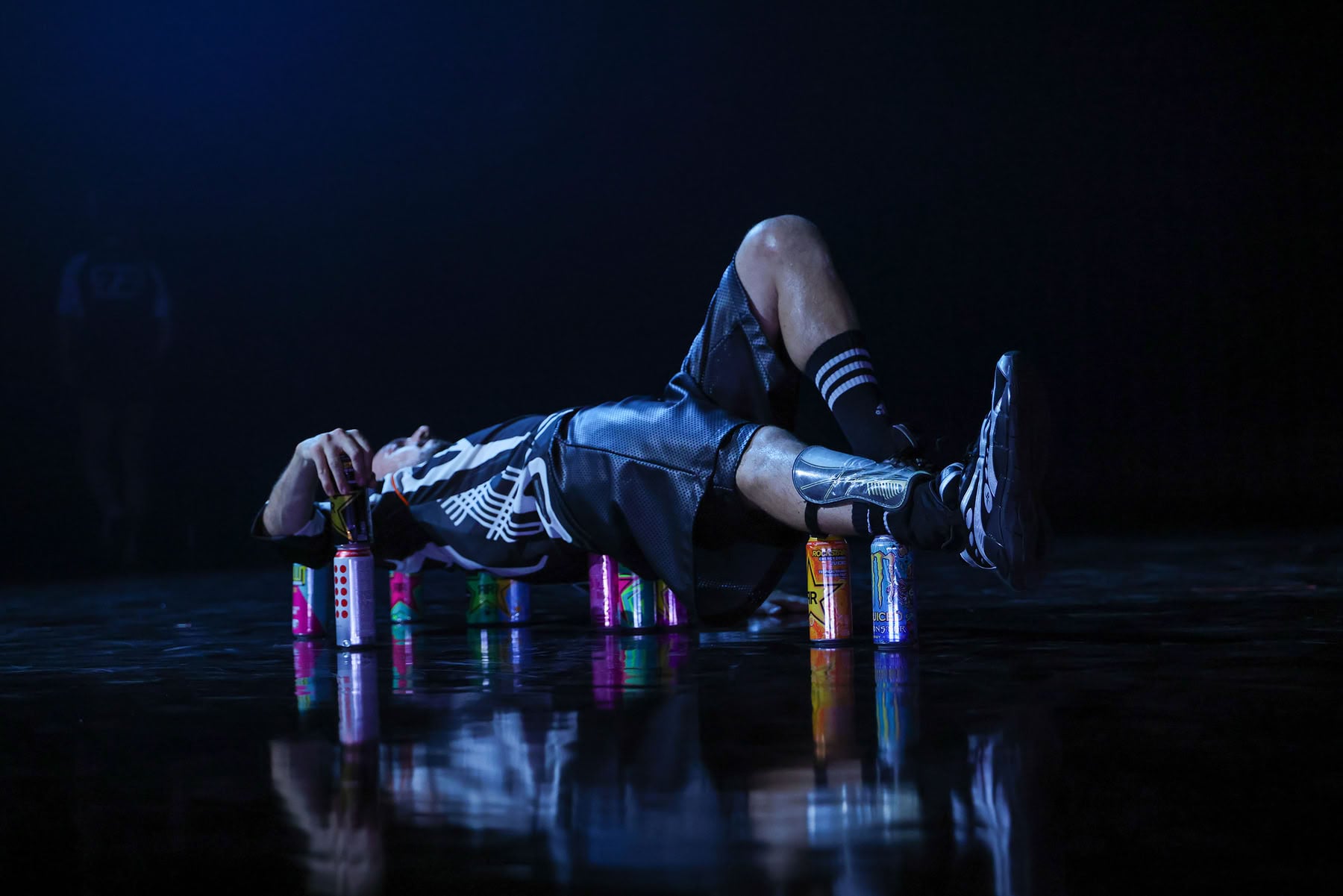
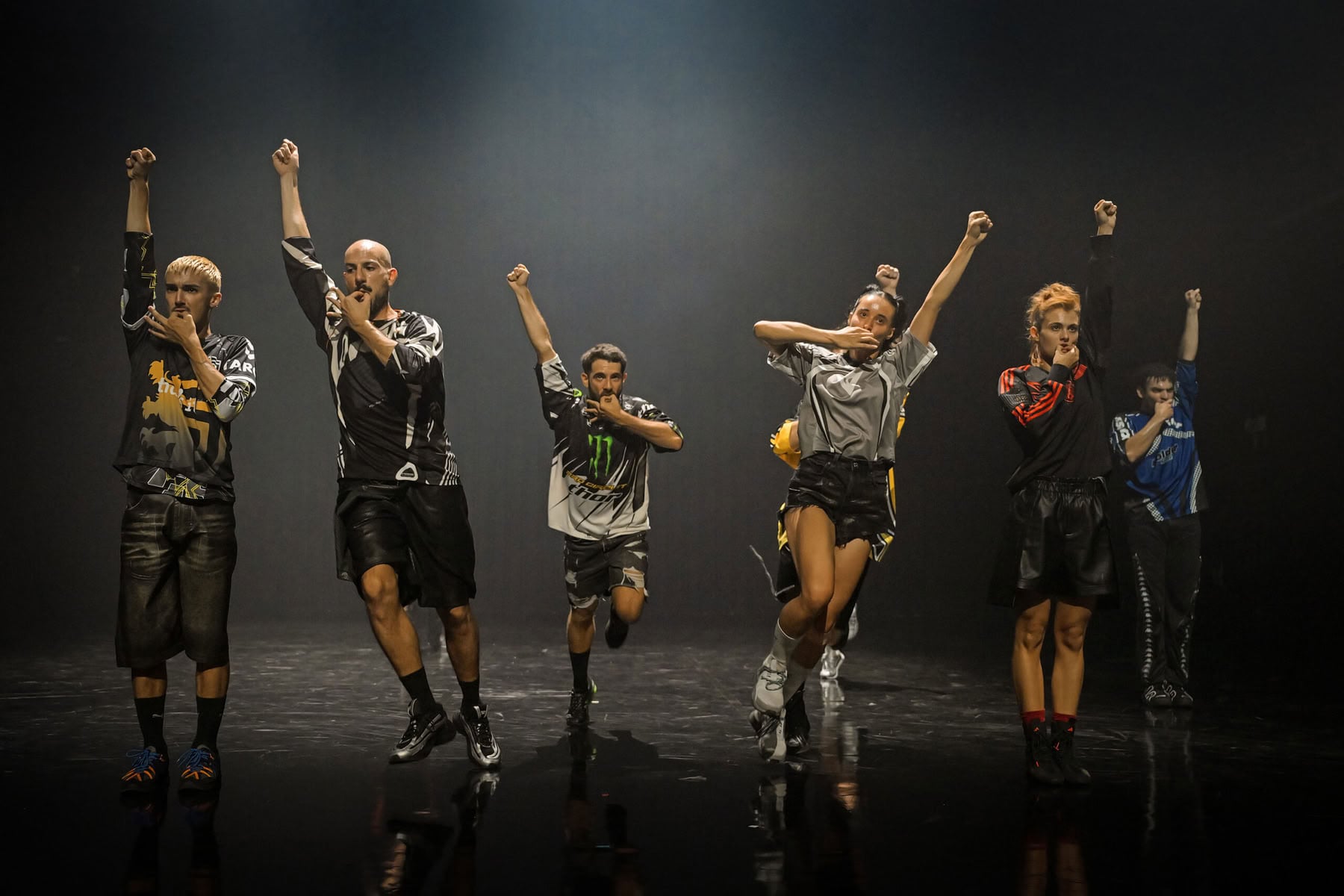
The disconnected effect resembles scrolling down a social media feed, which is indeed the point of Moritz Ostruschnjak’s piece. It doesn’t judge; it simply illustrates, through rap hand signs, TikTok challenge dance moves, selfie pouting, footballers’ celebratory gestures and two-finger whistles. It is understandably a popular theme in contemporary dance, yet nothing about this piece is obvious – it surprises at every turn.
Ostruschnjak was a graffiti artist… a sprayer… which led him into street dancing and then classical dance training. All of this is seen onstage – rawness combined with some serious technique.
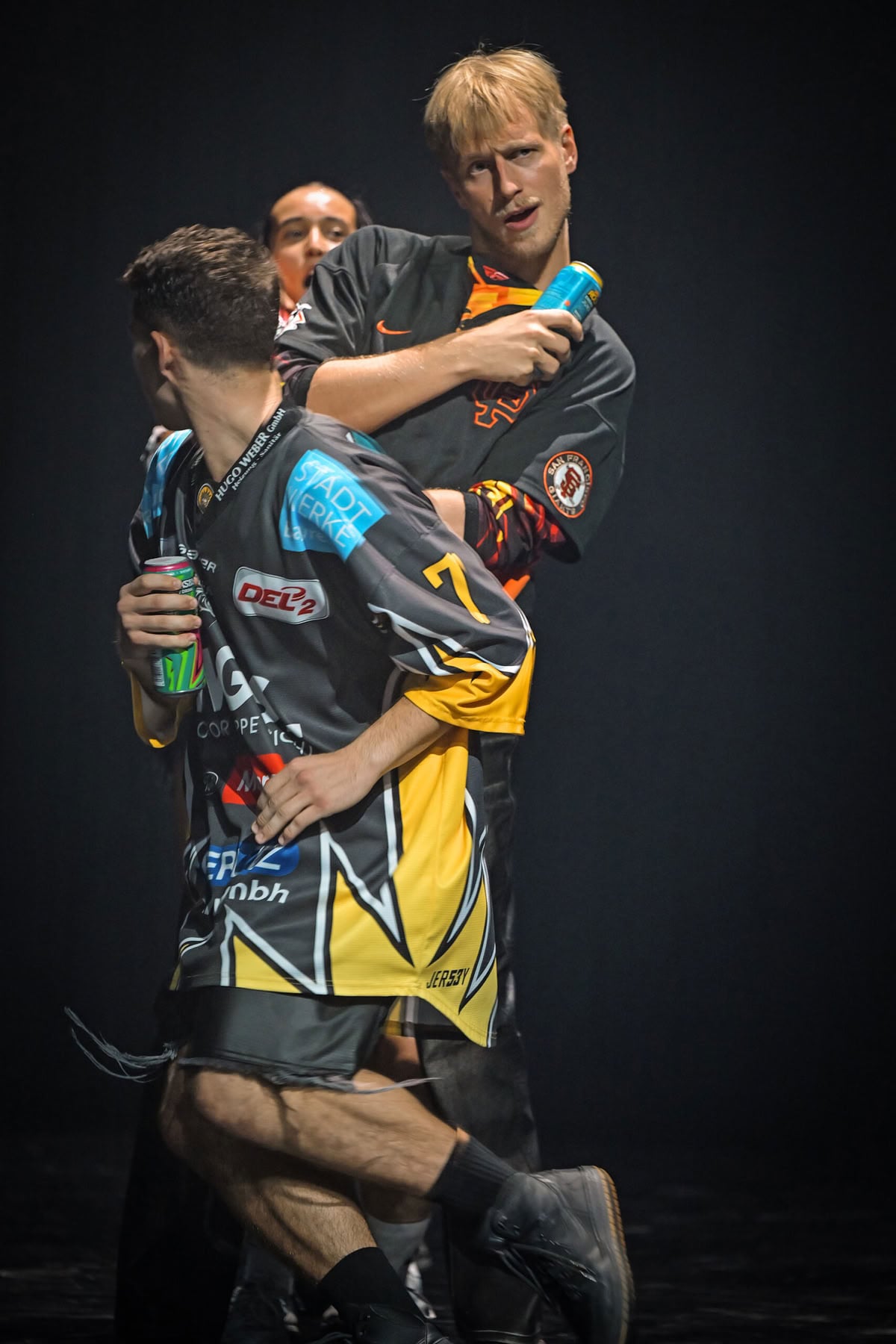
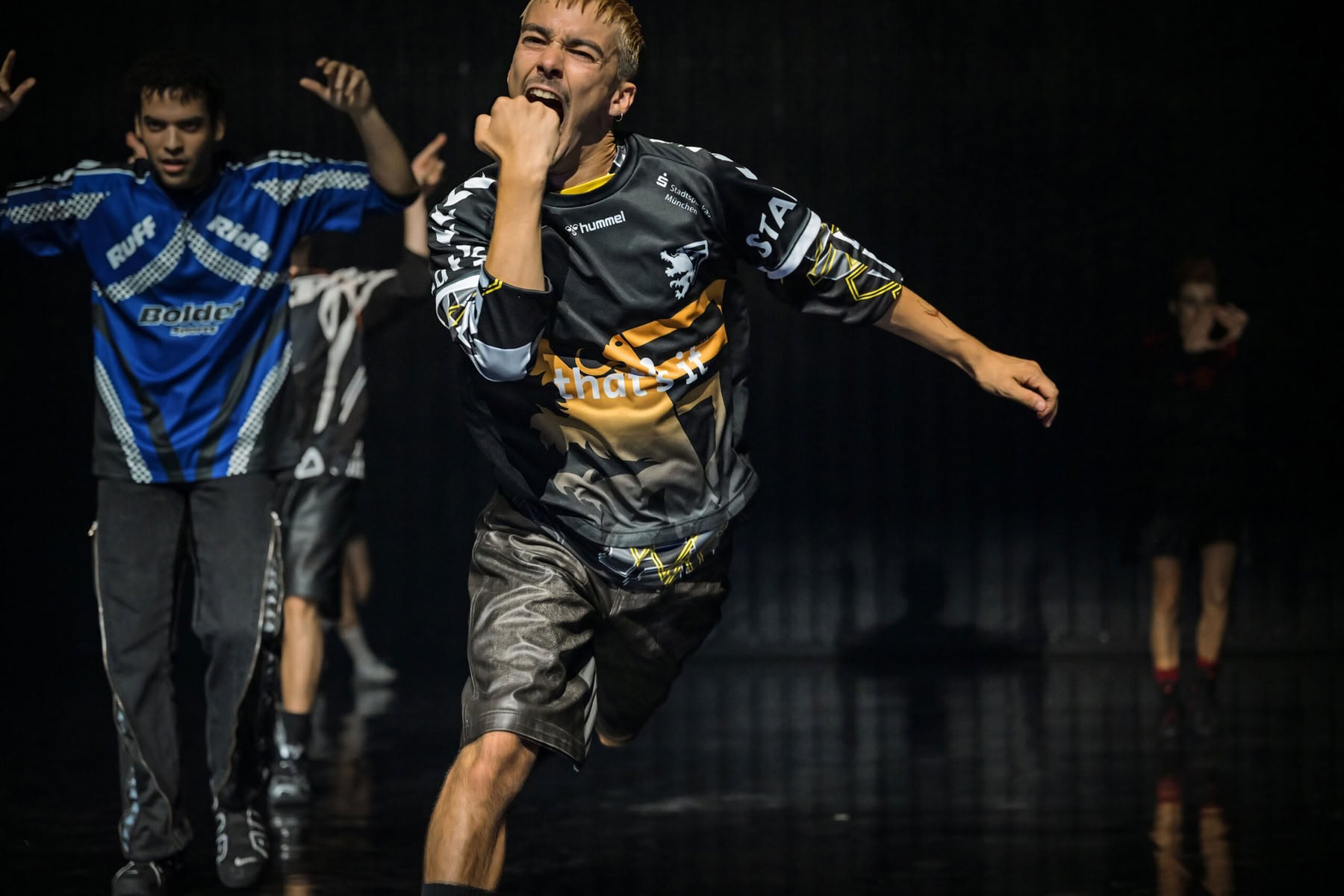
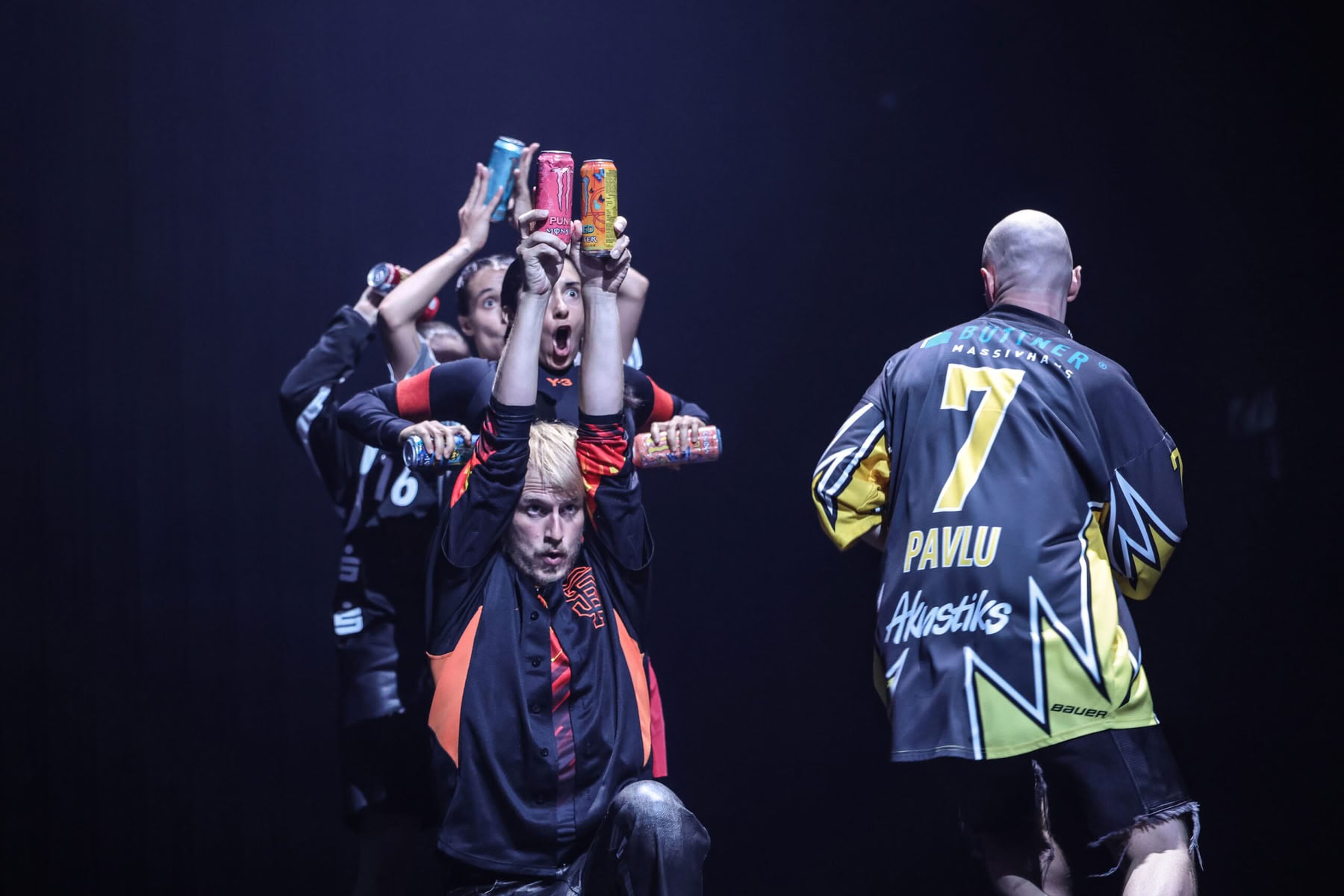
The company is from Mainz, on the Rhine River, but only used one song in German, which was a late-medieval Lautenlieder (maybe by Oswald von Wolkenstein? The music used wasn’t listed), the analogue lute contrasting with the digital assault of Death Grips’ “Giving Bad People Good Ideas” or the hypnotising electronic loops of Aïsha Devi’s “Aurat”. It was an intoxicating mix. Freddie Mercury, however, crowned the hour-long work with “Who Wants to Live Forever”, as the dancers moved across the stage in a liberating, eye-opening way, before becoming confused, frightened, lost.
Brecht‘s alienation effect (Verfremdungseffekt) had the dancers staring out at the audience – sometimes provocatively, sometimes neutrally, and occasionally as a group – illuminated by a harsh frontal light, as though they were posing the question, “Who are we?”
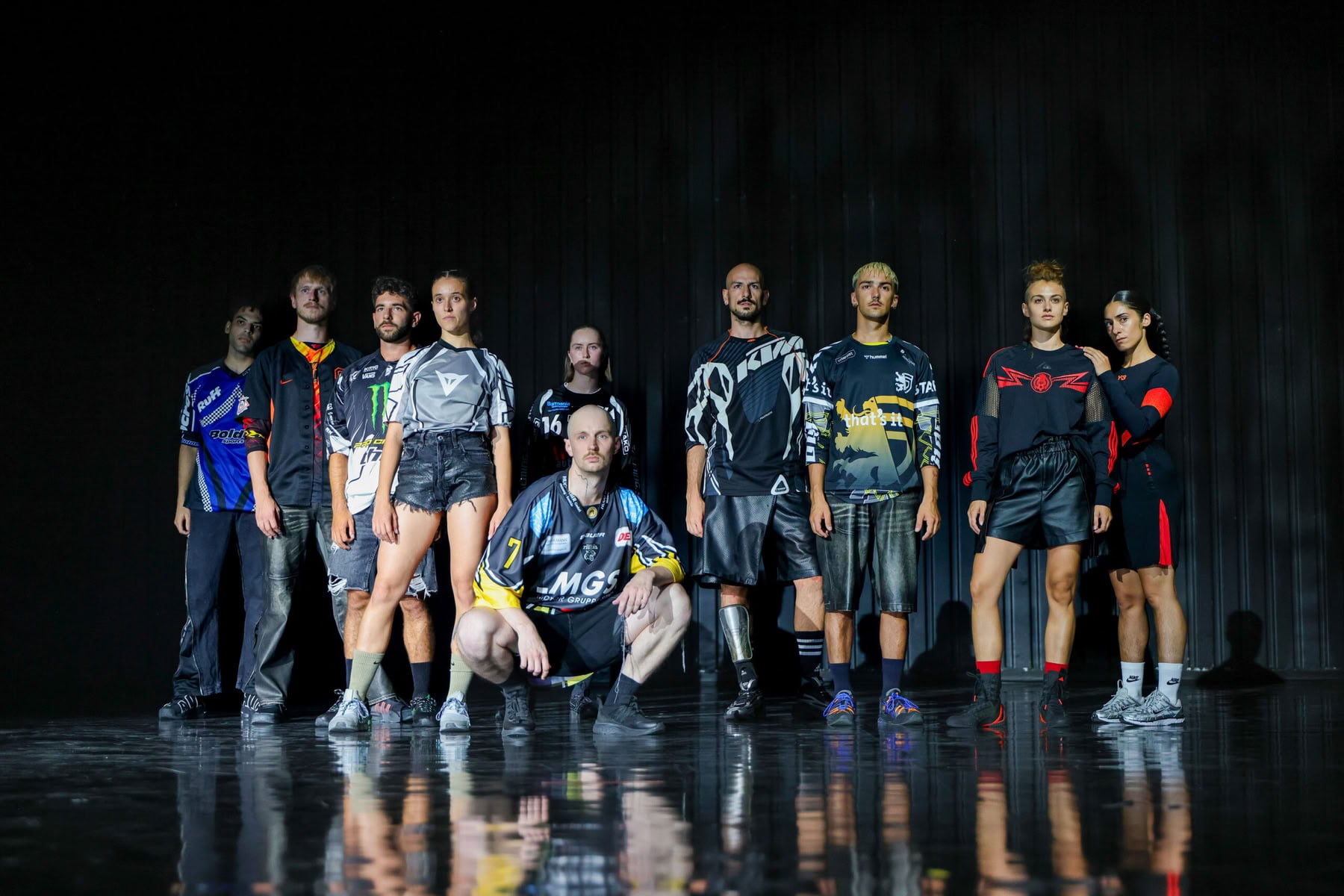
The logo-drenched street clothes, which recalled influencer recommendations, combined with Tanja Rühl’s effective lighting, created intense visual stage pictures.
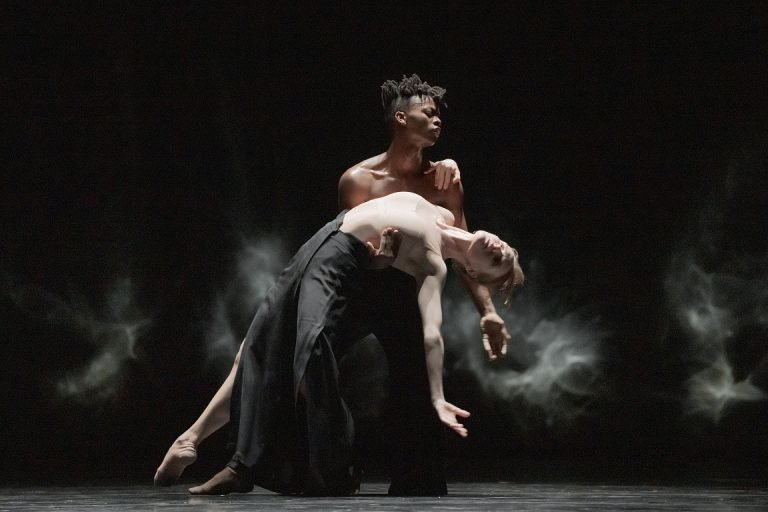
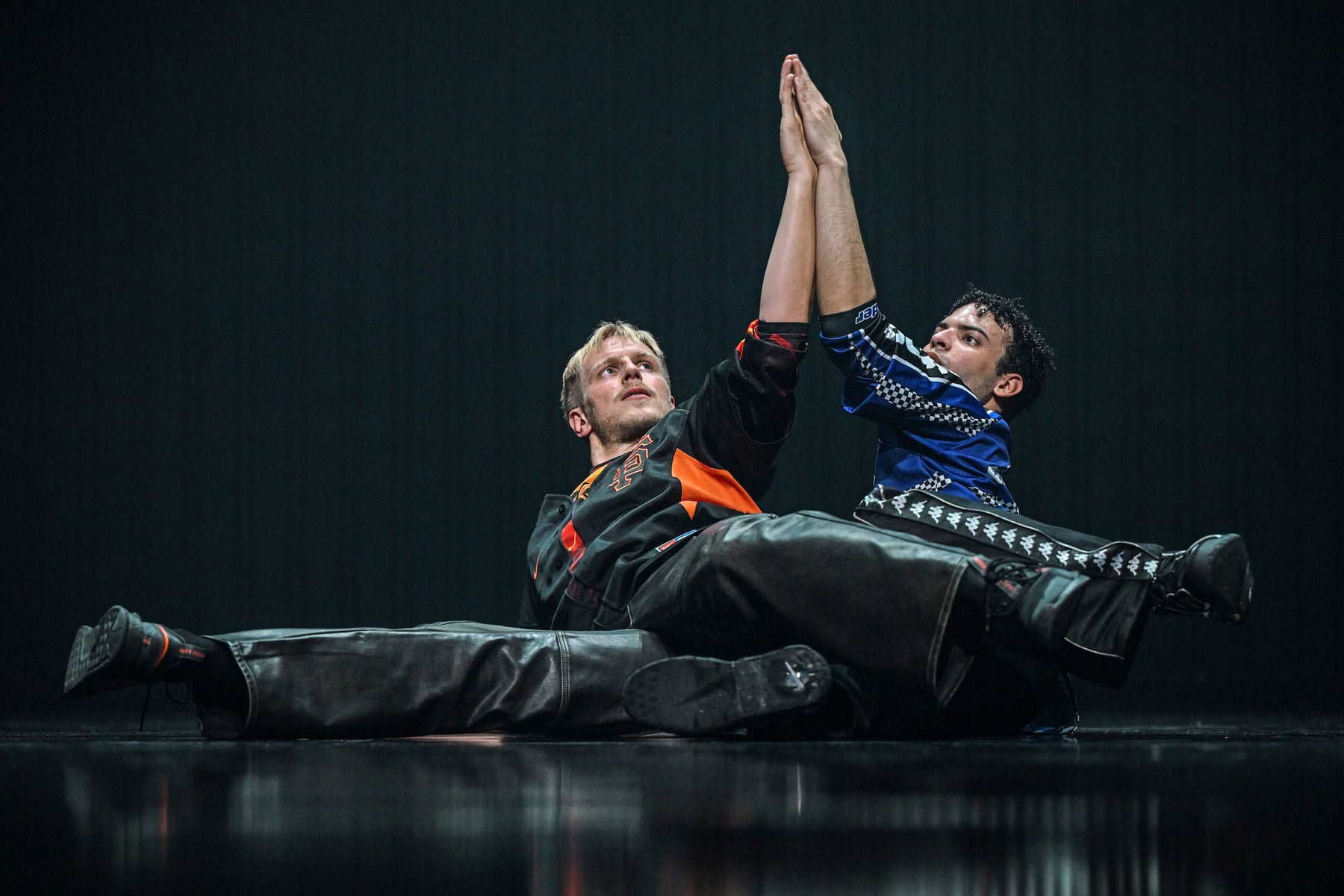
The dancers’ physical and interpretive capabilities were striking, but two stood out for me: the infectious energy of Tanit Cobas and the intensity of Jaime Neves. One of the most touching and original sections featured Neves on the floor with Finn Lakeberg as they played with interweaving leg patterns, and a choreographic motif that Ostruschnjak also used elsewhere: the seated performer seeming to move slowly as though on a revolve.
One of the joys when shuffling out of a theatre foyer is overhearing comments from fellow punters: “What was that about?” said a middle-aged woman in an extraordinary getup, who wouldn’t have looked out of place on the stage. “What does it mean?”
That’s exactly the question we should be asking right now: what does it mean? Trailer Park premiered in 2023, before the current concerns about AI, and Freddie Mercury singing “There’s no chance for us, It’s all decided for us,” surely carries more weight now than it did just three years ago.