
Review: The Royal Ballet in Balanchine – Three Signature Works, Serenade / Prodigal Son / Symphony in C
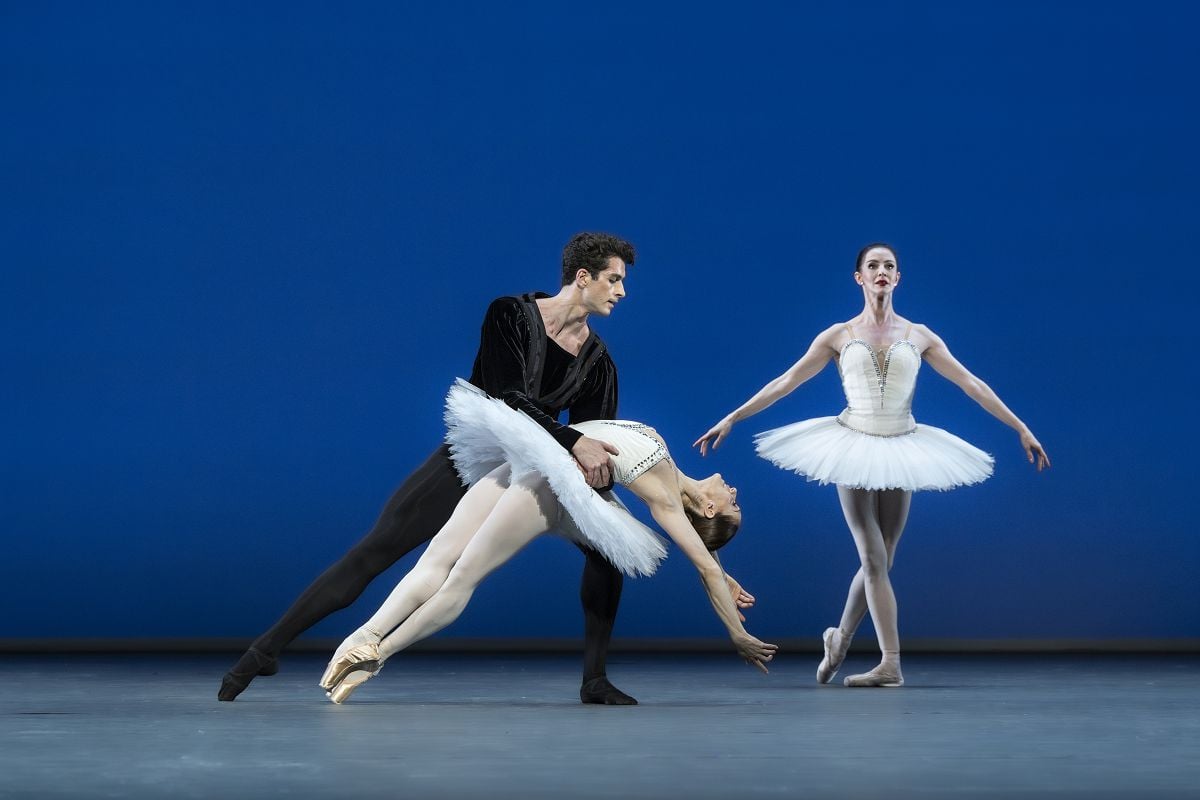
Jonathan Gray sees The Royal Ballet’s new Balanchine triple bill, Three Signature Works – competent, but rarely exciting
| Title | Balanchine – Three Signature Works Serenade / Prodigal Son / Symphony in C |
| Company | The Royal Ballet |
| Venue | Royal Ballet and Opera, London |
| Date | 28 March 2025 |
| Reviewer | Jonathan Gray |
First, let me say at once how wonderful it is to have a triple bill of ballets created by George Balanchine back in the repertoire of The Royal Ballet, presented as part of the Dance Reflections by Van Cleef & Arpels Festival. Absent for far too long, it was an immense pleasure to see choreography of such quality on the stage at Covent Garden, with ballets of such variety of invention.
Serenade, perhaps Balanchine’s most performed work, was the first ballet he made in America in 1934; Prodigal Son was the last new creation for Serge Diaghilev’s Ballets Russes in 1929; and Symphony in C was originally choreographed for the Paris Opéra Ballet (when it was given the grand title Le Palais de cristal) in 1947. These ballets were made on very different types of dancers – some just starting out, others experienced artists – but what all the works have in common is an extraordinary vision of dance. Balanchine’s unerring musicality, his astonishing sense of physical shapes and poses in space, and his glorification of the dancers – be it in an erotic pas de deux, a dance that encompasses a sense of yearning for a lost world, or a bravura display of classical artistry – all express an astoundingly creative imagination.
The programme, which opened on 28 March under the headline banner Balanchine: Three Signature Works, was staged for The Royal Ballet by Patricia Neary, a Balanchine expert who first worked with the company in the 1970s, and it was entirely right for artistic director Kevin O’Hare to express his admiration and gratitude to her in a front-curtain speech at the start of the evening, at which he also announced that Neary is soon to retire. She had obviously been working hard with the dancers, and they seemed to respond to the challenges Neary presented them with, but, to speak true, I found some of the performances a little underwhelming.


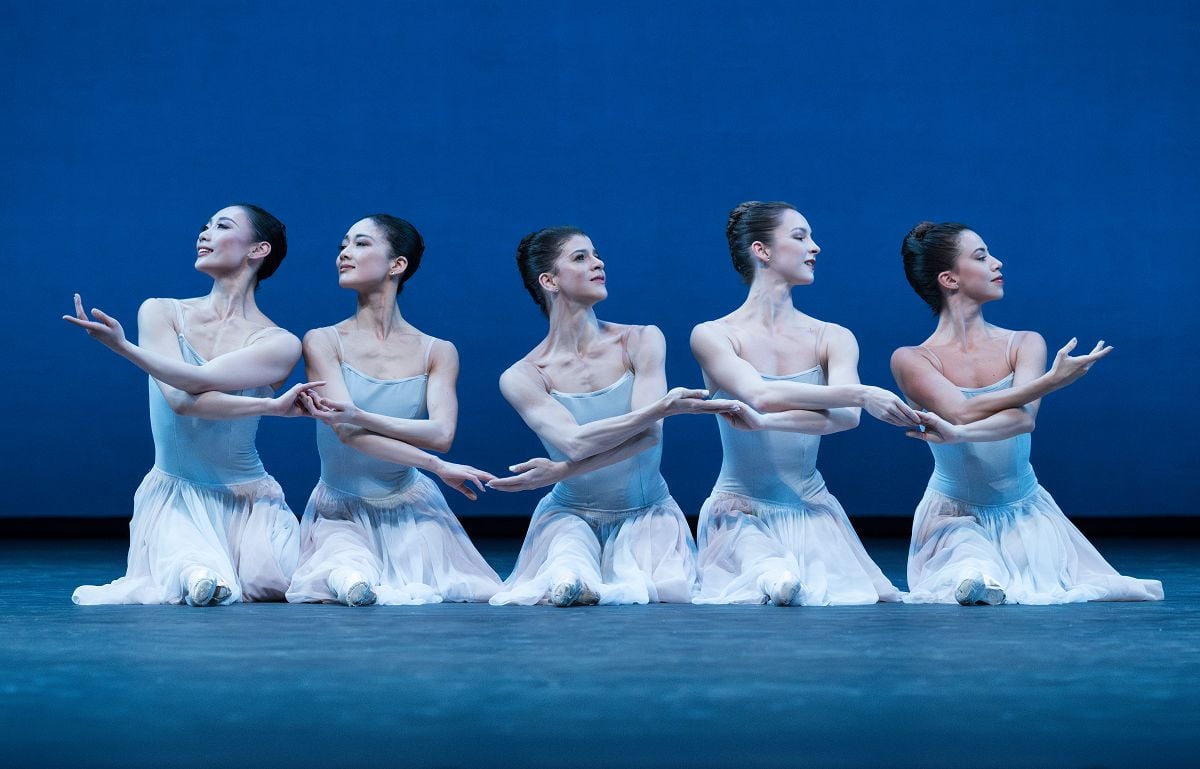


Serenade was the ballet that came up best, with the corps de ballet catching wonderfully the ebb and quick-changing flow of Balanchine’s choreography to Tchaikovsky’s Serenade for Strings. An airborne Lauren Cuthbertson, relishing her off-balance poses, captured the impulse of her dances with a sense of style, especially when partnered with the always-elegant William Bracewell, and Mayara Magri brought exactly the right kind of energy and bounding propulsion in the “Russian” dance. Then, in the elegiac final section, where the choreography seems inspired by the classical sculptures of Canova (his Psyche Revived by Cupid’s Kiss in particular), Melissa Hamilton‘s “Dark Angel” guides Ryoichi Hirano into the arms of Cuthbertson before she is left by them, then raised and carried up high like an icon as the curtain falls.
Prodigal Son


Danced to music by Prokofiev, Prodigal Son is an almost comical depiction of the familiar Biblical story, with Balanchine showing a rebellious but naïve Young Man falling – essentially – into a honey trap laid out for him by the Siren and her Drinking Companions. Stripped of everything he owns, right down to his brief briefs, the Young Man, humiliated and humbled, crawls on his knees back to his forgiving family, and, in one of the most moving scenes in all of Balanchine’s ballets, up into the arms of his stern father, who cradles him like a child. It is a role in which Cesar Corrales excelled, from his arrogant leaps at the beginning, to the confusion of his sexual feelings for the Siren in their overtly erotic pas de deux, and the heartbreak of his return home. Less successful, however, was the casting of Natalia Osipova, a ballerina I greatly admire, as the Siren. Osipova’s dancing was smudgy, and she simply does not possess the height, long legs or killer pointework and killer instinct expected for this role, nor its sense of streamlined, angular, Art Deco movement.
Symphony in C


Symphony in C, danced to Bizet’s music of the same name, is the ultimate Balanchine tutu ballet, with each movement led by a ballerina and her partner, four soloists and a small ensemble, who then gather en masse at the end. It can be a thrilling experience when danced at its best, but at this revival by The Royal Ballet the dancers looked too careful and correct truly to conjure up the work’s ebullience. On the whole, the dancers were competent, but rarely exciting, the exceptions being Marianela Nuñez, who brought scale and grandeur to the slow second movement, and Joseph Sissens, who displayed his pin-sharp footwork and wonderful buoyancy in the fourth movement. This was, however, only the first of eight performances of the Balanchine programme, so hopefully The Royal Ballet will gain in confidence and be back on top form soon. Musically, it was a good evening, with Fayçal Karoui, former music director of New York City Ballet, drawing some fine playing from the Orchestra of the Royal Opera House.


Jonathan Gray was editor of Dancing Times from 2008 to 2022.
He studied at The Royal Ballet School, Leicester Polytechnic, and Wimbledon School of Art where he graduated with a BA Hons in Theatre Design. He was on the Curatorial Staff of the Theatre Museum, London, from 1989 to 2005, assisting on a number of dance-related exhibitions, and helping with the recreation of original designs for a number of The Royal Ballet’s productions including Danses concertantes, Daphnis and Chloë, and The Sleeping Beauty.
Jonathan Gray has also contributed to the Financial Times and The Guardian, written programme articles for The Royal Ballet and Birmingham Royal Ballet, and is co-author of the book Unleashing Britain: Theatre gets real 1955-64, published in 2005. He is a member of the Dance Section of The Critics’ Circle.




I agree with Jonathan about Lauren, Nela and Natalia.