Review: Yorke Dance Project’s Modern Milestones, a programme of five inspirational works
Graham Watts sees Yorke Dance Project’s mixed programme that took him on a fascinating journey through some Modern Milestones.
| Title | Modern Milestones |
| Company | Yorke Dance Project |
| Venue | Linbury Theatre, Royal Ballet & Opera. London |
| Date | 19 January 2026 |
| Reviewer | Graham Watts |
I left the Linbury Theatre believing that choreographers are never too old to make great dance. This thought was perhaps emphasised by passing Sir Richard Alston on my way to the exit.
Alston, the Patron of Yorke Dance Project, was put out to pasture far too early by the funding authorities in a shameful exhibition of ageism but in this remarkable mixed programme of Modern Milestones, we saw work created by the late Sir Robert Cohan, when aged 90, and an extraordinary new work by Christopher Bruce, still looking sprightly as he took his curtain call, at the slightly more tender age of 80.
Yorke Dance Project, the brainchild of Yolande Yorke-Edgell, has continued its slow-burning rise through the British dance scene with this programme of five inspirational works, and one must acknowledge the support of The Royal Ballet in presenting the company at the Linbury Theatre, an appropriate recognition of the elite quality of the YDP output.


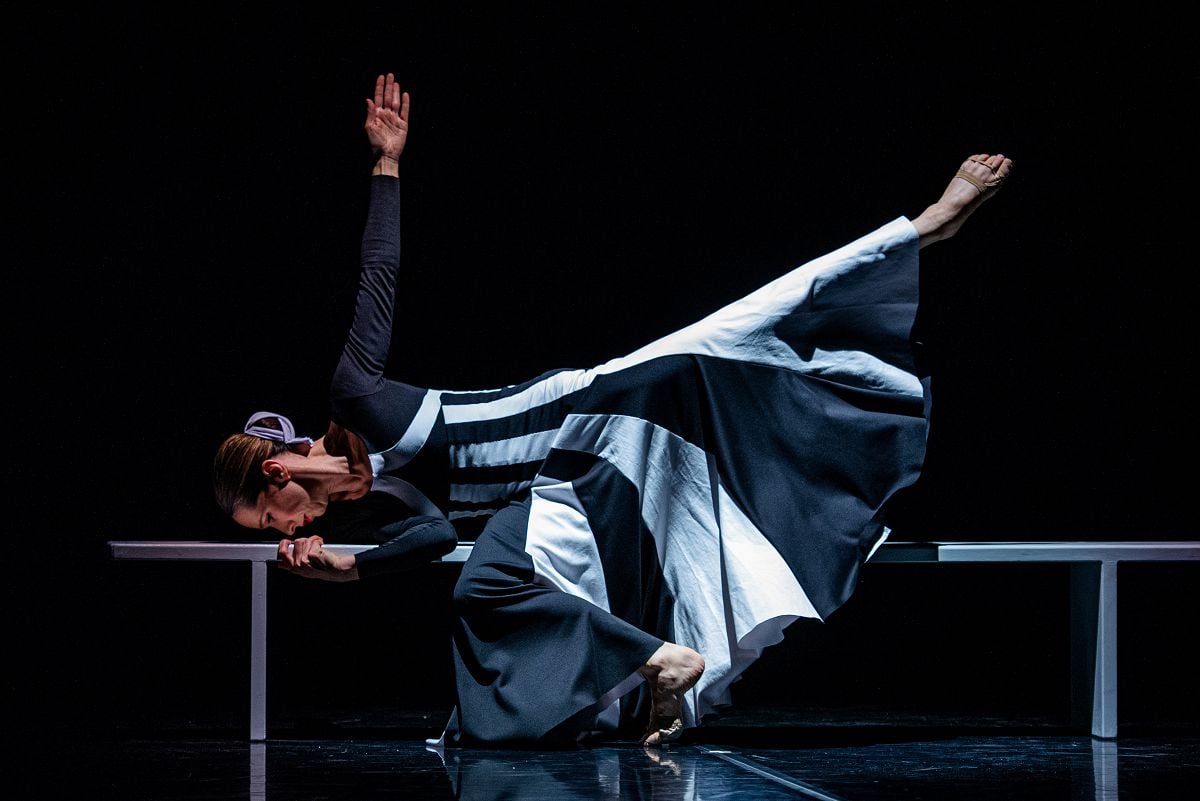
In addition to the revival of Cohan’s Lacrymosa (2015) and the London premiere of Bruce’s Troubadour, Yorke-Edgell’s ongoing recreation of Martha Graham‘s work continued with a revival of Deep Song (1937), the solo created as a rage against the atrocities of the Spanish Civil War, danced barefoot with appropriate tortured angst by Amy Thake. Her distinctive dress with elaborate black and white patterns (a copy of the original designed by Graham herself) was an allusion to Picasso’s Guernica, painted earlier in 1937.
Thake began by sitting on a simple white bench, which was subsequently turned on its side to become a chair and eventually she climbed under it as if lying in an open-sided coffin. Deep Song is a powerful dance polemic rooted in its era but nonetheless an important revival to remind audiences of Graham’s genius in creating stylistic, expressionist and meaningful movement.
![YDP, CAST [x], dancer Eileih Muir, photo Jimmy Parratt](https://www.gramilano.com/wp-content/uploads/2026/01/YDP-CAST-x-dancer-Eileih-Muir-photo-Jimmy-Parratt.jpg "YDP CAST x dancer Eileih Muir photo Jimmy Parratt")
![YDP, CAST [x], dancers l-r Eileih Muir, Carina Howard, photo Jimmy Parratt](https://www.gramilano.com/wp-content/uploads/2026/01/YDP-CAST-x-dancers-l-r-Eileih-Muir-Carina-Howard-photo-Jimmy-Parratt.jpg "YDP CAST x dancers l r Eileih Muir Carina Howard photo Jimmy Parratt")
Sandwiched between this and Lacrymosa was the London premiere of CAST [X] by Yorke Dance’s associate artist, Liam Francis, performed by the choreographer working alongside Carina Howard, Eileih Muir and Harry Wilson. It was a tough ask for this new work to be surrounded by dance masterpieces but Francis’ well-structured piece fitted in surprisingly well, bringing a freshness of street and contemporary dance to the programme, backed by Jethro Cooke’s minimalist, layered score of spoken text (the link between Francis and Cooke is via Lost Dog’s Ruination, which the latter composed). The fast fluid interactions of the four dancers in small spaces of light (designed by Zeynep Kepekli) were impressive.


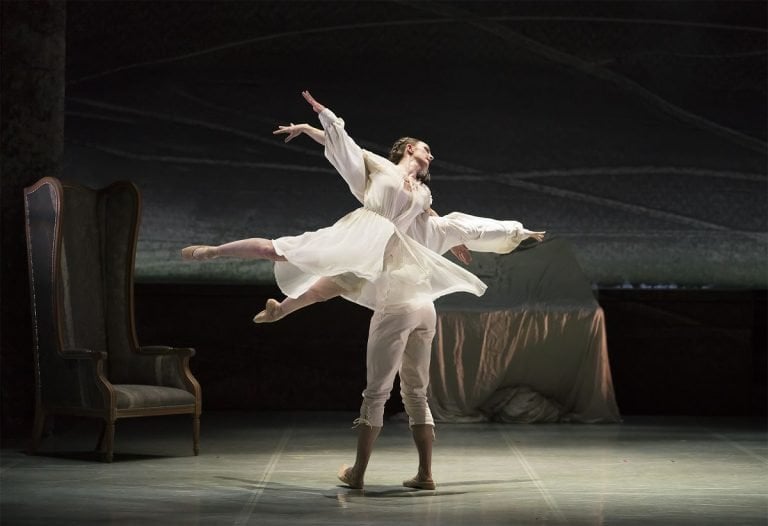
After a brief pause, Muir returned to partner Jonathan Goddard in Lacrymosa, both wearing black rehearsal clothes in dance that continued the barefoot emotional turmoil of Deep Song. Goddard also wore the haunted, dark-eyed, hollow-cheek look that he brought to such good effect to the roles of Dracula and Frankenstein’s Monster, expressiveness that sat with his sleek, athletic movements, intrinsically aligned to his excellent partner. It is a rather desolate work with essences of loss and longing etched through the movement, and the dancers’ morose expressions were so deeply embedded that it came as a shock when they smiled for their curtain call.

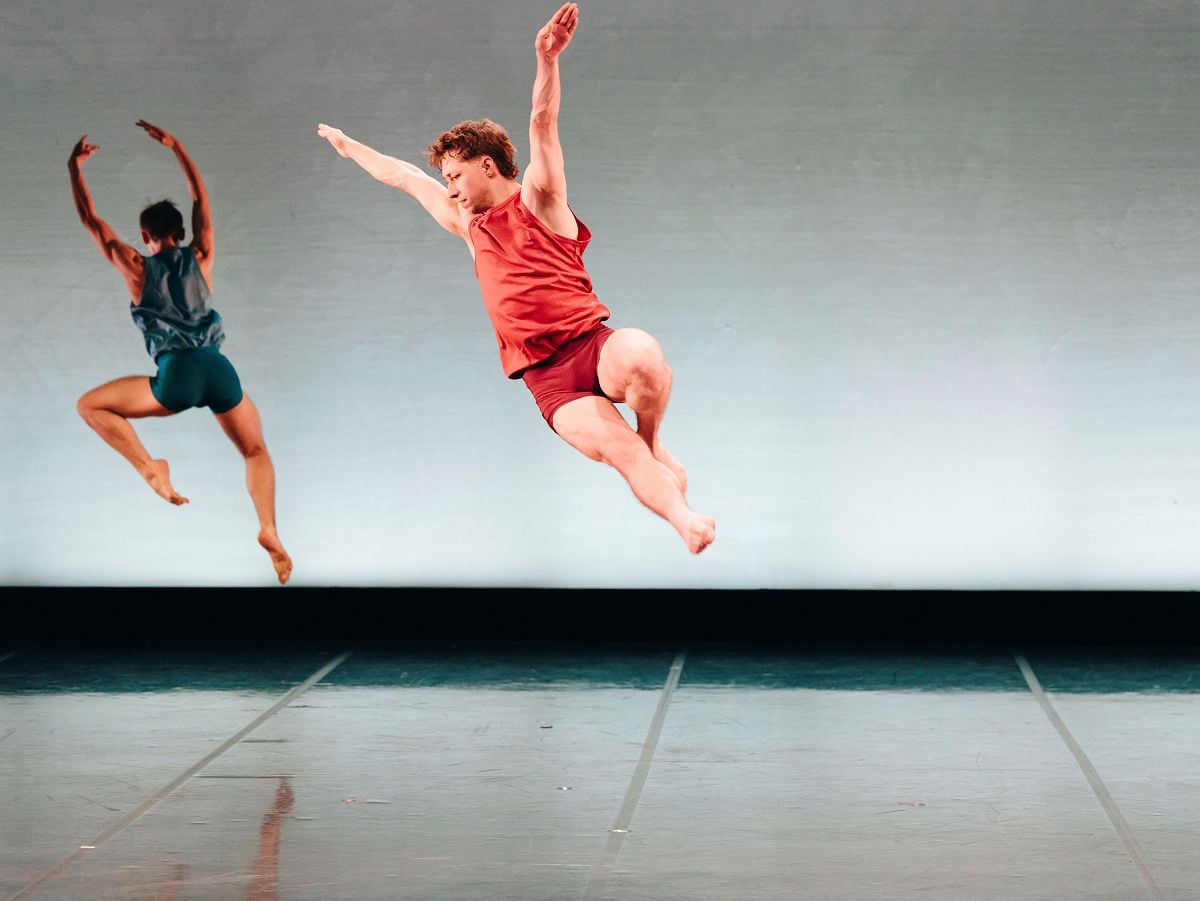
Another mid-twentieth century American female choreographer championed by Yorke-Edgell is Bella Lewitsky, a pioneer of West Coast modern dance. Perhaps her best-known work was Kinaesonata (1970), a distillation of pure movement performed by eight dancers who come in and out of the stage in differing combinations, often against a backdrop of diagonal slashes of colour against a plain screen. Her movement is very reminiscent of Merce Cunningham‘s style, including such motifs as planking, balanced on one leg with the body stretched horizontally, one arm pointing ahead or hopping from foot-to-foot. Colourful and upbeat, it was an excellent (if not over-long) contrast to Deep Song and Lacrymosa.
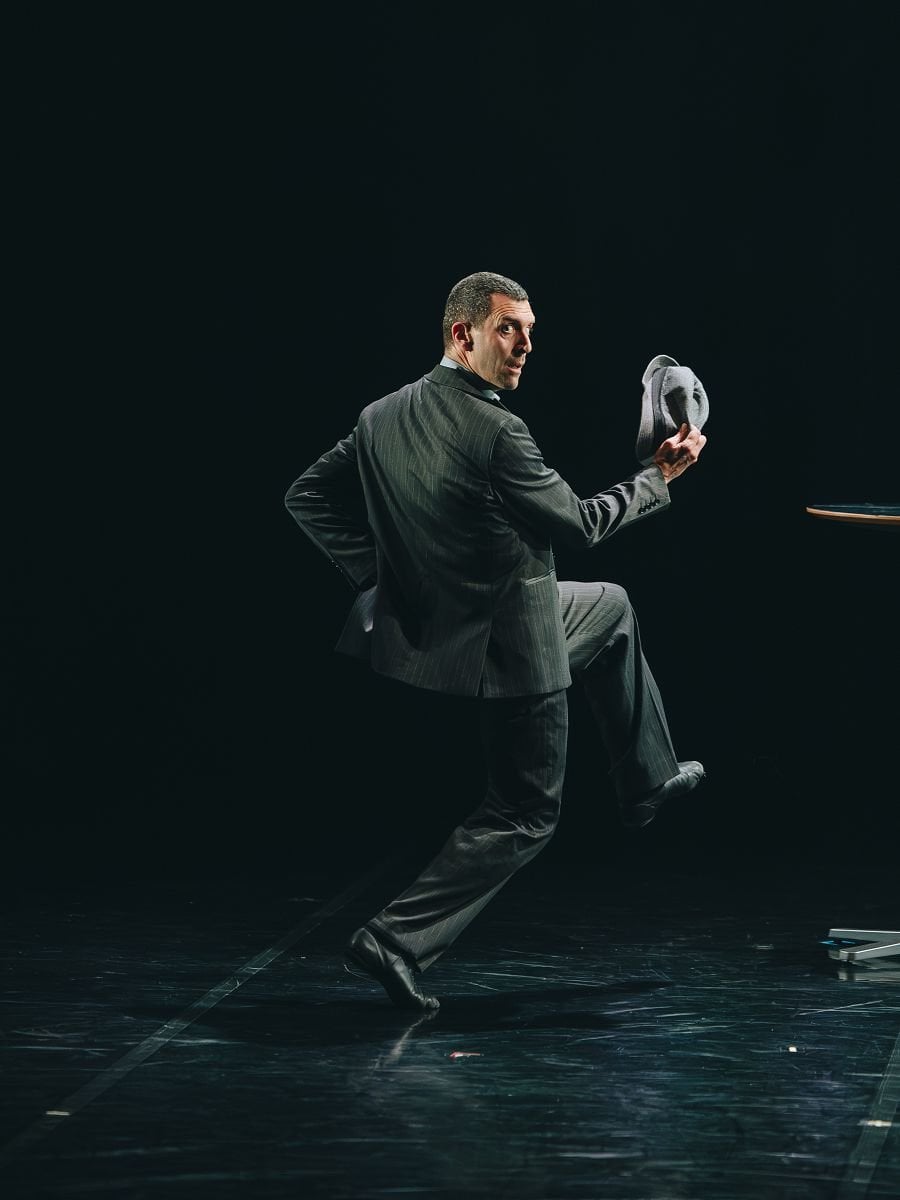
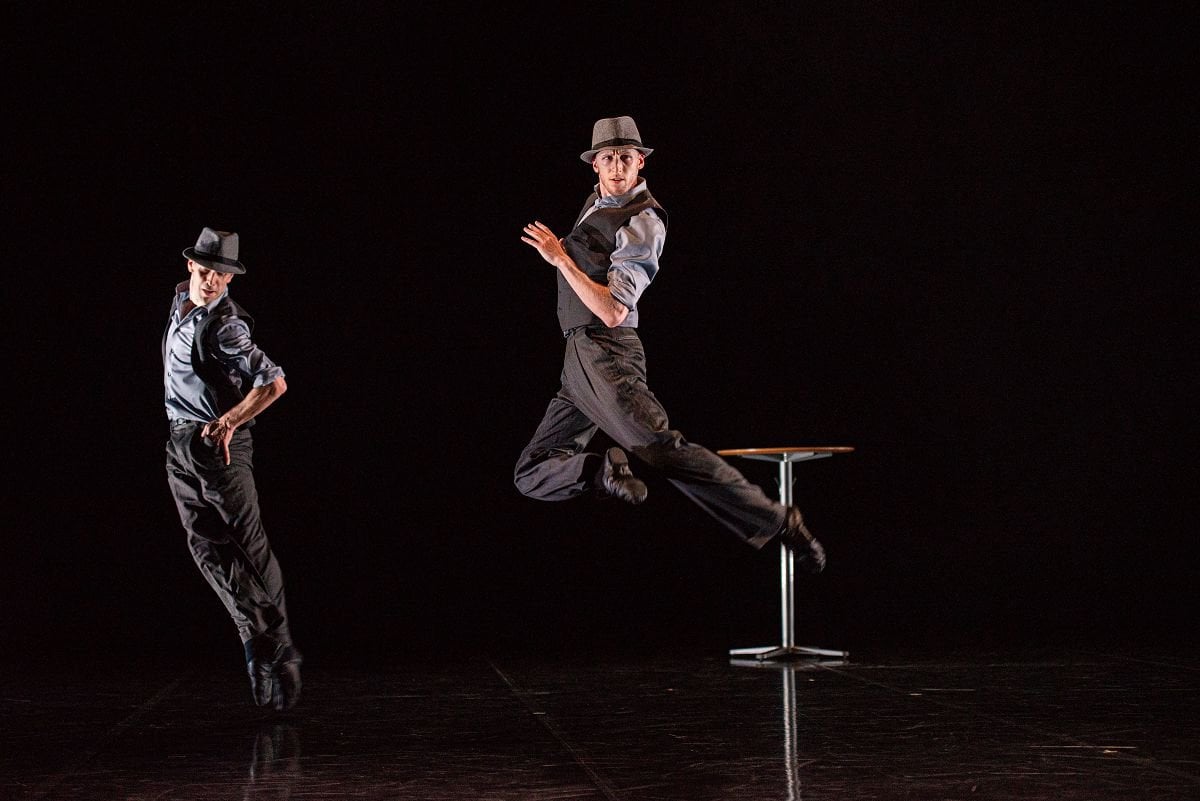
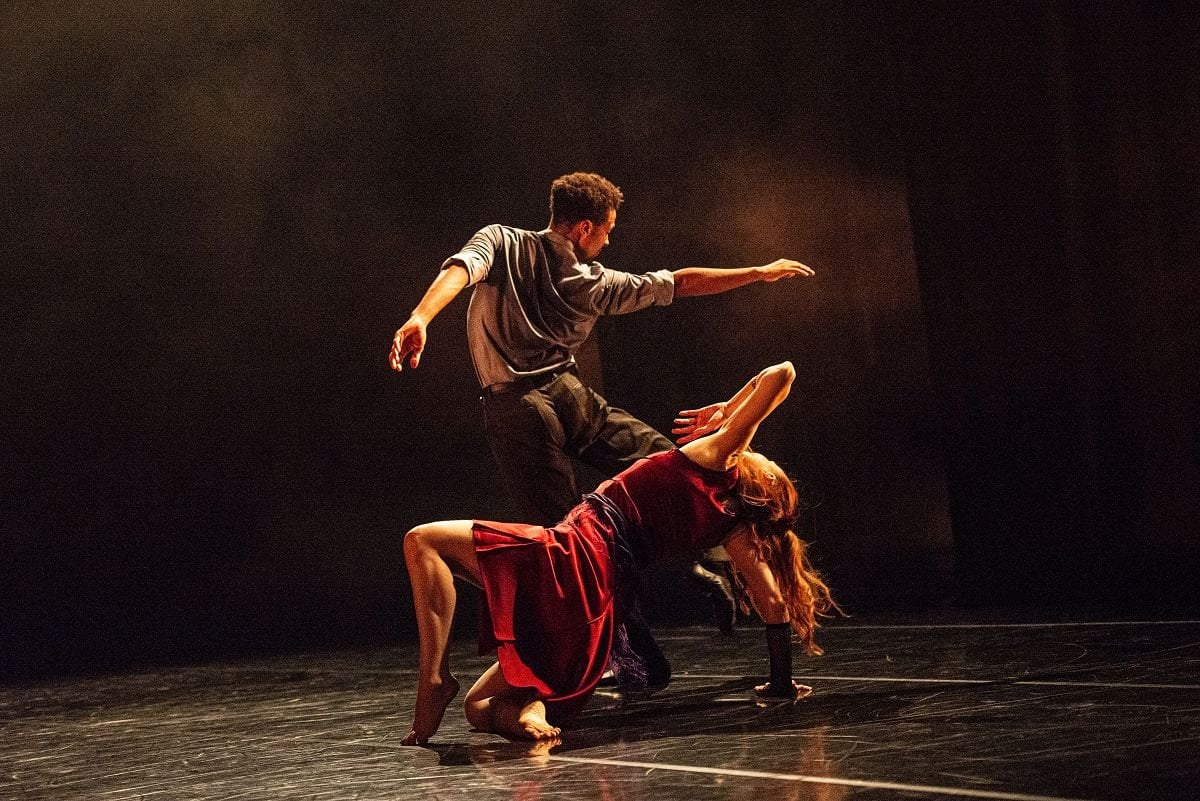
The entire second part was devoted to Troubadour, created by Bruce to the 2008 recording of Leonard Cohen’s live performance at the O2, including Cohen’s own introductions to the songs, delivered in his unique deep bass vocal style, something like gravel hammered smooth and then encased in a velvet sock. With great music to work from such as the opening track Dance Me to the End of Love and Suzanne, Bruce had a head start from which he has created a masterclass in rhythm through a seamless, flowing tapestry of dance numbers.
As in the opening work, a single piece of furniture comprised the set, this time a tall, round bar table. The ensemble of eight interacted in varying combinations, all excellent, the women in flowing red dresses and the men wearing three-piece suits and grey trilby hats, each taking on the role of Cohen himself, expressing in movement his witty introductory comments. One duet between Goddard and Howard as a slightly tipsy, cigarette-smoking femme fatale, was utterly captivating. Bruce’s epitaph for a troubadour showed that his best work is still coming and it was a wonderful finale to a fascinating journey through these Modern Milestones.

Graham Watts is a freelance writer and dance critic. He writes for The Spectator, Tanz, Shinshokan Dance Magazine (Japan), Ballet Magazine (Romania), BachTrack and the Hong Kong International Arts Festival and has previously written for the Sunday Express, Dancing Times, Dance Europe, DanceTabs, London Dance, the Edinburgh International Festival and Pointe magazine (USA). He has also written the biography of Daria Klimentová (The Agony and the Ecstasy) and contributed chapters about the work of Akram Khan to the Oxford Handbook of Contemporary Ballet and on Shobana Jeyasingh for the third edition of Routledge’s Fifty Contemporary Choreographers.
He is Chairman of the Dance Section of The Critics’ Circle and of the UK National Dance Awards and regularly lectures on dance writing and criticism at The Royal Academy of Dance, The Place and (until the war) for Balletristic in Kyiv. He was a nominee for the Dance Writing Award in the 2018 One Dance UK Awards and was appointed OBE in 2008.