Review: Royal Ballet & Opera’s “Phaedra + Minotaur” left the audience wanting more
Graham Watts sees Royal Ballet & Opera in Phaedra + Minotaur, an equal combination of opera and dance.
| Title | Phaedra + Minotaur |
| Company | Royal Ballet & Opera |
| Venue | Linbury Theatre, Royal Opera House, London |
| Date | 6 February 2025 |
| Reviewer | Graham Watts |
This performance was an exemplar for the subtle but important and long overdue change of name from The Royal Opera House to the Royal Ballet & Opera. For 70 years the Royal Ballet had seemed like a lodger or a poor relation in the House that was owned by the Royal Opera and now, at long last, it is a shared belonging. As is the production of Phaedra + Minotaur – not half human and half bull, like the mythical Minotaur – but an equal combination of opera and dance.
This co-production with the Theatre Royal, Bath, where this work premiered at the Ustinov Studio in August 2022, brings together a performance of Benjamin Britten‘s final vocal composition, Phaedra (with text by Robert Lowell, after Racine’s Phèdre), and a danced performance of Minotaur, choreographed by Kim Brandstrup (with assistance from the dancer, Jonathan Goddard). Both works were designed by Antony McDonald.
For those unfamiliar with Greek mythology, Phaedra’s mother, Pasiphaë was cursed by Aphrodite and forced to have sex with a bull, giving birth to the hybrid Minotaur, which is imprisoned on an island, guarded by Ariadne (Phaedra’s sister). When Theseus arrives to kill the Minotaur, Ariadne falls in love with him. However, Theseus leaves her stranded on the island and falls for her sister. On the day of their wedding, Phaedra becomes passionately attracted to Theseus’ son, Hippolytus, an infatuation that leads to the innocent son’s murder and Phaedra’s suicide. Greek mythology makes the best soap operas!
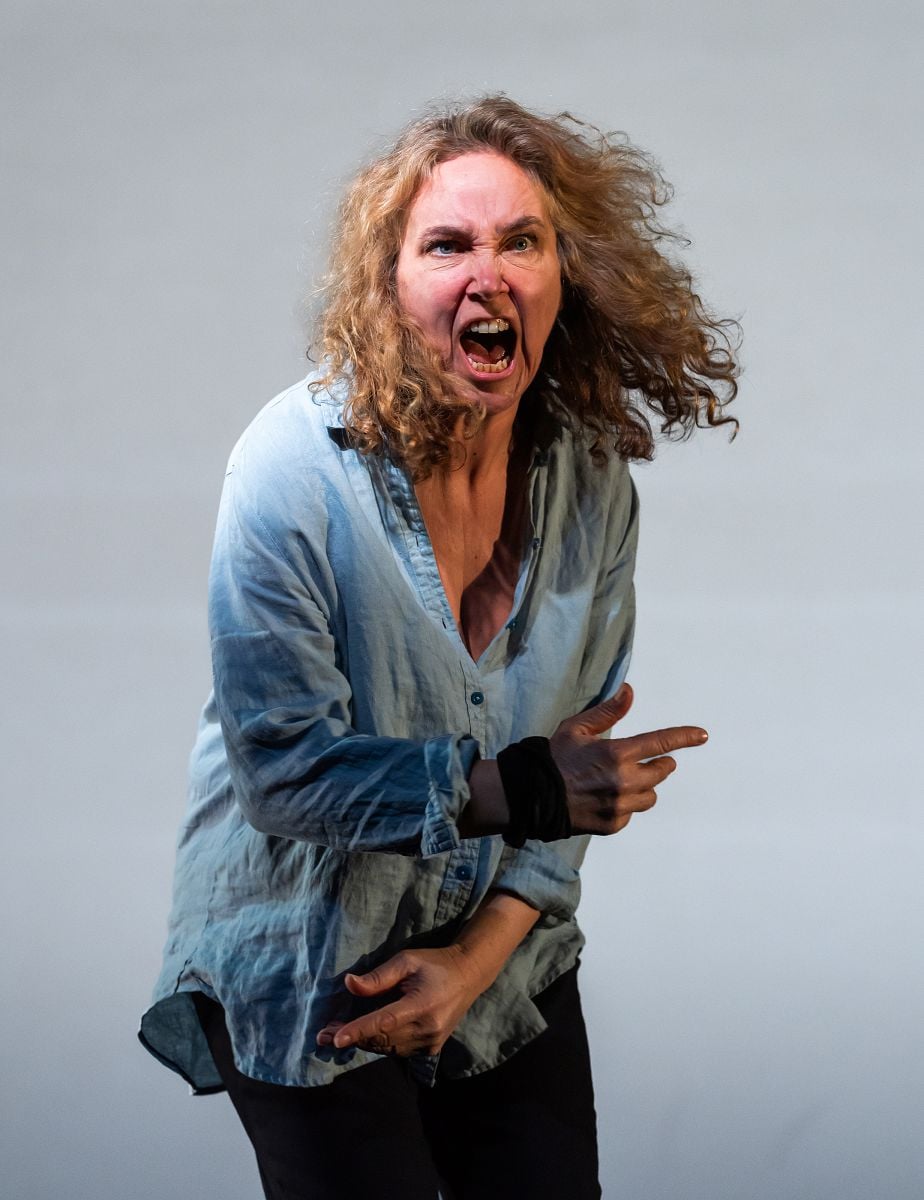
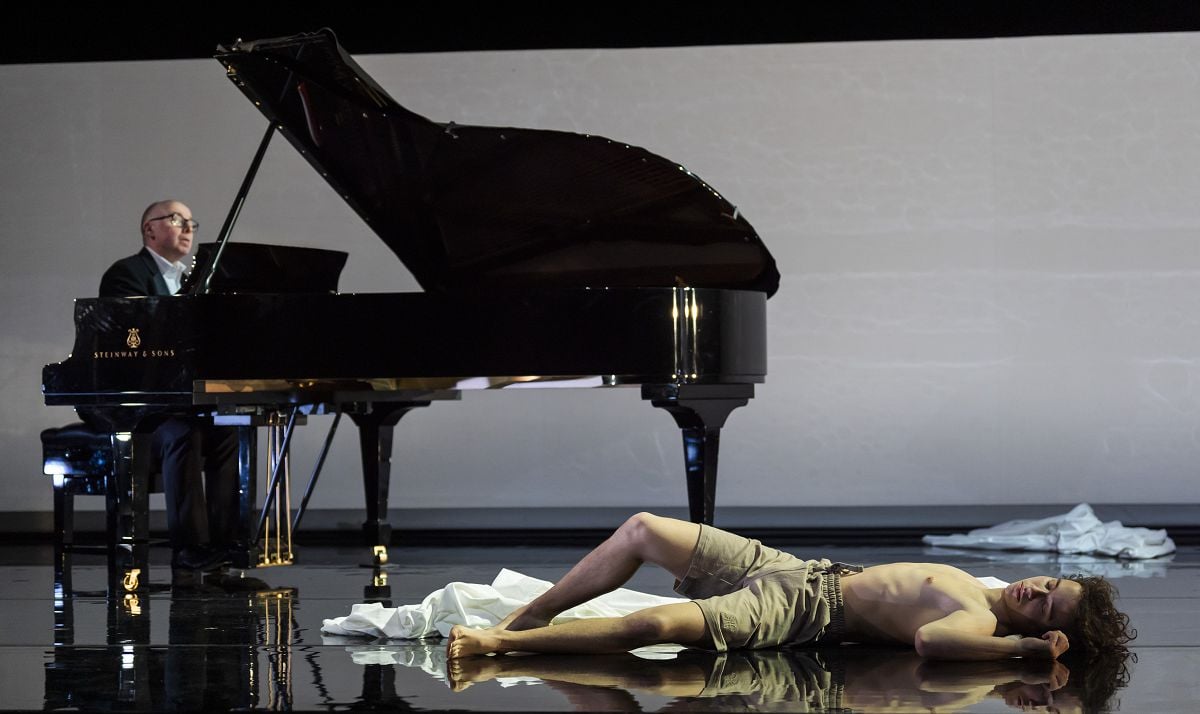
This production takes the mythology and essentially reverses the timeline. The mezzo-soprano, Christine Rice, reprised her Olivier Award-nominated performance in the title role of the opener with a coruscating performance as the emotionally damaged Phaedra. Her intensity in the role was immense, portraying the mixed emotions of having loved the heroic Theseus and fallen lustfully for his son. Rice was supported onstage by the Royal Opera’s Head of Music and acclaimed pianist, Richard Hetherington, and in brief cameos, Jonathan Goddard pre-empted his role as Theseus in the later work, and ZooNation’s Oscar Fichelson appeared as the hapless Hippolytus.

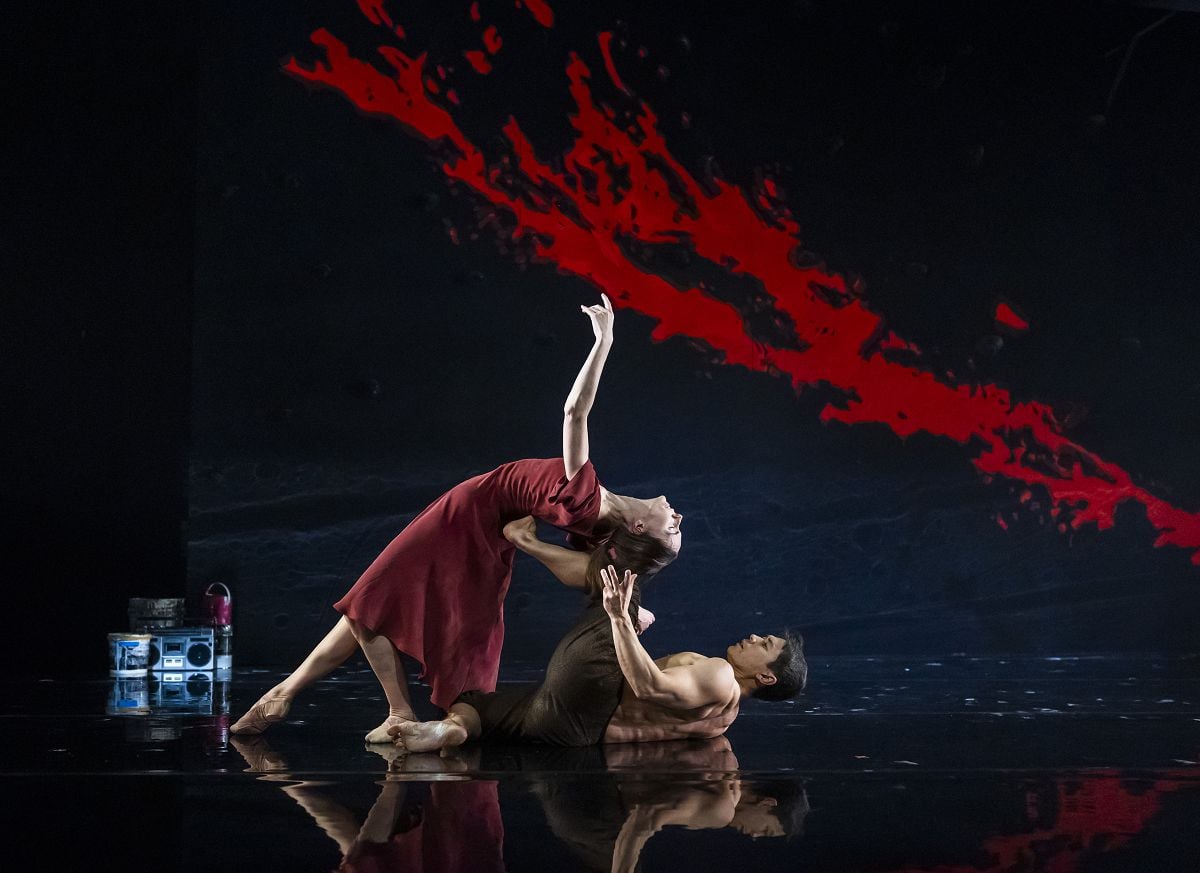
The main event for a dance critic was Kim Brandstrup’s Minotaur, which was an outstanding example of descriptive, narrative-based choreography, played out in five sections, with an eclectic score by Eilon Morris. Each episode was announced in projections onto Antony McDonald’s back wall, which bore a deep slash of vivid red bloodstain, perhaps indicative of the outcome of the Minotaur’s slaughter by Theseus in the first section, appropriately entitled Combat. This possessed outstanding fight choreography for Goddard (as Theseus) and Tommy Franzén as the Minotaur, full of athletic lifts and tumbles that made full use of Franzén’s diverse hip-hop skills. During the combat, Ariadne (Kristen McNally) looked on wistfully from above in the semi-darkness of a full-length window space cut from that back wall.
The action and the movement language then changed pace to Seduction, an intense romantic pas de deux for Goddard and McNally, which Brandstrup has choreographed so well to bring out the heightened emotion and maturity of this intense mutual attraction. This continued into the next episode (the heart of the work), entitled Departure. Brandstrup’s movements captured the anguished acceptance of an inevitable parting, with McNally’s hand repeatedly placed on Goddard’s chest as a gesture of holding onto him. I have fond recollections of a duet by Brandstrup entitled Afsked (which is Danish for Farewell), which was premiered with great feeling by Zenaida Yanowsky and Dylan Elmore in Johan Kobborg‘s Out of Denmark programme, twenty-two years ago. The synergy between a stand-alone Farewell duet and this Departure pas de deux is clear and although I saw no obvious choreographic similarity, both of these passionate dances about the frailty of human emotions touched me immensely. Brandstrup is a master of this genre.
Having been despatched as the Minotaur, Franzén returned as Dionysus, the God of many things including winemaking, fertility and festivity (also nowadays claimed by the LGBTQ community). Having put Franzén’s elite hip-hop skills to good use in the earlier sequence, now his climbing skills and upper body strength came to the fore in the last two sections (Lament and Deus ex Machina).

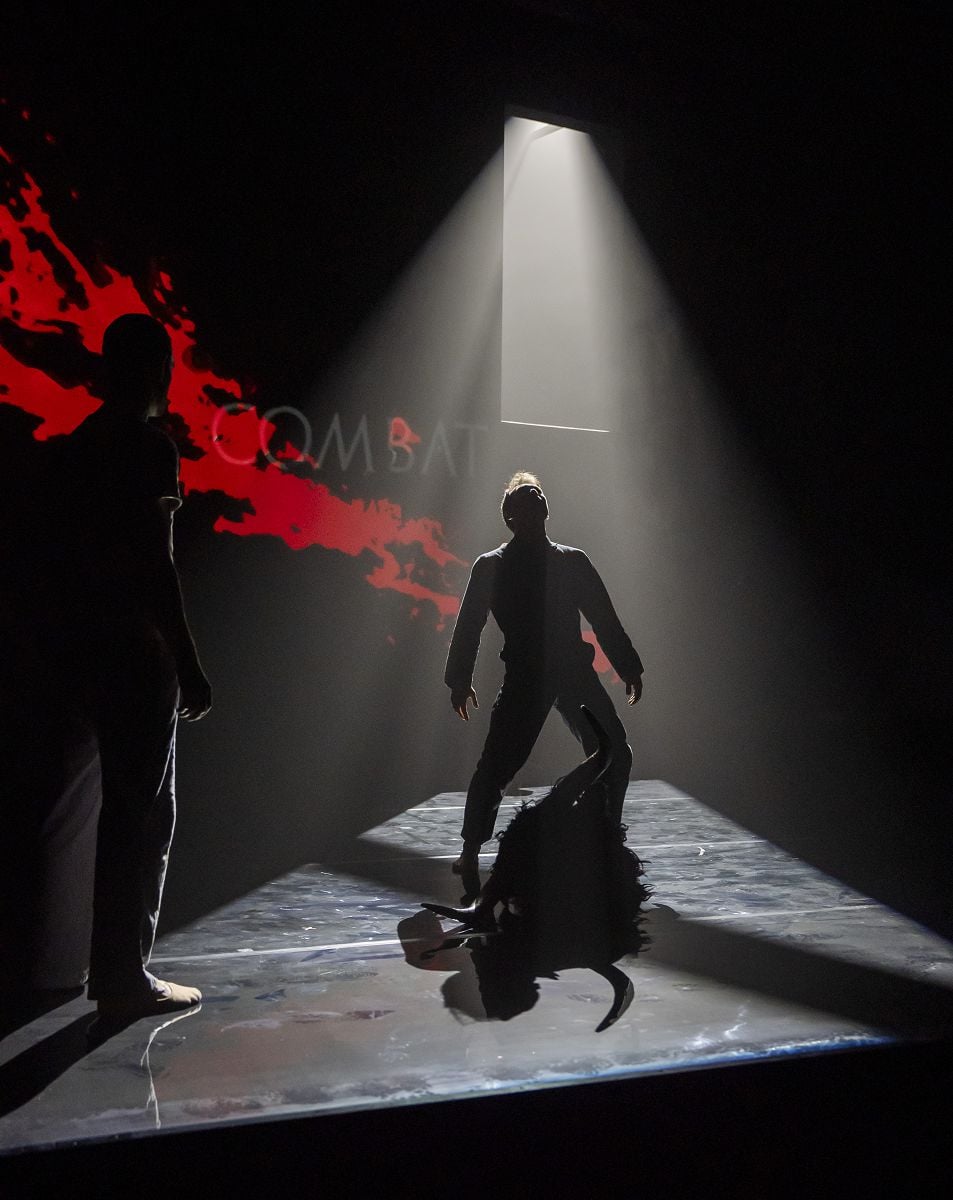



McDonald’s back wall was liberally studded with competition climbing holds and Franzén (who first appears on top of the wall, 4 metres or so above the stage) zipped across the vertical structure and in-and-out of the window space with remarkable propulsion and strength (at one point he held onto the ledge with one arm). We have seen these climbing skills before in the Gates of Hell sequence from Russell Maliphant‘s The Rodin Project, turned into a male duet, unsurprisingly entitled Wall, for Franzén and Dickson Mbi. That was several years ago and the ageless Franzén (a quality shared with his co-stars, Goddard and McNally) still appears to have Olympian rock-climbing skills and speed.
Both works have that unusual and attractive quality of leaving the audience wanting more.

Graham Watts is a freelance writer and dance critic. He writes for The Spectator, Tanz, Shinshokan Dance Magazine (Japan), Ballet Magazine (Romania), BachTrack and the Hong Kong International Arts Festival and has previously written for the Sunday Express, Dancing Times, Dance Europe, DanceTabs, London Dance, the Edinburgh International Festival and Pointe magazine (USA). He has also written the biography of Daria Klimentová (The Agony and the Ecstasy) and contributed chapters about the work of Akram Khan to the Oxford Handbook of Contemporary Ballet and on Shobana Jeyasingh for the third edition of Routledge’s Fifty Contemporary Choreographers.
He is Chairman of the Dance Section of The Critics’ Circle and of the UK National Dance Awards and regularly lectures on dance writing and criticism at The Royal Academy of Dance, The Place and (until the war) for Balletristic in Kyiv. He was a nominee for the Dance Writing Award in the 2018 One Dance UK Awards and was appointed OBE in 2008.