12 of the best in 2024 – fascinating memories from my year in dance
Graham Watts looks back at a year in dance and the 135 performances he saw in 2024. He picks out a dozen of the best.
I slipped back a little in 2024, seeing only 135 shows, although they contained 176 different works (down from 200 in 2023). 87 of these I reviewed professionally for seven separate outlets based in five different countries. This included travel to review performances in Barcelona (x2), Ghent, Lucerne (x2), Oslo (x3), Prague, and Warsaw (x2).
65 of the shows were reviewed with a star rating and my overall output for the year was, as follows, with last year’s comparisons in parenthesis:
★★★★★ 6 (6 in 2023)
★★★★ 20 (19)
★★★ 28 (47)
★★ 11 (12)
My average for the year was 3.32 stars (marginally up from 3.22 stars in 2023).
With 26 shows scoring 4 stars and above, it was clearly a good year and here, for what it is worth, are reflections on a dozen of the most memorable shows from 2024.

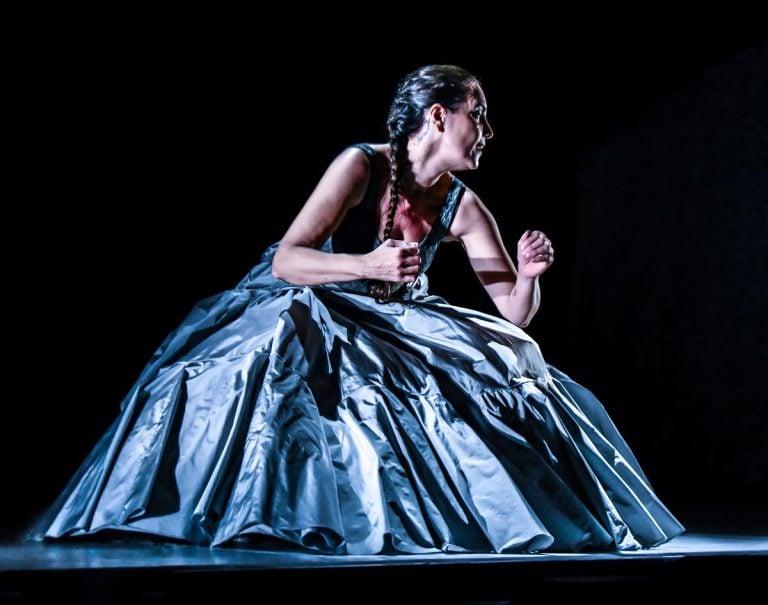
1. ¡VIVA! by Manuel Liñan for Cia Mañuel Linan, performed at the Peacock Theatre, London on 21st October
I loved this spectacular show so much that within ten minutes of it ending – and for the first time that I can remember after a review – I went online and bought tickets to experience it all over again the next evening! It is the most joyful and uplifting example of dance as pure entertainment. As the headline star in an exceptional cast of eleven dancers and musicians, Liñán leads the way with a trio of solos, each showcasing his magnificent command of zapateado and opening with a back-to-audience performance that exemplified the silky-smooth fluidity of his hands, wrists, and arms. Everything he does is delivered with intense expressiveness, exemplifying this highly personal odyssey that has changed the face of flamenco.
2. JEWELS by George Balanchine, performed by Norwegian National Ballet at the National Opera House, Oslo on 6th October
Norwegian National Ballet is the seventh company that I’ve seen take on the challenge of George Balanchine‘s fiendishly complex ballet and it did so superbly, honouring the ballet’s legacy whilst also imposing its own personality on the character of this much-loved friend. This was yet another example of a company at ease with itself enjoying a work that has the best of all worlds in the ice-cool precision of Emeralds, the fiery elation of Rubies and the luminous splendour of the classical Petipa pastiche in Diamonds. It was a sparkling cluster in a luscious setting that epitomises the magic of dance.
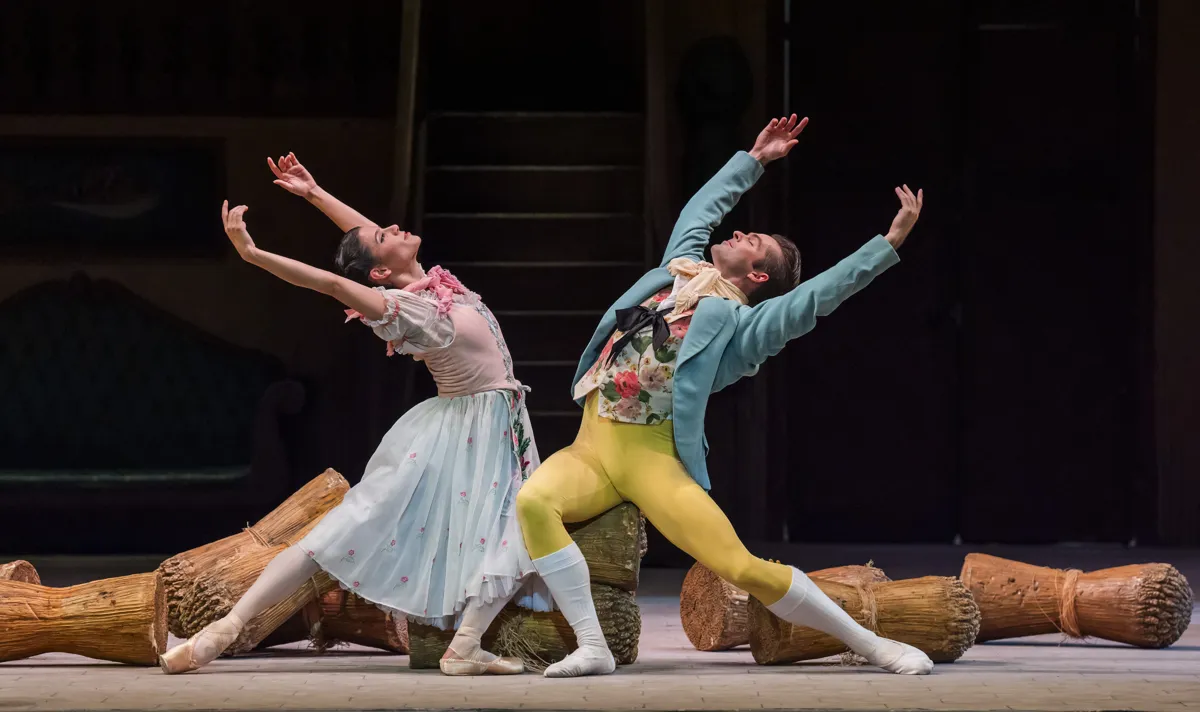
3. LA FILLE MAL GARDÉE by Sir Frederick Ashton, performed by Birmingham Royal Ballet a Birmingham Royal Ballet on 25th September
It may have been a miserable autumn evening on the streets of Birmingham, walking to the Hippodrome through that irritating mist of drizzle that seems to cling to your face, but inside the theatre we experienced the magic and romance of high summer all over again. Poultry were preening; the pony pooping; and the picnic prepared. These days, one can see this charming ballet about the wayward daughter all over the world but I have always felt that it sits best of all on Birmingham Royal Ballet, where every role in this gentle comedy ballet is lovingly cherished and passed on through the experience of one generation to the next. The dancers here honoured all of those who have gone before with a complete cluster of top-notch performances.

4. A double bill of THE HUMAN ATTRIBUTES by Swee Boon Kuik and SEREMOS by Andrea Miller for Tanz Luzern, performed at the Luzern Theatre on 7th December
The outstanding double bill of contemporary dance I saw in 2024. Not only equally excellent in choreography, performance, and design but also a programme of great contrasts. It was fascinating how two such different works could fit together so well, both pieces left me wanting more with that feeling of surprise that time could fly by so quickly (both pieces were each half-an-hour). Tanz Luzern is clearly a small company punching well above its weight with an impressive international ensemble and, in Wanda Puvogel, it has the added advantage of being led by an artistic director with an inquiring vision to find and showcase excellent new choreography from around the globe.
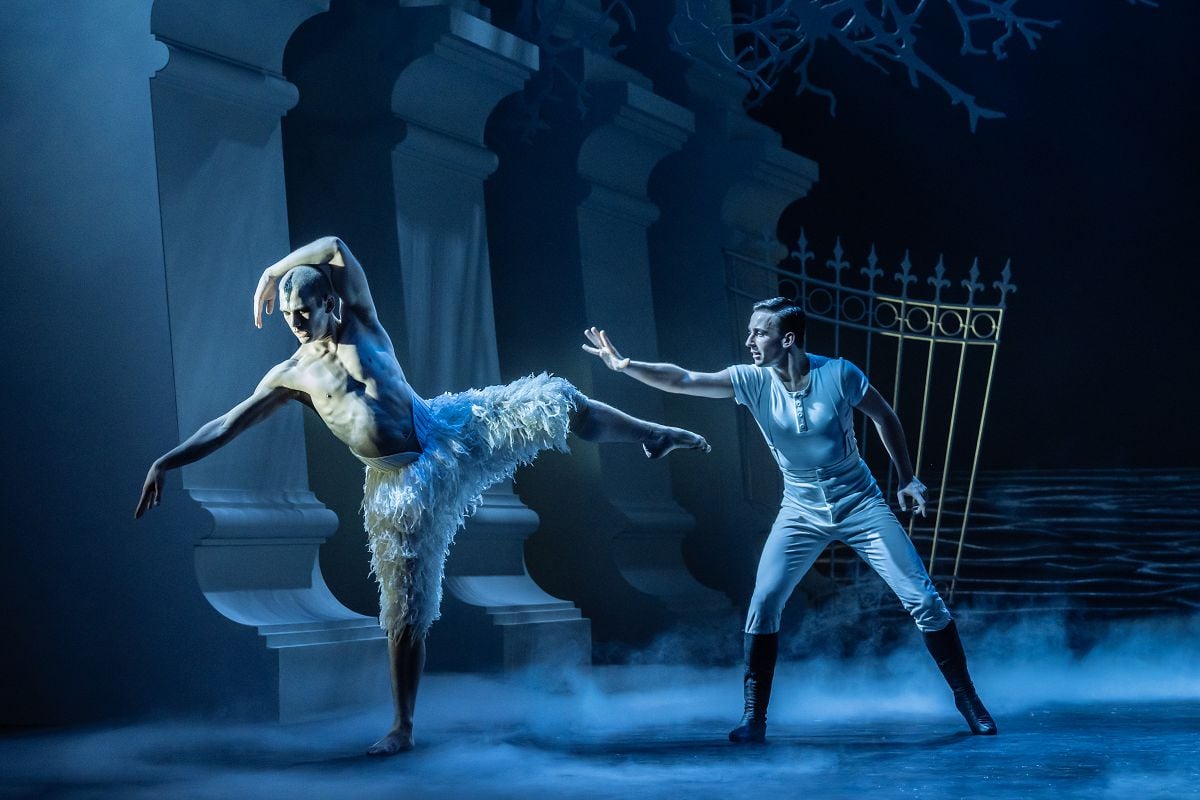
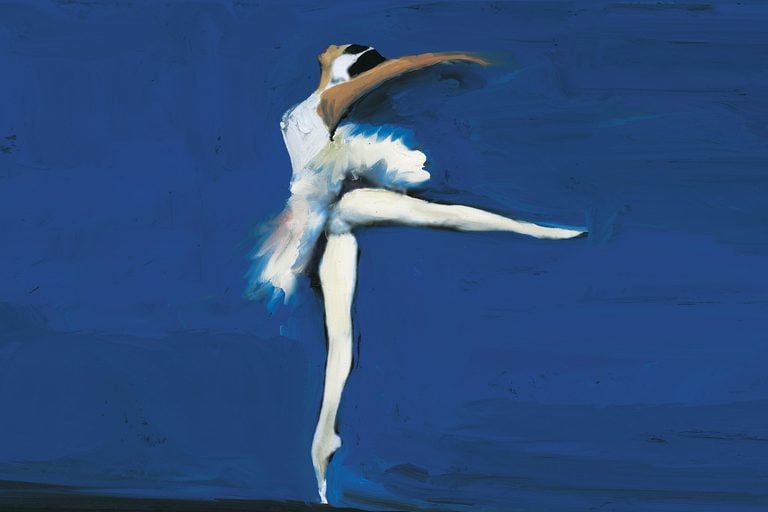
5. 30th Anniversary production of SWAN LAKE by Sir Matthew Bourne for New Adventures, performed at Sadler’s Wells on 12th December
If there were an award for the best new dance production of the last 30 years, then Matthew Bourne‘s ground-breaking interpretation of Swan Lake would certainly be the odds-on favourite to win. This revival showcases a new generation of principal players, all of whom have cut their teeth in the company rather than being parachuted in as starry guests. Bourne’s confidence in this emerging cohort is justified by excellent performances across the board, more than satisfactorily filling the feathers of those who have gone before.

6. ASHTON GALA and ASHTON CELEBRATED, being various choreographies by Sir Frederick Ashton, performed by Sarasota Ballet and The Royal Ballet at The Royal Opera House, London on 8th and 18th June
June was a mega celebration of the genius of Frederick Ashton with guest performances by Sarasota Ballet and a celebration programme by The Royal Ballet. The Floridian city of Sarasota has become host to a kind of Royal Ballet in exile. Since Iain Webb became artistic director, in 2007, and Margaret Barbieri joined as his assistant in 2012, the company has been building up an impressive collection of Ashton’s works (32 largely one-act ballets and excerpts at the last count). The “gala” was the penultimate show of an all-too-brief debut season at The Royal Opera House marking the launchpad for a five-year Ashton Worldwide Festival. More than 35 years after his death some of Ashton’s ballets are more popular than ever and some of those that might easily have been forgotten are being kept alive in Sarasota. The Ashton Celebrated programme included a main stage debut by a trio from Sarasota, performing The Walk to the Paradise Garden, a quaint pas de deux previously performed just three times by The Royal Ballet in the 1970s. These programmes celebrated the 120th anniversary of Ashton’s birth with a sprinkling of his works, spread over the best part of 50 years in their creation, bringing back unfamiliar choreography alongside the revered and the very best. It was an uplifting brief festival, enlivened by the presence of Sarasota Ballet.
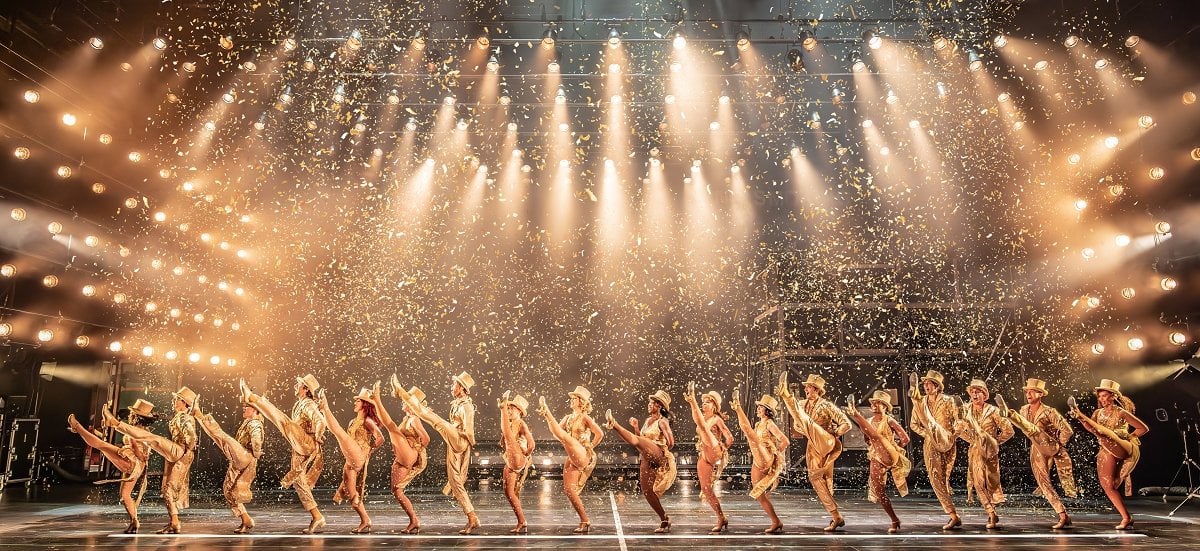
7. A CHORUS LINE, performed at Sadler’s Wells, London on 2nd August
This is a thrilling new interpretation of a musical theatre masterpiece. I absolutely loved it and, judging by the reaction of the packed audience, that sentiment was universal. It is a work of some significant social and historic significance in documenting a time when the closet door was beginning to open. The overall excellence of this production with a towering performance by Adam Cooper (as director Zach) made it the most memorable show of the London summer.
8. INVOCACIÓN by Rubén Olmo and Antonio Najarro for Ballet Nacional de España, performed as part of the London Flamenco Festival at Sadler’s Wells, London on 12th June
The London Flamenco Festival ended with a brief season of pulsating performances by Ballet Nacional de España, merging a mix of choreography by the current and previous company director and concluding with a tribute to Mario Maya, one of the great names in modern flamenco. De lo Flamenco was a sea of colour, with rollicking waves sweeping across the stage in the stylish movement of the ensemble and creating a finale that was joyful and exuberant, building to an arresting crescendo that sent the audience home with springs in their steps. This was quality flamenco done Las Vegas style!
9. PINOKIO and HUSBAND AND WIFE by Anna Hop for Polish National Ballet, performed at Teatr Wielki / Opera Narodowa, Warsaw, respectively on 21st April and 15th June
Hop’s credentials as one of the fast-rising international choreographic talents was further confirmed by a new full-length ballet, Pinokio. There are many reasons to admire this new creation including her success in making a ballet that will appeal to children who only know of Pinocchio through Walt Disney’s cartoon film, and yet still faithfully represents the morality tale that Carlo Collodi intended when creating the story. Husband and Wife is now in its fifth year of performance (as part of a double bill with Sarmatian Parable, a curious old-fashioned piece by the late Conrad Drzewiecki) and it is a rare example of a modern balletic farce that presents a visually attractive package, especially in the intricate, acrobatic timing of the characters’ interactions. The sex romp scenes are rib-crackingly hilarious.

10. FRANKENSTEIN: A DOUBLE BILL by Mark Bruce for the Mark Bruce Company, performed at The Place, London, on 26th March
Rather than attempting a faithful dance theatre reconstruction of Mary Shelley‘s narrative, Mark Bruce’s take on Frankenstein is a thematic distillation, stripped back to just one act of 50 minutes (preceded by a 20-minute hors d’ouevre entitled Liberation Day for the same cast of six dancers). In nine meaty scenes, Bruce weaves issues of Greek mythology through themes of loneliness and vulnerability, which spring from the monster’s sad existence, all presented in a style that owes some further influence to Central-European cinema of the early 20th century. It is this delicate juxtaposition with Greek Tragedy and German Expressionism that gives Bruce’s production a key element of uniqueness over other danced interpretations. Bruce and his outstanding team of creatives – both on and off the stage – have brought together a work of commendable brevity to articulate the beautiful but flawed creature that lives within us all.
11. COMMON GROUND(S) by Germaine Acogny & Malou Airaudo / MINUTES AROUND LATE AFTERNOON by Louise Lecavalier / WHITE HARE by Ben Duke, performed as part of the Elixir Festival at Sadler’s Wells, London on 10th April
The Elixir Festival opened with a triple bill of very different and apparently unconnected works: a duet by a pair of septuagenarians performed with a lot of feeling contrasted with a solo of exuberant full-on movement by a vibrant 65-year-old and a text-heavy comedy about a runaway tortoise. The connection came in the festival’s theme of expressing how bodies of a certain age can still dance with purpose and vitality. So much so that I had forgotten the festival’s purpose of challenging perceptions about dance and age by the end. Irrespective of age, these five dancers were just outstanding performers.
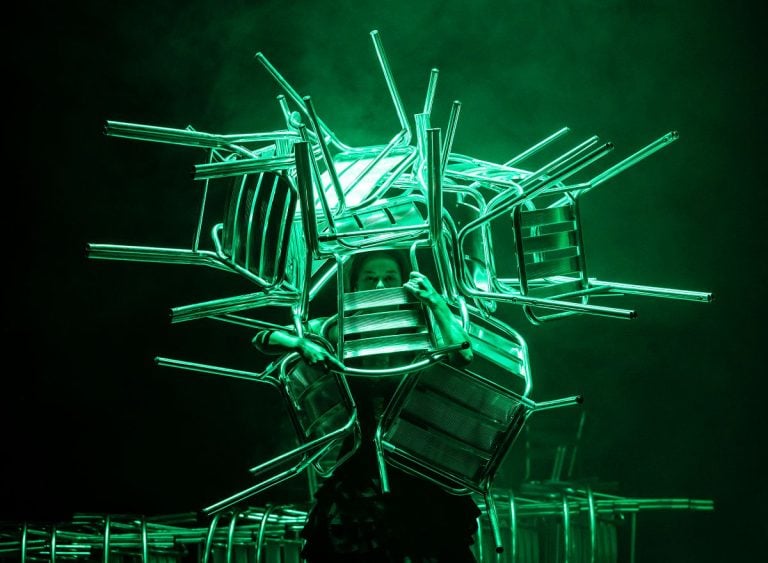
12. THE SUBSTITUTE by Jo Strømgren for Jo Strømgren Kompani, performed at the National Opera House, Scene 2, Oslo on 7th September
This was the year’s biggest surprise. Reviewing a work aimed at ‘children of all ages’, with most of the considerable spoken text in Norwegian, was a unique experience! Although spatial awareness and movement were a key part of this one-man show, it was pure theatre without dance. And, to make life just a tad more complicated The Substitute was a sequel to an earlier piece, The Tired Man, which I hadn’t seen. However, despite the language barrier, I laughed out loud countless times, principally due to the physical humour and clarity of expression from Anders Sanzén, the Swedish actor who personified Jo Strømgren’s superb tragi-comic character of Clas Göran with such fine sensitivity and exceptional timing. Strømgren has created a marvellous and durable character, a man whose supposed indolence masks a strange sense of heroism as he attempts to create strategies that will allow him to meet life’s challenges. I sense many more adventures for him in years to come.