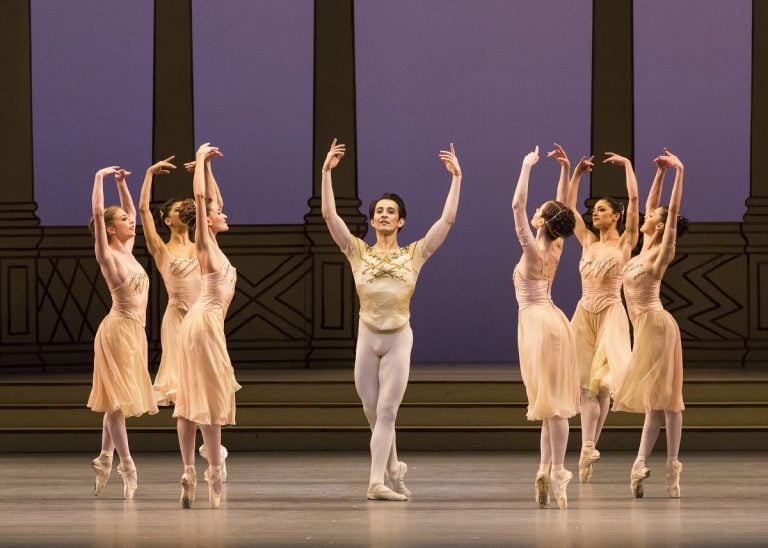
Review: English National Ballet’s Rhythm Riot – alternate cast – mixed bill, mixed results
From Thiago Silva’s show-stopping turn in Bow Out to a Symphony in Three Movements that steals the night, Lily Hyde sees English National Ballet’s new triple bill and finds its two premieres promising more than they deliver.
| Title | Rhythm Riot |
| Company | English National Ballet |
| Venue | Sadler’s Wells, London |
| Date | 25 September 2026 |
| Reviewer | Lily Hyde |
Mixed bill. Mixed results. English National Ballet’s new triple bill, Rhythm Riot, presents one classical ballet and two world premieres. The pieces varied in quality, but the company’s dancing was consistently excellent.
The bill opens with Balanchine’s Symphony in Three Movements. Set to sections of scores Stravinsky had composed during the Second World War for film projects that never materialised, this work is rarely performed outside of New York.
Considering how much British ballet was moulded by another twentieth-century choreographer, Frederick Ashton, I feel there’s a certain belligerence in British companies staging Balanchine’s work – when they do, it’s almost always Serenade or Tchaikovsky Pas de Deux, so Symphony in Three Movements is a refreshing delight.
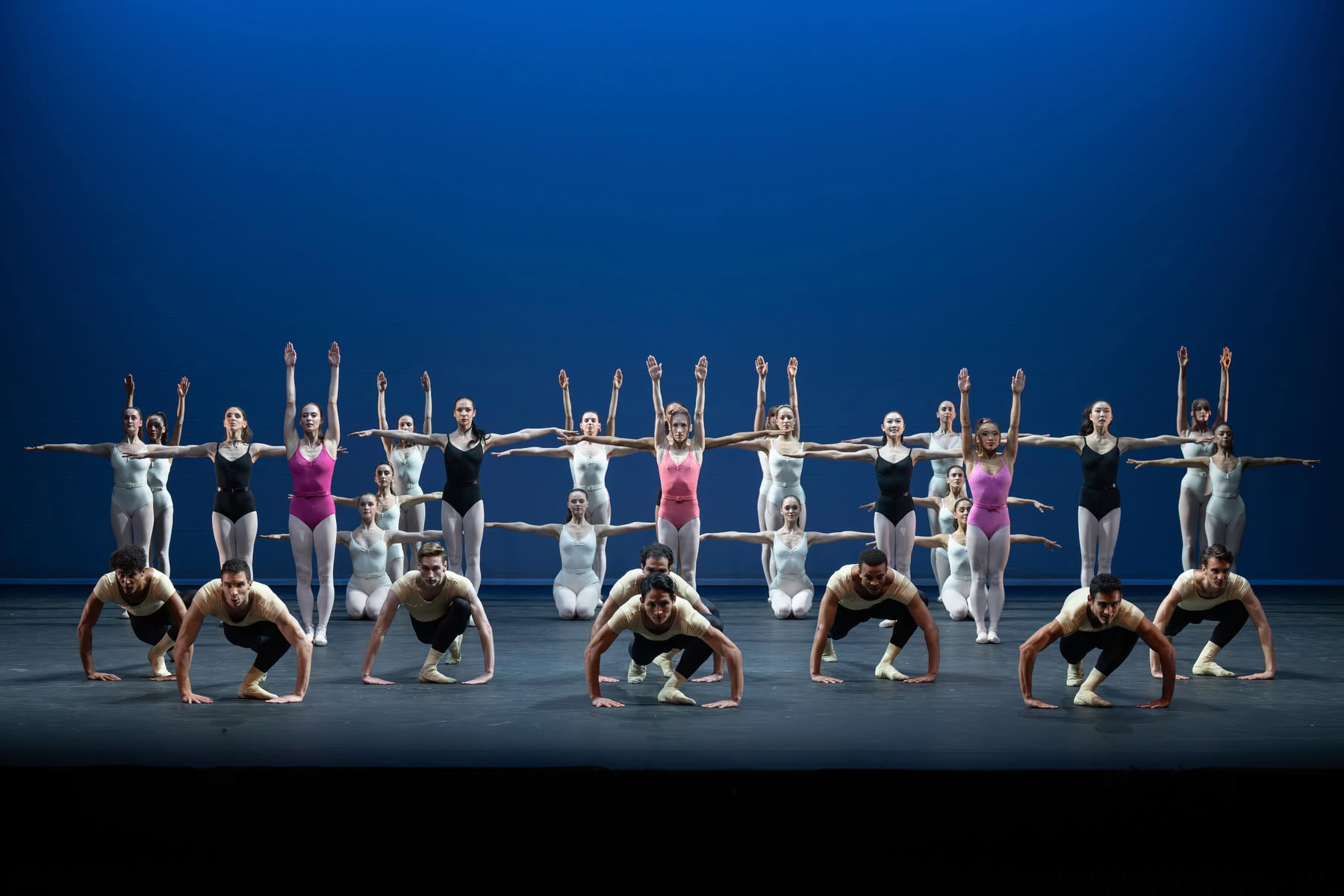
Critics of Balanchine dismiss his work as having a sterile, almost machine-like feel, but there’s a scrappiness to Symphony in Three Movements. It feels vital and alive, just as fresh in 2026 as it did more than half a century ago.
The ballet’s impact is felt from the moment the curtain rises. In a striking formation, the company moves with outstanding synchronicity and makes light work of the piece’s shifting tempos. Sometimes companies that are not the New York City Ballet perform Balanchine and never really capture that ineffable quality of his work, but his presence is keenly felt here.
All the dancers were in excellent form. Even though they had small roles within the ballet, I was continuously struck by the stage presence of dancers Ashley Coupal and Taela Graff. Aitor Arrieta in particular brought an adroit cleanliness to his movements, and Julia Conway and Minju Kang ably commanded the stage. However, make no mistake, the show belongs to Lead Principal Sangeun Lee. It’s astounding that this was her debut in her role – she fits into the Balanchine mould perfectly, possessing the ability to balance sharp lines with supple control. Lovely and tall, she was made for Rubies in Balanchine’s Jewels (we haven’t seen The Royal Ballet do Jewels since 2017 – ripe for the taking?)
The English National Ballet Philharmonic, adeptly conducted by Maria Seletskaja, has never sounded better, and the finale with all thirty-two dancers on stage is striking. Make no mistake, this is a company at the top of its game.
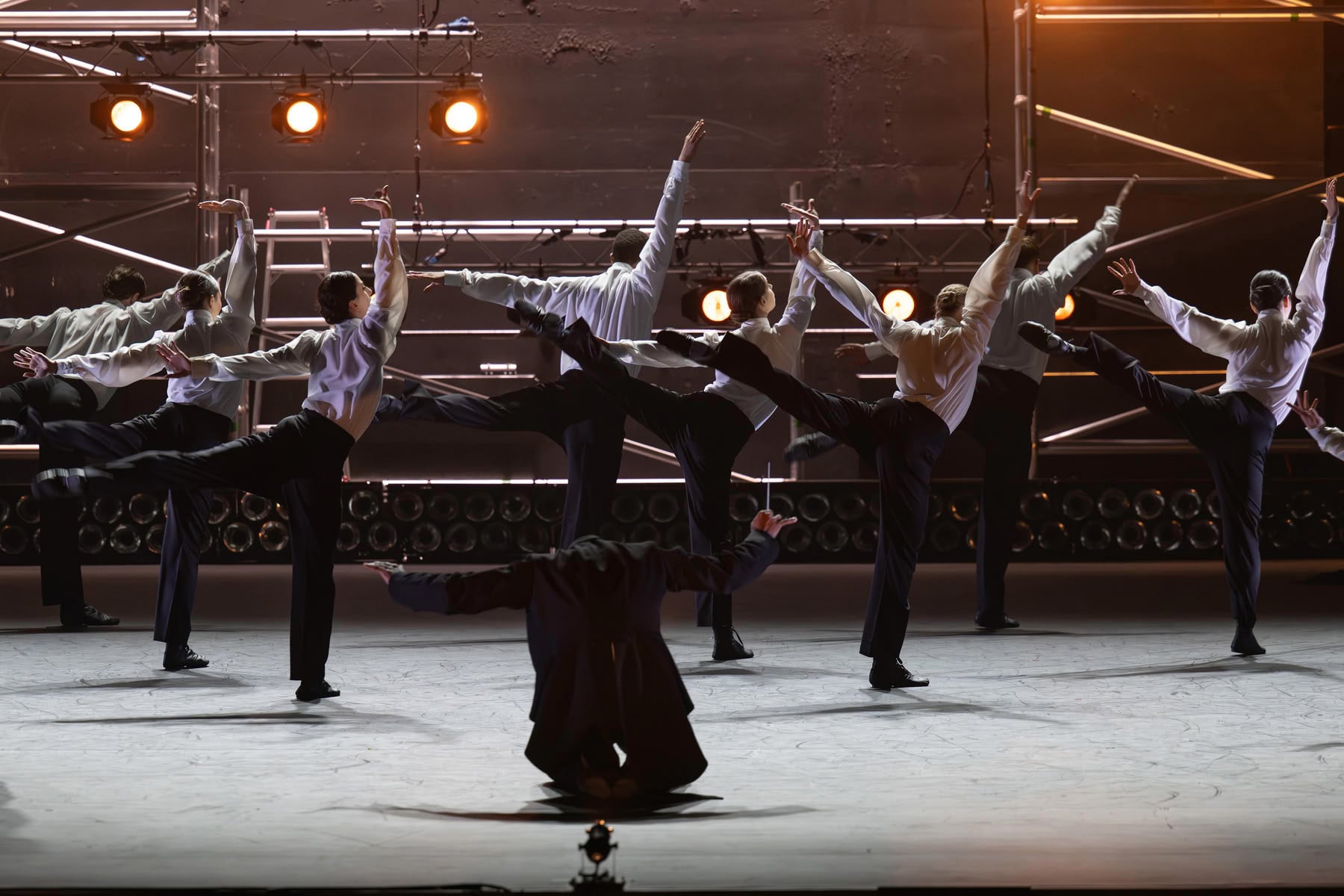
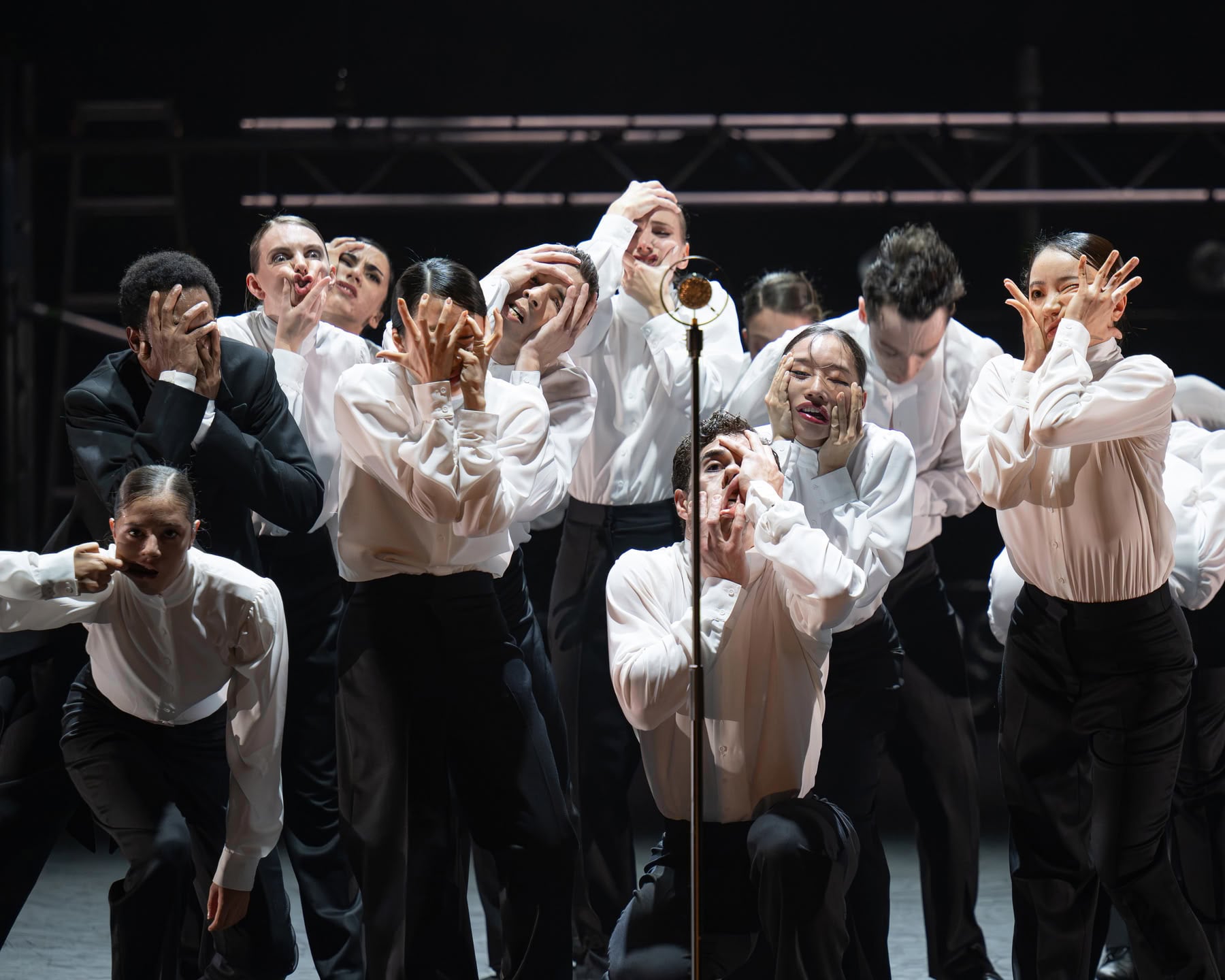
Micaela Taylor’s ballet Bow Out is inspired by Jumpin’ Jive, a dance by the Nicholas Brothers that appeared in the 1943 film, Stormy Weather. It’s a deeply immersive piece; Candice Mac’s set design evokes the back of a soundstage, the company look great in their tailcoats, and Tru’s score combines the modern thrum of a bass guitar with a Benny Goodman-esque big band.
Thiago Silva establishes himself as a star with his Gene Kelly barrel rolls and overwhelmingly charming stage presence. The group dances are easily the best thing about the piece; it’s not pure ballet, but its balletic interpretation of 1930s and 40s Hollywood musicals, especially the tap numbers, is deeply satisfying.
Where the piece loses itself is when it attempts to go deeper. To a distorted version of Judy Garland singing Get Happy, the piece becomes something darker and more internal, but it doesn’t entirely work. The period the ballet is inspired by is rich with themes of exploitation it could explore, but it’s unclear what, if anything, this deviation is trying to communicate.
The themeless dirge of darkness relies on the score to carry emotion, but it doesn’t succeed. The piece’s weakness is only exacerbated by having the dancers make noise, speaking and shouting, a practice which has long lost the ability to shock, and has since descended into the realm of gimmick.
When the piece is at its best, it shows a really strong promise of what’s to come from Taylor.
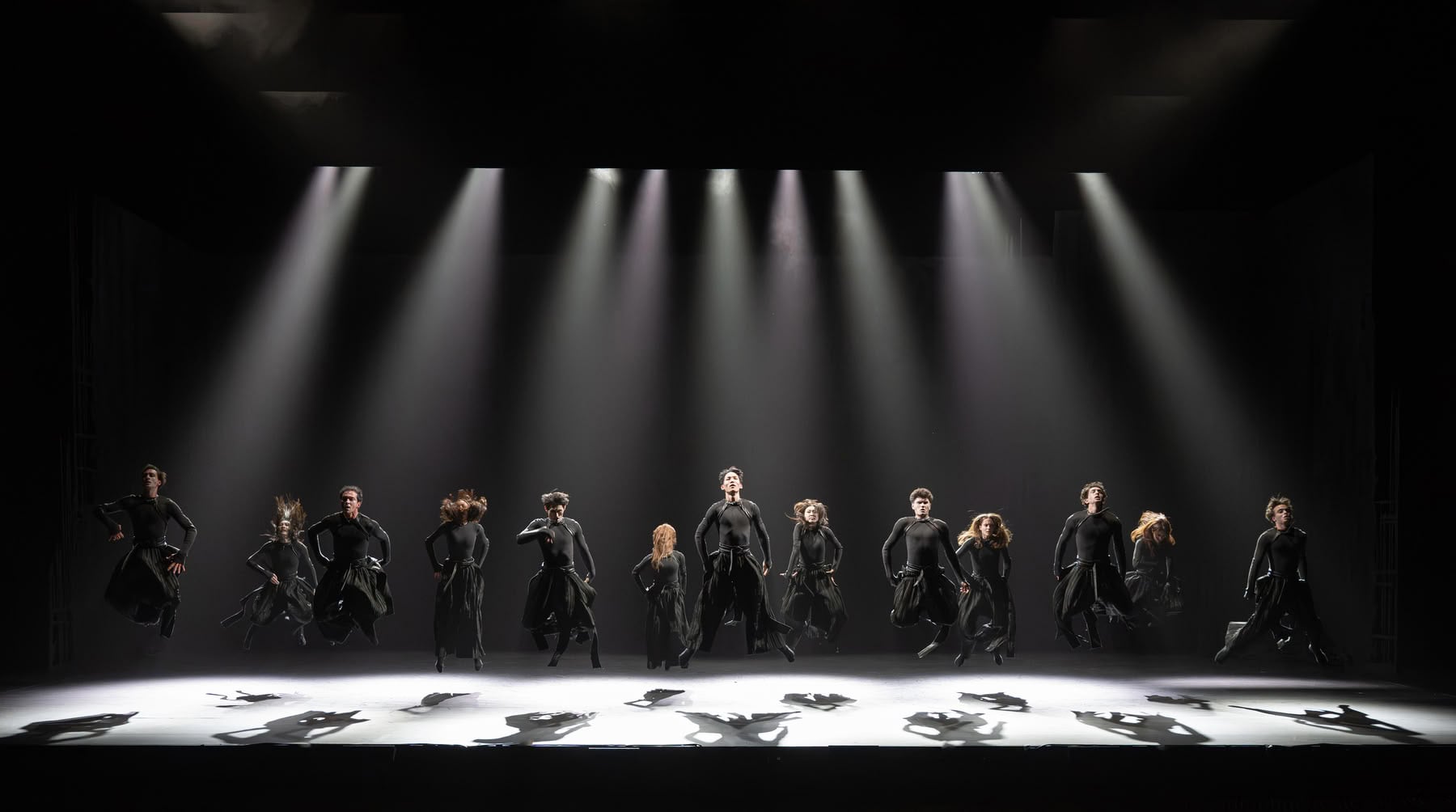
Unfortunately, the same cannot be said for the final piece of the night, Jae Man Joo’s Auguries of Innocence. Inspired by William Blake’s poem of the same name, the piece claims to explore the connection between the natural world and the human experience.
The world the piece inhabits is beautiful. Thomas Mika’s set design and Pēteris Vasks’s music create something immersive, tangible, and timeless. It is led by Jakob Wheway Hughes as The Weaver of Souls – a role played by both men and women. The problems start when Wheway Hughes begins a slow, broken shuffle around the stage.
It evokes Tuesday from Wayne McGregor’s Woolf Works, and unfortunately, once one has McGregor on the mind, it is hard to steer away from the idea that this is little more than a pale shadow of other choreographers. Blake’s poem and the ballet it inspired are about the sins of man, but so too is McGregor’s The Dante Project. The final pas de deux (performed by Ksenia Ovsyanick, Daniel McCormick, Emma Hawes, and Gareth Haw, trying their absolute best in flesh-coloured leotards) felt a little too reminiscent of Christopher Wheeldon’s After the Rain. There’s even something of David Byrne in the jerky choreography, but at least David Byrne and Talking Heads gave their audience something fun you can dance to.
It is not imitation, but rather a derivative piece that offers nothing new or exciting. It is turgid viewing, and having been in excellent form all evening, it is clear this company of astounding talent deserves something better.
It’s not the most auspicious start for a season. Echoing the thoughts of my fellow critic, Mathew Paluch, it is admirable and important that ENB’s Artistic Director, Aaron S. Watkins, commissions two new pieces for a triple ballet, but when the most impactful piece was the one choreographed more than half a century ago, it raises questions about the company’s future direction. Perhaps, somehow, the answer lies in the past.

Lily Hyde is a cultural and dance writer based in London. Her writing has appeared in The Fence and The Creative Independent, and she runs the cultural newsletter, Falling Upwards. She is currently writing her first novel.