
[Review] Swan Lake with The Royal Ballet – Mayara Magri shows that “great dancing can overcome even the most banal production”

Jonathan Gray sees Liam Scarlett’s production of Swan Lake for The Royal Ballet – “in Scarlett’s hands the ballet becomes a confusing mess”.
| Title | Swan Lake |
| Company | The Royal Ballet |
| Venue | The Royal Opera House, London |
| Date | 7 March 2024 |
| Reviewer | Jonathan Gray |
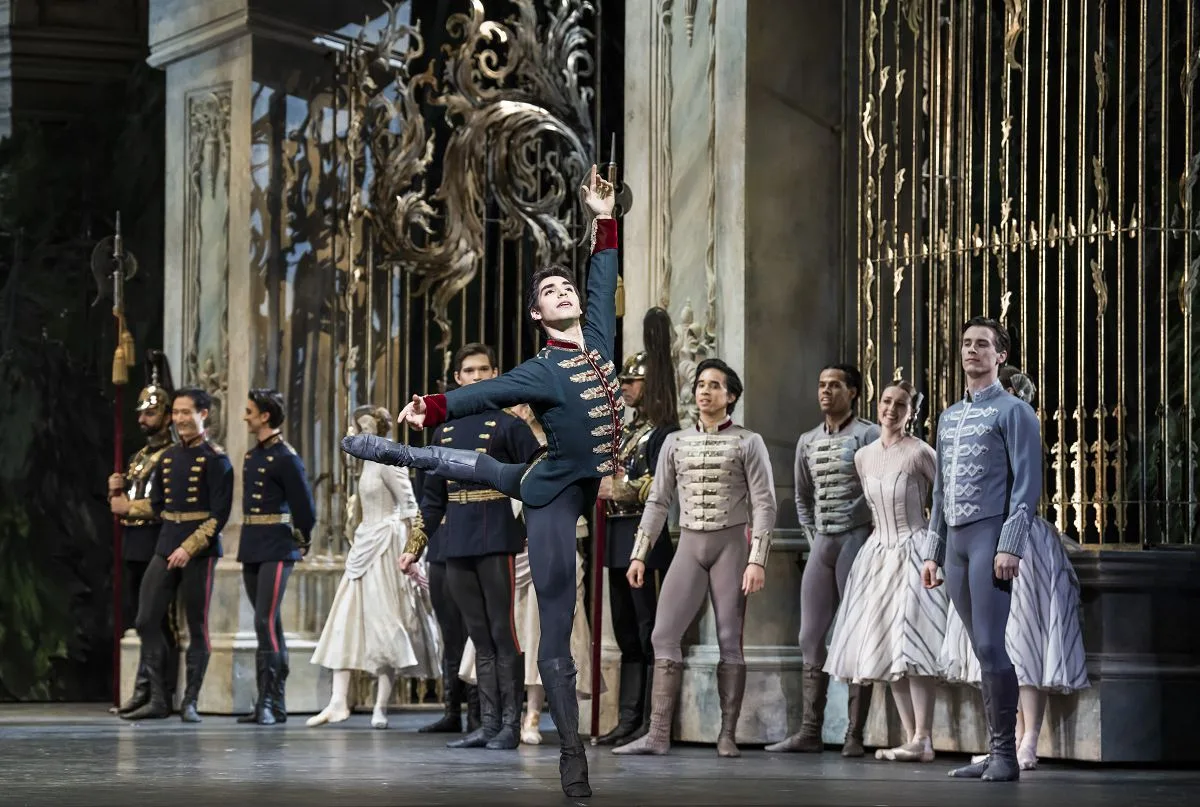
If you are a regular ballet-goer, it won’t be long before you pay your next visit to the swans on the lake. Swan Lake is seemingly never absent from the repertoire, and in these straightened times it is only natural that ballet companies want to capitalise on its popularity to fill their coffers. There are some lakesides you may like to linger at a little longer but, to speak true, the one currently on view at The Royal Ballet, in a production staged by the late Liam Scarlett, would not be one of them. Despite excellent dancing from the company, some (but not all) magnificent sets and costumes by John Macfarlane, and a choice selection of familiar choreography by Marius Petipa, Lev Ivanov and Frederick Ashton, in Scarlett’s hands the ballet becomes a confusing mess, bogged down with trivial, irrelevant histrionic details and run-of-the-mill dances that make you wonder what all the fuss is about. Here, Prince Siegfried is a wimp, there is little sense of a grand romance between him and the Swan Queen, Odette, and not much of an impression of a couple uniting in death to break an evil curse. In this production, Siegfried doesn’t even die alongside Odette at the end. At least the music is still by Tchaikovsky, but with some dud notes emanating from the Orchestra of the Royal Opera House on 7 March, under the baton of Koen Kessels, you wonder what the score will sound like at the end of a very long run of performances in June.
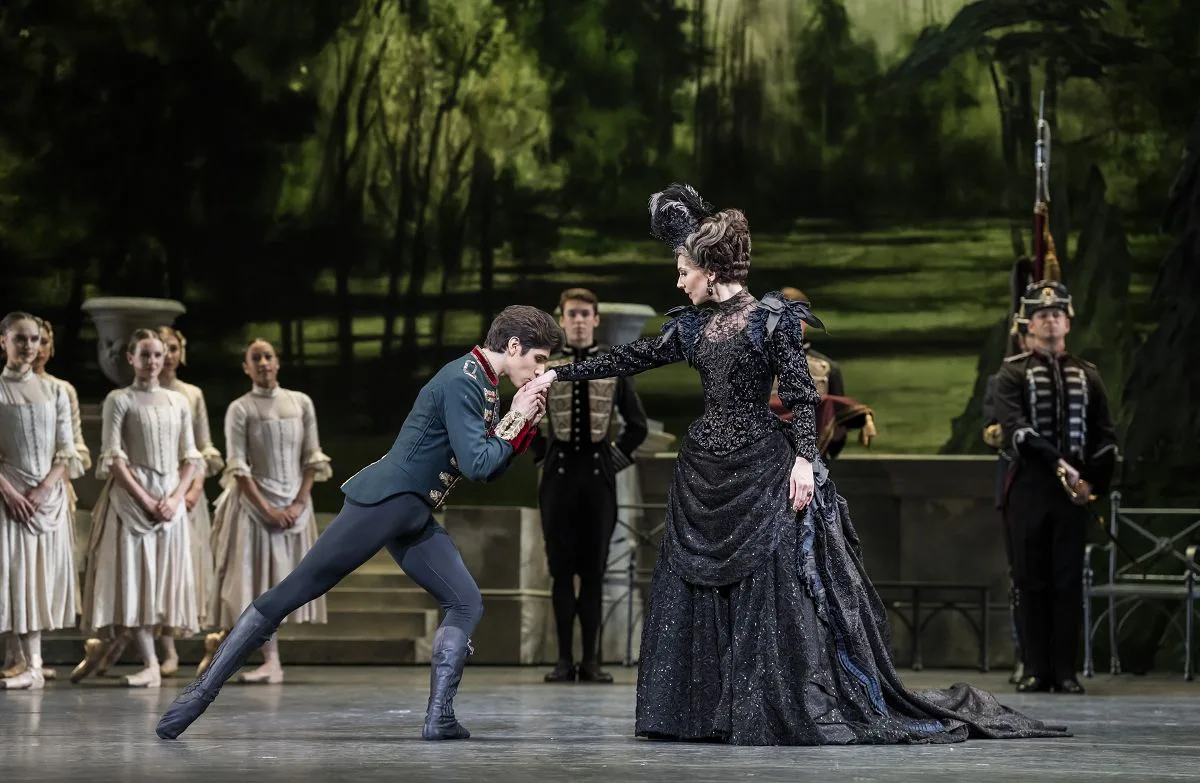
Scarlett’s staging of Acts I and II just about stands, although his dances for the big waltz and polonaise in the first act are uninspired, but from Act III onwards the production is pretty disastrous, with some of the most embarrassing versions of the national dances ever seen (especially the Spanish dance), and a fourth act that is simply pathetic. Where Scarlett gets things really wrong, I believe, is by attempting to give Von Rothbart a backstory. Instead of just being a wicked sorcerer whose domain is the lakeside, and who has enchanted Odette and her companions and transformed them into swans by day, Von Rothbart is now also a malignant courtier and advisor to Siegfried’s mother, the Queen, with the intention of seizing the crown for his own ends. Why would a magical spirit care? Surely, he already has enough magic at his fingertips to do as he wants? More to the point, if the courtier Von Rothbart has a daughter, Odile, why wouldn’t she already be known to the people at the court?
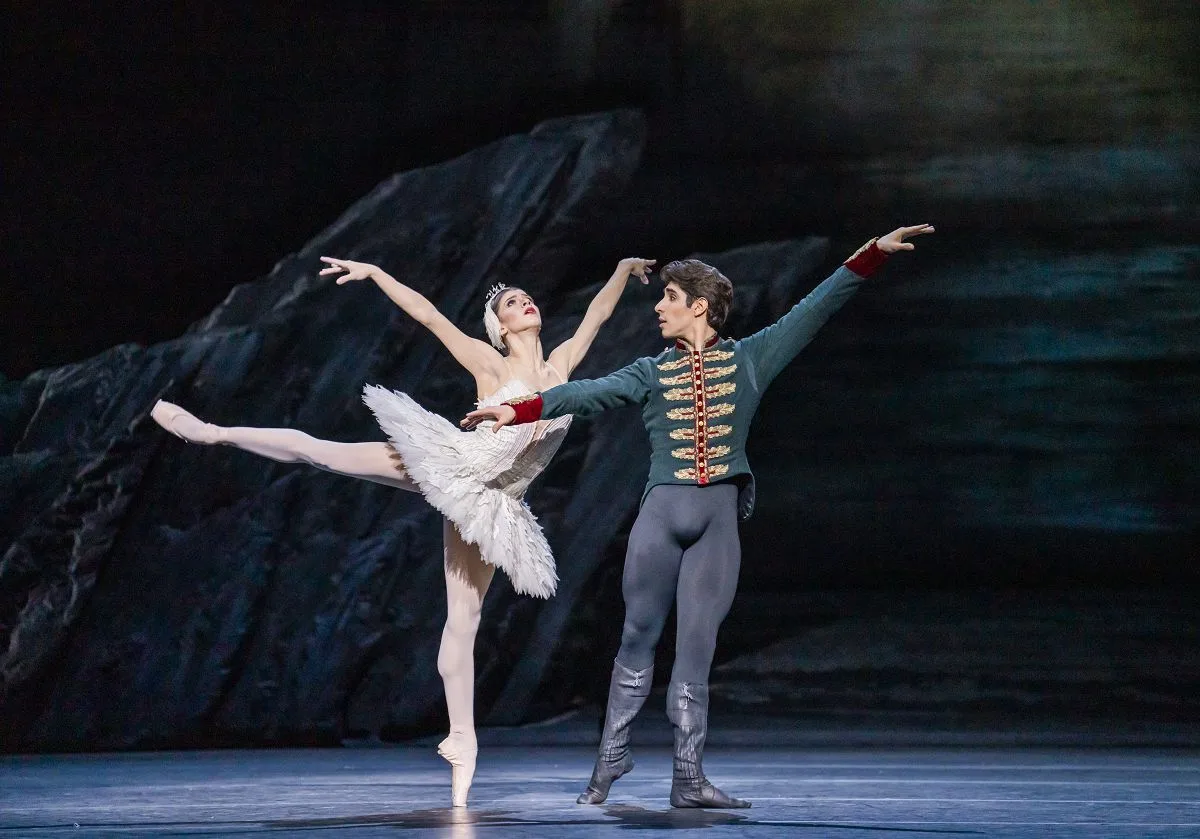

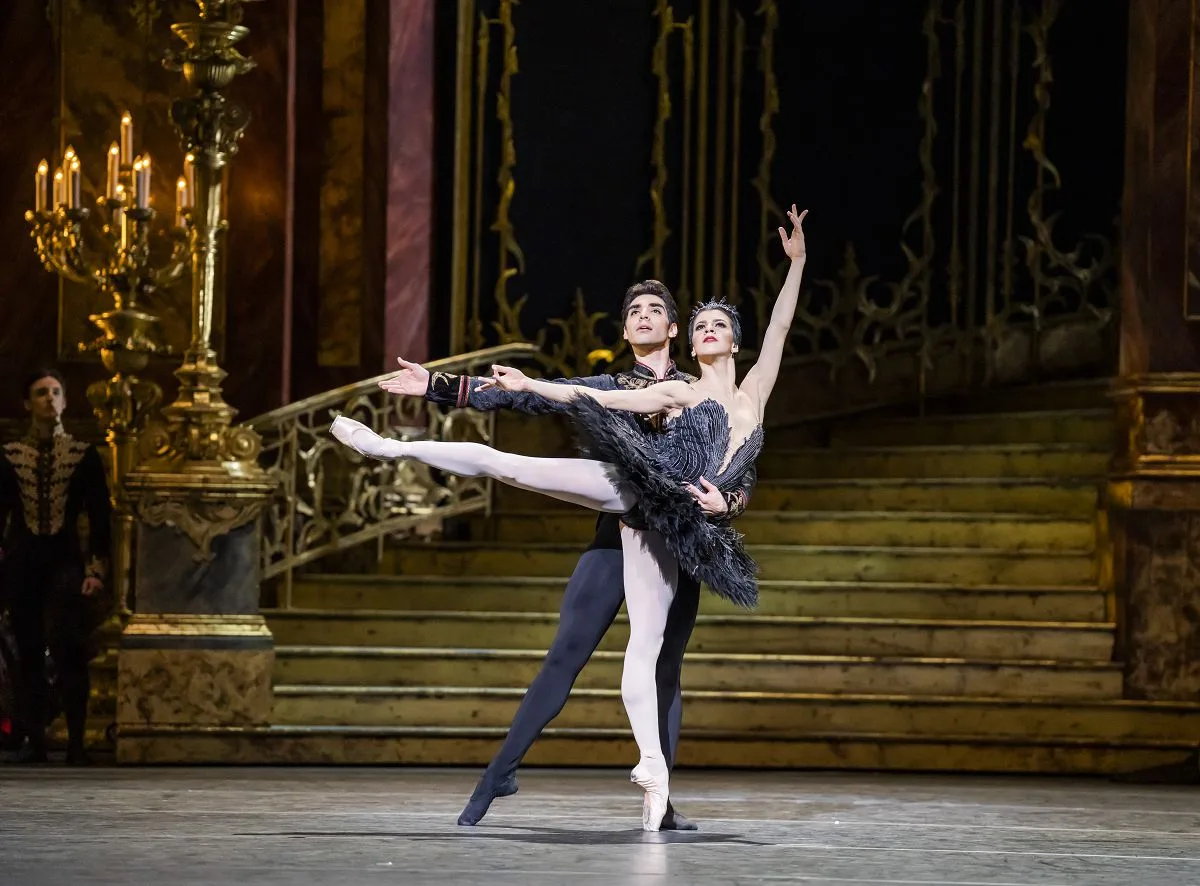
Great dancing can overcome even the most banal production, and in Mayara Magri The Royal Ballet has a young ballerina who takes on the challenge of performing the dual role of Odette/Odile with aplomb. Technically strong, with wonderfully fluid arms and back, Magri enters the stage in grand style. As Odette, she expresses her sorrow with simplicity, and her eloquent arabesques seem to stretch into infinity. Magri also brings a tender, beautifully yearning quality to her adagio dancing that is especially touching in the Act II pas de deux. Appearing as Odile in Act III, Magri was not the usual scheming vamp, but instead a woman who was sensuous and alluring. It’s a shame, however, that Scarlett embellishes Odile’s traditional Petipa dances with the hard, crude elements of choreography introduced into Swan Lake in Soviet Russia, transforming her from a fully rounded character into a stereotype. Magri – and her Royal Ballet colleagues – deserve better.
Returning to the stage as Prince Siegfried after a year-long injury, I felt Cesar Corrales also deserved better. On excellent form, although Corrales’ dancing was understandably tentative at times, he seemed hampered throughout by Scarlett’s reduction of Siegfried’s character into a diminutive, weak-willed royal. Romantic and ardent by nature, I sensed Corrales wanted to make Siegfried more passionate, more chivalrous, more driven, and less like a cardboard cut-out. Corrales supported Magri with care in the two great pas de deux although, when standing en pointe, she is taller than him, which is not ideal in a partnership. Nevertheless, the couple offered the audience very fine performances.
There were good performances from other dancers, too, including Joonhyuk Jun as Siegfried’s friend, Benno, whose easy, elegant jumps devoured the stage, but best of all was the female corps de ballet in Acts II and IV, moving with fluency and grace. Until The Royal Ballet decides to stage a new production of the ballet, however, bringing back more of the elements that made its previous production by Anthony Dowell so captivating, I’m happy to do the unthinkable and give this particular Swan Lake a miss in future.




Jonathan Gray was editor of Dancing Times from 2008 to 2022.
He studied at The Royal Ballet School, Leicester Polytechnic, and Wimbledon School of Art where he graduated with a BA Hons in Theatre Design. He was on the Curatorial Staff of the Theatre Museum, London, from 1989 to 2005, assisting on a number of dance-related exhibitions, and helping with the recreation of original designs for a number of The Royal Ballet’s productions including Danses concertantes, Daphnis and Chloë, and The Sleeping Beauty.
Jonathan Gray has also contributed to the Financial Times and The Guardian, written programme articles for The Royal Ballet and Birmingham Royal Ballet, and is co-author of the book Unleashing Britain: Theatre gets real 1955-64, published in 2005. He is a member of the Dance Section of The Critics’ Circle.


Oh I do agree, especially about the role of Rothbart, which I’ve always felt was wrong. I’m not overly keen on Liam Scarlett’s production (I prefer Sir Peter Wright’s) but I was in the House for last night’s performance and Mayara Magri was superb – which makes up for a lot…