Review: Black History Month Draft Works at The Royal Opera House – the future is certainly looking bright
Lily Hyde sees Black History Month Draft Works at The Royal Opera House curated by Marcelino Sambé with the work of five Black female choreographers.
| Title | Black History Month Draft Works |
| Company | Various |
| Venue | Clore Studio, The Royal Opera House, London |
| Date | 7 October 2025 |
| Reviewer | Lily Hyde |
A beaming Marcelino Sambé took to the stage of the Clore Studio of the Royal Opera House to introduce Black History Month Draft Works, a programme he curated featuring the work of five Black female choreographers. Describing these artists as ‘the future of dance and choreography’ – if Sambé is to be believed, the future is certainly looking bright.
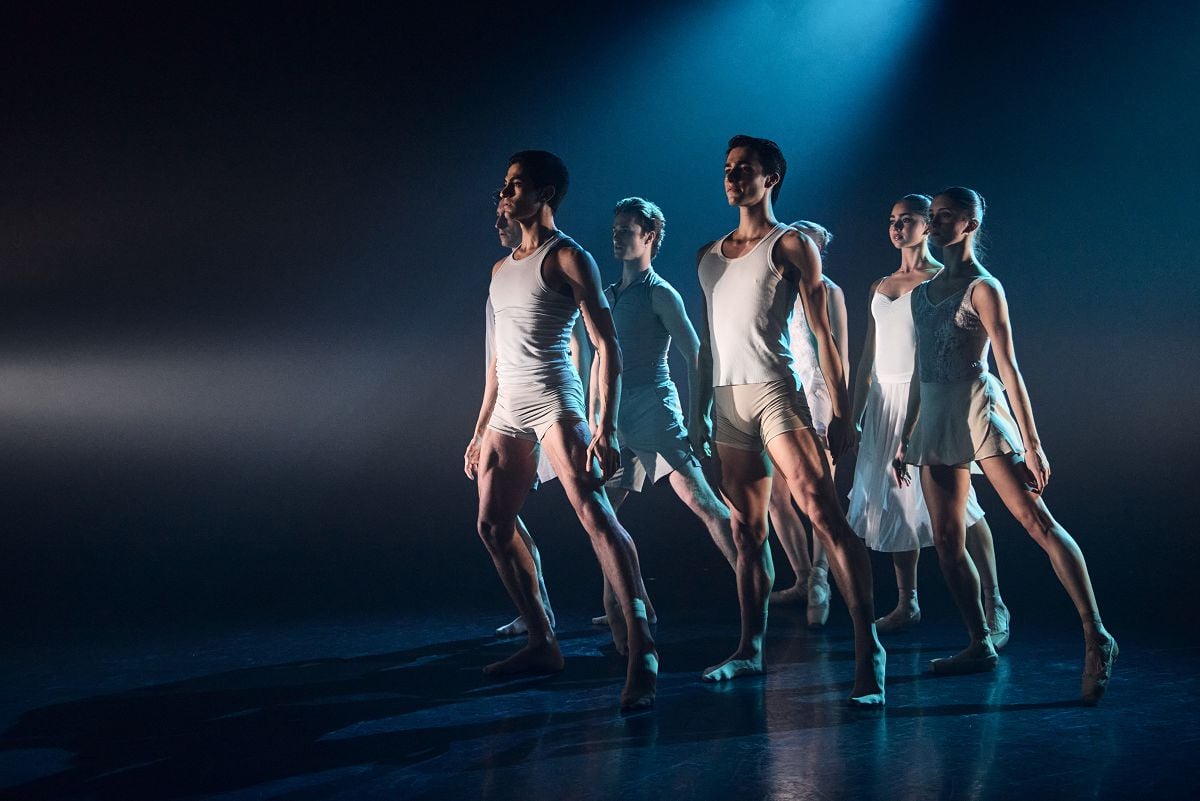
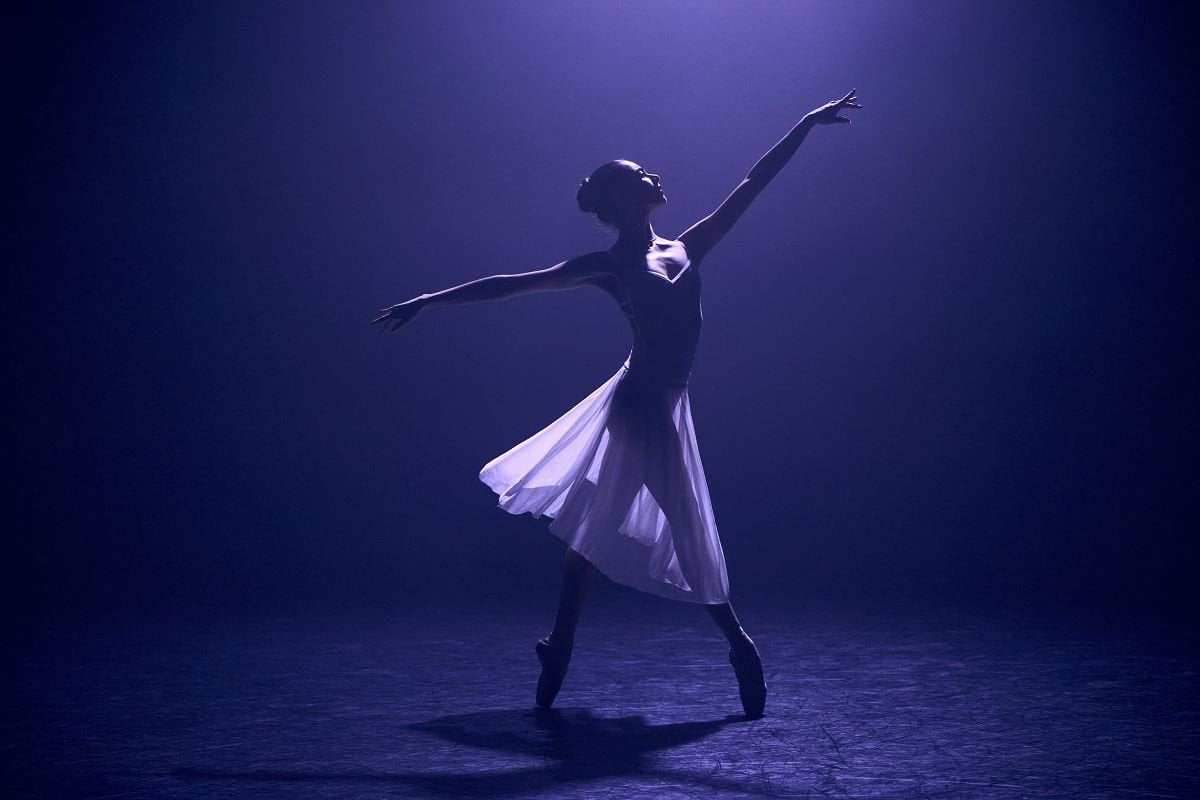
The first piece, In Ascendance, was described by its choreographer, Royal Ballet Artist Rebecca Myles Stewart, as a series of ‘fleeting moments’, and it’s a testament to her strength as a choreographer that they’re so compelling to watch. Set to Marian Anderson’s recording of Deep River and Leontyne Price’s Ave Maria, the group of six Royal Ballet dancers moved with a precise and adept synchronicity, but it’s in the pas de deuxs where Myles Stewart’s choreography really shines.
Her choreographic vocabulary is extensive, with soft, flowing Wheeldon-esque lines and MacMillan’s sensibility for moments of stillness – with time (Myles Stewart was only appointed an Artist of the Royal Ballet in the Summer), I dare say that she has the potential to take her place amongst them.


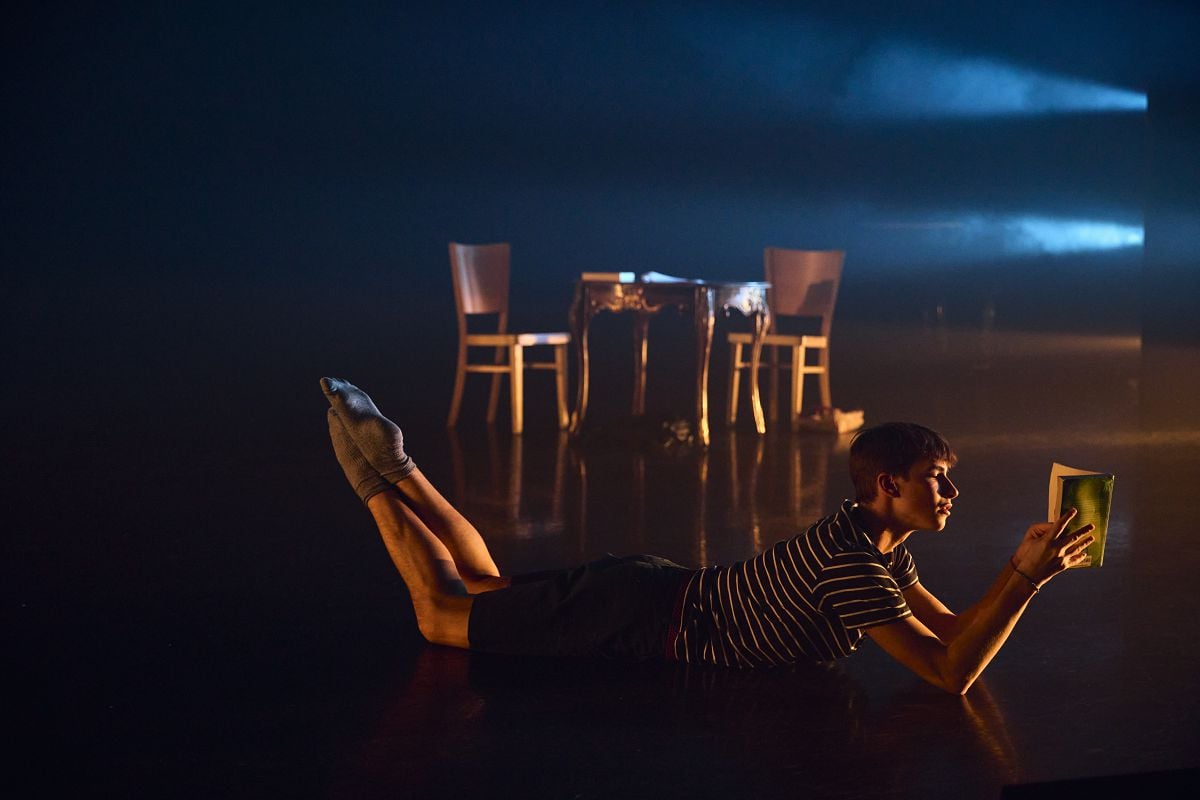
Grey Picket Fence by Blue Makwana explores the breakdown of a marriage, as lawyers inform a woman, Caroline, that her soon-to-be ex-husband, Steve, has been awarded custody of their son, Toby. The dancers mime to discordant narration as their bodies ripple and jerk, but the dialogue feels more didactic than realistic – lines like ‘you became CEO and you became a monster’ feel heavy-handed and undermine the sincerity of the premise.
A maelstrom of chaos ensues, but there is somehow both too much and not enough going on, as the lawyers charge across the stage like bulls, and the family hurl themselves into the air.
Still in development, there are glimmers of promise – Ravi Cannonier-Watson brought a real menace to Steve that could be explored in greater detail, and Amos Child delivered a moving performance as Toby. Considering the success of dialogue in dance in Kristen McNally’s The Limit, the piece may benefit from the input of a dramaturg. In its current iteration, it’s a work that seems to have a lot to say, but isn’t entirely sure how to say it.


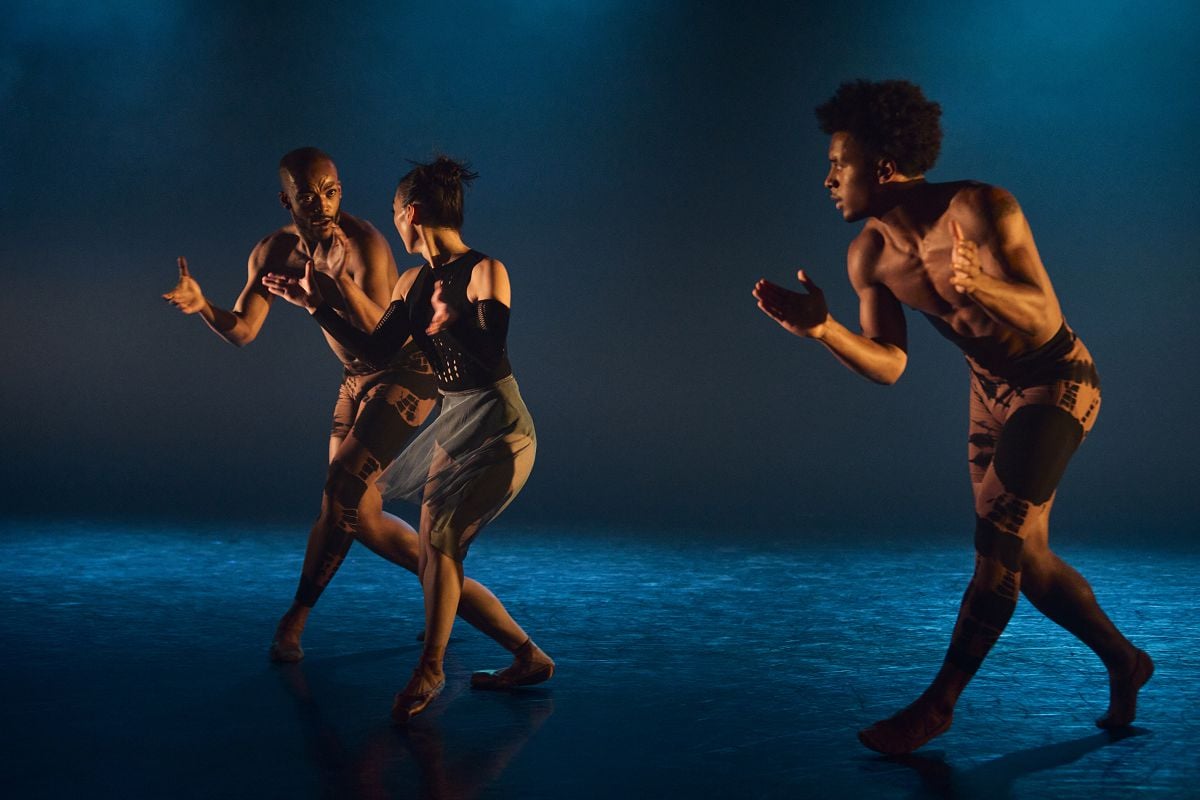
Creatures by Olivier-winning member of Ballet Black, Isabella Coracy, was the most accomplished piece of the evening. Striking in its modernity, Paul Calderone’s score ripples and thrums as dancer Megan Chiu commands the stage. Bringing a terrifying vulnerability to her performance, Chiu’s bourrées seem almost futile as her body contracts and shudders. On stage for the entire length of the piece, it’s a technical feat that would test any prima.
The accompanying dancers, Bhungane Mehlomakulu and Elijah Peterkin, move with intense synchronicity, but my eyes wandered back to Chiu, compelling even in repose. As the piece reaches a manic, glitching crescendo, it’s exhilarating to watch the three dancers move together, as Chiu comes into a power that previously terrified her.


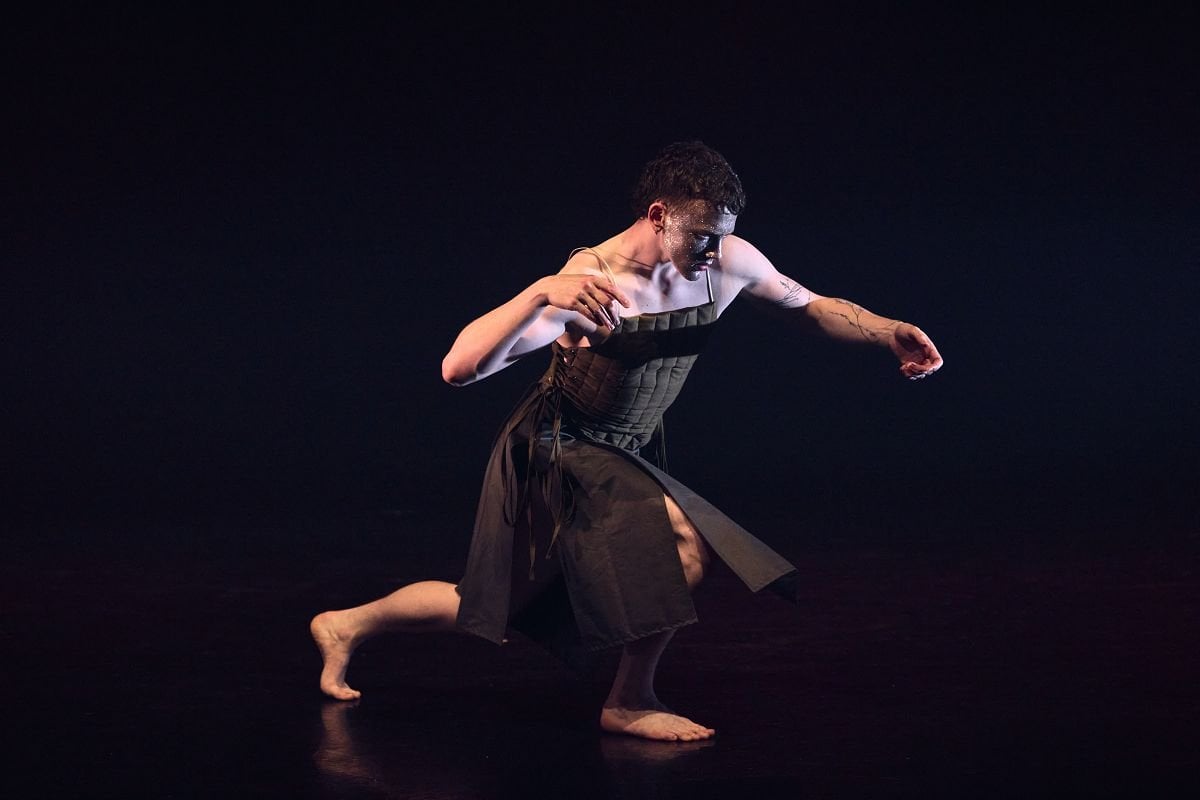
The excerpt of Elisabeth Mulenga’s Christ Alone is probably the boldest piece I’ve had the pleasure of seeing in the Royal Opera House. An exploration of an obsessive and extreme religious upbringing, even Mulenga admits that her depiction is uncompromising.
With the stage bathed in candlelight and dancers wearing Laura Ashley dresses, lace gloves, and girlish plaits, the peal of church bells does not herald something blithe and easy, but rather something deeply sinister.
The dancers’ fixed smiles quickly become frozen and manic, and their bodies convulse as Damsel Elysium’s discordant soundtrack of fervent devotion echoes. They become consumed, then possessed entirely as they writhe and strike the floor. Rarely moving together, the four dancers suffer in their own way, but they suffer alone. Indeed, the only moment two dancers move together is when one appears to be forcibly removing something from another.
There’s an undercurrent of fury in Mulenga’s work, and as a silver-faced Magnus Westwell strides across the stage in stilts, there is no pretence that this piece is anything other than a nightmare, and the choice to depict it as such, regardless of the risk it poses in alienating the audience, speaks volumes to her artistic integrity.


Hannah Joseph’s Kaleidoscope of Time closed the evening. Starting with Royal Ballet Artist Emile Gooding, his solo demonstrated both an aptitude for flowing lines and incredible control. With the other dancers, Marianna Tsembenhoi, Amelia Townsend, and Caspar Lench, the four made a strong quartet that moved through Joseph’s series of vignettes with languid and ebullient synchronicity. The use of not one but two versions of Pure Imagination felt a little trite, but it ended the evening on a high note.


Lily Hyde is a cultural and dance writer based in London. Her writing has appeared in The Fence and The Creative Independent, and she runs the cultural newsletter, Falling Upwards. She is currently writing her first novel.