[Interview] Margaret Barbieri, assistant director of Sarasota Ballet, on the eve of the company’s performances at The Royal Opera House

Former Prima Ballerina and assistant director of Sarasota Ballet, Margaret Barbieri, talks to Paul Arrowsmith as the company visits London in a celebration of Frederick Ashton
What are your memories of Frederick Ashton – the man and his ballets?
I have so many amazing memories! One of the first is when I was chosen to dance the gypsy girl in The Two Pigeons for my graduation performance from The Royal Ballet School.
Sir Fred took the final rehearsals with us on the Covent Garden stage. Years later when I was in the company, he chose me to dance the young girl as well. How lucky I was to dance both roles at alternate performances!
Having danced so many of his ballets, I remember many rehearsals with him and how he would very gently hone in with his corrections, giving advice on how to enhance his choreography, how to articulate the quick footwork as well as the interpretation of the role, always emphasizing the importance of musicality. Sometimes just little details, where the head should be, where the eyes should focus, the épaulement and porte de bras, and of course always using the body. Gary Grant said to the dancers the other day when rehearsing Façade [for us] via Zoom, that Sir Fred would say, “it’s all in the details.”
I remember also the personal moments, when Iain [Webb, Barbieri’s husband and director of Sarasota Ballet] and I would join him for lunch in the canteen or at a Company function and he would love to chat and hear all the news about everyone. I remember he was the first person we told that I was pregnant with our son, even before telling our parents! This was during his rehearsals for the revival of Valses Nobles et Sentimentales – which is why the ballet has such a special meaning for us both!
For a dancer, what are the challenges and pleasures of Ashton’s choreography?
The pleasures are his beautiful choreography, which even when very difficult, feels organic. His musicality, his sense of style, his humour and his incredible way of telling the story.
The challenges are making his choreography seamless and appear easy. Sometimes it’s the speed of the ballet or the quick footwork that can be demanding and sometimes the pas de deux can be incredibly intricate – but of course always so wonderful to dance. There has never been a single ballet of his that I didn’t love dancing, although I do remember being very nervous dancing [the third movement of] his Sinfonietta when it was created on us with the Royal Ballet’s touring company. It is fast and fiendish!
Why have you and Iain placed such emphasis on Ashton’s works?
I don’t believe we have put special emphasis on Ashton works for a reason other than we both loved dancing and watching all of Sir Fred’s ballets. And as it happens, our dancers love performing his works also and our Sarasota audiences fell in love with his ballets too. However, the company also performs ballets by a multitude of different choreographers including ballets by Balanchine, De Valois, MacMillan, Cranko, Robbins, Taylor, Bourne, Wheeldon, and ballets created on them by Lang, Bond, and Bintley, to name but a few.
Let me try a question you won’t answer – why is it in the UK Ashton is represented by an ever-dwindling number of works?
Respectfully I wouldn’t want to comment or speculate, what I will say is that a director’s job is incredibly difficult with a vast number of pressures and influences, and it is impossible to please everyone.
Given the demand for the company to perform in London – and how quickly tickets sold – would not Sadler’s Wells have been a better showcase for you than the Linbury?
It is such an unbelievable honor to be invited to perform at the Royal Opera House and we are so grateful to Kevin O’Hare and The Royal Ballet for inviting Sarasota Ballet to perform at the Linbury. It also has extra meaning to be performing Sir Fred’s ballets at Covent Garden to launch the five-year festival, Ashton Worldwide.
Of course, we would be delighted to perform at the Sadler’s Wells, especially because Iain and I spent so many years performing there, and so hopefully these performances may lead to other opportunities in the future.
How is the visit financed?
Like most funding for the performing arts in the US, we’re reliant on our supportive and generous donors and foundations. We have been incredibly fortunate that many of them have donated to this tour.* I can’t honestly articulate just how truly grateful we are to everyone for their enormous support and generosity.
Are there any works you would have liked to bring that you weren’t able to include?
Yes, there are quite a few of Sir Fred’s ballets we would love to perform in London, including Illuminations, The Two Pigeons, and Apparitions. Outside of his wonderful ballets there are others that I think it would be fantastic to be able to bring to the UK such as The Rake’s Progress and Checkmate [by Ninette de Valois], Kenneth MacMillan’s Las Hermanas which we just recently performed here in Sarasota, plus Peter Wright’s Summertide and a couple of early Christopher Wheeldon ballets – to name but a few!



You are giving, I think, seven performances in London which is more than you would do in a performance week in Sarasota?
The number of performances we give varies depending on the theatre size and also availability. For example, at the Sarasota Opera House, and at the Van Wezel Performing Arts, we unfortunately are only able to give three performances of a programme. However, when we perform at the FSU Center for the Performing Arts we tend to give five to seven performances. A schedule like we have in London isn’t unusual as we had seven performances when we have toured nationally to places like the Joyce Theater in New York and Jacob’s Pillow Dance Festival.
Next season in Sarasota you are giving 18 performances – do correct my maths – across six programmes, from October to April. That makes me wonder – is the company full time?
I believe it’s actually 23 performances across six programmes next season. Yes, our company is fulltime. However, unlike in the UK and other European countries, 52-week contracts are virtually unheard of here in the US. Most American ballet companies are like us in that they contract their dancers for between 30-40 weeks, with a large layoff period in between or at the end of their season. Depending on whether we have a summer tour like this one to London the number of weeks is increased.
Given that you only have performances in one week per month, how do you keep your dancers motivated and in condition?
You should just see our schedules! Our dancers work unbelievably hard going from the repertoire for one programme straight into the next. They are highly motivated and in top condition. Honestly, I’m always worried about overworking them and try to be careful that we don’t! They are incredibly adept at learning the ballets and the multitude of different styles very quickly. In fact, choreographers and stagers always marvel at just how quick they are.
It seems an enormous amount of work for so few performances, particularly say for a new full-length as with David Bintley‘s Comedy of Errors in 2022 …
I can understand you saying that, but Comedy is coming back soon! Iain had hoped to bring it back before, but our rep can be heavily influenced by theatre availability, especially with a production like A Comedy of Errors which can only fit in one theatre.
Next season Bintley’s Spider’s Feast finally makes it to the stage. What are the other highlights for you? You have Ashton’s Romeo and Juliet too?
Yes, we’re very excited about both The Spider’s Feast and Ashton’s Romeo and Juliet, as well as Giselle returning, and exciting premieres by Edwaard Liang, Jessica Lang, and Gemma Bond, and of course not forgetting other wonderful returning ballets like Balanchine’s Serenade and Rubies, Robbins’ In the Night and Taylor’s Brandenburgs.



What drew you and Iain to Sarasota in 2007?
Honestly it was a mixture of luck and circumstance, but we are incredibly grateful that we have become a part of the Sarasota community.
What is your approach to programming – how do you balance American and British repertoire?
That is Iain’s specialty. I may be somewhat biased, but I honestly think that he has a virtually unparalleled ability to programme a season. He thinks constantly about programming, even dreaming about different ballets he would like to do! It takes a great deal to put a triple bill together, it’s not just about how the ballets fit together choreographically and musically, he also must take into consideration the dancers, the rehearsal schedule, the theatre’s size, whether to use live music or not, whether the orchestra and the different instruments for each ballet can fit together in the pit, and a host of other elements.
The great thing is that when these incredibly varied programmes come to life, everyone marvels at how “did he think of that?”, or “how did he know they would work so perfectly together?” I can tell you that it takes many months and many sleepless nights for Iain to put a season together!
What is the Margaret Barbieri Conservatory?
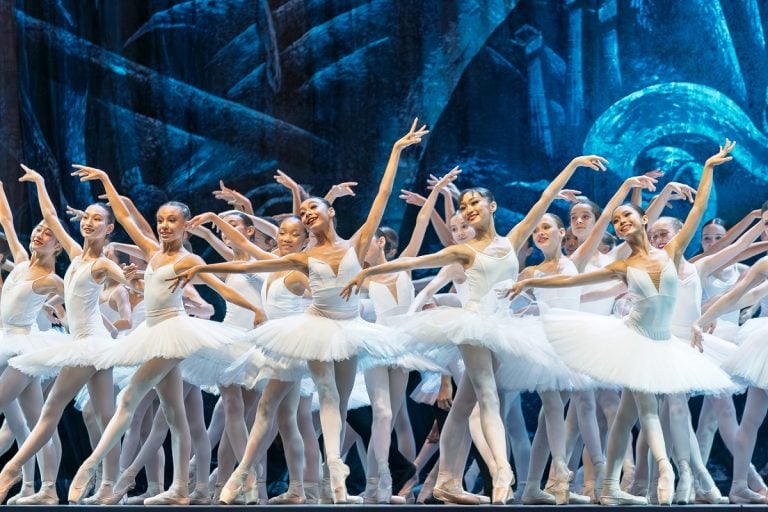
It is Sarasota Ballet’s year-round pre-professional programme. Through a nurturing and inclusive environment, the conservatory prepares talented young students for either a professional dance career or a place on a college dance programme. The conservatory is led by education director Christopher Hird and assistant director Miles Burger.
The curriculum is designed to train dancers to become not only technically strong but also have a true sense of artistry, musicality, and style. The Margaret Barbieri Conservatory is a Youth America Grand Prix partner school, and graduate students are now dancing with Sarasota Ballet, Ballet Austin, Indianapolis Ballet, Philadelphia Ballet 2, and many more.
Some of my earliest memories of ballet going in the UK in the 1970s were of you in Les Sylphides, in The Two Pigeons and as the Giselle. What are your highlights as a principal of Sadler’s Wells Royal Ballet?
I think you have just mentioned some of them!
Giselle has to be at the top of my list because I had my lucky break dancing at very short notice, five days to be exact, the lead role in Giselle at Covent Garden whilst I was still a corps de ballet dancer.
I also loved dancing La Fille mal gardée, The Dream and all Sir Fred’s ballets, as well as De Valois’ Checkmate and Rake’s Progress; Kenneth [MacMillan]’s Las Hermanas, Solitaire, and Elite Syncopation; John Cranko’s Lady and The Fool and Pineapple Poll. Also Ronald Hynd’s Papillon, Hans van Manen‘s Grosse Fugue.
Of course, the principal roles I performed in the great classics were also very special, including Aurora in The Sleeping Beauty, Odette /Odile in Swan Lake, and Juliet in Romeo and Juliet which sadly I only danced once [at Covent Garden] as it wasn’t in the Sadlers’ Wells Royal Ballet’s repertoire at the time.
I feel very fortunate to have danced such a varied repertoire that allowed me to develop as an artist and dancer. I loved dancing them all.
In those days the company did eight performances of three programmers per week. Today, it is four performances of one work and much smaller touring circuit. What are your thoughts – particularly in terms of audience and dancer development?
Sadly, the rising costs of touring have made those long tours, 16 weeks on the trot with eight performances per week, a thing of the past. Although they were exhausting and sometimes filled with accommodation difficulties, they were also amazing. Most importantly, so many of my generation had incredible opportunities to dance so many leading roles because of the number of performances. In one week I can remember dancing three performances of the lead role in Giselle and then on top of that, dancing in all three ballets for the triple-bill programmes.
Are you nervous ahead of London?
Of course, very nervous! After all we will be performing Ashton works in his home theatre, which is more than a little daunting. But at the same time, we’re also excited as this is such an honor and a once in a lifetime opportunity for our dancers!
And when will we see the company in the UK again?
Let’s get through this visit first and then see!
* Sarasota Ballet’s London visit is sponsored by
The Rick Mather David Scrase Foundation (Chairman, Richard Jarman), the Philip and Janice Levin Foundation (Trustee, William A Farber), the Jean Allenby Goldstein Touring Fund, Sandra and Neil Defeo and their Family Foundation, Frank and Katherine Martucci, Audrey Robbins and Harry Leopold, Jan and Bill Farber, and Karol Foss.