
Review: Manon at La Scala – Nicoletta Manni/Reece Clarke; Myriam Ould-Braham/Claudio Coviello
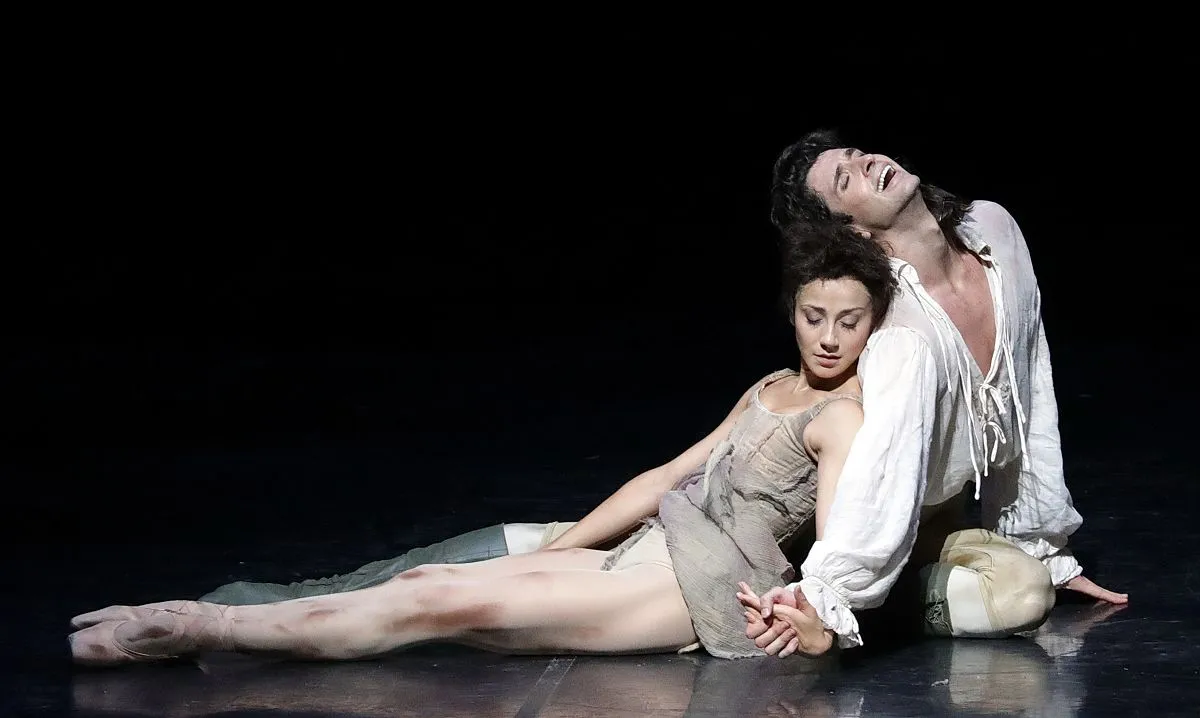
Height problems at La Scala led to last-minute casting for Kenneth MacMillan‘s Manon, or, as it is known outside the UK, L’histoire de Manon.
Alessandra Ferri brought Manon to La Scala – and several other titles in which she excelled, including MacMillan’s Romeo and Juliet – after she become the theatre’s étoile. Milan first saw the ballet in 1994 in a memorable, emotional evening with Julio Bocca as her des Grieux.
Thirty years on, and Nicoletta Manni was due to dance with (her husband) Timofej Andrijashenko, but he twisted his ankle after landing badly towards the end of a performance of La Bayadère in mid-June. Manni is tall and needs a tall partner. La Scala has four male principal dancers, and they were already in other casts or not suitable regarding height. The first performance was also to be televised, so a suitable dancer had to be found elsewhere.
Claudio Coviello was to dance with Vittoria Valerio, who hurt herself during rehearsals executing the famously dangerous ‘Manon slide’ in the bedroom pas de deux. Coviello is one of the shorter dancers in the company and so, again, “a suitable dancer had to be found elsewhere”.
The Royal Ballet and the Paris Opera Ballet to the rescue. Reece Clarke – one of the world’s tallest classical dancers – hopped back and forth from his base in London for rehearsals with Manni as he was performing Swan Lake with Natalia Osipova in London. The petite Myriam Ould-Braham, on the other hand, at 42 had reached retirement age in Paris and gave her final performance in May, so making her La Scala debut was an unexpected retirement present.


Manni and Clarke fitted each other perfectly, and director Manuel Legris cast tall dancers around them. Coviello found a perfect partner in Ould-Braham, and shorter dancers surrounded them in the other main roles. Poor Andrijashenko and Valerio, nursing their wounds as their frequent partners were receiving ovations. It’s a cruel business.
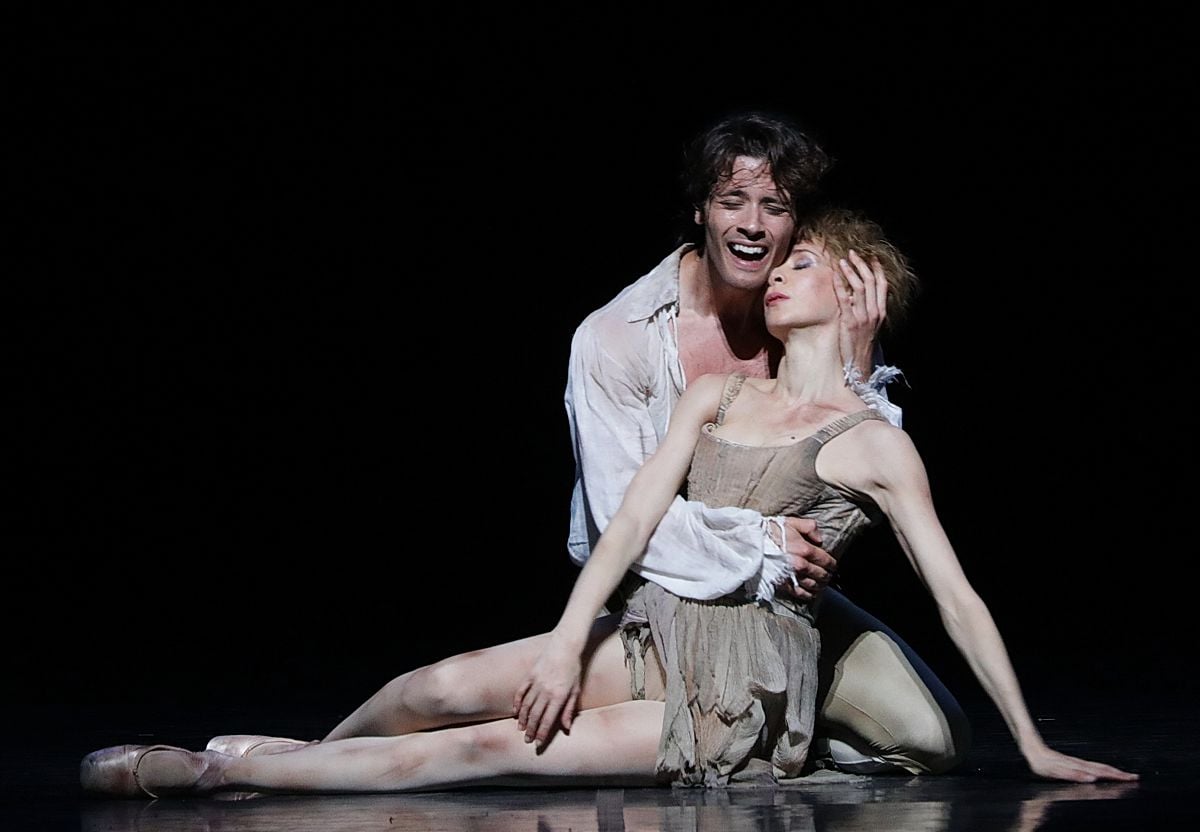
I have rarely seen Nicoletta Mani so soft in her gestures – her wrists and arms have never been so expressive. Her nomination to étoile last year (she’s the theatre’s only resident étoile) seems to have given her a liberating boost.
This bucket-list role for all ballerinas sees Manon transform from convent recruit to lover to gold digger to humiliated deportee, before dying in a swamp in Louisiana. All those transitions are exciting challenges for a dancer-actor, but it is a role also full of potential traps. One of the trickiest of these shifts is after she falls head over heels for the dreamy student des Grieux, and so instead of heading for the convent she heads for his bed. After des Grieux leaves the bedroom arrives the wealthy Monsieur GM (played by Gabriele Corrado leaving a slime trail behind him), waves around some jewels and furs, and she’s off with him in a jiffy. She fondly touches the bedsheets and as she wanders off with the old man she gives a quick backward glance. ‘Bye.
True, she has her scheming, pimp of a brother, Lescaut, pushing her along, but even so, it is difficult to believe. So where should doubt creep in and when should temptation take over? For me, it needs to be evident already in the bedroom pas de deux with des Grieux. He is earnest and totally smitten, while she is playful, slightly mischievous, and although she is discovering him she is also discovering men… the demi-monde beckons, and des Grieux could be just the first in a series of lovers. It is only later, on seeing des Grieux once again, and with the liaison with Monsieur GM continuing, that she realises the difference between desire and diamonds.
Manni does this transition rather well. She has eyes that become catlike when she glances sideways (something she uses to effect as Odile), and it gives her a perfidious air. During the writhing pas de trois with Monsieur GM and Lescaut her legs were especially expressive, as they were when she is manhandled by the letches during the party. It was generally a very fine performance, though when Manon dies, mid-air, and des Grieux lowers her to the ground, those heart-breaking moments before des Grieux realises that she is dead were undercut but her body not quite seeming lifeless – it was almost imperceptible… almost. There were tears in my eyes, nevertheless.
Des Grieux, another dream role, is, is however simpler to play as he is more or less the same person throughout – passionate and honourable. He is the only man on stage during the whole ballet to respect a woman, as the others are creepy or cheeky. Even when he discovers that he can kill, stabbing the penal colony gaoler, it is because he learns that Manon has been sexually abused by him. In Reece Clarke’s interpretation, he is a lantern-jawed, golden-age of Hollywood film star. Well, Clarke can’t help it – he looks rather like Montgomery Clift… but with improbably long legs. Somehow, he keeps his long limbs perfectly under control. His first variation was a lesson in legato phrasing and beautiful line. His partnering in the later pas de deux is impeccable and he and Manni obviously ‘clicked’ as there was a real connection between them on stage, and their scenes together were riveting.
A trivial but curious detail was seeing him manoeuvre the playing cards that he cheats with under his thigh while sitting at the gaming table during the party scene. It was much clearer than taking them in and out of the coat pocket as I believe I have always seen before.


The Lescaut in both casts was Nicola Del Freo, one of La Scala’s finest dancers, and he gave a technically thrilling account of the party scene variation. His mistress was Martina Arduino, a strong dancer too, who did everything right, but… and it’s a big but… Italian dancers and audiences do not seem to ‘get’ the humour. Lescaut, drunk, struggles to understand where he is, where she is, and how their various limbs can come together for a pas de deux. With lots of nods to those who know what to expect after seeing a classical ballet preparatory step, as well as all-out clowning for those who do not know ballet’s codes, it’s a scene that has UK audiences roaring with laughter. And it’s not just an Anglo-Saxon sense of humour – it is well danced and received when the Paris Opera Ballet stages Manon too. It is odd, because Italians have a great vaudeville tradition, with comic actors such as Totò excelling in physical comedy, creasing the audience up with just an eyeroll. Casting has much to do with it, as visual gags and timing are hard (impossible?) to teach, however a few years ago, corps de ballet dancer Walter Madau judged the role perfectly. Unfortunately, he’s left performing for teaching.


What a perfect Manon is Myriam Ould-Braham. I believe it is easier for a smaller dancer to be a convincing Manon, especially for the opening and final scenes – fresh and innocent, then used and broken. I wanted to intervene and protect Ould-Braham, even when she was being manipulative: “No, be careful… it will only end in tears!” Of course, the willowy dancers Sylvie Guillem and Svetlana Zakharova have both been excellent Manons at La Scala, but Ould-Braham – like Natalia Osipova, a previous Manon with Claudio Coviello – was particularly moving.
Coviello’s des Grieux is shy and unsure, though he lights up when his approaches are welcomed by Manon. Like Clarke, his first solo was delicately embroidered and elegant. However he tended not to hold a position and one movement blended into the next so it was rather like this sentence which is without any punctuation. Ould-Braham clearly died mid-air in the ballet’s closing moments, oh how tragic a moment, and Coviello touchingly nuzzles her dead body with the top of his head, like a dog trying to waken its owner. Yet strangely, this time, there were no tears.



Graham Spicer, aka ‘Gramilano’, is a writer, director and photographer based in Milan. He was a regular columnist for Opera Now magazine and wrote for the BBC until transferring to Italy. His articles have appeared in various publications from Woman’s Weekly to Gay Times, and he wrote the Danza in Italia column for Dancing Times magazine. Graham was the historical advisor on Codice Carla, the 2023 documentary on Italian ballerina Carla Fracci.
Graham also works as a dance photographer, and his photos have appeared in many books, theatre programmes, and magazines, including Dancing Times, Dance Spirit and Ballet2000, as well as all the major Italian newspapers.
He is a member of the Dance Section of The Critics’ Circle.



Wish someone would prform the Manon Lescaut ballet with score by Jacques Fromental Halevy. There is a modern performance edition of it available.