Review: Ballet Nights 006 – high calibre works and artists going where the artistic wind takes them

Matthew Paluch sees Ballet Nights 006 at London’s Cadogan Hall: “A collective of (generally) high calibre works and artists going where the artistic wind takes them in order to take risks and explore.”
| Title | Ballet Nights 006 |
| Company | Ballet Nights |
| Venue | Cadogan Hall |
| Date | 5 September 2024 |
| Reviewer | Matthew Paluch |
From the Docklands to Elephant & Castle to Sloane Square… things are looking up for Ballet Nights – the ticket prices definitely are. Top tix at Cadogan Hall are £150, and that isn’t a cheap night at the ballet. Producer Jamiel Devernay-Laurence offers a longer programme at two and a half hours (including interval), with some repeats and some first timers.
Part 1 opened, as usual, with a musical interlude by Viktor Erik Emanuel, this time Chopin’s Ballade No. 1 in G Minor. It’s on the dramatic side, and Emanuel went with the remit. Though somehow the hall’s acoustics didn’t allow for his usual level of clarity.
September, In the Rain by Jordan James Bridge was the opening dance piece. Very well performed by Constance Devernay-Laurence, it didn’t have much arresting language bar a motif of en pointe work using demi plié.
Tanzt by Pett|Clausen-Knight saw James Pett joined by Rebecca Bassett-Graham. The composer and singer Madil Hardis made an impact, but the dance content less so. It was busy, full of over extension, over dramatization, and the removal of clothes for no apparent reason. But I suppose yes – plenty of tanzt.


Introducing Joy, by Constant Vigier, did just that. It introduced the American dancer Joy Womack to London. Womack is famous for being the first American to graduate from the Bolshoi School, and the second to join the company, though she left calling the institution corrupt a while back. The solo was intriguing, using a clear ABA structure, and including some material that favoured less is more, which I appreciated. I also enjoyed the overall improvisational feel, though at numerous times one craved a little more fluid, connected phrasing, in both language and the execution of it, and less deferential vibe.
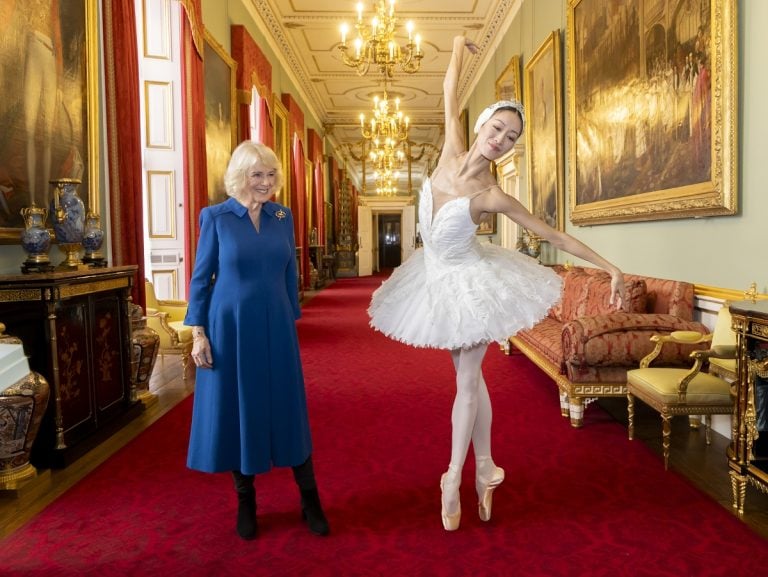
The first half finished with Set Fast by Grace O’Brien of Rambert School of Ballet and Contemporary Dance, and White Swan pas de deux danced by English National Ballet principals Sangeun Lee and Gareth Haw. I wrote about both here so won’t again now.


Part 2 opened with Erik Emanuel playing Ondine from Ravel’s Gaspard De La Nuit. Another dramatic number with endless cascades that allows the mind to wander.
Cha Cha and Tiara by Rentaro Nakaaki is basically everything I don’t like – light, comedic dance. Yet Nakaaki has a skill of making work layered with taste and subtlety. Julia Conway and Eric Snyder of English National Ballet helped no end with their grounded, balanced execution, as did the topical Xavier Cugat and His Orchestra score. One didn’t know where things were going next, which is an enjoyable rarity, and the combination of soft knee movement and sassy ballroom vernacular made for an original, modern duo.
If by Jamiel Devernay-Laurence and performed by Alexander Fadayiro and Jonzi D was surprisingly powerful, largely down to Jonzi D’s rendition of Rudyard Kipling’s prose, but also Fadayiro’s quietly powerful presence. Even the overly literal meetings of text and movement didn’t offend, however the random insertion of danse d’école language did.


Leto by Nick Mullikin, artistic director of Nashville Ballet, was inoffensive but also verging on uninteresting. Confidently danced by Sarah Pierce and James Lankford it offered nothing either new or memorable, and made me ponder the dance version of muzak: danzak?

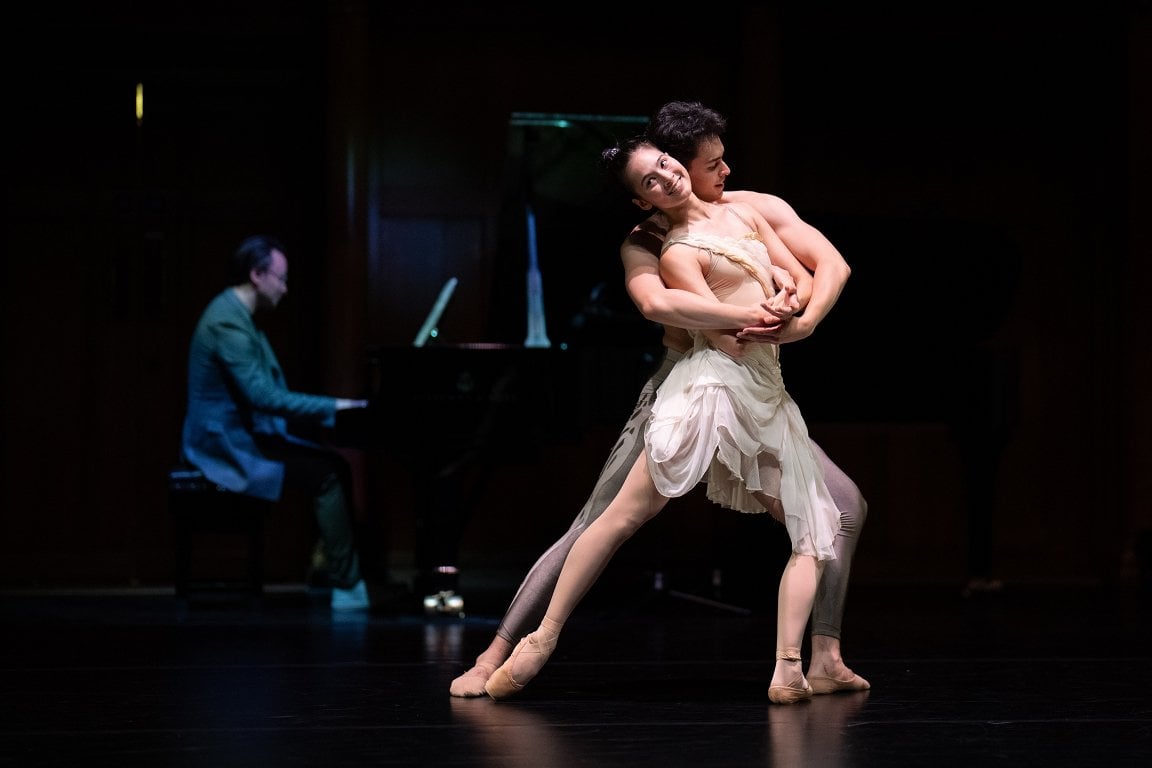
The Four Seasons/Summer choreographed and danced by Sarah Jane Taylor and James Wilton was undoubtedly the most interesting work and dancing of the entire evening. Initially I wasn’t sure how to contemplate what they offered, as it felt too on the raw, feral side, but then I realised – this is actual contemporary dance. Feeling over form, exploration over polish… it was both refreshing and intoxicating. The choreography went to many different places with sustained, circular arm motifs, symmetry and mutation like those seen in nature, airborne tumbling, and floorwork that seemed to know no bounds. Couple this abandon with Vivaldi’s crystalline, dramatic precision and one has a language that verges on the acrobatic underpinned by purely, artistic intention. Genuine modern dance. Riveting.
Closing the evening was the much-touted headlining act – Steven McRae returning to the London stage after an 11-month hiatus. Fortitudine, choreographed by McRae and supported by Charlie Siem on the violin, is (in crude terms) a flash-in-the-pan tap number, but no one can deny McRae’s skill, prowess and presence. I found it a bit too heavy on the alpha-male/camp juxtaposition, and it really was over in a blink. But fear not, as McRae is back on the Royal Opera House mainstage soon, also in tap shoes.
During a performance pause, I considered the Ballet Nights trajectory over the last year. The accomplishment of selling out Cadogan Hall, 12 months after Devernay-Laurence started the Ballet Nights journey is no mean feat and should rightly be commended. And though Ballet Nights has a clear brand and performance structure, I’m still unsure it’s found its raison d’être in practice. What started as a grassroots platform for choreographic exploration and supporter of the ballet genre, now seems to be going in all kinds of different directions with contrasting agendas. However, perhaps that isn’t a problem, but rather its unique selling point – a collective of (generally) high calibre works and artists going where the artistic wind takes them in order to take risks and explore. Or rather where Devernay-Laurence feels they should be going… so what’s next Jamiel?!


Graham Spicer, aka ‘Gramilano’, is a writer, director and photographer based in Milan. He was a regular columnist for Opera Now magazine and wrote for the BBC until transferring to Italy. His articles have appeared in various publications from Woman’s Weekly to Gay Times, and he wrote the Danza in Italia column for Dancing Times magazine. Graham was the historical advisor on Codice Carla, the 2023 documentary on Italian ballerina Carla Fracci.
Graham also works as a dance photographer, and his photos have appeared in many books, theatre programmes, and magazines, including Dancing Times, Dance Spirit and Ballet2000, as well as all the major Italian newspapers.
He is a member of the Dance Section of The Critics’ Circle.