Review: Zoonation’s The Mad Hatter’s Tea Party at The Royal Opera House – Deliciously Mad

Kathrina Farrugia-Kriel sees Zoonation’s The Mad Hatter’s Tea Party at The Royal Opera House – “If this is the future of theatre entertainment, then this deliciously mad production is just what audiences need.”
| Title | The Mad Hatter’s Tea Party |
| Company | Zoonation |
| Venue | Linbury Theatre, The Royal Opera House, London |
| Date | 7 September 2024 |
| Reviewer | Kathrina Farrugia-Kriel |
The Kate Prince Company returned to the Linbury Theatre at the Royal Opera House with their production The Mad Hatter’s Tea Party, originally created in 2014. Kate Prince has clearly made her mark on both popular dance and commercial theatre. Since setting up her company in 2002, Prince’s Zoonation has explored hip-hop culture both as a theatrical form – which perplexed critics two decades ago – and as an educational tool for her academy. Audiences at the Linbury were as diverse as they could get, from children and young people to pensioners. I’ll come back to this point later on.
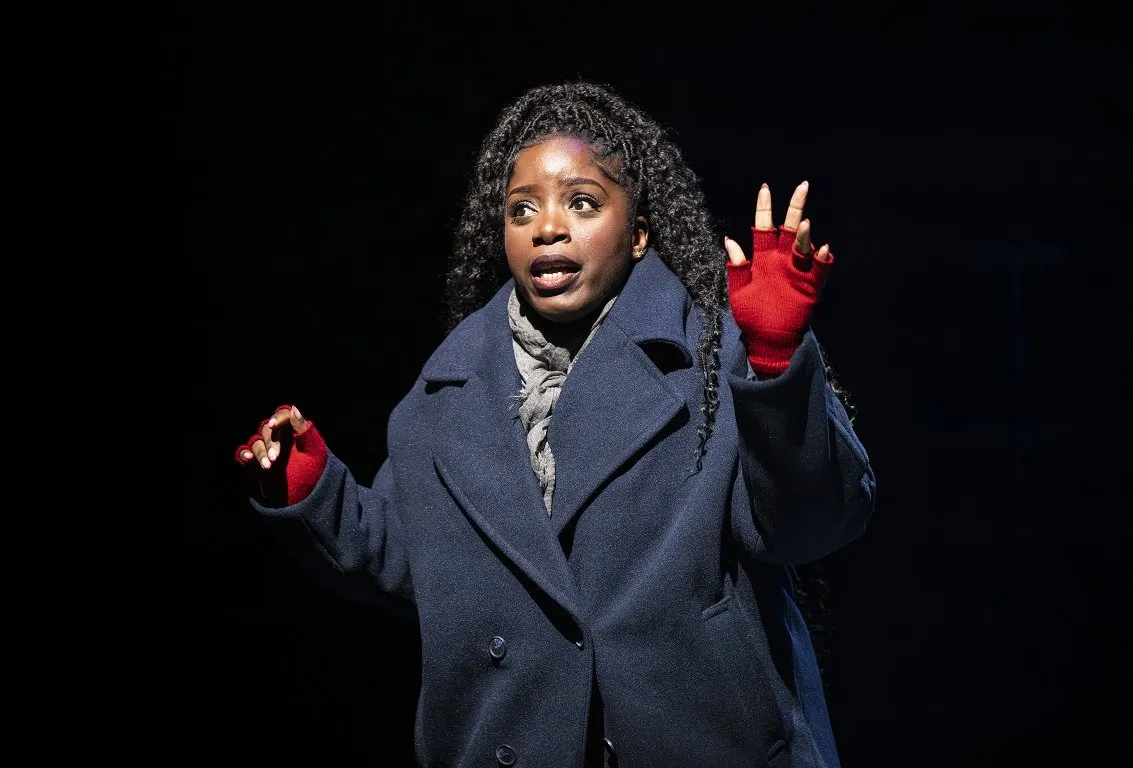
But why another rethinking of Alice in Wonderland? The Mad Hatter’s Tea Party is a simple narrative of sorts. Prince takes Lewis Carroll‘s novel and sets her first act in a hospital mental health ward where the seven characters hope to find their way out of their madness. ‘Ernst’ is a doctor who has one week to fix seven individuals, including Alice who is a ‘lost and confused young woman desperately trying to find herself’, a Queen of Hearts who is a bully (after a difficult childhood), a March Hare ‘with low self-esteem manifesting in a desperate need for approval’ and an ‘anxious people-pleaser” (White Rabbit). The second act is in Wonderland, a woodland utopia where everyone can be themselves. The simplicity of Prince’s narrative is strengthened through the narrator, Betty (Malinda Parris). In a captivating, even intoxicating, performance by Parris, the narration holds the narratives across the two scenes. With catchy music by DJ Walde and Josh Cohen, and lyrics by Prince, Cohen and Walde, the production brings together hip-hop culture, R’n’B and pop music with Afrobeats and Caribbean rhythms. The exuberant energy of the performers meanders across the dancers and singers.

Audiences cheered the dancers as they battled on stage. Hip-hop culture on stage brings the dancers into an intriguing space – the movement is bold and expansive, sometimes shifting into humorous movements, others bringing pathos to the story. Prince has harnessed the creative potential of the work, allowing for these exceptional Zoonation dancers to flourish and entertain. Tommy Franzen, as Ernst, demonstrated his versatility between both acts. Elijah Smith as the March Hare shone in his expansive and thrusting moves. Ryan Hughes brought out the softer and more sustained qualities of hip hop in his role of the White Rabbit, while Portia Oti, as Alice, is a huge talent that is still in its nascency. Issac Baptiste aka Turbo, as the Mad Hatter, is the MC par excellence – comic, mischievous, intriguing, and knows when to leave the party and hand over to the new Mad Hatter (Franzen).

There is also a ‘Britishness’ to Zoonation’s production, reminiscent of the age-old pantomime and its audience participation features. Seven audience members were asked to come on stage including a grandmother, a middle-aged man, a young boy, and a 17-year-old celebrating her birthday (yes, she did get a mention and cheers from us all). Prince knows how to warm the audience’s cockles. The chosen participants dressed up, participated in the action, and found themselves in the spotlight. She also strikes the right chords with her choices in props – the significantly large teacups and teapots contrasted the drab ward-like décor of Act 1. The puppet dormouse that lives in the giant teapot provided much entertainment – a cross between Stevie Wonder and Suggs from Madness. The audience cheered, clapped and got up to dance by their seats. If theatre can entertain as well as educate (on accepting that ‘there is no such thing as normal’), then Zoonation does exactly that. Prince has cleverly steered her production to make meaningful theatre, beyond the crafting of hip hop into a theatrical setting. Like with her more recent Message in a Bottle (2019) which tackled another human aspect of refugees, Prince packages her message on mental health and inclusion around a colourful (if highly entertaining) performance. There is much to experience in The Mad Hatter’s Tea Party. Sometimes the narratives are slightly clichéd, but the production, particularly the compositions and songs, together with the dancers’ technique, delivers on so many fronts.
I left the theatre thinking that if this is the future of theatre entertainment, then this deliciously mad production is just what audiences need. I certainly left with a spring in my step (and what a great way to start the season). Chapeau!
Photo Album: Zoonation’s The Mad Hatter’s Tea Party