Interview: Weston Hurt – the baritone with a limb difference – makes his debut with English National Opera as Rigoletto

Last night English National Opera in London had in American baritone Weston Hurt, a new Rigoletto.
Born without a right hand, Hurt is a passionate advocate for people with disabilities, “encouraging all performers to embrace their individuality”.
The ‘difforme’ Rigoletto is the court ‘buffone’ – a fool, a jester. An interpreter with a real ‘deformity’ is unusual – Thomas Quasthoff chose not to sing the role. Directors have sometimes done away with Rigoletto’s hunchback deformity – a few years ago in Seattle a director said, “Rigoletto’s greatest deformity exists in his own mind, because of his self-loathing”. It’s such slippery territory. A deformity certainly is not normal (a minority of the population are disabled), but this doesn’t signify that this minority are not natural. Hurt told me:
I feel that performing as God made me – as opposed to wearing a prosthesis – allows me to connect to the audience in a very real and genuine way.
Playing Rigoletto without a prosthesis makes sense, but do you also try to make sense of having one hand in other roles, or just do you just ignore the fact – as I imagine the audience does after the first couple of minutes?
With every role that I sing I make a point to create a backstory for how that individual lost their hand and how that has affected the character and use that to create believable storytelling.
There have been many discussions over the past decade or so about whether non-Black singers should sing Otello or Aida. The Taming of the Shrew, The Merchant of Venice… the theatre is full of minefields. You certainly can’t be caught up in a media scandal about playing Rigoletto without a hand, but how do you see the role?
I have been living with this music since 2003 and each time I return to it I’m always able to find something new and interesting. In Piave’s libretto we see in Act 1 that Rigoletto himself mentions in both the “Pari siamo” as well as in the duet with Gilda that he is “difforme”. Since first performing the role, I have felt very comfortable creating my own definition of that word with my own limb difference, as I was born without my right hand. Of course, it’s tradition that Rigoletto is seen as a “hunchback”. I have no issue at all including my own disability into the physicality of this role that in my opinion makes this character all the more interesting and unique.
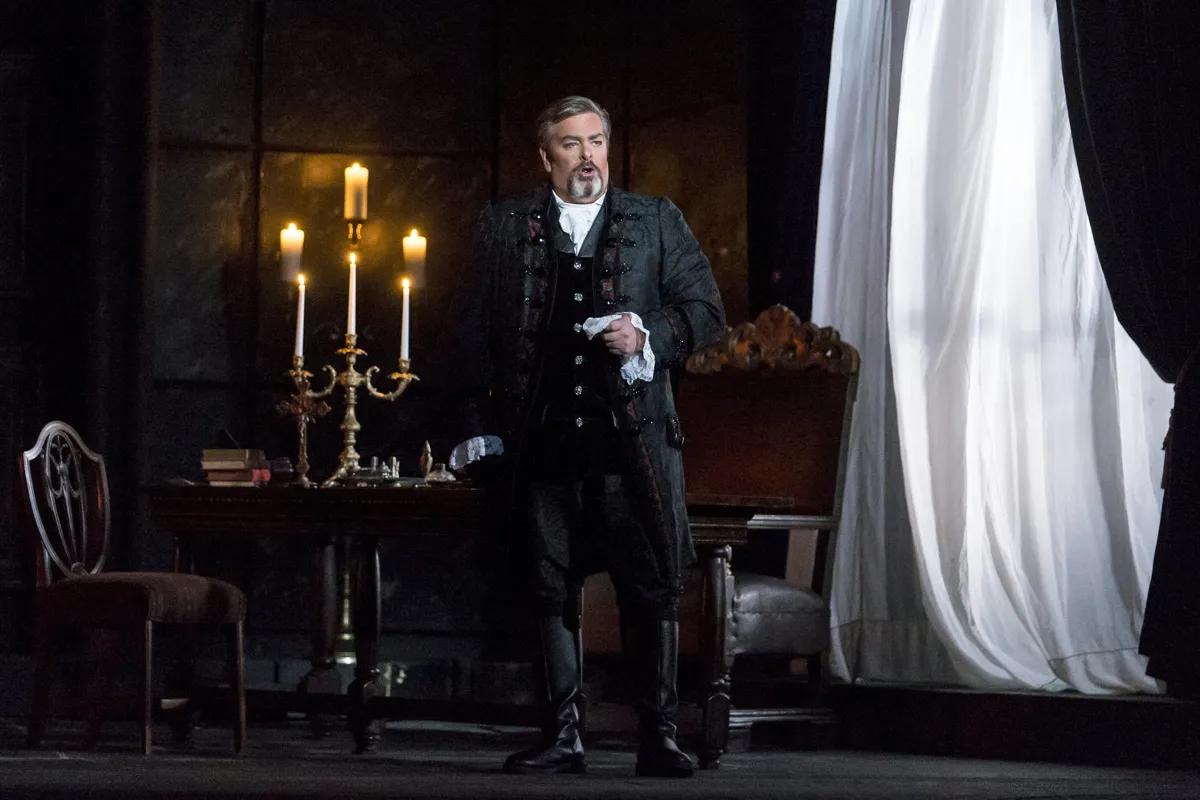
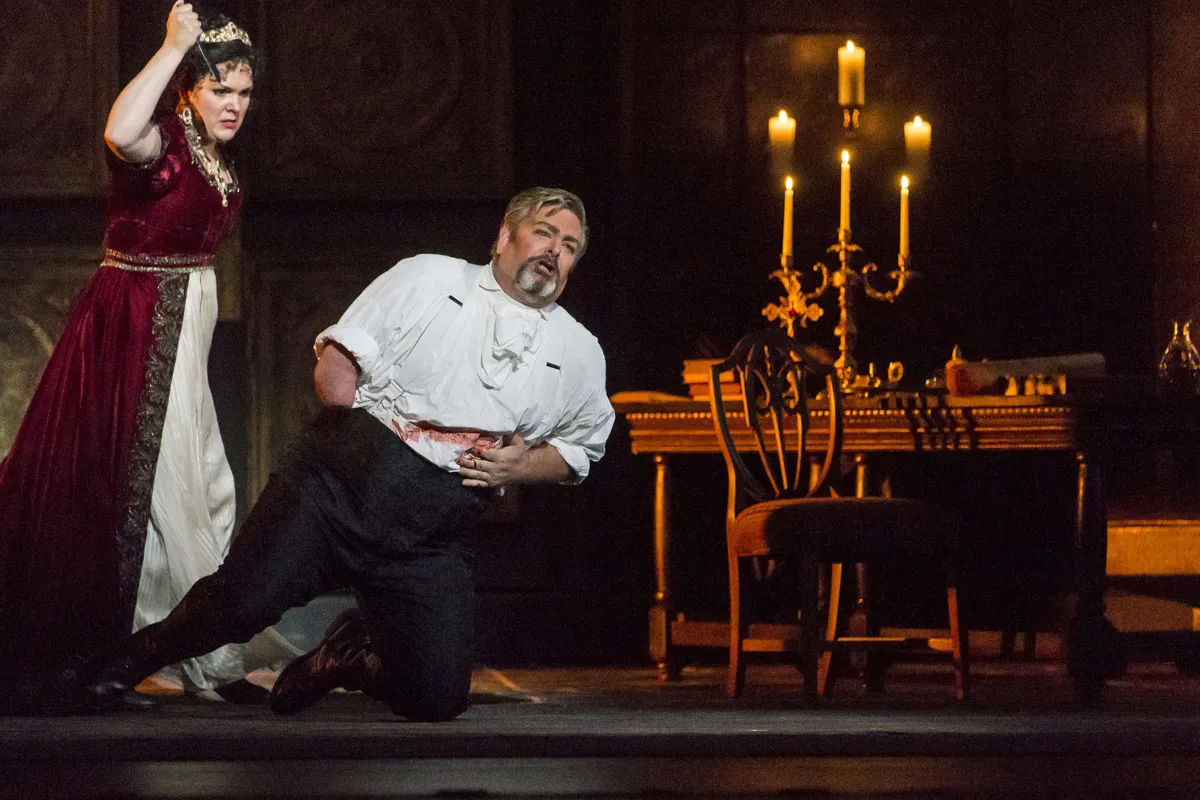
Do you feel that your disability communicates something extra to the audience?
I strongly feel that it’s anyone’s guess as to whether these fictional characters of the operatic world had two hands to begin with! As a performer who was born without my right hand, I always want to bring an authentic truth to my performances of every role I sing.
Has your disability ever held you back in the opera world?
Very early in my training a mentor once told me that I would more than likely need a prosthesis to start my career in order to make administrators more comfortable in hiring me. This proved to be true on a few different occasions early in my career.
I remember offering Rossini’s “Largo al factotum” for an audition with a regional company in the States and was told, “Weston, that might very well be the best I have ever heard that aria sung… but how am I going to hire a Figaro that only has one hand?” Spoiler alert – I didn’t get that job.
On another occasion, after singing for a prominent German opera company, they told my manager that they would like to offer me a fest contract as long as I had a prosthesis. At the time, I did not have a prosthesis and therefore lost out on that opportunity.
The other thing that mentor told me was that, “after you start singing everywhere I’m sure people will not even care about it anymore”. Thankfully, that latter part has been true.
So here you are in London making your UK debut.
I am honoured and privileged to be performing Rigoletto with English National Opera as my UK debut in this epic Jonathan Miller production.
Everyone at ENO has been so incredibly supportive and kind. The revival director (Elaine Tyler-Hall) and the conductor (Richard Farnes) have been a dream to work with.
I had the opportunity to work with Jonathan Miller in the United States in the early 2000s and he was very interested in the fact that I was born without my right hand. We would have lengthy discussions over meals about how my real-world perception was altered living with one hand, and how daily chores had to be re-thought.
And how are you enjoying London?
In the month that I have been here, I have fallen in love with London. The history, the architecture, the people, and the vast offerings of delicious culinary options have been especially welcoming.
I attended a performance of Hadestown in the West End and was absolutely floored to see a performer on stage with a very similar limb difference to my own. The exceedingly talented Beth Hinton-Lever as an ensemble member in the cast blew me away. It was such a powerful thing for me to see myself represented on an international stage. This is exactly what I aim to do – show that we as artists are inclusive in our diversity and that we represent ALL of humanity on stage.

Weston Hurt – biography
Having been seen at many of America’s most significant houses, baritone Weston Hurt makes his anticipated UK debut this upcoming season as Rigoletto with English National Opera. The 2024-25 season will also bring his house and role debut as Tonio in Pagliacci with Pensacola Opera.
This past season, he joined the roster of The Metropolitan Opera for the first time, covering Alvaro in Catan’s Florencia en el Amazonas, and returned to Houston Grand Opera as Sharpless in their Miller Outdoor Theatre performances of Madama Butterfly. During the 2022-23 season, Mr. Hurt made several returns to signature roles, including Germont with Lyric Opera of Kansas City in La traviata, Scarpia with Arizona Opera in Tosca, and Sharpless in Madama Butterfly with New Orleans Opera. On the concert stage, he joined Opera Roanoke for Britten’s War Requiem, the Boston Youth Symphony Orchestra for Verdi’s Requiem, and Madison Opera for their outdoor Opera in the Park concert.
Notable opera engagements have included his role debut as the title character in Nabucco at Seattle Opera, his house and role debut with Houston Grand Opera as Scarpia in Tosca, his debut with New Orleans Opera as Germont in La traviata, his role debut as Iago in Otello with Boston Youth Symphony Orchestra, and a return to Seattle Opera in another role debut as Talbot in Maria Stuarda. He has also appeared as Renato in Un ballo in maschera with Boston Youth Symphony Orchestra, the title role of Rigoletto with New Orleans Opera, PORTopera and the Boston Youth Symphony Orchestra, Scarpia in Tosca with Tulsa Opera and Nashville Opera, Germont in La traviata at the Seattle Opera, Portland Opera, Boston Lyric Opera, Opera San Antonio, Madison Opera, and Atlanta Opera, Ford in Falstaff at the Seattle Opera, Portland Opera, and Virginia Opera; Sharpless in Madama Butterfly at the Seattle Opera, Boston Lyric Opera, Lyric Opera of Kansas City, New York City Opera, Atlanta Opera, Berkshire Opera Festival and Opera Grand Rapids; Schaunard in La bohème at the Dallas Opera, Peter in Hansel and Gretel at Portland Opera; Enrico in Lucia di Lammermoor at Portland Opera, the Arizona Opera and Austin Lyric Opera; the Count in Le nozze di Figaro at Michigan Opera Theater, Frank in Die tote Stadt at the Dallas Opera, the New York City Opera and with Odyssey Opera; Eisenstein in Die Fledermaus with Amarillo Opera; Baldassare in L’Arlesiana with the Opera Orchestra of New York, Creon in Cherubini’s Medea with Opera Omaha and John Peerybingle in I Grillo del Focolare with Teatro Grattacielo, and a performance of Der ferne Klang with the American Symphony Orchestra in Avery Fisher Hall.
A prolific concert singer and recitalist, Mr. Hurt has performed in recitals sponsored by the prestigious Marilyn Horne Foundation in the United States, and has also performed in concert internationally, including a South American tour of performances of the Brahms Ein deutsches Requiem. Recent engagements have included appearances with the Nashville Symphony, the Dallas Symphony, the Alabama Symphony, and the Oratorio Society of New York in Carnegie Hall. His large repertoire includes such works as the Handel Messiah, Beethoven’s Ninth, the Fauré Requiem, Orff’s Carmina Burana, the Bach Mass in B minor and Magnificat, the Mozart Mass in C minor and Coronation Mass, the Haydn Paukenmesse, and the Britten War Requiem, which he sang at Carnegie Hall.
A graduate of the prestigious Juilliard Opera Center, Mr. Hurt has received many notable vocal awards, including 1st place and the People’s Choice Award from the Dallas Opera Guild Vocal Competition, the Vienna Prize from the George London Foundation, and 1st Place in the 2003 Oratorio Society of New York Competition, as well as various awards from the Licia Albanese-Puccini Foundation International Competition, Liederkranz Foundation, Metropolitan Opera National Council, Opera Index, and Palm Beach Opera Competition, and two career grants conferred by The Santa Fe Opera.