Review: McGregor / Maillot / Naharin, an eclectic triple bill at La Scala

Graham Spicer sees La Scala’s thrilling contemporary programme: Wayne McGregor’s Chroma, Jean-Christophe Maillot’s Dov’è la luna and Ohad Naharin’s Minus 16.
| Title | McGregor / Maillot / Naharin |
| Company | La Scala Ballet |
| Venue | Teatro alla Scala |
| Date | 20 March 2026 |
| Reviewer | Graham Spicer |
The latest triple bill at La Scala had many regulars clutching their pearls in shock, “La Scala isn’t the place for this!” What? Not Wayne McGregor’s Chroma, which, like all three works, the company was dancing for the first time. Not Jean-Christophe Maillot’s poetic Dov’è la luna. But Ohad Naharin’s eccentric, and often tongue-in-cheek, Minus 16.
If La Scala isn’t the right venue, then where? There are not many alternatives in Milan, and Naharin’s piece required a large company, beyond the scope of Milan’s annual contemporary festival. The piece took up only a third of the evening and, for me, company director Frédéric Olivieri made an interesting choice.

Naharin uses his own movement method, known as Gaga – he’s often referred to as Mr Gaga. The Israeli choreographer is currently the House Choreographer with Tel Aviv’s Batsheva Dance Company, where he served as Artistic Director for three decades until 2018. Minus 16 is based on pieces he created for the company in the 90s, including Mabul (1992), Anaphaza (1993), and Zachacha (1998), and was first performed by Nederlands Dans Theatre 2 in 1999. Its sections have little to do with each other except for the 23 dancers who appear almost throughout, and the music is similarly eclectic, with the 1930s song ‘Hooray for Hollywood’ rubbing shoulders with a rock version of the traditional Israeli song, ‘Echad Mi Yodea’. “NOT AT LA SCALA!”
The elderly man who shot out of his chair and stormed out of the auditorium – the click of the heels of his brogues ricocheting around the auditorium – was either disturbed by the highly amplified music of the Jewish song or by the company sitting on chairs in an arc across the stage in black and white costumes resembling traditional Jewish attire – a political protest, or an aural one? Or maybe he was afraid of missing his train – Minus 16 was the last piece on the programme. Whatever, Naharin’s heritage is a strong presence in his work, and pearl clutchers and heel clickers had their say.


I loved it, from the moment, five minutes into the interval, when music started to play, and a lone dancer appeared in front of the tabs, gazing around the auditorium. He slowly started to move, and when the tabs opened, he began dancing – often with flashy, technically difficult passages, but always tongue-in-cheek. The audience rushed back from the foyer. The caterers must have been thrilled!
There were poetic moments too. Towards the end of the well-known sequence with the chairs to the amped-up Passover song, the dancers threw elements of clothing to the centre of the stage, until they were left in loose-fitting grey underwear. Two remained and danced to Vivaldi’s Nisi Dominus, sung by my old pal, the countertenor James Bowman, who died three years ago, which gave the touching duet an extra emotional punch for me.
The true ‘not-at-La-Scala’ horror of horrors was when the dancers descended into the audience, walking across the slyly raised orchestra pit, and grabbed partners of all physical types, young and old. Spreading out across the stage, and with the minimum of whispered instructions, the company danced around, and with, their partners, in a lively, disarming and joyous celebration of dance. Then, with Dean Martin crooning ‘When marimba rhythms start to play…’ the couples held each other, slowly swaying, until one by one, the audience members returned to their seats, except for one woman who, as the dancers all collapsed to the floor, remained standing under a follow spot which guided her back into the auditorium. She looked delighted as the audience broke into applause and laughter. The remarkable thing is that no one looked uncomfortable – I would have died.

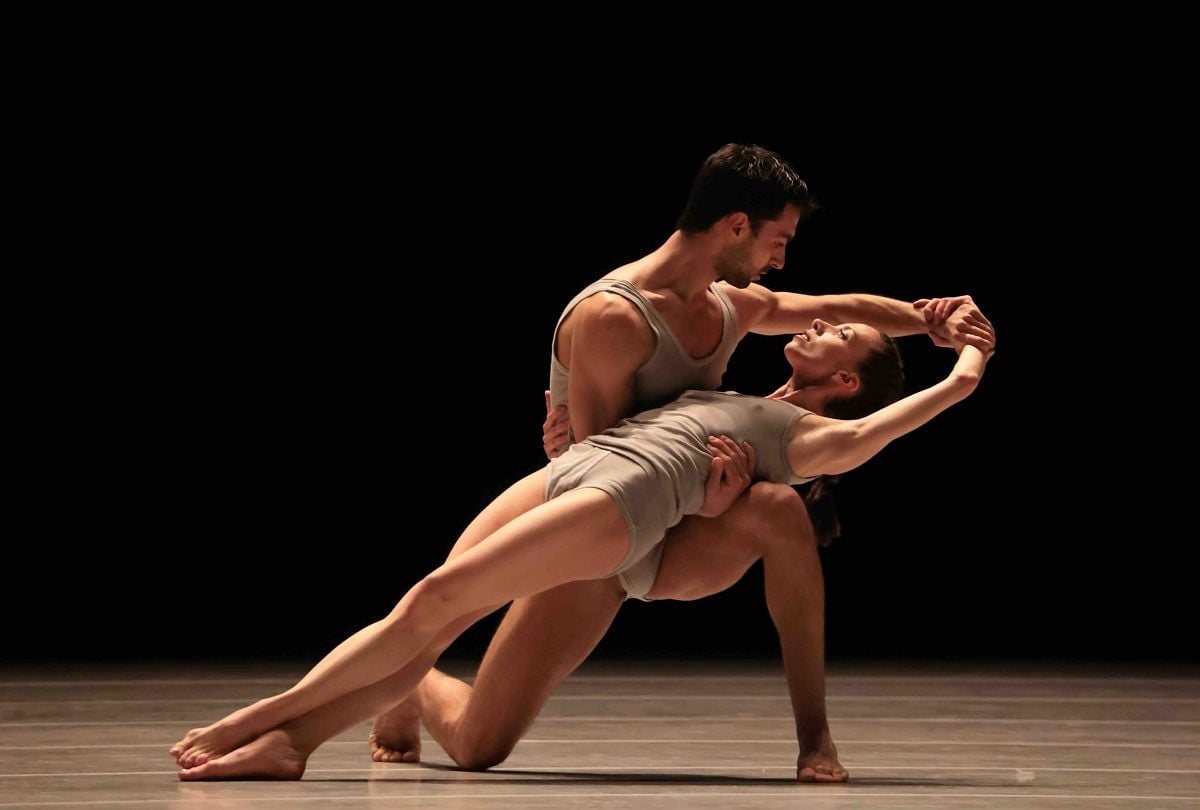
Jean-Christophe Maillot’s Dov’è la luna (‘Where is the Moon’… no question mark) – created for his Les Ballets de Monte Carlo in 1994 – is a dreamy half hour, where figures appear and disappear into Jérôme Kaplan’s largely monochrome set. There is an onstage pianist to perform the nine pieces by Alexander Scriabin (played with intense introspection by Leonardo Pierdomenico) for just seven dancers in grey shorts and singlets, with Maillot’s simple yet hypnotic choreography.
Maillot created this piece as his father was dying. In a programme note, he writes eloquently about that time:
For this reason, this ballet has neither a beginning nor an end in the strict sense. It is in a state of transition… The transitory seems to me to be the only possible permanent state. In some mythologies, the moon is this place of passage, between life and death – between death and life. It symbolises a space where a second birth is being prepared. At that time, this rebirth had not yet appeared to me. But a helping hand was laid upon my pain. It did not seek to erase it: it illuminated it differently, with delicacy and restraint. It gave the darkness a benevolent face.
Very much an ensemble piece, it features two dancers who are slightly more prominent, danced magnificently by Maria Celeste Losa and Roberto Bolle.


The triple bill opened with Wayne McGregor’s Chroma, receiving its Italian debut on the twentieth anniversary of its creation. It is also 20 years since McGregor first worked at La Scala, directing and choreographing Purcell’s Dido and Aeneas. Woolf Works received its Italian premiere at La Scala in 2019, and in 2022, his AfteRite was paired with LORE, a work created for La Scala. On that occasion, McGregor said of La Scala’s dancers, “They are fearless. They are flexible mentally to allow for my non-linear way of working.” Indeed, they are very suited to dancing his work.
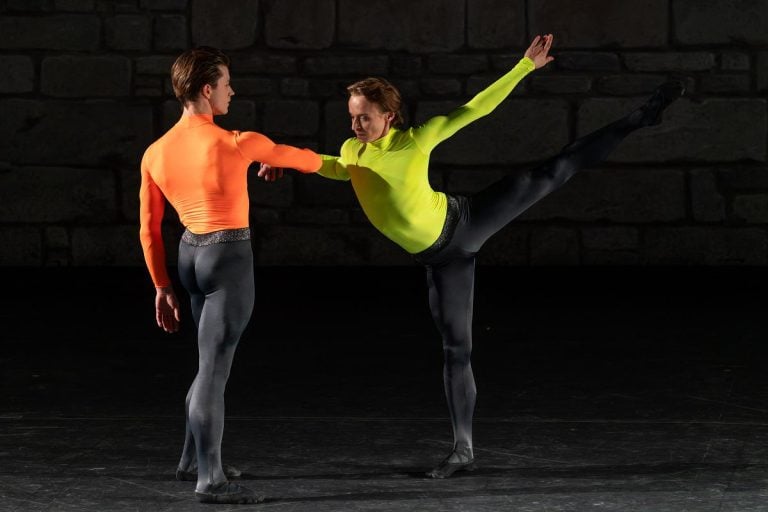
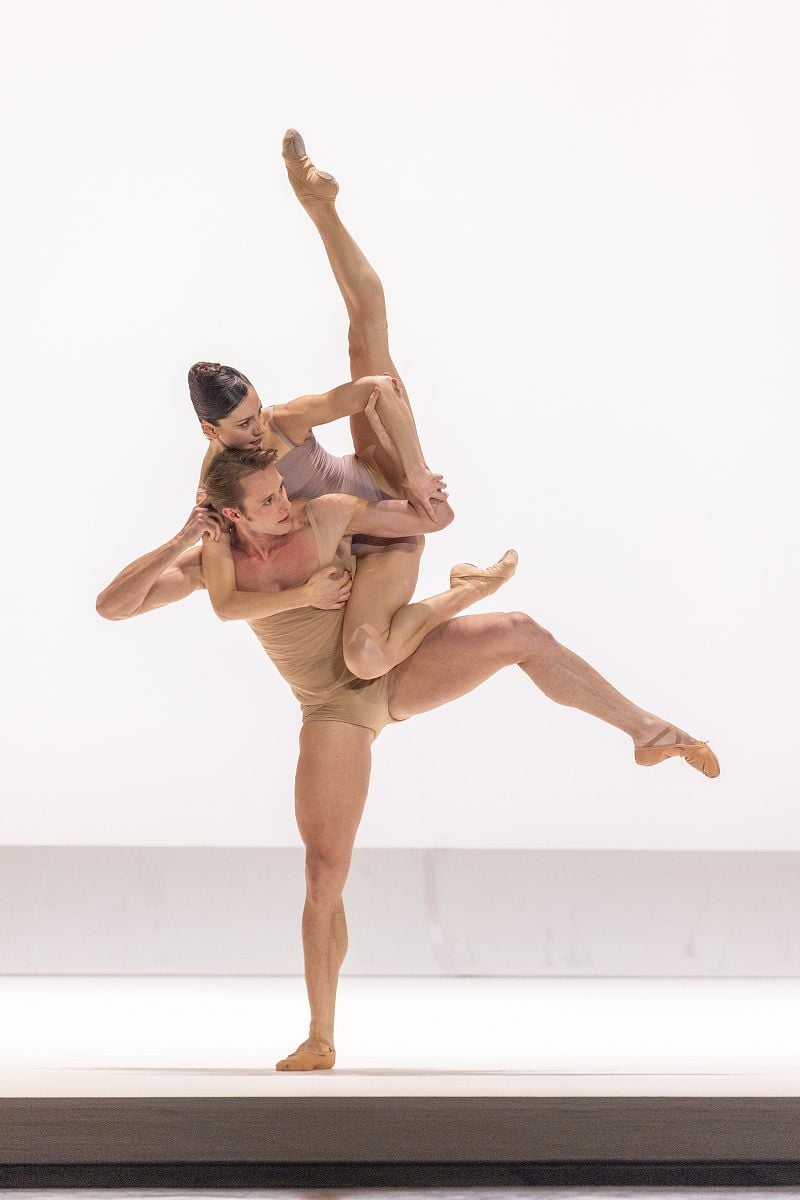
Hyperextensions that caused such consternation in the 80s – Financial Times critic Clement Crisp famously described Sylvie Guillem’s signature 180‑degree à la seconde pose as “vulgar” – are now commonplace, but the delicate control with which Nicoletta Manni brought her leg to (and well past) this position gave the movement an expressive quality, and, of course, it is no longer the preserve of the women – Domenico Di Cristo constantly excels in this repertoire. A sinewy Manni was ably partnered by Timofej Andrijashenko, and Claudio Coviello, who is always a communicative force, also stood out from the hard hitters that La Scala fielded for this premiere.


The sensory overload from Joby Talbot’s almost violently amplified score is forceful, and when combined with the blindingly lit white box set by architect John Pawson, it’s a curtain opener that knocks you back into your seat like a rocket launch. McGregor’s intelligence, though, tells him how to mix his ingredients, and the doses are balanced, so the angular, metallic, musical throb becomes lyrical, and Lucy Carter cleverly fine-tunes her lighting so that the concave becomes convex, the deep becomes shallow, and McGregor’s choreography reflects this subtleness after the neck-grabbing wham-bam of the opening. It is clear why former director of The Royal Ballet, Monica Mason, appointed McGregor as the company’s Resident Choreographer in December 2006, just one month after the premiere of Chroma.



Graham Spicer, aka ‘Gramilano’, is a writer, director and photographer based in Milan. He was a regular columnist for Opera Now magazine and wrote for the BBC until transferring to Italy. His articles have appeared in various publications from Woman’s Weekly to Gay Times, and he wrote the Danza in Italia column for Dancing Times magazine. Graham was the historical advisor on Codice Carla, the 2023 documentary on Italian ballerina Carla Fracci.
Graham also works as a dance photographer, and his photos have appeared in many books, theatre programmes, and magazines, including Dancing Times, Dance Spirit and Ballet2000, as well as all the major Italian newspapers.
He is a member of the Dance Section of The Critics’ Circle.