Review: A Single Man “with two of our finest male dancer-actors”
Jonathan Gray sees The Royal Ballet and Factory International’s A Single Man – I wanted to be moved more
| Title | A Single Man |
| Company | The Royal Ballet and Factory International |
| Venue | Linbury Theatre, The Royal Opera House, London |
| Date | 8 September 2025 |
| Reviewer | Jonathan Gray |
I wanted so much to admire Jonathan Watkins’ new two-act dance version of Christopher Isherwood’s novel A Single Man, which opened The Royal Ballet‘s new season at the Linbury Theatre on 8th September. First seen at the Manchester International Festival last July, it is wonderfully performed, but by the end of the evening I wanted to be moved by the production more than I was.
Watkins has a good track record in adapting books into successful dance works, most notably his compelling staging of George Orwell’s 1984 for Northern Ballet a decade ago, which I count as one of that company’s greatest artistic achievements. He seemed, therefore, to be the perfect choreographer to tackle Isherwood’s subtle story about George, a middle-aged gay man coping – or not coping – with the death of his long-term younger partner, Jim. Set in California in the early 1960s, the novel deals poignantly with the grief George cannot express openly to anyone but his closest friends, something that was also conveyed in Tom Ford’s fine 2009 film version of the novel.
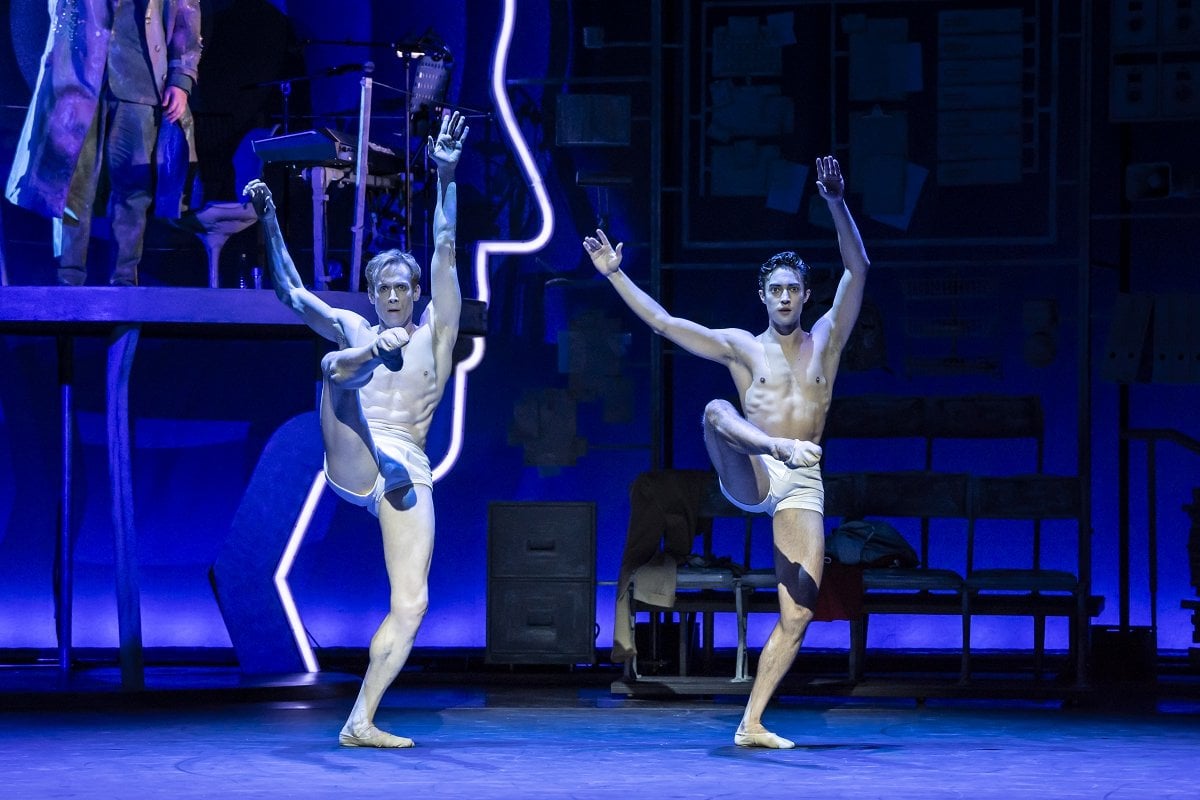
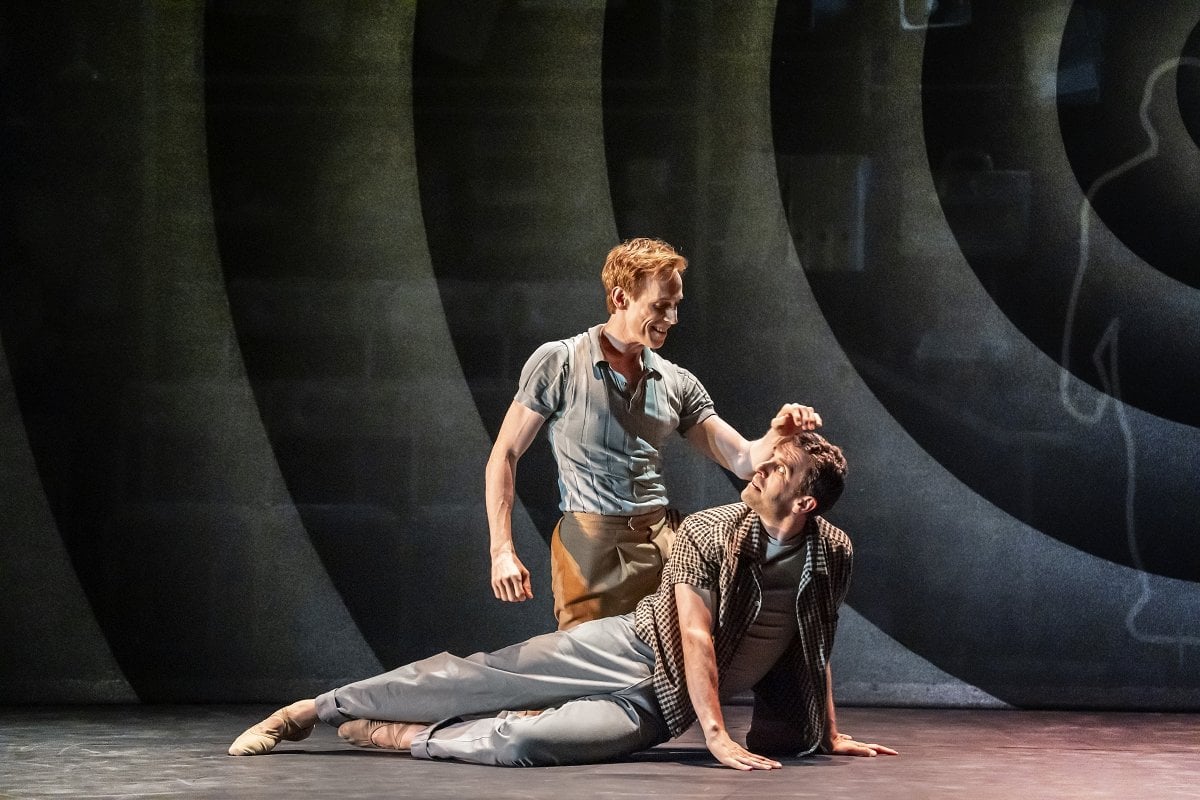


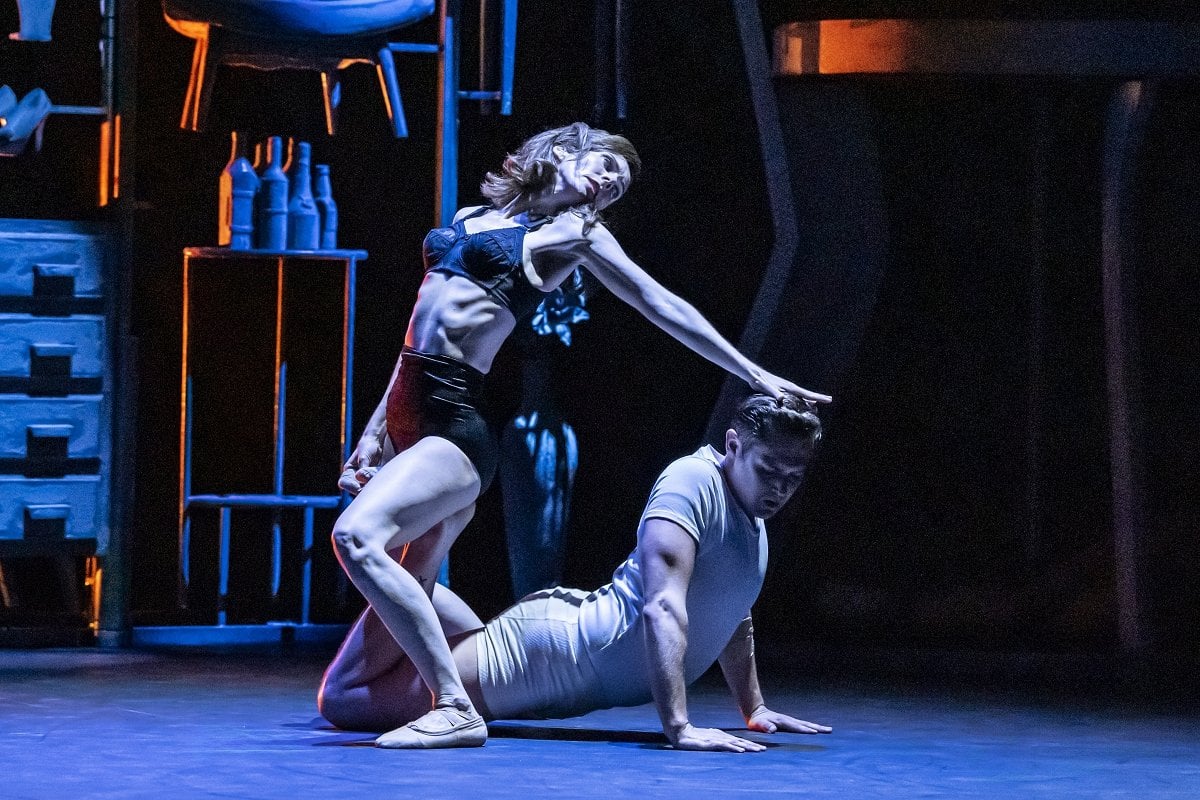
Danced to a new, yet low-key and unmemorable musical score by Jasmin Kent Rodgman, and with original songs composed and sung by John Grant, the production sets out to depict a day in the life of George. He is portrayed on stage by both a dancer (Edward Watson) and a singer (Grant, who performs on a platform above). Watson is seen from the moment he awakes in the morning to when he falls asleep at the end of the day in dance movements that depict him driving to the college where he works, teaching his students, exercising at the gym, getting tipsy with his close female friend Charley (Kristen McNally), and then later that night getting amorous in a bar and swimming in the ocean with Kenny (James Hay), one of his students. At all times, he is haunted by memories of Jim (Jonathan Goddard). Alongside the main characters, Watkins also deploys a small ensemble of dancers to portray, in extended dance passages, George’s fellow commuters, his students, the athletes at the gym, customers at the bar, and even the waves of the ocean. They also represent the fatal car in which Jim dies.
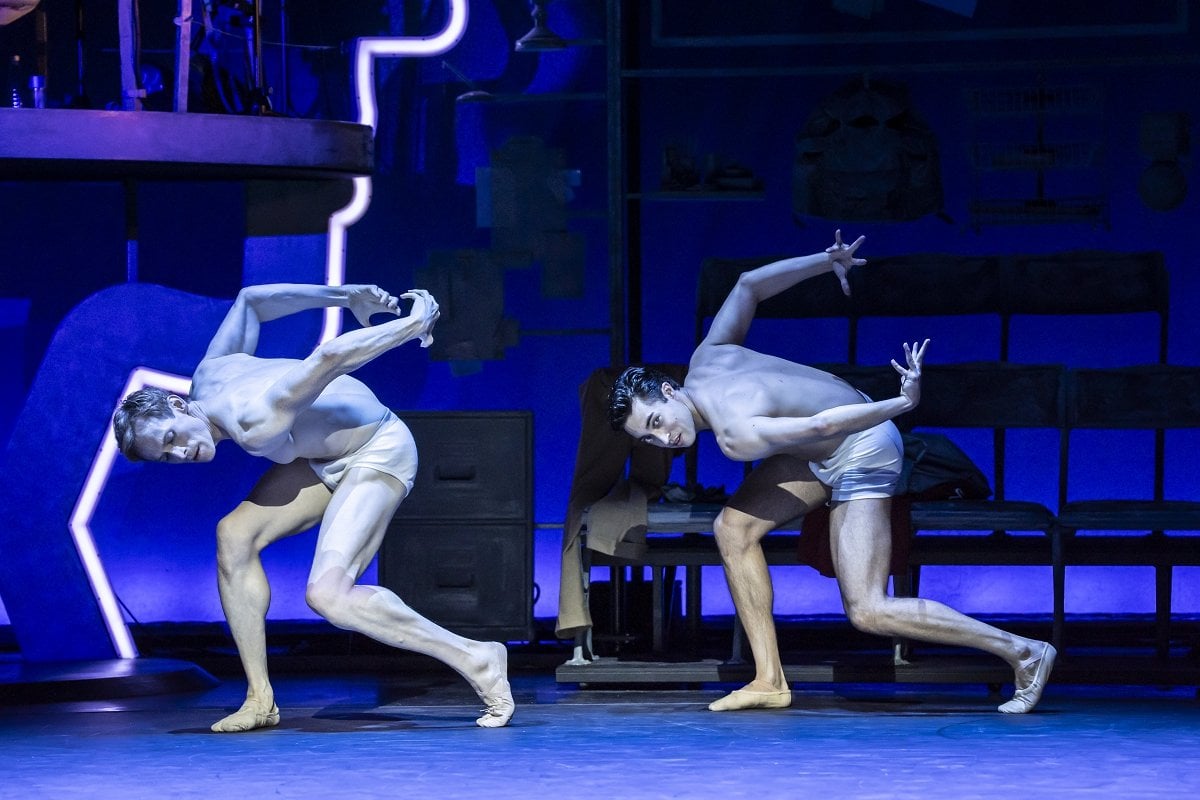
Watkins’ choreography is at its most direct and moving in the duets composed for George and Jim, which express beautifully their feelings of desire and companionship before Jim’s death, and George’s wrenching anguish after their separation. The dances are melting and comforting, or knotted and tense, the two men’s limbs softening and tightening around each other. It is a loving, tragic relationship that is brilliantly suggested through wiry, electric intensity by both Watson and Goddard, two of our finest male dancer-actors, who dominate and enhance the performance.
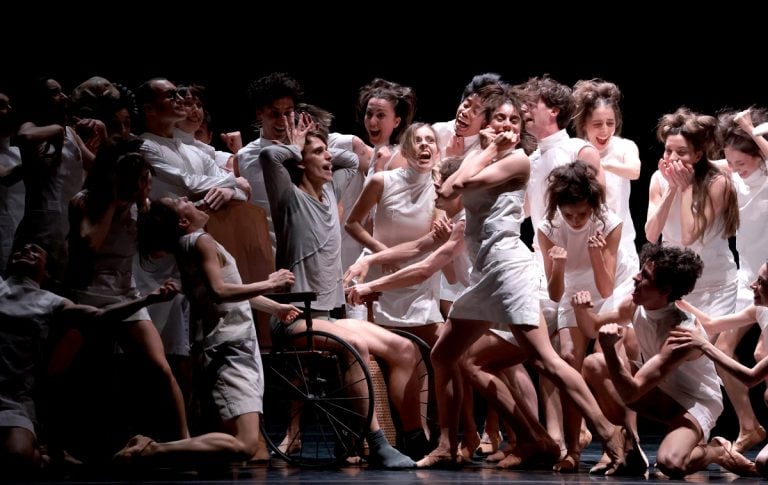
Elsewhere, Watkins is less sure in his handling of the roles for Charley, who seems simply to move from one dizzy, tipsy moment to the next, and Kenny, who has little to do other than smile and dance sexily. I found the least successful elements of the production, however, to be the sections for the ensemble (which includes such admirable artists as Marie Astrid Mence, Harry Alexander and Greig Matthew). Their choreography was not only undistinguished as dance, but it held up the action rather than help to move it forward, thereby diminishing the impact of the work as a whole. If Watkins can find time to cut the padding of the ensemble dances, place further emphasis on the duets for George and Jim, and commission more attractive costumes for the cast, I believe he could shape A Single Man into a stronger and much more affecting work than it is at the moment.


Jonathan Gray was editor of Dancing Times from 2008 to 2022.
He studied at The Royal Ballet School, Leicester Polytechnic, and Wimbledon School of Art where he graduated with a BA Hons in Theatre Design. He was on the Curatorial Staff of the Theatre Museum, London, from 1989 to 2005, assisting on a number of dance-related exhibitions, and helping with the recreation of original designs for a number of The Royal Ballet’s productions including Danses concertantes, Daphnis and Chloë, and The Sleeping Beauty.
Jonathan Gray has also contributed to the Financial Times and The Guardian, written programme articles for The Royal Ballet and Birmingham Royal Ballet, and is co-author of the book Unleashing Britain: Theatre gets real 1955-64, published in 2005. He is a member of the Dance Section of The Critics’ Circle.