
Review: Marianela Nuñez and Patricio Revé in the Norwegian National Ballet’s La Bayadère

Graham Watts sees La Bayadère in Oslo, where two stellar dancers shared the stage with an excellent company.
| Title | La Bayadère |
| Company | Norwegian National Ballet |
| Venue | National Opera House, Oslo |
| Date | 17 April 2026 |
| Reviewer | Graham Watts |
2018 was when Natalia Makarova‘s La Bayadère was last performed by either American Ballet Theatre or The Royal Ballet and so it was a no-brainer to visit the beautiful city of Oslo to see this revival of a very special production, made all the more enticing by having what might be a unique opportunity to see one of the world’s greatest ballerinas dancing one of the great classical ballerina roles.
Kudos to Ingrid Lorentzen and Norwegian National Ballet for staging Makarova’s production and inviting Marianela Nuñez and Patricio Revé from London to dance the lead roles of Nikiya and Solor. An added emotional highlight was that Makarova, now 85, was present to coach them, and she came on stage to take a rousing curtain call that seemed as if it would never end!
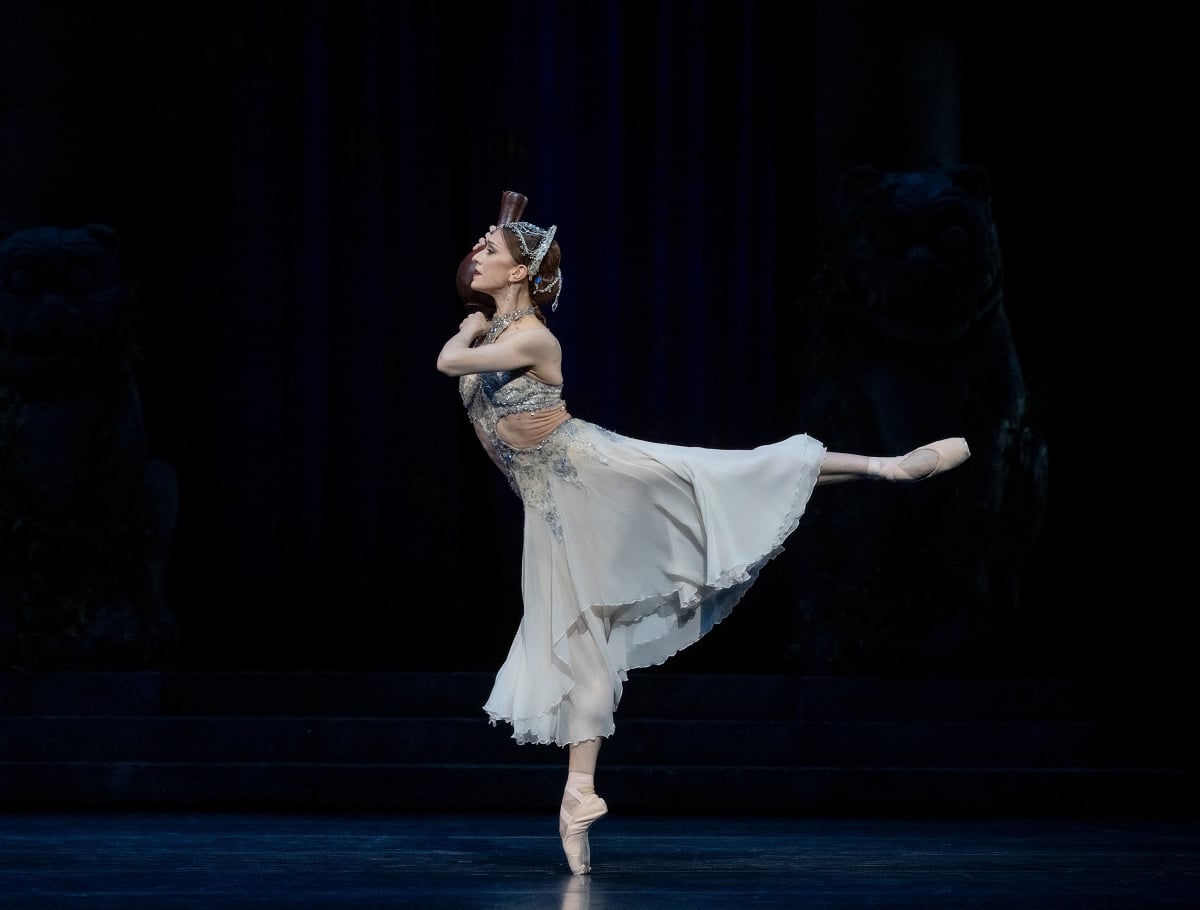
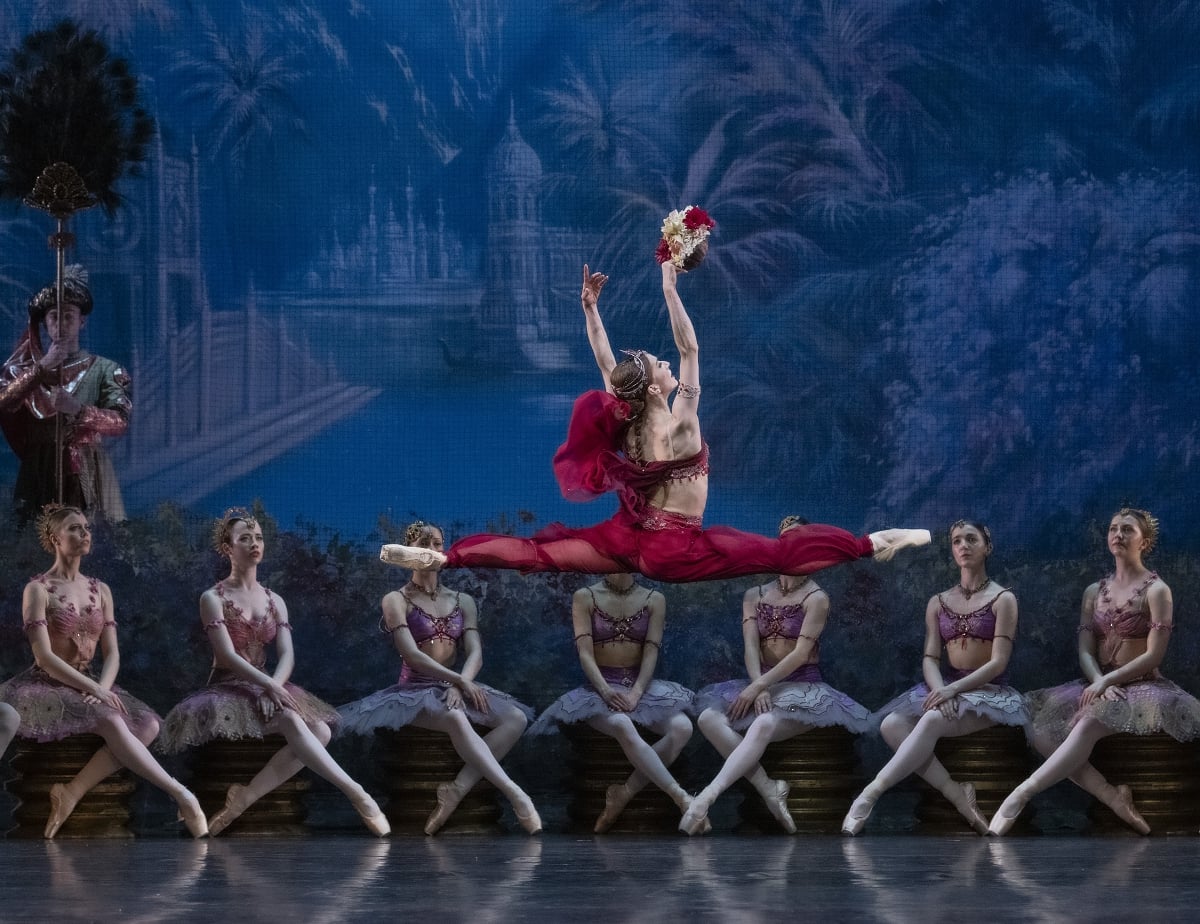
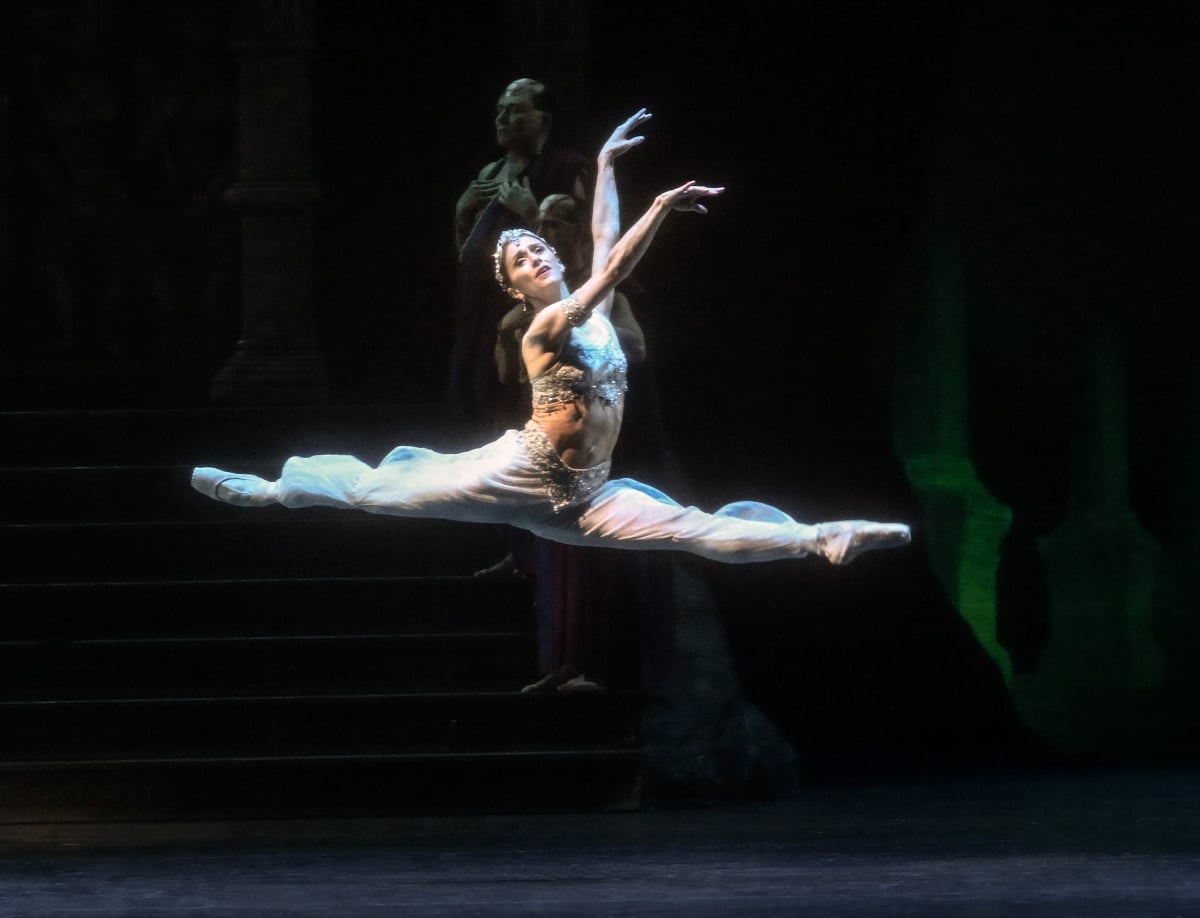
Nuñez never disappoints, and she gave a sensual, fluid and magical performance, clearly inspired by the experience of absorbing Makarova’s wisdom to dance one of her favourite roles with a clarity and freedom that shone through every step and expression.
The highest praise is also due to her partner. Revé commanded the stage with such confidence and charisma that there could be no doubt that here was a heroic warrior. He entered the ballet, early in the first scene, returning from a hunt with all the imperious mannerisms of a man who could probably have slain the enormous tiger with his bare hands. This confidence carried through into Revé’s dancing, where multiple pirouettes slowed into perfect balances, and every jump was delivered with impeccable elevation, technique and timing. The Norwegian audience has an enthusiastic habit of breaking into applause mid-sequence in recognition of exceptional virtuosity and Revé gave them several opportunities to do so.
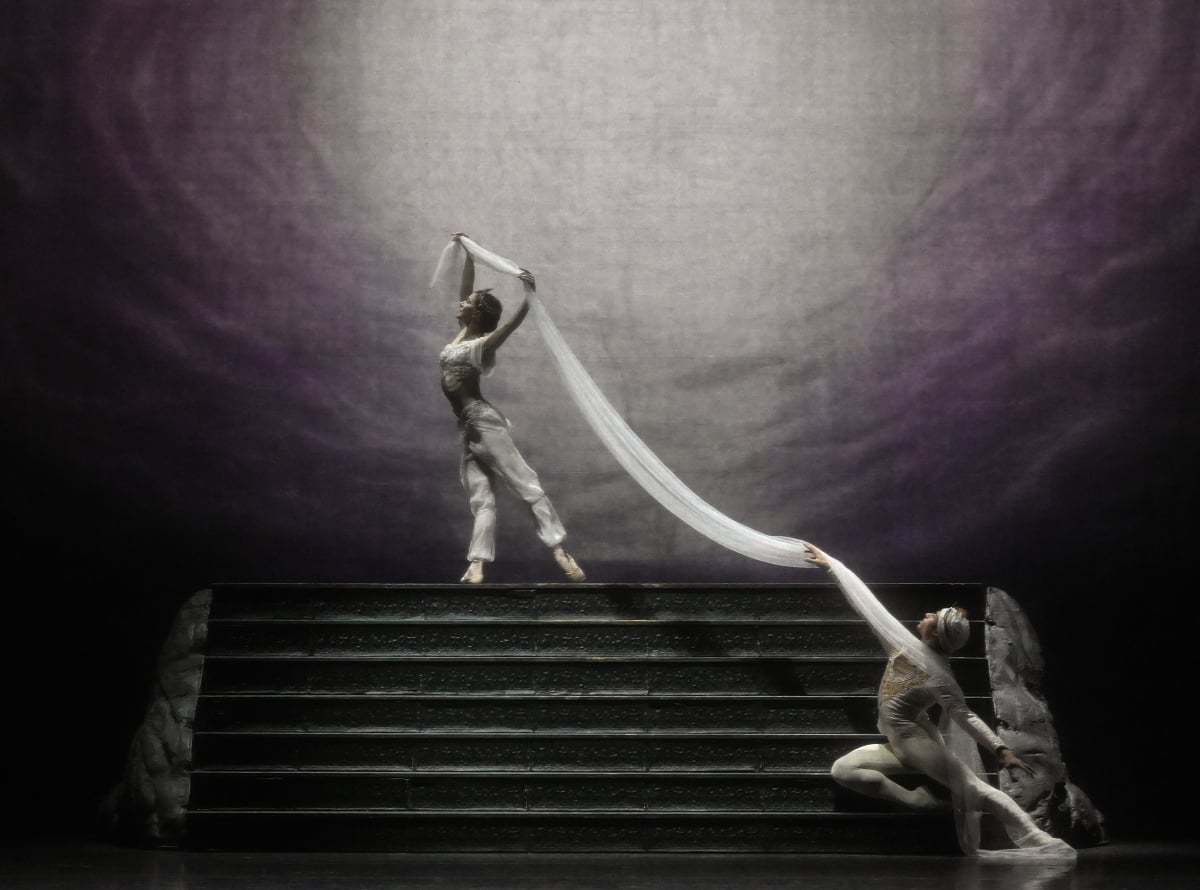
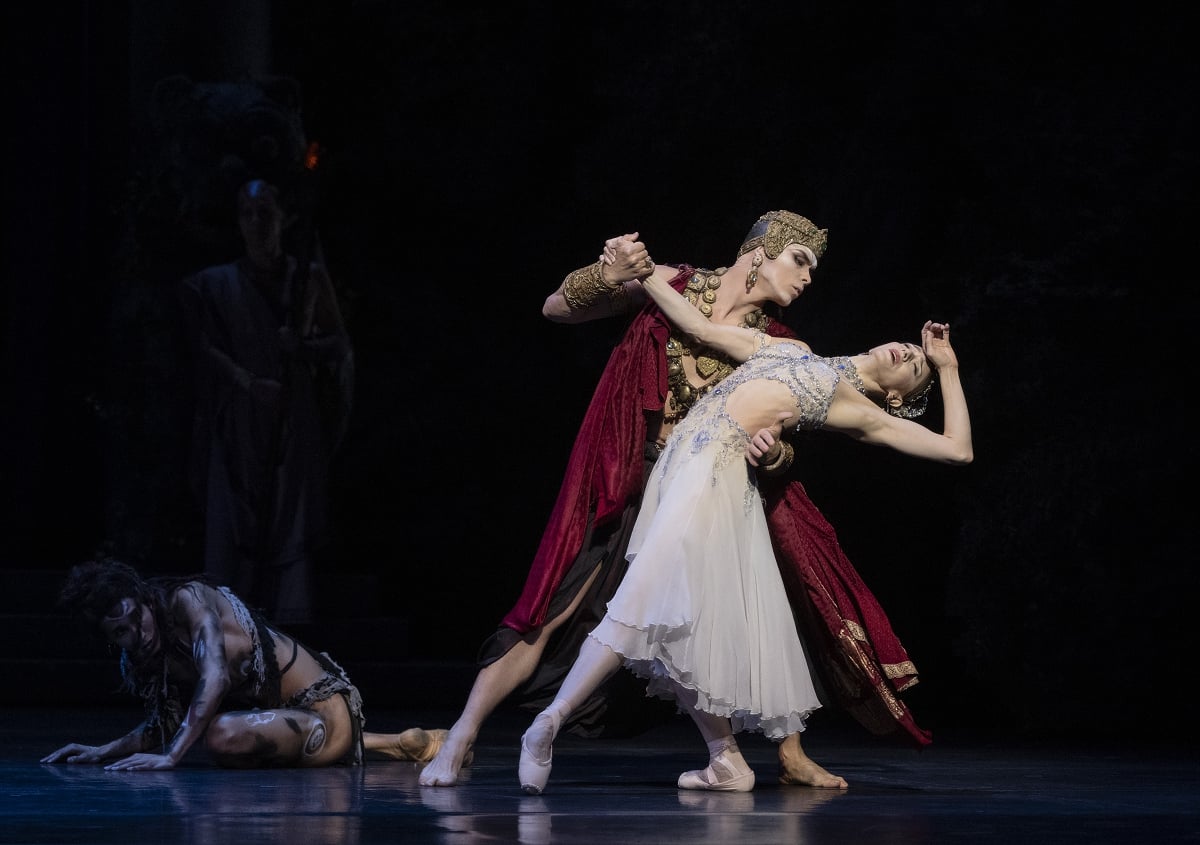
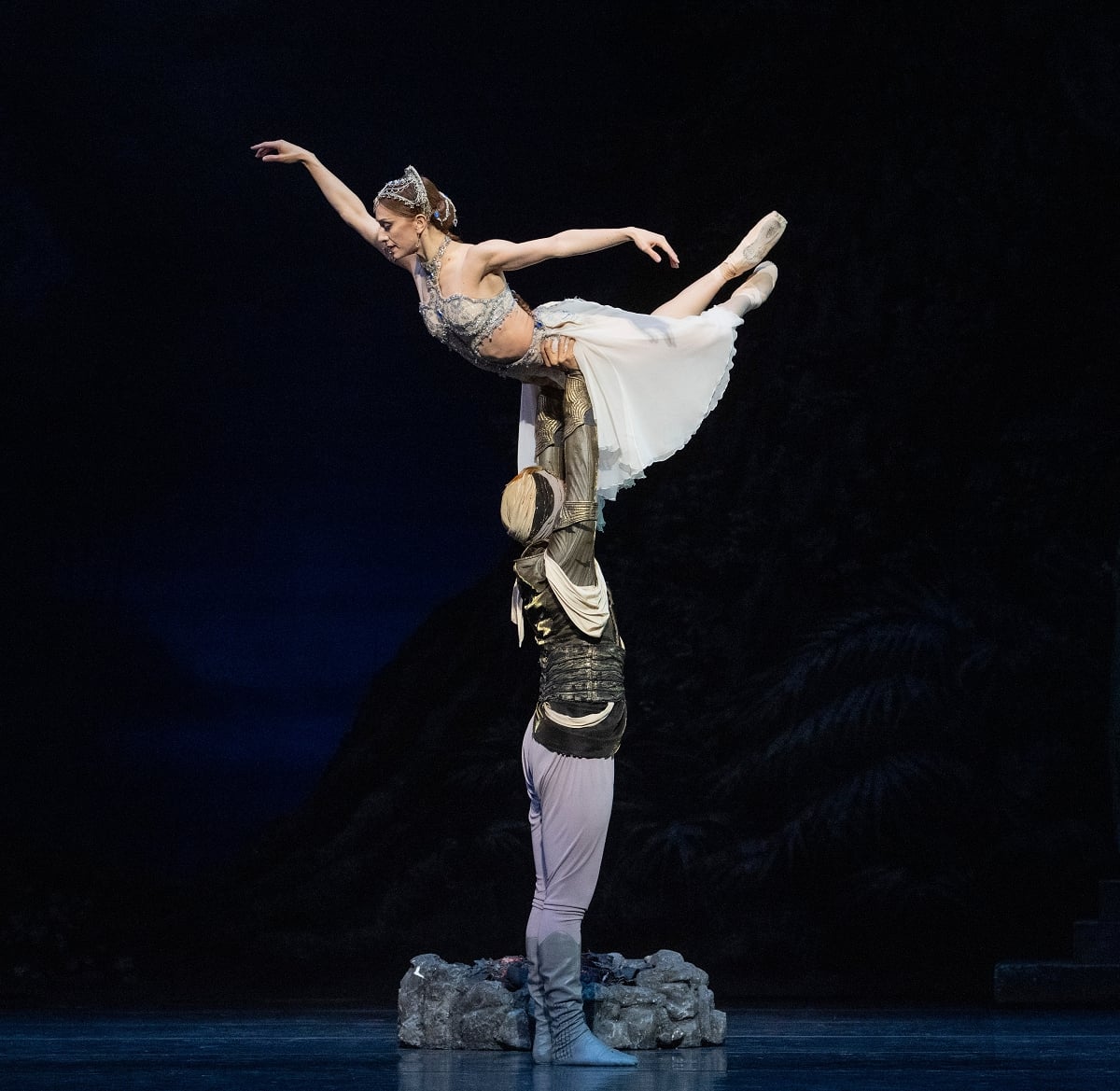
Revé resonates strength and security, while Nuñez has a svelte coolness and an emotional integrity that is meltingly delivered through her expression and movement. Their partnership is an exciting prospect for the future. Margot Fonteyn was 42 when she first danced with Rudolf Nureyev, thus gaining an astonishing extension to her career, and I hope and believe that we may experience a similar continuation in the dancing of this most precious ballerina.
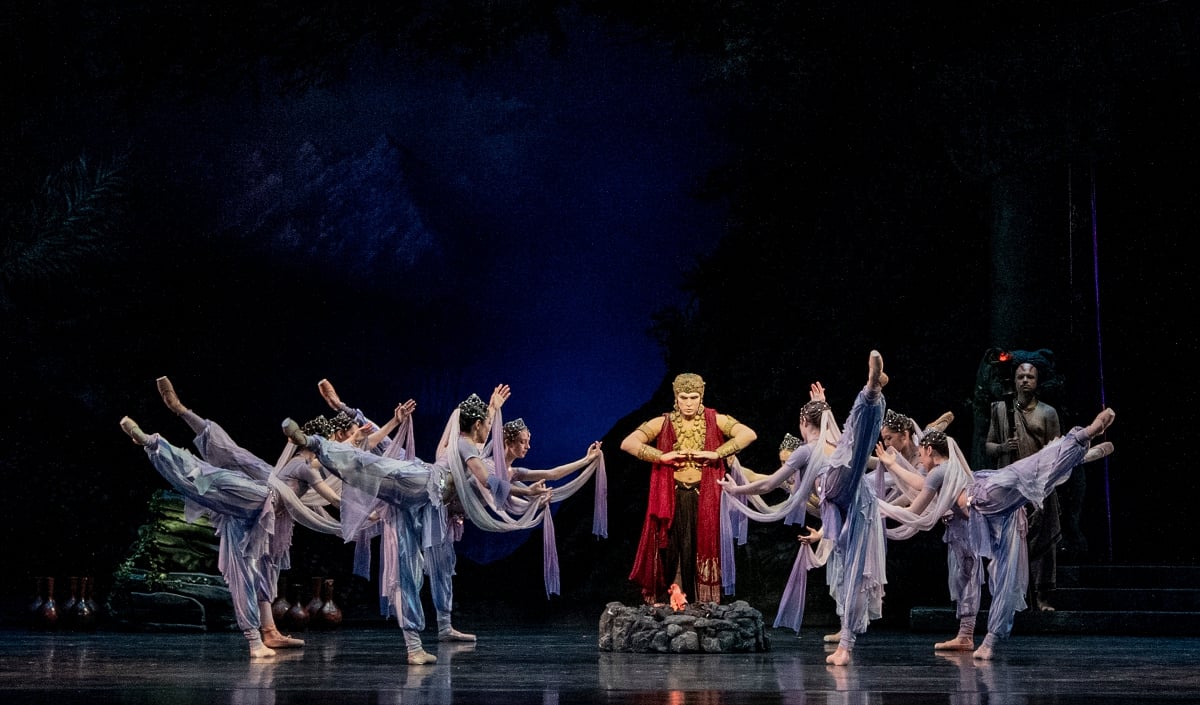
But, back to the show at hand, which was a faithful representation of this fanciful and exotic story of doomed love and spiritual reconciliation. The setting for the betrothal scene was especially spectacular although there were a couple of aspects of the staging that didn’t work for me: when Magdaveya, the lead fakir, and the High Brahmin summon the fire from the pit in the first scene, there appeared to be no fire, which somewhat spoilt the intended effect; and the seismic impact of the Kingdom of the Shades is greater when they spend more time in their spiritual descent from the Himalayas: here, the low angle of the ramp meant that they seemed to be already onstage after four arabesques.
The role of Gamzatti, the haughty daughter of the Rajah, is fiendishly complex, particularly in the synchronised jetés and Italian fouettés of her betrothal pas de deux with Solor. Melissa Hough, an American principal with Norwegian National Ballet, was impressive in conveying Gamzatti’s surly, sultry attitude and maintaining this conviction through the difficult choreography.
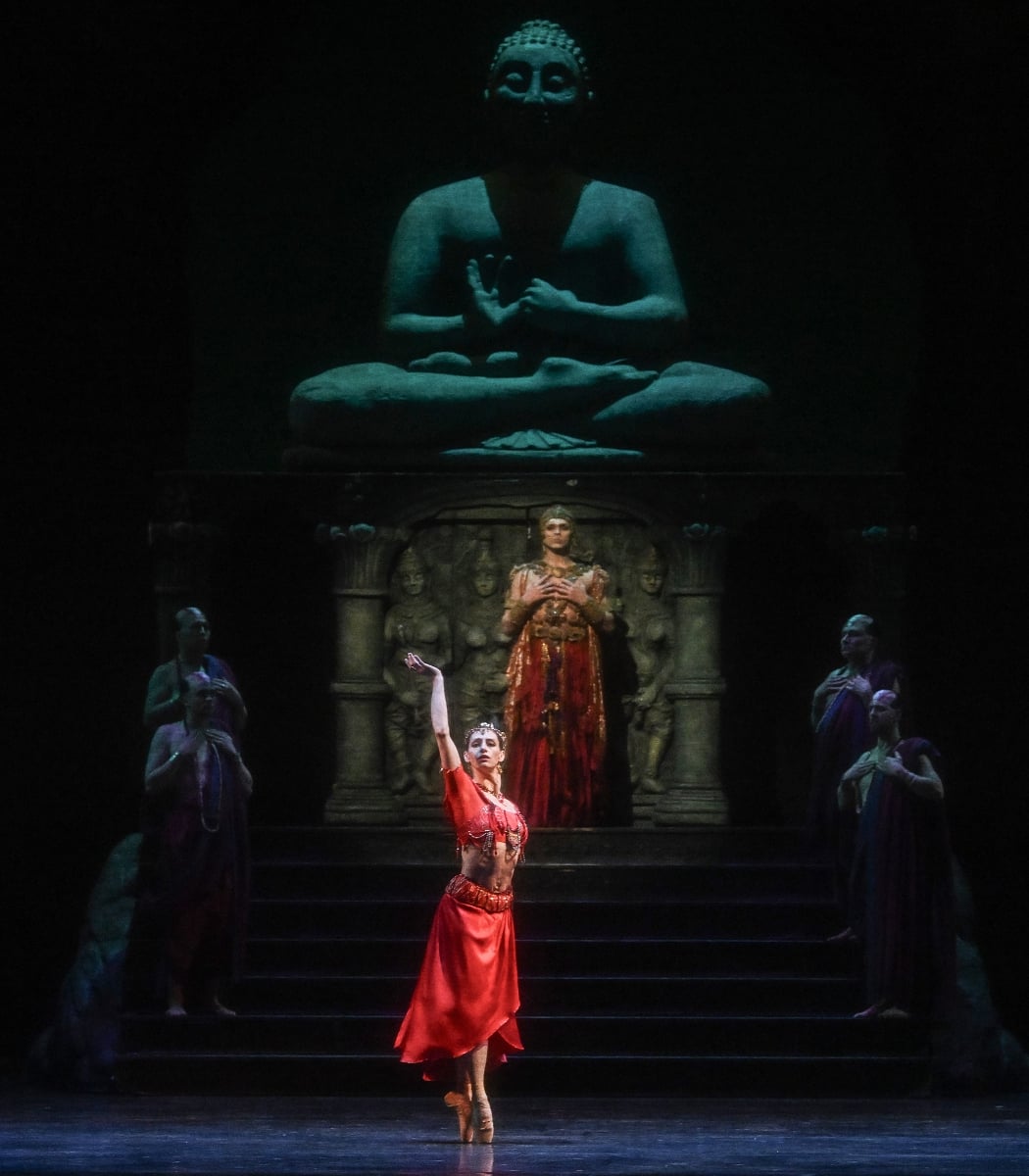
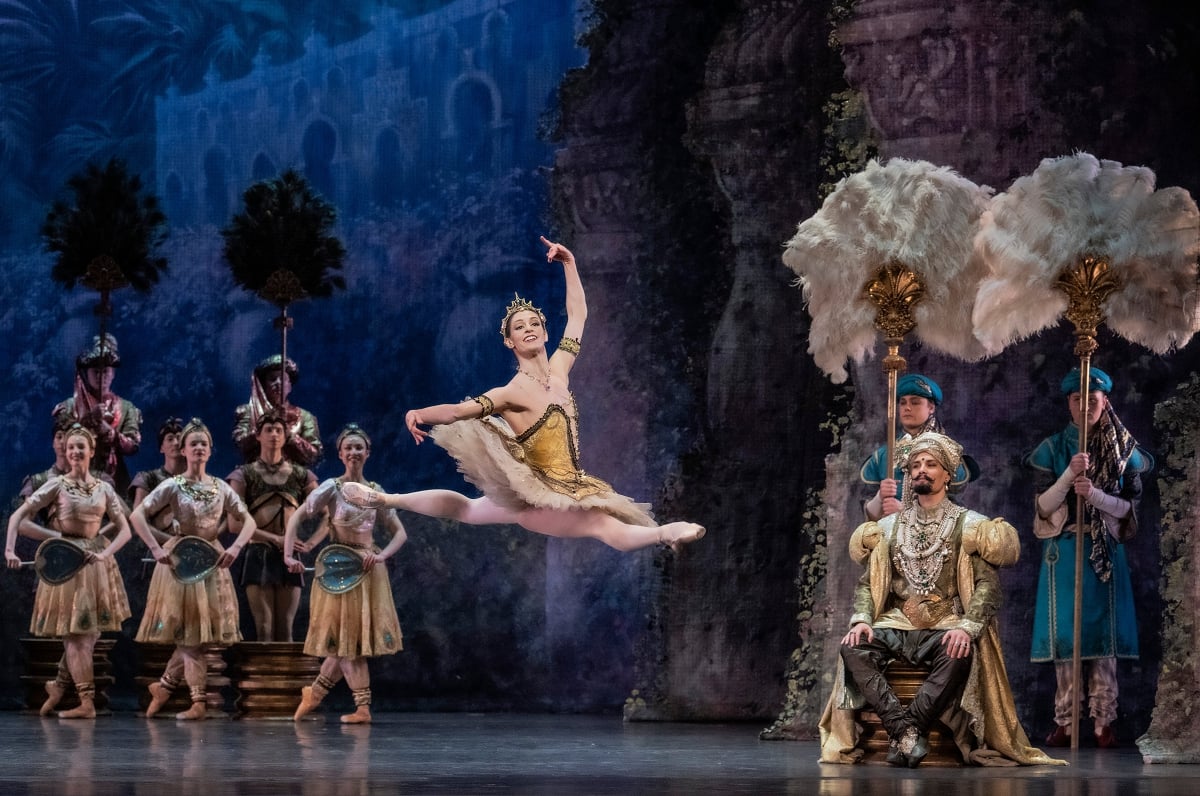
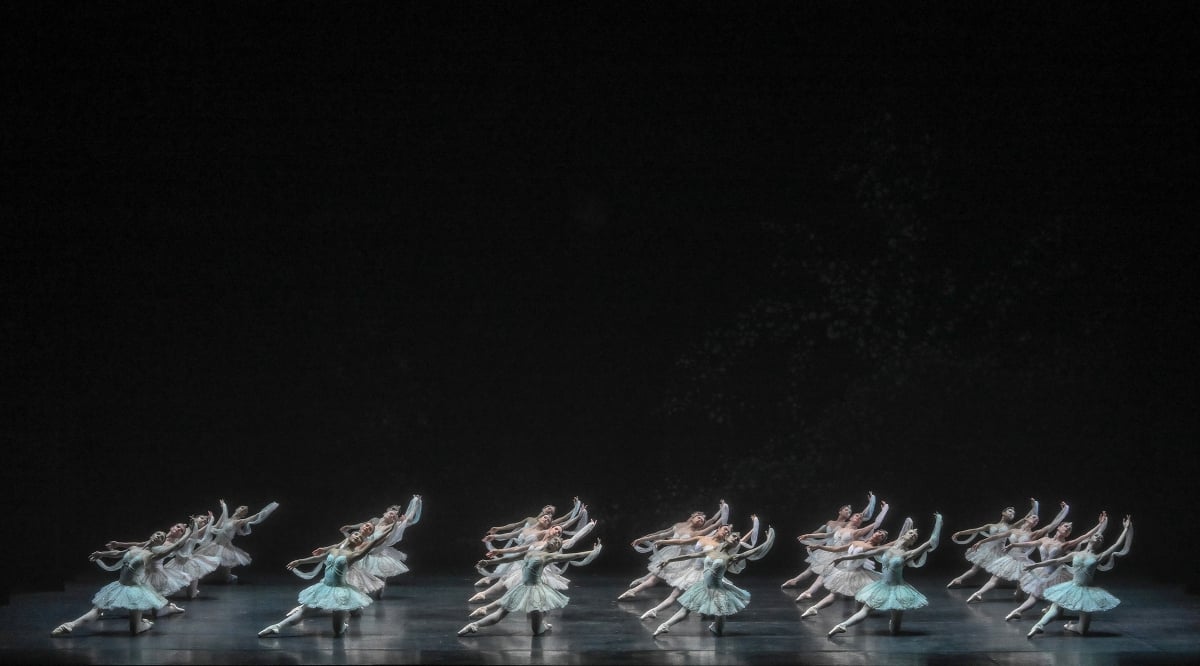
While the corps de ballet was suitably mesmeric with beautiful symmetry and unwavering balances in the notoriously complex seven minutes in the Kingdom of the Shades, there was a little unevenness in other group dances, which will hopefully settle with more performances. On a personal level, it was a pleasure to once again see Gina Storm-Jensen (a Gamzatti in a later cast) performing as one of the dancers in the Pas D’action betrothal celebrations. The difficult D’Jampe dance, where the eight dancers perform with scarves tied to their legs, was danced strongly despite the restriction.
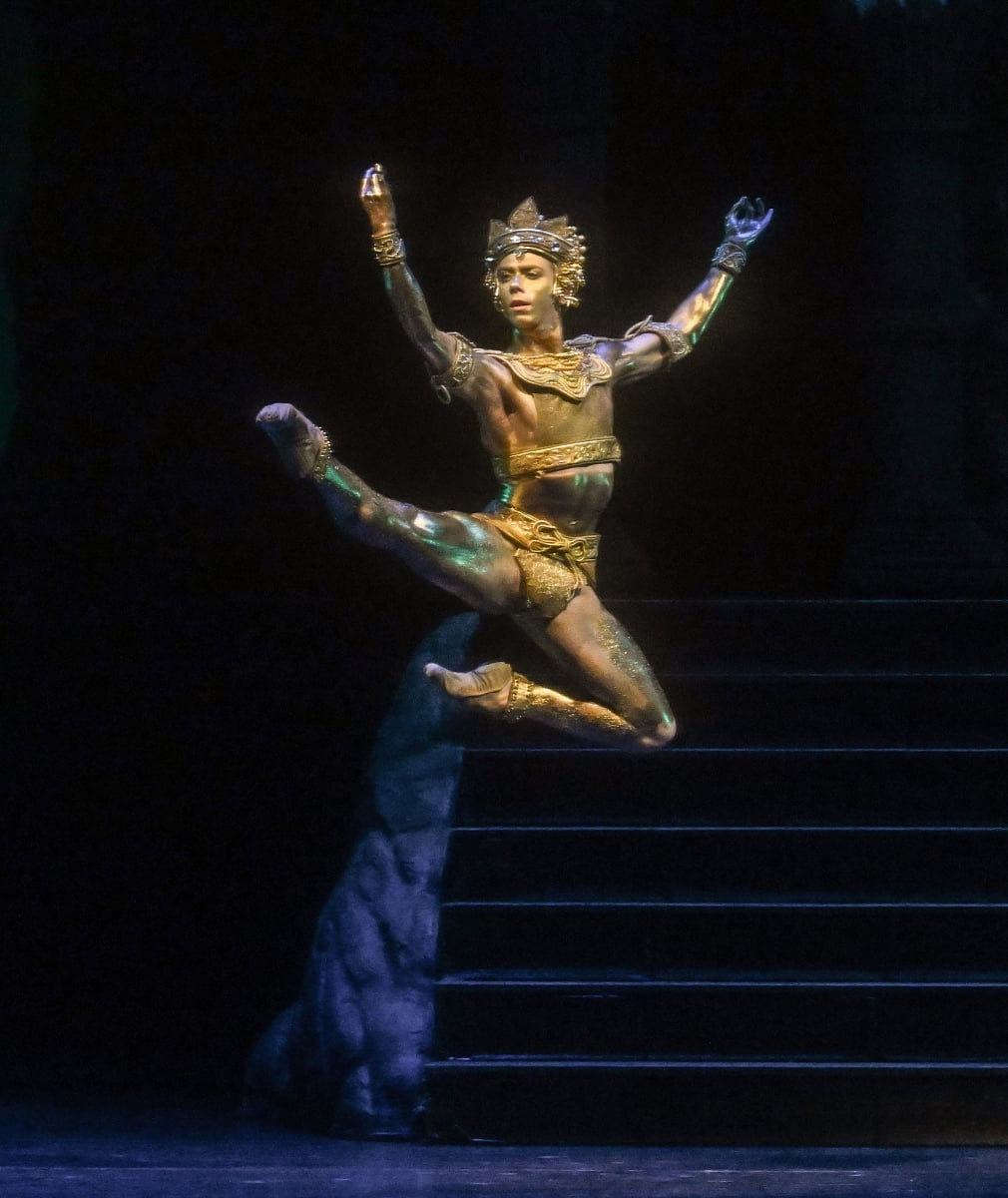
In other solo roles, Giuseppe Ventura delivered an exciting cameo as the Bronze Idol; Pedro Alcantar stretched every sinew in his leaping and stretching as Magdaveya; Vasili Tkachenko was an ominous and imposing High Brahmin; the Rajah was portrayed with appropriate majesty by Leonardo Basilio; and a special mention for Thea Gudim Breder as the servile Aya, Gamzatti’s humble handmaiden. The Opera House in Oslo is renowned for excellent acoustics, and John Lanchbery’s arrangement of the Minkus score was performed superbly by the orchestra, conducted by Emmanuel Siffert.
Now nearly half a century old, Makarova’s production of La Bayadère is a timeless classic that deserves to be seen. Congratulations to Norwegian National Ballet for this opportunity and for inviting two stellar dancers to share the stage with their excellent company. It was a special moment to witness Makarova, one of the few remaining legends of twentieth-century ballet, take the stage, and her delight with this performance was clear for all to see.


Graham Watts is a freelance writer and dance critic. He writes for The Spectator, Tanz, Shinshokan Dance Magazine (Japan), Ballet Magazine (Romania), BachTrack and the Hong Kong International Arts Festival and has previously written for the Sunday Express, Dancing Times, Dance Europe, DanceTabs, London Dance, the Edinburgh International Festival and Pointe magazine (USA). He has also written the biography of Daria Klimentová (The Agony and the Ecstasy) and contributed chapters about the work of Akram Khan to the Oxford Handbook of Contemporary Ballet and on Shobana Jeyasingh for the third edition of Routledge’s Fifty Contemporary Choreographers.
He is Chairman of the Dance Section of The Critics’ Circle and of the UK National Dance Awards and regularly lectures on dance writing and criticism at The Royal Academy of Dance, The Place and (until the war) for Balletristic in Kyiv. He was a nominee for the Dance Writing Award in the 2018 One Dance UK Awards and was appointed OBE in 2008.


An excellent review, Graham. Thank you. When will the RB finally confer the title of Prima Ballerina Assoluta on Marianela Nuñez, one of the most exceptional ballerinas to have danced in the history of classical ballet. It is long overdue and richly deserved. It would be an honour, I am sure, that would be universally welcomed throughout the international dance community It should be given to her while she is still dancing at her peak.
Marianela Prima Ballerina Assoluta! I have mixed feelings. On one side I love her dearly and think that she deserves the title and it would be an enormous source of pride in the Argentinian Ballet community, on the other side I would feel very bad that my also adored Margot Fonteyn would loose her title or have to share it…