Review: Nureyev’s The Sleeping Beauty at La Scala – thrilling in its eccentricity

Graham Spicer sees Rudolf Nureyev’s The Sleeping Beauty at La Scala with an electrifying Martina Arduino as Aurora.
| Title | The Sleeping Beauty |
| Company | Ballet of La Scala |
| Venue | Teatro alla Scala, Milan |
| Date | 9 January 2026 |
| Reviewer | Graham Spicer |
After six years, Rudolf Nureyev‘s Sleeping Beauty is back at La Scala. Unusually, it is enjoying a long run of 14 performances, which may not sound like many for those cities used to daily Nutcracker performances during Christmas month, but for Milan this has become rare. The programming has paid off, with sold-out notices for every performance.
Nureyev’s version of the ballet was created for La Scala in 1966 with Carla Fracci as Aurora and Nureyev himself as Desiré; the sets and costumes were by Nicholas Georgiadis. The year after Nureyev died in 1993, La Scala staged a new version with sets and costumes credited to Oscar-winning designer Franca Squarciapino (though the sets are obviously by her husband, the late Ezio Frigerio), with Viviana Durante and Manuel Legris in the leading roles.
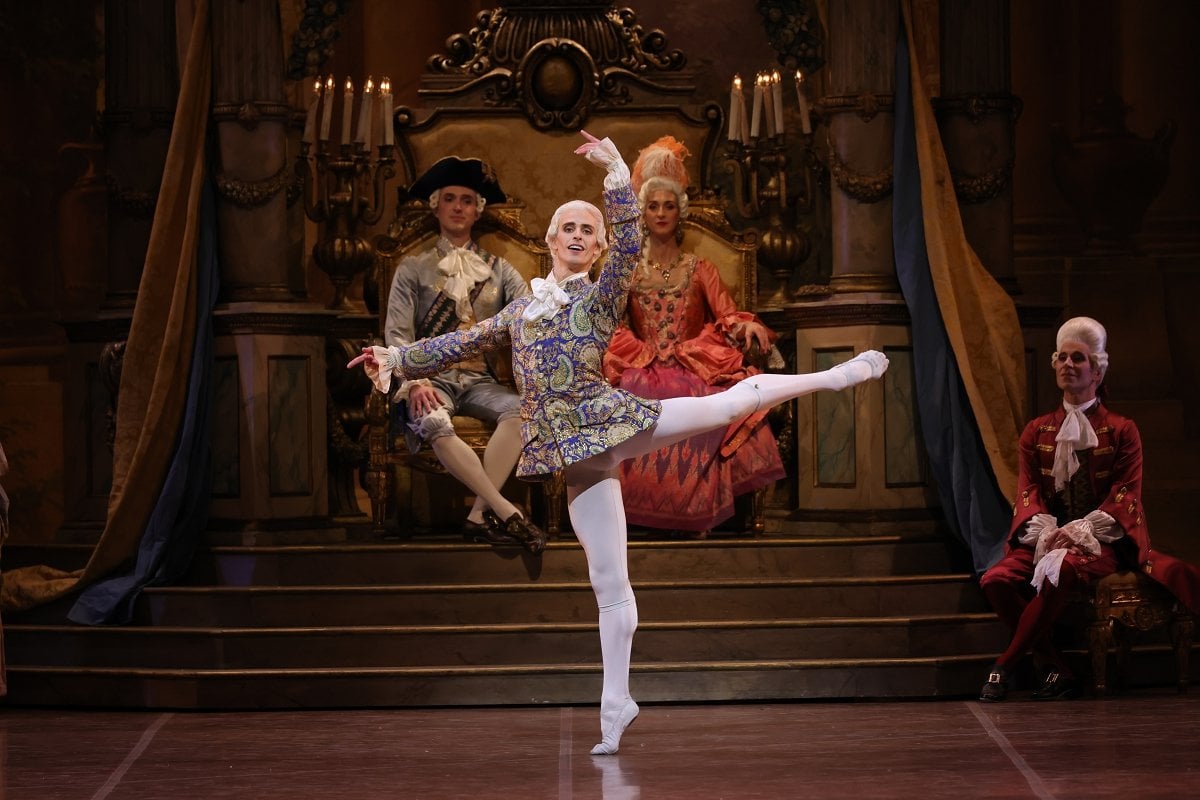


To my eye, it seems that the costumes have been spruced up, showing off gloriously decadent, vivid colours which popped and dazzled. Frigerio and Squarciapino went on to create a similar production in 1997 for Paris Opera Ballet, and then again with another variation on a theme for the Bolshoi Ballet in 2011, though this was with choreography by Yuri Grigorovich.
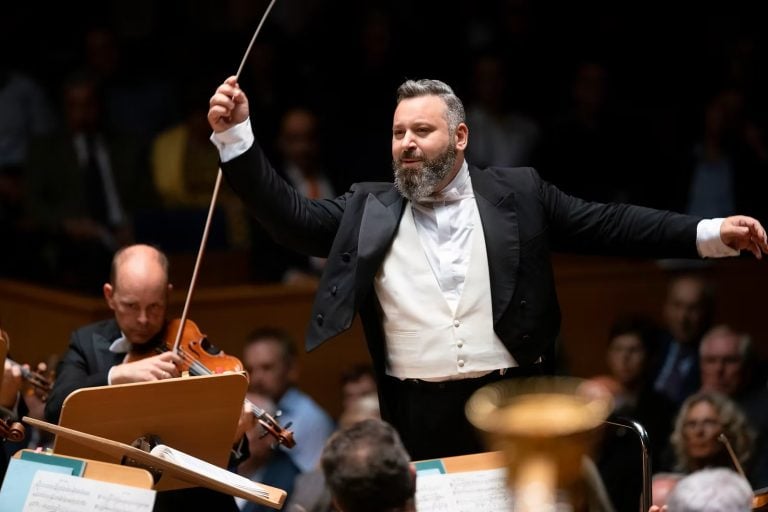
From the first notes of the overture, one knew that it was going to be a musically exciting evening. Conductor Kevin Rhodes often opted for fast-paced tempi, keeping closer to Tchaikovsky’s (and Petitpas’s) intentions rather than the plodding pace, often heard, that diminishes the score’s impetus.
Returning to my observations from the 2019 outing, I found that almost nothing has changed – the plastic baby Aurora is passed around with no pretence at care; the short-sighted Prince looks everywhere except the obvious (and highly illuminated) spot to find Aurora sleeping, and he stubbornly keeps his back towards the Lilac Fairy, who is alone with him on an otherwise empty stage, in a “She’s behind you!” moment; and this fairy tale lacks magic – no smoke bursts for Carabosse, and no mystery as the court simply sits on the floor to sleep for 100 years as the lights are dimmed.
Yet so much is good.


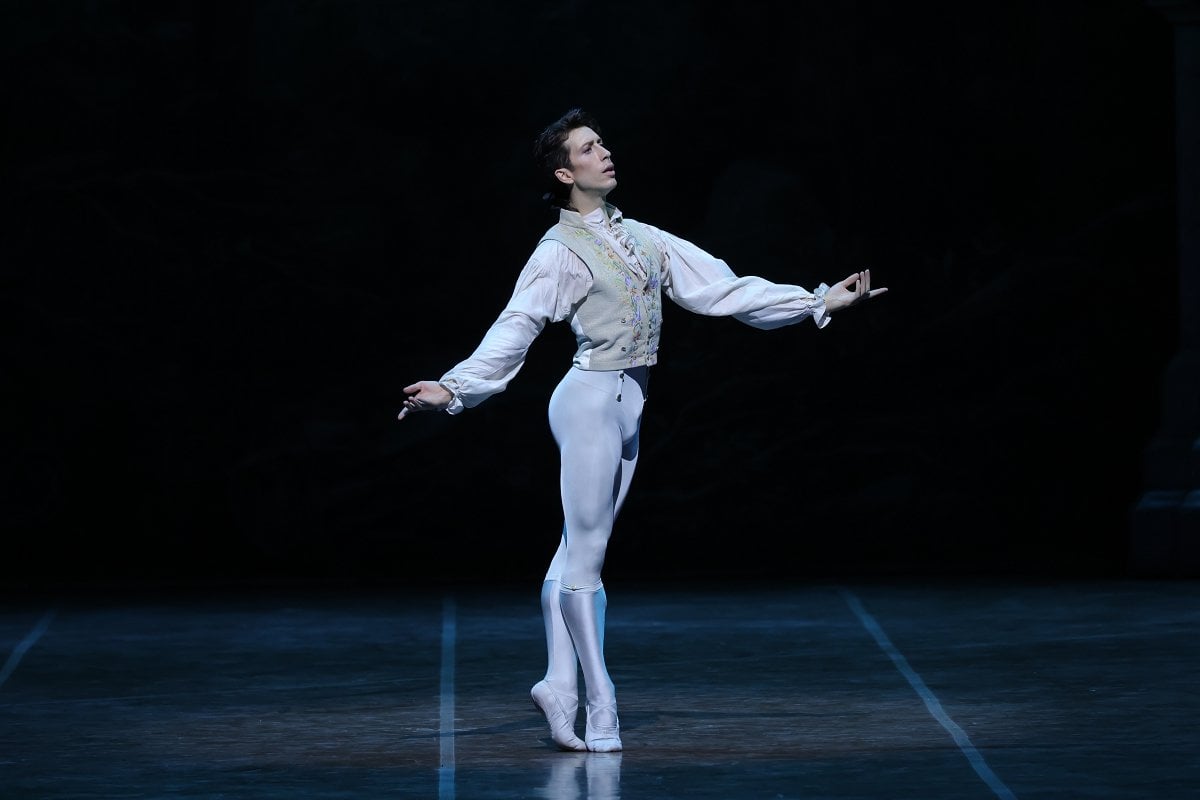


The Prince plucks an arrow from the flank of a trophy stag, just before his courtiers throw arrows haphazardly towards a target, before our hero hits the bullseye on his first try. Aurora lovingly passes her roses to the Queen, instead of hastily chucking them at her feet. And the choreography for the corps de ballet is stunning – imaginative and elaborate.
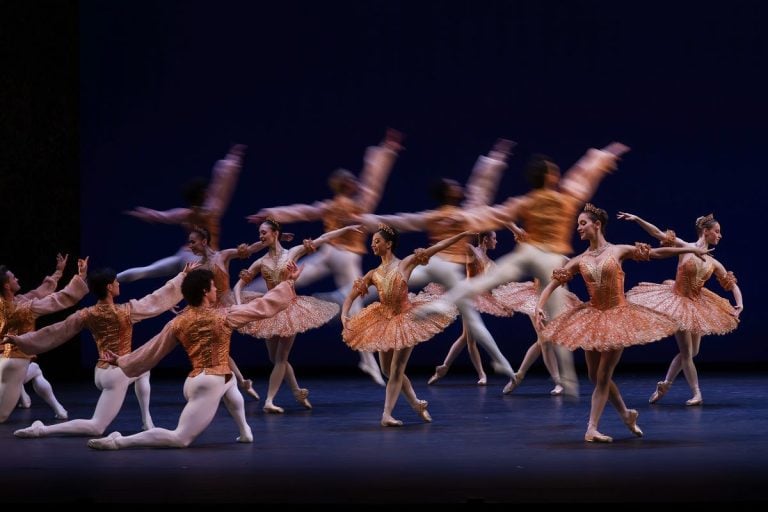
The company is tested to the full by Nureyev’s highly intricate patterning and his complex steps, The Garland Waltz looks like other versions on amphetamines with its rapid pas de bras, the men constantly jeté-ing around the stage, and the women rushing under each other’s arms in rapidly changing formations until, towards the end, they hardly touch the floor as they are either jumping or being held aloft.
The Polonaise of the third act is glorious and, during the last bars, all 12 men leave their partners and perform jetés in a quick manège, before returning to the same position on the final note. Thrilling. And the courtly dance (Sarabande) at the beginning of the third act has the men doing some quirky backwards steps and forward lunges, which gives some oomph to a stately dance.
However, in other parts, the quirkiness seems perverse – change for change’s sake. Even within some of Petipa’s choreography, Nureyev will introduce a change of direction or add an extra step – almost always complicating a sequence as though to challenge the dancer, but rarely adding anything for the spectator. The long solo he created for himself – before the Lilac Fairy whisks him away in a remote-controlled boat to the palace – is full of Nureyev’s signature moves, almost all legwork, with many ronds de jambes, tours en l’air, batterie… but it feels like a test, as though created for a final year dancing exam. Mattia Semperboni – a fine soloist with the company – was pushed to the limits of his abilities.

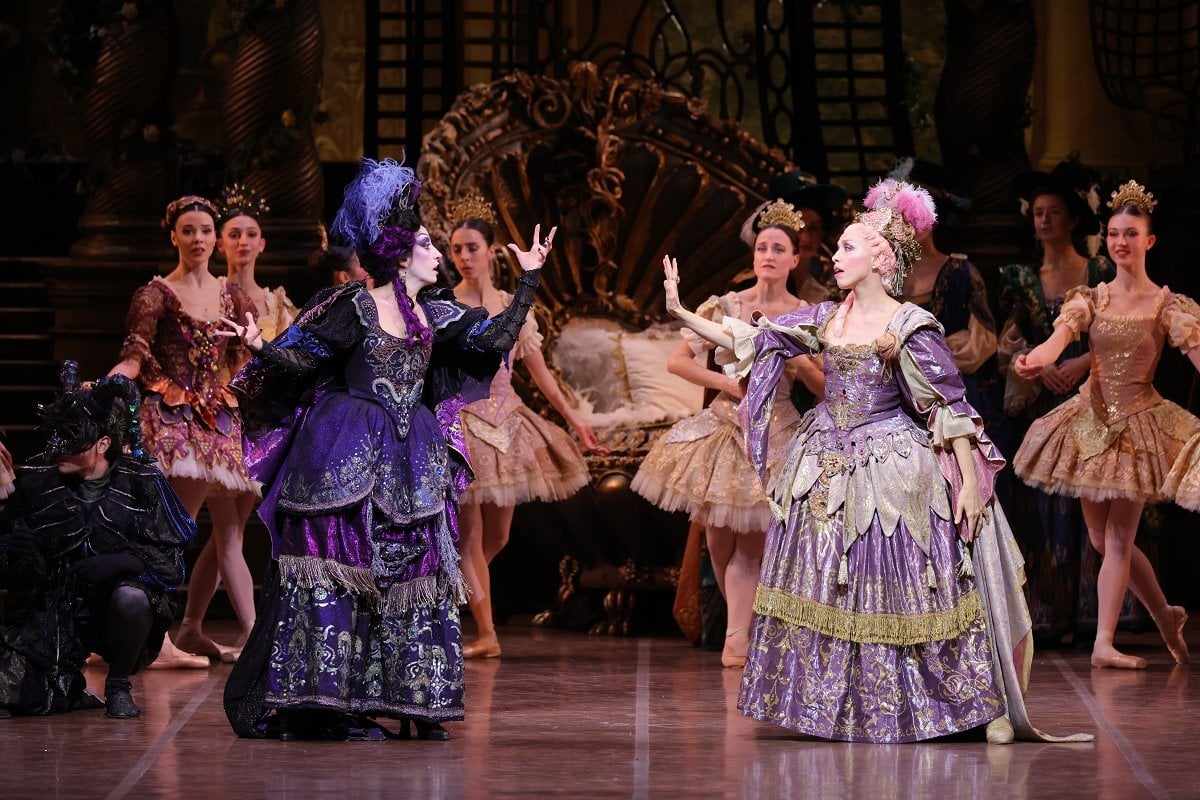
The Lilac Fairy is a mimed role and provides the good side of the coin to Carabosse’s bad. However, Squarciapino has given her a stately costume, suggesting that she could just be a visiting princess. Nicholas Georgiadis’ original design for La Scala was more fanciful, and his 1972 version for The National Ballet of Canada was even more spectacular. In a bizarre casting choice, the roles were given to Antonella Albano (Carabosse) and Chiara Fiandra (Lilac Fairy), two excellent but petite dancers who lacked physical authority for these roles.
The fairies of the prologue were well danced, but were short on characterisation, making the sequence seem like a series of variations at the Prix de Lausanne; and the Jewel Fairies in the (here) pas de cinque were untidy, although the male solo was expertly handled by the newly minted principal dancer, Navrin Turnbull. Elsewhere, there were admirable performances by Letizia Masini as a sensual White Cat and Christian Fagetti as a high-leaping Puss-In-Boots, and Agnese Di Clemente was delightful as Princess Florine with young Gabriele Fornaciari, who was soft yet athletic as the Blue Bird.
The star, rightly, was Martina Arduino as Aurora, who danced with assured playfulness in the first act, serene detachment in the vision scene (with the beautifully danced dryads), and was radiantly regal in the Grand Pas de Deux. Her sunniness didn’t leave her as she slowly raised and lowered her arm to greet each prince in attitude (and yes, La Scala has finally lost its blackface prince), and the dynamic of her turns in the final pas de deux was electrifying.
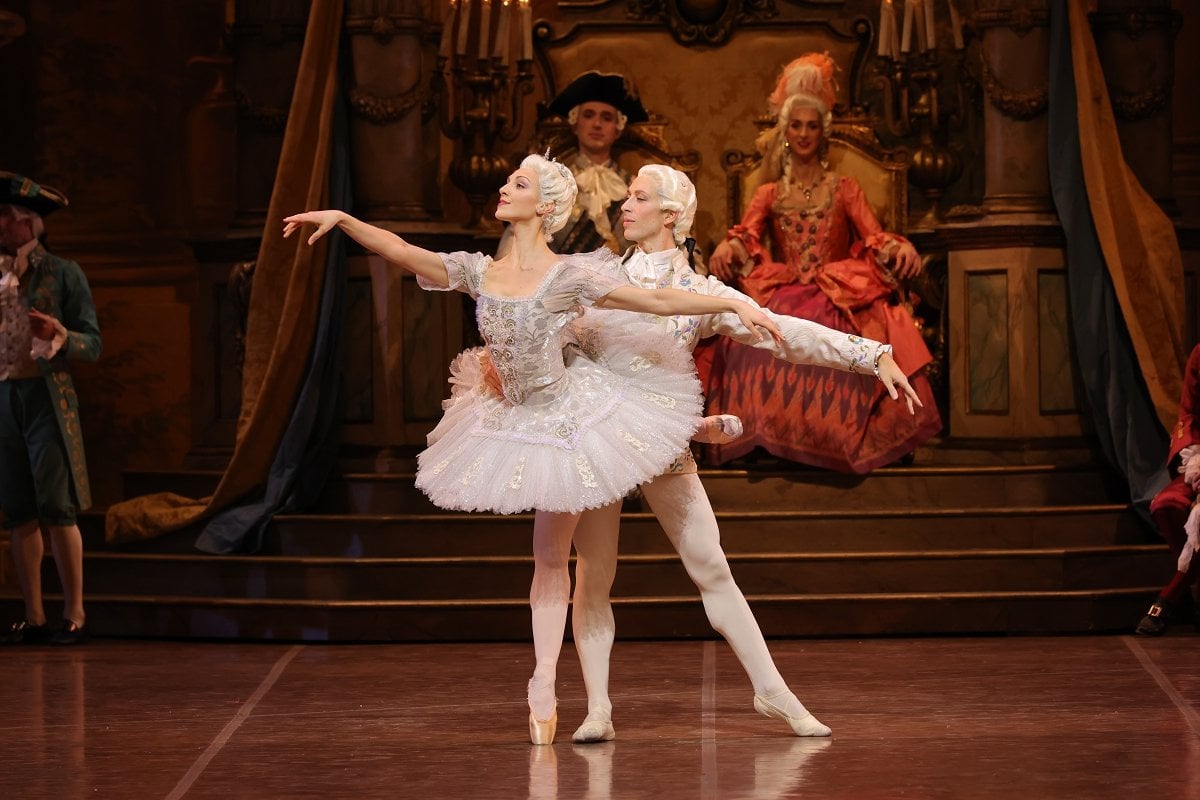

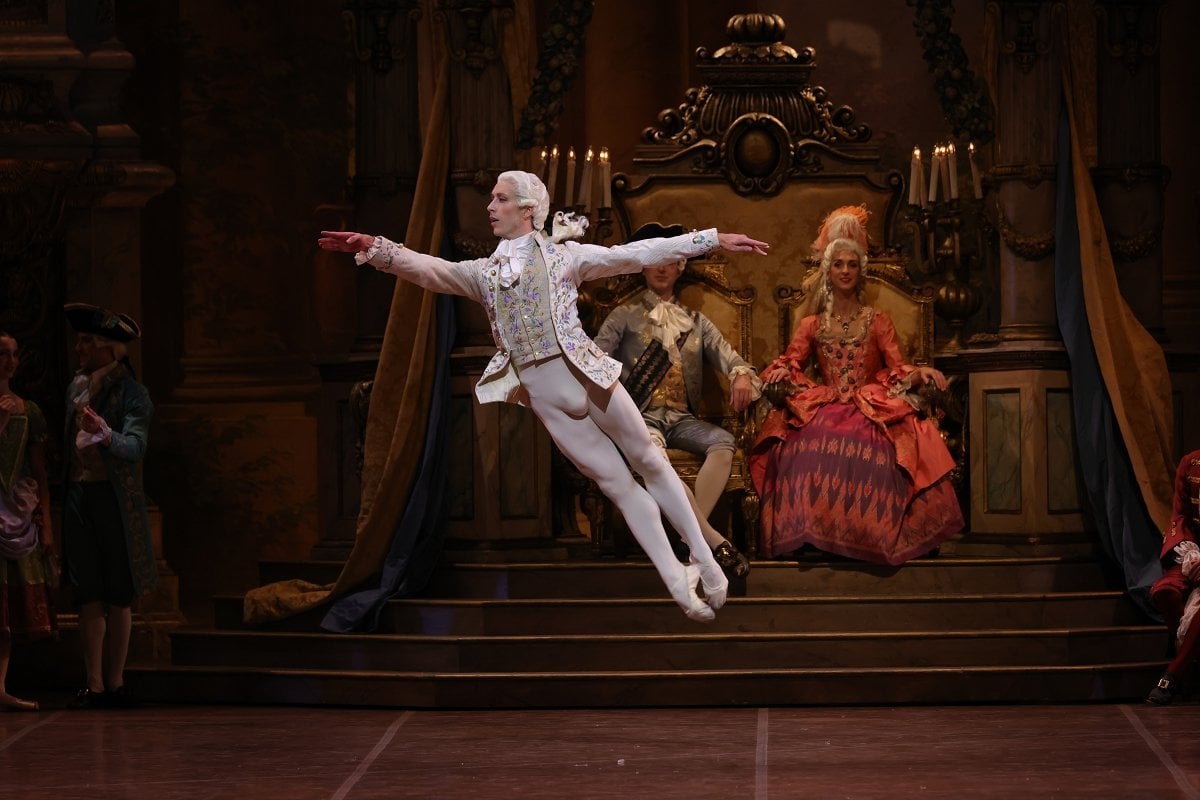
Rudolf Nureyev chose his frequent partner Carla Fracci to be his first Aurora, and in the upcoming gala dedicated to her at La Scala – an annual event known as Gala Fracci, established by former director Manuel Legris after Fracci died in 2021 – The Sleeping Beauty will be represented with scenes from the third act.