Review: Il danno – former La Scala dancers in a chilling, cinematic take on Damage
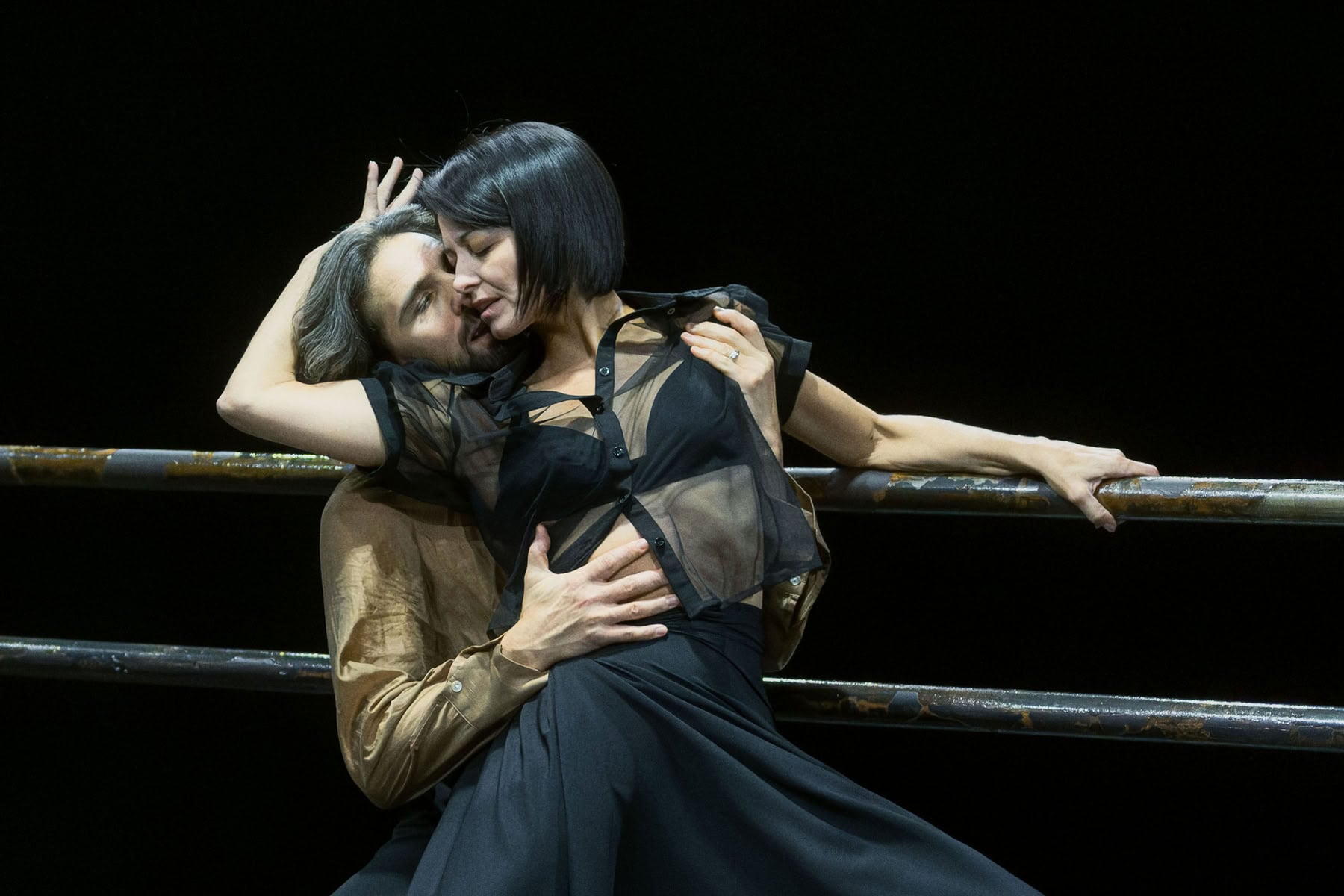
In Susanna Beltrami’s gripping take on Hart’s novel, Emanuela Montanari and Antonino Sutera play the doomed lovers up close – sometimes literally, in giant filmed close-ups.
| Title | Il danno – Anatomia di una caduta |
| Company | DANCEHAUSpiù |
| Venue | Teatro Franco Parenti |
| Date | 24 October 2026 |
| Reviewer | Graham Spicer |
Choreographer Susanna Beltrami has created a small masterpiece.
The co-artistic director of Milan’s DANCEHAUSpiù (the National Centre for Dance Production) has turned Josephine Hart’s novel Damage into an absorbing piece of dance theatre.
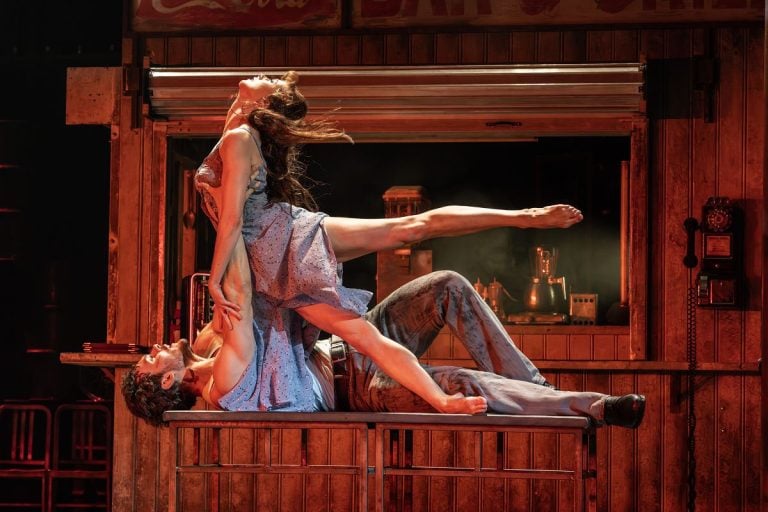
The story became famous through Louis Malle’s 1992 film, starring Juliette Binoche as Anna Barton, Jeremy Irons as Stephen Fleming, and Rupert Graves as Martyn, Fleming’s son. In Beltrami’s Il danno – Anatomia di una caduta (Damage – Anatomy of a Fall), former La Scala soloist Emanuela Montanari is Anna, former La Scala principal Antonino Sutera is Stephen, and Nicolò Brizzi is Martyn. Its subtitle, incidentally, echoes the title of Justine Triet’s 2023 film Anatomy of a Fall, in which a fatal plunge also lays bare a family’s fault lines.
The comparison with the film is unavoidable, since the production borrows the language of cinema. Projected onto a proscenium-sized black gauze in front of the stage are short scenes of the dancers in extreme close-up, beautifully shot by Salvatore Lazzaro in faded, memory-like tones. All three lose nothing by comparison with their screen predecessors.
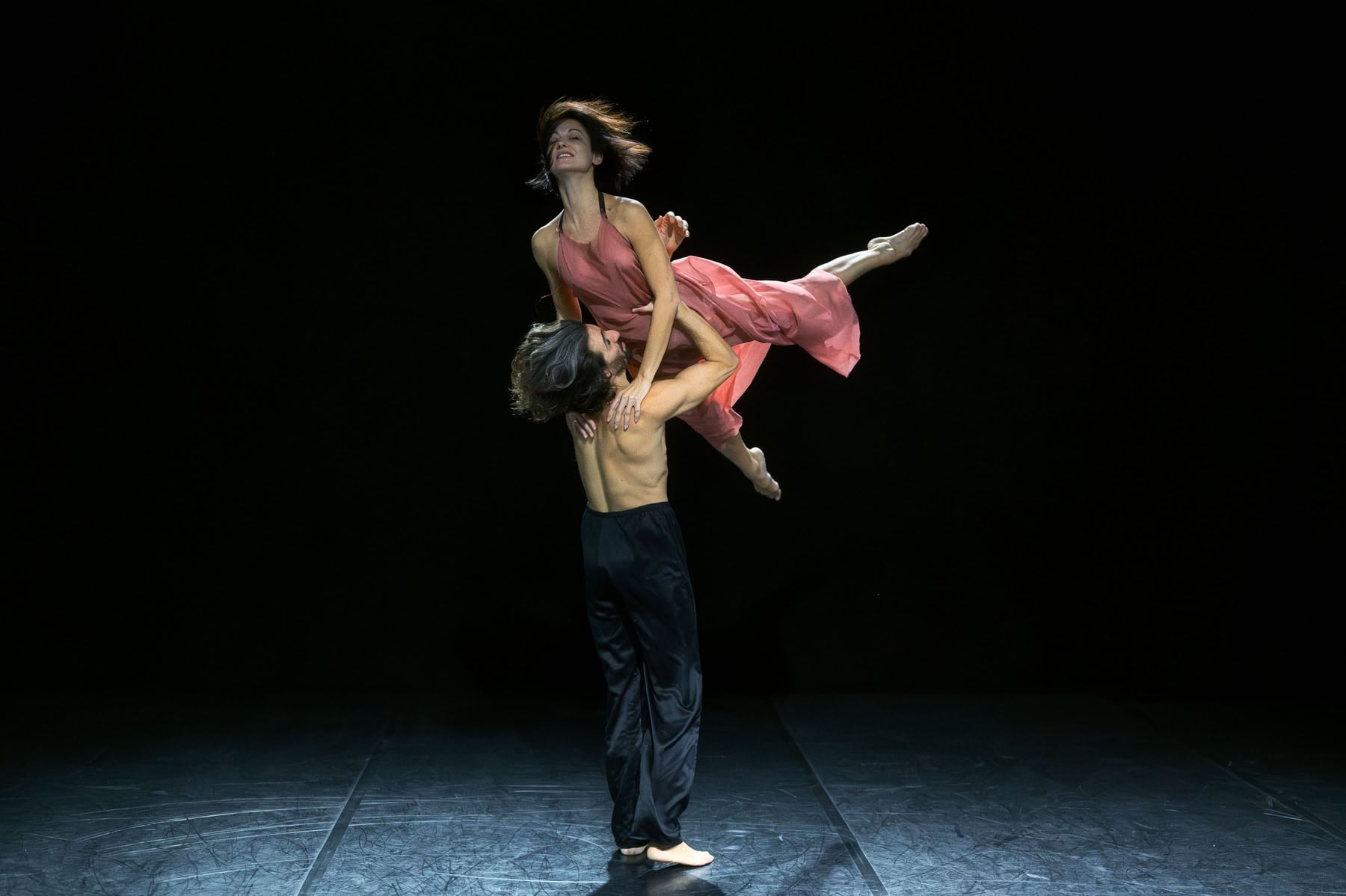
Montanari was always one of La Scala’s finest actresses, as Tatiana in Onegin and Bianca in The Taming of the Shrew (both Cranko), Marguerite Gautier in La Dame aux camélias (Neumeier) and Marguerite and Armand (Ashton), Maria in Annonciation and the female lead in Le Parc (Preljocaj), and L’Eletta in Béjart’s Le Sacre du printemps. When she retired in 2022, she danced a pas de deux from Petit’s Chéri as her farewell. This time we weren’t watching her across an orchestra pit, but up close and personal, even naked in the shower. She gives herself completely to the role, without a trace of vanity, and that luminous face registers every shift in Anna’s mood.
Sutera made his name in virtuoso roles, though it was his moving Romeo in MacMillan’s Romeo and Juliet that earned him promotion to principal; his Mercutio was also memorable. Here he digs deeper, brilliantly, as does Brizzi, a recent graduate of the DanceHaus Hip Hop Department, who is a revelation, thoroughly convincing as the son.
Atmospheric projections of clouds and underwater scenes often show the dancers lit behind the gauze, so that their performances blend with the video to immersive effect. Lines from Hart’s novel are also projected, the most arresting being Anna’s statement: “Damaged people are dangerous. They know they can survive.” Anna’s damage stems from an incestuous relationship with her brother when they were young, which ended in his suicide.
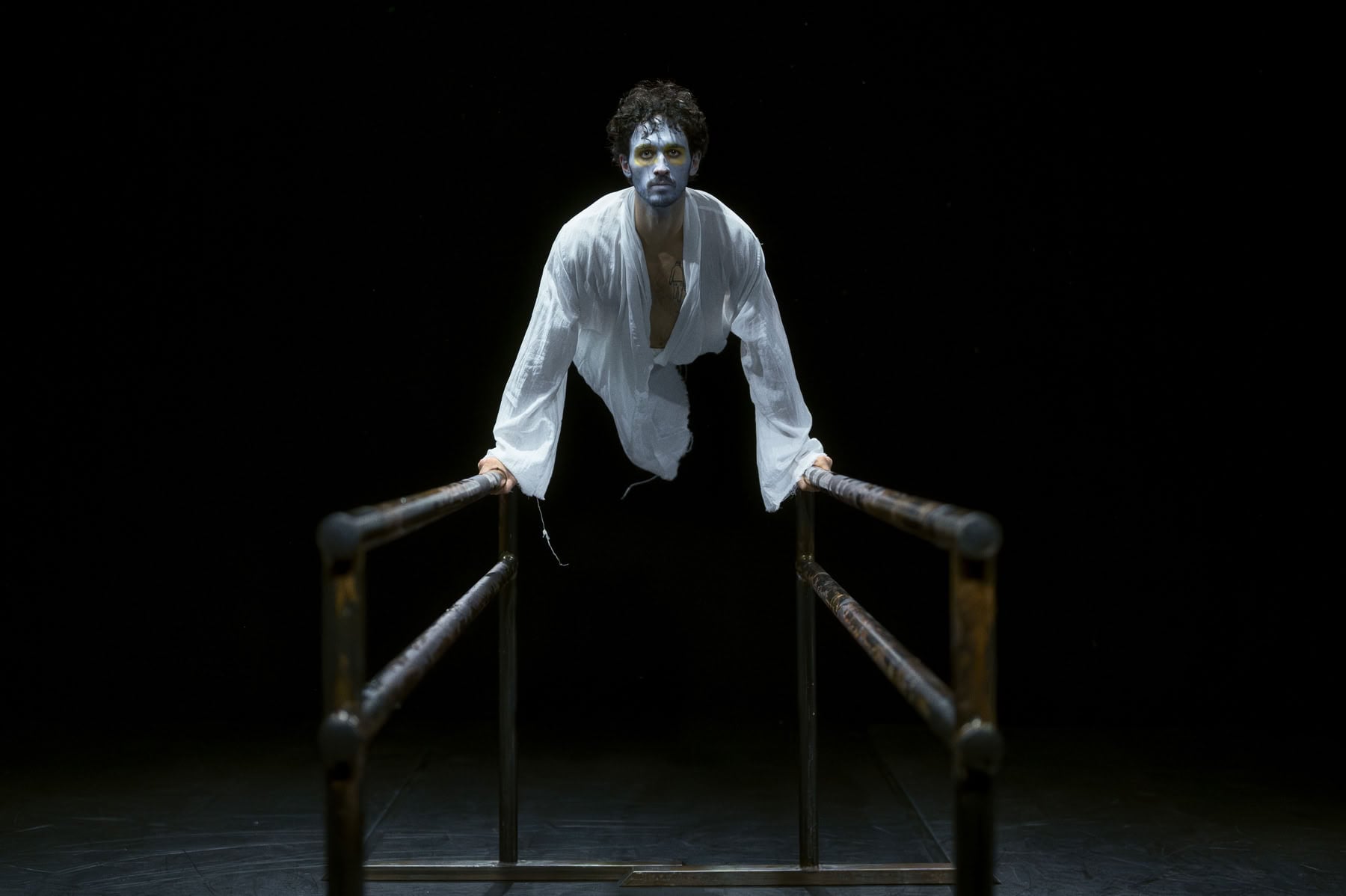
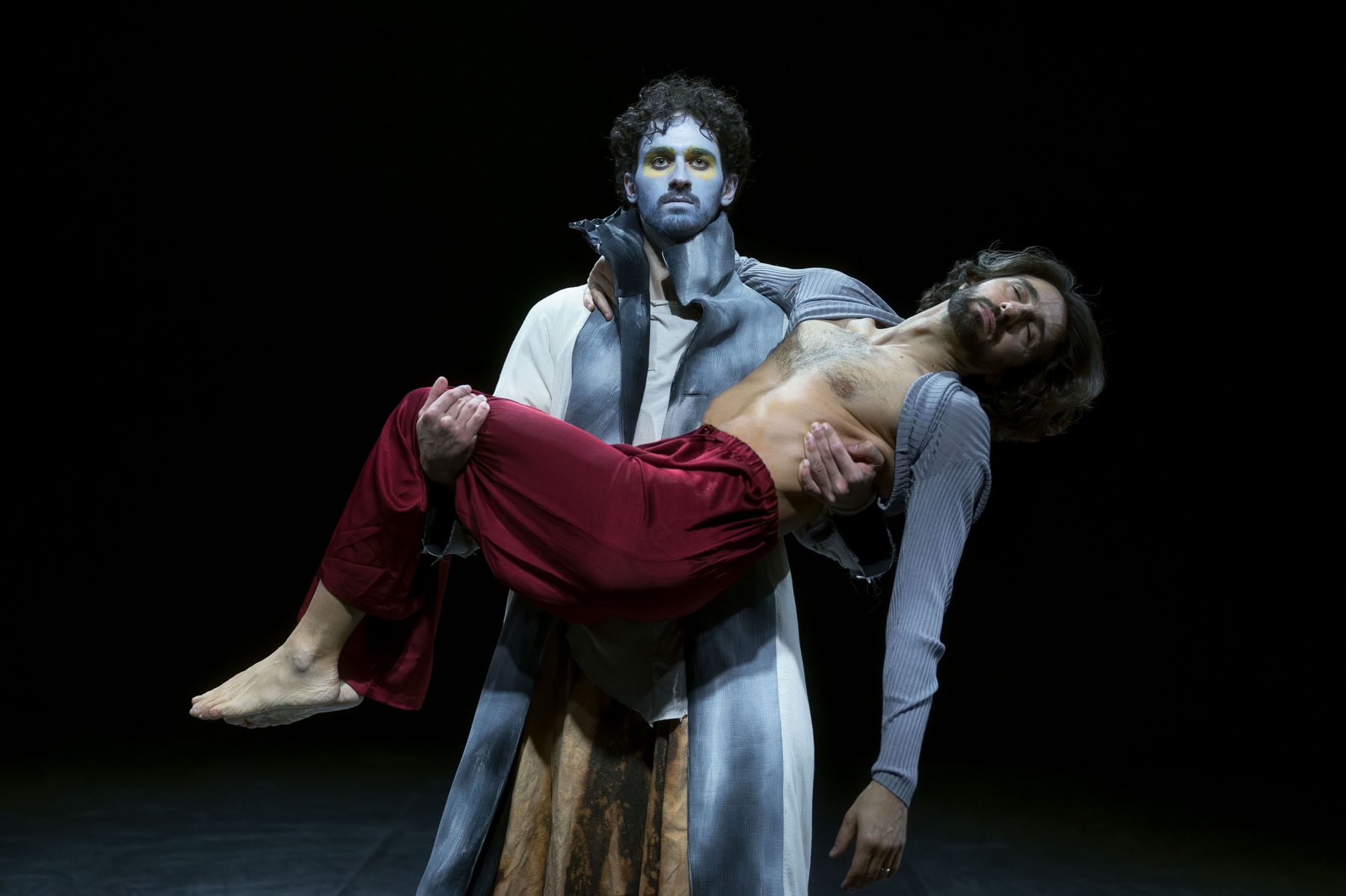
The work opens with Stephen alone at the barre. The ballet barre delineates the space and serves as a prop the dancers can dominate or be trapped by. We are seeing Stephen after the events that follow, which unfold in flashback – as in the novel, which he narrates. Martyn appears in deathly makeup, and the story begins.
Stephen is a respected middle-aged politician with an orderly marriage and a settled life who meets Anna, the woman his son Martyn intends to marry. The attraction is instant and wordless, and the two begin a secret affair driven more by compulsion than by love. When Martyn discovers them together, he falls to his death, in a Hitchcockian slow-motion drop down the stairwell that Lazzaro captures perfectly. Stephen loses his family, his career and his name. Anna walks away and survives, as she said she would.
On stage we see many sides of Anna: anguished and alone, passionate in a pas de deux, a sexy vamp. Matteo Bittante, who also designed the effective lighting, has assembled a wide range of musical styles, and the dance moves from contemporary to tango to classical (on pointe), with some gymnastics thrown in as Martyn manoeuvres his way across the barre. But Beltrami is never afraid of absolute stillness, or of gazes held, towards the audience or between the dancers.
If anything could be trimmed, it would be a couple of solos that slightly overstay their welcome. Otherwise, Beltrami’s sense of theatre is unerring. A lifelike mannequin stands at the barre, and I wondered whether it might move. It stays lifeless until it is strung up horizontally and spun slowly, mirroring Martyn’s fall. Chilling.
Il danno runs for just over an hour but stays with you much longer. Beltrami doesn’t retell the novel; she distils it into images of guilt, desire and memory that linger like Lazzaro’s faded close-ups.
In the end, the real damage isn’t the fall but the hairline crack that comes before it, and she makes us feel it from the moment Stephen first stands alone at the barre. With three superb performances and a filmmaker’s eye for an image, this is dance theatre at its most compelling, and it deserves a much longer life on tour.