Review: The National Ballet of Canada in London – Pite/Kudelka/Portner

Kathrina Farrugia-Kriel sees The National Ballet of Canada in Frontiers: Choreographers of Canada – Pite/Kudelka/Portner
| Title | Frontiers: Choreographers of Canada – Pite/Kudelka/Portner |
| Company | The National Ballet of Canada |
| Venue | Sadler’s Wells, London |
| Date | 2 October 2024 |
| Reviewer | Kathrina Farrugia-Kriel |
The National Ballet of Canada returned to Sadler’s Wells with their production Frontiers: Choreographers of Canada – Pite/Kudelka/Portner. Artistic Director Hope Muir, a key feminist driver in developing works by established and emerging female choreographers within Canada’s premier company, programmed a triple bill which opened with a lukewarm opener by the masterful James Kudelka, and an unremarkable piece by emerging choreographer Emma Portner. The evening ended with a bold work, typical of the contemporary ballets created by Crystal Pite, which exuded a deeply honed craft that took us on an existential moment into the unknown. The third part to the evening of works was really the standout ballet, eclipsing both the Kudelka’s meandering opener and Portner’s duet.
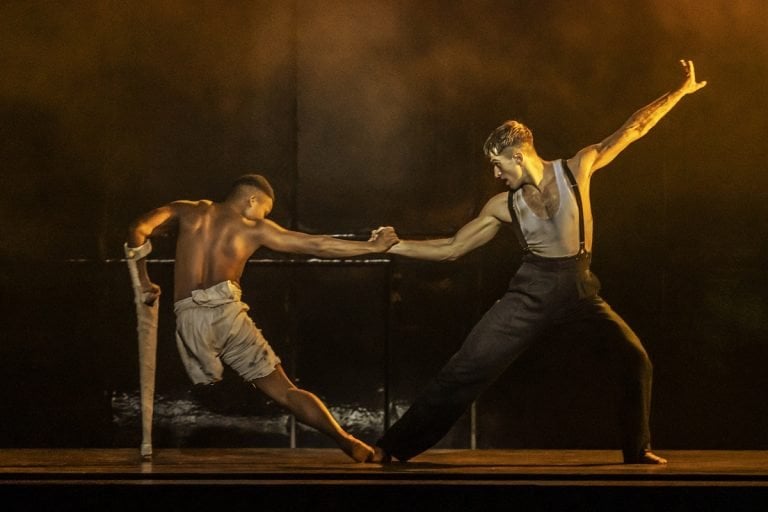
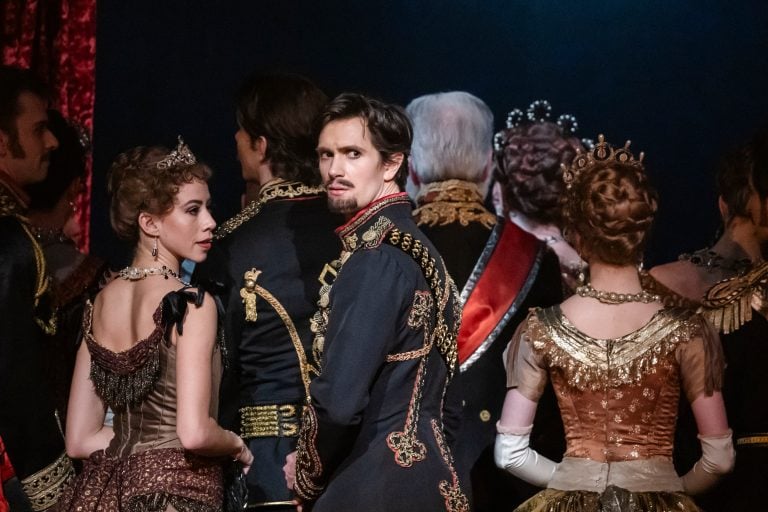
Despite my reservations that this wasn’t the most consistent of triple bills, the company was on fine form. Heather Ogden, the company’s longstanding principal ballerina, brings stellar quality on stage in all of her technical demands. Her commitment to the movement made Portner’s underdeveloped ideas, pseudo-‘contemporary ballet’, in islands seem almost prosaic, while in Kuldelka’s Passion she meandered and floated nostalgically into the arms of Mcgee Maddox. The star of Passion was principal dancer Genevieve Penn Nabity who scintillated charm in both Kudelka’s ode to romantic ballet, and also in Pite’s Angels’ Atlas. Muir’s fine set of company dancers – including the inimitable powerhouse, principal dancer Siphesihle November and first soloist Hannah Galway – highlighted their incredible artistry in Pite’s work. Every company member on stage embraced Pite’s unique style with every inch of their being; the pulsating arms, the richness of the ports de bras, and the trademark unison and staggered canon in the organisation of Pite’s ensemble. November and Galway stood out in their duets, and on opening night, they brought out the tendrils of humanity set to Tchaikovsky’s Liturgy of St John Chrystostom Opus 41 (Cherubic Hymn).

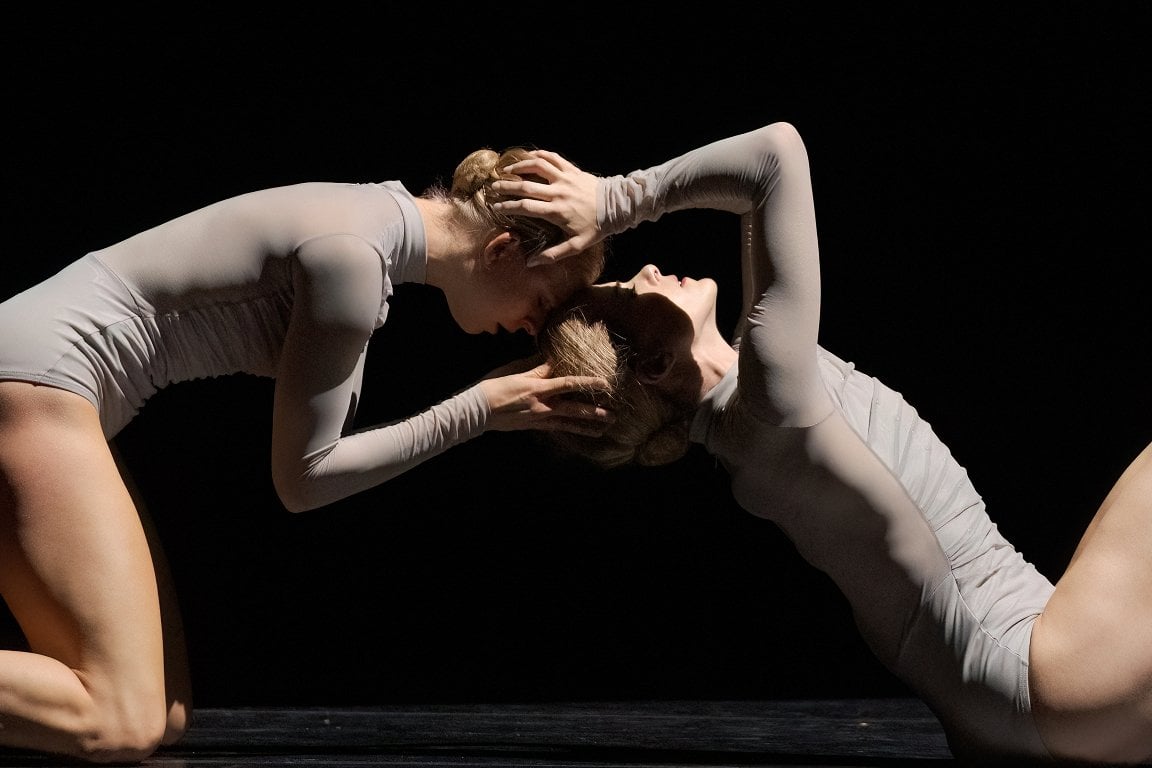


Contemporary ballet can be a mixed affair (having edited a rather large anthology on the topic, allow me to tackle some of the triple bill’s qualities). Kudelka is masterful in shaping the comings and goings of the dancers against Beethoven’s Concerto for Piano in D (First Movement). There are so many layers: on stage and both musically and choreographically. In its shaping, it’s almost faultless, but it just feels more unforgettable as a choreographic venture than Kudelka’s more recognisable signature in contemporary ballets (Kuldelka’s work isn’t seen that often in London but more around North American companies, and that’s a pity). My mind wandered during islands. Shaping a choreographic ‘signature’ of sorts, or developing one’s voice or identity as a choreographer (particularly in the genre of contemporary ballet), takes time. Portner’s choreography felt like an ‘all sorts’ bag of ‘a little of this, a little of that’. Lighting tricks (which many of us have seen over the decades) didn’t mask the issues that I was unpicking in islands. Nevertheless, offering up-an-coming choreographers a ticket on the triple bill will give the choreographer an opportunity to reflect on her approach and vision for her artistic voice (a couple of years ago, another critic also wrote a similar message to a well-known ballet choreographer, like a friendly ‘quo vadis‘).


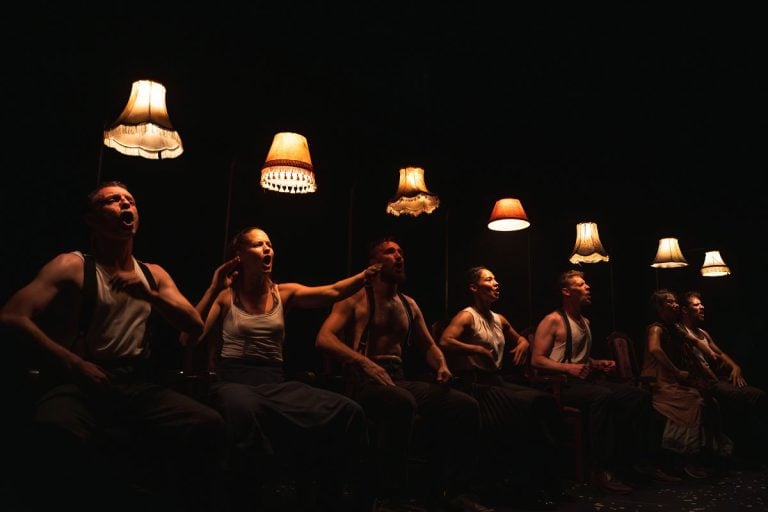
In closing with Angels’ Atlas, Muir’s resounding choice reminds us that Pite is really one of the leading choreographers that can create ballets that really zone into the humanity of art. Her work always moves people; it is not frivolous, nor created for ‘entertainment purposes’. London audiences will be familiar with The Royal Ballet’s Flight Pattern, which eventually was expanded into a triptych of phenomenal beauty out of darkness, Light of Passage which audiences can catch again in the first quarter of 2025. When I refer to ‘beauty’, I’m largely thinking of works which move us beyond this world. In Angels’ Atlas (a work which Pite describes as a ‘frontier, a portal, a portrait of the unknown’ in the programme notes), I held onto my seat as the sound viscerally spread through the auditorium. Jay Gower Taylor and Tom Visser’s visual direction, a similar visual collaboration explored in The Royal Ballet’s production, enhanced the heavenly, almost out-of-body experience of Angels’ Atlas. From the opening moments of the ballet – when the cast emerge from their lying state, to the final moments of Galway and November’s final separation – Pite’s choreography morphs in the most fluid of ways: a sophisticated approach which eclipses that of most creatives, established and emerging.
As I journeyed home, I couldn’t help but think that the well-known, the new and the sublime are all doing okay at the National Ballet of Canada. There is one thing missing – that is to embrace First Nations choreographers in their next frontier.