
Interview: Roberto Bolle turns 50

I interviewed Italy’s most well-known male dancer, Roberto Bolle, four years ago, for Dancing Times magazine.
Today, 26 March 2025, is his 50th birthday, and so gramilano.com is now publishing our conversation online.
Buon compleanno Roberto.
Roberto Bolle is a dancer whose fame has travelled far beyond the stage – he has a popular annual television show on Italy’s main channel on New Year’s Day (with an audience of almost four million this year) and fronts big business marketing campaigns. At 45, he’s now that dancer that he looked up to when he graduated from La Scala‘s academy. “I think it’s important for young dancers to have those at the top on stage with them,” he tells me when I speak to him early in January, “but above all to see the constancy, continuity and dedication in class and during the rehearsals.”
His rise to the top happened quickly. Elisabetta Terabust was the director of the company at La Scala when Bolle graduated. “She had faith in me and pushed me. I’d wanted to join The Royal Ballet; Mara [Galeazzi] was already there and I was attracted to such a prestigious company, but Elisabetta was categorical that I should stay at La Scala.
“She was such an excellent interpreter. She helped to bring that out in me, and she pushed me into leading roles to see how I would cope, even though I didn’t feel ready. Overcoming her ‘tests’ made me grow up quickly.”
When Bole was twenty, Terabust promoted him to the rank of principal dancer, and a year later he left La Scala to pursue a freelance career. “It was stimulating to work with other companies, ballet masters, and partners, but as a guest you’re always in the spotlight having to prove your worth. The first five or six years were very difficult because, frankly, I felt unconfident in certain roles.
“When I first arrived in London in 1997 to dance Swan Lake with Altynai Asylmuratova for English National Ballet, and in 1999 to partner Darcey Bussell in The Nutcracker at The Royal Opera House I didn’t know how to deal with the stress. I was extremely agitated because I didn’t feel safe – I felt weak, insecure, and afraid.
So when did that change? “I saw that companies were asking me back and it felt less and less that I was being thrown to the wolves. I was psychologically stronger and, I suppose, I grew up. In fact, when I made my debut with the American Ballet Theatre in 2007, which was an important event because it was Alessandra Ferri‘s farewell, I was no longer that frightened boy but I was able to enjoy the moment with confidence: a principal dancer with his strengths, charisma, stage presence, and with the maturity to cope with pressure.”

Apart from his looks, Roberto Bolle has a certain British quality about him. “I think you’re right, because I have that sort of manner. In fact, Anthony Dowell has always inspired and fascinated me: my model dancer. I look at Mikhail Baryshnikov and Rudolf Nureyev and I think, fantastic, but they have nothing to do with me; but when I look at Anthony, I can identify with him, and with the roles he performed.”
Bolle danced the role Dowell created in Frederick Ashton‘s A Month in the Country with American Ballet Theatre – how was that? “Difficult! Much more difficult than I was expecting. Ashton’s ballets sometimes don’t look it, but they are often the hardest. It was special working on that ballet with Anthony and he has a very British sense of humour, which made the rehearsals wonderful.”
Bolle has regularly appeared as a guest artist with The Royal Ballet during his career, most recently in Onegin, coming a month before the first lockdown. Onegin, Des Grieux in Manon, Romeo, Armand in John Neumeier‘s La Dame aux camelias are roles he favours. “I certainly have an affinity for these characters from an aesthetic point of view, they suit me, but there’s also an emotional affinity because they are more delicate characters, sweeter, refined, and often sunny.”
Bolle is undoubtedly sunny and laughs often during our conversation. Professionally, isn’t it tricky being Mr Nice Guy? “In most public situations I have a team to help me, but I like to be nice to people. It’s in my nature so it doesn’t cost me much. Of course, there are times when you don’t feel like it, but it takes very little to make another person happy.”
He makes his ballerinas happy too as he has an apparent talent for accompanying them for their farewell performances: Bussell’s gala in 2007, Zenaida Yanowsky in 2017, Ferri (the first time round), Julie Kent, Aurelie Dupont, Paloma Herrera… “I think I’m a reliable partner and I have a natural ability to create a connection with my ballerinas which is not only physical. When we are on stage we manage to create a special feeling and so I am delighted to be chosen for these occasions – it’s a great honour.”
What does he wish for in a ballerina, apart from lightness? “Exactly, number one is lightness!” he giggles. “But seriously, I like to create a feeling of emotional lightness, in the sense that I like rehearsals to be joyful because, in the end, that’s what dance is all about – the joy of doing what we absolutely love: creating something with our bodies, with the music, with the choreographer. I have friendships with all these dancers that have continued through the years.”
Bolle is popular with the men too – he chooses the best for his Bolle & Friends galas. “I really like having extraordinary dancers with me, as their talent can only increase the level of the show and the pleasure of the spectator. When I invite Federico [Bonelli] or Vadim [Muntagirov] from the Royal Ballet, there’s a comparison, but I have no problem with competition because I believe that every artist at this level has his value.”
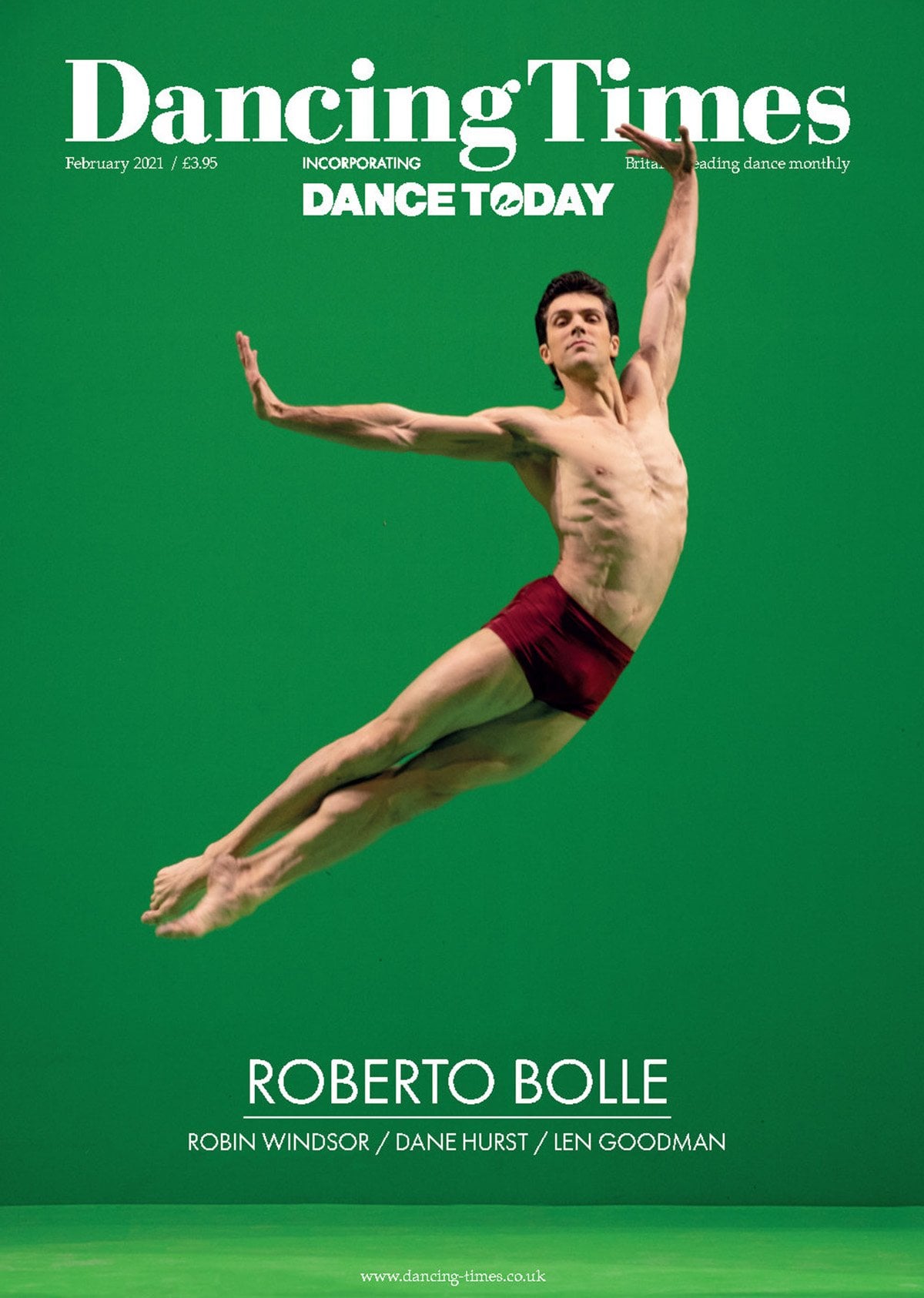

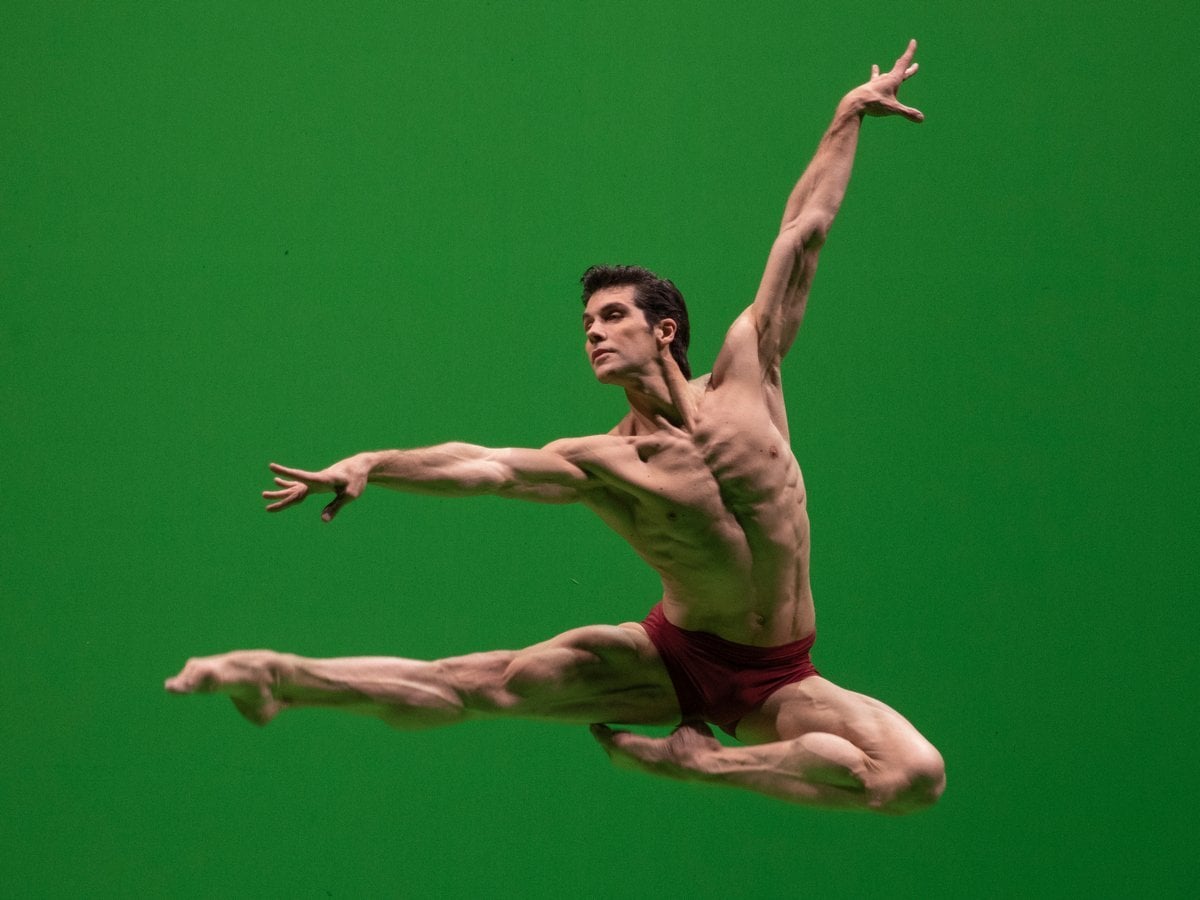
There’s also the comparison with his younger self – how does he manage to keep in shape? “Well, until I was 30, I used to eat anything at any time. Nowadays, there’s a new awareness of fuelling an athlete’s body. I’m much more careful about what I eat, the quality of the food, and the times I eat. It’s not just about keeping the weight off, but to ensure that the body has energy.”
During lockdown, didn’t he ever want to devour a tub of ice cream? “Of course! I became a little bloated and I certainly lost muscle tone, but occasionally breaking the rules is fine. I was busy too because with OnDance, the dance festival and portal we created in 2018, gave up to five free online classes a day: from classical to Charleston to hip hop. We offered them for eight weeks, with principals from La Scala, and friends like Federico, Polina [Semionova], Melissa [Hamilton], and many others participating. It was crucial for people at home to feel the closeness of the dance community… just being together.”
Then came the moment to return to the rehearsal studio. “Yes, that was difficult. It was slow and even painful with stiff ligaments, tendons, and muscles. I had to start in a very gradual way and there were some physical changes that I’m still working on. I’d never gone for so long without being in the studio – no one had.”
However, he was ready for his bare-chested closeup after the summer when he danced Maurice Béjart‘s Bolero at La Scala. “It’s one of the roles I’ve enjoyed most recently, and somewhat of a counterbalance to most of my other roles. It’s very intimate and gives the possibility of expressing the essence of your own self. The rhythm, the spotlight only illuminating the hands… the piece is simple and brilliant at the same time.”
A simple mantra that induces a dizzying incantation – can he get lost in its frenzy? “It is easy to get carried away by the music and this kind of movement, but you can’t get lost in it completely otherwise you risk losing the choreographic sequence!”
He’s also mainly undressed on the cover of his new book, Parole che danzano (Dancing Words), as indeed he is on the cover of this magazine and within the pages of this interview.
“The dancer’s body is the most beautiful, the most harmonious, and the most elaborate body there is. It is our instrument, which we create through the art of dance with sweat and discipline. Why cover it up?”


Graham Spicer, aka ‘Gramilano’, is a writer, director and photographer based in Milan. He was a regular columnist for Opera Now magazine and wrote for the BBC until transferring to Italy. His articles have appeared in various publications from Woman’s Weekly to Gay Times, and he wrote the Danza in Italia column for Dancing Times magazine. Graham was the historical advisor on Codice Carla, the 2023 documentary on Italian ballerina Carla Fracci.
Graham also works as a dance photographer, and his photos have appeared in many books, theatre programmes, and magazines, including Dancing Times, Dance Spirit and Ballet2000, as well as all the major Italian newspapers.
He is a member of the Dance Section of The Critics’ Circle.

A great interview – thank you ❤️