Interview: Giving Voice to British Ballet – Patricia Linton talks to Jonathan Gray about Voices of British Ballet
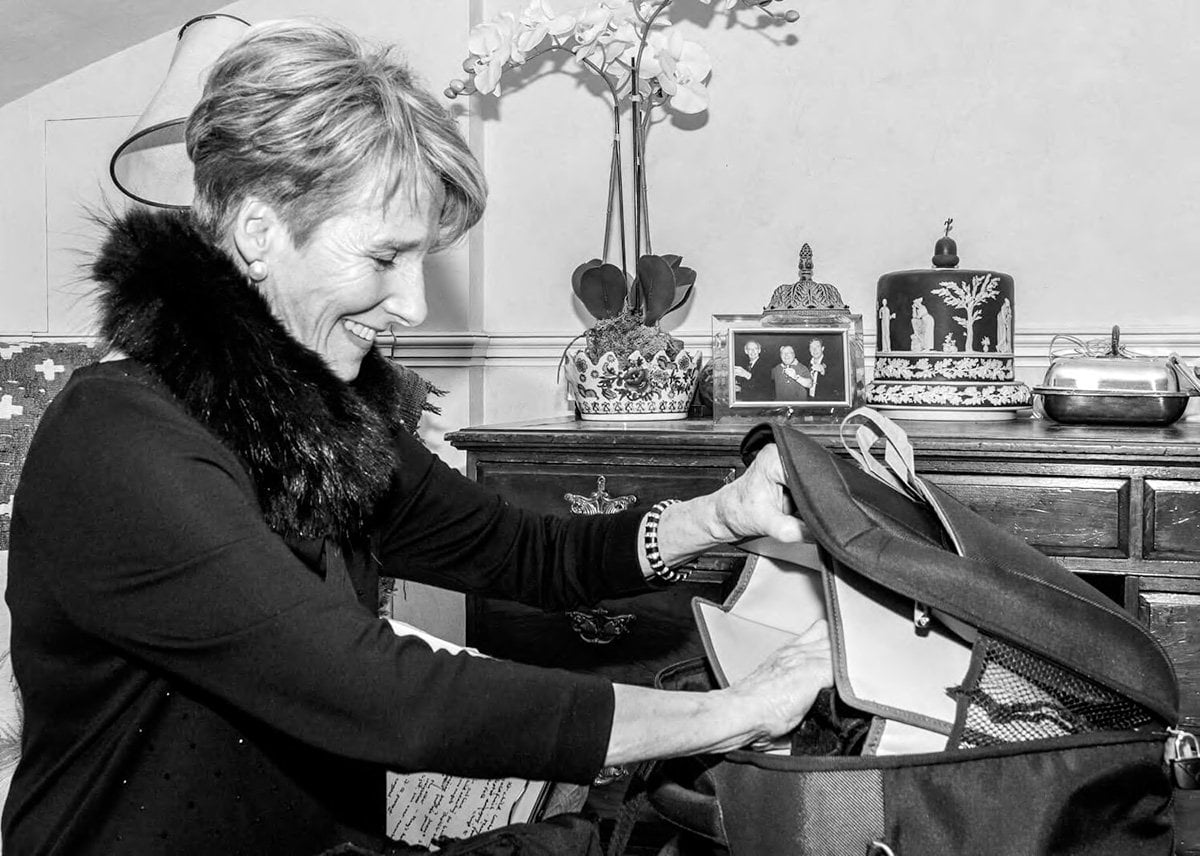
Voices of British Ballet launches a new platform, with a website and podcast, to become the UK’s richest audio archive and treasure trove of untold stories of British ballet.
Dance critic Jonathan Gray talks to director Patricia Linton, a former Royal Ballet dancer and teacher at The Royal Ballet School, about the project.
Jonathan Gray: How did Voices of British Ballet (VBB) come about?
Patricia Linton: I had become interested in the archives at White Lodge [The Royal Ballet Lower School] when I was a teacher there. I enjoyed assembling material for historical exhibitions for the pupils, especially ones that related to ballets they were performing in, such as The Nutcracker. I was helped and guided in these endeavours by Audrey Harman, the then archivist at The Royal Ballet School. She herself had been a dancer in several companies, notably Sadler’s Wells Theatre Ballet, and had taught me the Royal Academy of Dance syllabus when I was myself a pupil at White Lodge in the late 1950s. Thus, we had a link.
I was amazed at how little I knew about the history of British ballet in the first half of the 20th century, and about the many names that popped up of people that I discovered had done so much to lay the foundations of where dance is today. I quickly realised that although there was much information on the famous names (Margot Fonteyn, Frederick Ashton, Ninette de Valois, etc), many who had played an important role in creating the fabric for the future had had far less exposure. It hit home when I found that my very own teacher Pamela May – in her day a ballerina second only to Fonteyn – was one of these unremembered people, as well as being a remarkable teacher in her own right.
It occurred to me that having these people talk about events and experiences in their balletic lives, in their own words and voices, would be interesting and valuable in all sorts of ways. However, I did not formulate a proper plan for VBB until I retired from White Lodge in 2001. In 2002 I learned about the technicalities of oral history, and decided to fulfil the plan of recording voices in a more systematic way, according to established guidelines for oral history.
Thus, VBB was born, and I worked on it thereafter, even while fulfilling another 15 years of teaching! There are now over 500 interviews including 80 or so recorded in New Zealand, Australia and South Africa in 2006, which reflects the very international make up of “British” ballet, and of those who have contributed to it.
JG: Why is the oral history of ballet important?
PL: It’s imperative to have on record memories that might otherwise be lost. When people come to Britain from all over the world to work and study ballet here, it is important to gain an insight into our own tradition and its varied roots. Marie Rambert and Ninette de Valois, who helped establish ballet in this country, took a huge amount from Serge Diaghilev and Russian ballet. In this balletic world nothing is isolated. It is fascinating to hear people reflecting the many sources of our own history, and how our tradition evolved. In VBB we can hope only to give a backdrop to this history through our interviews, but I believe that it will be one that will interest people and will throw light on areas they had not appreciated.
In 1946 the critic Arnold Haskell wrote of ballet that, “tradition is all-important in an art form that leaves no exact written record”. Even though we now have Benesh movement notation, the voices that we are recording are living testament to the thread that is our own tradition, going from the 1920s and 1930s until now.
JG: Have you always been interested in the history of dance?
PL: It was Michael Somes [the former Royal Ballet principal and ballet master] who first prodded me into thinking in a more circumspect way about the history of ballet and dance. He always used to say to us young dancers that “whatever ballet you are studying, always find out three things, the choreographer, the composer and the designer, and learn about them”. That was my start.
Later, when I got interested in teaching, I was fascinated by the three great ballet traditions, the French, the Danish and the Russian, each affording material for a lifetime of study and enjoyment. British ballet has drawn on all three of these traditions, as well as the Italian tradition, so as to make something particularly our own, with a huge range of choreographers. Interestingly, storytelling seems to be in the British DNA. Even in apparently abstract ballets, our dancers will tend to express an underlying narrative. Maybe this follows on from what the choreographers Ashton and Kenneth MacMillan have left us, but there it is anyway, and it is fascinating to hear people from different eras talking about it and how they have approached roles.

JG: Are the interviewees on VBB all British?
PL: Many of our dancers (and others), including many we have interviewed are not themselves British. Our British tradition has always absorbed and been reliant on and inspired by other countries. I quickly realised the national and ethnic diversity not just of our dancers, but also of those from all the other professions that go to make up a ballet performance.
JG: How is VBB funded?
PL: My dear father was so interested in the idea that he gave me a donation to get started. From then on it has been a battle. There has been wonderful support from a number of organisations, but it is an expensive business to do on one’s own.
The technological changes and developments over the 20 years since I started VBB have changed my idea from simply laying down the full interviews in a national archive to the wonderful opportunities offered by the digital world – websites, podcasts, etc. However, they come at a price!
JG: What are your plans for the future?
PL: The digital world has broadened the scope for dissemination. Life has changed so much since VBB began – the digital world gives so many opportunities, which I hope we will be able to embrace, so as to extend our reach to many different audiences.
JG: Why is VBB launching a website?
PL: It is essential. People will be able to access the VBB website from all over the world, and it will allow a regular release of new podcasts. All this shows how we continue to expand our educational and historical aims, and to make the history and traditions of British ballet come alive through our voices to many people in many places and of many ages and cultures.

Graham Spicer, aka ‘Gramilano’, is a writer, director and photographer based in Milan. He was a regular columnist for Opera Now magazine and wrote for the BBC until transferring to Italy. His articles have appeared in various publications from Woman’s Weekly to Gay Times, and he wrote the Danza in Italia column for Dancing Times magazine. Graham was the historical advisor on Codice Carla, the 2023 documentary on Italian ballerina Carla Fracci.
Graham also works as a dance photographer, and his photos have appeared in many books, theatre programmes, and magazines, including Dancing Times, Dance Spirit and Ballet2000, as well as all the major Italian newspapers.
He is a member of the Dance Section of The Critics’ Circle.