Review: Contrasts – Paris Opera Ballet perform works by Trisha Brown, David Dawson, and Imre and Marne van Opstal

Matthew Paluch sees the Paris Opera Ballet in Contrasts – a dialogue of styles and executions that makes for a heady night.
| Title | Contrasts – Trisha Brown | David Dawson | Imre, Marne van Opstal |
| Company | Paris Opera Ballet |
| Venue | Palais Garnier, Paris |
| Date | 13 December 2025 |
| Reviewer | Matthew Paluch |
Contrasts is a very successful quadruple bill that actually does what it says it will. The four diverse works are a dialogue of styles and executions and make for a heady night.
Opening the programme are two Trisha Brown pieces. The first is O złozony / O composite created by Brown for the company in 2004. If you aren’t familiar with Brown’s work, it’s a great introduction. The three dancers glide through a work that’s all about movement fundamentals, including the transfer of weight, impulse, swing, and tilt. Dressed in white, they explore the black stage space with starry backdrop (Vija Celmins).
An additional layer is added by recorded poetry from Czeslaw Milosz and sophisticated, minimal music by Laurie Anderson. When I hear Anderson, I always wonder why anyone uses anyone else?!


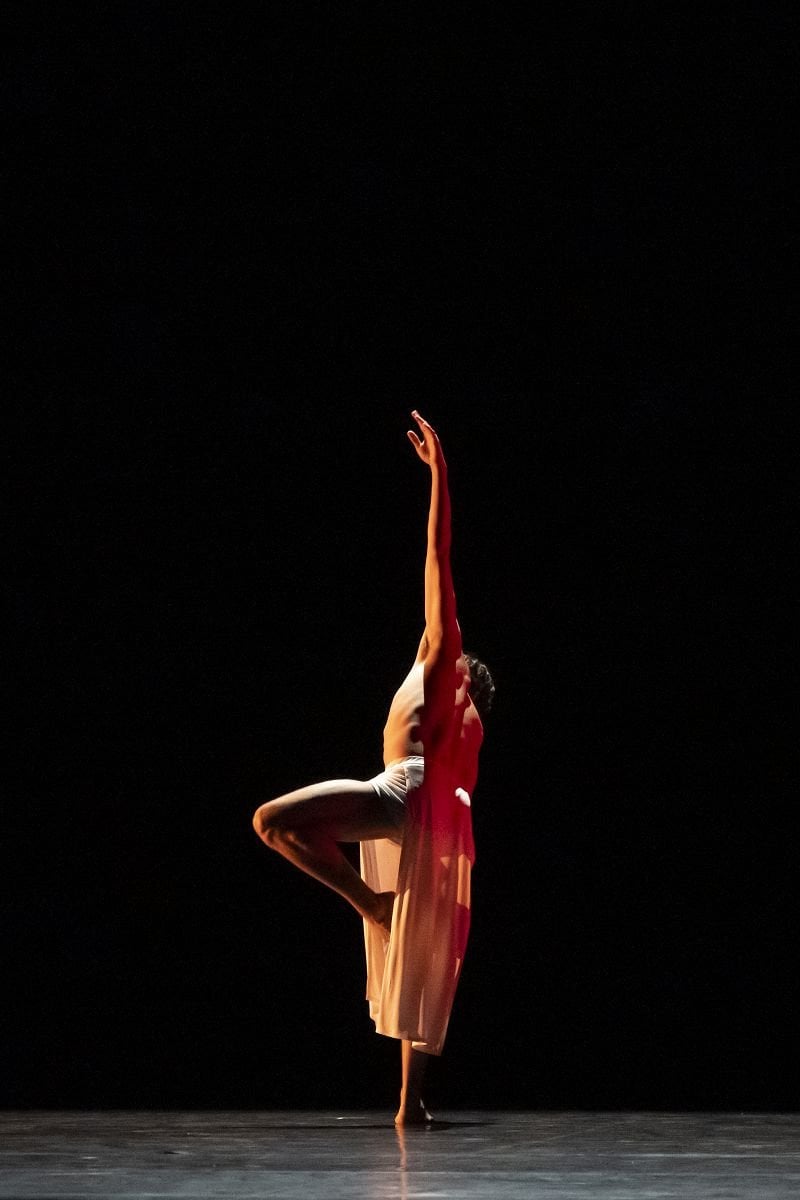
Following is a second Brown piece If You Couldn’t See Me (1993/4). The solo has a gimmick – the dancer never shows their face. Not a problem in some ways, as the back is a very interesting part of the body/movement, but enlightening in others; you soon realise how reducing the movement capability inhibits natural flow, which Brown normally uses in abundance. It’s an original piece that makes the reverence, when we finally see the organic Germain Louvet, face and all, more poignant than usual.
The third work is a David Dawson premiere at the Paris Opera. Anima Animus (2018) was originally created on the San Francisco Ballet and absolutely finds a successful new home in Paris. It looks wonderful on the Garnier stage, suits the dancers, and leaves an air of excitement even after it’s finished.


The score by Ezio Bosso helps a lot, especially the final movement, which sounds like a beehive of sorts. Add to this Yumiko Takeshima’s slick, monochrome costumes and John Otto’s sparse set and you’re onto a winner.
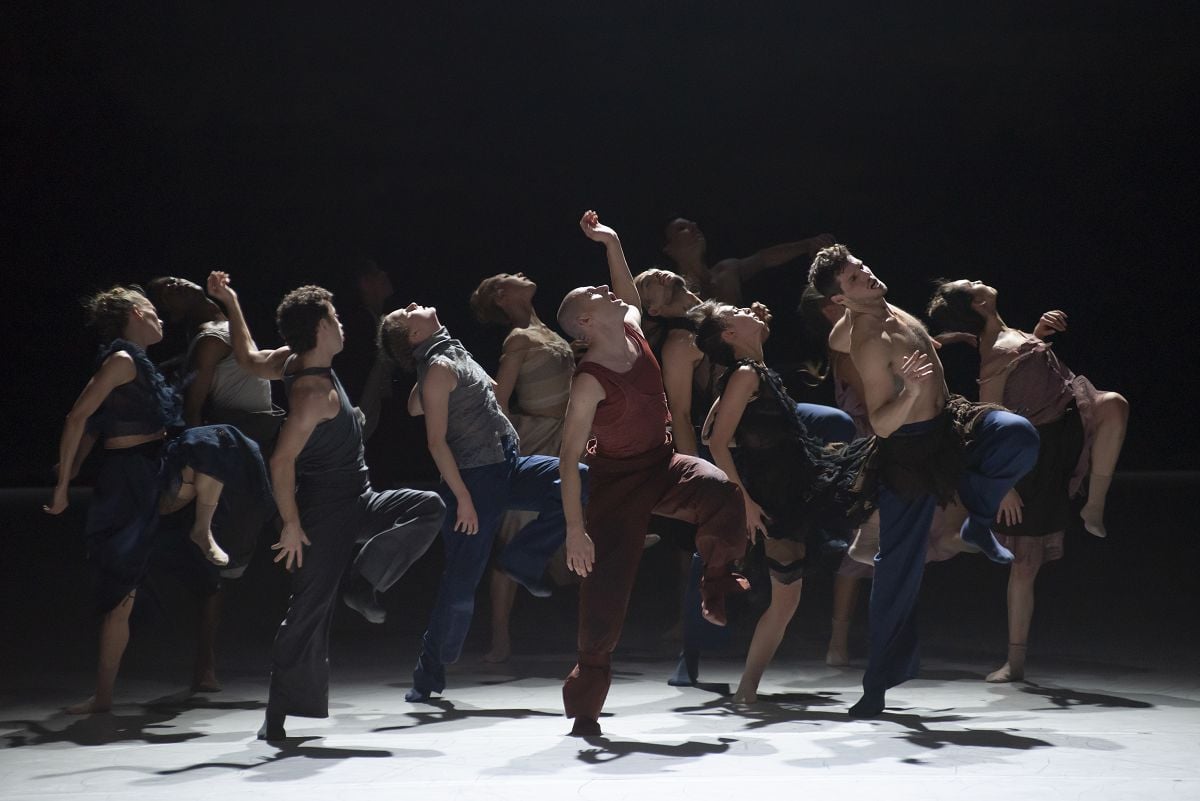
The cast also do Dawson proud, allowing the big movement to do the talking and not overselling matters. I was also aware of how connected they all were – it was intoxicating. My only slight reservation was the number of overhead lifts – too much of anything isn’t a good thing. On that note, bravo to Enzo Saugar, a beautiful dancer who also acts as a permanently available and reliable forklift truck. And also a nod to Bleuenn Battistoni, who doesn’t allow you to take your eyes off her!

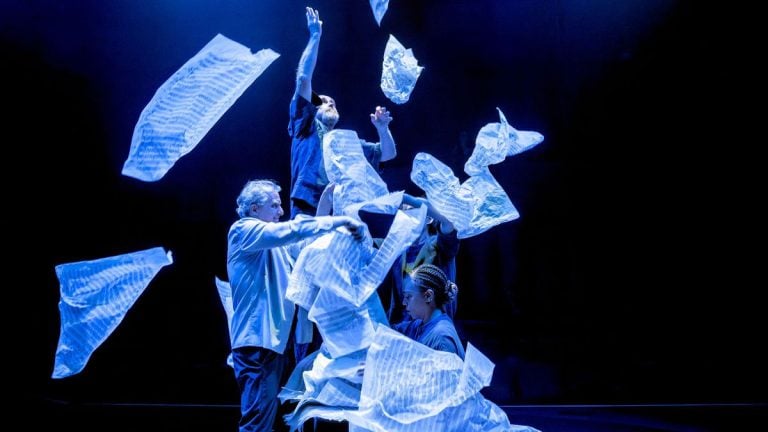
Closing the evening was a new creation, Drift Wood by Imre and Marne van Opstal. You know you’re in interesting territory if you can’t explain what you’re seeing, or rather, how it makes you feel. And such is the case with Drift Wood.
Largely speaking, it’s a work about human emotion and individual voice, and within all of this a sense of hope even if the environment suggests the opposite. I couldn’t shake a feeling of foreboding… and anyone who’s seen the zombie apocalypse series The Last of Us will know exactly what I’m alluding to.
The van Opstal’s are dealing with big thoughts and they communicate them through a number of mediums: movement of course, with solo, duo and group explorations; architecture, via the oppressive, concrete-in-style set and shifting perspectives (Tim Visser); and overwhelming fine art; ginormous back and sidedrops are revealed to show landscape scenes somewhere between Constable and Turner – breathtaking.
The music by Amos Ben-Tal and sound design by Salvador Breed are also a wonder. At times a barely there atmosphere, at others, the driving, percussive rhythm of the movement language.
Speaking of movement, what’s offered feels original and intention led. Any aficionado will undoubtedly see similarities with at least two current Israeli choreographers, however what the van Opstal’s have created feels very much like the early, genuine stages of a burgeoning language. I hope they can maintain it, and don’t fall down the lacking development, repetitive cycle we see happen too often.
The dancers are also having the best time. You can just tell when artists are truly engaged and inspired by the work, and this is very much the case. They’re all dancing for their lives throughout, showing a sense of grounding, internal articulation, escapist episodes, and travelling prowess.
My only bugbear is that it didn’t quite know how to finish and is perhaps five minutes too long. With a work of such strength, choreographers shouldn’t fret too much over making a lasting, final impression, as we’re all already waiting to see what they’ll do next.


Matthew Paluch was awarded a place at The Royal Ballet School in 1990 where he graduated in 1997. His first four years as a professional dancer were spent working with London City Ballet, Scottish Ballet, K-Ballet and English National Ballet, becoming a full-time member of ENB until leaving in 2006.
Matthew graduated from the Royal Academy of Dance, Professional Dancers’ Teaching Diploma in 2007, and was formerly on faculty at The Royal Ballet School. He completed his Masters in Ballet Studies at Roehampton University in 2011, has been a freelance writer since 2010 and currently works in the Law Sector.
He is a member of the Dance Section of The Critics’ Circle.