
Review: Alice’s Adventures in Wonderland at La Scala – it is pure joy

Graham Spicer sees Christopher Wheeldon’s Alice’s Adventures in Wonderland in Milan – beneath the spectacle is a quiet emotional core.
| Title | Alice’s Adventures in Wonderland |
| Company | La Scala Ballet |
| Venue | Teatro alla Scala |
| Date | 30 May 2026 |
| Reviewer | Graham Spicer |
Christopher Wheeldon‘s ballet Alice’s Adventures in Wonderland arrived at La Scala to considerable anticipation. The video and the cinema relay had whetted appetites, perhaps more for the staging than the choreography, though the Mad Hatter’s tap routine and the Queen of Hearts’ ‘rose adage’ were remembered highlights. The run of seven performances was almost immediately sold out, and there was an excited frisson in the auditorium before the curtain went up.
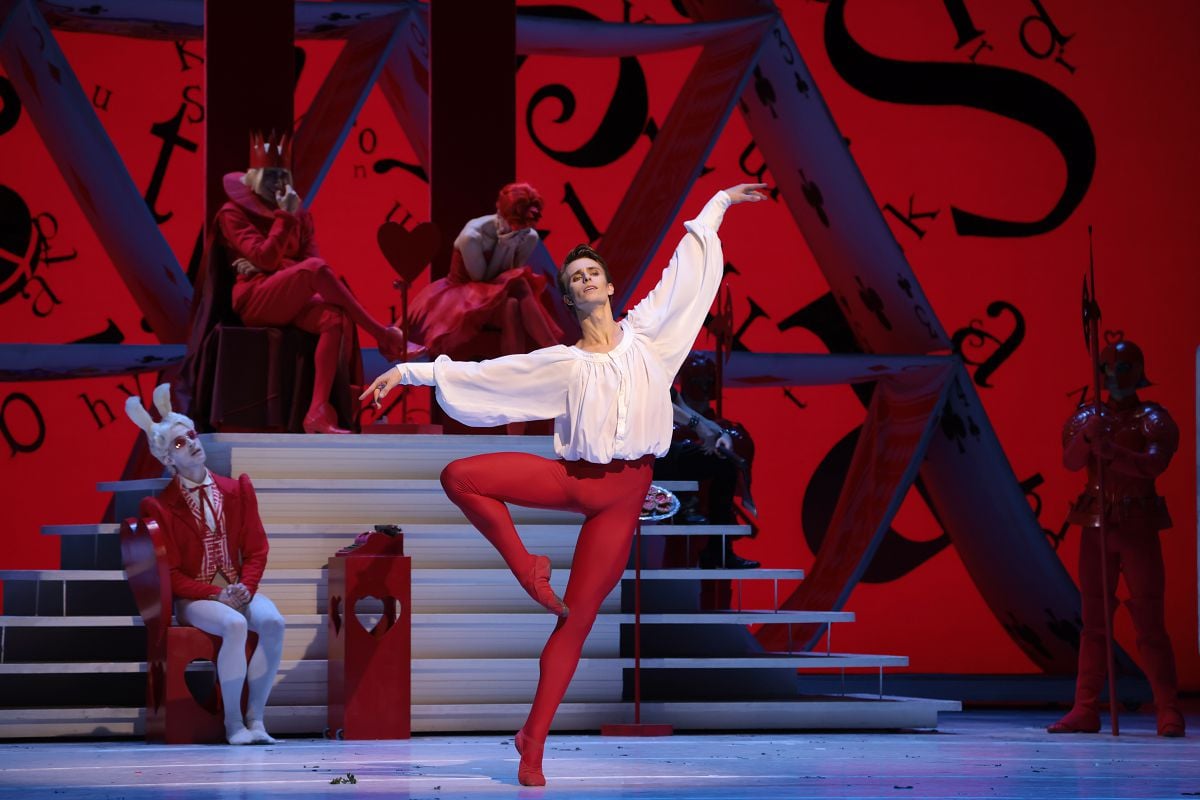
Joby Talbot’s amplified score from the large orchestra made an exciting start, but the first scene was visually disappointing. La Scala’s stage is wider than that of The Royal Opera House, which had loaned the production, and from my seat, slightly to one side, halfway back in the stalls, one-third of the stage view was black as wings had been brought in to resolve sightline issues. The image of the stage-wide country house – so effective in the video – seemed washed out, possibly due to overly bright lighting. The first scene resembles a pop-up book with the garden gate rising from the stage with nothing attached to it, two cutout trees on the left and right, and the flat house itself, which has a door for entrances and exits. Pop-up books were becoming popular when Lewis Carroll wrote Alice’s Adventures in Wonderland in the early 1860s.


Carroll is seen onstage at the opening (played and danced magnificently by Claudio Coviello), taking photos of friends and neighbours as they gather for a meal on the lawn. Carroll (real name Charles Dodgson) was a lecturer in mathematics at Oxford University as well as a photographer. His relationship with young Alice Liddell, whom he photographed, inspired the main character of his book. We then see him transform into the White Rabbit (wearing round spectacles – presumably Oxford glasses!) before jumping down the rabbit‑hole – the entrance to Wonderland.
All the main characters from Wonderland are seen in this first scene, but unless you know the dancers playing them, it’s not obvious that Alice’s mother, in pale green, becomes the Queen of Hearts in bright deck-of-cards red. And the same goes for the other characters. During an interval chat, it was clear that no one had noticed this doubling up – a shame, since it is such an excellent idea. Maybe a little colour-coding or costume-design features could have given some clues – after all, Alice has three costumes in the ballet, and all are violet.

Bob Crowley’s designs, a star of the show, are often infused with Victoriana, even in Wonderland. So a giant ‘Home Sweet Home’ sampler is raised to reveal a horrendous kitchen where the Duchess’s cook – a cleaver-wielding Mrs Lovett figure – is feeding a whole pig into a sausage-making machine, and threatens to throw the Duchess’s howling baby in it too. The Duchess is a grotesque pantomime dame who willingly holds her baby under the pepper grinder. Antonella Albano was suitably monstrous as the cook, though the able Gabriele Corrado didn’t quite live up to my expectations as the Duchess.


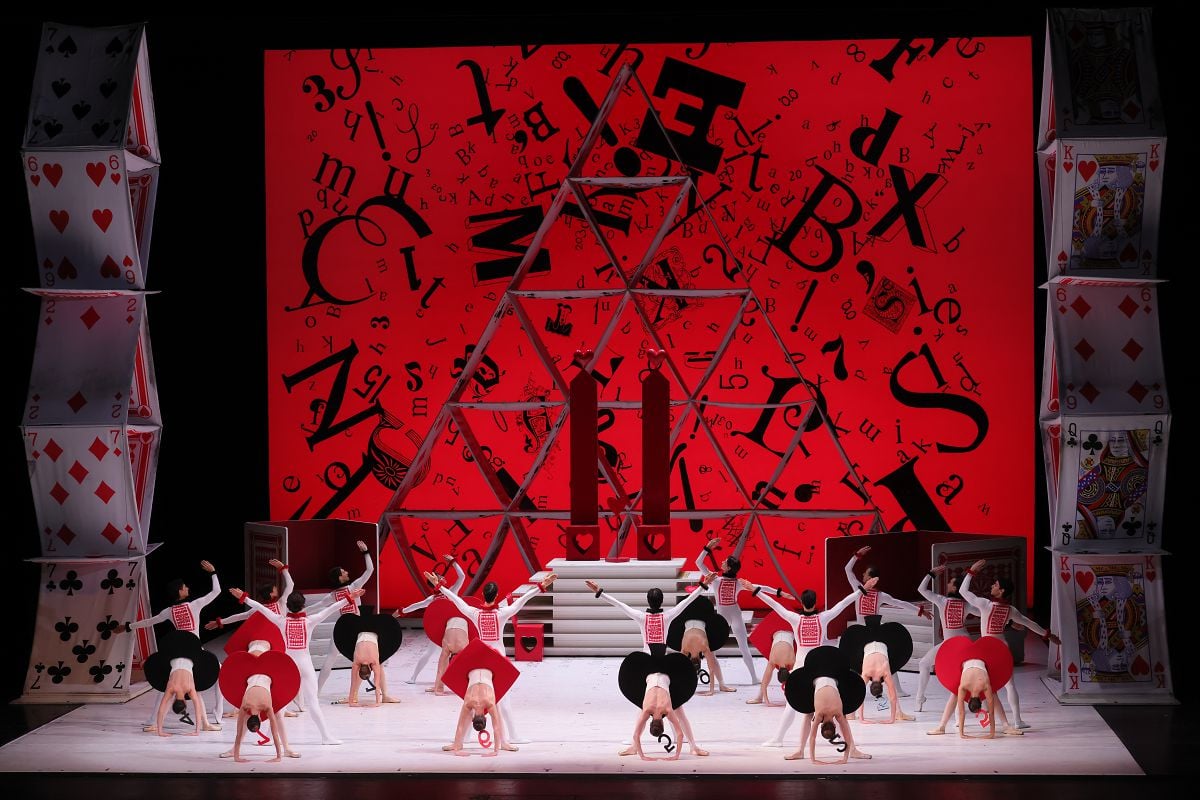
Crowley also pays homage to John Tenniel’s original book illustrations by bringing his Cheshire Cat design to life in 3D, with a black figure operating each body part. The limbs, head and tail occasionally fly around the stage of their own accord before magically reassembling. It is a memorable moment of theatrical wizardry. There are many: the Caterpillar’s body formed from the legs of several dancers on pointe, peeking out like those of a pantomime horse; the proscenium-high houses of cards that come crashing down as the Queen is defeated; the rod-puppet Alice operated by unseen hands as she falls down the rabbit hole; the Queen’s red rose bushes that send the gardeners mad as they try to eliminate the continually blooming white flowers; and Alice, growing gigantic in the forced‑perspective, shrinking‑box hallway.
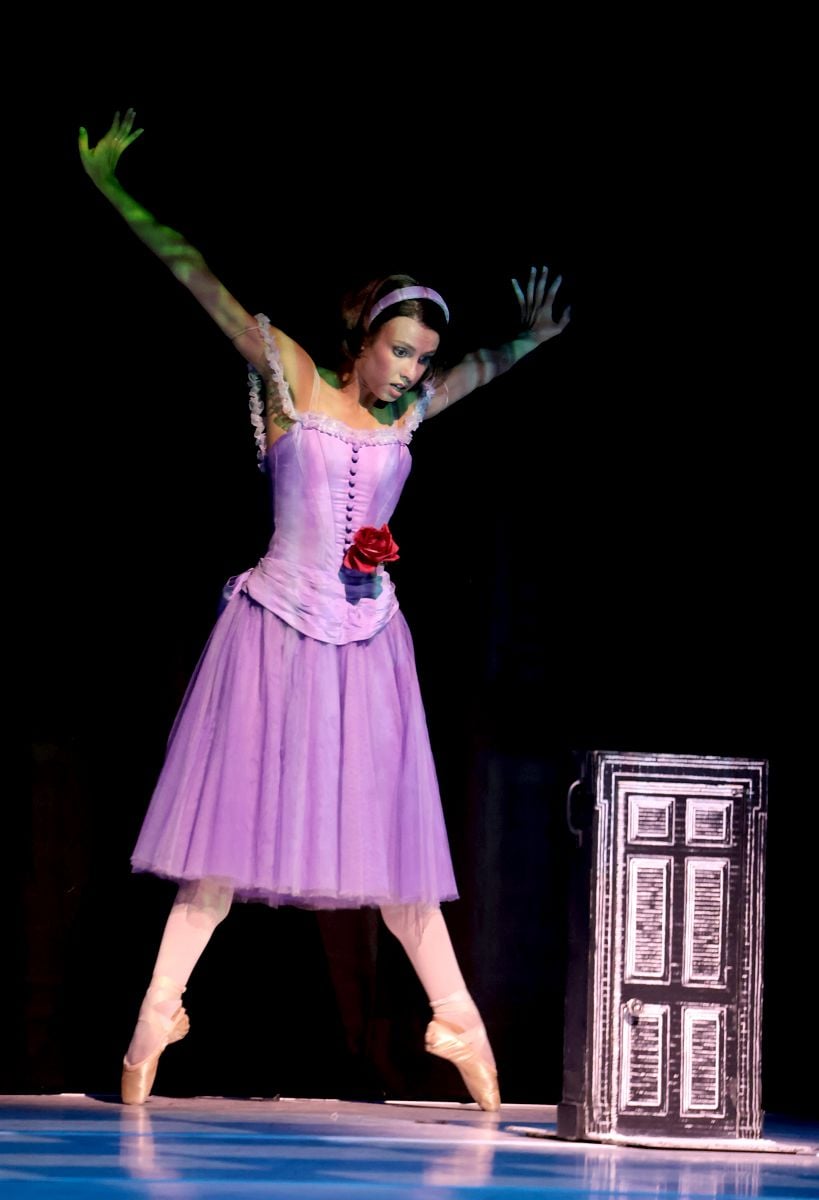
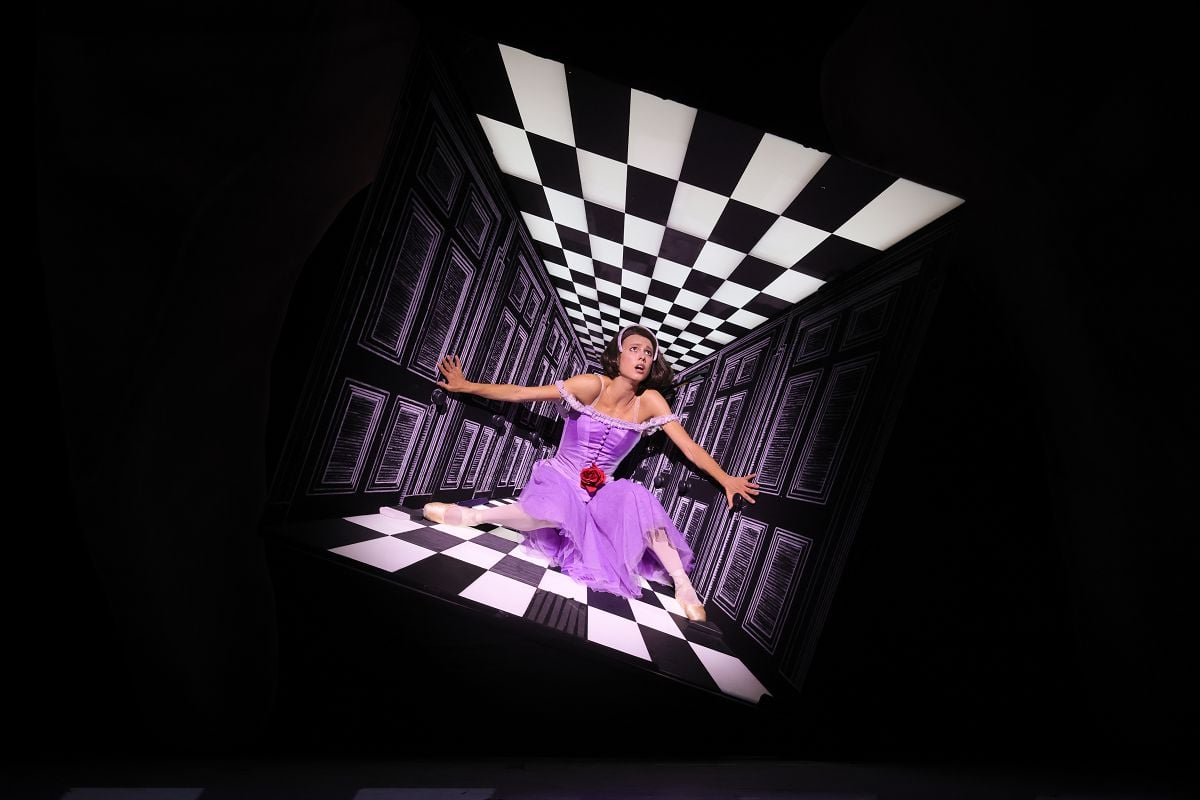
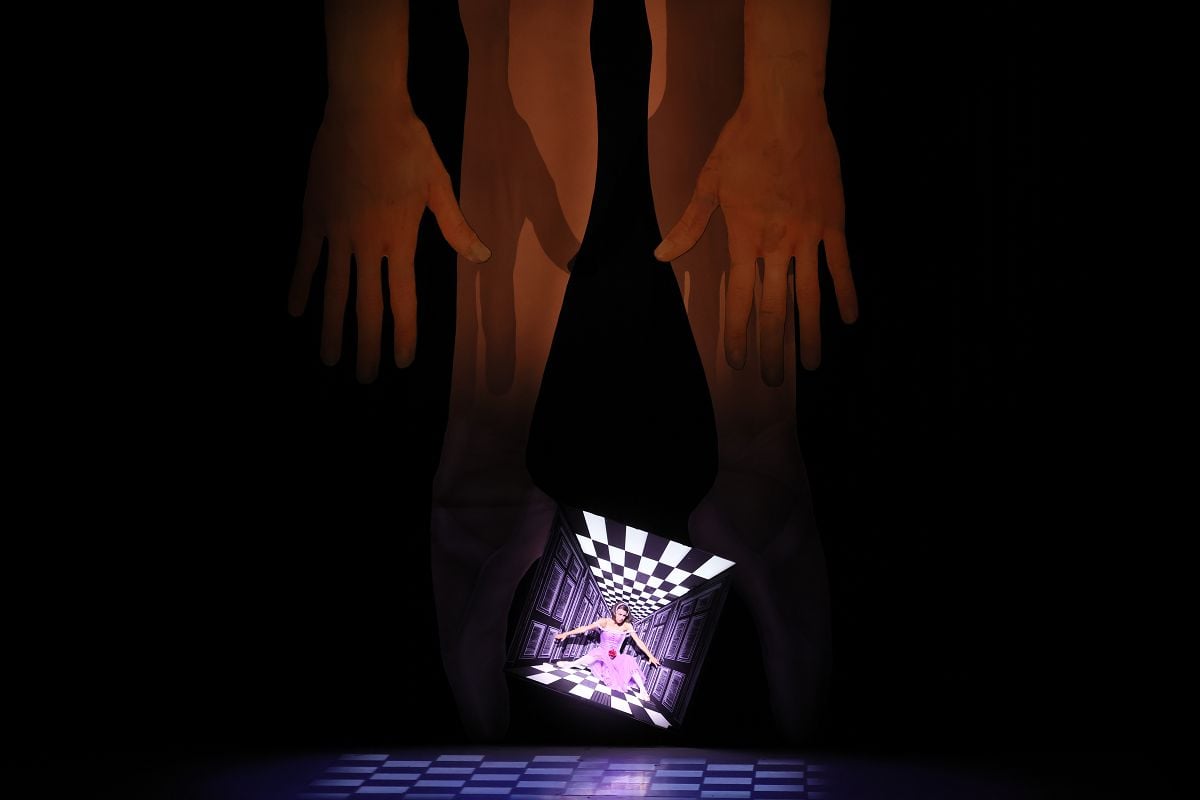
Though parts of the opening lawn scene, the Caucus Race, and the trial scene felt a little long, it was not because nothing was happening, but rather because there was too much happening, giving the impression that the scenes were blurry, as it was unclear where to focus.
But then Christopher Wheeldon is overflowing with ideas. His choreography, often funny, is also extraordinarily challenging for the dancers, and he has Alice onstage for almost the entire performance, requiring great stamina. On the opening night, she was played by Agnese di Clemente, physically petite and attractively proportioned – a perfect Alice. She excelled in the group scenes and pas de deux, though the intention got lost in her solos, which became a series of (beautifully executed) steps. Her Jack, who stole the tarts, was Navrin Turnbull, who brings to mind Sergei Polunin, the creator of the role in 2011. Turnbull is not a flashy performer and doesn’t play to the balcony, but he’s a very fine dancer and a credible interpreter.


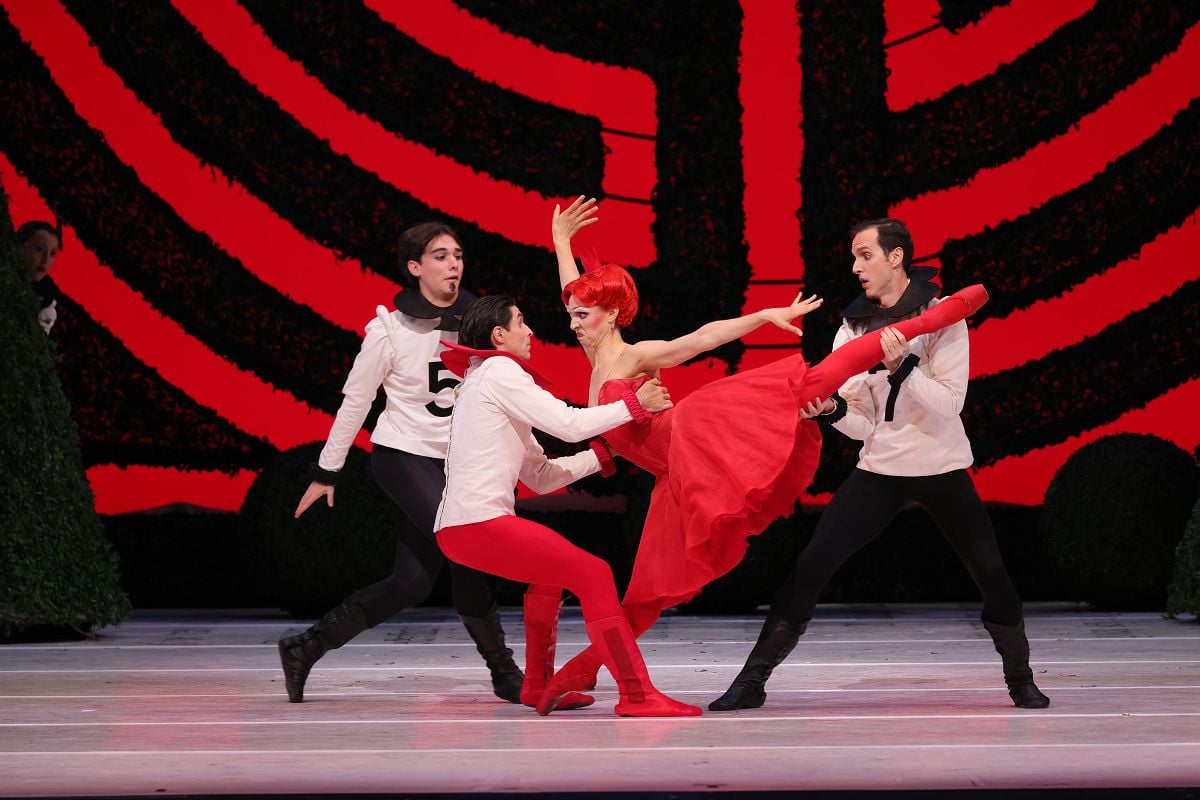
In the various casts, La Scala assigned the role of the Queen of Hearts to its principal dancers, while soloists played Alice. Martina Arduino‘s show-stopping Queen of Hearts’ Tango, with its parody of Sleeping Beauty‘s Rose Adagio, had people laughing out loud, which isn’t usual for Italian audiences. The ability to choreograph comedy is rare, and Wheeldon, like Frederick Ashton, is a master of the light touch. Comedy is hard! Arduino had some scary expressions, though with a certain murderous charm, and was obviously loving the opportunity to be OTT.
Wheeldon also lets rip in the Mad Hatter’s tea party scene, and here, long before his Broadway successes, he introduced a tap sequence. The opportunity to cast The Royal Ballet‘s Steven McRae, ballet’s de rigueur tap-dancing star, clearly inspired the idea. At La Scala, Christian Fagetti danced the role, and although a few weeks of tap lessons can’t create a Fred Astaire, he coped admirably and with flair.
Frivolity can only be sustained for so long, and Wheeldon introduces simpler, more beautiful and introspective sections. After the Caterpillar gives Alice a piece of (magic?) mushroom, she takes a bite, and a woozy waltz begins. The scenery swoons like Alice does and becomes psychedelic-coloured before the waltz blares out in Viennese fashion and the multicoloured corps de ballet appear as roses. With nods to Busby Berkeley and The Waltz of the Flowers, it is pure joy.
Then the various duets for Alice and Jack, tender and elated, are beautifully danced by Di Clemente and Turnbull, who caress Wheeldon’s detailed footwork and embrace his expansive lifts and jumps. In the ingenious final scene, the pair are once again outside the house, though the time is now… or 2011, anyway. Alice has been reading Lewis Carroll’s novel while lying on a bench (Notting Hill?), and Jack, in jeans, has been listening to music from a portable CD player. A man resembling Carroll from Act 1 enters wearing the White Rabbit’s round glasses, and there are some ‘was it all a dream?’ looks between them. The final duet and the exit leave ‘Carroll’ alone to read the book Alice has left behind. In the closing moments, the ballet sheds its spectacle and reveals a quiet emotional core.


Graham Spicer, aka ‘Gramilano’, is a writer, director and photographer based in Milan. He was a regular columnist for Opera Now magazine and wrote for the BBC until transferring to Italy. His articles have appeared in various publications from Woman’s Weekly to Gay Times, and he wrote the Danza in Italia column for Dancing Times magazine. Graham was the historical advisor on Codice Carla, the 2023 documentary on Italian ballerina Carla Fracci.
Graham also works as a dance photographer, and his photos have appeared in many books, theatre programmes, and magazines, including Dancing Times, Dance Spirit and Ballet2000, as well as all the major Italian newspapers.
He is a member of the Dance Section of The Critics’ Circle.


A review full of insight – but after the first scene, full of balletic quotations, a show not a ballet. I recall the hard core, rose tinted Royal Ballet regulars looking morose in the interval of the premiere at what had been allowed onstage.