Review: Lithuanian National Ballet’s Pulse of Life – a double bill that beats as one
Artistic director Jurgita Dronina’s programming pays off: a homegrown premiere and Dawson’s swirling ode to love gel as two halves of the same whole.
| Title | Pulse of Life |
| Company | Lithuanian National Ballet |
| Venue | Lithuanian National Opera and Ballet Theatre, Vilnius |
| Date | 21 and 22 November 2026 |
| Reviewer | Graham Watts |
This double bill of plotless ballets, loosely themed around love and given the generic title Pulse of Life, paired a new and homegrown work with another that was nearly new and imported. They made for an excellent, if relatively brief, evening of contemplative and absorbing dance.
The world premiere was Martynas Rimeikis’ I Like…, which was followed by David Dawson‘s Affairs of the Heart, originally created on Munich’s Bayerisches Staatsballett in 2022. Although the two works are choreographically very different, the programme’s obvious cohesion came from the defining influence of music, a strong but comparatively simple design ethos and a hefty dose of sentiment, all topped off by the outstanding movement capabilities of tremendous dancers. I saw two casts on consecutive evenings, and each gave me thrilling moments in which their slickness and unity were evidence of a strong rehearsal process and a close technical affinity with the choreography.
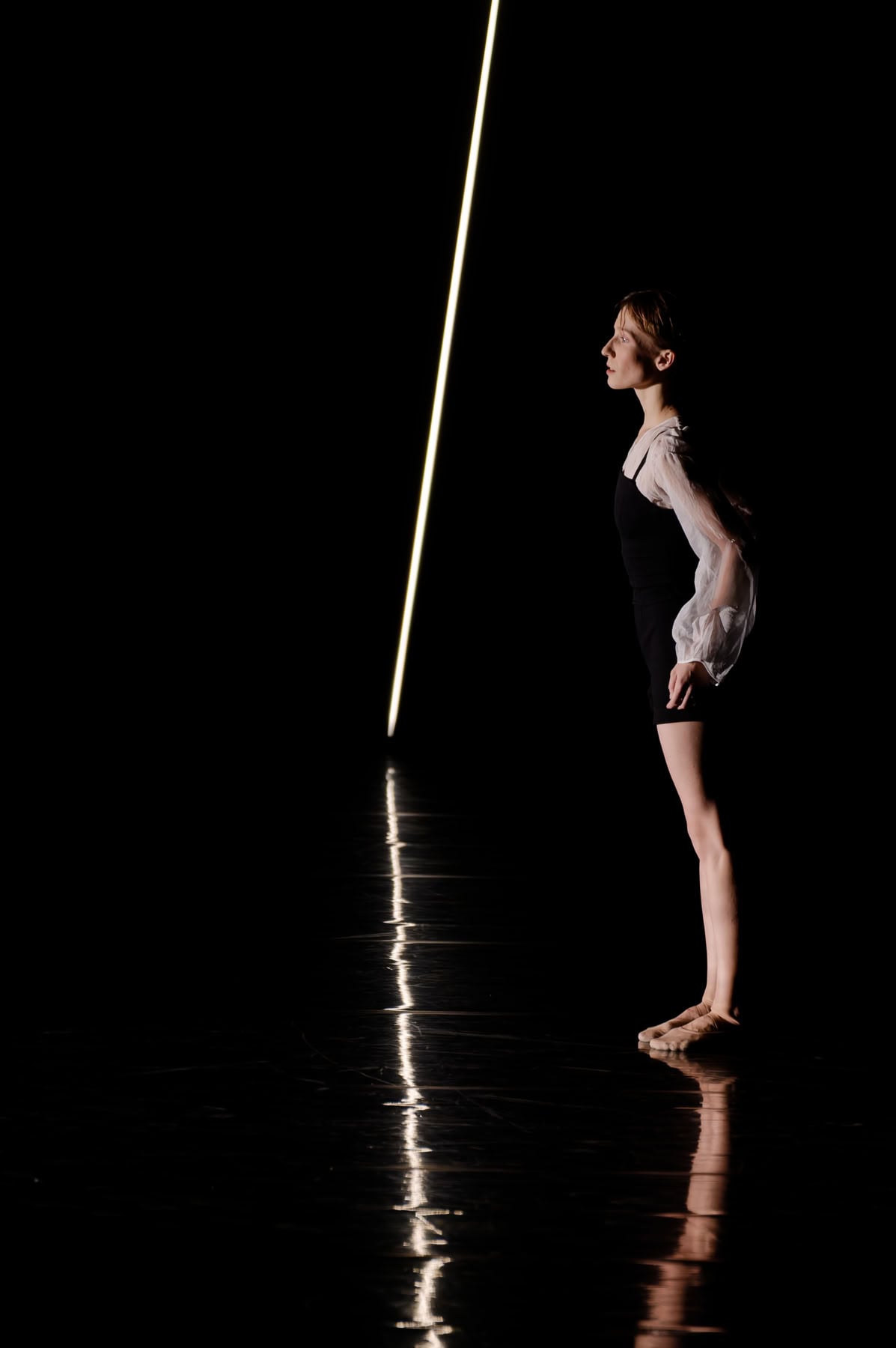
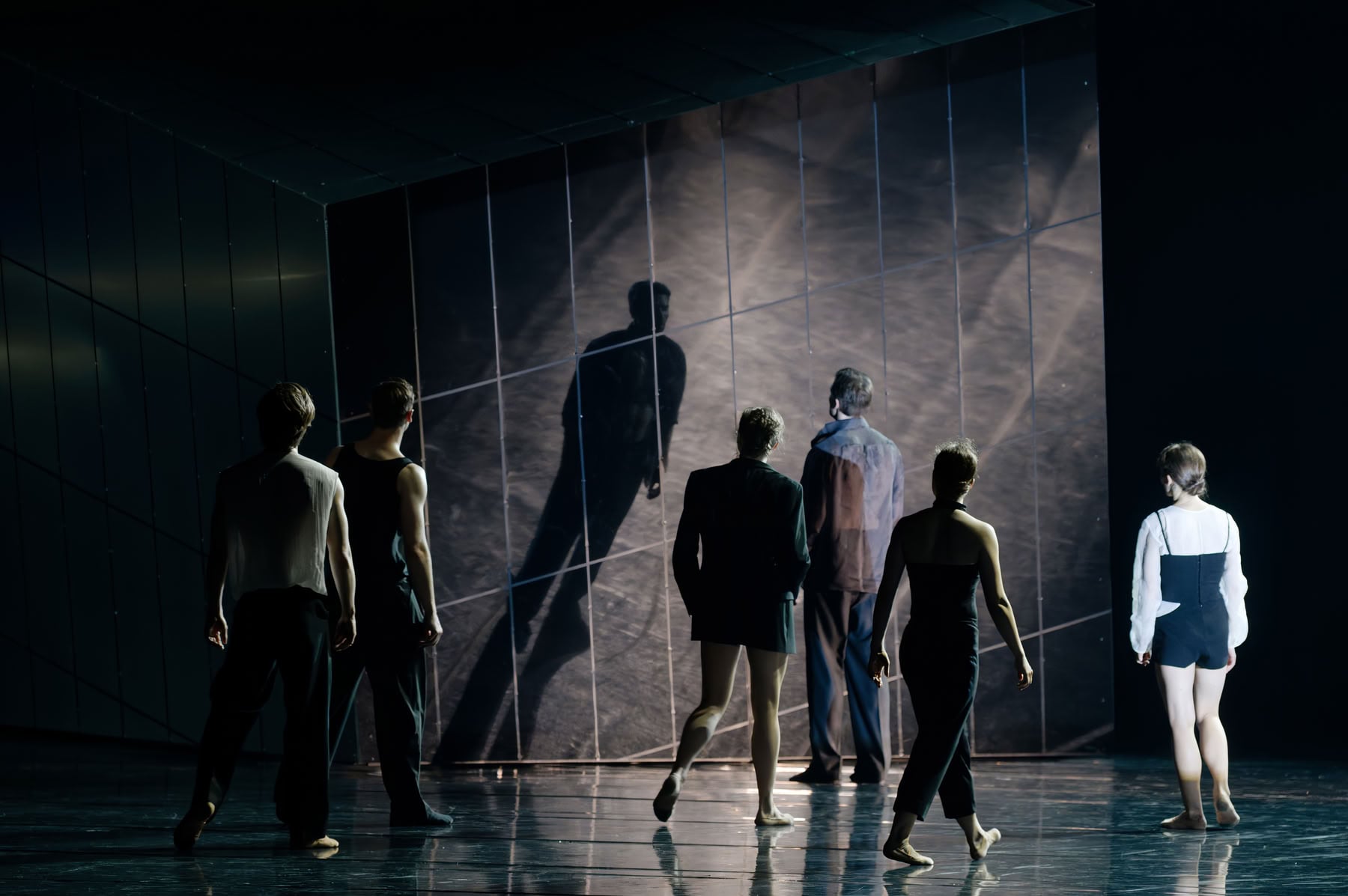
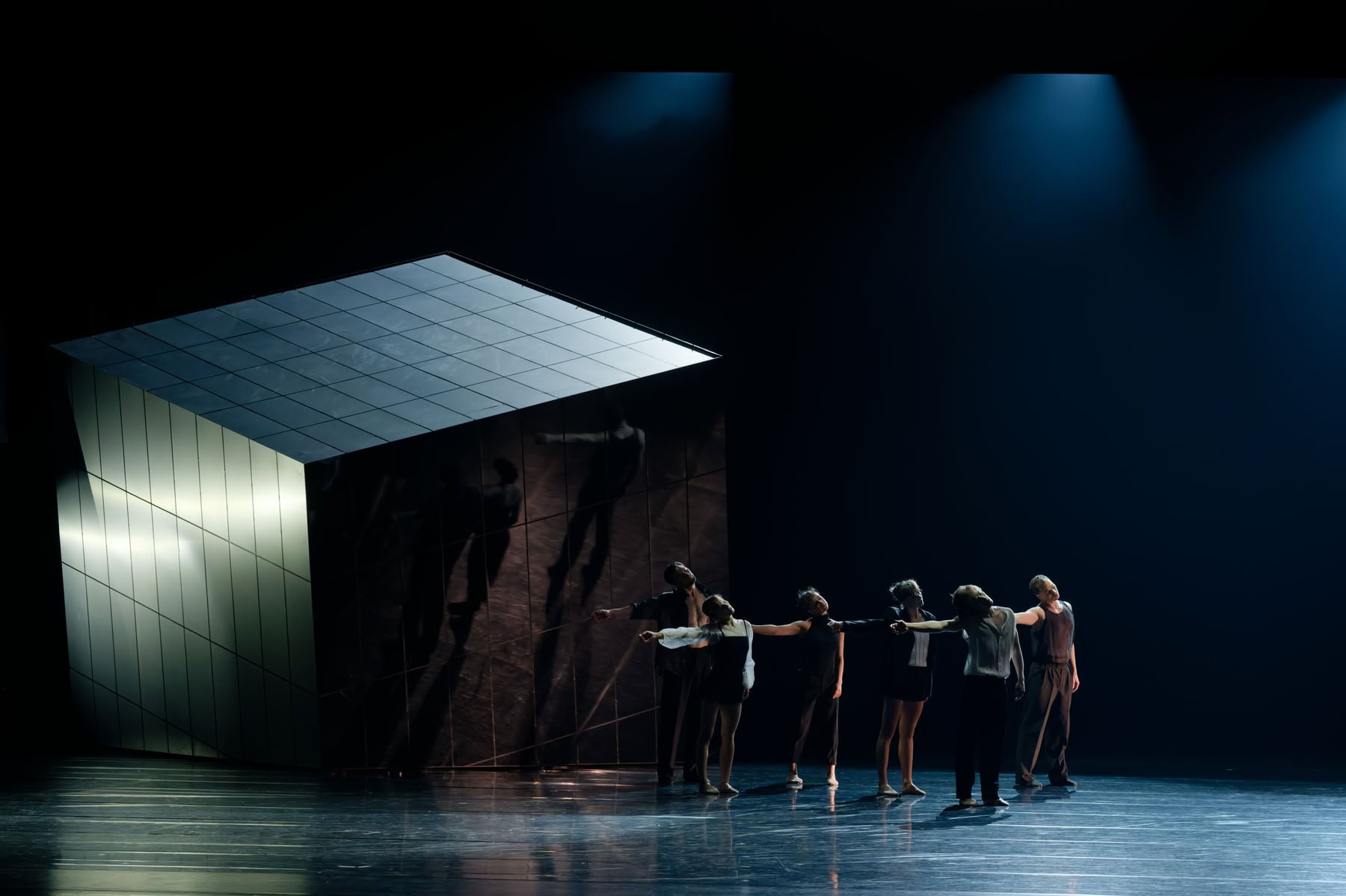
The ensemble has had a long association with Rimeikis, who has been with the Lithuanian company since 1999, as dancer, artistic director for four and a half years and now as its award-winning chief choreographer. With such a track record, it is understandable that his choreography in I Like… seemed to fit the six dancers like a velvet glove. Although three casts were listed in the programme, I saw the same impressive dancers on both nights.
The chief inspiration for Rimeikis was the music of Vidmantas Bartulis (1954–2010), a postmodernist composer who, I confess, was new to me, but whose exquisite portfolio I have been exploring in recent days. Rimeikis’ specific trigger was a series of 16 compositions under the collective title I Like…, and in particular I Like H. Berlioz (Lointaine), which Bartulis composed for flute and strings, and the haunting distant refrain of ‘Lili Marleen’ that ends his I Like Marlene Dietrich.
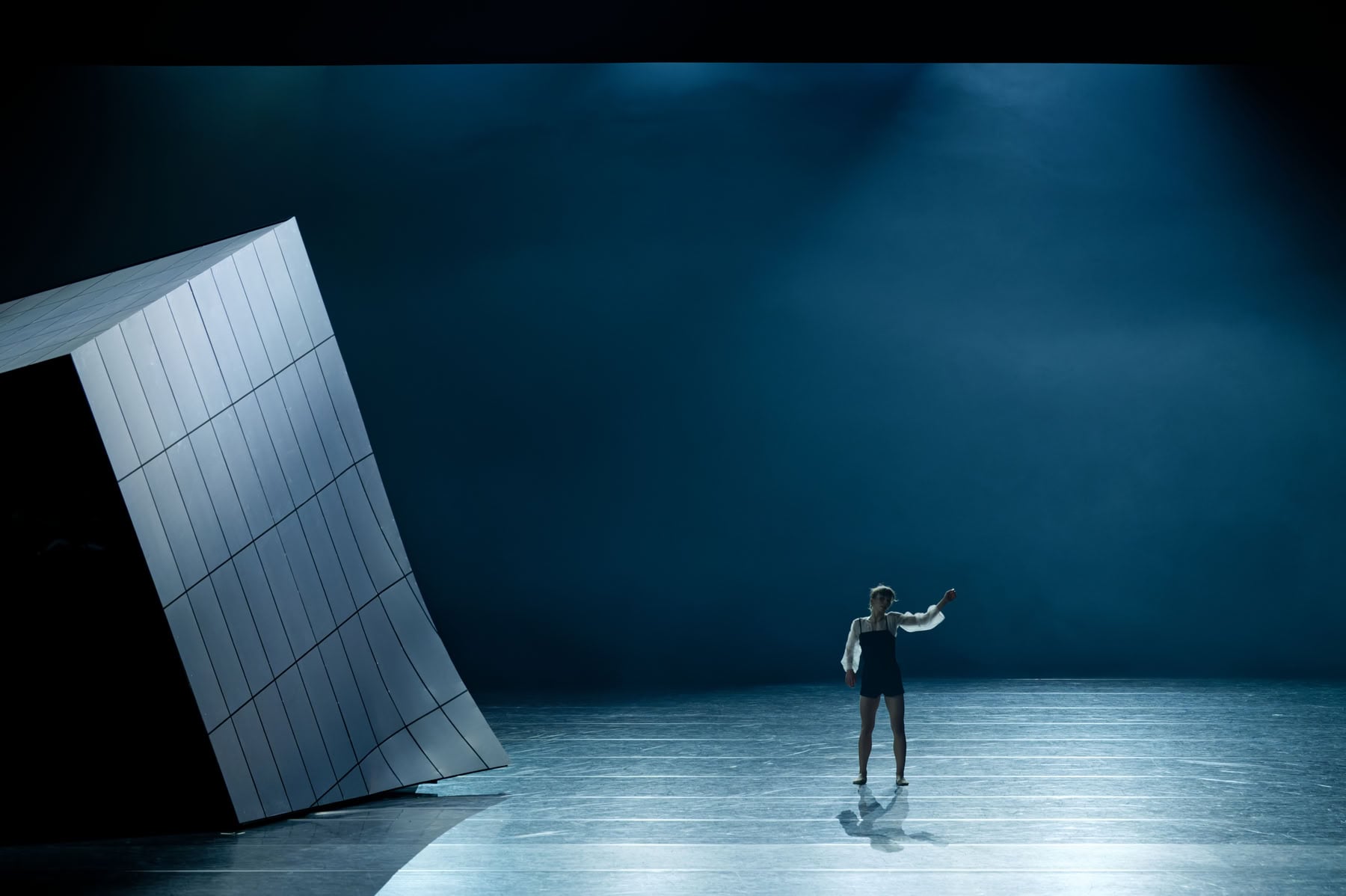
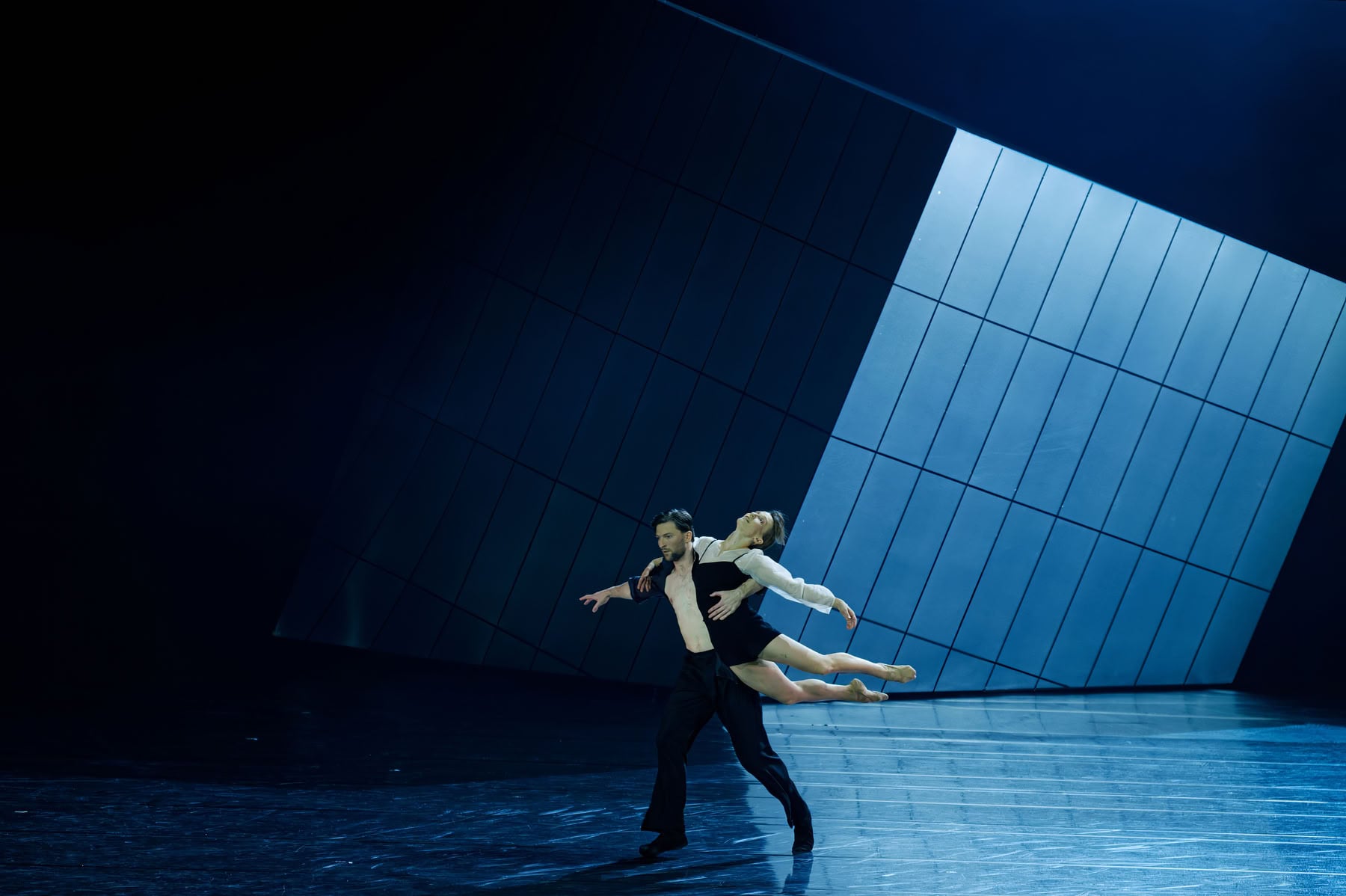
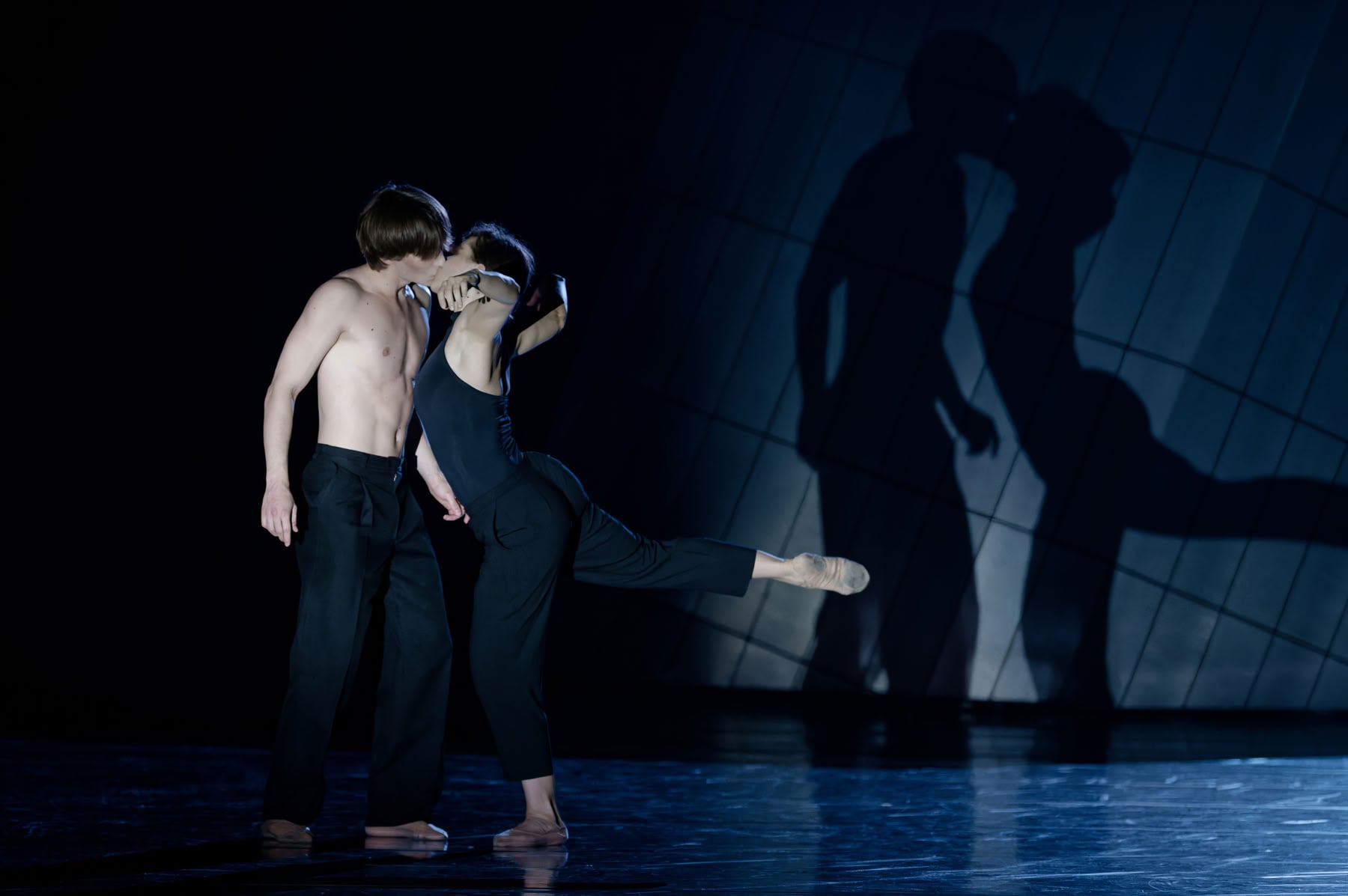
Wearing the distinctive contrast of a white blouse with translucent sleeves under a black top and shorts combo, Julija Stankevičiūtė opened the work in stillness, and she effectively closed it with a mesmerising solo to accompany Marlene Dietrich’s unique voice. Each of the sextet wore a different version of ‘own clothes’ on a black-and-white theme, including Vilija Montrimaitė in a jacket and shorts (costumes designed by Elvita Brazdylytė). The third woman, Gabrielė Marčiukaitytė (all in black with a halter-neck top), performed an emotional kiss duet with Jonas Kertenis. Ernest Barčaitis and Ignas Armalis completed this excellent group.
Marijus Jacovskis’ simple but effective design motif was a steel-coloured cube that imperceptibly drifted across the upstage horizontal, shape-shifting as it went – thanks to Levas Kleinas’ lighting and Vaclovas Nevčesauskas’ video designs – so that it became a single sheet of metal bent in two or a structure with only one or two sides visible. As in Pina Bausch‘s later works, it was a singular but monumental design element and it often seemed as if, standing motionless and staring at the structure, the dancers had a quasi-religious regard for it.
There is no linear progression to the work, which seems instead to represent a series of memories that have shaped the lives of the six participants, a sense heightened by some dancers standing still while others reflected their own experiences in movement. I was not very familiar with Rimeikis’ choreography but, on this evidence, he deserves greater international recognition.
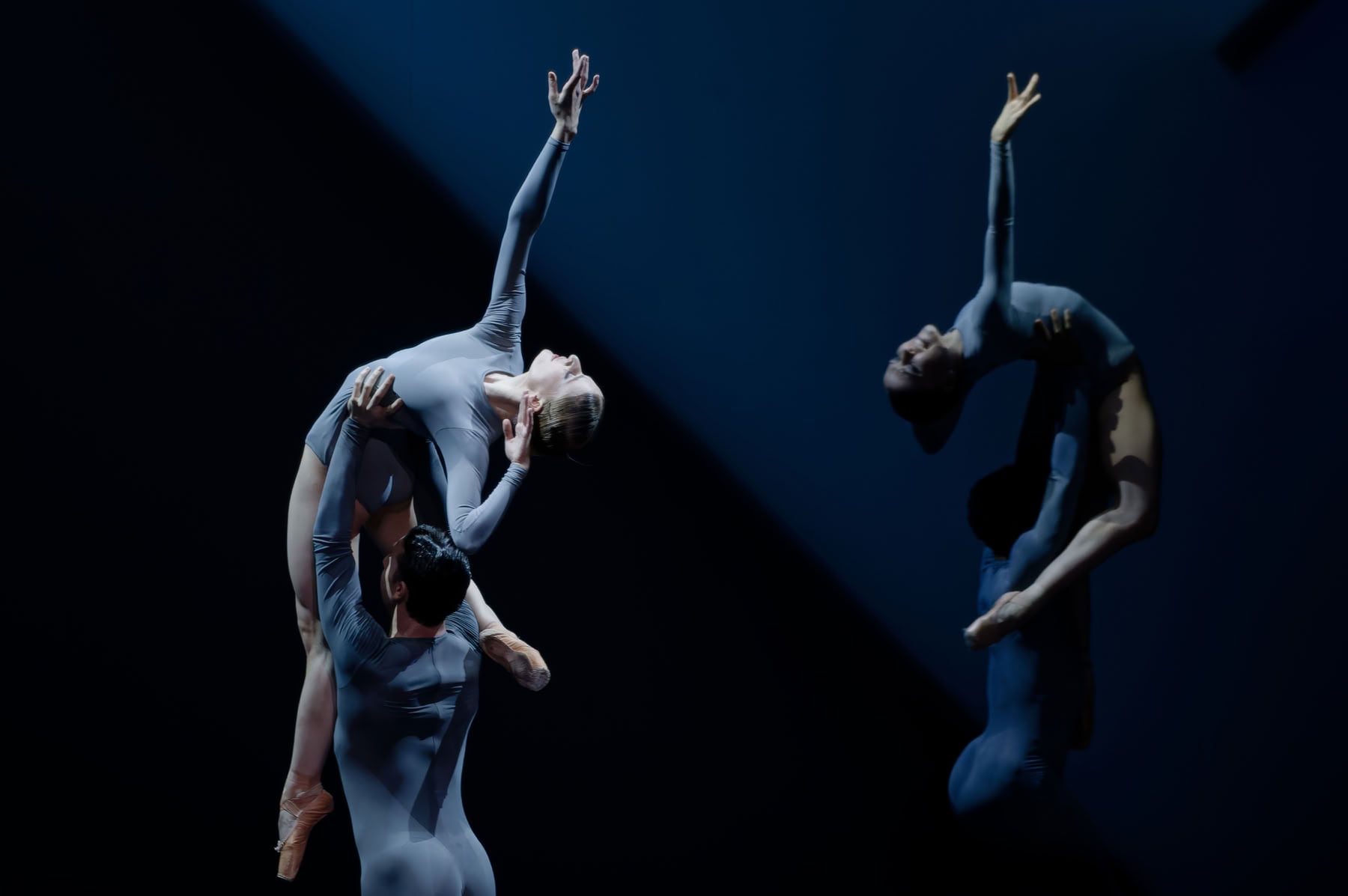
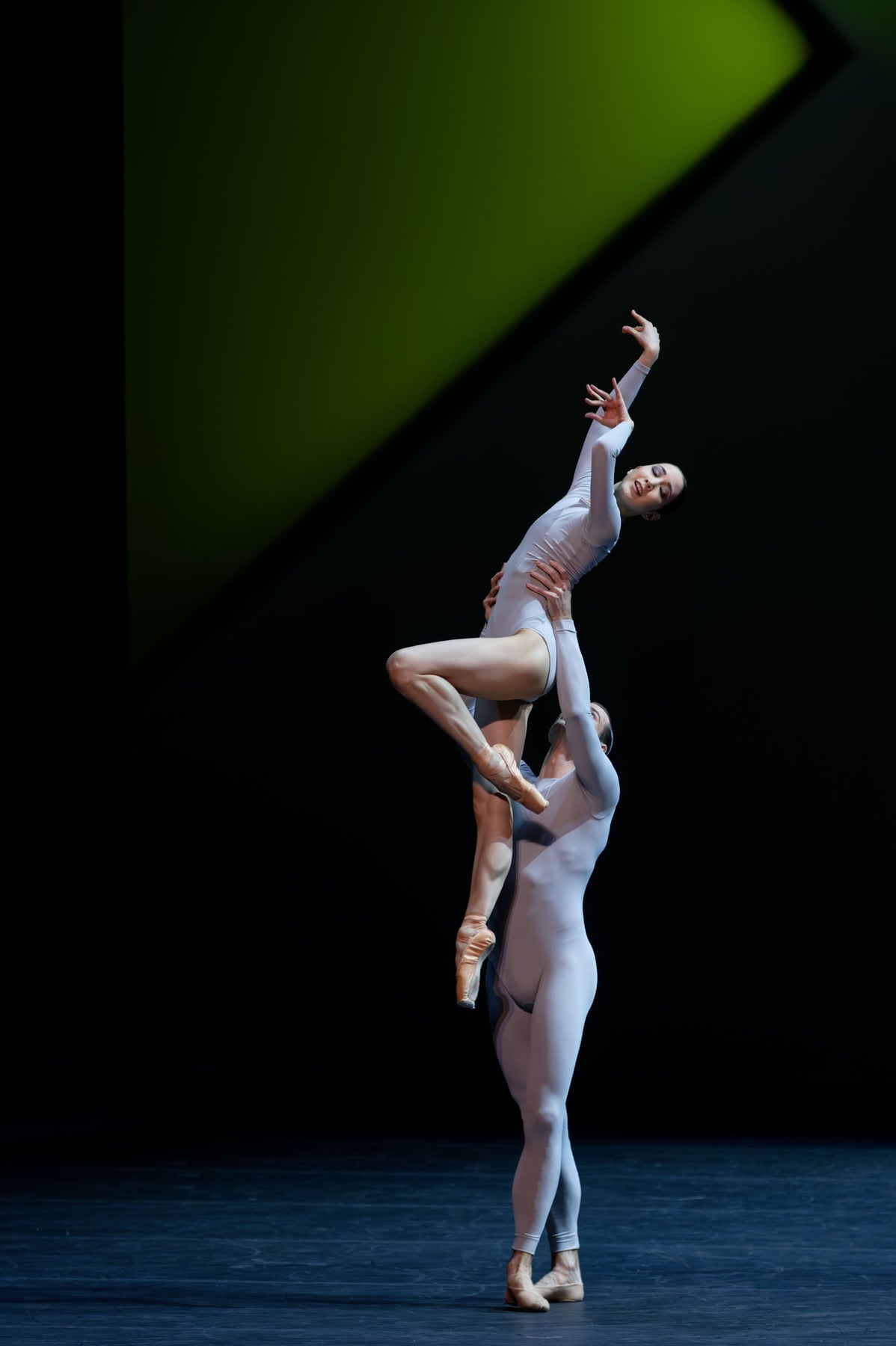
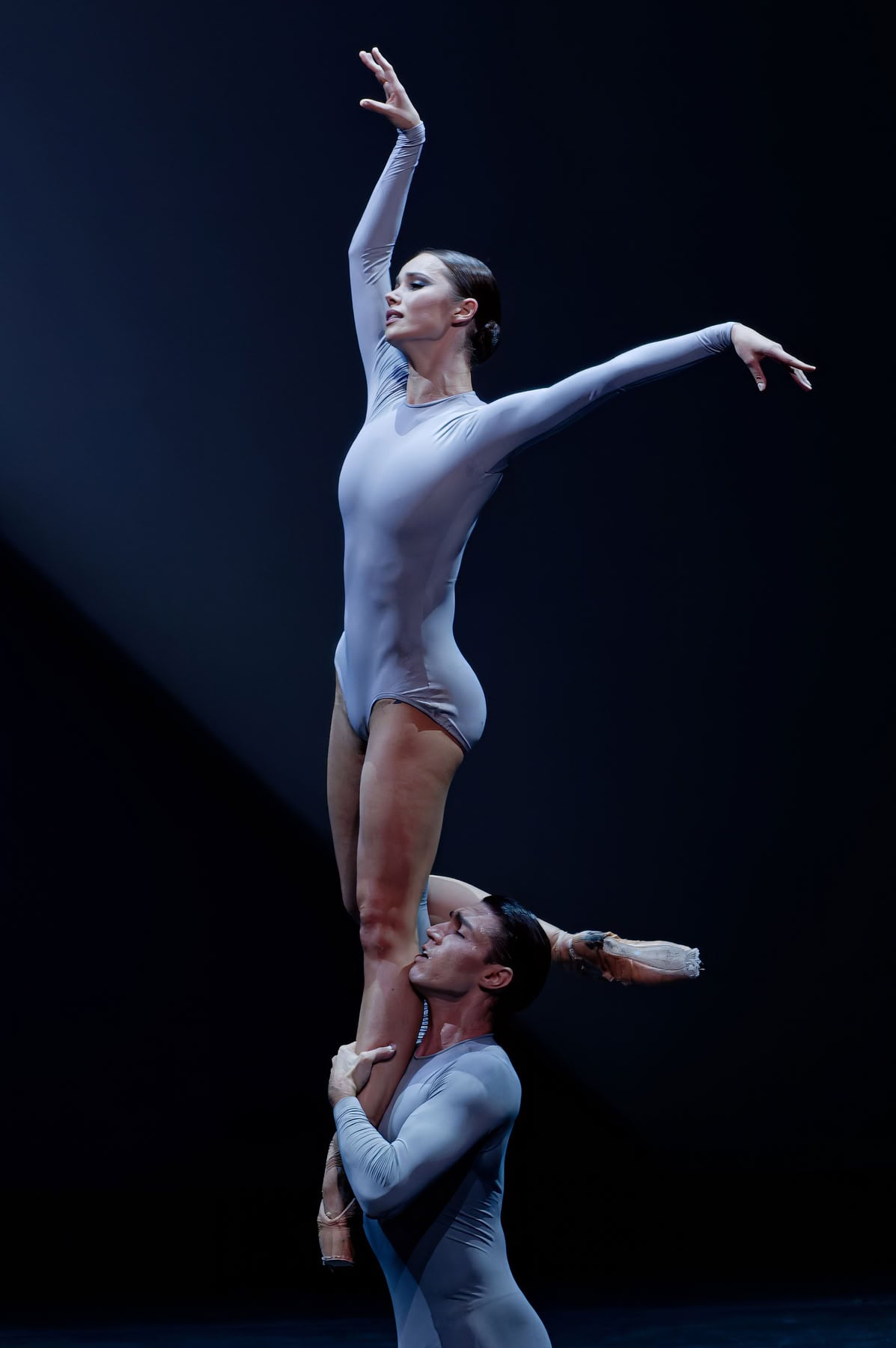
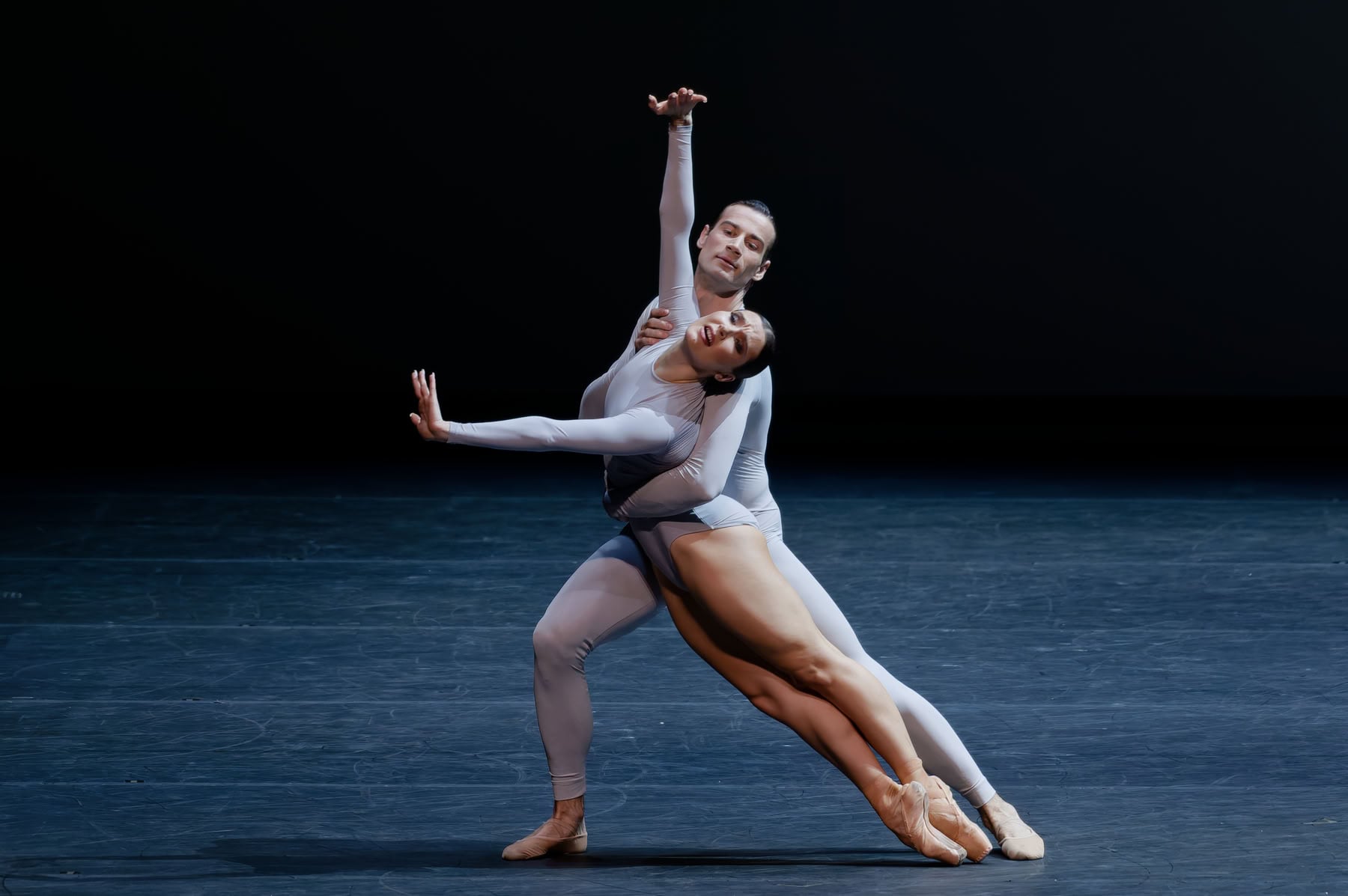
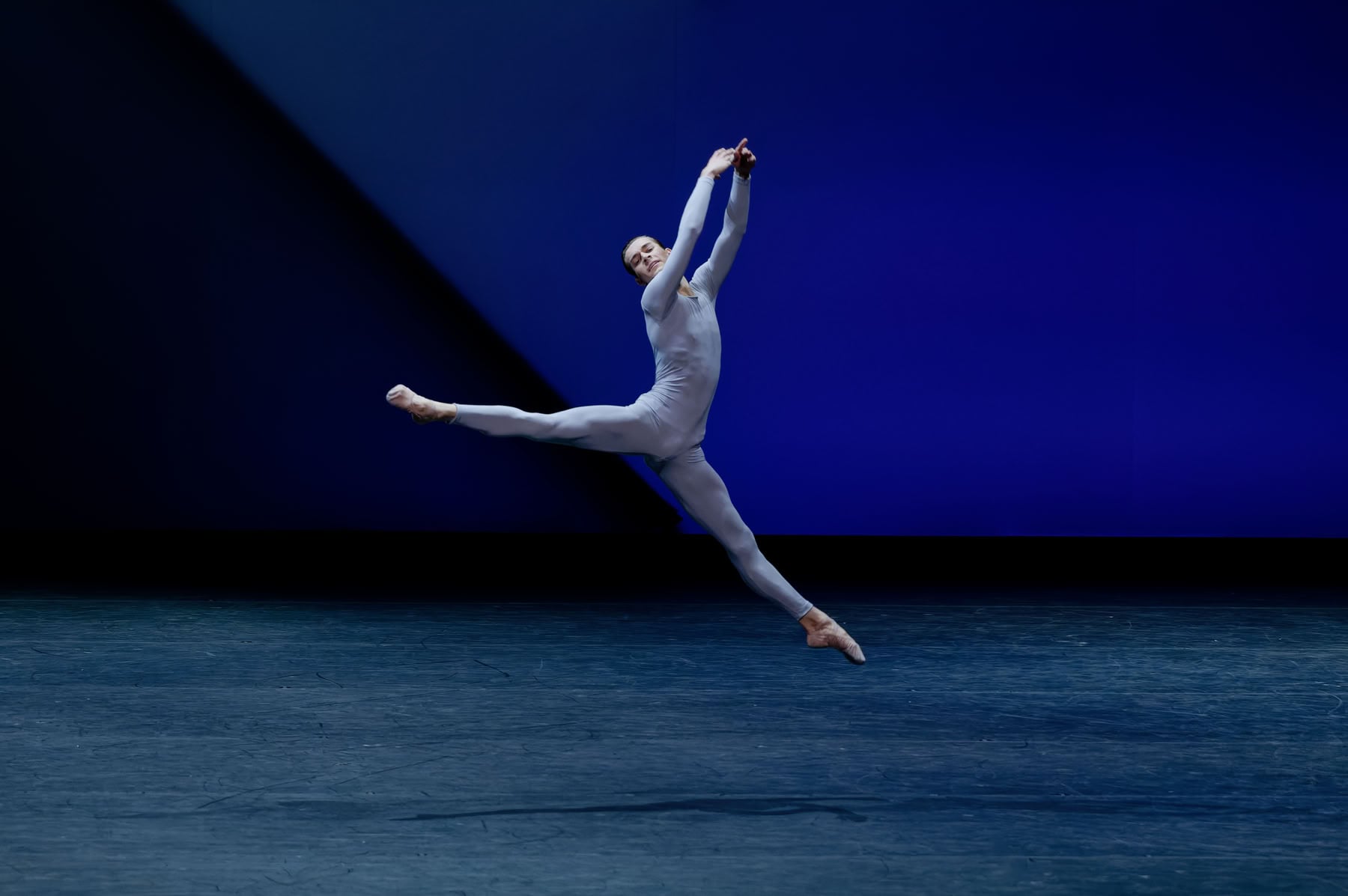
Affairs of the Heart is a masterpiece of thematic pure dance. Dawson eschews any superstition by setting the work on 13 dancers: four couples, a trio of women soloists and two men. His choreography flows like silk scarves transported by the wind. The main similarities with the earlier work are a huge emphasis on turning, in every possible way and at many different speeds, and impressive lifts.
Even though there is no obvious narrative, I love the way that Dawson (like Forsythe) gives all his dancers a name: it must make the rehearsal process much easier! The character of Emilio does much of the heavy lifting, transporting different women across the stage in presage lifts (one of which concludes with the woman being wrapped around his body like a serpent). Luis Valle, a Cuban dancer who has been with the company for just three months, was impressively strong in this role, while on the second night Jonas Laucius gave a palpably expressive performance (with Valle cast in a supporting role).
Four dancers held their place across both casts (Marija Kastorina, Marine Pontarlier, Saulė Jauniškytė and Imanol Sastre) and deserve a name-check for their stamina. Others who metaphorically leapt off the stage to impress me were Kristina Gudžiūnaitė and Ami Morita, sharing the role of Madison; and Nora Straukaitė and Olesia Šaitanova (as Prisca). But the whole cast, on both evenings, were excellent embodiments of Dawson’s many and varied interpretations of the heart in dance, as an ensemble but also in their emotional journeys as individuals or in smaller groups plucked from the crowd.
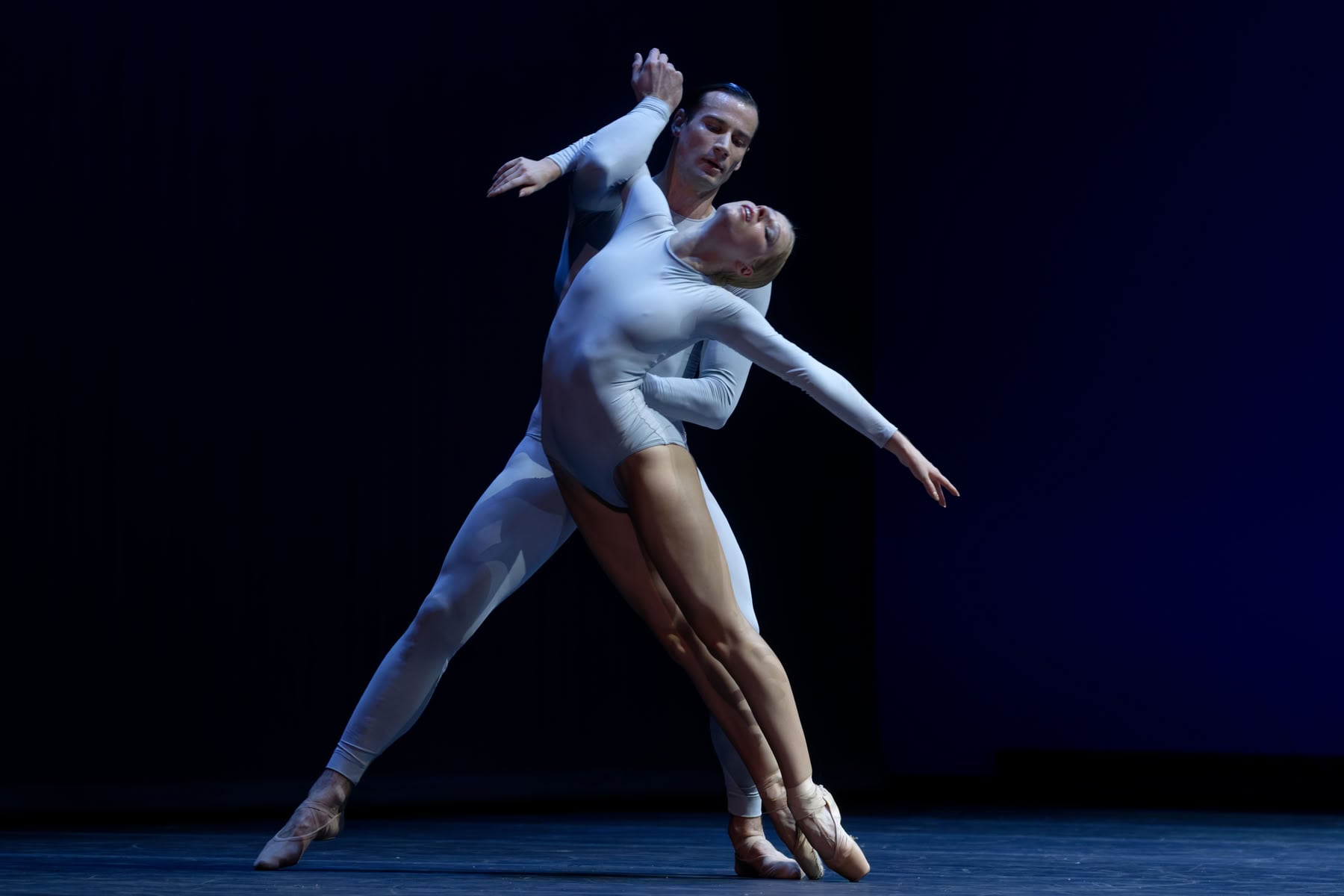
It’s unsurprising that both choreographers named their works after the music that inspired them. Dawson’s musical trigger was Marjan Mozetich’s Affairs of the Heart: Concerto for Violin and Strings, another lovely piece hitherto unknown to me. The music has a beautiful melodic flow and a regular rhythmic signature, which Dawson interprets emotionally in movement superbly aligned with the score. The (uncredited) solo violinist was excellent and the orchestra was conducted sensitively on both nights by Modestas Barkauskas.
Eno Henze’s set, enhanced by Bert Dalhuysen’s lighting, is an ever-changing embossed backdrop – a subdued, Mondrian-like context that never dominates the choreography but forms a sympathetic alliance with the movement. Yumiko Takeshima’s sky-blue leotards, with bare legs for the women and tights for the men, completed this understated but effective design cocktail.
Constructing a mixed programme is a curatorial risk for any director, especially if the works are made in isolation from each other, but here was a case where artistic director Jurgita Dronina‘s judgement scored a bull’s eye, since the pieces gelled as two halves of the same whole. With both works being around the 30/35-minute mark, it made for a brief evening. The programme is certainly well worth repeating, and I suggest that it might be front-ended by another work, just so long as it is doesn’t affect the overall synergy.