Review: Stravinsky double bill at La Scala – a jewel-box Apollo before the peat-strewn Rite
Apollo learns nobility through art, and the Chosen One dances herself to death: La Scala sets two Stravinsky scores, and two very different worlds, side by side.
| Title | Balanchine Bausch Stravinsky |
| Company | La Scala Ballet |
| Venue | Teatro alla Scala |
| Date | 19 November 2026 |
| Reviewer | Graham Spicer |
This is the rite time to be in Italy: Rome Opera Ballet has just finished an Igor Stravinsky triple bill, ending with Pina Bausch‘s The Rite of Spring; in Turin next month the Tokyo Ballet will include Maurice Béjart’s Sacre du printemps in the programme; and currently La Scala Ballet is presenting a Stravinsky double bill which has Bausch’s Rite as the last work.
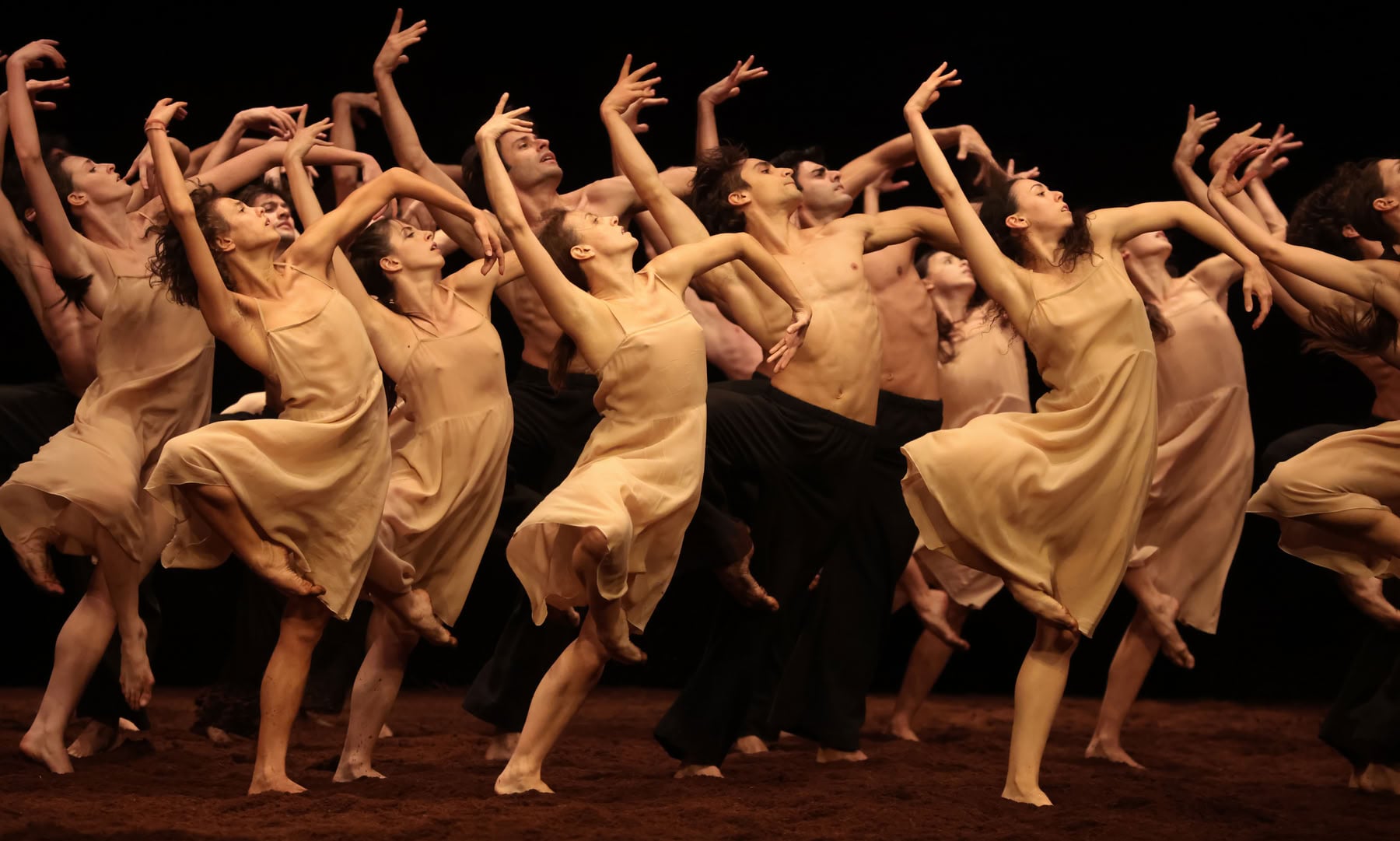
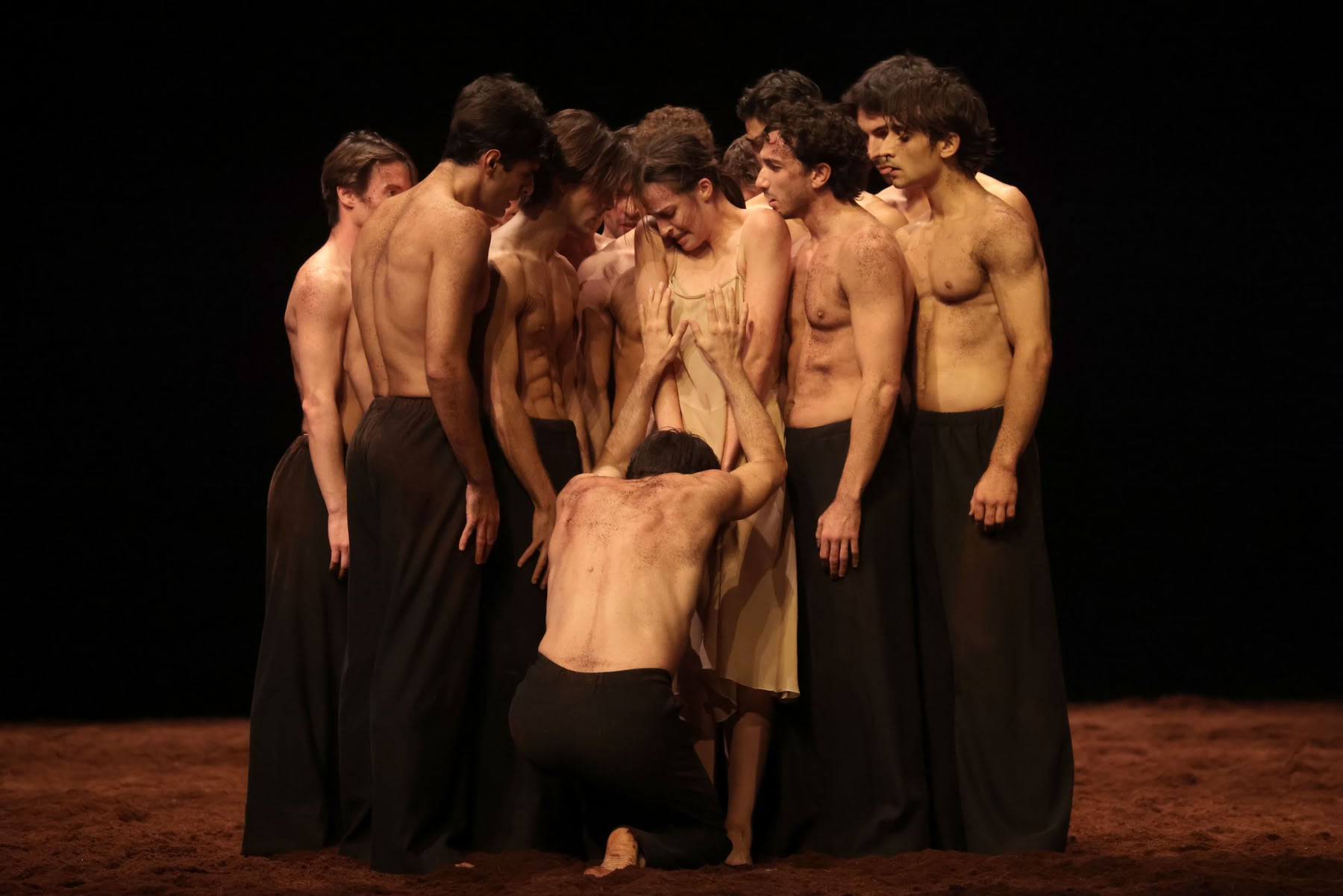
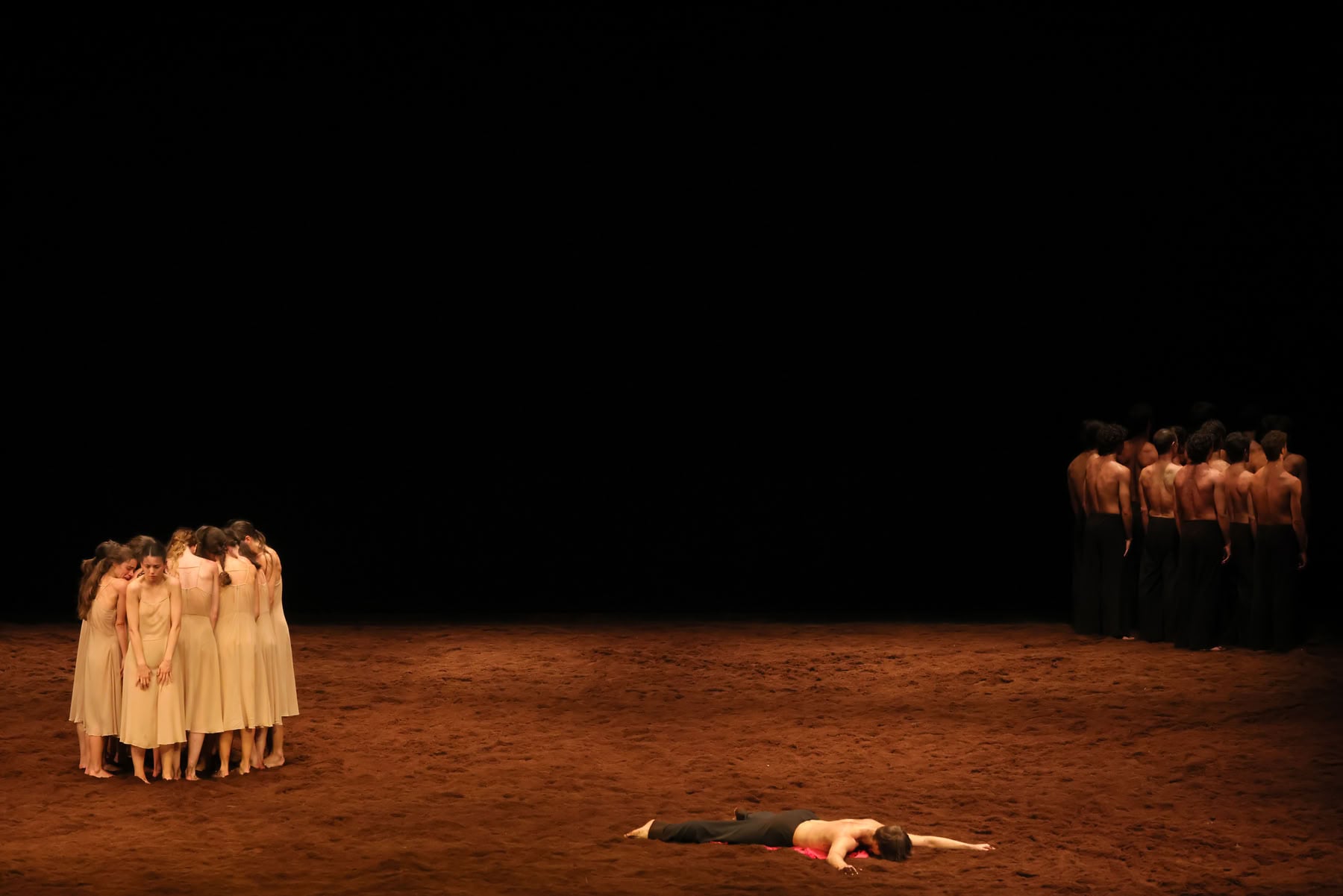
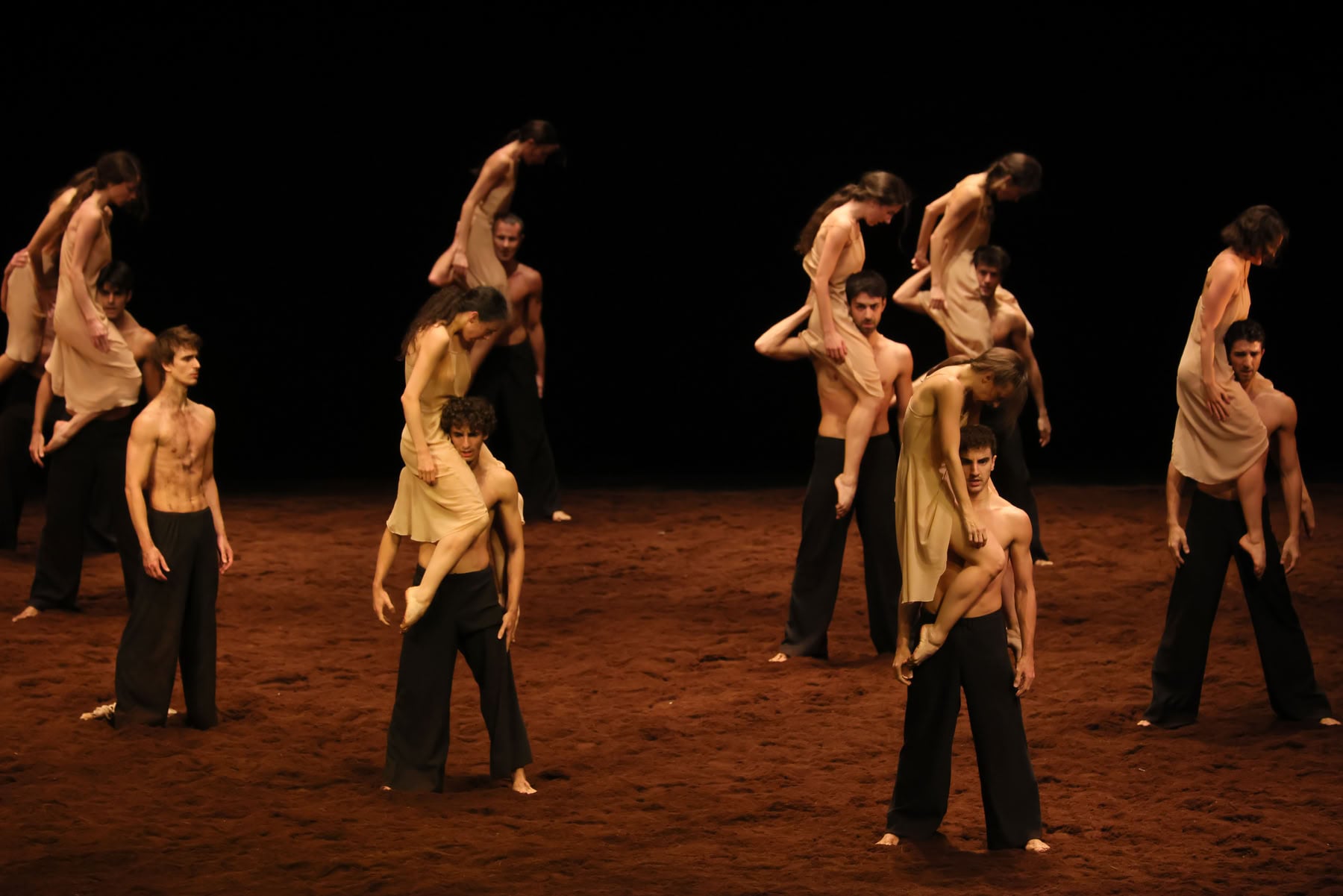
Well, Le Sacre du printemps (as La Scala bills it) has to be last, with (literally) tons of peat covering the stage. During the interval – as tradition demands – the curtains are kept open as a large team of stagehands eliminate unnecessary wings and add in waist-high lateral lights, lay down a brown canvas floor and bring on a series of large metal containers full of earth, which is tipped onto the stage and raked to cover the floor. It is a rite of its own, and the audience applauded as the last workers left the stage.
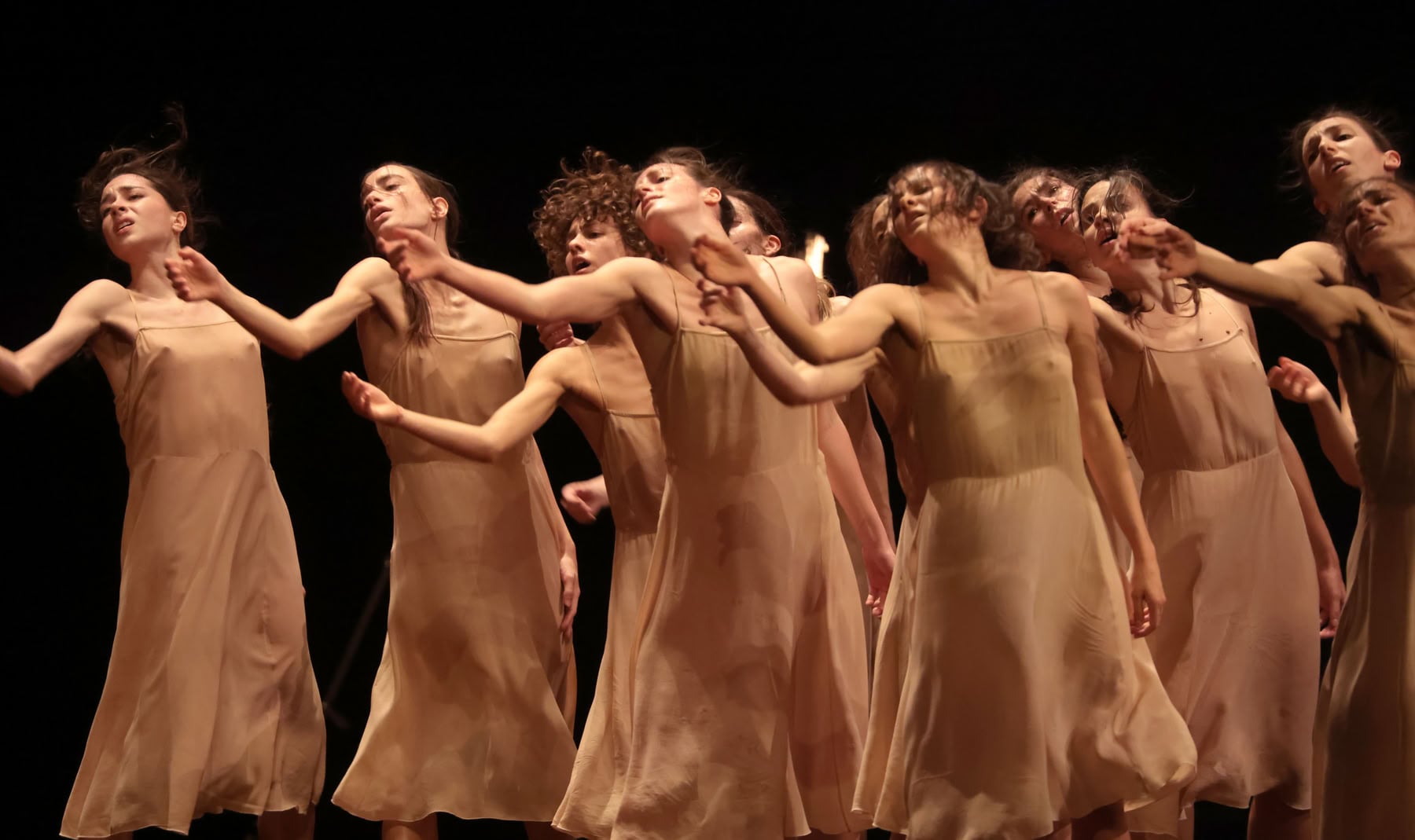
Josephine Ann Endicott from the Pina Bausch Foundation supervised this outing of the 1975 production. She was the Chosen One in the original and, now in her mid-70s, remains a force of nature in the rehearsal studio. Her rehearsals with the cast were captured on YouTube during La Scala’s brief participation in World Ballet Day. Although she had already been working with the dancers for several weeks, some of the women seemed out of their comfort zone and self-conscious, perhaps due to the cameras invading a private space – intimate rehearsal work can feel like a session with a therapist. None of this was seen onstage, where the dancers were fully engaged, thrillingly surrendering to the demands of the choreography and seemingly possessed by Stravinsky’s pounding score.
Fifty years ago, Bausch’s version caused quite a stir. Endicott says, “Whoever in the public liked it, loved it, but those that didn’t were getting up, walking out, slamming the doors very rudely, so that we all heard it.” This reaction pales in comparison with the opening night in Paris in 1913, when the Ballets Russes danced Vaslav Nijinsky’s choreography. Ballets Russes stage manager Serge Grigoriev wrote, “Not many minutes passed before a section of the audience began shouting its indignation; on which the rest retaliated with loud appeals for order. The hubbub soon became deafening; but the dancers went on, and so did the orchestra, though scarcely a note of the music could be heard. The shouting continued even during the change of scene, for which music was provided; and now actual fighting broke out among some of the spectators.” Exciting times!
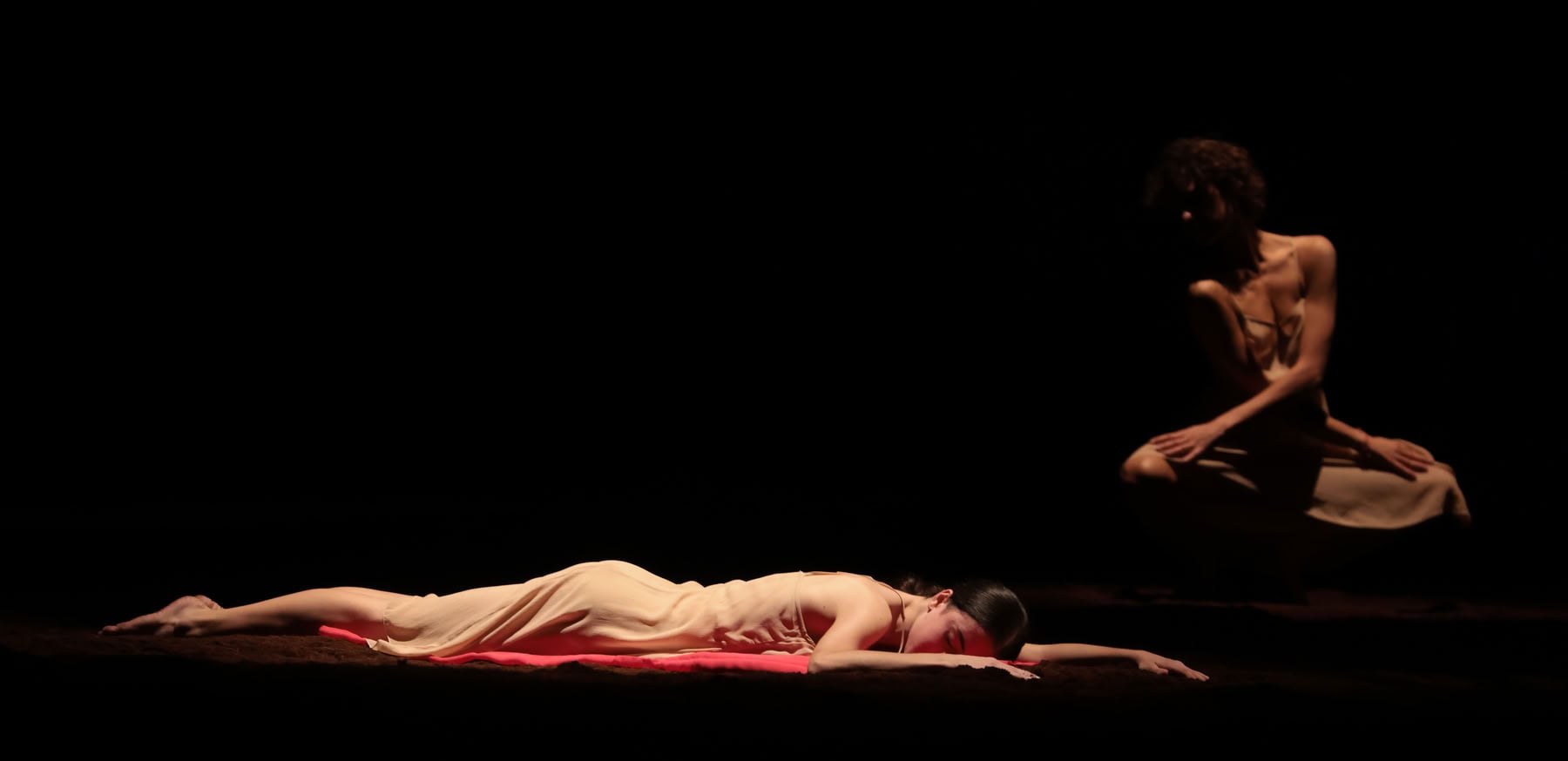
More than a century of intellectual experiment with dissonance and atonality never cured audiences of their appetite for melody – Hollywood has long reached for the lush, Wagnerian sweep of a large orchestra. But when film composers want to unsettle us, as in Psycho or Jaws, they borrow from the Rite: its jagged, stabbing rhythms still startle. Bausch hears both sides of the score. Her choreography tracks it closely, pitting the brutal, propulsive passages – the selection of the victim, the inexorable five-minute dance towards death that closes the piece – against the short, circling, folk-inspired motifs.
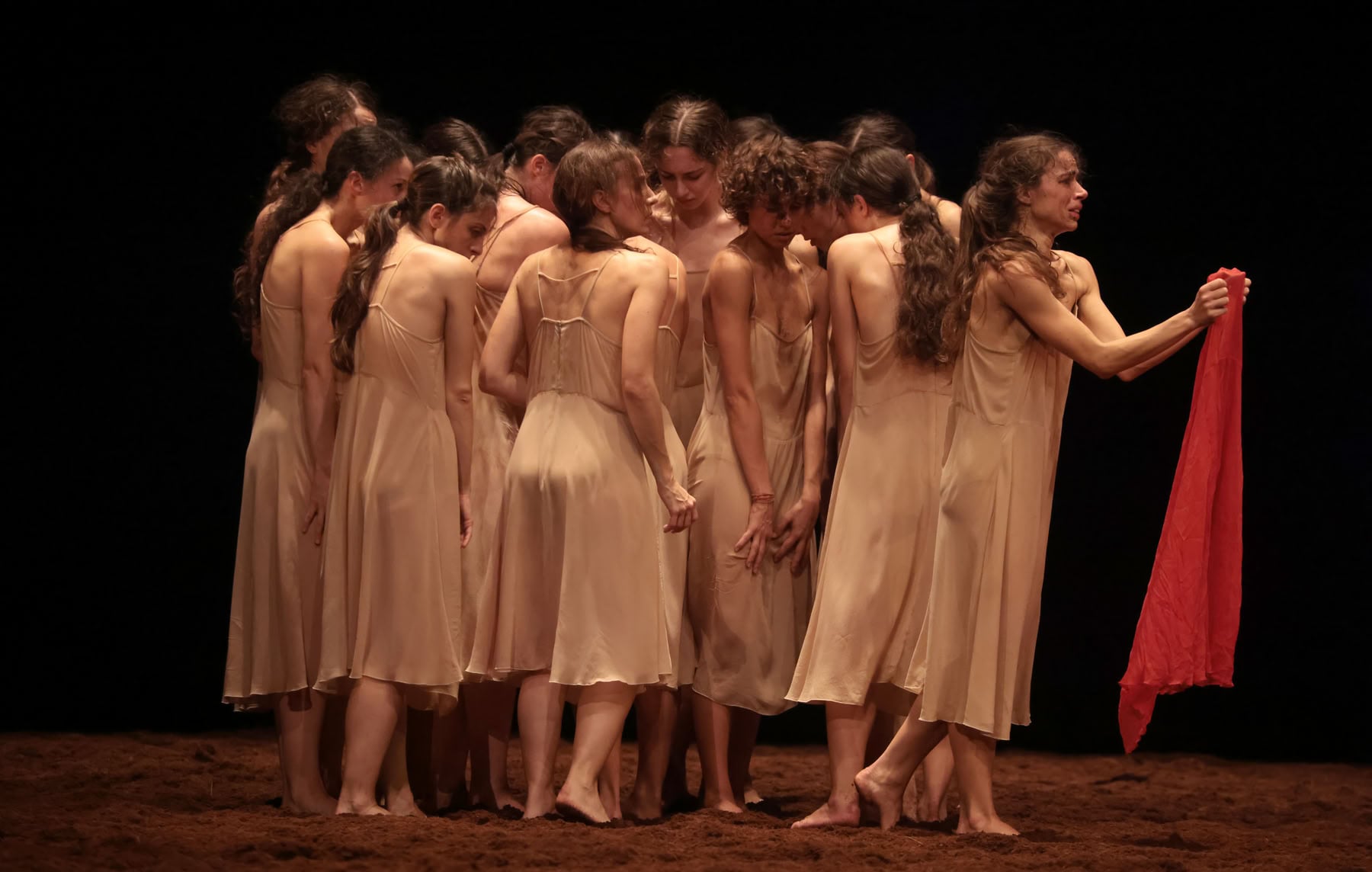
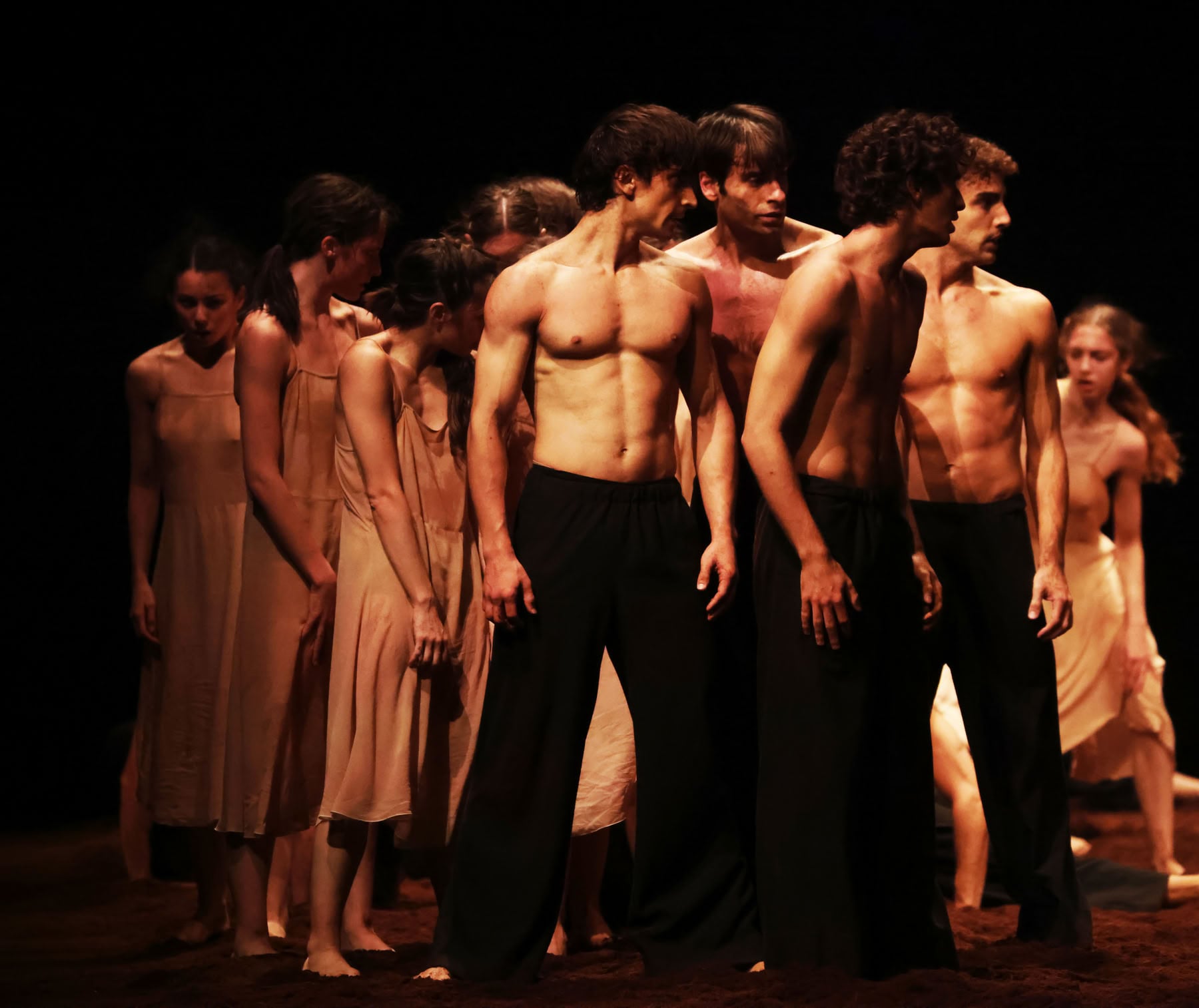
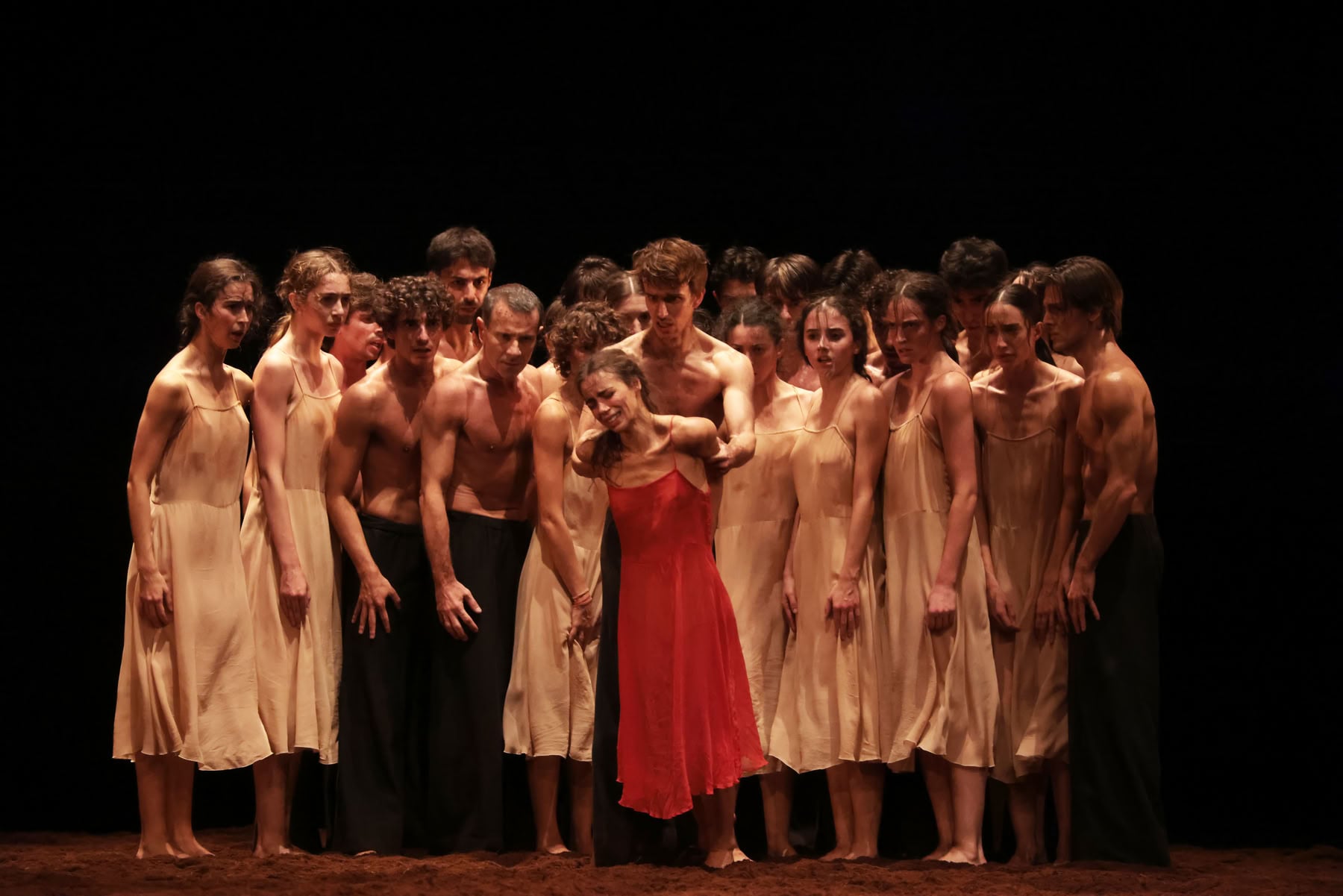
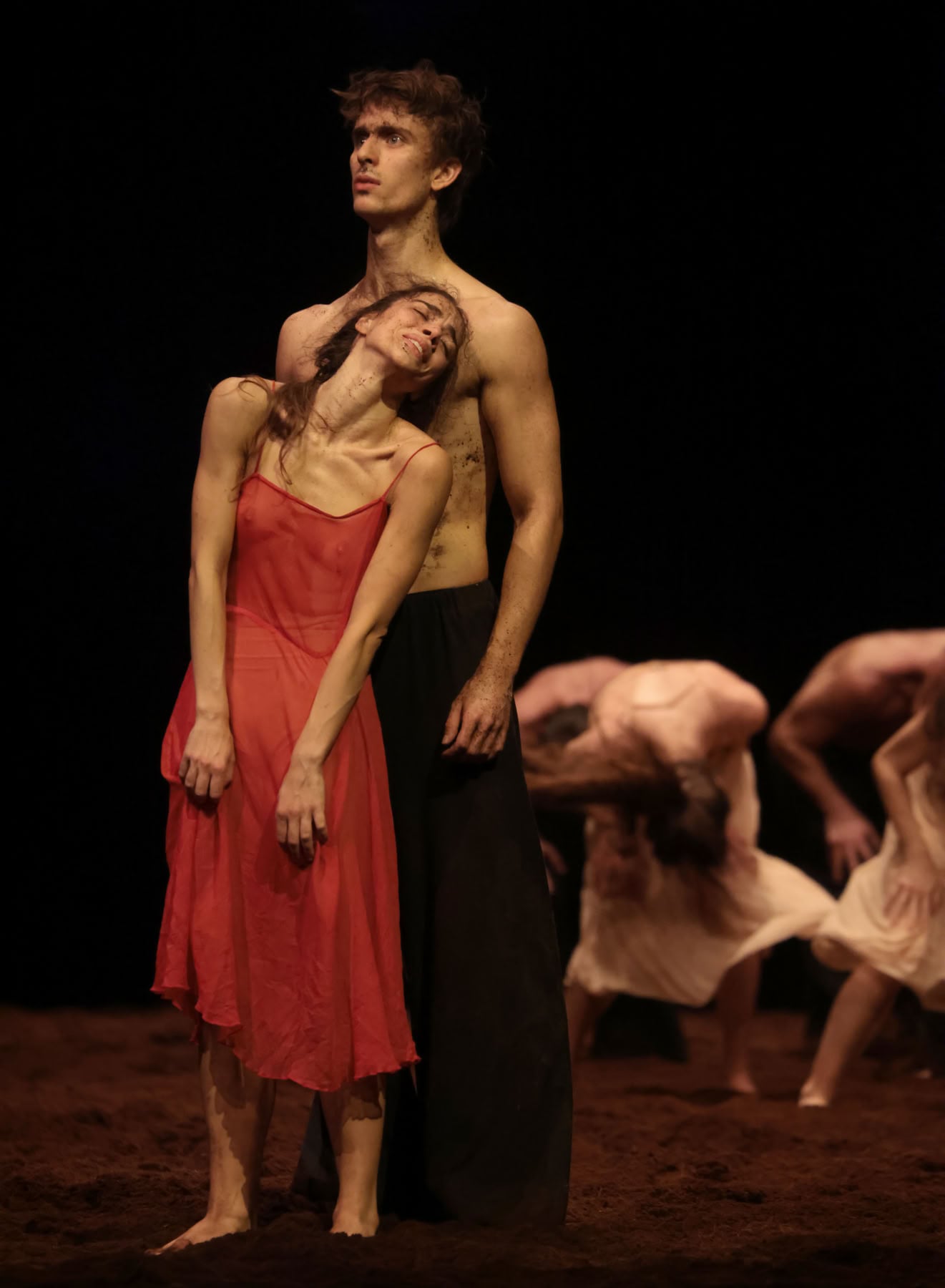
One of the most dramatic visual pictures is that of the herd, dressed in earth colours, against the sole figure in a blood-red dress, a dress so flimsy that a strap breaks, revealing her naked breast. These are cruel images.
As the dancers sweat and drop to the ground, the earth clings to their skin, and the musical pauses fill with their panting – the savannah in the thick of the hunt. All that’s missing is David Attenborough whispering that not every gazelle will make it through the season, and we already suspect which one.
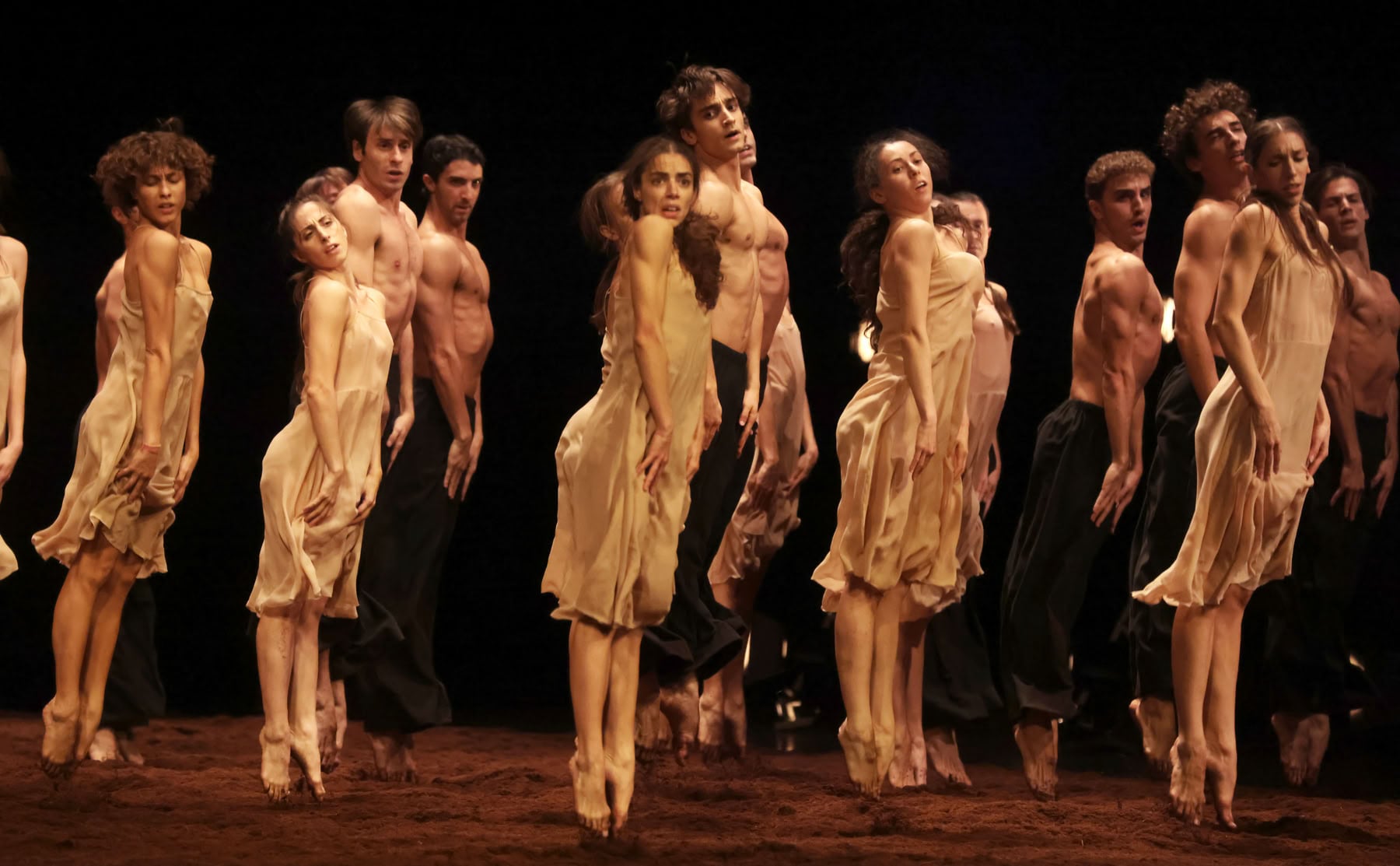
The energy and commitment had the packed house in its grip; everyone was transfixed. Even in such a collective work, Navrin Turnbull especially caught the eye, and Benedetta Montefiore, as the Chosen One, poured herself into the role. Her final flailing, desperate dance was so harrowing that, but for the orchestra pit, half the 2,000-strong audience might have clambered up to save her before she crumpled into the earth.
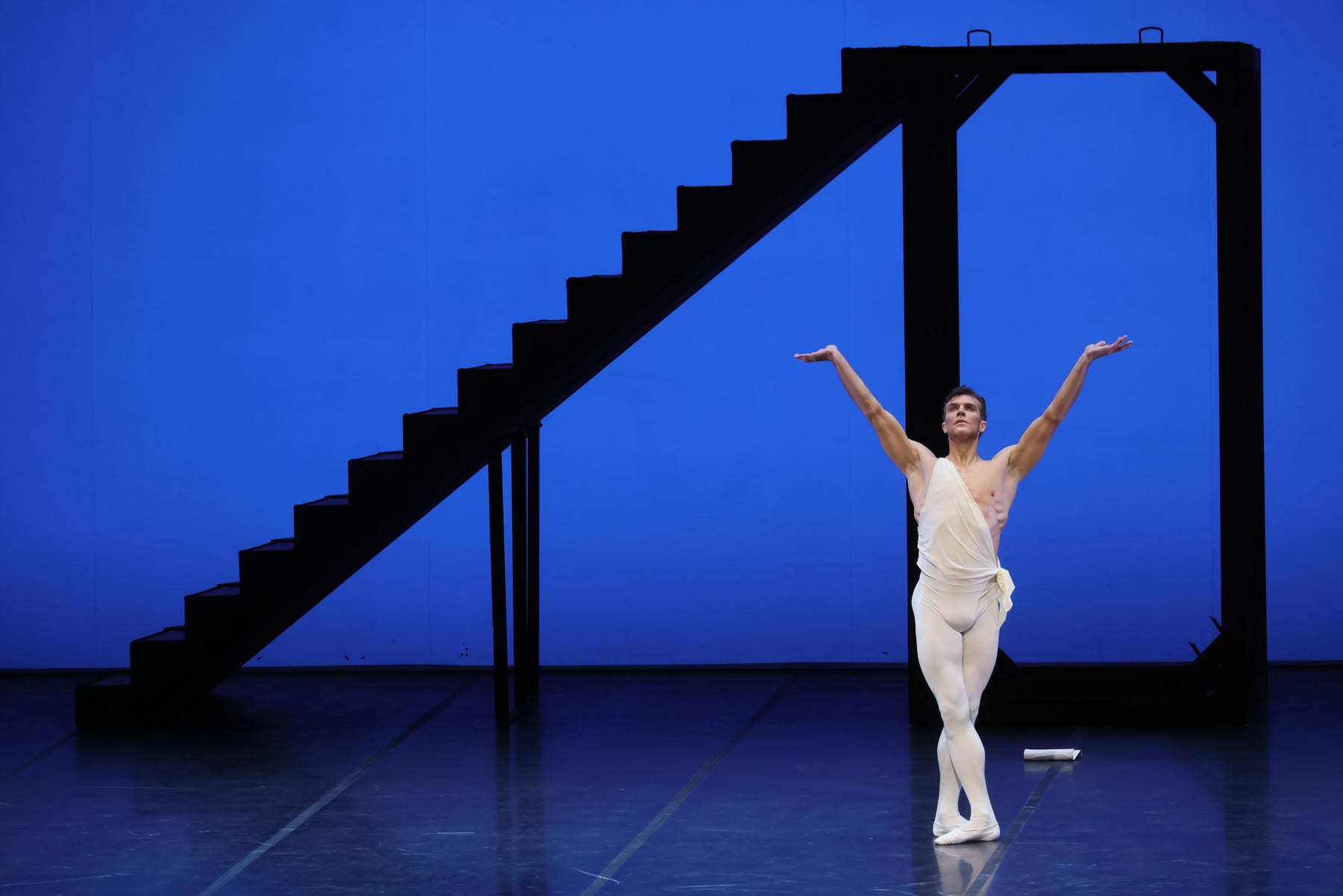
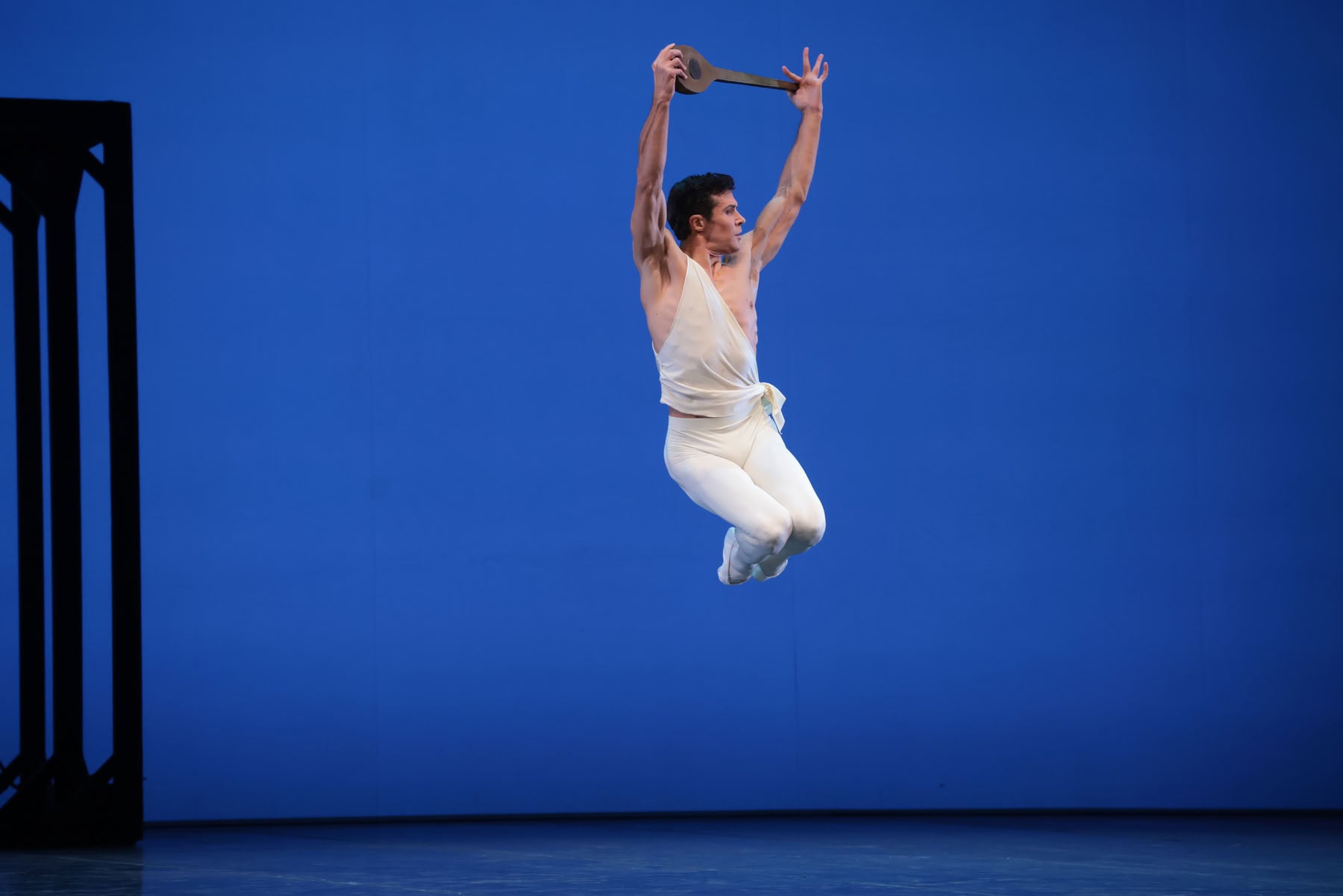
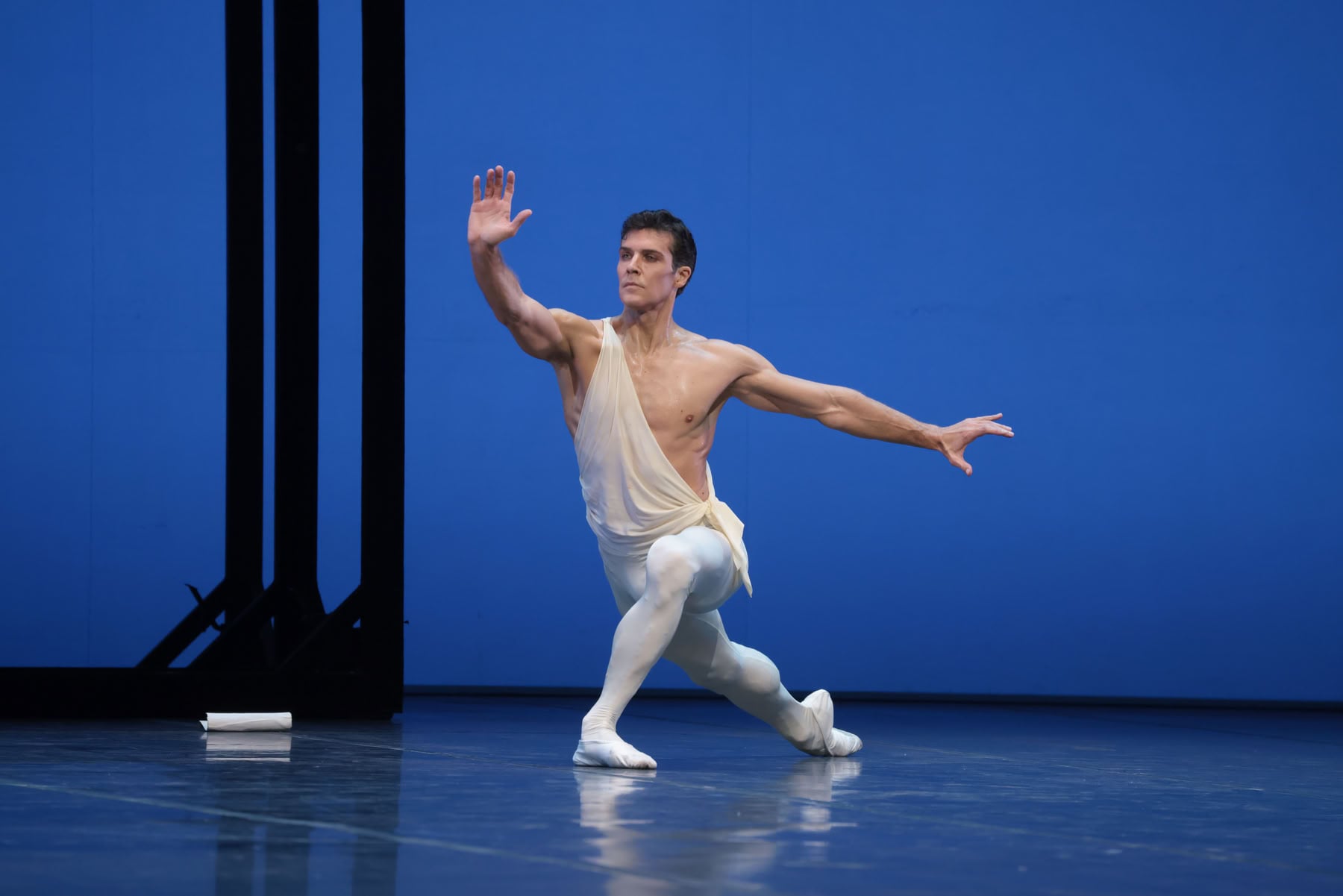
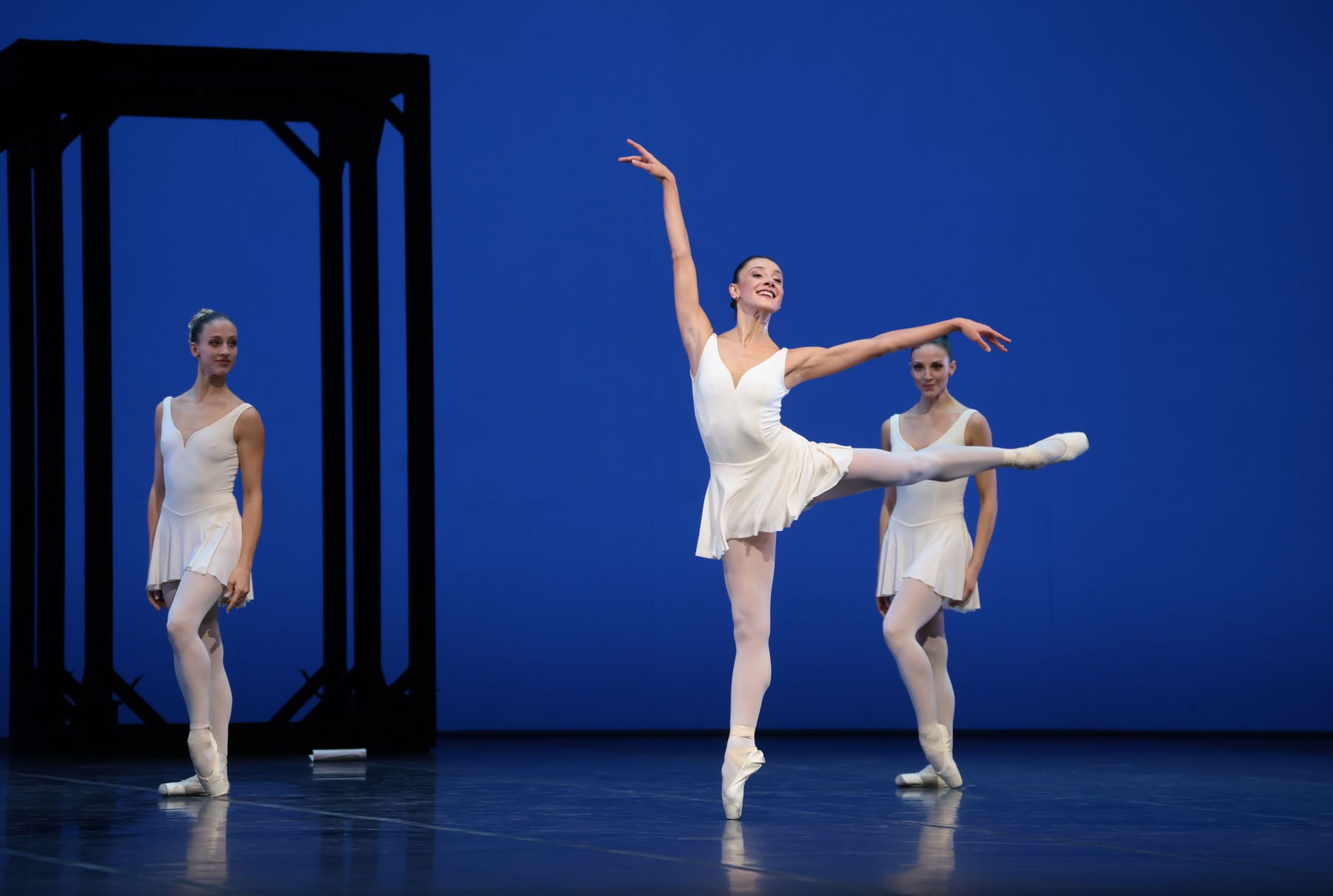
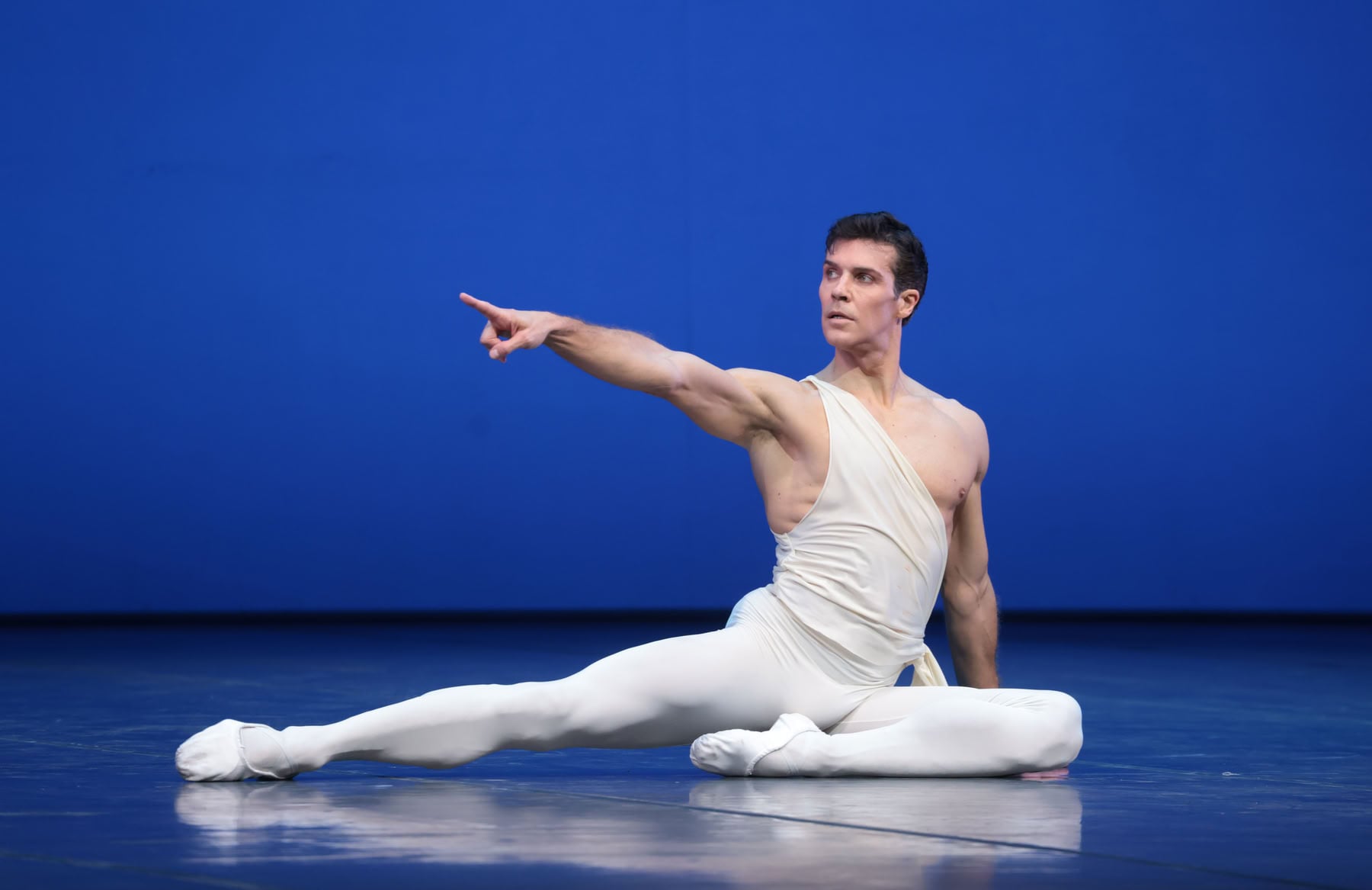
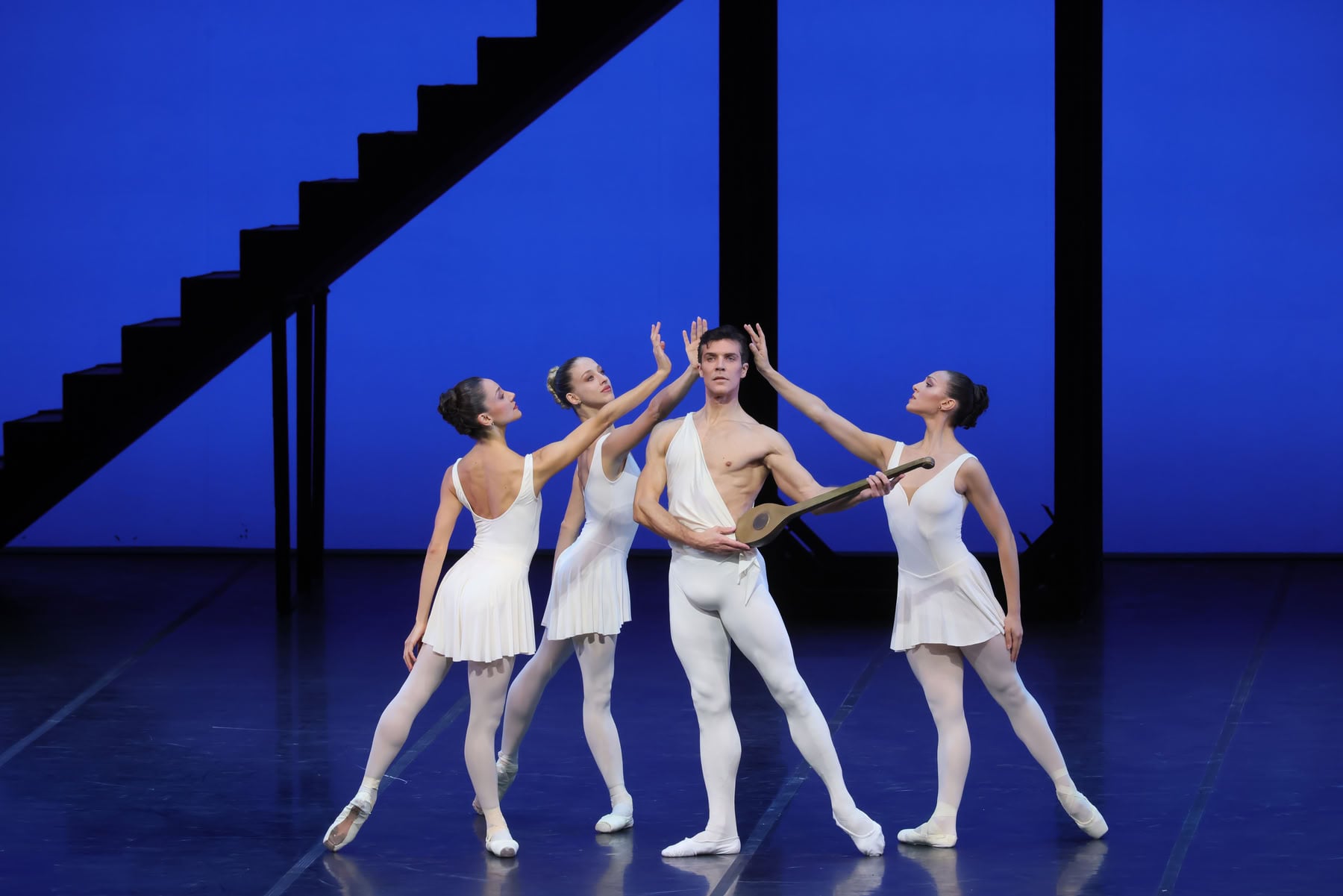
The opening work, Apollo, was strikingly different, with an intense cobalt cyclorama, pure white, close-fitting costumes, and the crisp lines of the backlit staircase. This was Stravinsky more than a decade after The Rite of Spring, employing a string orchestra in a neoclassical manner. The choreography too shows neoclassical clarity, stripped of ornament. George Balanchine was just 24 when Apollon musagète premiered in 1928 with Serge Lifar in the title role. Half a century later, he shortened the ballet and its title when Mikhail Baryshnikov danced it with the New York City Ballet, and it is now known simply as Apollo. One of these cuts removed the prologue showing Apollo’s birth, but La Scala has retained it.
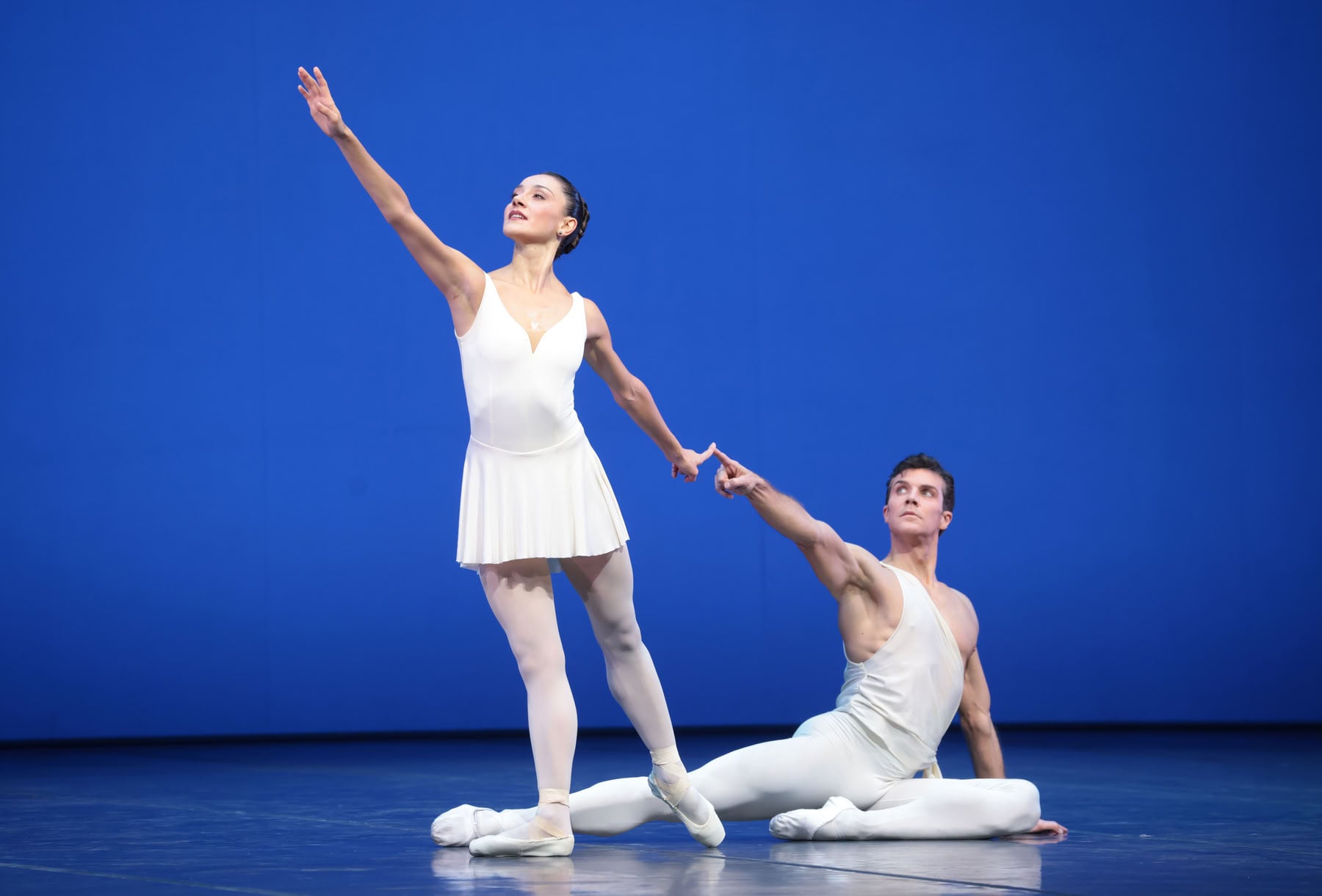
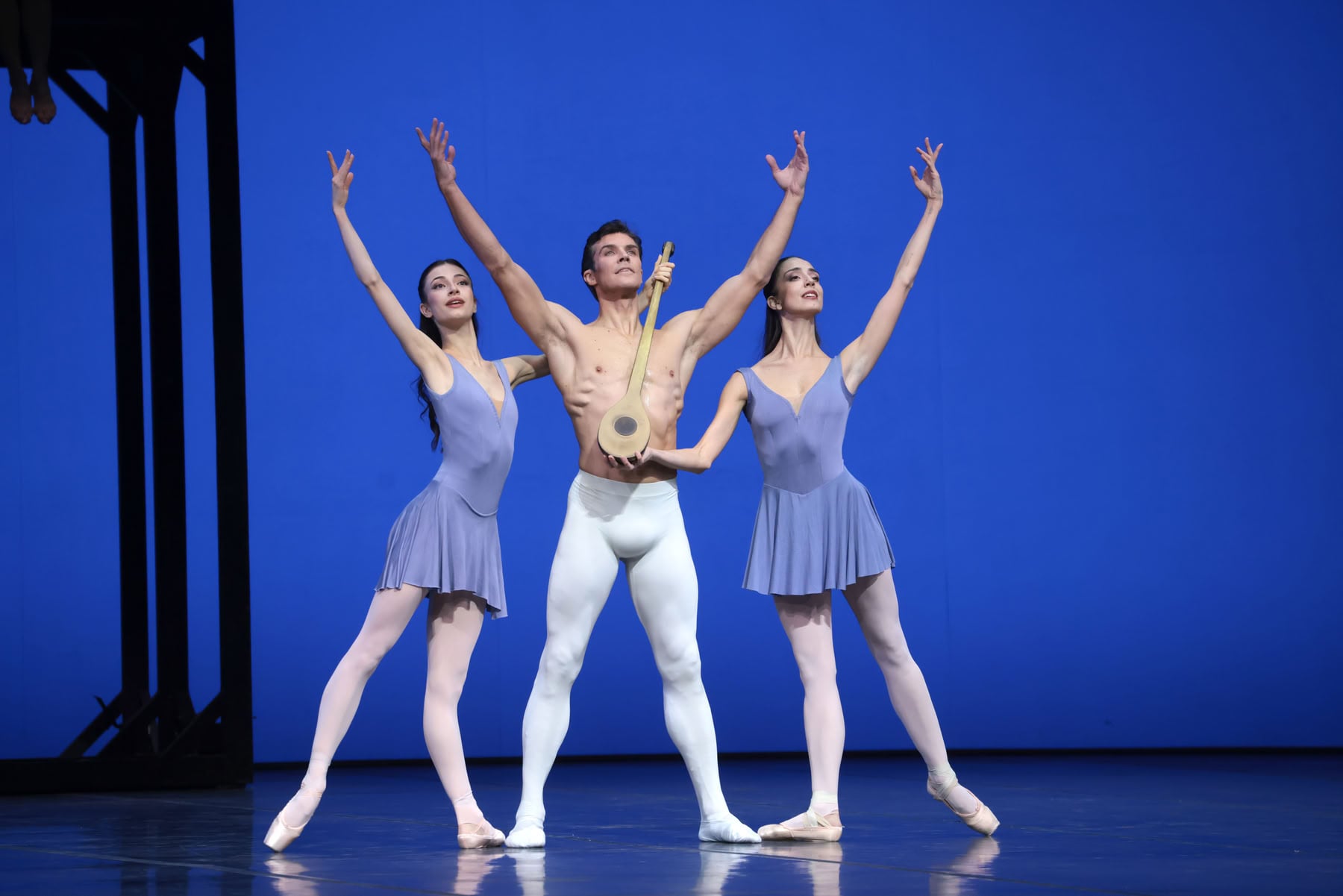
Apollo has a special quality, and it feels as though La Scala has opened its jewel box and put one of its sparkliest diamonds on stage. The dancing is restrained yet playful, and in half an hour Apollo progresses from unrefined youth to god. He is angular, with flexed feet, and becomes cultured through the demonstrations of the three muses: Calliope (muse of poetry), Polyhymnia (mime), and Terpsichore (dance). Apollo decides to pursue dance further, choosing Terpsichore for the well-known pas de deux.
Principal dancers Nicoletta Manni, Martina Arduino and Virna Toppi were magnificent as the three muses. Sandra Jennings, a former dancer with the New York City Ballet and répétiteur for The George Balanchine Trust, had coached them meticulously. The synchronicity was splendid, and they matched each other physically in line and proportion.
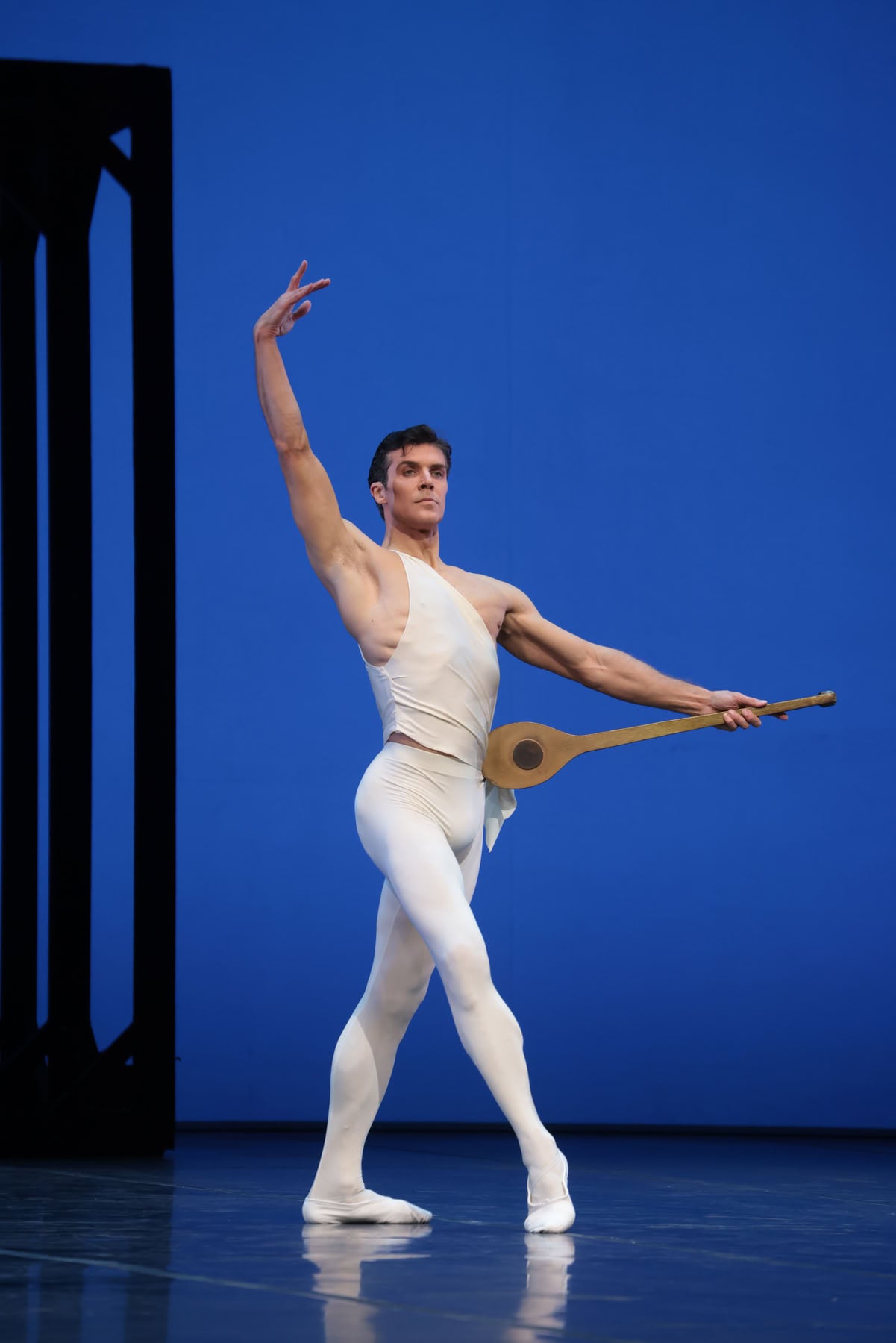
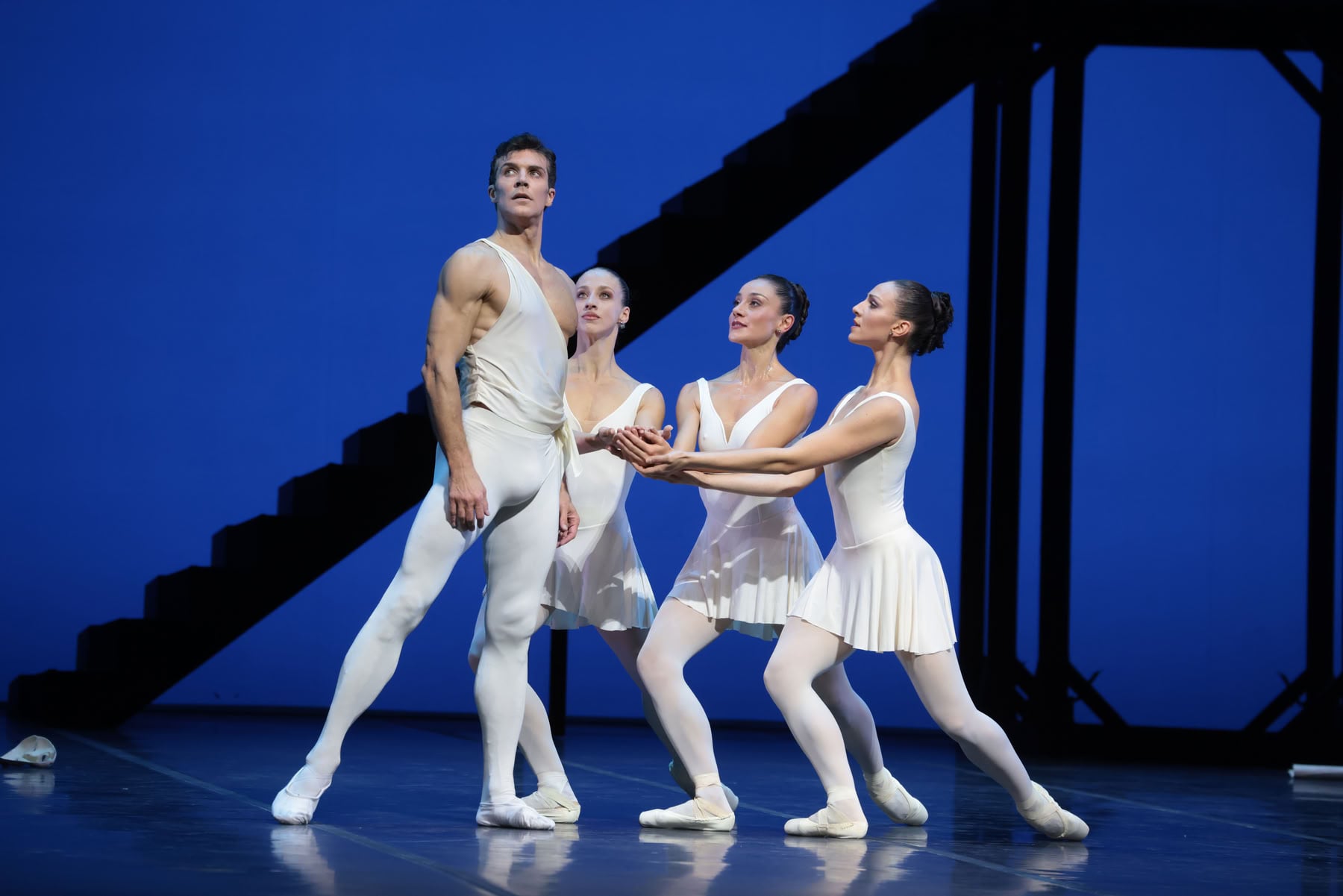
Jacques d’Amboise, who danced Apollo hundreds of times, said when in his forties: “I think you have to be young to perform it.” At 51, Roberto Bolle proved him wrong with his elegant, controlled performance. In a role without flashy moves – he has one vertical jump – the part demands authority and restraint, which Bolle radiated.
In the closing moments, Apollo hears his father, Zeus, calling him to Mount Parnassus (or maybe Mount Olympus, Zeus’ home). The three muses, sitting on the ground, each stretch a leg towards Apollo’s outstretched hand, like rays converging on a single point – a sign of harmony. The long staircase of the prelude creates a big stage picture of Apollo, followed by the others, ascending it and moving into the light. It is a stunning final image.
One of my favourite idiosyncratic touches in the choreography is when Apollo holds one bent arm behind his back and the other aloft, and opens and closes his fists. It is a simple little gesture that makes a great impact. According to Jane Pritchard, curator of dance at the Victoria and Albert Museum in London, Balanchine was inspired by the flashing illuminated signs in London’s Piccadilly Circus. The story is a reminder that inspiration is rarely grand. What marks out genius is the eye that sees the possibility in the ordinary.