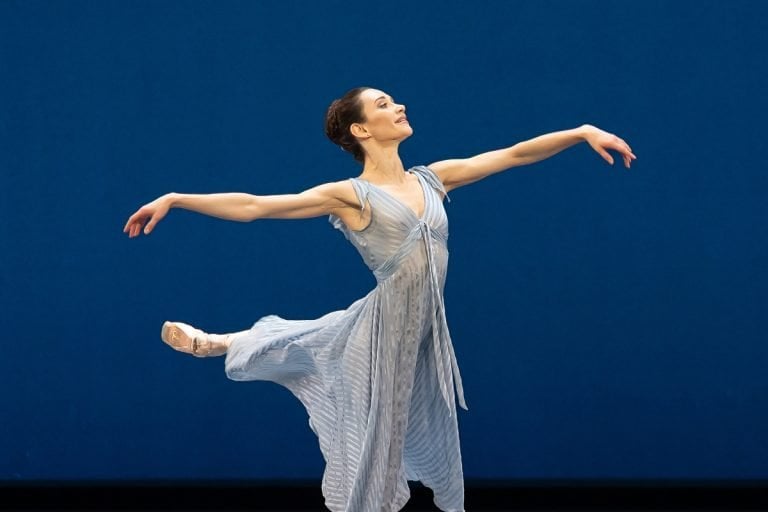
Review: Les Étoiles gala in Milan – 21 dancers, 17 pieces, 3 hours of starry dance

Writing about ballet galas is always a challenge and a review can easily turn into a shopping list… he did this, then they did that. The latest Les Étoiles gala from Daniele Cipriani was certainly rich in content, with changes of cast and repertoire on the different nights – a very long shopping list indeed. So indulge me in some cherry-picking and a disclaimer – as I sometimes photograph these performances as well as watch, I do know the organisers, but I think I can manage to be objective, which isn’t always understood: “I feel so disappointed. I thought you liked my dancing,” wrote a prima ballerina after my lukewarm, but respectful review, though I didn’t receive a message after a rave one a couple of months later.
The galas were at the Arcimboldi Theatre on the outskirts of Milan, built to house La Scala while the opera house was restructured and restored between 2002 and 2004. The stage has the same dimensions as La Scala and twenty years on, the old theatre tabs that were a backdrop to ovations for Callas and Nureyev, are still in place, and were used for these gala performances. When the Scala crowd first ventured to the Arcimboldi for a Traviata, we were crossing planks laid over mud, searching in the fog for the only bar. Now there is still the fog, but the area has become a major university hub and a centre for the Italian headquarters for many international companies. And there are many bars and restaurants.
So off to the other side of Milan on the day of a general strike! That didn’t deter the audience as the theatre was packed – young bunheads (literally, with their buns beautifully in place), La Scala regulars, and coaches were dropping off groups in front of the theatre’s piazza. There was quite a buzz – this was the first time that Cipriani had presented Les Étoiles in Milan, after many years of successes in other Italian cities, especially Rome. The galas were dedicated to the memory of Vladimir Shklyarov, who participated several times in these events.
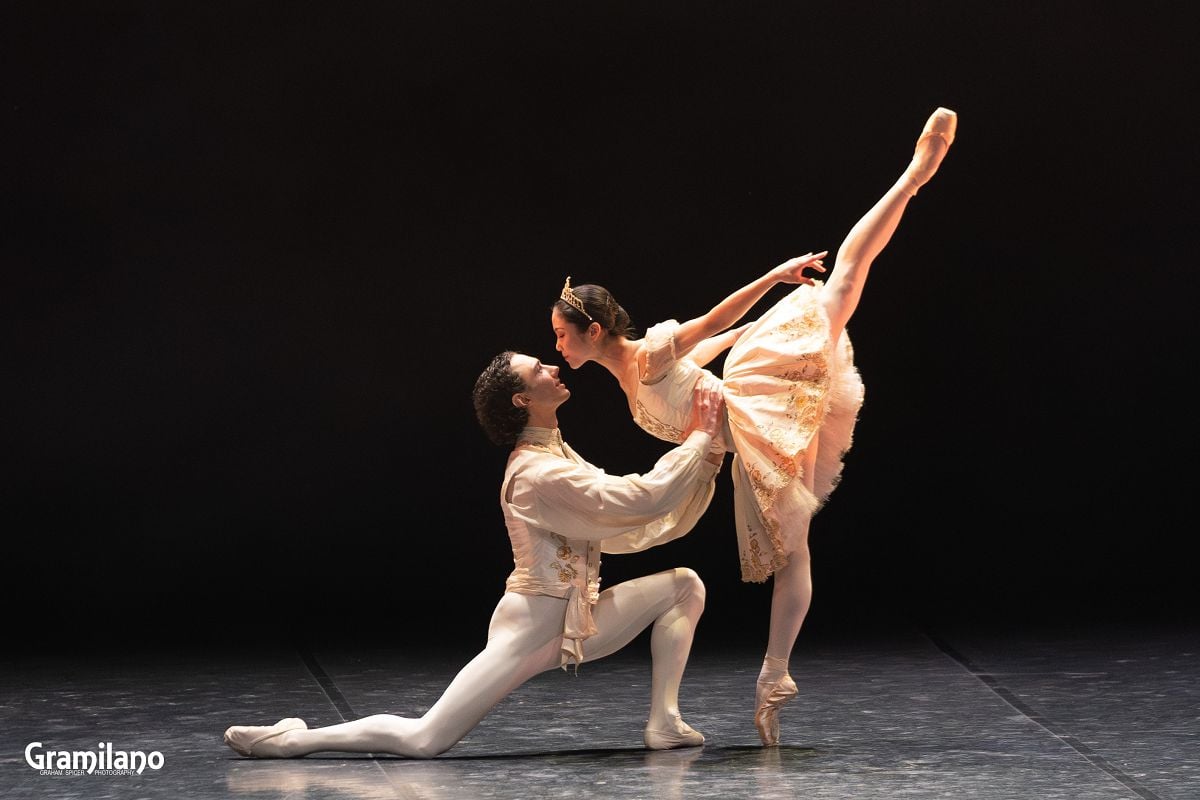
First up was Balanchine’s Diamonds pas de deux with Polina Semionova and her fellow principal dancer from Staatsballett Berlin, Martin Ten Kortenaar. He was new to me. He has an elegant presence and line, and is a worthy partner for Semionova who was regal and sure from her pointes to her headpiece, glittering with bling and star quality.
Another dancer who oozes star quality is Eleonora Abbagnato who performed the swinging kiss (or flying kiss) pas de deux from Angelin Preljocaj’s Le Parc. She danced with her former Paris Opera Ballet colleague, Mathieu Ganio – a fine actor as well as a superlative dancer, who has commanding gravitas in his stage presence. A good idea on paper was to include the ballet’s four gardeners (who act like cupids in the full work) giving Abbagnato a dreamlike sequence with them, before their percussive and energetic interlude. However, it felt like padding, and although it broke up the solos and duets gala sequence, Ganio’s entrance was the starting pistol moment that initiated a satisfying conclusion to the first part of the evening.
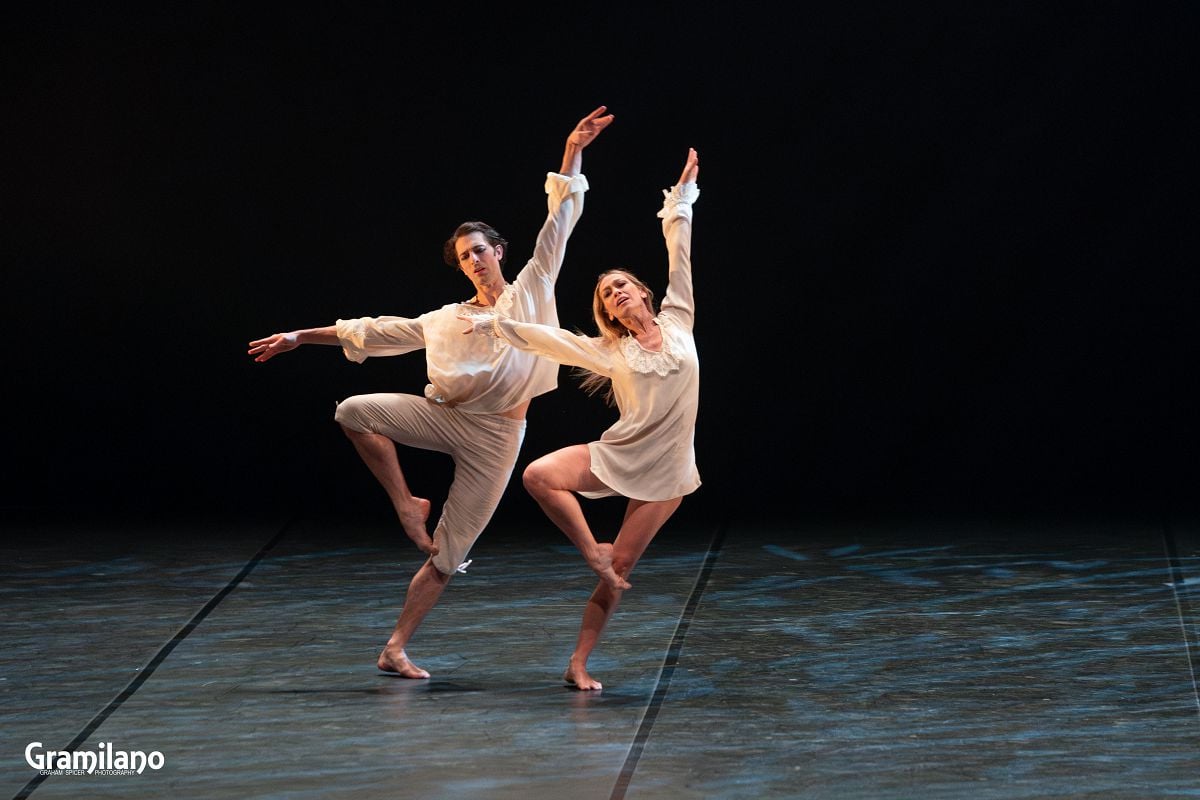
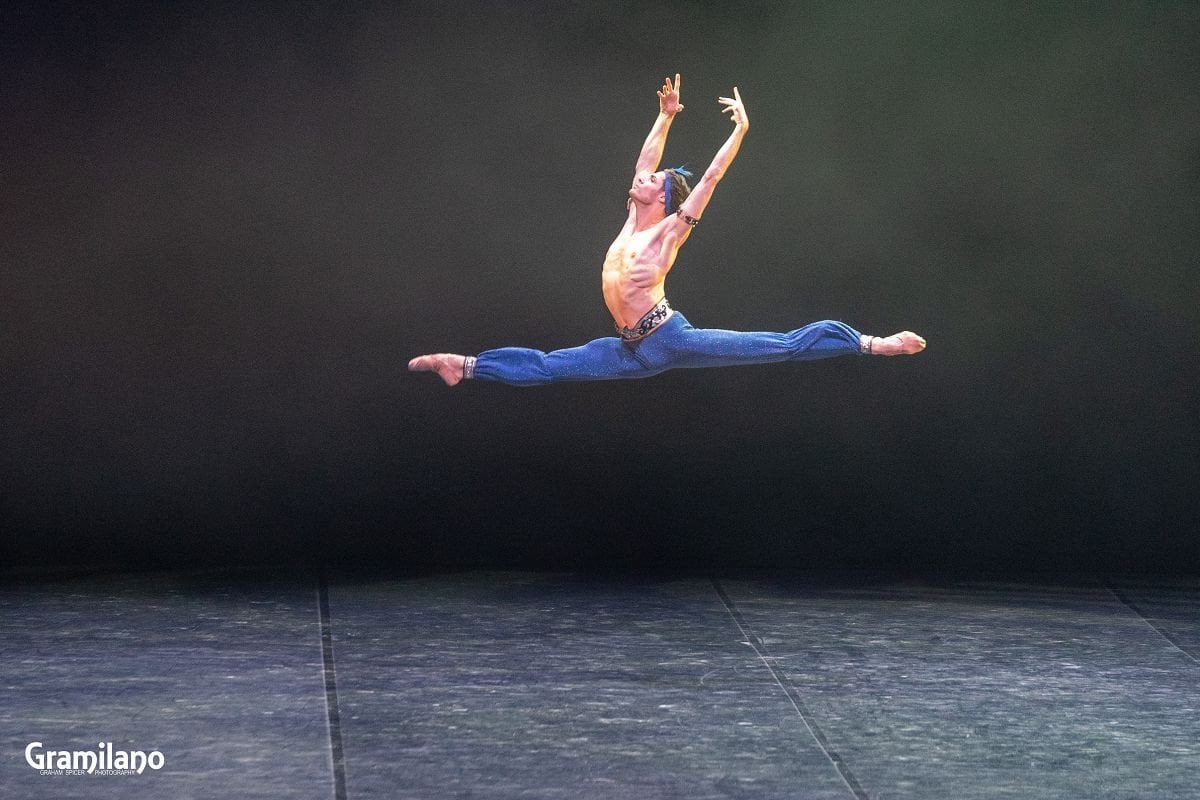
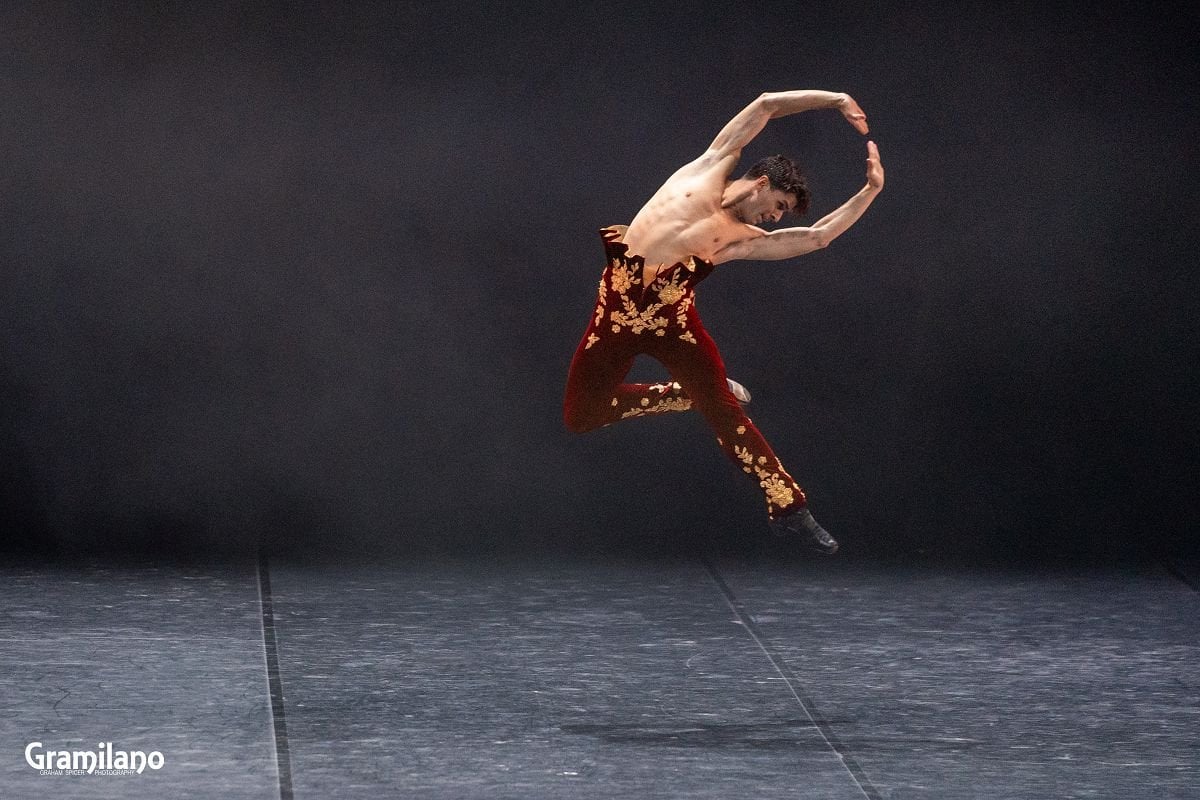
Grand pas de deux underpin ballet galas everywhere. No surprise then to see Le Corsaire with Olga Smirnova and Jacopo Tissi, both at Amsterdam after having fled the Bolshoi in 2022. But wait… this isn’t the third act, but the bedroom scene from the second act. It has choreography by Konstantin Sergeyev (based on Petipa) and if not gripping, it was beautifully danced. The pair then performed Le Corsaire‘s grand pas in the second part of the evening. Photography often gives clues to a dancer’s skill that the eye sees in a different way. The clinical 500th-of-a-second shot is crisp and unforgiving. Personally, I love blur which can evoke the movement seen onstage, but print photo editors want everything in focus. So if you want the magazine cover, photograph Tissi – 180-degree jetés with shoulders down and a relaxed facial expression, remarkably also during a manège sequence. Always.
Also picture-perfect is Maia Makhateli who seems to freeze time with poses held a fraction of a second longer than necessary which phrases her dancing and communicates supreme assurance to the audience. She was dancing with Victor Caixeta, an ‘escapee’ from the Mariinsky Ballet who also found himself in Amsterdam, though he will soon be taking up a new and exciting position with another major European company. He is very personable and has an easy and expressive physicality. They danced La Bayadère‘s Act 2 pas de deux and Balanchine’s Tchaikovsky Pas de deux.
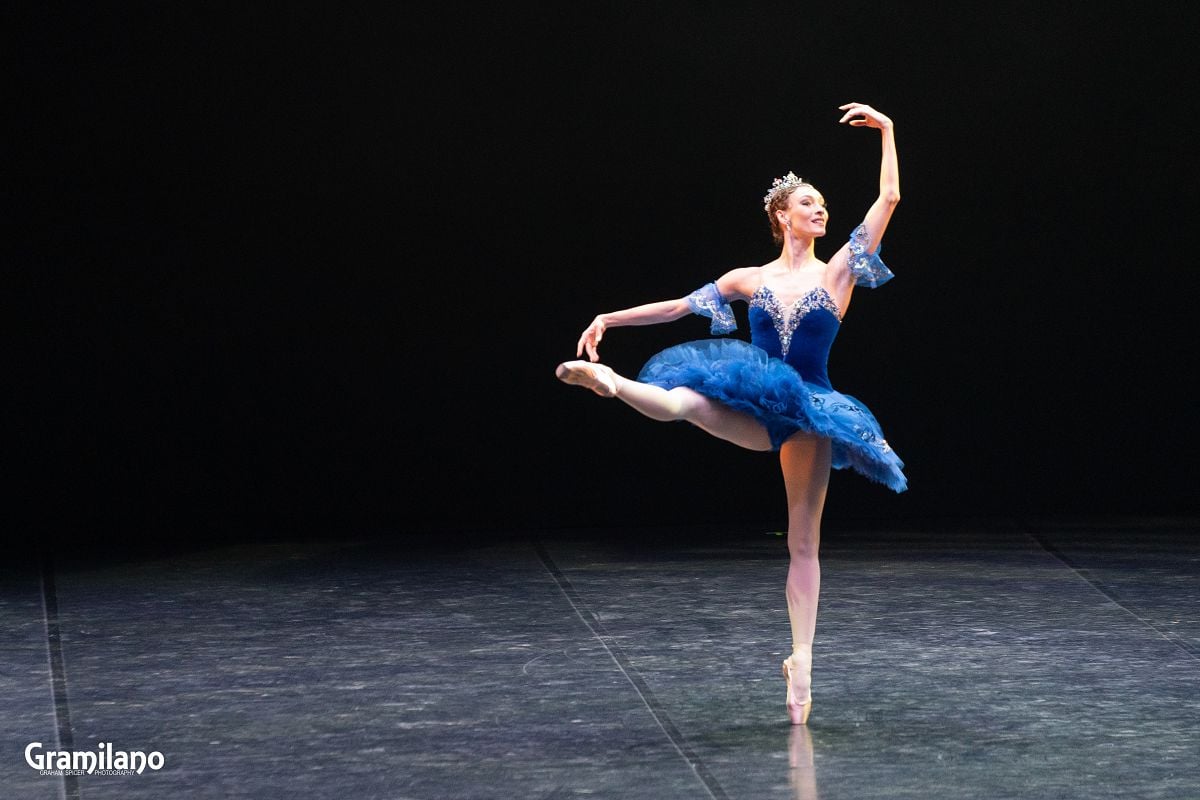
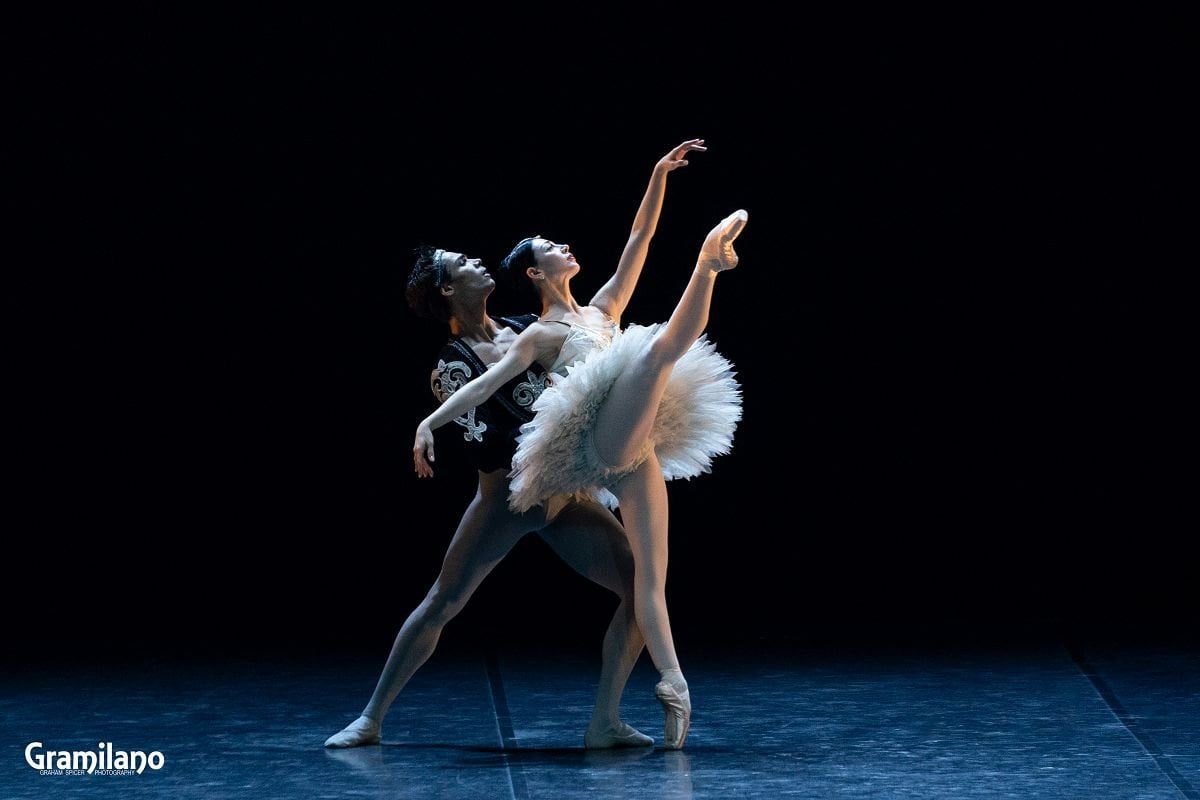
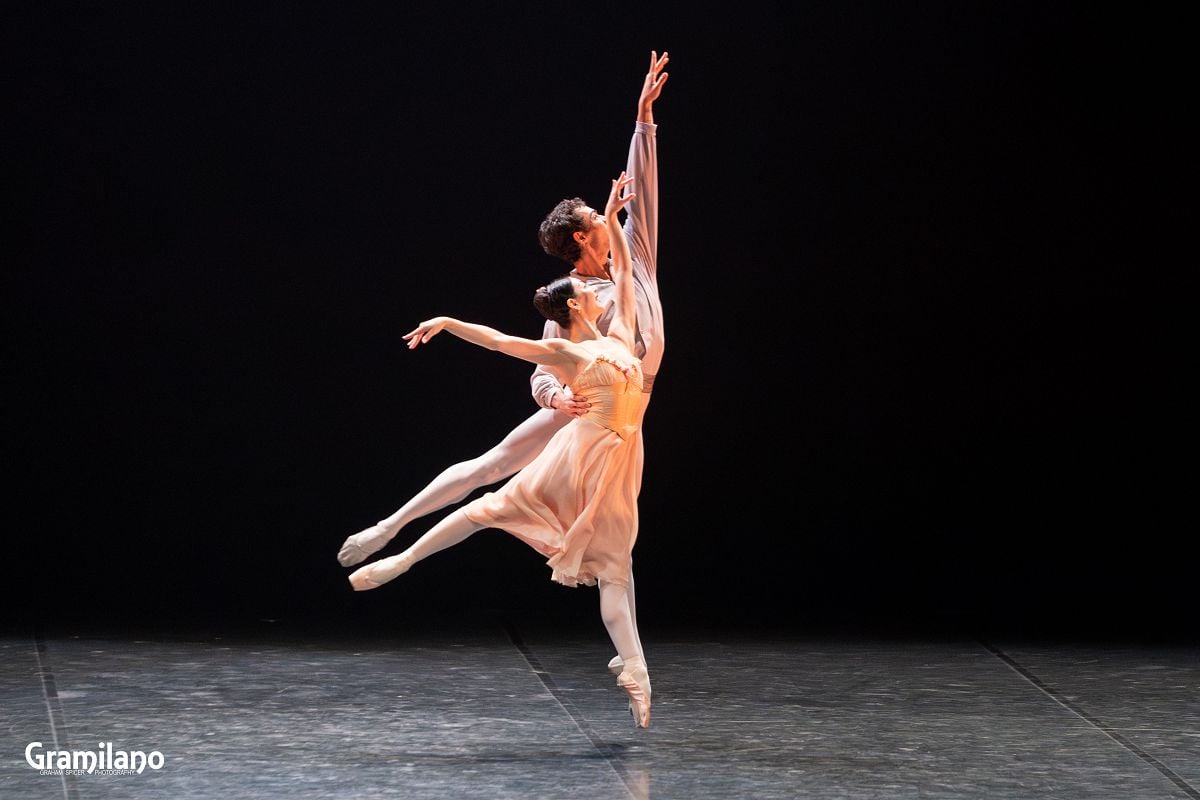
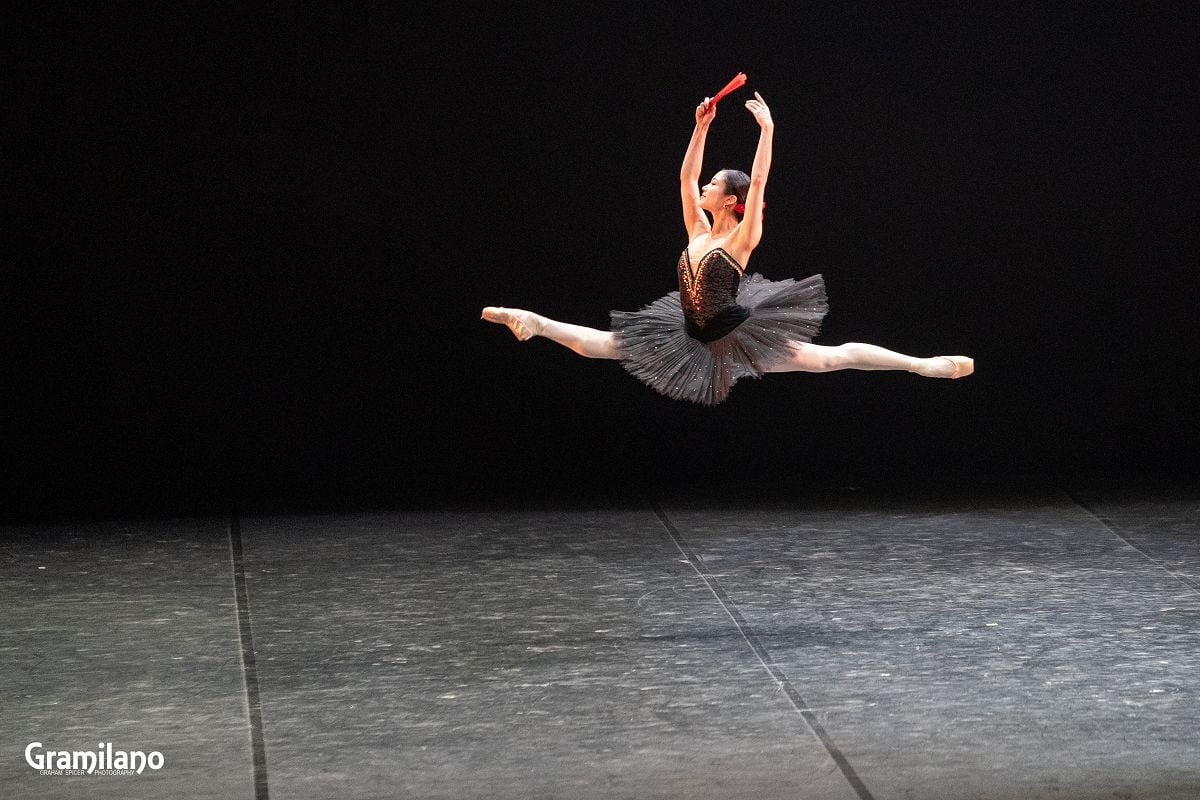
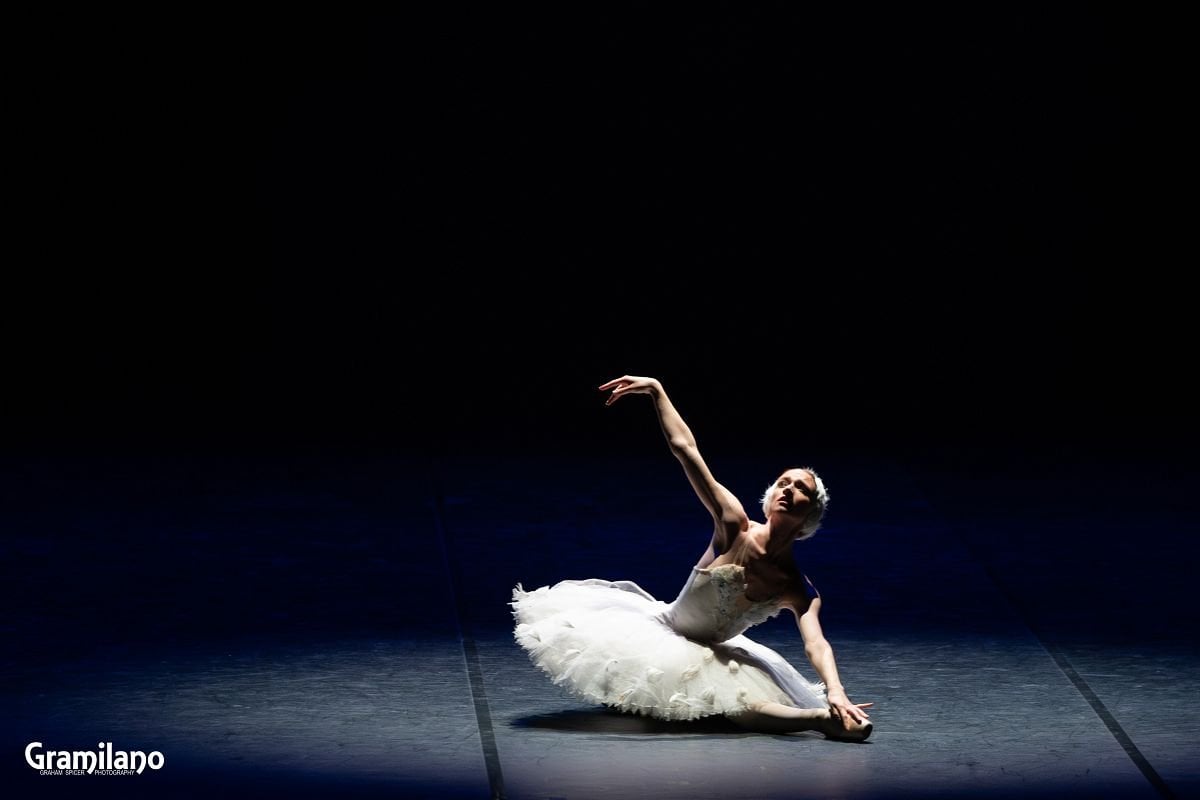
The ‘Black Swan‘ pdd was given to American Ballet Theatre’s Catherine Hurlin and Hamburg Ballet’s Alessandro Frola. Frola is a wonderful dancer, who is fine in this repertoire, though excels in more modern pieces. Aside from his dancing, he is a good actor with believable reactions to Odile, even in the context of a gala. Hurlin was a delightful discovery. I had assisted a presentation of the dancers on their arrival in Milan, and though she spoke with wit and authority, I wondered what sort of Odile this girl-next-door type would portray. The chameleonic ballerina extended her claws and, in a Jekyll and Hyde transformation, ate up the stage with her fiery eyes, bold gestures, and strong technique. Later in the evening she was an idiosyncratic Dying Swan, suffering but not fragile in an engaging performance. Also, during the défilé finale, she fearlessly zigzagged across the stage in a series of lightning-fast chainées – impressive.
Oh, and of course, Don Quixote. Cipriani always puts the third act grand pas at the end of his galas. This time it was entrusted to Daniil Simkin (a regular) who dazzled, as is to be expected, but he always dominates the steps and doesn’t allow himself to be pulled along by the tricksy elements, maintaining a refined presence. He was joined by Hamburg Ballet’s Madoka Sugai who has the powerful jumps, balances and fouettés that everyone expects, but is almost casual in her approach… “You want another 32 fouettés? Why not!” She didn’t do them, of course, but it all looked easy. Her face, too, communicated sereneness, though not that of a princess but of an assured modern woman. Adorable.
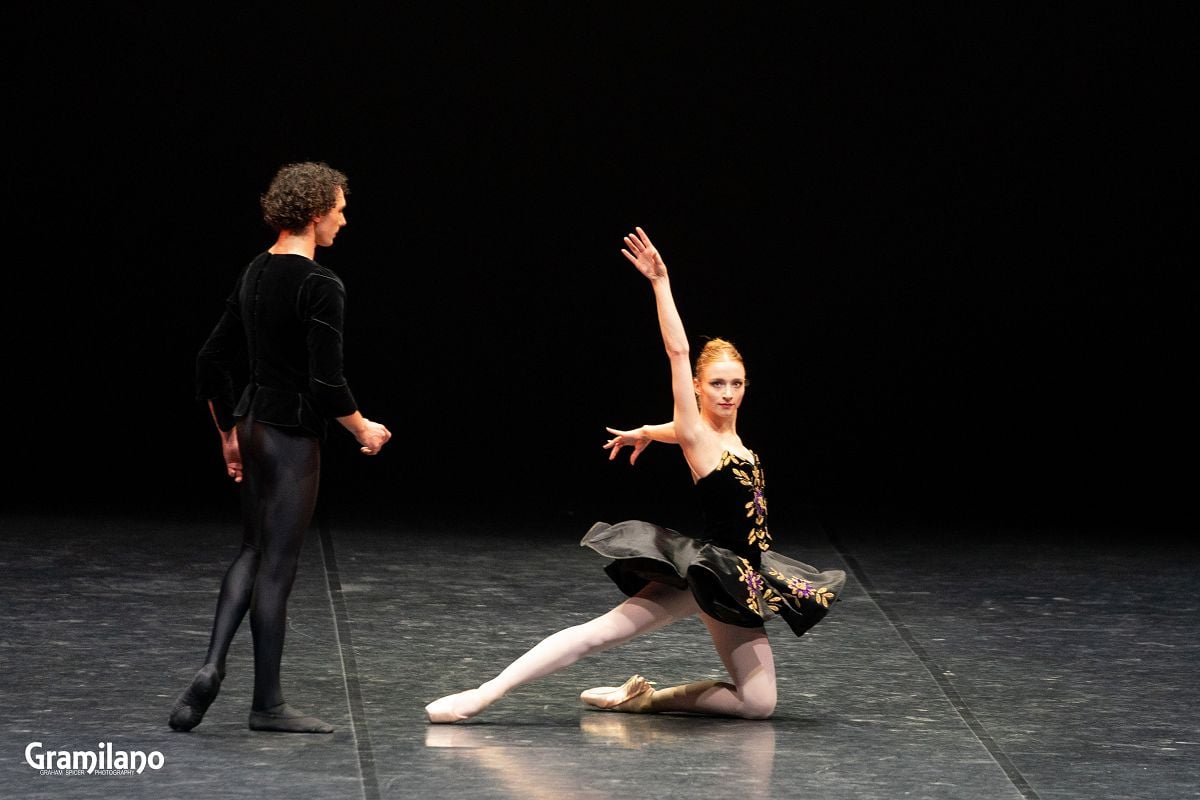
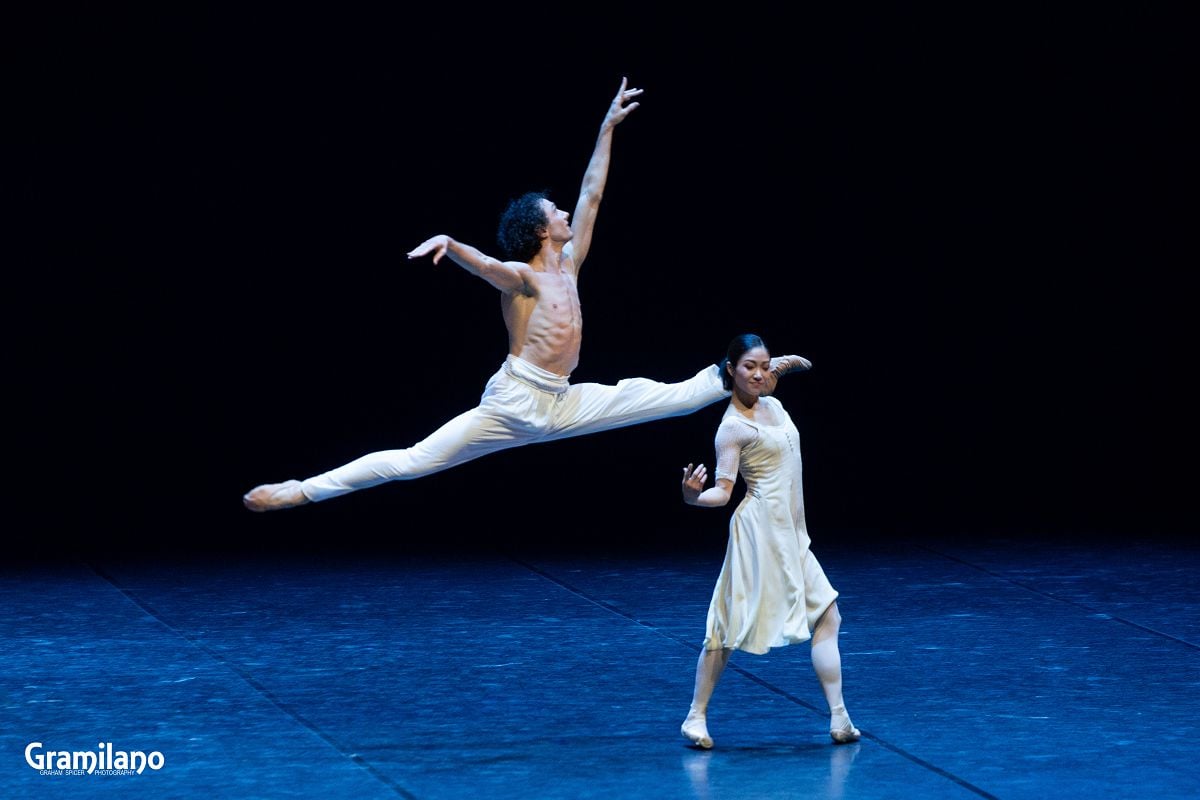
Sugai joined her fellow Hamburg principal, Frola, in extracts from John Neumeier’s Spring and Fall – he dances, she dances, then they dance together. It’s simple – nothing delights, nothing grates, nothing comes as a surprise, but it’s enjoyable. This, I feel, is Frola’s true territory where he can use his suppleness, communicative port de bras, and artistry to the full, and Sugai got to show some of her playful side in a delightfully carefree manner. On the second evening, the two opened with the pas de deux from The Sleeping Beauty, which was not on the printed programme (Les Étoiles galas always have surprise elements). Frola had thankfully dominated his hair with a little gel which stopped him from seeming like Gene Wilder in Young Frankenstein as he had the previous day. It was a winning opening to a long and generous evening – we left the theatre at midnight after three hours.
Modern fare was plentiful. Sergio Bernal – who has probably performed more regularly in these galas than anyone else – followed on from Hurlin’s The Dying Swan with the jewel in his crown, El Cisne, with spellbinding choreography by Ricardo Cue. It starts with a whooshing soundscape leading into Saint-Saens’ music on which Bernal dances with bold and heart-rending gestures – a majestic creature shot in the back by an arrow? It was touching and powerful. Bernal also performed his own choreography in the flamenco-flavoured Obertura with macho vigour, but undercut with tender humanity.
Semionova and Ten Kortenaar danced David Dawson’s On the Nature of Daylight which showed off Semionova’s incredible strength of line which dissolves into angular ordinariness. It is set to haunting music by Max Richter (if it is not Philip Glass or Arvo Pärt then it has to be Richter, right?), and with darkness on the theatre’s large stage, and lack of to-the-front choreography, it seemed that the couple were dancing without confines through space.
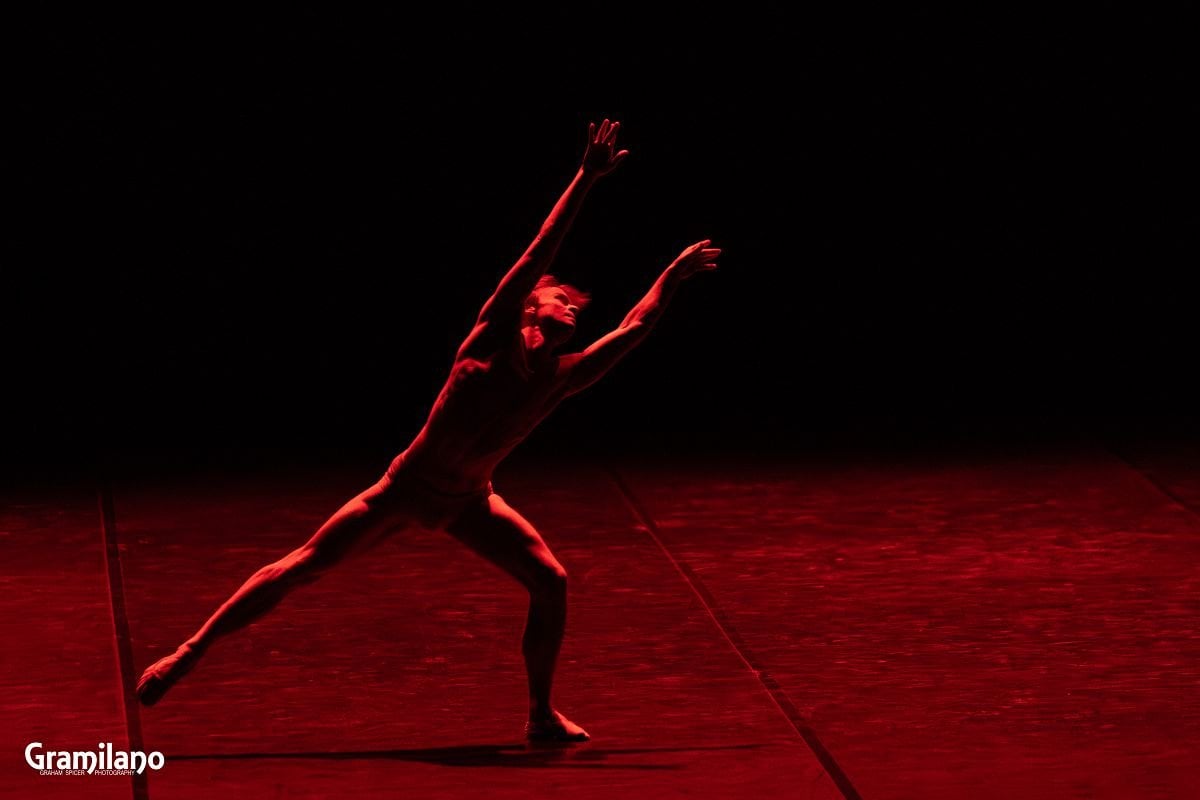
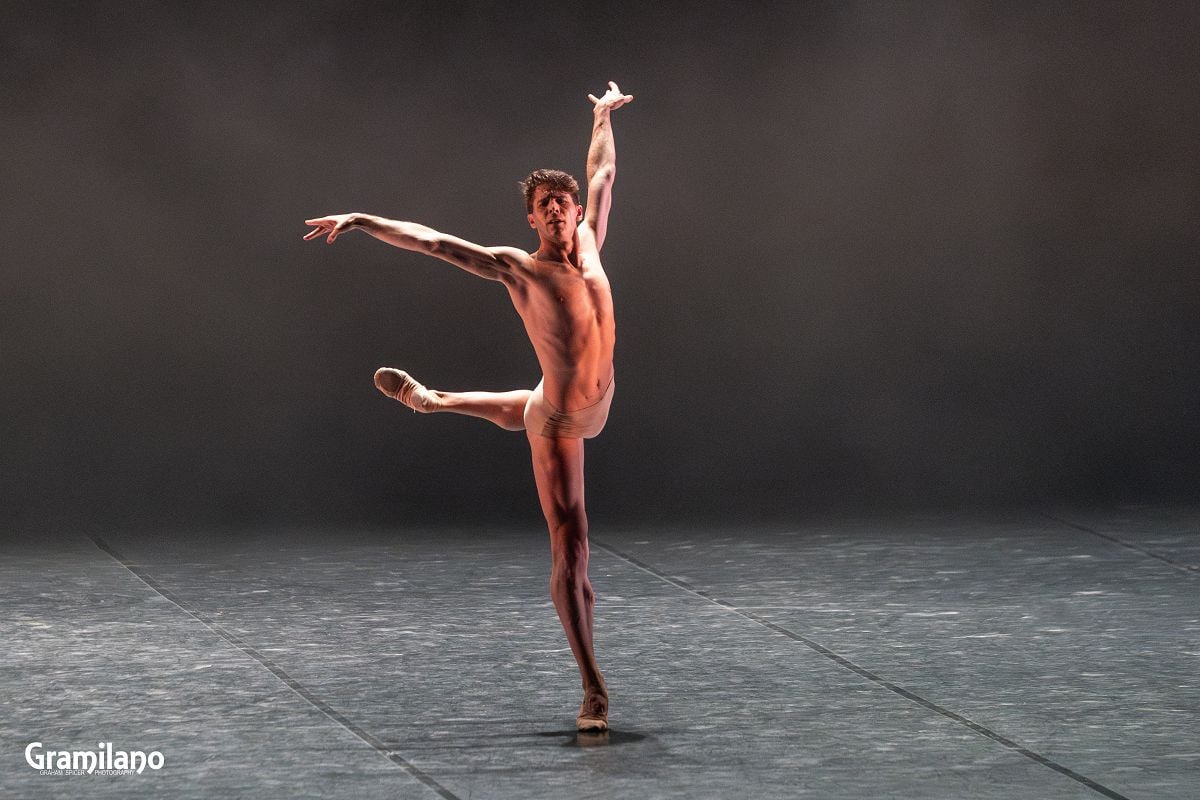
Another piece to profit from using low lighting – in fact, the lowest of lighting – was Simkin in his crowd-pleaser by Alejandro Cerrudo, Pacopepepluto. To Dean Martin crooning ‘In the Chapel in the Moonlight’, Simkin larks around the stage in flesh-coloured Lycra shorts, so with the backlighting the immediate thought is, “Is he, or isn’t he?” provoked by him cupping his crotch and the choreography hiding ‘that’ area. His exit for his applause showed that “he wasn’t” (naked, that is).
A new piece by Vittoria Girelli, who is La Scala trained and dances with Stuttgart Ballet, was performed by her company colleagues Matteo Miccini and Edoardo Sartori. Formoria is an enjoyable piece, though it suffered from being on a bill with another male couple, Simone Repele and Sasha Riva, whose pieces showed a similarly jerky and off-axis style. Miccini and Sartori dance well together, and as they are of similar build there is satisfying symmetry to their movements. The dramatic lighting was effective, as was the eclectic score with music by dancer and composer Davidson Jaconello mixed with Elgar and Bartók.
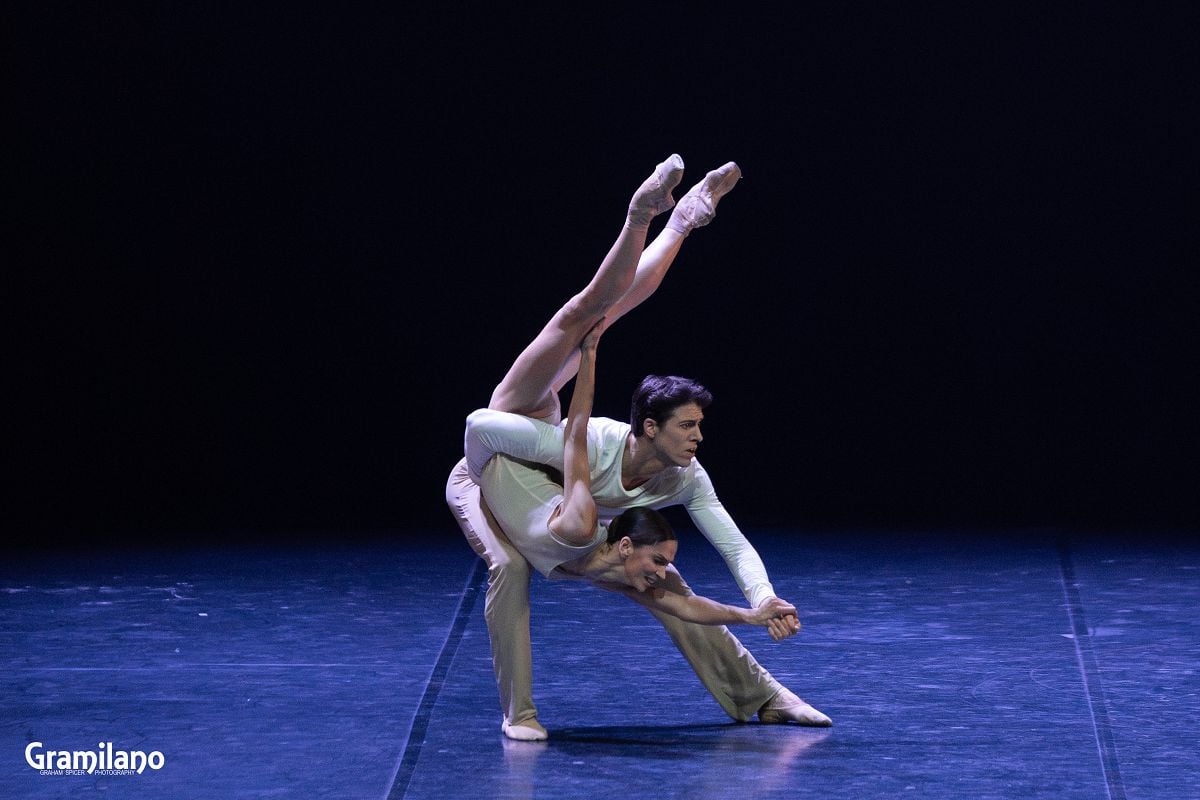
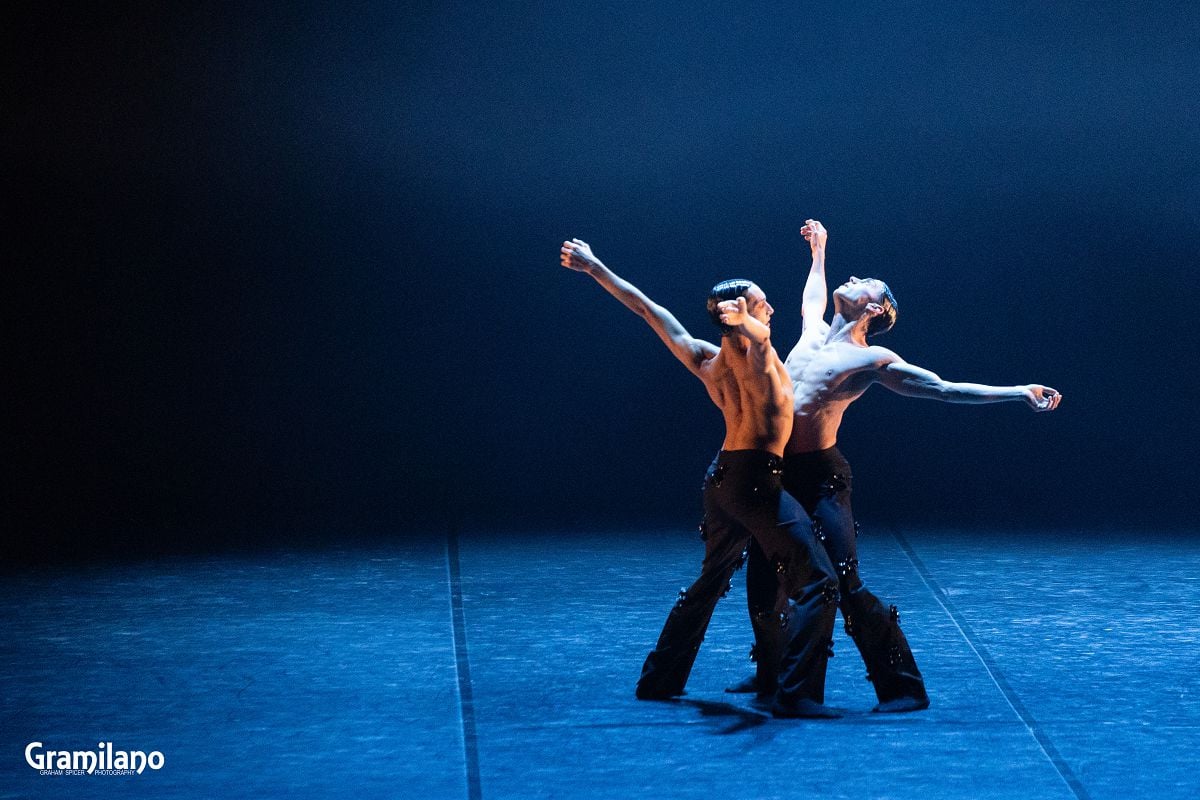
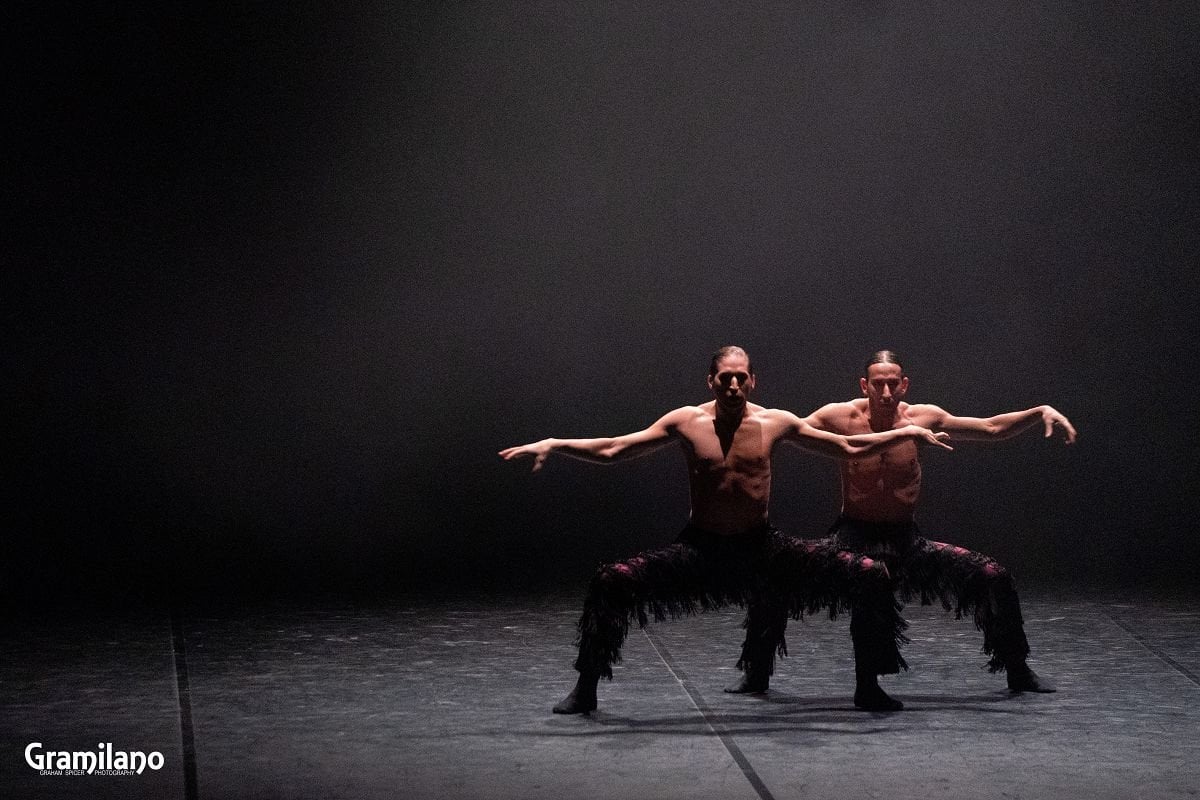
And so to Repele and Riva who danced a piece they created, I’m on Your Side to Simon and Garfunkel’s ‘Bridge over Troubled Water’. I’ve already reviewed this piece (created for Les Étoiles) and I remain enchanted by its tragi-comic mix of the disadvantaged who dream, the clowns who cry, and (as Abba sang ten years after ‘Bridge over Troubled Water’) the losers who stand small. The onstage and offstage couple know each other inside out – they met at school and have been dancing together ever since – and their complicity from a deep understanding of each other’s bodies and minds is palpable. Their second piece was Eyes Open / Shut Your Eyes created for them by Marco Goecke. Maybe it was less effective than the first piece, though his rapid and intricate moves suit the pair. Again, the choice of music was seductive – ‘Twilight’ with the soulful sound of Antony and the Johnsons (now Anohni and the Johnsons). It was pleasing that Repele and Riva’s intimate pieces received the same loud ovations as the tutu ‘n pointes showstoppers.
The success of the galas should assure Les Étoiles a fixed place in Milan’s somewhat slim dance calendar.


Graham Spicer, aka ‘Gramilano’, is a writer, director and photographer based in Milan. He was a regular columnist for Opera Now magazine and wrote for the BBC until transferring to Italy. His articles have appeared in various publications from Woman’s Weekly to Gay Times, and he wrote the Danza in Italia column for Dancing Times magazine. Graham was the historical advisor on Codice Carla, the 2023 documentary on Italian ballerina Carla Fracci.
Graham also works as a dance photographer, and his photos have appeared in many books, theatre programmes, and magazines, including Dancing Times, Dance Spirit and Ballet2000, as well as all the major Italian newspapers.
He is a member of the Dance Section of The Critics’ Circle.