Review: Béjart Ballet with new works by Riva&Repele and Andonis Foniadakis – big, bold visions

Lydia Wharf sees Béjart Ballet Lausanne in a triple bill with works by Riva&Repele, Andonis Foniadakis and Maurice Béjart and finds “a company looking forward with confidence”.
| Title | Oskar | Real Love | L’Oiseau de Feu |
| Company | Béjart Ballet Lausanne |
| Venue | Théâtre de Beaulieu, Lausanne |
| Date | 16 December 2025 |
| Reviewer | Lydia Wharf |
Newly appointed Artistic Director of Bejart Ballet, Julien Favreau, certainly knows how to create a spectacle. His triple bill features two premieres – major commissions from choreographers riding high on the crest of international success – alongside a 55-year-old masterwork from the company’s legendary founder, Maurice Béjart. It’s one hell of an audacious programme, and I’m here for it.
Founder Bejart’s impact on the development of modern dance is recognised worldwide. He was a prolific choreographer, making over 200 works in his lifetime, and his extraordinary legacy is felt most profoundly in Lausanne, where he established Béjart Ballet in 1987. Incoming Favreau seems ideally placed to take the company forward – his much-celebrated career as a performer with the company spans some 30 plus years and included in his repertoire are roles created for him by Maestro Béjart himself. Favreau’s first major curatorial statement at the glossy Theatre de Beaulieu, Switzerland’s largest, confidently honours the company’s heritage whilst ushering in an ambitious future. All three works on the bill are big, bold visions that don’t so much throw down the creative gauntlet but hit you in the head with it.
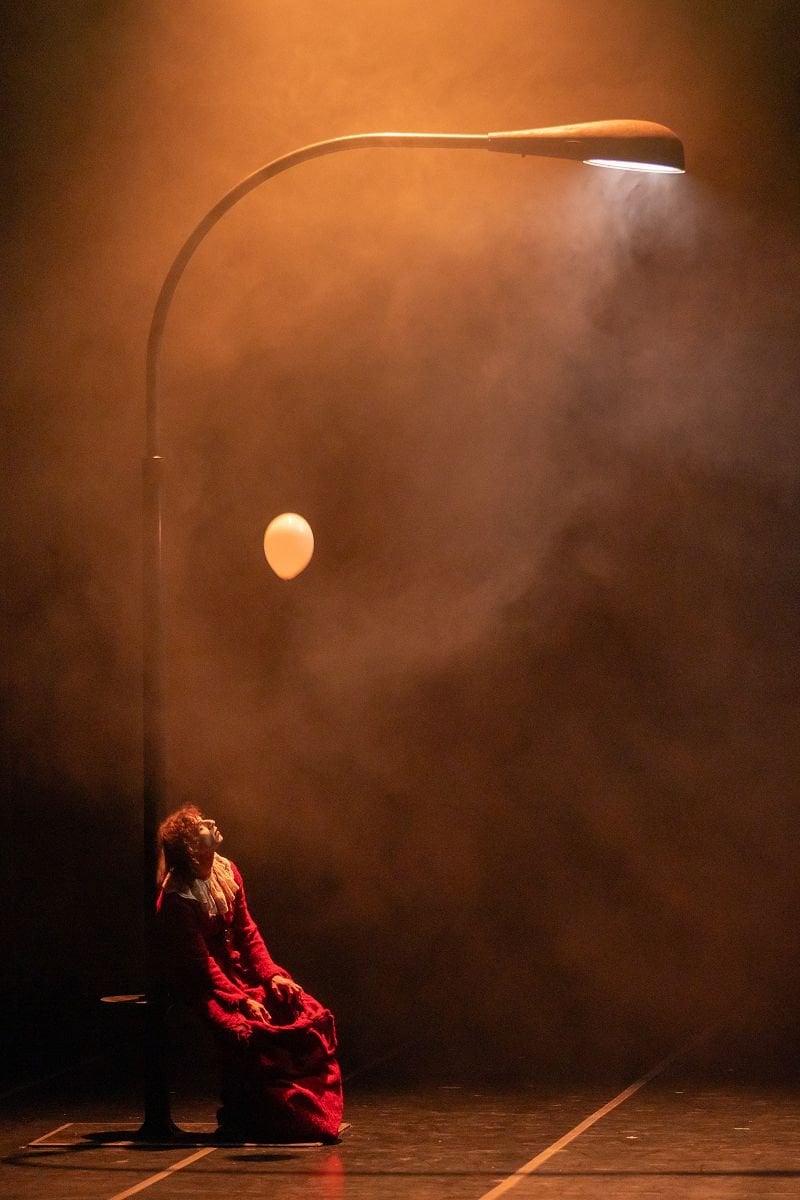
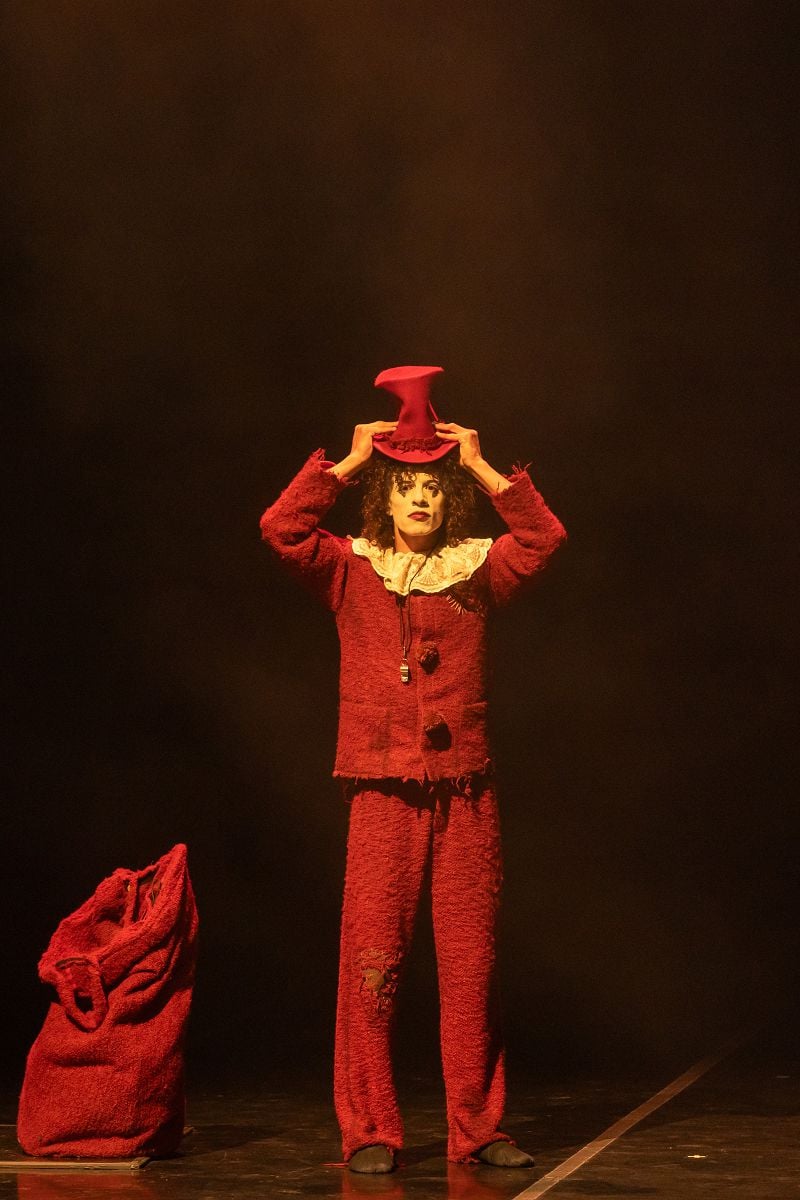
The first is a commission from all-male duo Riva&Repele (Sasha Riva and Simone Repele), created around the extraordinary young company dancer Oscar Eduardo Chacon. Eponymous Oskar is a clown, slouching onstage in a velvety orange suit and tilting his winsome face to a streetlight. He’s a charming, shambolic figure, whose movements swell and grow to reveal gorgeous extensions and hovering leaps, but whose hopes, when dashed, deflate him like a balloon. As he dances alone, often reaching and yearning, experiencing both agony and ecstasy, we see growing within him a kind of personal, existential struggle, often leaving him hunched and dejected. He’s a Petrushka of sorts – swinging from comedy to dark and agonising isolation.
But Oskar is not alone. In fact, Oskar becomes an entire cast of Oskars; nightmarish figures that scurry out of the shadows, also hunched, and physically menacing as they shudder and convulse in union. Riva&Repele use a formidable score – Tchaikovsky’s 11th Symphony and one of Brahms’ Hungarian Dances – to drive forward the dramaturgy of Oskar’s story, creating a delicious tension, drawing the audience deeper into his inner journey.
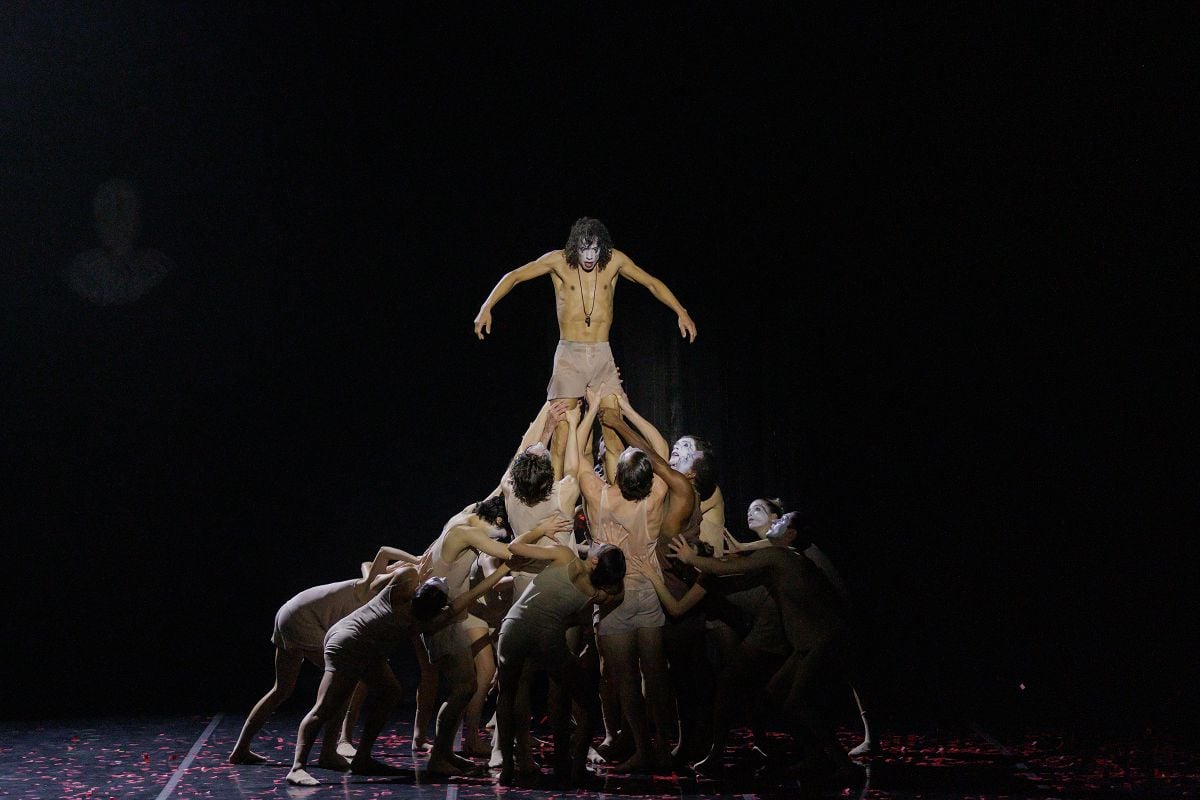
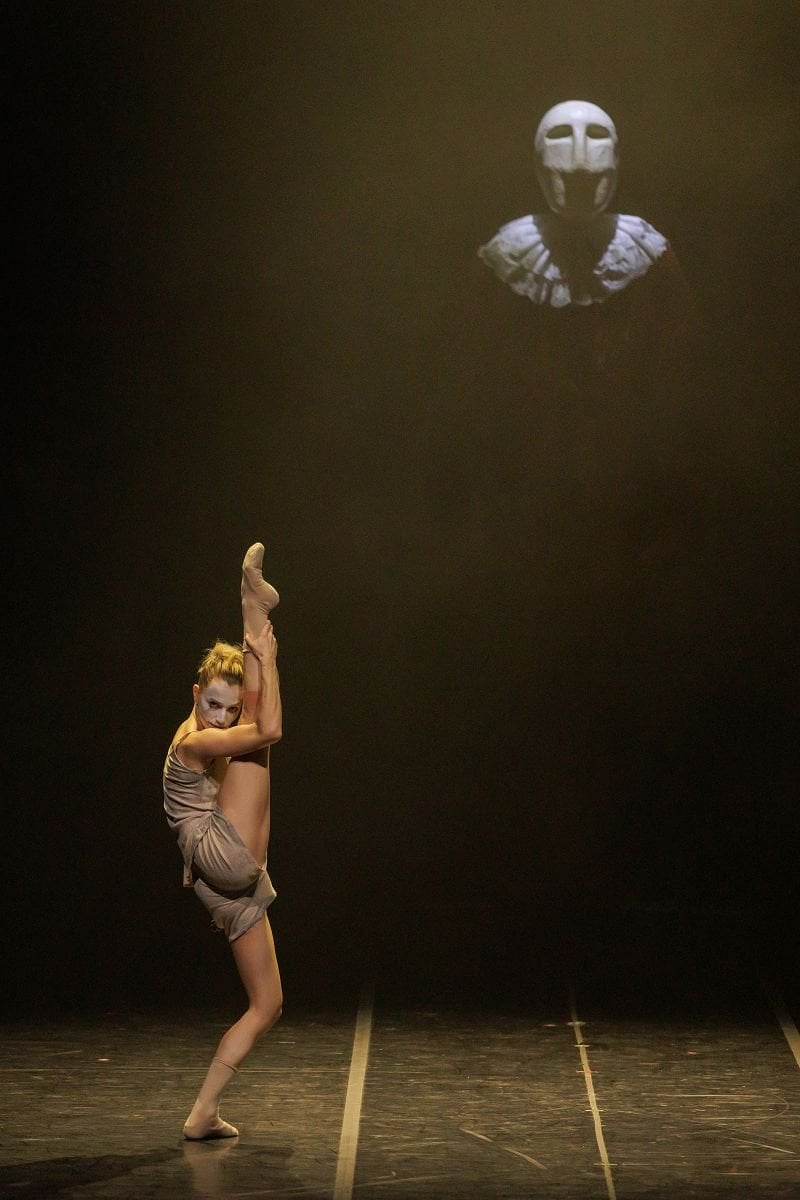
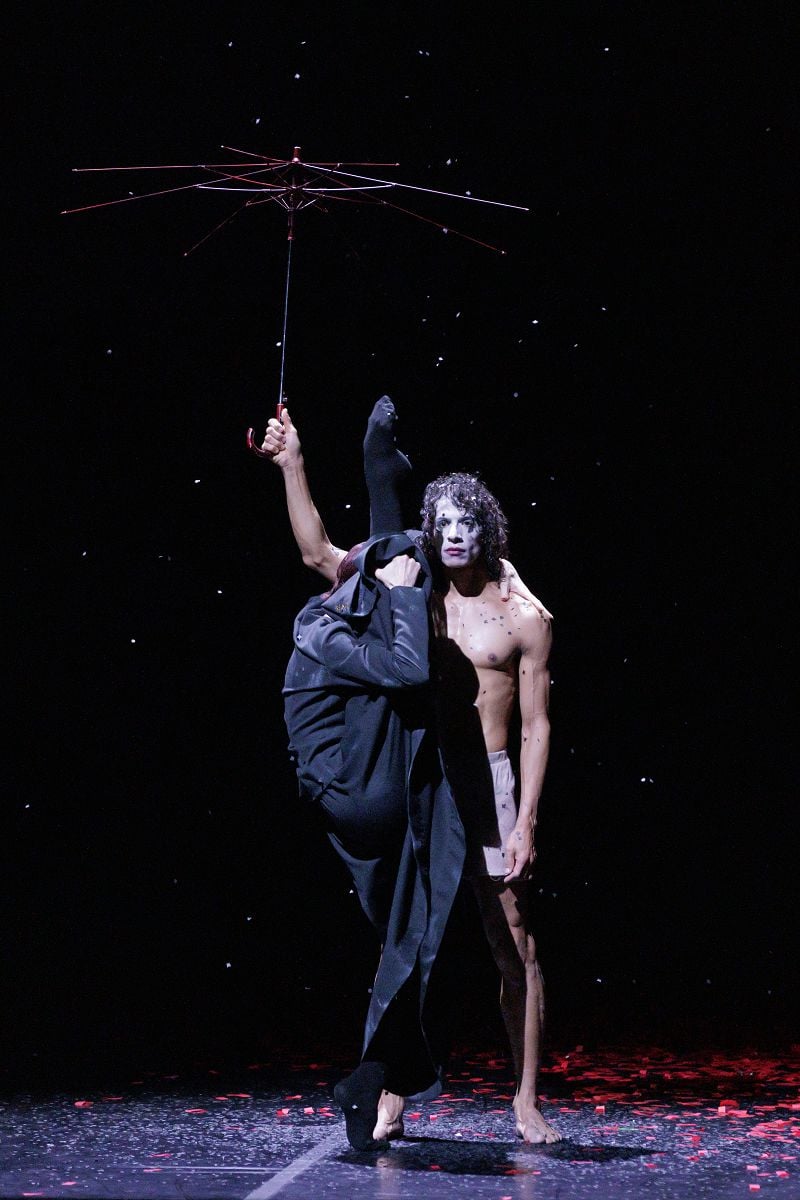
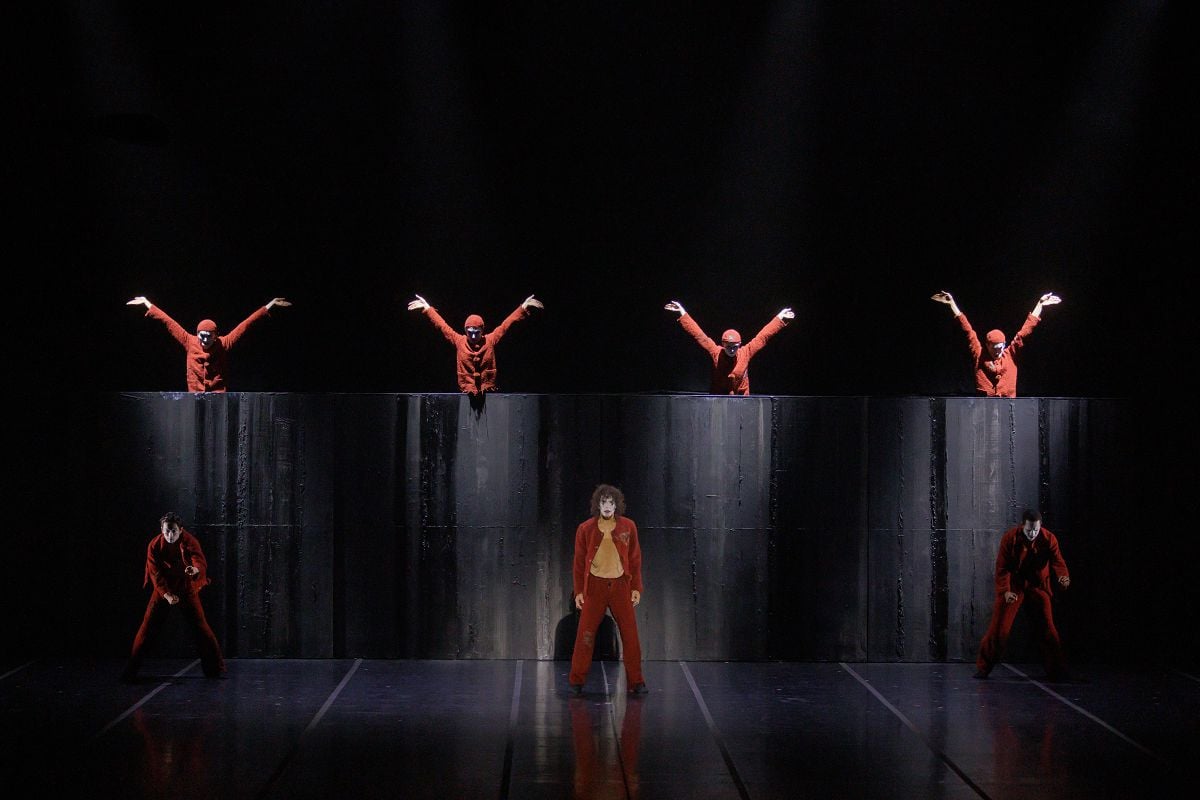
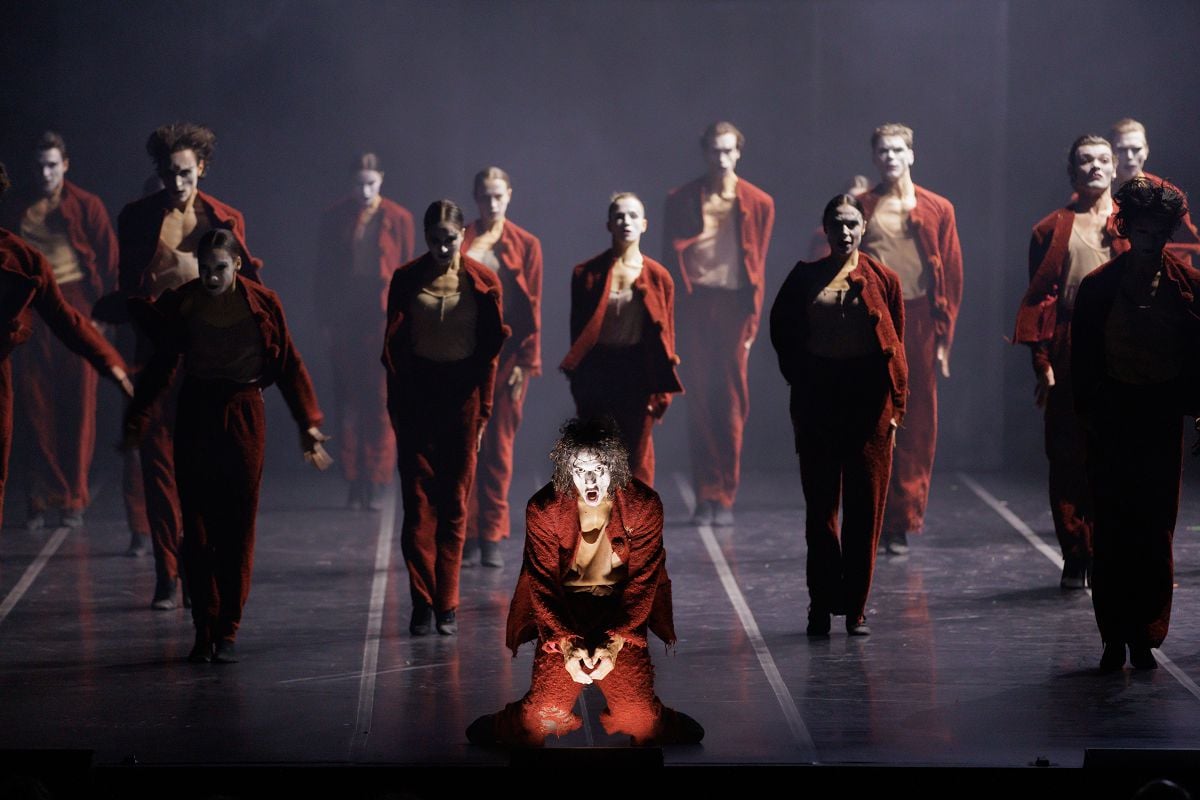
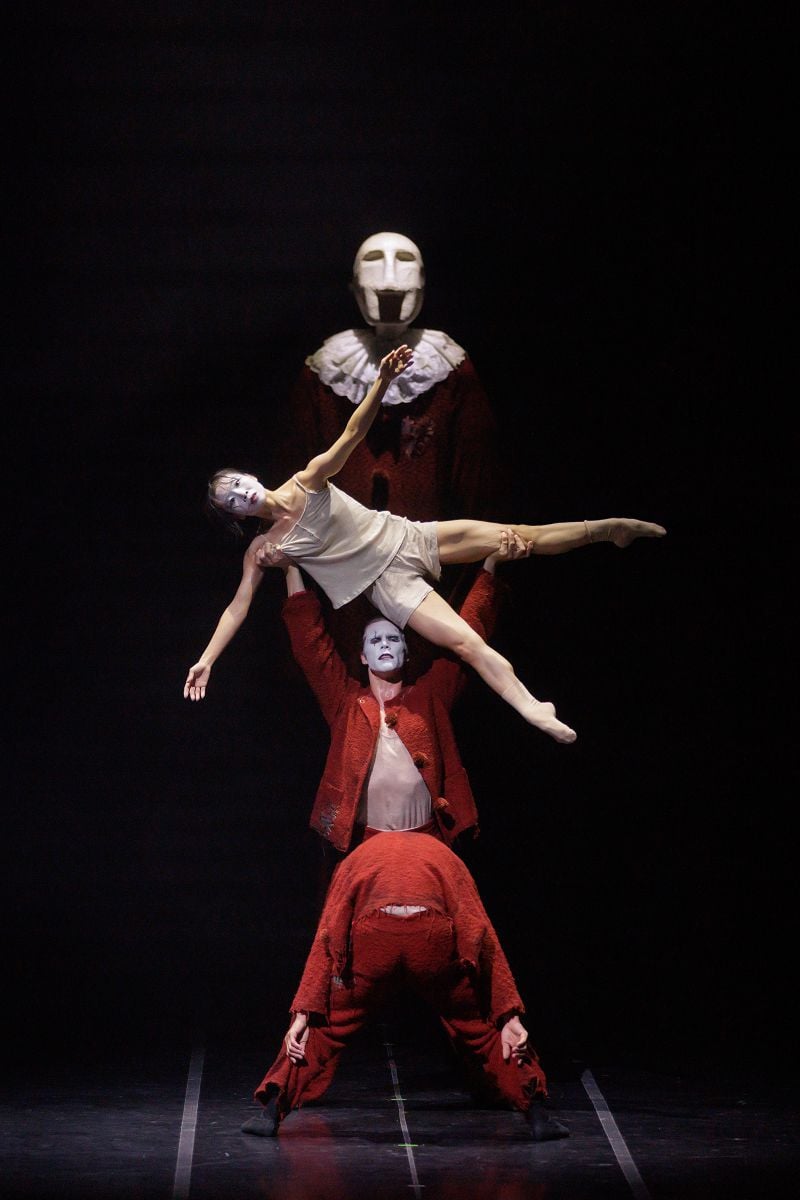
The cast of Oskars gradually move away from unison and come into focus as specific and distinct characters, bringing a depth of and complexity to their interactions with Oskar and with each other. Their starting point is classical ballet, so to suddenly see performers extending into a kind of vertical splits (a développé à la seconde) lends an overly gymnastic sensibility to the work, but when it errs towards the grotesque, performed with absolute conviction and formidable skill, it allows a rich, dark dynamic of relationships and connections to emerge. The choreography utilises the dancers’ extraordinary physicality to create an almighty tension – Oskar’s body doesn’t so much ‘speak’ as shriek.
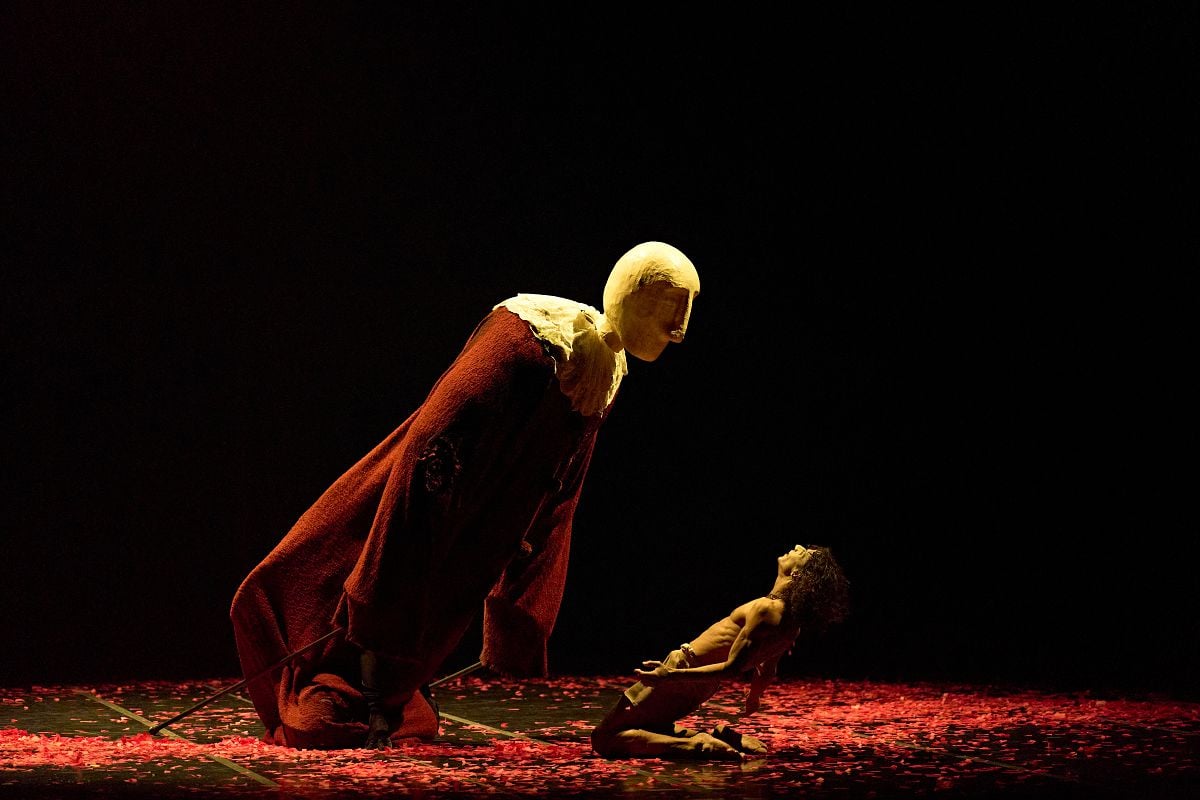
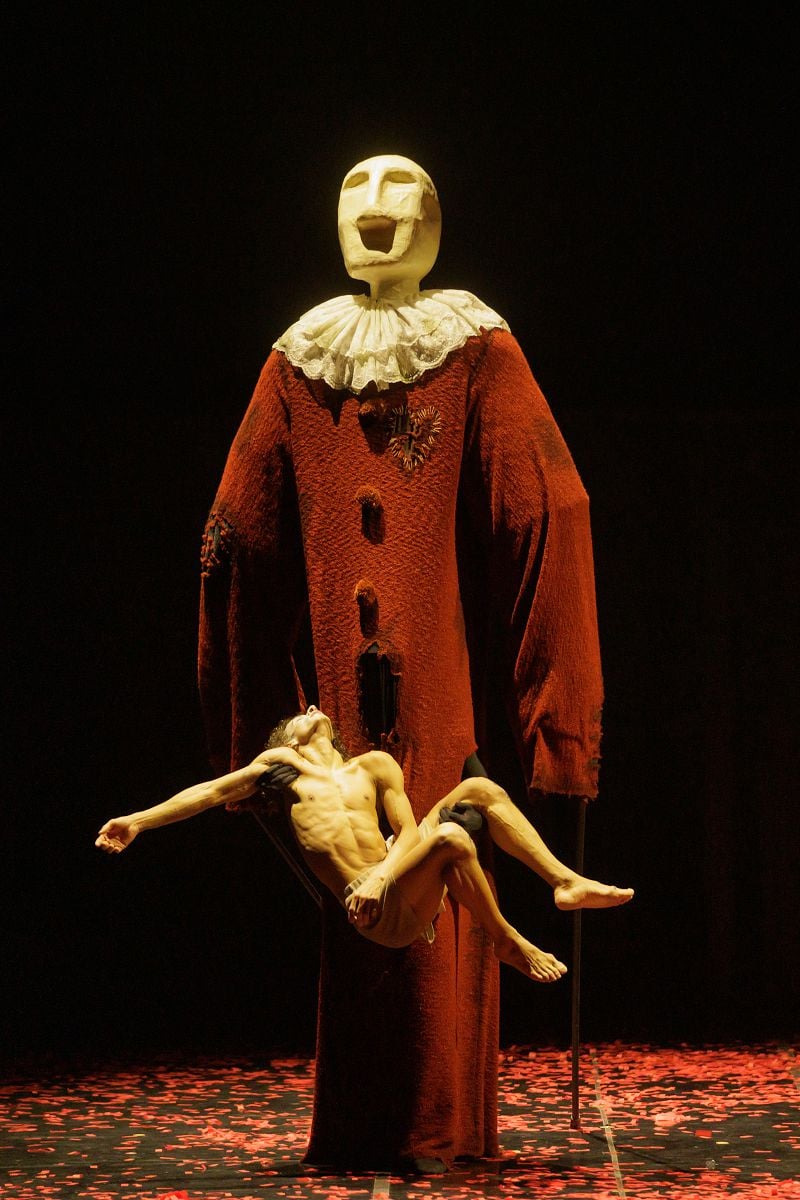
Explosions of vermillion ticker tape billow across the stage and one enormous, thoroughly nightmarish puppet Oskar – who emerges from the darkness 10 feet tall – looms over our tortured ‘hero’ and somehow swings him around the stage like a child as the ballet reaches its climactic conclusion. The massive puppet then cradles Oskar tenderly, laying him down to rest in a pool of swirling redness. It’s an epic, philosophical and existential musing and it’s absolutely compelling.

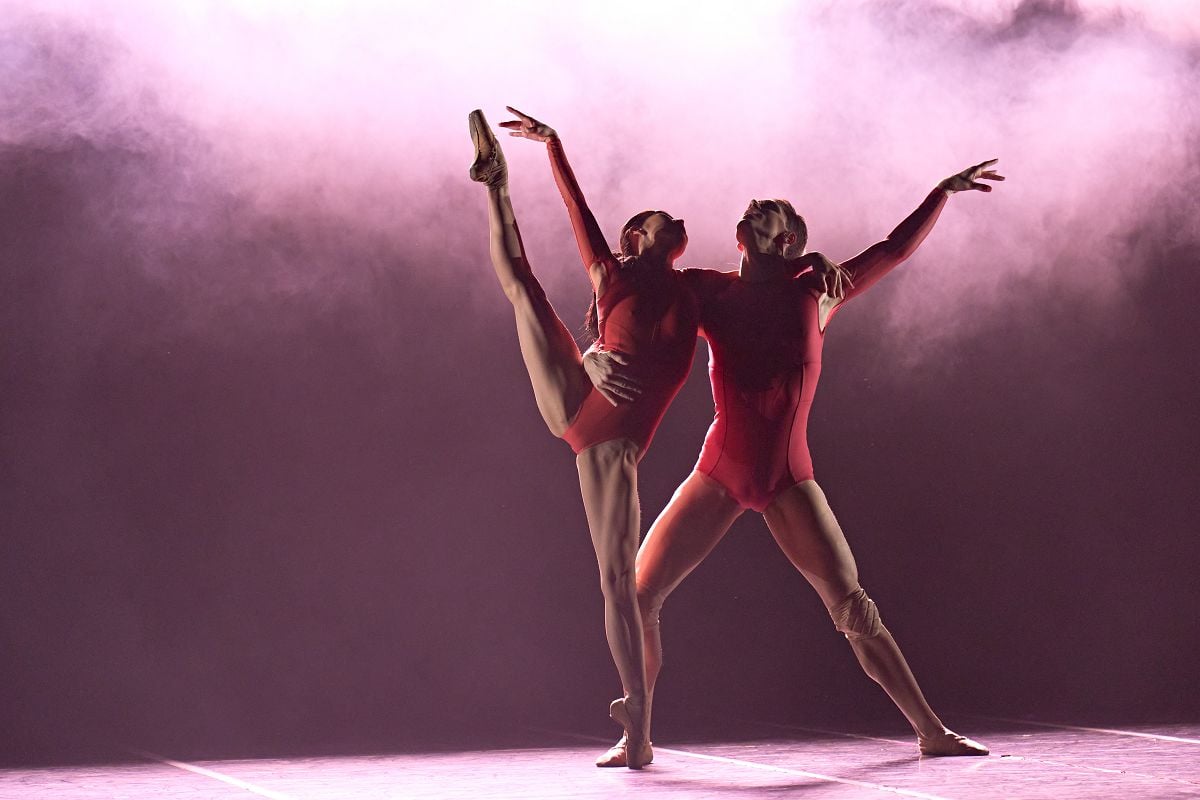
The second commission, Real Love, comes from Andonis Foniadakis, another male choreographer of considerable international repute, and a former company dancer under the direction of Béjart. His work is known to test the very limits of human capacity, and this notion very much drives his creation, which is nothing short of a marathon of modern ballet, performed with astounding determination by a cast of 15 dancers in fluorescent pink or orange leotards, adorned with feathers that occasionally, accidentally fly.
Real Love is an homage of sorts to the music of Depeche Mode, which thumps and clangs through the auditorium throughout. The dancers begin almost every scene by running full pelt onstage to throw themselves into a series of fast, furious enchaînements, flashing and flickering across the stage, performing athletic pas de deux and trois. A single bar of fluorescent light across the backdrop provides a subtly changing frame to the action onstage, moving slowly, imperceivably up and down, and changing colour, but the pace of dancing remains the same – cut-throat. Choreographically complex, the effect is almost a blur of impossibly flexing limbs, never faltering or dissipating. Its sheer relentlessness creates a sense of unease – of 100 pirouettes, surely one won’t land? Will we begin to see a dancer tire, their technique falter? Will there be an injury or a fall?
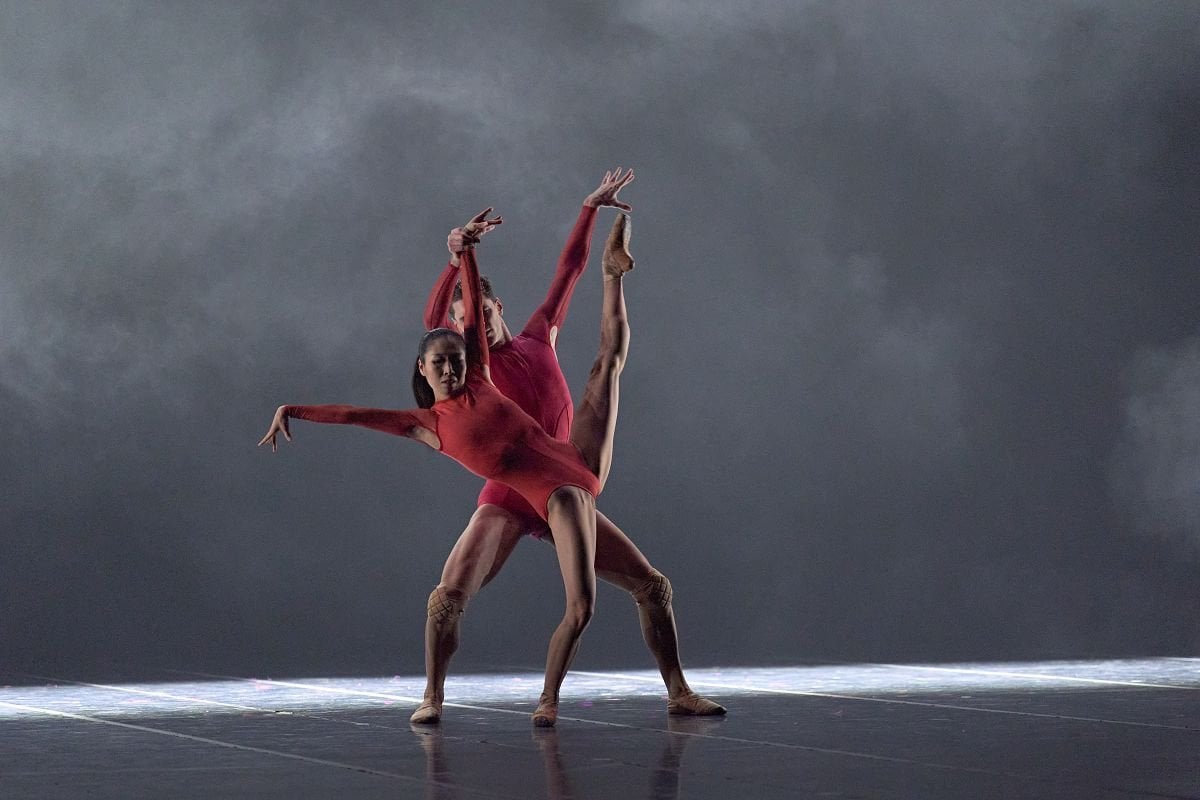
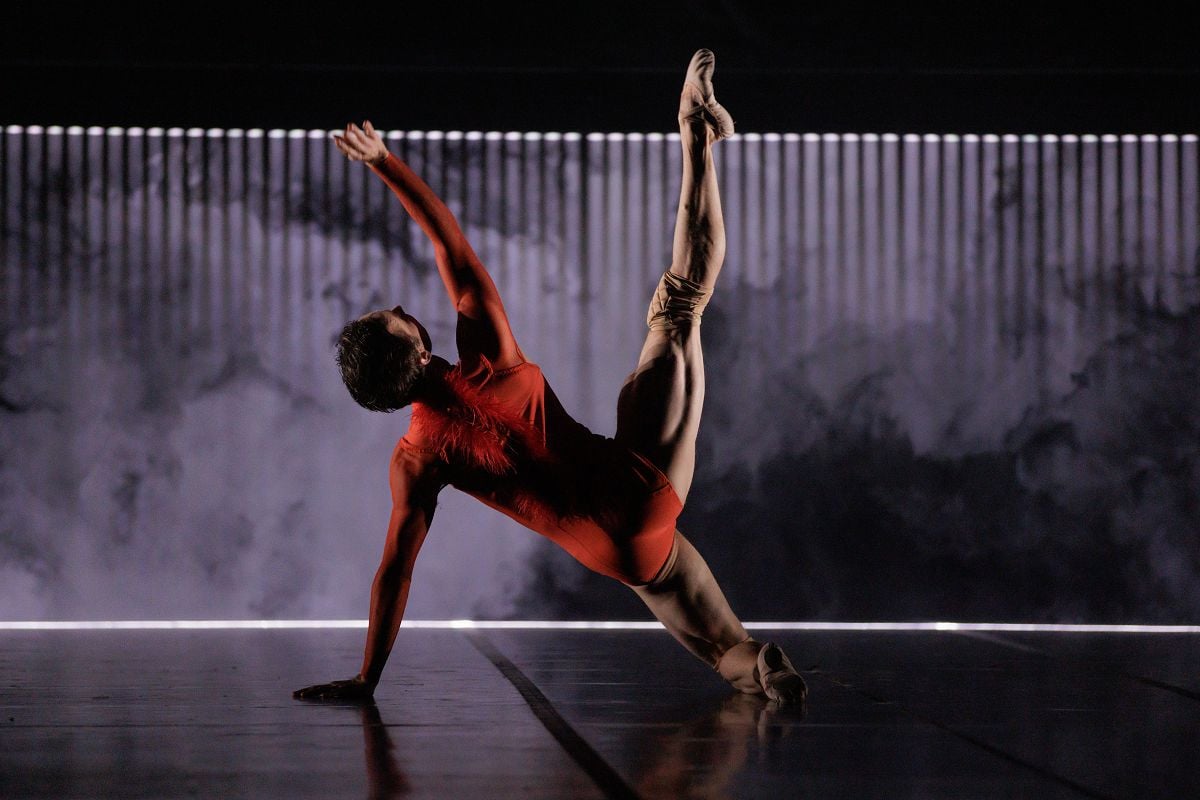
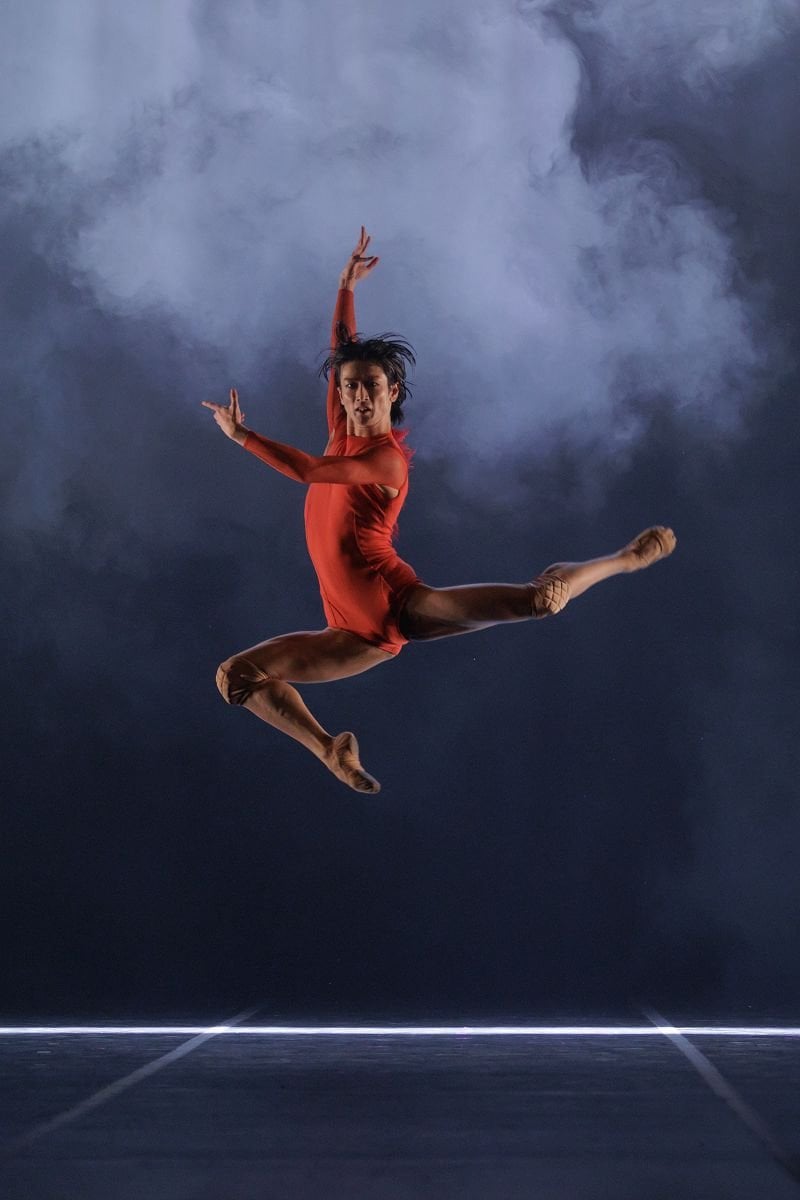
To my great relief and to the company’s great credit, everyone is intact for the third and final work of the evening – Béjart’s Firebird. It’s a male lead (in keeping with a very ‘male’ night) for a ballet that premiered in 1970 and has remained in the company repertoire since, literally rising from the ashes again and again.
Whilst Bejart refused any references to politics in Firebird, it’s hard not to resist the urge to read allegory in this richly symbolic, gravely rendered work. The choices of colour and style are so considered and deliberate as to reveal intent – the reds and blues in the costumes, the bold formality of the movement vocabulary, the brave struggle of the phoenix. That the work is performed 55 years later is a testament to its resonance; it expresses something profound.
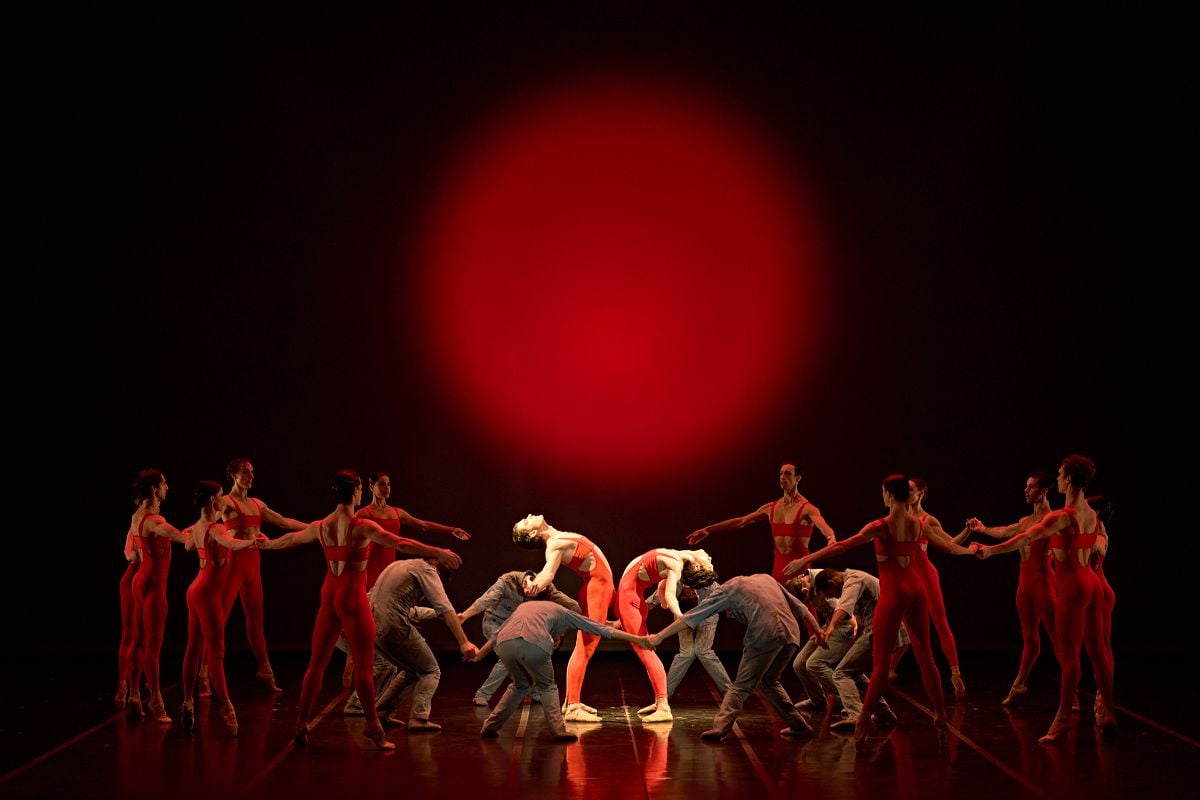
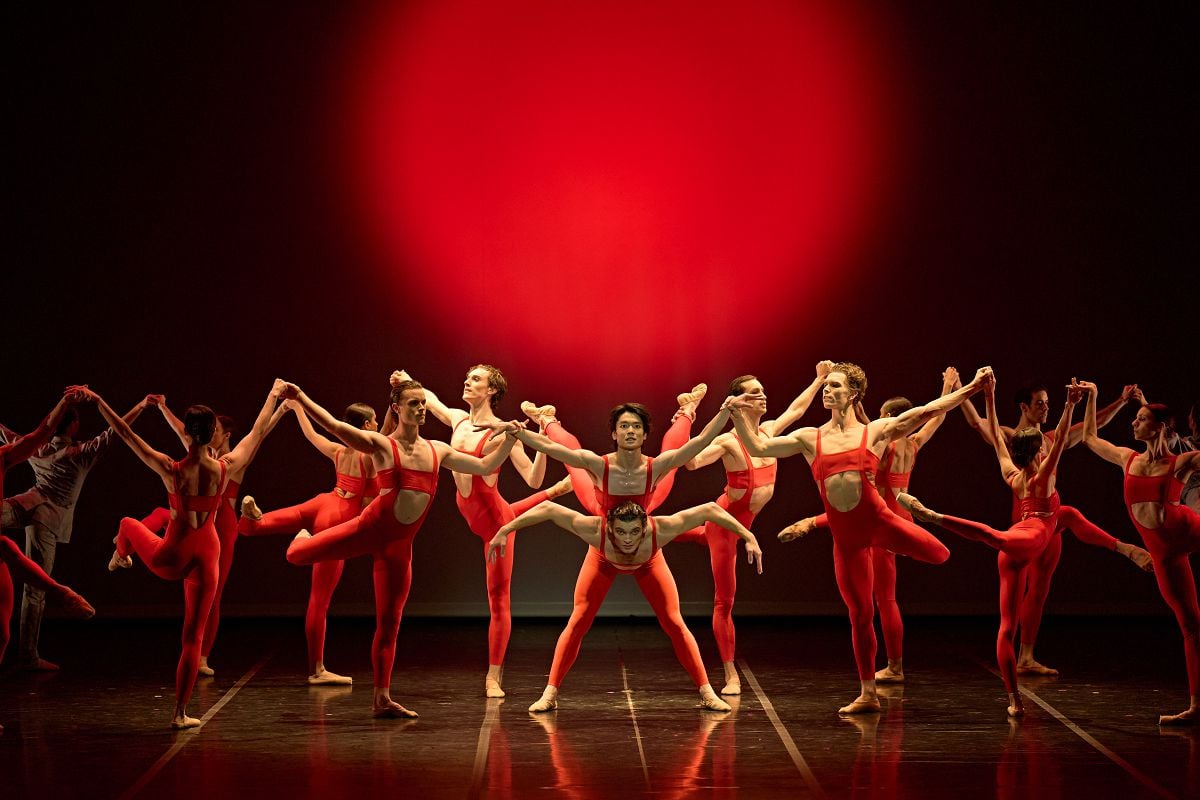
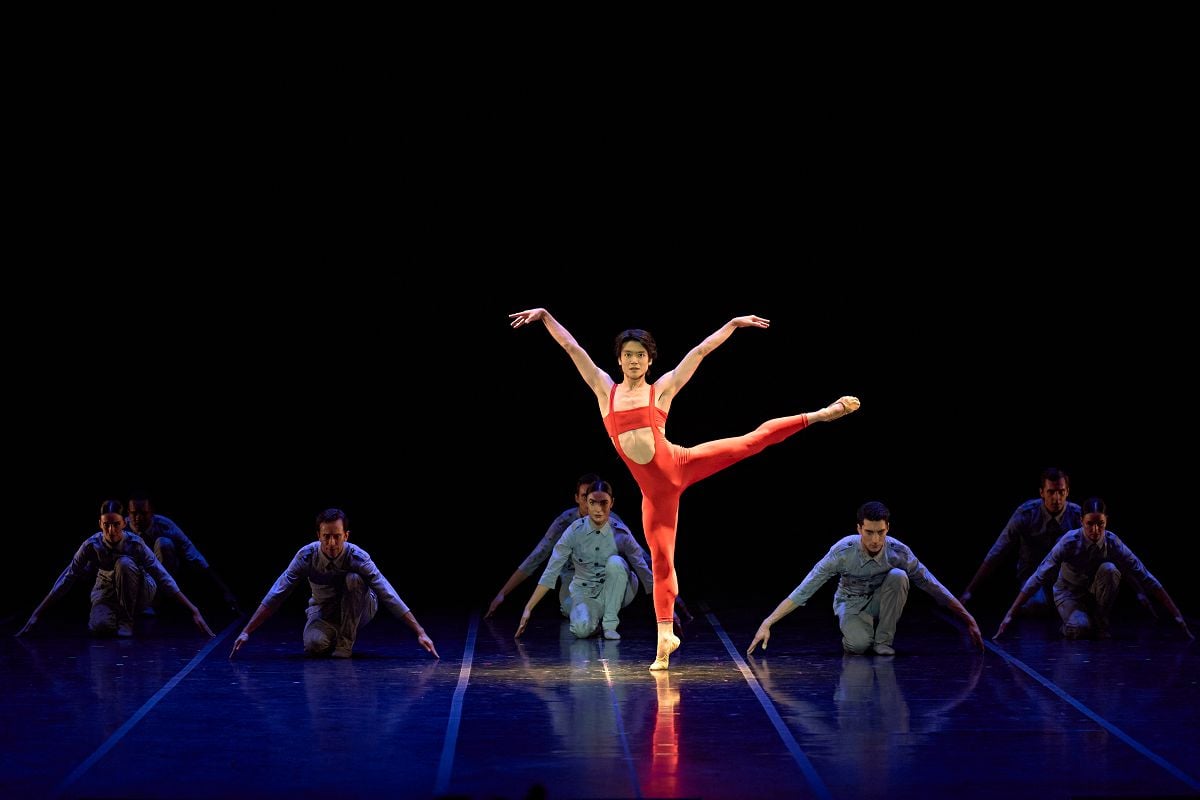
Taken at face value though, it’s pure choreographic vision; a masterful interpretation of Stravinsky’s extraordinary score, performed with absolute conviction by the cast. Notably noble Hideo Kishimoto fuses the lightness of flickering edges with the fluid strength needed for exacting feats of slow endurance. The tenderness and strength in this story are tangible, in the choreography and the score, which are so closely aligned as to feel inextricably woven together. Bejart’s expressionism continues to hold its own in the contemporary world – it’s arguably the furthest departure from classical ballet technique in this triple bill, and yet it has a discipline and vigour of its own.
Three very different visions, each one boldly expressed and skilfully performed; the theme of perseverance resonates strongly for a company looking forward with confidence.