Review: The Joffrey Ballet celebrates American Icons of dance with works by Arpino, Graham, Joffrey and Tetley

Scott C Morgan sees a programme of American Icons of dance with The Joffrey Ballet – this US arts institution is a global dance treasure.
| Title | American Icons |
| Company | The Joffrey Ballet |
| Venue | Lyric Opera House, Chicago |
| Date | 19 February 2026 |
| Reviewer | Scott C Morgan |
The Joffrey Ballet‘s 70th anniversary season continues with American Icons, a mixed repertory program that celebrates U.S. ballet and modern dance pioneers of the 20th century.
The four featured choreographers of Gerald Arpino, Robert Joffrey, Martha Graham and Glen Tetley all suit the title thanks to the shared country of their birth. Yet, the selected dance pieces for American Icons appear to be more about the choreographers in dialogue with European cultural touchstones rather than them finding inspiration entirely from U.S. soil.

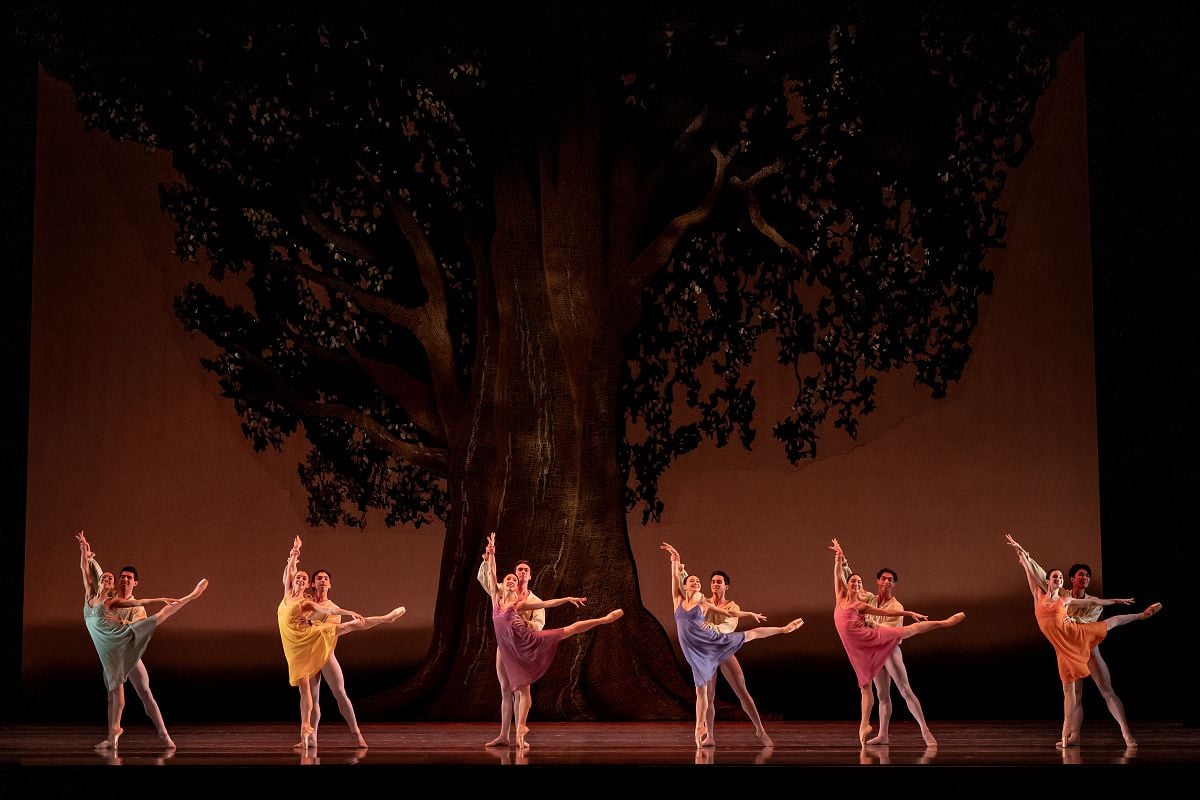
There’s certainly a European flavour that infuses Kettentanz, choreographed in 1971 by Joffrey Ballet co-founder Gerald Arpino. In front of a large tree, a dozen dancers in pastel colours hop and gallop together as a group before playfully separating into couples and trios to music by Austrian composer Johann Strauss Sr. and German composer Johann Mayer.
Arpino’s Kettentanz is full of youthful energy and sprightly bounce. It could be set just outside Vienna, or you could interpret Kettentanz as Germanic immigrant communities celebrating their old-world culture and refashioning it for their new home in America.
Unfortunately, there was some minor sloppiness from some of the dancers during the opening night performance. For a split second, you could spot the fleeting looks of surprise or worry from the dancers as they executed shaky transitions into lifts or out from spins. I’m not sure if this was opening night jitters, or if just more rehearsal time was needed with re-staging choreographer Suzanne Lopez to make sure everything becomes more seamless in execution.
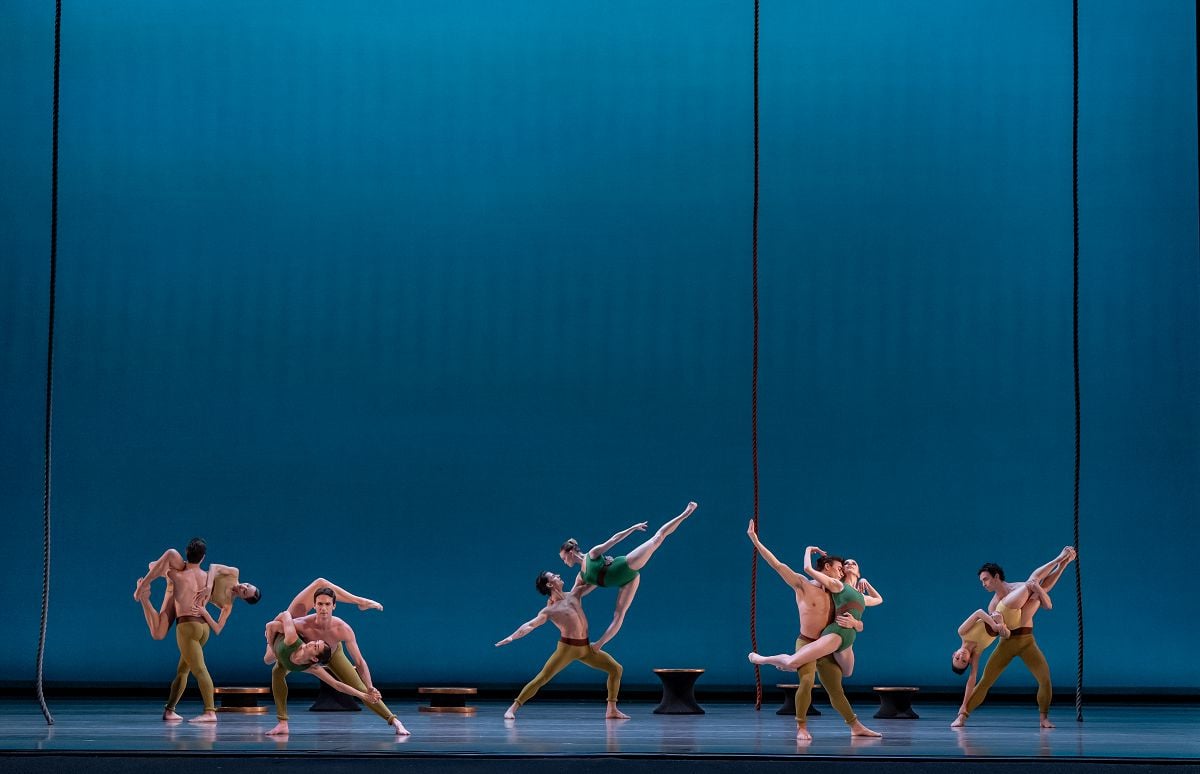

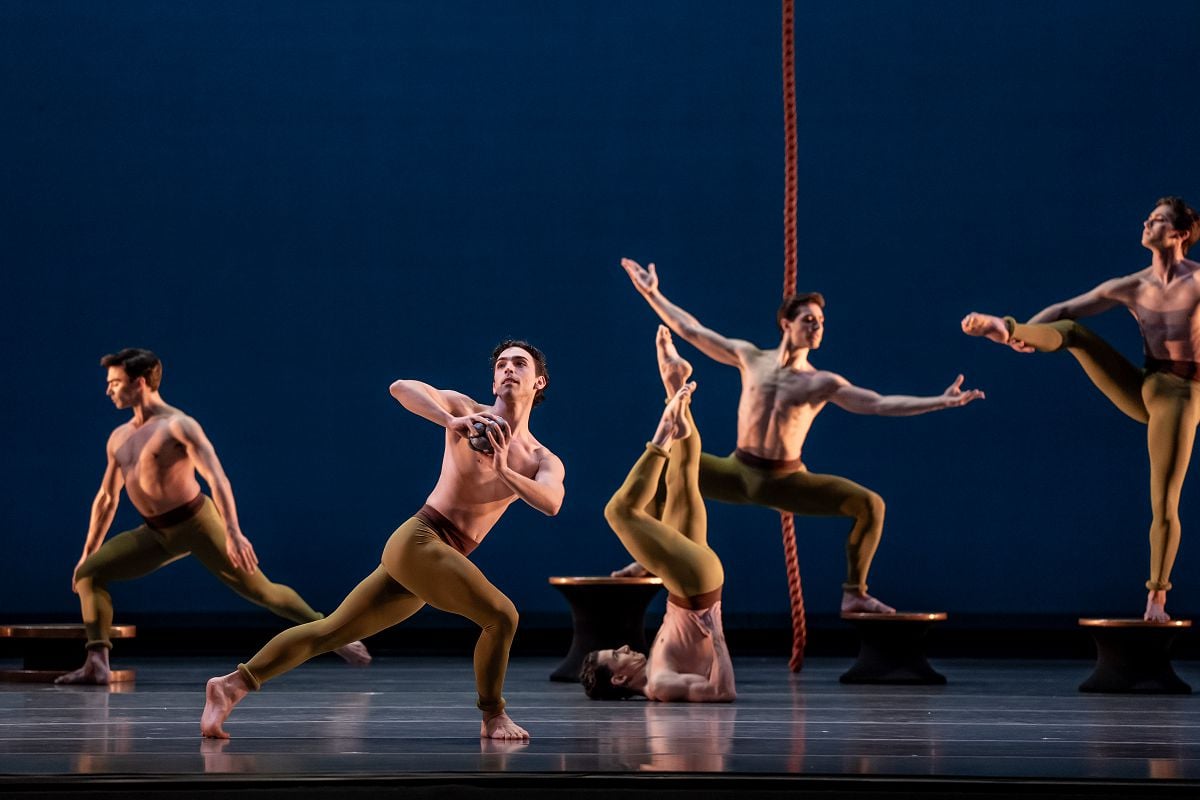
Up next was the company premiere of Martha Graham’s 1962 dance Secular Games, which was full of the pioneering modern choreographer’s trademarks, like a cloth shroud and dancers’ outstretched limbs expanding and then collapsing to their cores. Though not technically part of Graham’s many dance works inspired by Greek mythology, one could easily see Secular Games as her modern re-imagining of ancient Mediterranean youths at exercise and play.
Set to a pulsating and modernistic score by Austrian-born U.S. composer Robert Starer, Secular Games initially begins with six super-fit male youths stretching, preening and playfully passing a ball around as if they’re formulating the rules of a new game. The fact that there are also bronze pedestals for the dancers to pose on also hints at Graham’s possible classical statuary inspiration for Secular Games.
The arrival of six athletic women does complicate matters, including one wearing a shroud who is not in the mood for athletic fun. There was also a comical (if brief) observation of men being too obsessed with sports when a man dancing with a woman kept losing focus on the partner in his arms as his attention continually switched to others playing ball.
What kept coming to my mind during Secular Games was the famed floor mosaic of 10 sporty women exercising at the Roman villa of Casale at Piazza Armerina in Sicily. Tourists were only able to visit this ancient site in great numbers starting in the 1950s, so its wider world exposure at the time might be a source of inspiration for Graham’s Secular Games. Either way, re-staging choreographers Anne O’Donnell Passero and Lorenzo Pagano did a fine job of adding this engagingly contemporary yet classical Graham work to the Joffrey’s repertoire.
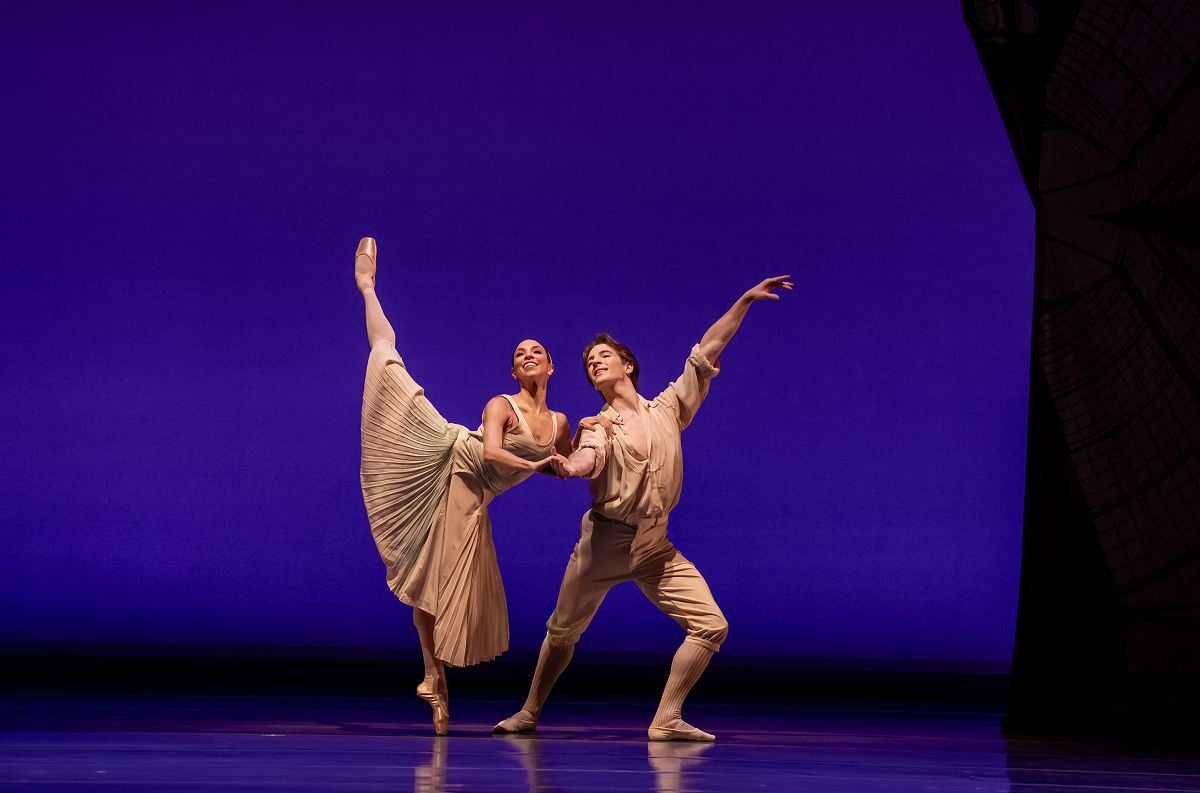
To represent the company’s namesake choreographer and co-founder, Robert Joffrey, a pas de deux excerpt with a live singer from the 1980 work Postcards was featured in American Icons. This excerpt replaced Joffrey’s 11-minute 1973 ballet Remembrances, which was originally announced back in February 2025 for the programme.
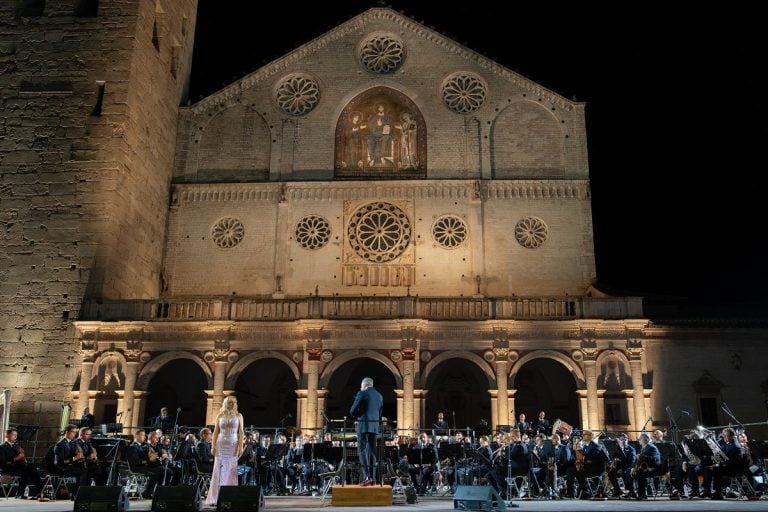
Featuring an op-art silkscreen-style collage backdrop of the glass ceiling of the Grand Palais in Paris, this Postcards excerpt was a fine showcase for the romantic pairing of opening night dancers Anais Bueno and Stefan Gonçalvez. The Gallic influence was emphasised by the onstage mezzo-soprano Camille Robles, a 2025-26 Lyric Opera of Chicago Ryan Opera Center Ensemble member, singing an Erik Satie song.
Re-stagers Suzanne Lopez and Christine Rocas did a marvellous job setting the swirling choreography on Bueno and Gonçalvez. Yet this Postcards excerpt felt all too brief and insubstantial in comparison to the other American Icons works. One could argue that the company’s namesake founder was given short shrift.
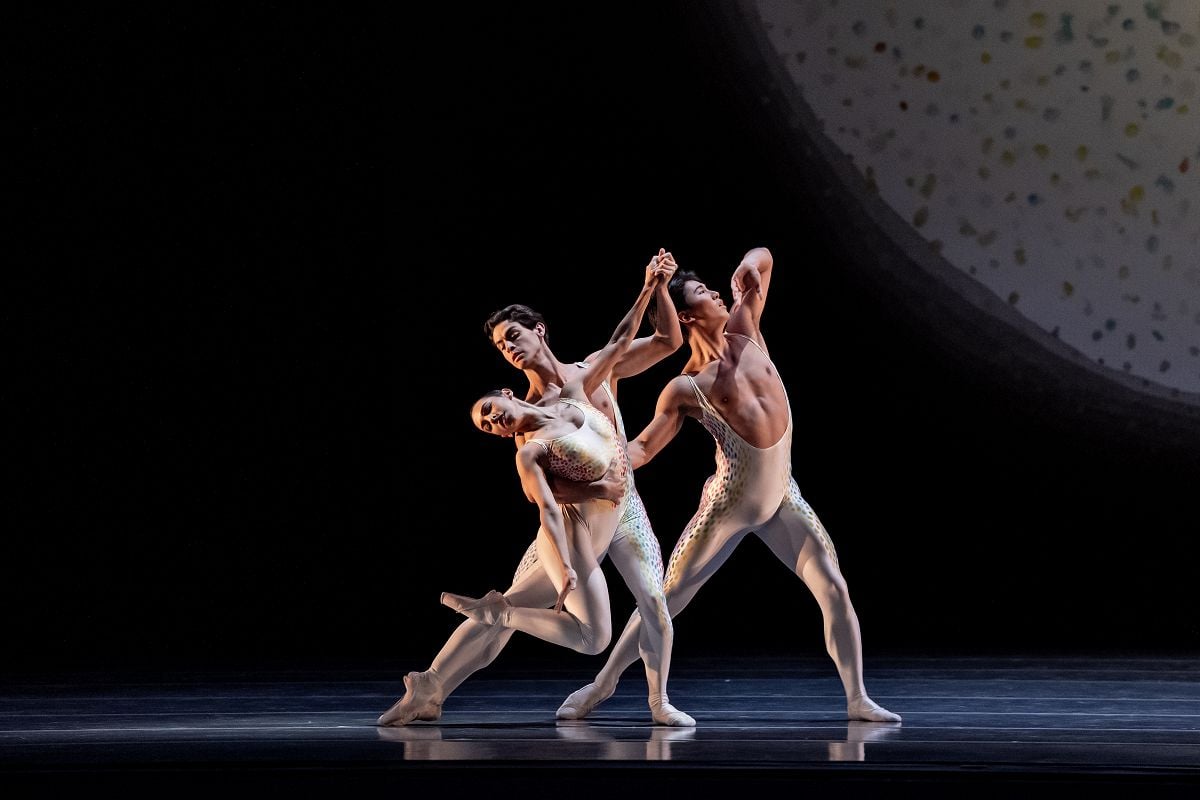
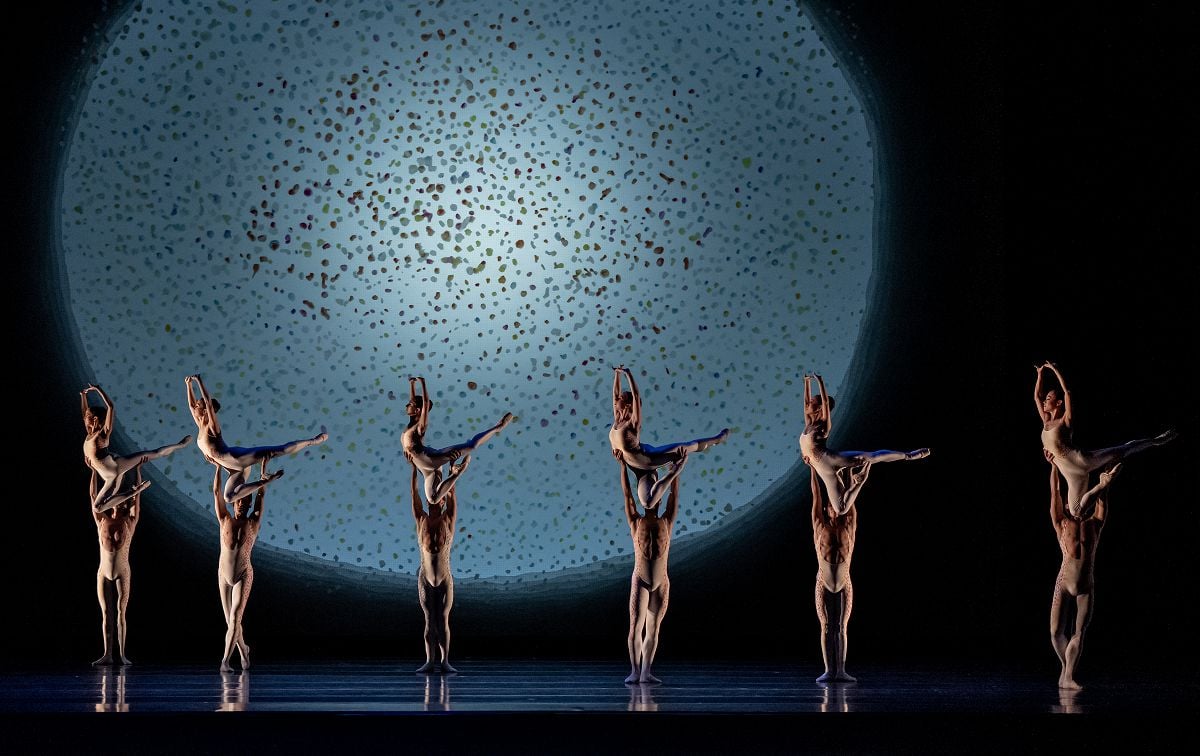
Rounding out the program was the company premiere of Glen Tetley’s beautifully mournful 1973 piece Voluntaries, which was the most substantive and moving work of the evening. This year marks the centennial of Tetley, who was an original Joffrey company dancer who later became an esteemed choreographer for companies in Europe, the US and Australia.
Tetley’s Voluntaries is an artistic response to an upsetting loss for the Stuttgart Ballet. Aboard a chartered transatlantic flight from Philadelphia to Stuttgart following a successful company tour of America in June of 1973, Stuttgart Ballet artistic director and South African native John Cranko unexpectedly died at the age of 45. Though a heart attack was initially reported in The New York Times, it was later revealed that Cranko choked to death after having an allergic reaction to a sleeping pill.
Originally presented by the Stuttgart Ballet in December 1973, Voluntaries bears the weight of collective mourning from a shared trauma of the company members who were aboard that tragic flight. Tetley certainly chose music to fit the mood with Francis Poulenc’s 1938 Concerto for Organ, Strings and Timpani in G Minor, which was thrillingly played for the Joffrey Ballet by the Lyric Opera Orchestra under the skilled direction of Scott Speck and guest conductor/organist Robert McConnell.
Tetley worked in tandem with original costumer and set designer Rouben Ter-Arutunian to visually reflect the mid-flight loss of Cranko. The dancers wear airy and speckled white dancer singlets that reflect the main ocular backdrop that suggests a desiccated Ishihara test circle for colour blindness. And lighting designer Chris Maravich has recreated the original work of John B. Read with shifting sky colours in bright white, yellow and blues.
Potentially reading as abstracted cranes or planes, the dancers often have outstretched arms to suggest wings. The women also frequently are raised and held aloft by the men in beautifully posed positions, suggesting lifelessness – possibly a symbolic physical representation of souls departing near the stratosphere.
Expertly re-staged on the Joffrey Ballet by choreographer Peter Ottman, Tetley’s Voluntaries featured strong and lithe performances from Victoria Jaiani and Dylan Gutierrez as the primary pas de deux couple. Dancers Amanda Assucena, José Pablo Castro Cuevas and Hyuma Kiyosawa also shone as the pad de trois trio among the overall 17-member ensemble.
With the addition of Voluntaries to the company repertoire, the Joffrey has Tetley’s powerfully abstracted artistic response to a respected peer’s passing. And since the Joffrey Ballet has previously staged Cranko ballets like Romeo and Juliet and The Taming of the Shrew, the company premiere of Voluntaries is an important inclusion in American Icons that is both a historical and living part of what makes this US arts institution such a global dance treasure.
The Joffrey Ballet’s repertory program American Icons continues through March 1, at the Lyric Opera House, 20 N. Wacker Drive, Chicago.
For more information, visit joffrey.org.