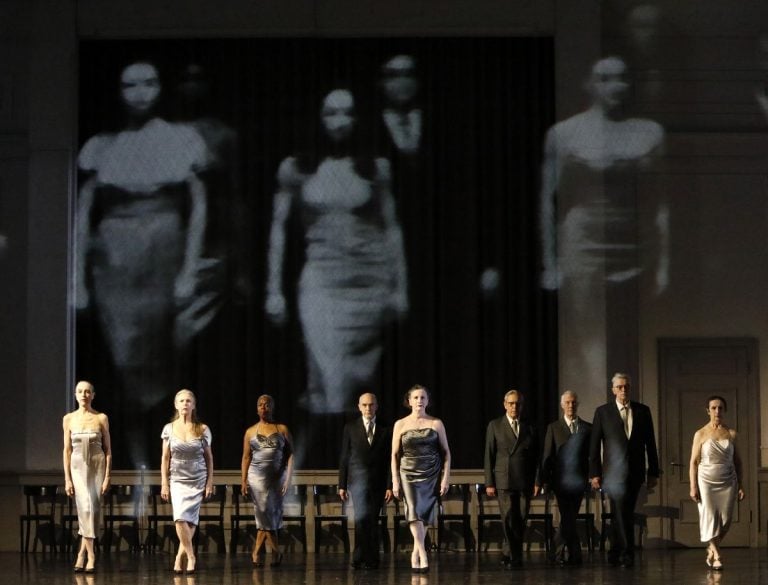
Review: Tango After Dark at Sadler’s Wells – virtuosity without variety
Germán Cornejo’s revival, rescued from a closed Peacock Theatre, offers world-class technique, but five pairs of near-identical duets end up leaning on rigid holds and recurring leg hooks.
| Title | Tango After Dark |
| Company | Germán Cornejo’s Tango After Dark |
| Venue | Sadler’s Wells, London |
| Date | 5 November 2026 |
| Reviewer | Graham Watts |
The closure of the Peacock Theatre earlier this year, due to emergency maintenance, forced the postponement of this revival of Germán Cornejo’s Tango After Dark, which appears to be following its own four-year Olympic cycle, having been previously performed at the Peacock in 2018 and 2022. Six months after that postponement, it has reclaimed these much sought-after London performances, albeit upgraded to the Sadler’s Wells main house: a fact that initially escaped this writer, who turned up unwittingly – along with others – at a dark Peacock and just scrambled across town to make it to Islington in time!
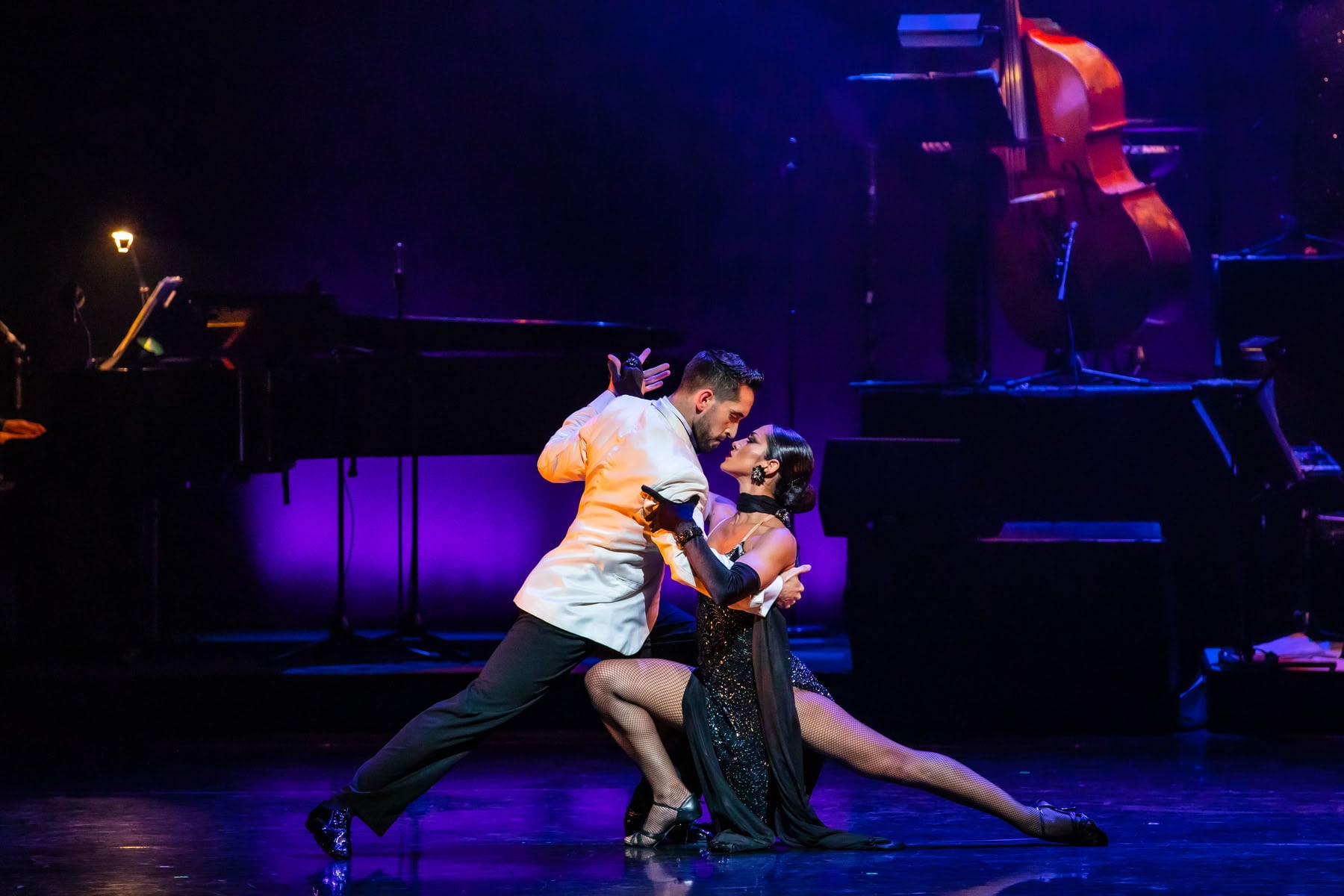
Looking back, I loved Tango After Dark on a previous visit, making it one of my performances of the year, but on this occasion I found that a very different show presented an unusual dichotomy. There is no doubting the world-class skills and expertise of the performers – both dancers and musicians – but it presents a seemingly endless agenda of tango duets, each stylistically similar, some lacking chemistry in the rigidity of the barely smouldering partnerships and invariably ending in a starkly lit pose with a predatory dominant man usually holding and hovering over a recumbent woman.
During an excellent post-show Q&A session with Cornejo, the dance writer Fatima Nollen drew attention to the origins of tango in the working-class barrios of Buenos Aires where it was routinely practised by men in same-sex couples. I recalled that there was an element of same-sex dancing in an earlier iteration of Tango After Dark, but the closest that this production came to it was in brief dances for multiple men and a woman. I couldn’t help thinking that some same-sex partnering would have brought crucial variety to the programme.
Despite the excellence of technique on show, this was more cabaret than theatre. There were minimal attempts at developing a story: for example, a woman arrived at the Milonga in outdoor clothing, carrying a bag but – so far as I could see – her story was never developed, and she was quickly absorbed into the anonymity of the Milonga’s ensemble.
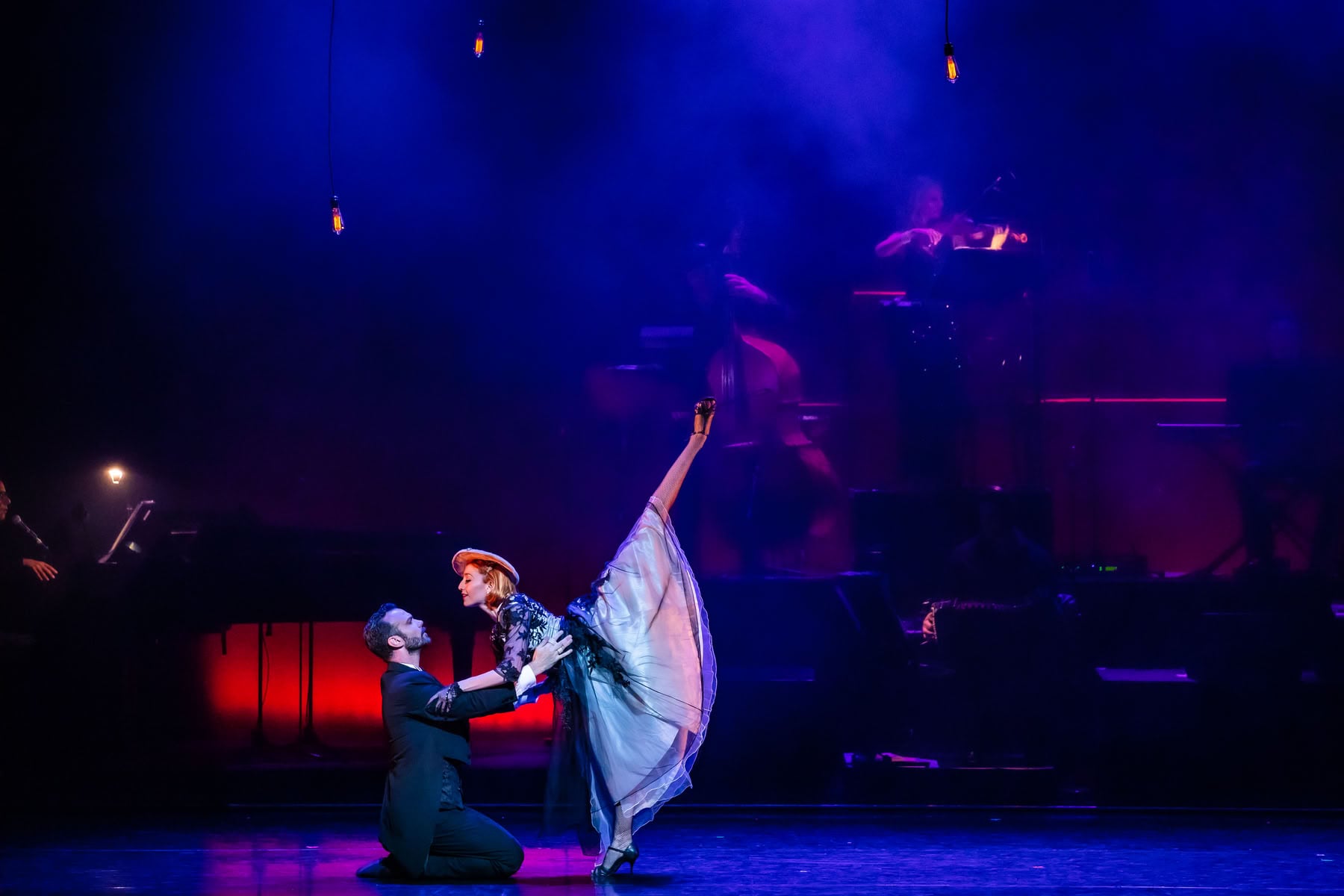
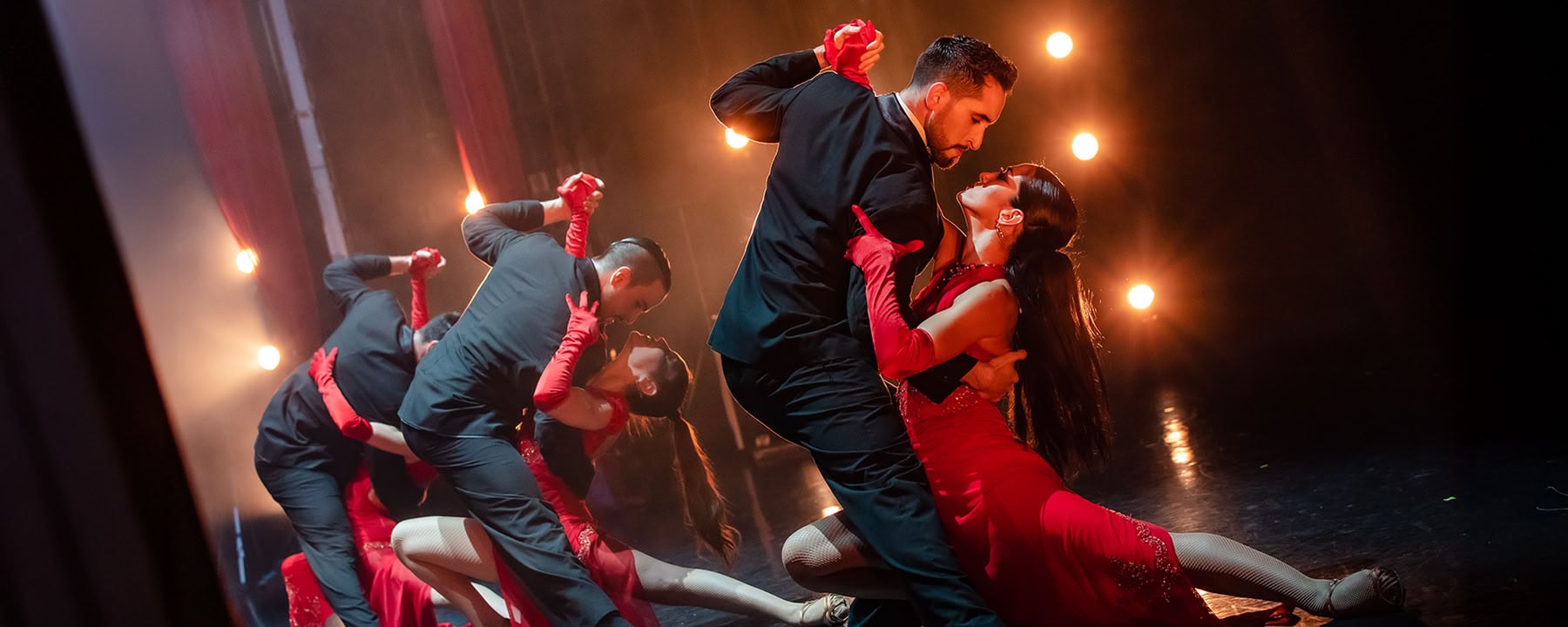
Tango is an exciting dance form and there were occasional moments of stunning virtuosity, not least in the impressive lifts that twisted the female dancer in every possible manner around her partner’s body. But both the style and movement in between, challenging though it may be to perform in unison, came from a limited palette of crouching and extended steps in a rigid hold, peppered with the regularity of leg hooks, either in fleeting ganchos through the partner’s legs or by the woman hooking her leg high up around the man’s torso.
Each of the five pairs had their moment in the spotlight across both acts, and the repetition became wearing after the interval. The exception was a boisterous post-curtain call encore in which each pair gave an edited highlight of their best bits.
It’s the first time that I have seen Cornejo dance without Gisella Galeassi, and her successor, Noelia Pizzo, has a similar chiselled beauty and stunning range of movement. In previous iterations, Cornejo and Galeassi led the dancing with two set pieces in each act. Here, Cornejo appeared to be less prominent than in previous shows, although he still went for the impressive présage lifts, holding Pizzo up with one arm whilst she balanced with a hand on his shoulder: the first of these was an obvious struggle, but the second (in that explosive encore) worked well to the audience’s delight.
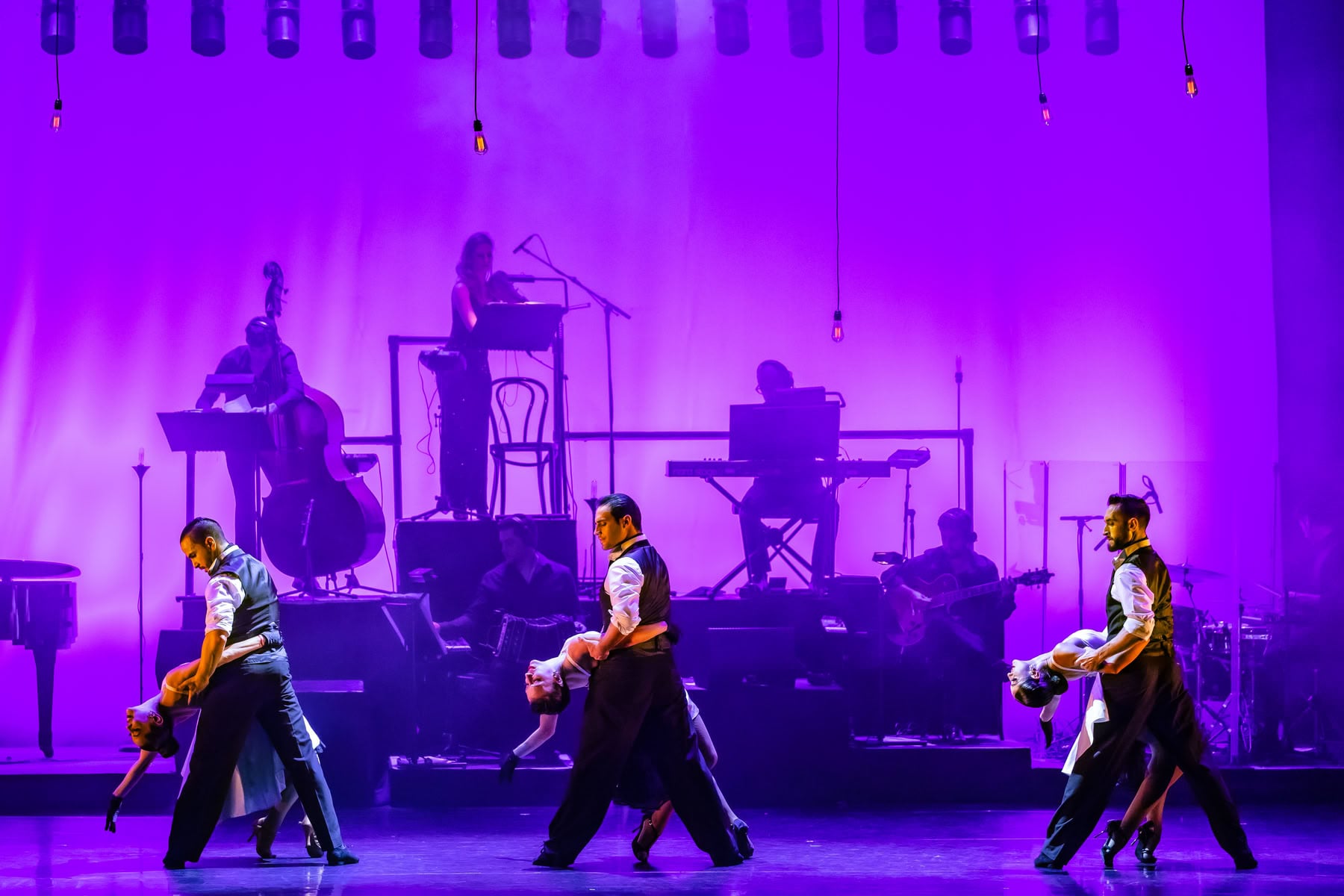
Apart from Cornejo, the only returning dancer from the previous show, to which I awarded five stars, was Nicolás Schell, and there was a mixed standard among the other pairs, with the men occasionally not looking completely at ease, perhaps in the improvised sections of each duet. Alongside his partner, Nair Schinca, Schell is the reigning World Tango Champion and, unsurprisingly, this pair stood out in the dynamism and togetherness of their performance, and it was a singular pleasure to admire their acclaimed artistry.
Tango After Dark uses Astor Piazzolla’s unique Tango Argentino music performed by two charismatic singers (Vanina Tagini and Jesús Hidalgo) and a band of five excellent musicians, adding to the clubland feel of the Milonga by being placed at the rear of the stage, headlined by Piazzolla’s own instrument of choice, the bandonéon (a type of concertina, as essential to tango as the guitar is to flamenco), played by Matías Rubino.
The sport of beach volleyball has been much criticised for the disparity of dress between men and women athletes, with the latter competing in little more than bikinis. Tango theatre is similarly discriminatory: men are fully covered up in jackets, shirts and trousers, whereas their partners’ elaborate, floaty costumes (designed by Cornejo alongside Alberto Mauri and Mimi Pinzón) are much more revealing, and the choreography makes the most of this bawdy exhibitionism.