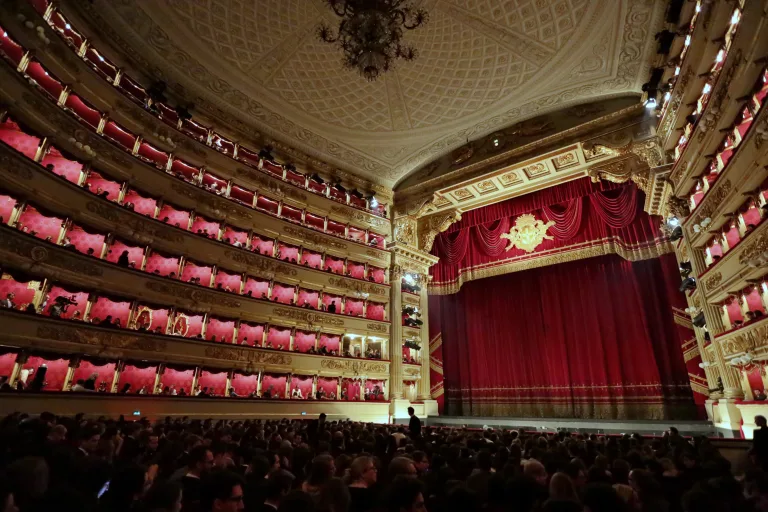
Review: Benjamin Bernheim at La Scala – from Gounod mélodies to Puccini, a masterclass in nuance
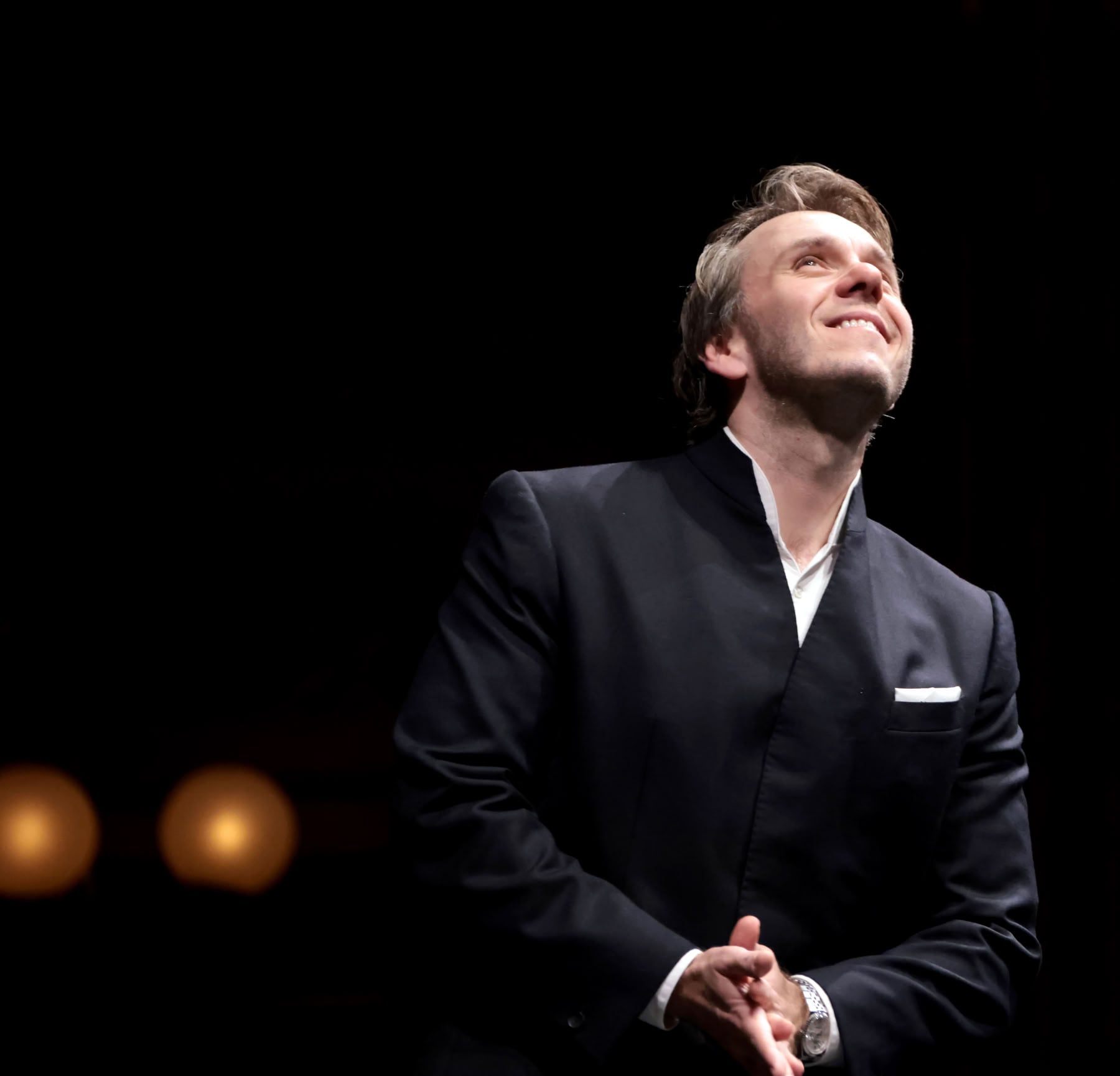
Gounod, Duparc and Hahn under a shared moon, Berlioz with piano, and three tenor arias sung with the delicacy of mélodie: Bernheim showed that refinement need not mean holding back.
| Title | Benjamin Bernheim |
| Company | Recital |
| Venue | Teatro alla Scala, Milan |
| Date | 22 November 2026 |
| Reviewer | Graham Spicer |
Benjamin Bernheim’s recital at La Scala showed a craftsman at work, intelligently shaping each phrase, exploring the full range of dynamic possibilities and lovingly attending to every detail. In a programme that went from Gounod to Puccini, he showed how the same care for communicating the French mélodie can be applied to an opera aria – he is refined and elegant, but can belt out a top note with the best of them.
The evening began unexpectedly, with the tenor entering alone and holding a microphone. He spoke about the victims of the Crans-Montana New Year’s Eve fire, in which 41 people died. Although born in Paris, he grew up in Geneva and knows the mountain resort well; he will be giving a benefit concert there on 30 December. A few of the survivors were in the theatre for his recital, and he repeated the name of the Italian association Next Crans-Montana several times. Set up by the families of the injured, it accepts donations to help the survivors – mostly teenagers and young adults – with severe burns, whose surgery and treatment will continue for years to come.
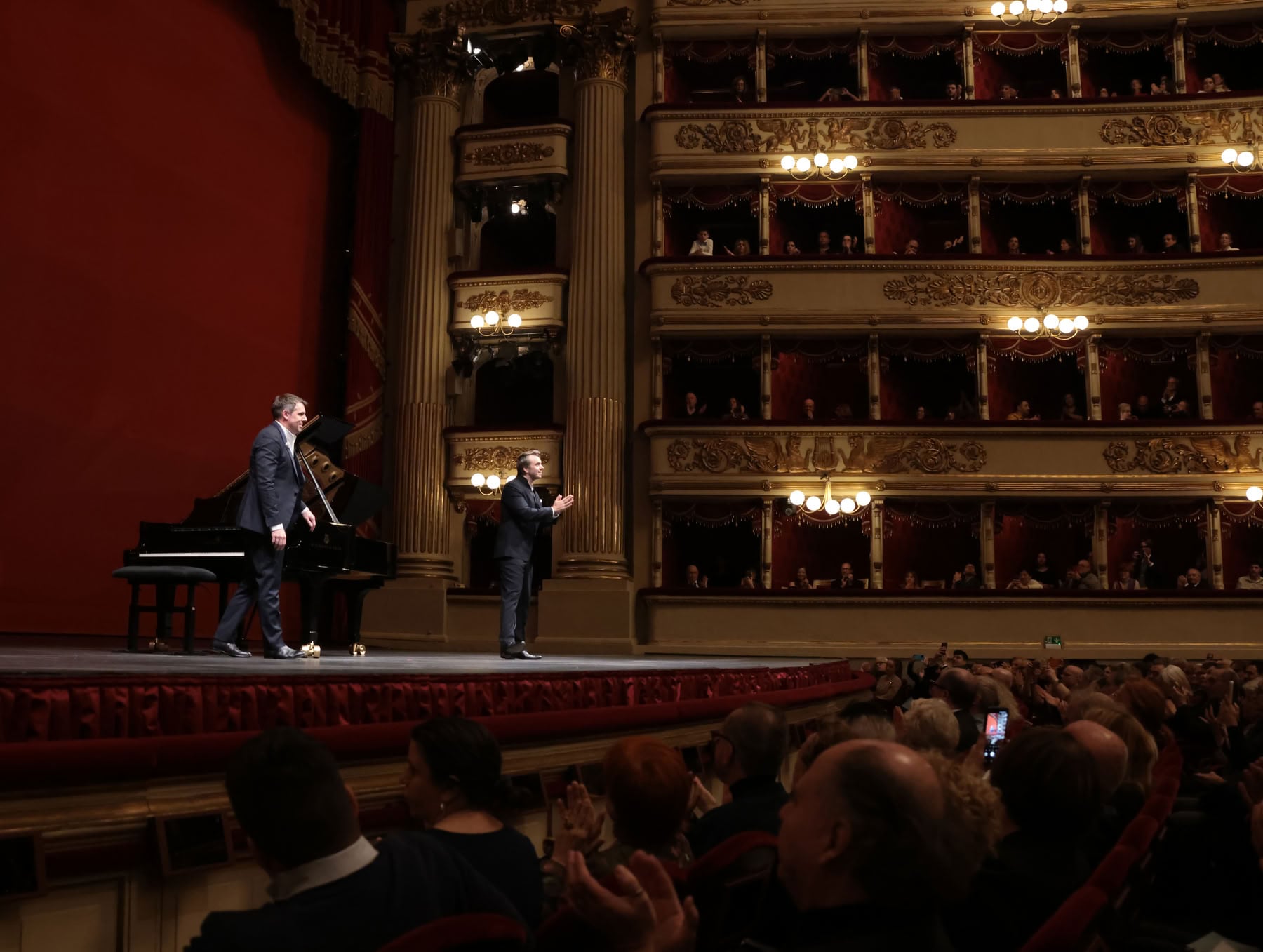
Bernheim and his excellent accompanist, Mathieu Pordoy, sparkled as they walked on to begin: Bernheim is a Rolex Testimonee, and something very glittery shone from his wrist; Pordoy wore a shimmering brooch on his lapel.
Bernheim is now 41 but retains a boyish quality. He isn’t flamboyant; in fact, he may even be a little shy, though he seemed perfectly at ease in La Scala’s auditorium, which can be daunting for singers, especially without a role to play or a costume to wear.
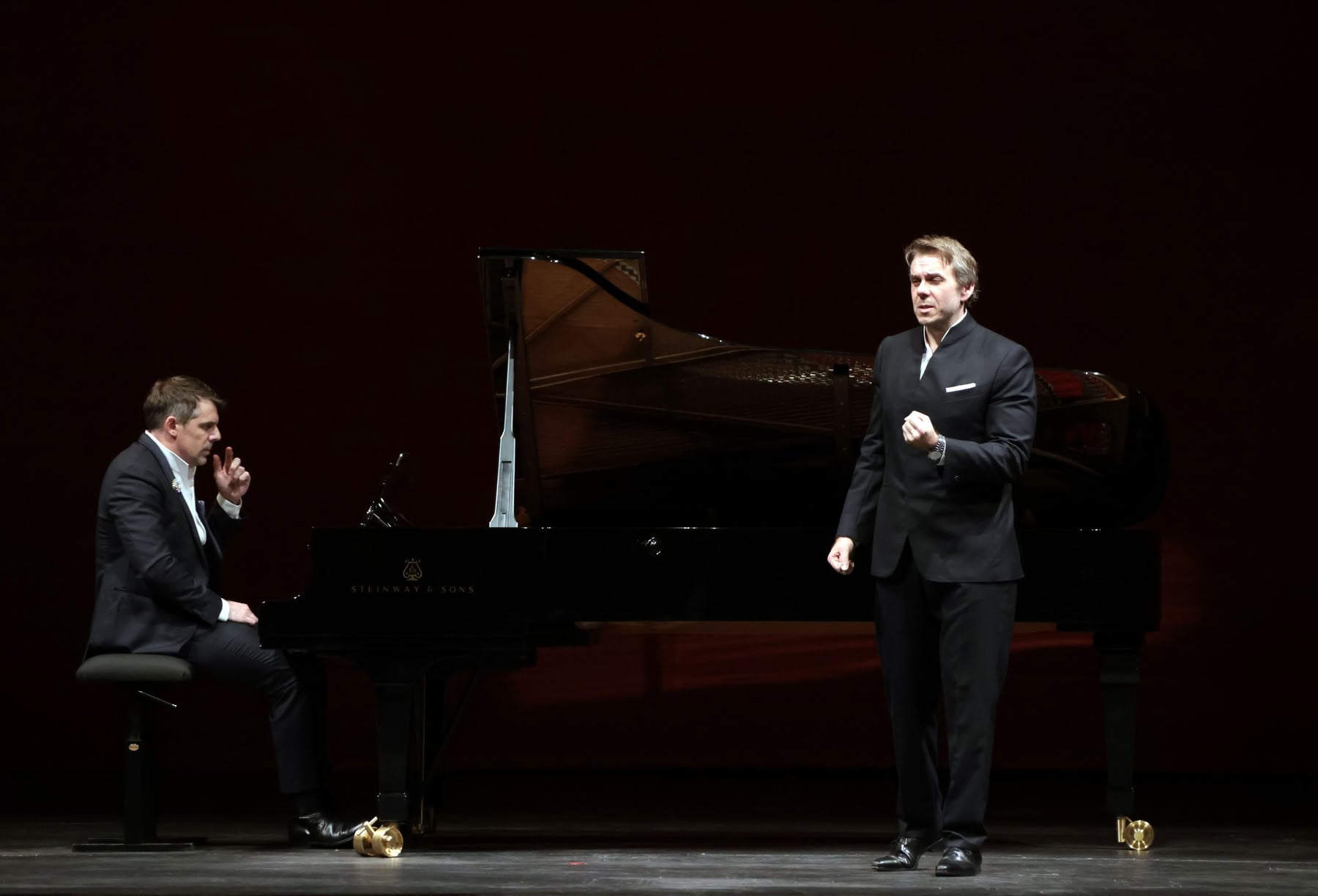
He began winningly with a selection of French song, opening with the wistful and reflective ‘L’absent’ by Charles Gounod, with its restrained, gently undulating piano accompaniment. It was as if Bernheim was handing over his visiting card. His control is exquisite, and his use of voix mixte – that blend of chest and head voice which French tenors have long prized – is beautiful and bewitching. The Gounod was all yearning legato, and Duparc’s ‘Chanson triste’ had an inward glow, but it was Hahn’s ‘L’heure exquise’ that cast the spell: the voice thinned to a thread on ‘C’est l’heure exquise’, yet it never lost its colour or line. All three songs feature the moon; the Gounod and the Duparc, both in E flat, share a similar rocking accompaniment, and it made for an intelligent grouping.
The night theme continued, if only in name, with four songs (‘Villanelle’, ‘Le Spectre de la rose’, ‘Sur les lagunes’ and ‘L’Île inconnue’) from Berlioz’s Les Nuits d’été (Summer Nights). The title was Berlioz’s own – one theory is that he imagined the songs as tales told on a summer night – while the poems are taken from Théophile Gautier’s La Comédie de la mort. The original 1841 version was for voice and piano, and that is how we heard the songs here, rather than in the more familiar 1856 orchestral version. He is at his finest in mezza voce where the poetry acquires a rare immediacy. Occasionally, however, a phrase was projected beyond the intimate frame of the song, a few climactic notes carrying more operatic weight than the music strictly required. The pianissimo ending of ‘Sur les lagunes’, with the most delicate legato, was unfortunately disturbed by enthusiastic applause from a tourist-heavy crowd, which clapped after every item on the programme.
The first half ended where it had begun, with Gounod: ‘Ah ! lève-toi, soleil !’ from Roméo et Juliette. Bernheim is at his best in music that rewards finesse rather than sheer volume, though his resplendent forte on ‘Parais !’, as Roméo pleads for the sun to appear and outshine the stars, made for an exciting close to the first half. Singing this idiomatic shows how completely at home he is in this repertoire – and raises a question: after his glorious Werther at La Scala in 2024, why was Bernheim not back for this autumn’s Faust, which closed on 8 November, and why is he absent from next year’s Les Pêcheurs de perles? His encore, ‘Je crois entendre encore’, from the latter seemed to say: ‘Look what you’re missing.
The second half opened with four songs by Strauss, three of them from Op. 27, his wedding present to his wife, the soprano Pauline de Ahna. The last, ‘Morgen!’, might have been written for Bernheim’s voice and temperament. Almost half of this four-minute gem belongs to the piano alone, and Pordoy held back the line with tiny rallentandos that filled every note with tenderness.
From this point on, including the encores, we were in opera territory – fitting for the setting.
Outside the theatre after the recital I heard two loggionisti – the passionate, knowledgeable and sometimes feared La Scala opera fans from the loggione, the top gallery – saying that his voice wasn’t ‘Italianate’ or ‘sensual’ enough for Italian opera. Certainly, there are warmer voices, but this sort of comment serves only to homogenise singers instead of celebrating their differences. One can enjoy both Maria Callas and Lily Pons singing ‘Una voce poco fa’.
He brought the same meticulous sculpting of phrases from the songs to the arias: from Verdi’s Macbeth (‘O figli, o figli miei!… Ah, la paterna mano’), Donizetti’s L’elisir d’amore (‘Una furtiva lagrima’) and Puccini’s Tosca (‘E lucevan le stelle’). He offered three portraits of longing and loss: Macduff mourning his murdered children, Nemorino discovering hope in a single tear, and Cavaradossi recalling vanished happiness on the eve of death. He used a broad palette of colours and shading that held the attention, whereas some tenors plough through these arias with all the subtlety of karaoke.
His encores brought him back to his home turf, including one of the most difficult tenor arias, ‘Je crois entendre encore’ from Bizet’s Les Pêcheurs de perles. This tightrope of an aria, especially with only a piano, lays bare a singer’s technique, but Bernheim spun his ethereal pianissimo high notes with deceptive ease and complete mastery of the seamless floating phrases. A masterclass.
‘Pourquoi me réveiller’ from Massenet’s Werther rounded off an evening characterised by nuance and elegance, and it was sung with the same attention to the shape and meaning of every phrase that had marked the Gounod at the start. Bernheim’s gifts are not of the showy kind – there was no grandstanding here, just a craftsman at the height of his powers. The audience cheered him to the rafters. This final encore was also a reminder of the role in which he triumphed on this stage two years ago. Werther asks why the spring breeze should wake him; La Scala’s management might ask itself why it has let this tenor slip away. On this evidence, bringing him back should be a priority.