Review: Goecke / Robbins / Bausch in Rome – Rebecca Bianchi leads a ferocious Rite of Spring
From Robbins’s clinical dance studio to the peat-strewn stage of Bausch’s Rite of Spring, Marta Mele finds Rome Opera Ballet dancing with wholehearted, almost sacred commitment.
| Title | Goecke / Robbins / Bausch |
| Company | Rome Opera Ballet |
| Venue | Teatro dell’Opera di Roma |
| Date | 8 November 2026 |
| Reviewer | Marta Mele |
At the Teatro dell’Opera di Roma, we have grown accustomed to attending full-length productions of the great works of the classical repertoire, alongside triple bills exploring the wide range of choreographic styles developed by contemporary artists. Less frequently, however, do we turn our attention to the historical roots of this theatrical format, which can be traced back to the far-reaching phenomenon that was Sergei Diaghilev‘s Ballets Russes, a company whose influence paved the way for countless later developments, and which visited Rome no fewer than four times between the 1910s and 1920s.
It is precisely this legacy that informs the company’s new triple bill, whose title brings together three key figures of twentieth-century and contemporary choreography: Jerome Robbins, for many years Associate Artistic Director of New York City Ballet; Pina Bausch, founder of the Tanztheater Wuppertal; and Marco Goecke, one of today’s leading choreographers and currently Artistic Director and Resident Choreographer of Ballett Basel.
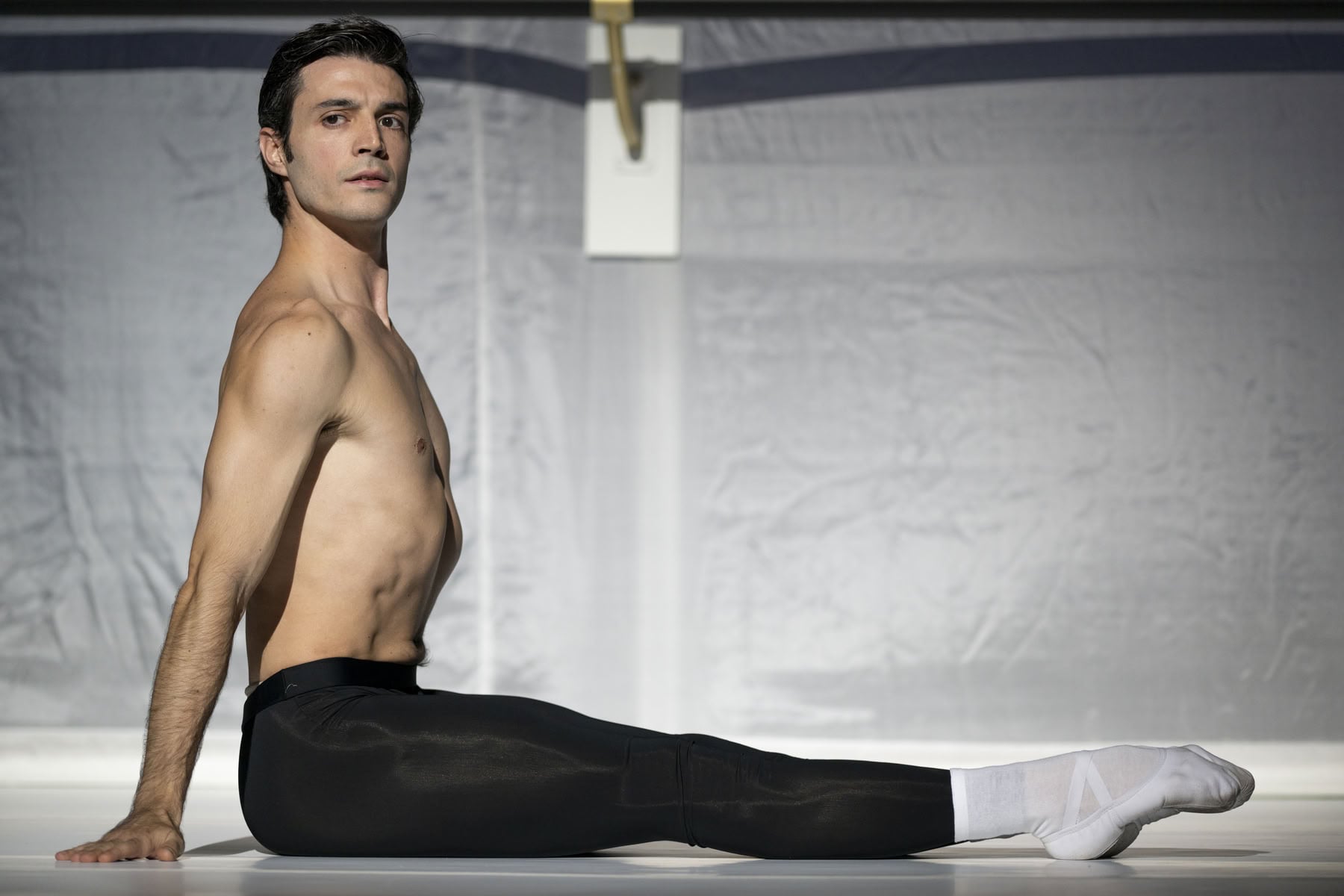
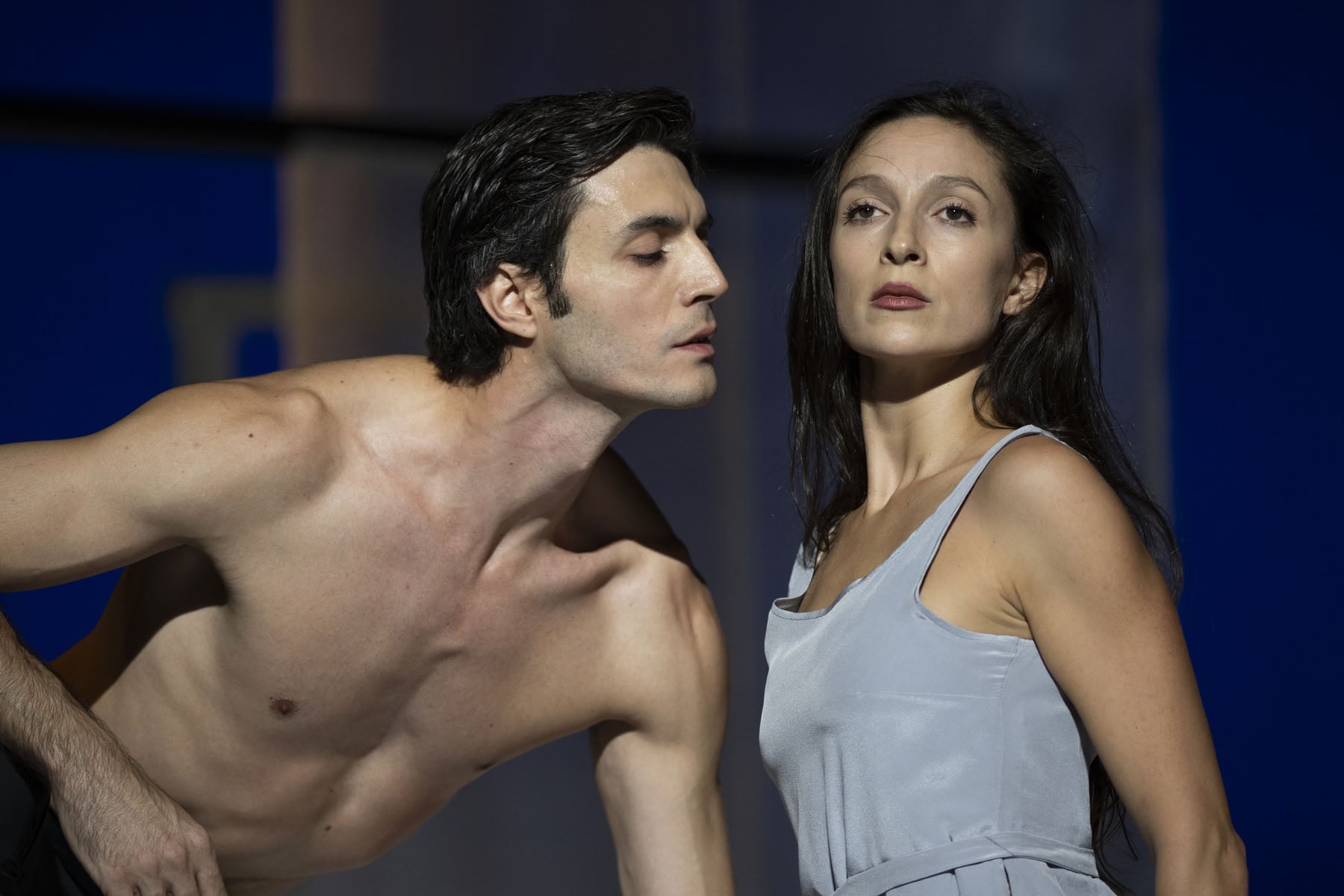
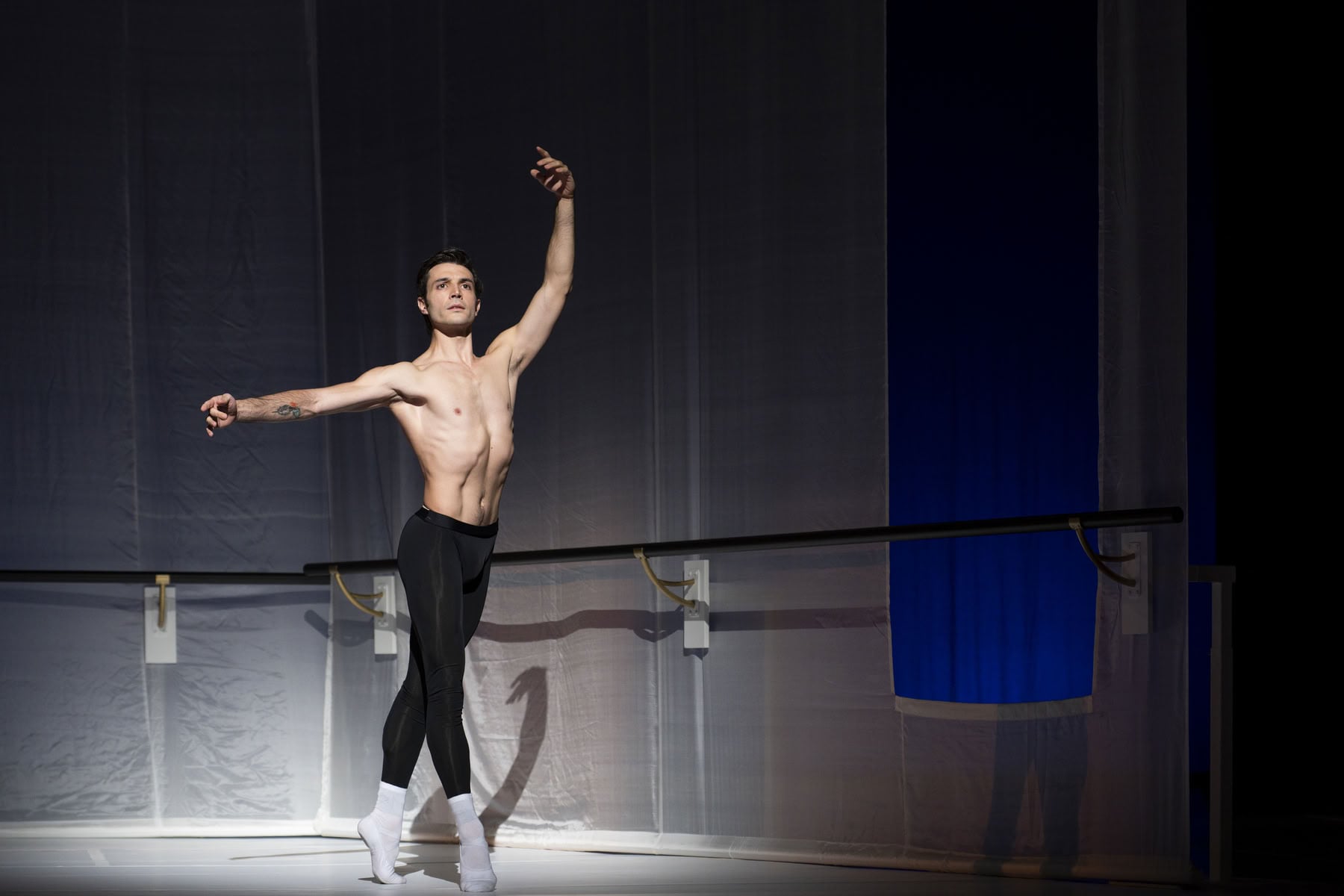
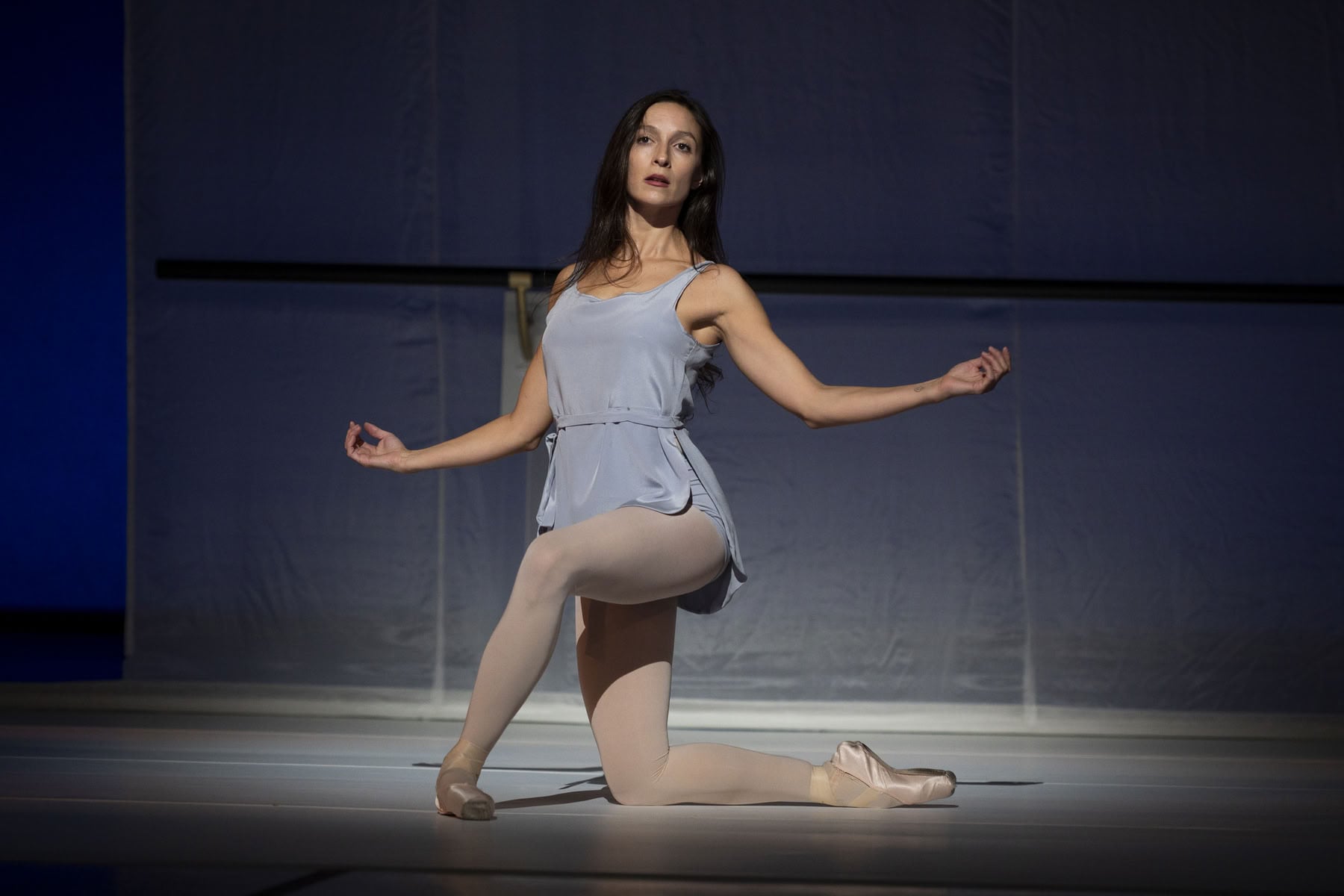
The triple bill opens with Afternoon of a Faun, the first choreographic work by the visionary Vaslav Nijinsky, which wove Debussy’s sensuous score together with the Symbolist imagery of Mallarmé. In Jerome Robbins’s reinterpretation, the mythological landscape disappears, giving way to a dance studio with white walls. This clinical space is inhabited by the Apollonian physique of a male dancer, narcissistically exploring the sensations of his own body and his reflected image in the mirror. There are no grand gestures: a développé performed lying on his back, a flexed foot, an extension of the torso, followed by a brief sequence of movement across the centre of the stage, punctuated by measured balances. It is a kind of paring down, as though Robbins had deliberately chosen to restrain the expressive potential of a performer of Giacomo Castellana’s calibre, who eventually withdraws to the edge of the stage, lost in his own thoughts.
The female figure, danced by Elena Bidini, likewise initially resists any overt display of seduction, although her flowing black hair responds to the slightest shifts of weight. It is a sharp glance that sets the game in motion, eventually finding expression in languid lifts and moments of surrender in her partner’s arms. And yet, while their eyes repeatedly return to the fourth wall – the imaginary mirror between them and the audience –, a tentative kiss ultimately seals the connection between the two dancers. Of Nijinsky’s original inspiration, little more than a faint echo remains
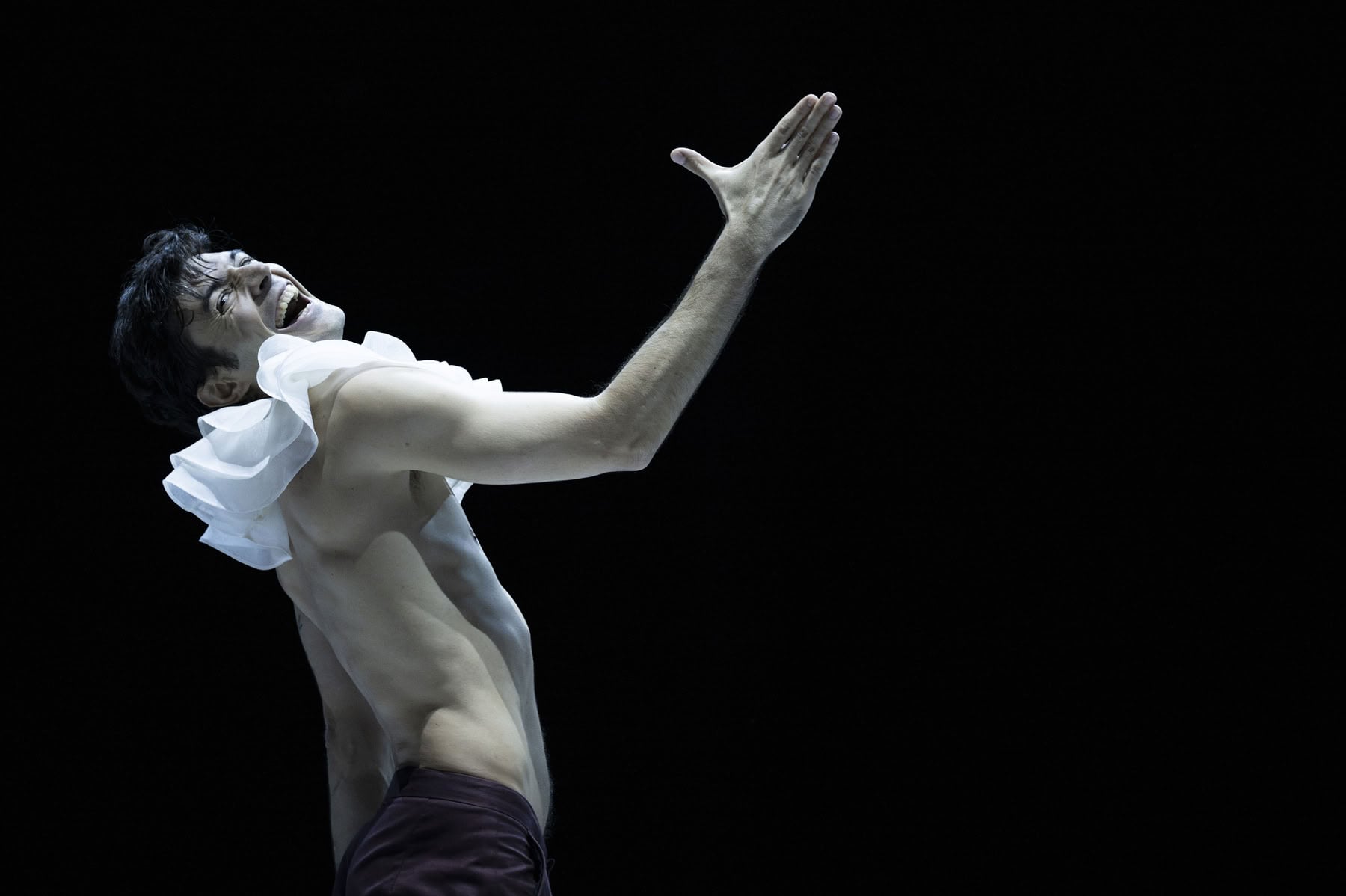
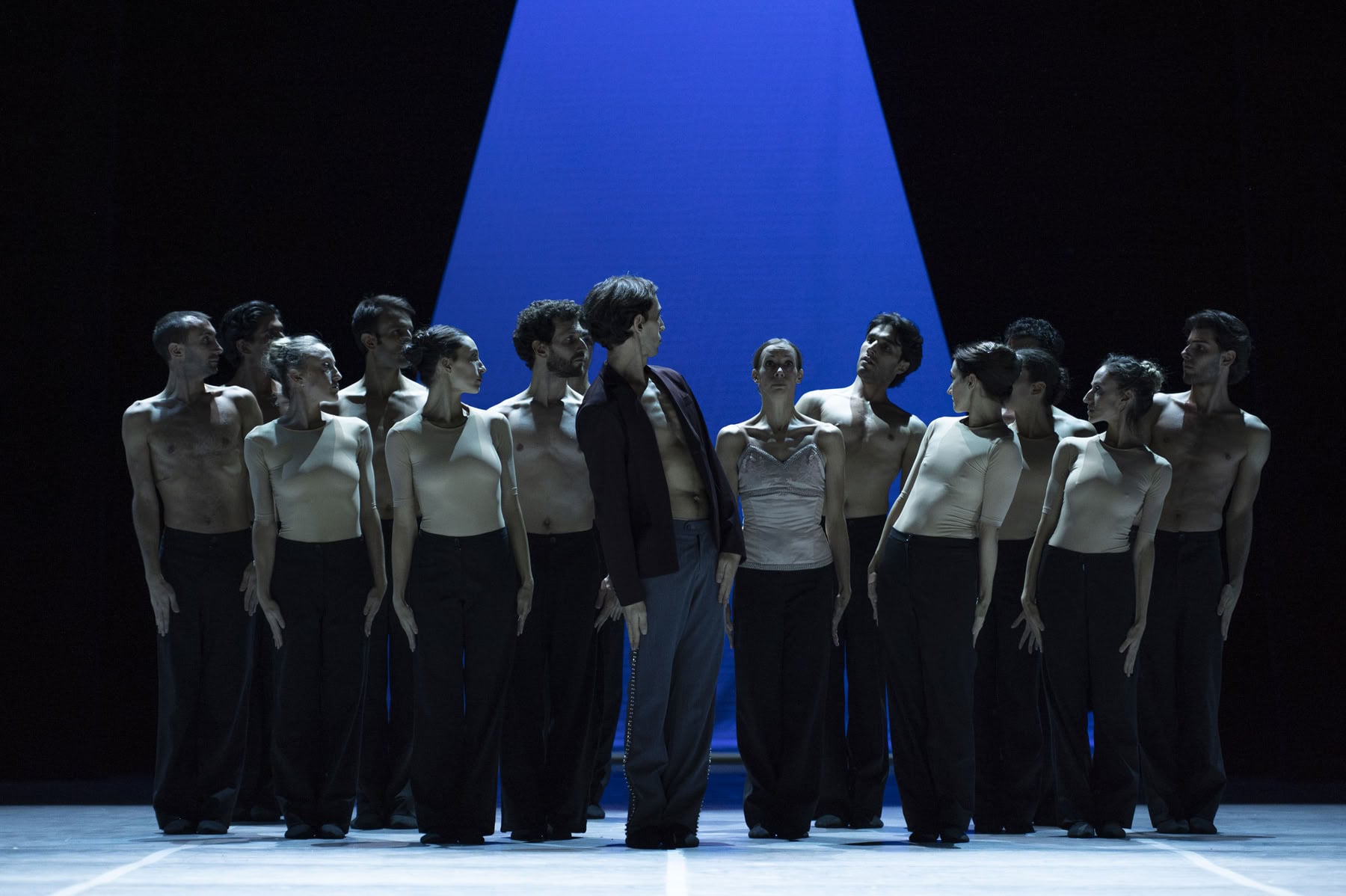
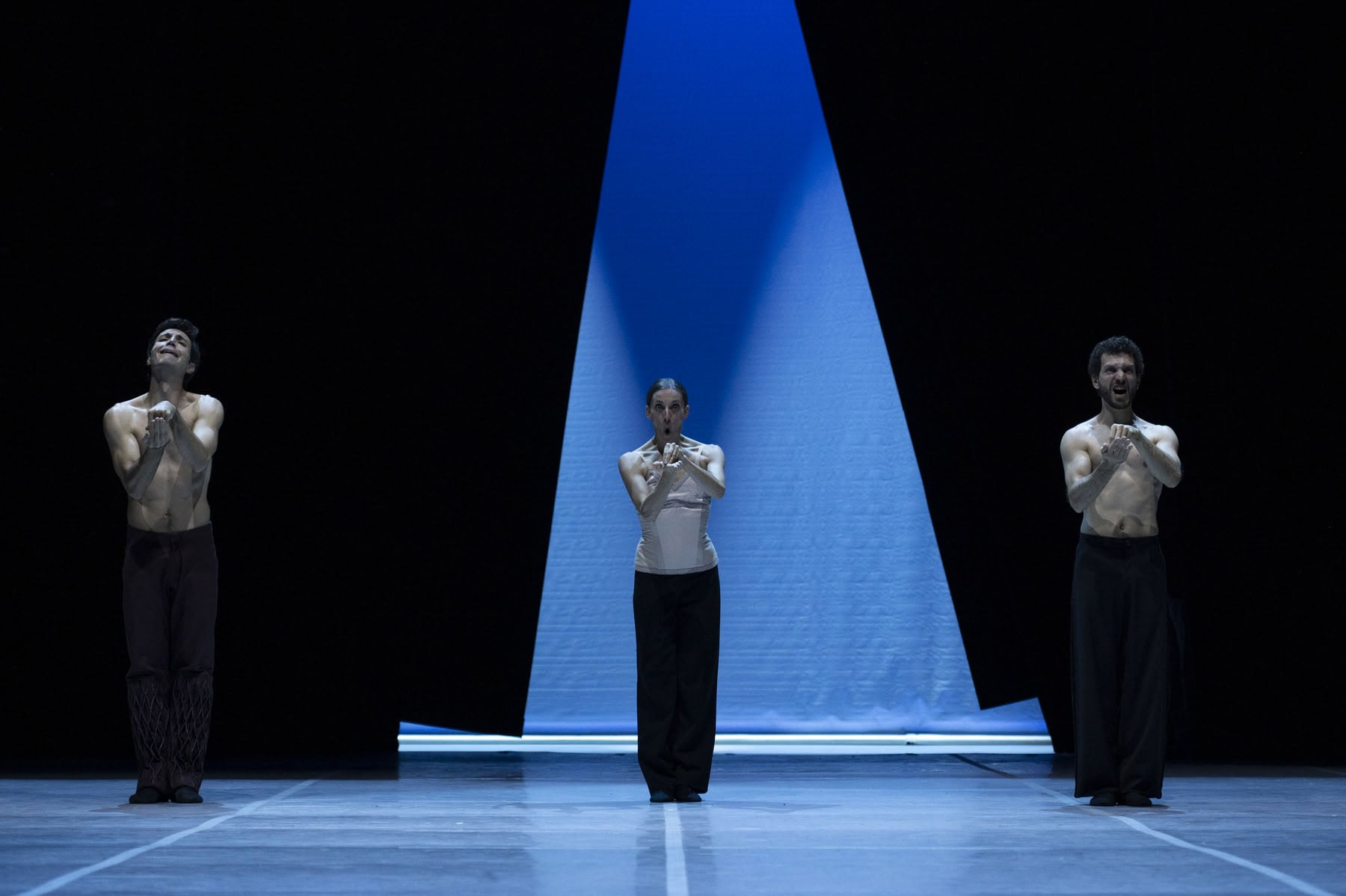
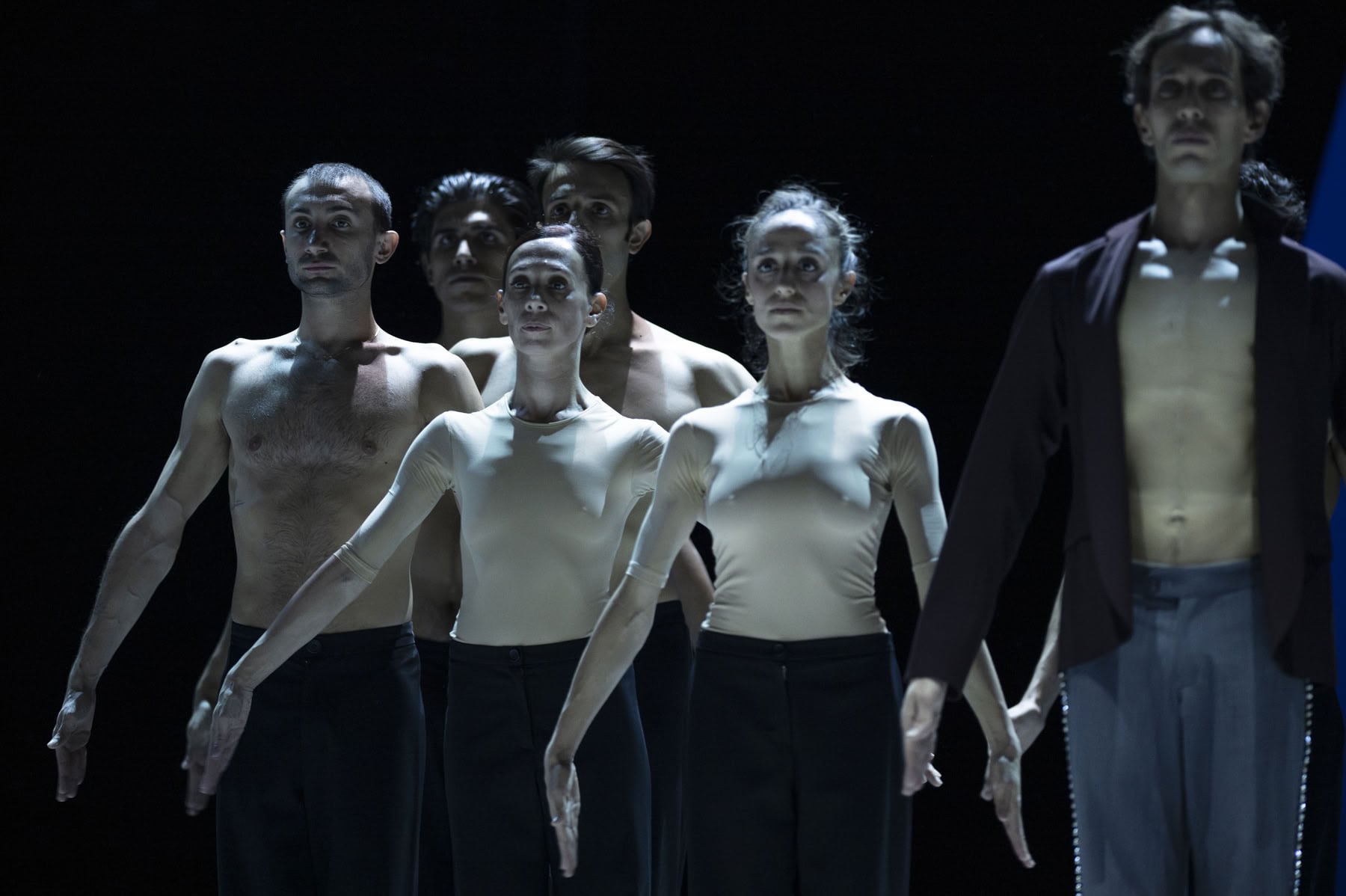
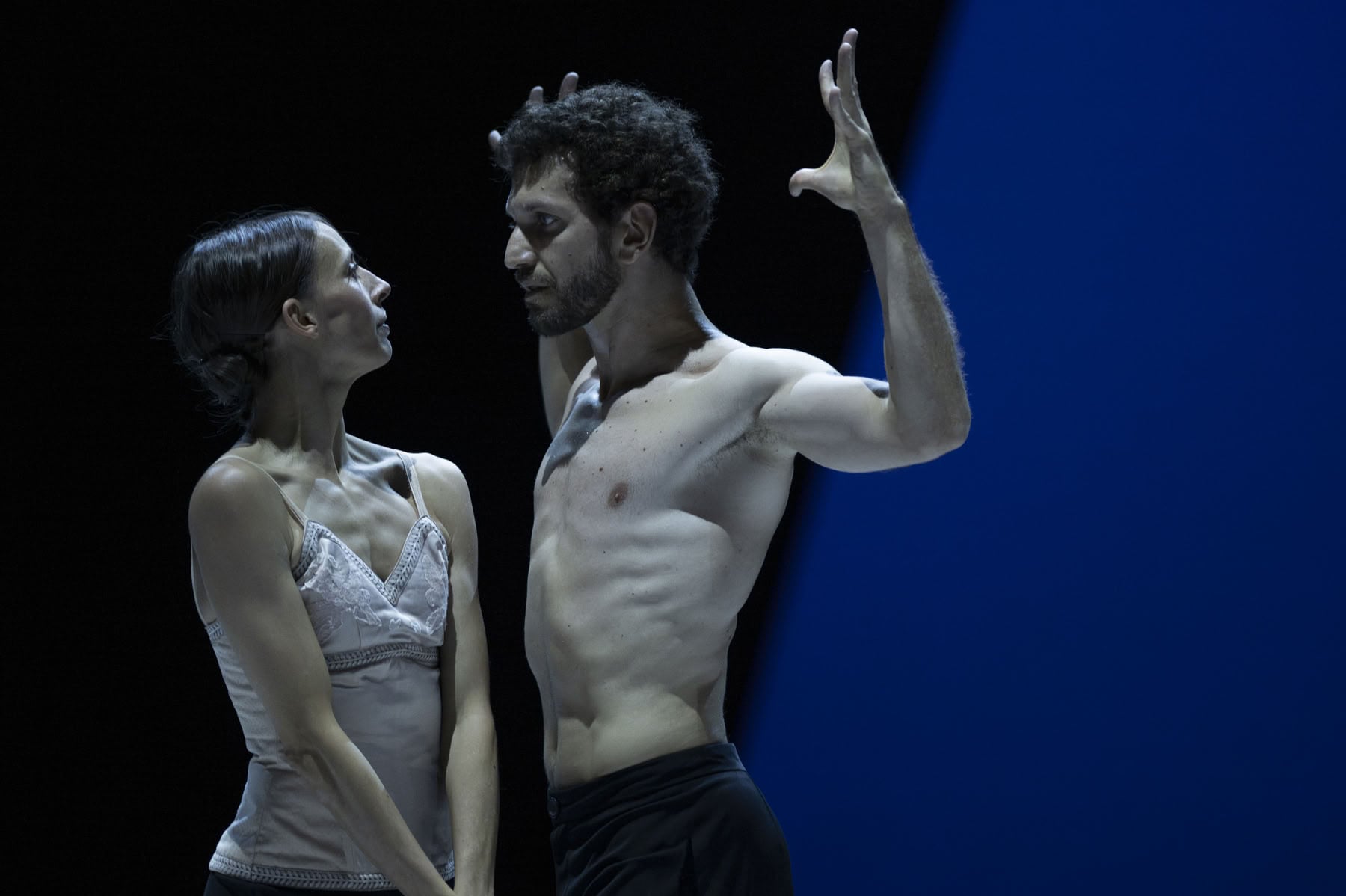
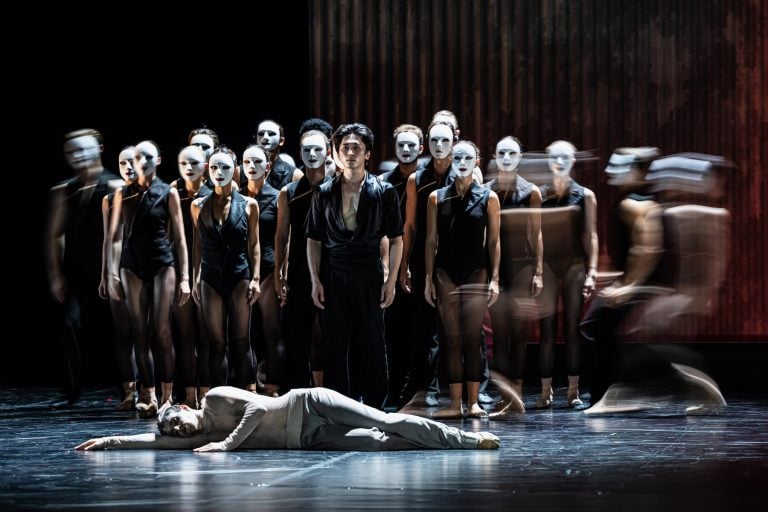
The second work proves even more abstract. Goecke erases the flamboyant colours of the Russian fair imagined by Alexandre Benois for Petrushka, plunging the stage into absolute darkness, while also dissolving the distinctive traits of the four characters in Michel Fokine‘s original choreography. In their place, a highly stylised gestural universe takes shape, defined by angular, sharp movements that are at times nervous and darting, at others fluttering, punctuated by obsessive repetitions and caricature-like gestures of mockery. The figures thus seem to lose every remaining trace of narrative identity, becoming grotesque corporeal presences. What ultimately asserts itself is Stravinsky’s score, whose extraordinary rhythmic and timbral richness the choreography brings into sharper relief.
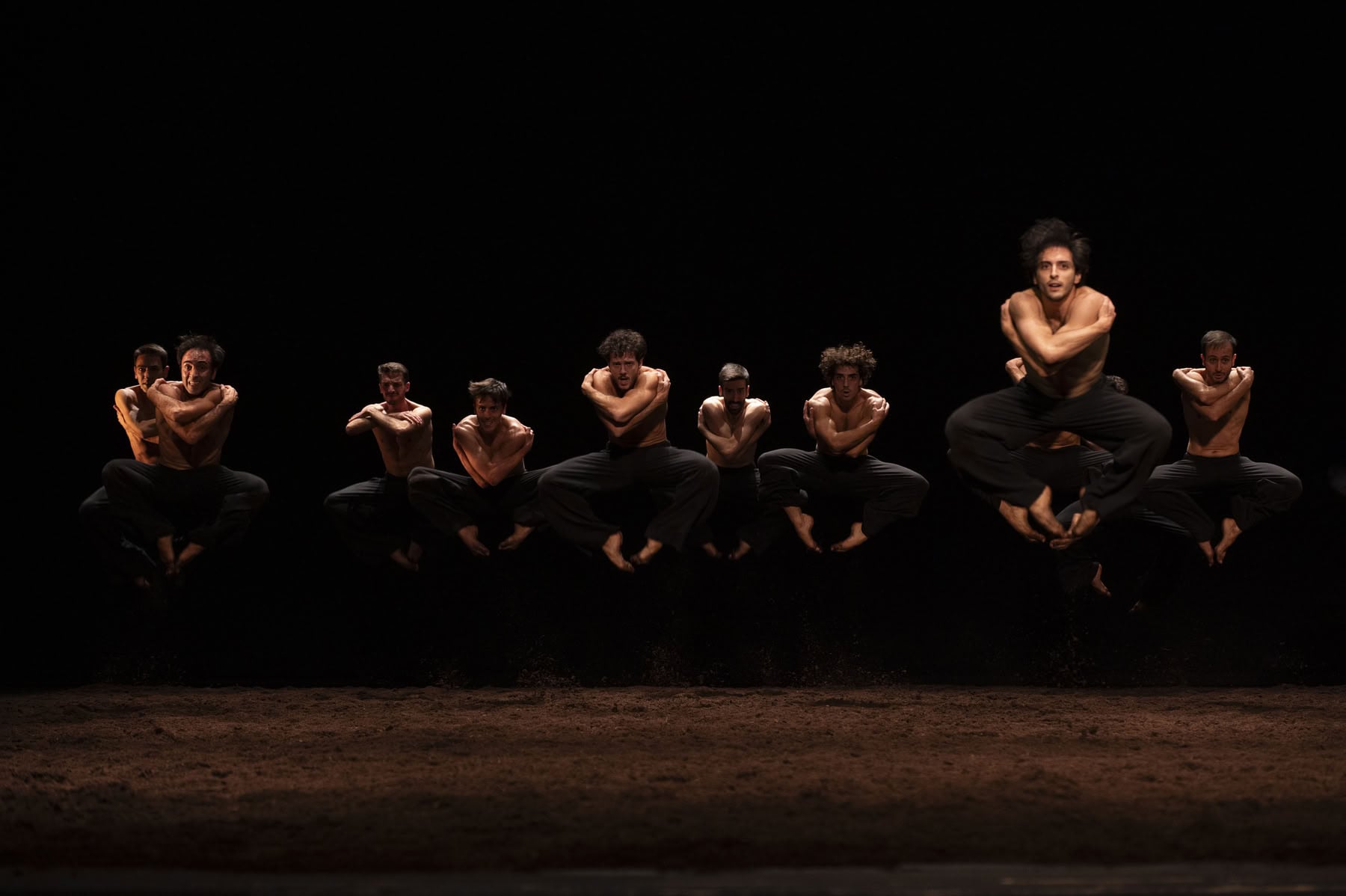
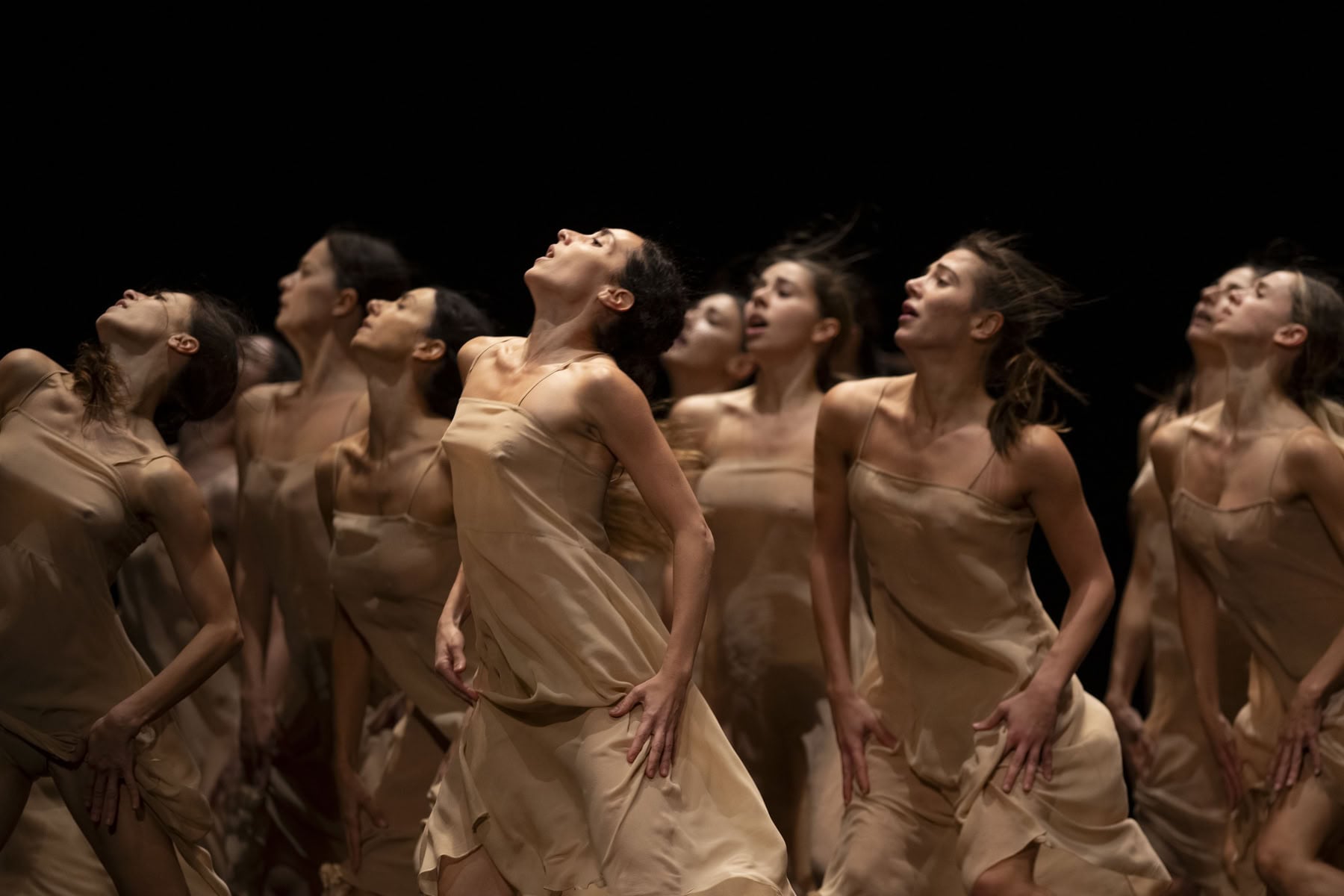
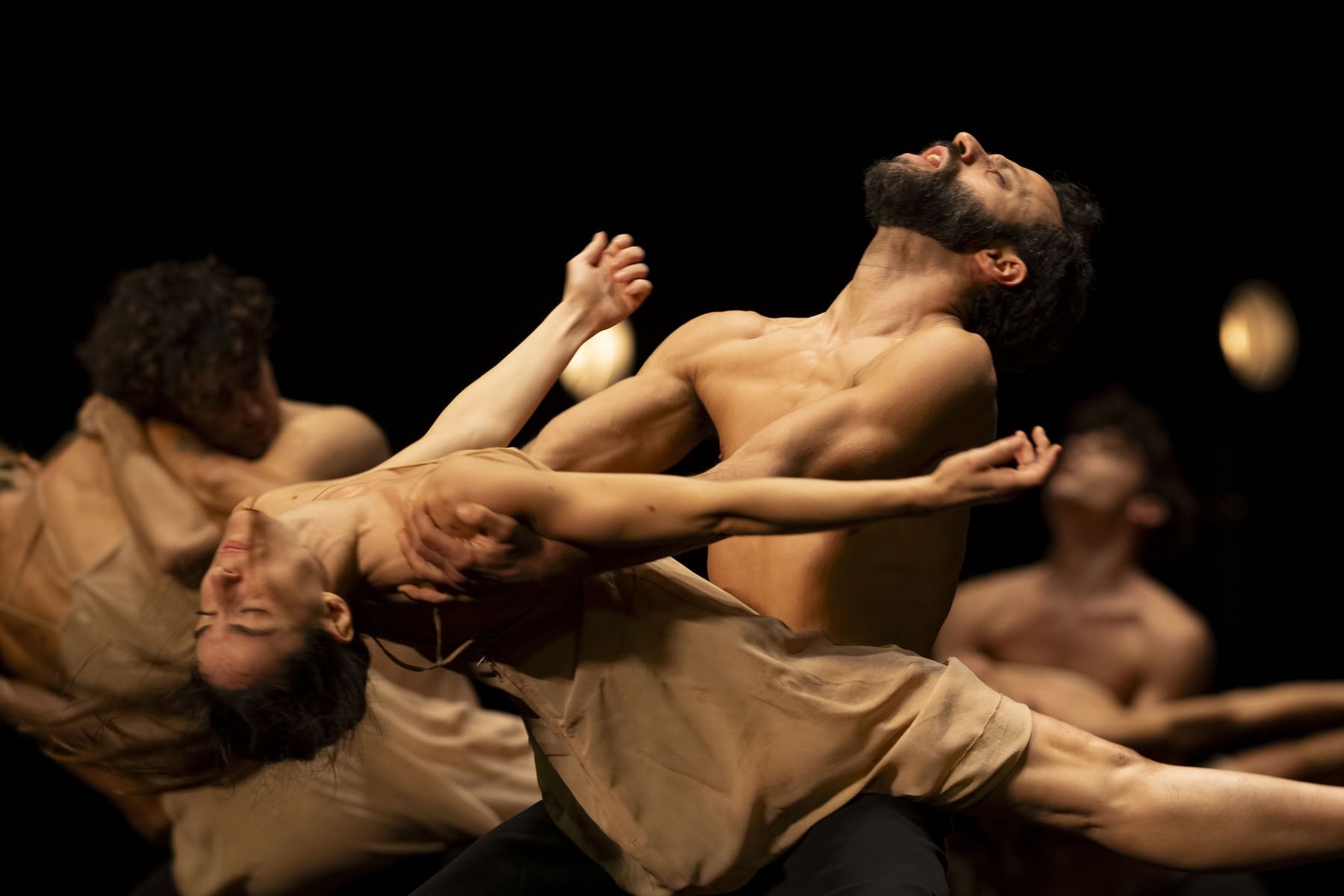
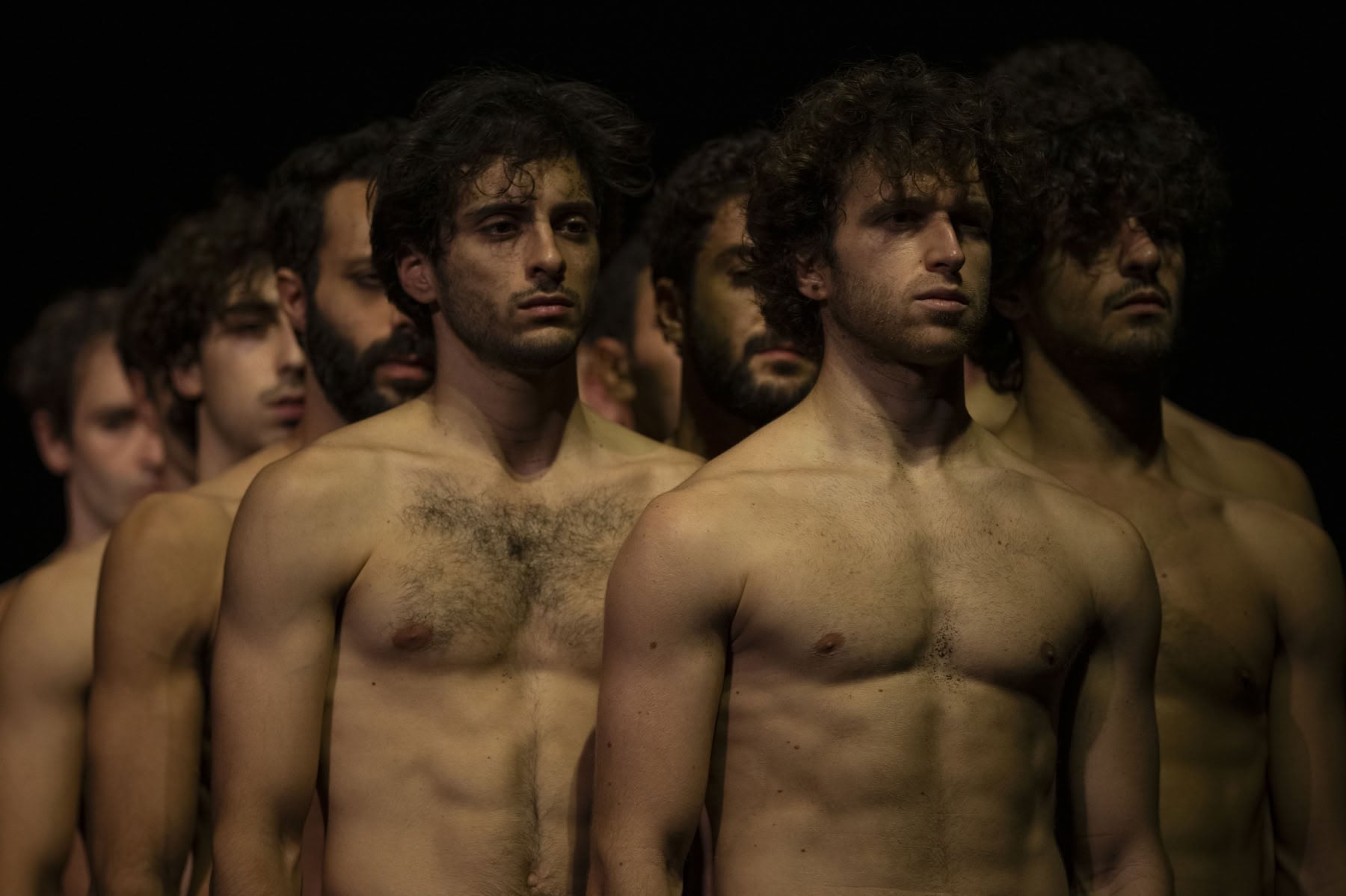
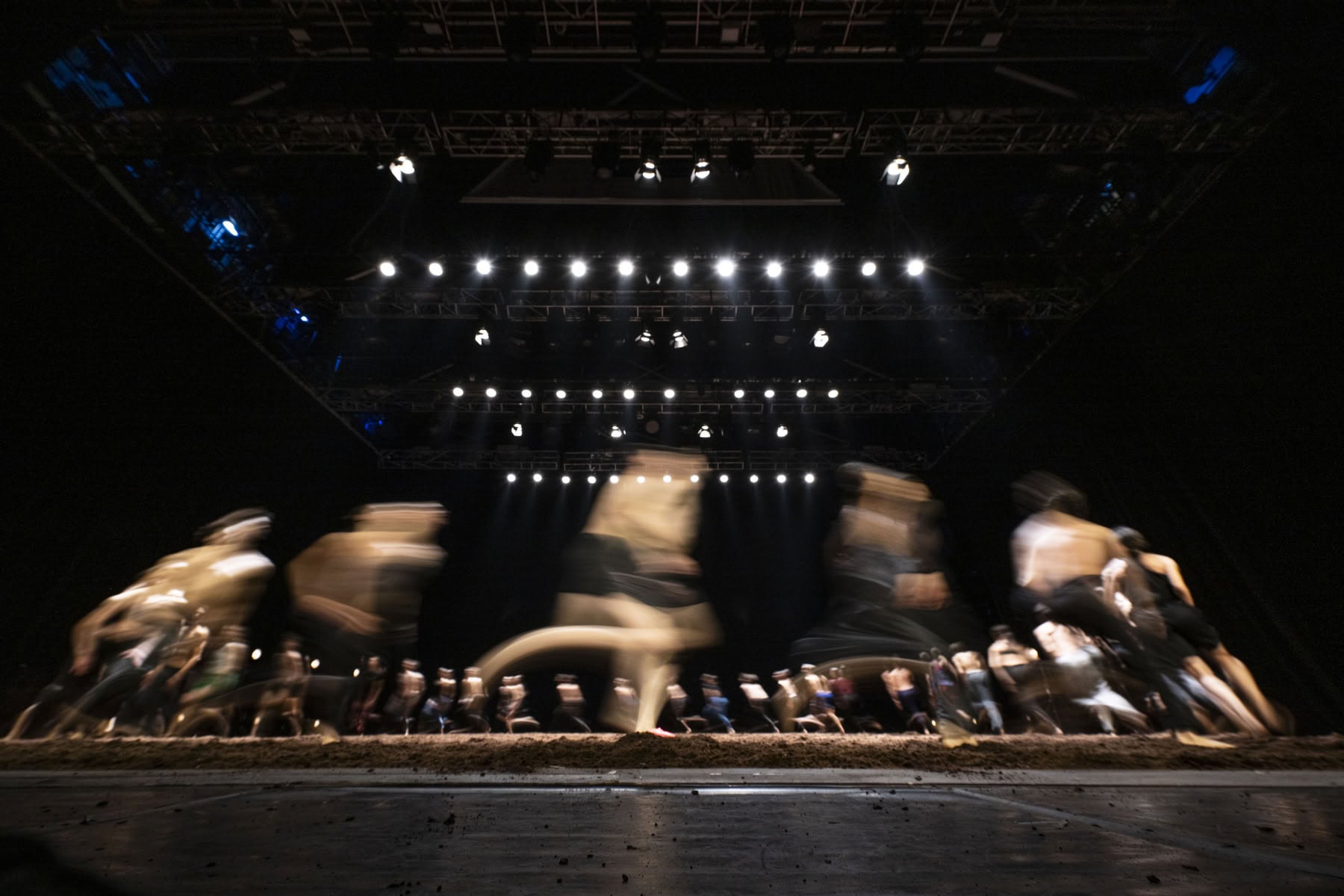
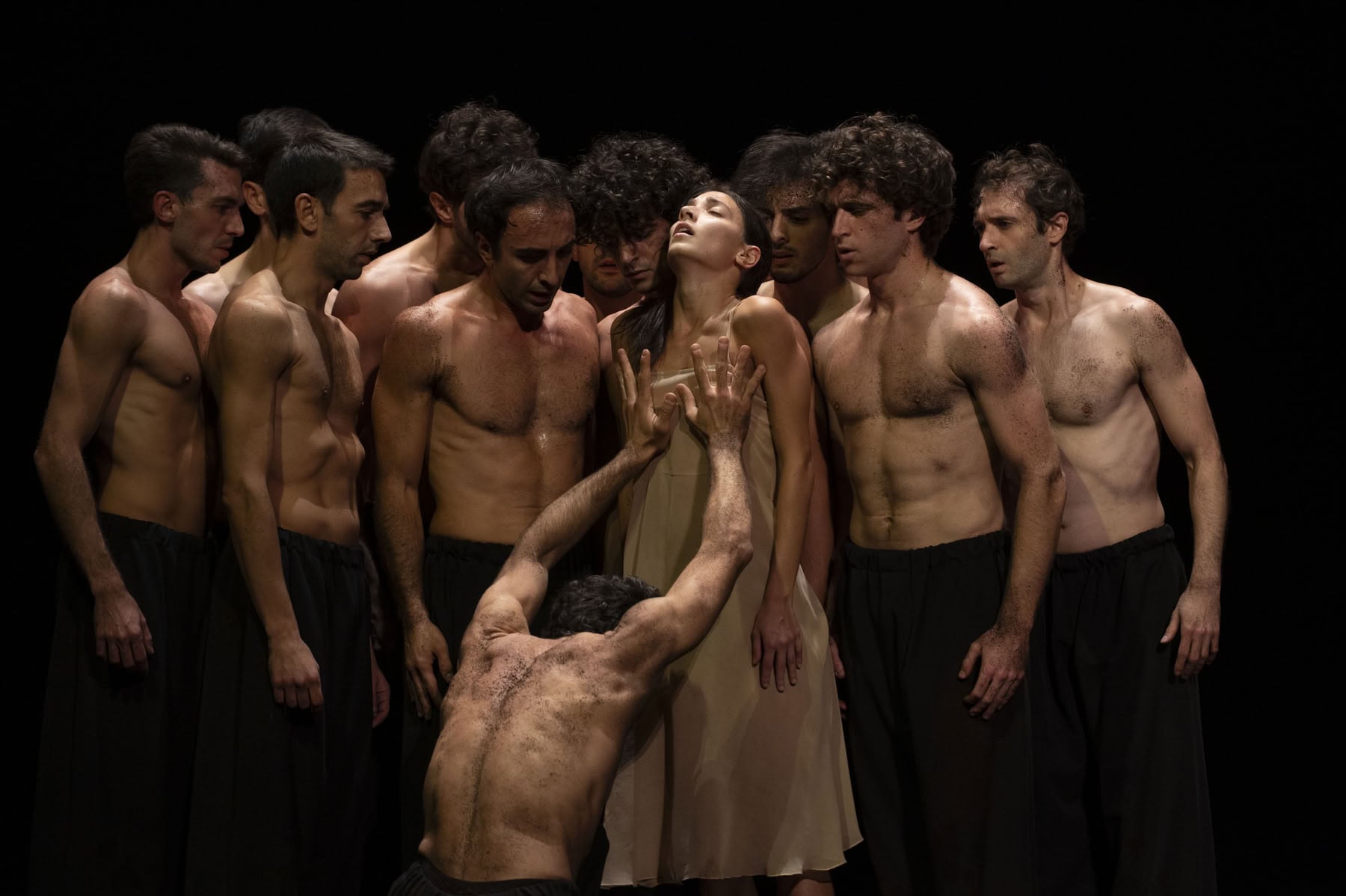
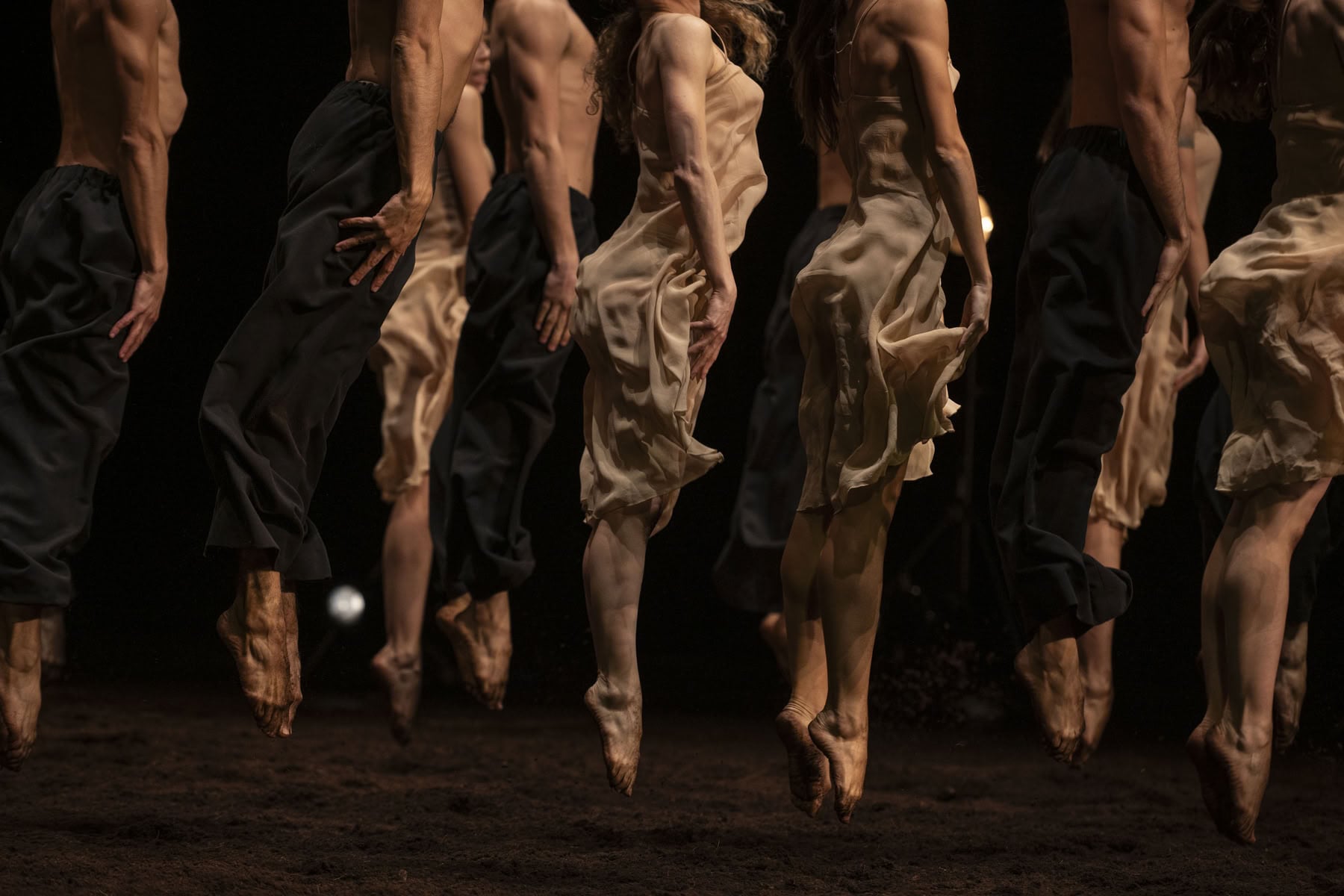
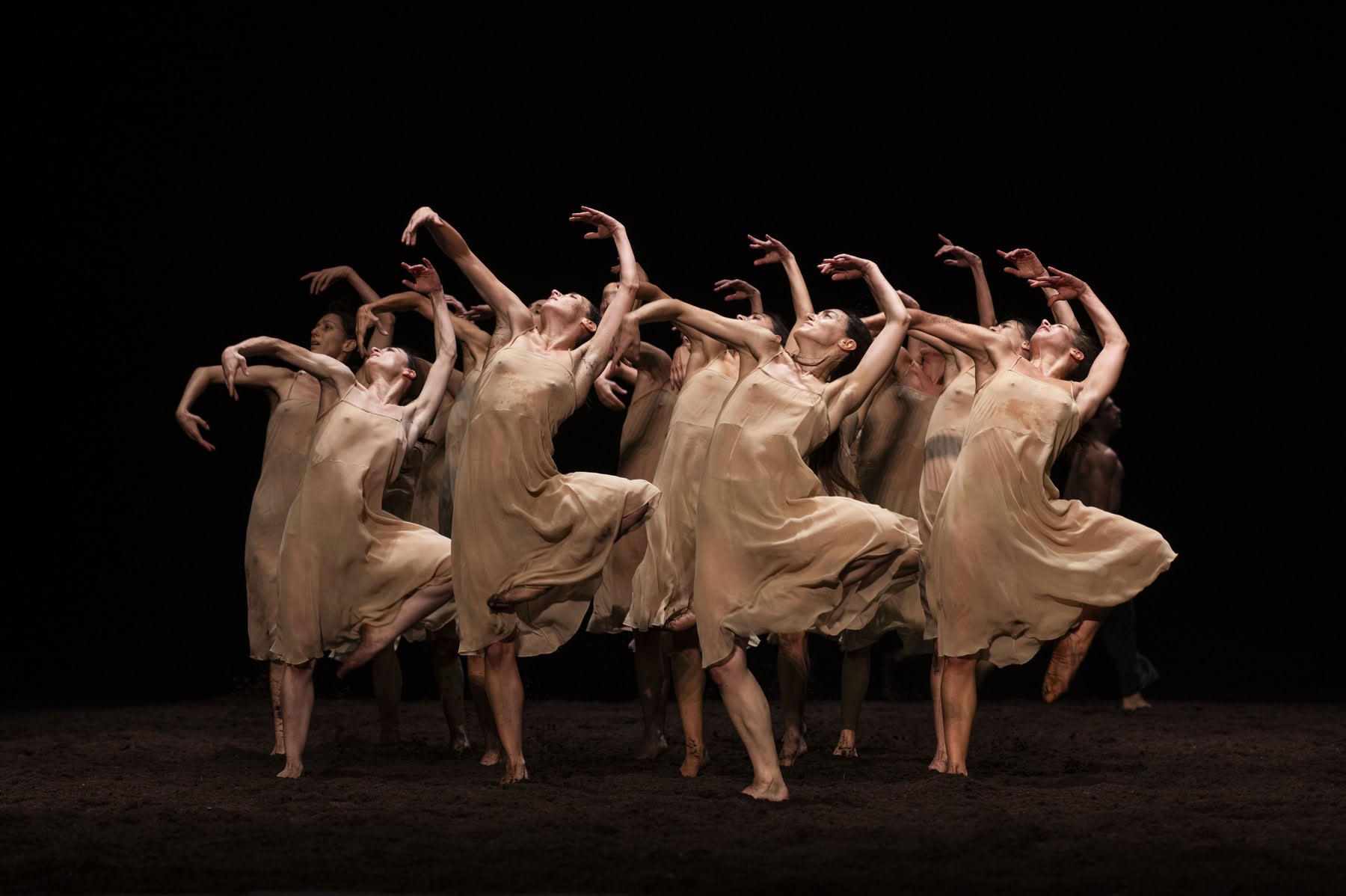
The scene change, during which peat is spread across the black floor with the curtain up, turns into a performance in its own right. Then comes the evening’s climax: The Rite of Spring in Pina Bausch‘s powerful version. Nijinsky had broken down the classical vocabulary to match Stravinsky’s dissonances; in Bausch’s hands, the pagan ritual erupts with all its theatrical violence.
The piece opens with a woman lying on the earth, on top of a red dress. Then come the shafts of light slicing through the darkness and catching the women as they run across the stage, the women gradually drawing together, the entrance of the men, and the intertwining of the two groups. The tension mounts. The impending sacrifice becomes palpable, as does the desperate attempt to escape an already predetermined fate, until the irrevocable choice is made, marked by the red dress.
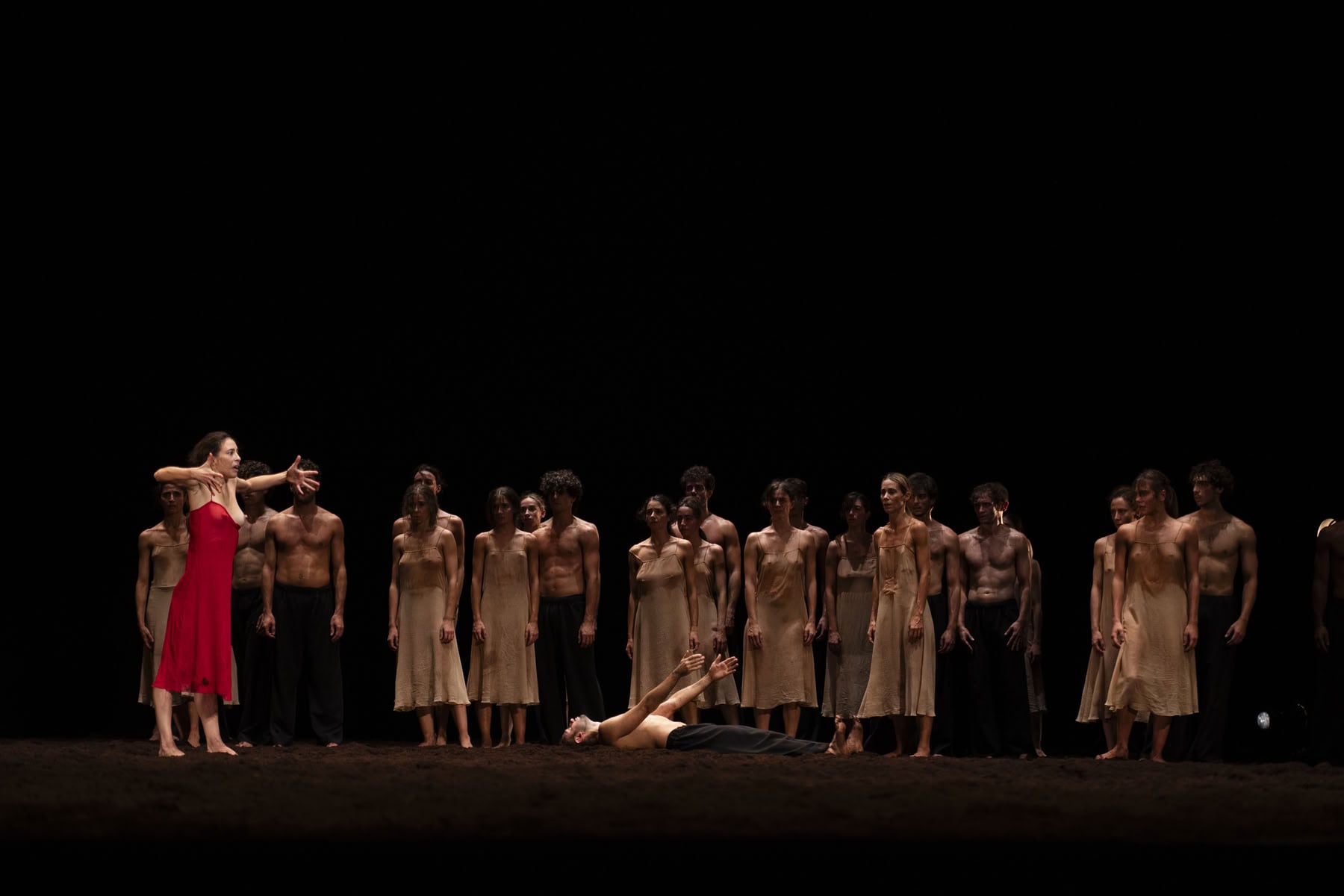
A man waits on the ground, his arms raised. The Chosen One has now been surrendered to her destiny. And so her final dance begins: an exhausting trial that carries her to the very limits of her strength, ending in collapse.
The dancers of Rome Opera Ballet, drenched in earth and sweat, give themselves over to the performance without reservation, summoning every ounce of energy to convey the sheer brutality of this score. Rebecca Bianchi, in particular, is an extraordinarily compelling Chosen One: a true sacrificial victim who dances with terror in her eyes until her final breath, locked in a desperate struggle against death. In films of the Wuppertal company, the work’s power seems to come above all from the stark simplicity of the movement; here, the wholehearted commitment of the Rome dancers gives the choreography a dimension of profound sacredness, an authentic collective fervour that finds expression in humility and devotion towards a masterpiece. And it shows.