Review: BalletBoyz’s 25th anniversary show, Still Pointless – lacking evolution

Lily Hyde sees BalleyBoyz’s ‘Still Pointless’ programme, admiring the company’s ten accomplished dancers, but finds some works… pointless?
| Title | Still Pointless |
| Company | BalletBoyz |
| Venue | Sadler’s Wells, London |
| Date | 12 May 2026 |
| Reviewer | Lily Hyde |
The evolution of ballet has always been fast-paced. Consider that just twenty-three years separate the premieres of The Sleeping Beauty and The Rite of Spring, ballet in the twentieth and twenty-first centuries seems to have maintained this pace, but whether its evolutions last is the sticking point.
Michael Nunn and William Trevitt are no strangers to classical ballet. They met at the Royal Ballet School before joining The Royal Ballet, where they became First Soloist and Principal, respectively. The pair left the company in 2001 to form BalletBoyz. Now celebrating its twenty-fifth anniversary, Still Pointless presents a programme of nine pieces they have performed over the past quarter century. Unfortunately, as much as the company – now a ten-strong group of all-male-presenting dancers – has developed and grown, the dances they presented, sometimes turgid and vacuous, lacked any indication of evolution.
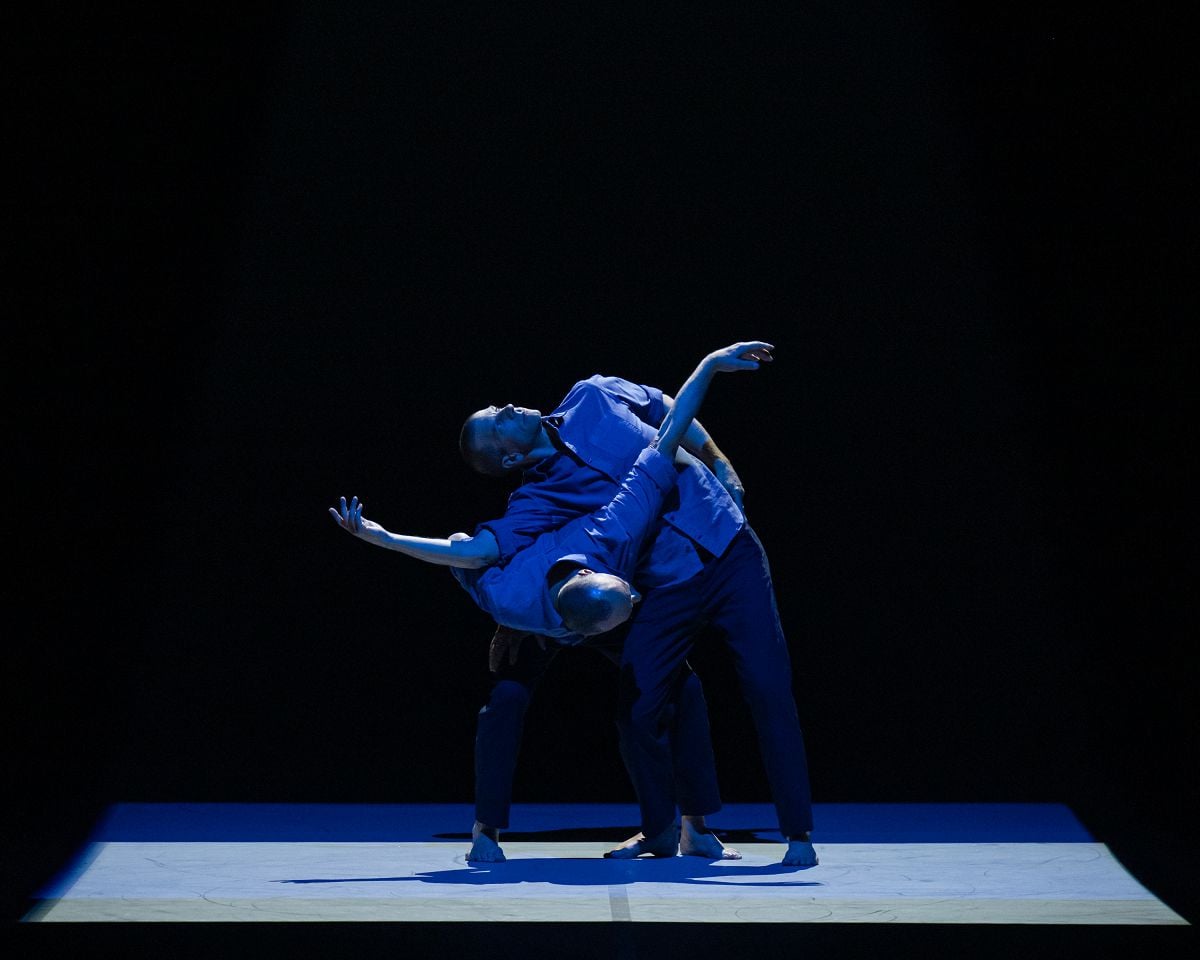
Two versions of Nunn and Trevitt opened the show. Firstly, themselves from twenty-five years ago on a screen, filming each other as they prepared for their first show, Pointless, and rehearsing Russell Maliphant‘s Critical Mass in a frigid church hall. The screen then lifted to reveal the Nunn and Trevitt of today performing an extract from Critical Mass, and, as exhilarating as it was to see them reprise their roles and bring impressive energy and synchrony, Maliphant’s piece felt incredibly dated. With its thrumming bass and unfortunate styling of a dress shirt and baggy chinos, it feels less Sadler’s Wells than it does a club in Slough in 1998. This, however, wouldn’t be as much of an issue if the company were then able to demonstrate the progression in the dances they performed.
Motor Cortex, a new piece by company dancer Seirian Griffiths, was brutish and primal, but offered little in the way of dynamic movement. Xie Xin’s Ripple did succeed in this, and the billowing costumes enhanced the light, almost weightless movements of the dancers. Russell Maliphant’s Fallen allowed the company to showcase its incredible dexterity, and the moment when the dancers seemed to multiply was genuinely breathtaking. However, these pieces offered little in the way of tonal variety and somewhat merged together.

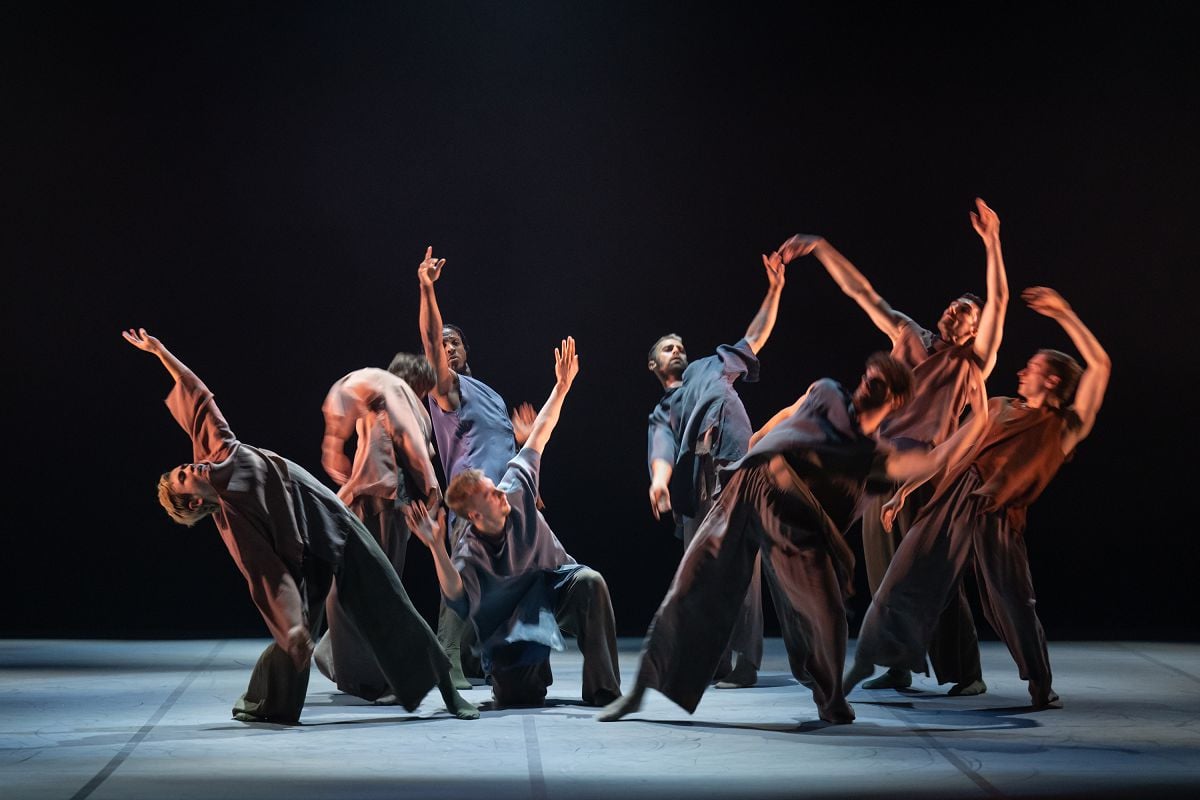
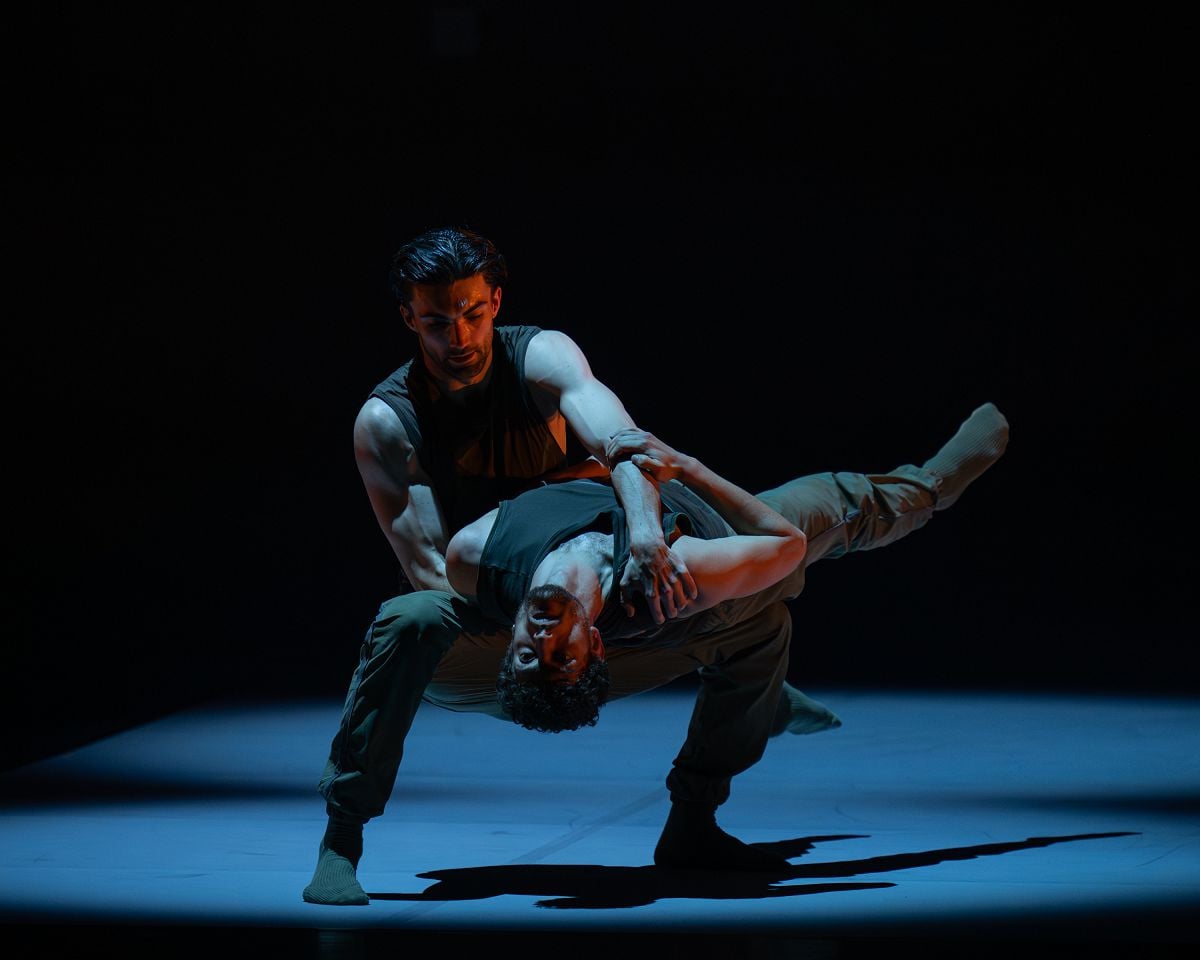
It didn’t help that they followed a broadly similar structure, beginning with a soloist, who is joined by another dancer for a brief pas de deux, and then joined by the rest of the company. If there is a meaning that unites these pieces, it is most likely a meditation on masculinity and isolation. Though whoops and cheers filled the auditorium, the lack of variation made for incredibly heavy watching.
Such heaviness seems to contradict the insouciant image that BalletBoyz (a name that Nunn and Trevitt state in the programme that they hate) strives to achieve. Perhaps it would feel less evident if they didn’t achieve this on some level with the interspersing films and narration that separate the pieces. On camera, Nunn, Trevitt and their collaborators are warm and personable, and the glimpses into their world are both fascinating and intimate.
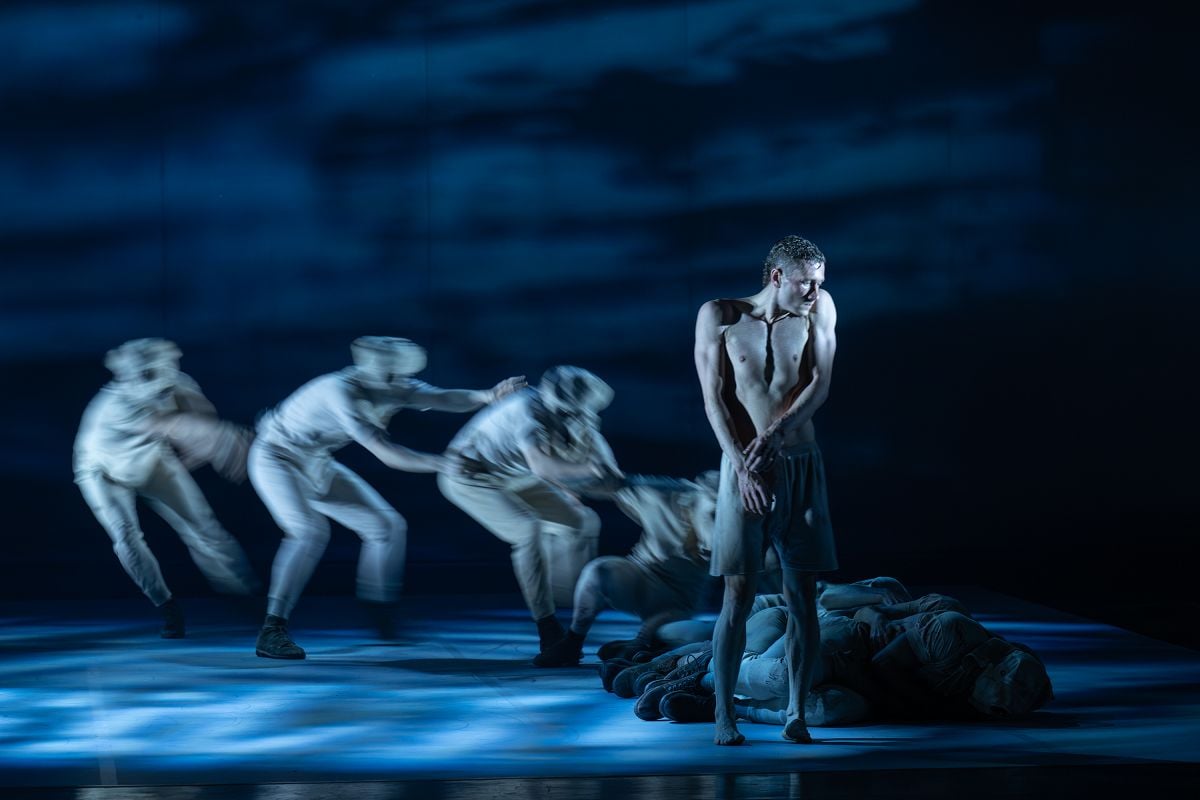
For the Act One finale, Nunn and Trevitt threatened to make the show more interesting by showing clips of their filmed performance of Young Men by Iván Pérez, muddy and immersive, but the curtain was then lifted to show an excerpt of Young Men, which, when staged, revealed itself to be another too-long piece that followed the exact structure of the three pieces that preceded it.
According to Pérez, the piece is about the indiscriminate brutality of war, so when the curtain lowered, and Kylie Minogue suddenly blasted through the auditorium, it felt utterly out of place. If Trevitt and Nunn were aiming for an irreverent palette cleanser, they had done little in Act One to earn it.
The second act offered much more variety, enhancing the technical aplomb of the company. Liam Scarlett‘s Serpent magnificently filled the stage with just ten dancers. Athletic and precise, every moment of Max Richter’s eerie score was used to great effect, as the company danced with an animalistic synchronicity, whose darkness was only hinted at.
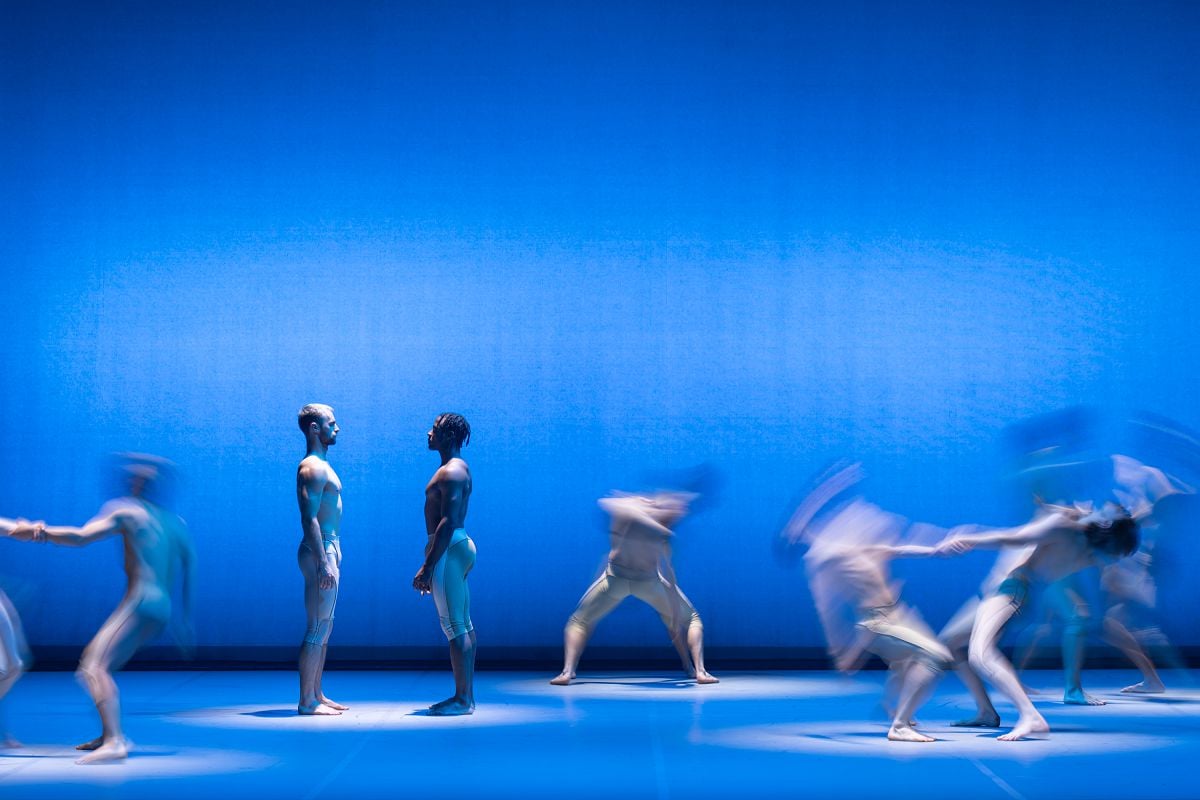

Maxine Doyle’s Bradley 4:18 felt like a manic ode to Jerome Robbins, and Christopher Wheeldon‘s Us was fluid and lovely. Featuring Paris Fitzpatrick and Dylan Jones, whose chests collapsed against each other, their touch electric, it was a gentle reprieve from some of the more aggressive pieces.
Javier de Frutos’s Fiction, which explores his fictional death before the premiere of his new work, seemed like an odd choice to close the show. Set around, and featuring to great effect, a ballet barre, the company’s movements progress from the confines of classical ballet to something freer and increasingly dynamic.

As fun as the piece is, and accomplished the dancers are, it does not entirely escape the realm of gimmick. Perhaps it is meant to be a metaphor for Nunn and Trevitt transcending the realms of the Royal Ballet into a company of their own, but that is a bold claim – almost as bold as calling your twenty-five-year retrospective Still Pointless.

Lily Hyde is a cultural and dance writer based in London. Her writing has appeared in The Fence and The Creative Independent, and she runs the cultural newsletter, Falling Upwards. She is currently writing her first novel.