Review: Dancing among the vines on the Visavì Discovery Tour
A coach tour of Collio wineries on both sides of the Italian–Slovenian border paired tastings with dance, from Pablo Girolami’s Rilke-inspired DJ set to a saxophone-accompanied solo and an AI satire in cat masks.
| Title | Visavì Discovery Tour |
| Company | Visavì Gorizia Dance Festival |
| Venue | Edi Simčič winery | Azienda Agricola Polje | Tenuta Della Casa | Teatro Comunale di Cormons |
| Date | 17 October 2026 |
| Reviewer | Graham Spicer |
I was reluctantly introduced to the Visavì Gorizia Dance Festival last year, but this year I came racing back.
Gorizia is difficult to get to, hence my lack of enthusiasm last year – it’s not complicated, but time-consuming. There are few direct trains, so from Milan there is a fast train to Venice, and then a local train which goes further north and east to Gorizia on the Italian border with Slovenia. The border controls and barbed wire were finally removed in 2007, when Slovenia joined the Schengen area, three years after it joined the EU.
And this is what makes the Visavì festival so special to visit – it is split between the two countries, and for visitors without a car there is a free shuttle service to move the spectators around. You can see every event, with strict timings allowing an all-day schedule that runs until the ‘main’ show in the evening at the Teatro Comunale Giuseppe Verdi in Gorizia or the Slovene National Theatre on the other side of the border in Nova Gorica.
My first Visavì 2026 account is about the Collio wine-tasting tour:
The Visavì Discovery Tour
Collio (in Slovenian, Brda) is a range of hills straddling the Italian–Slovenian border, and is regarded as one of Italy’s top white-wine regions. Cormons in Italy is the ‘gateway’ to the area and happens to have a Teatro Comunale, where the trip finished.
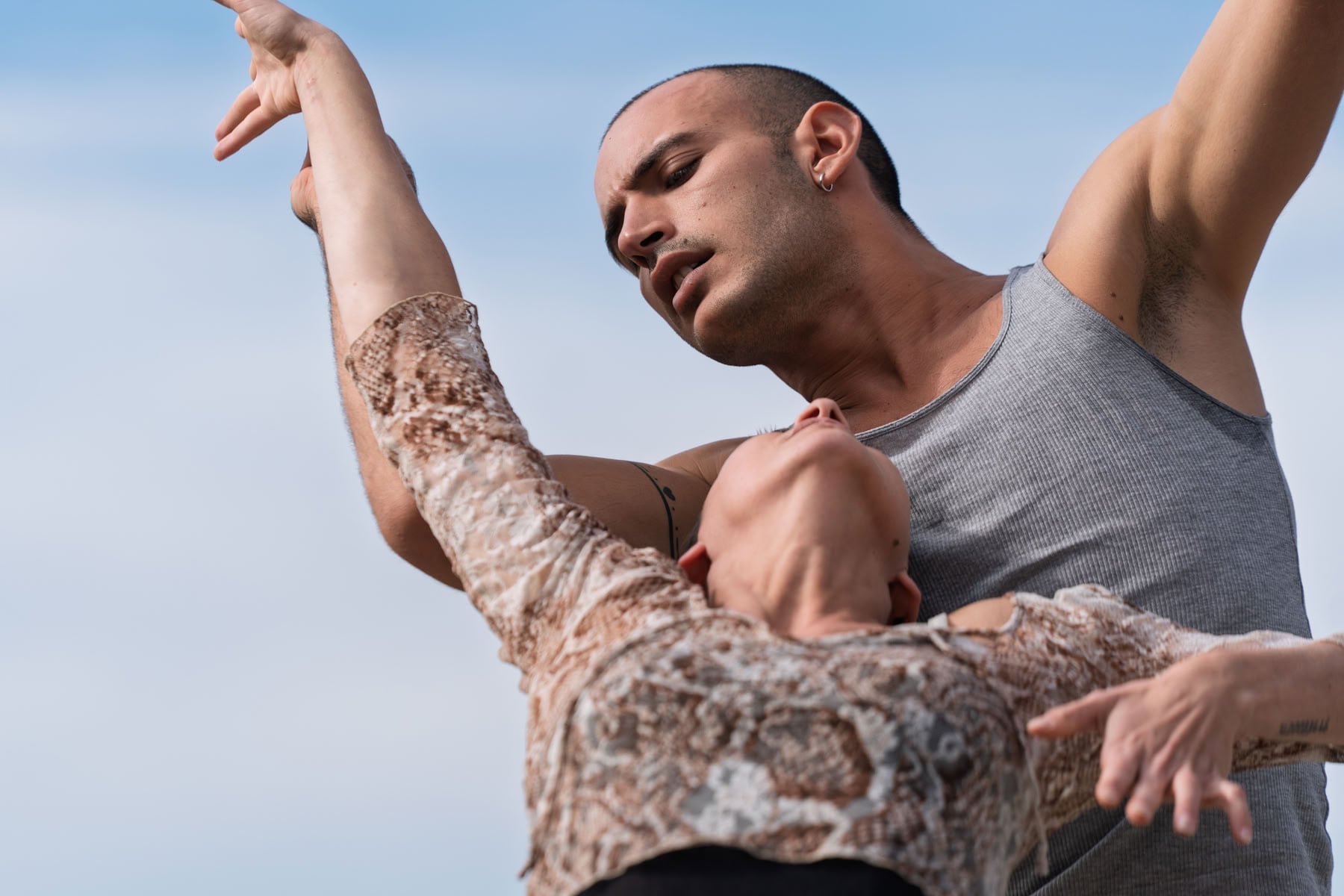
At midday, on the dot – this is the extremely efficient north of Italy! – the coach left Gorizia for the Visavì Discovery Tour, the first stop being the Edi Simčič winery in Dobrovo, Slovenia, which has glorious views over the vineyards. Before any tastings, Pablo Girolami’s company Ivona performed a half-hour piece entitled Angels’ Orders – The Rilke Project.
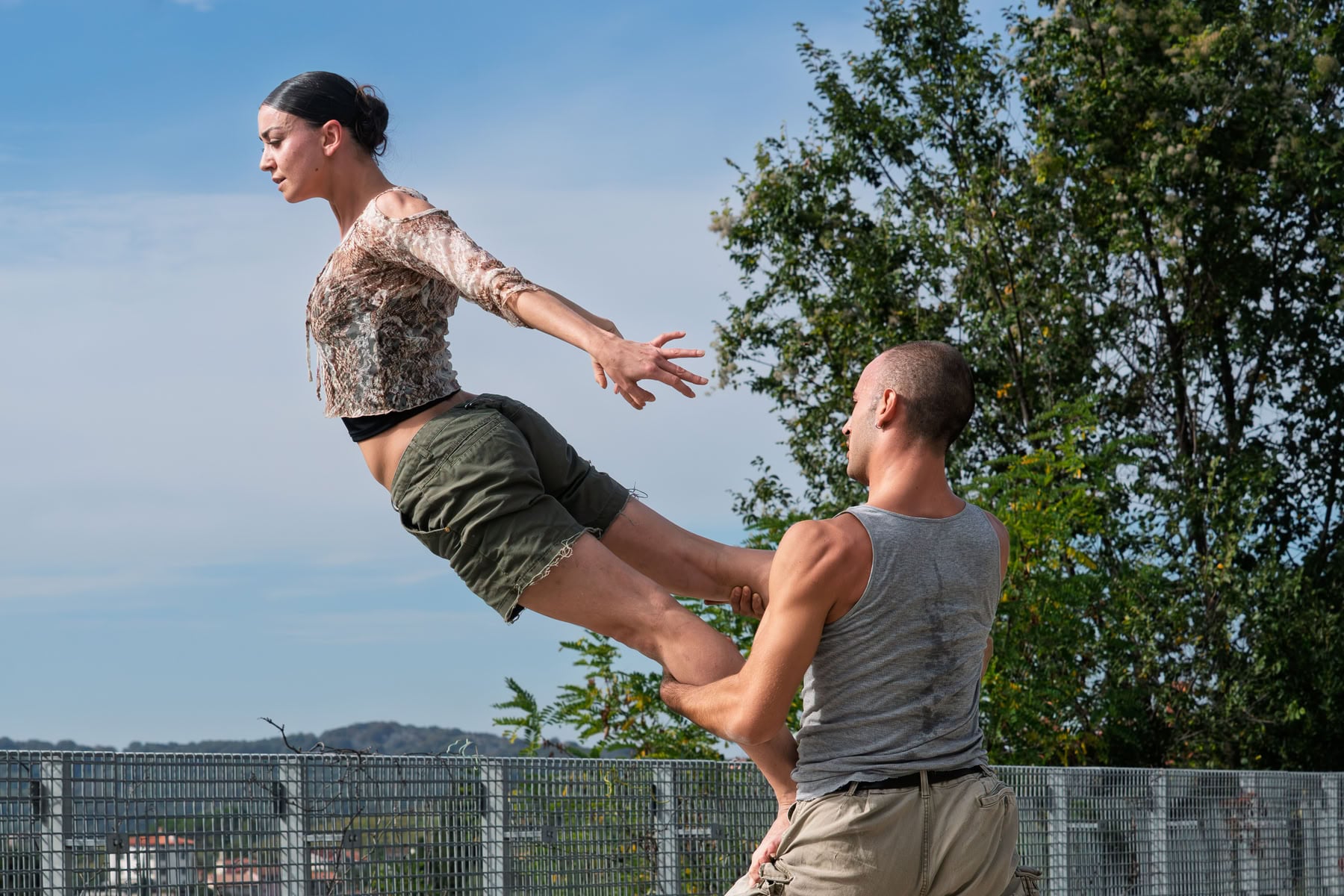
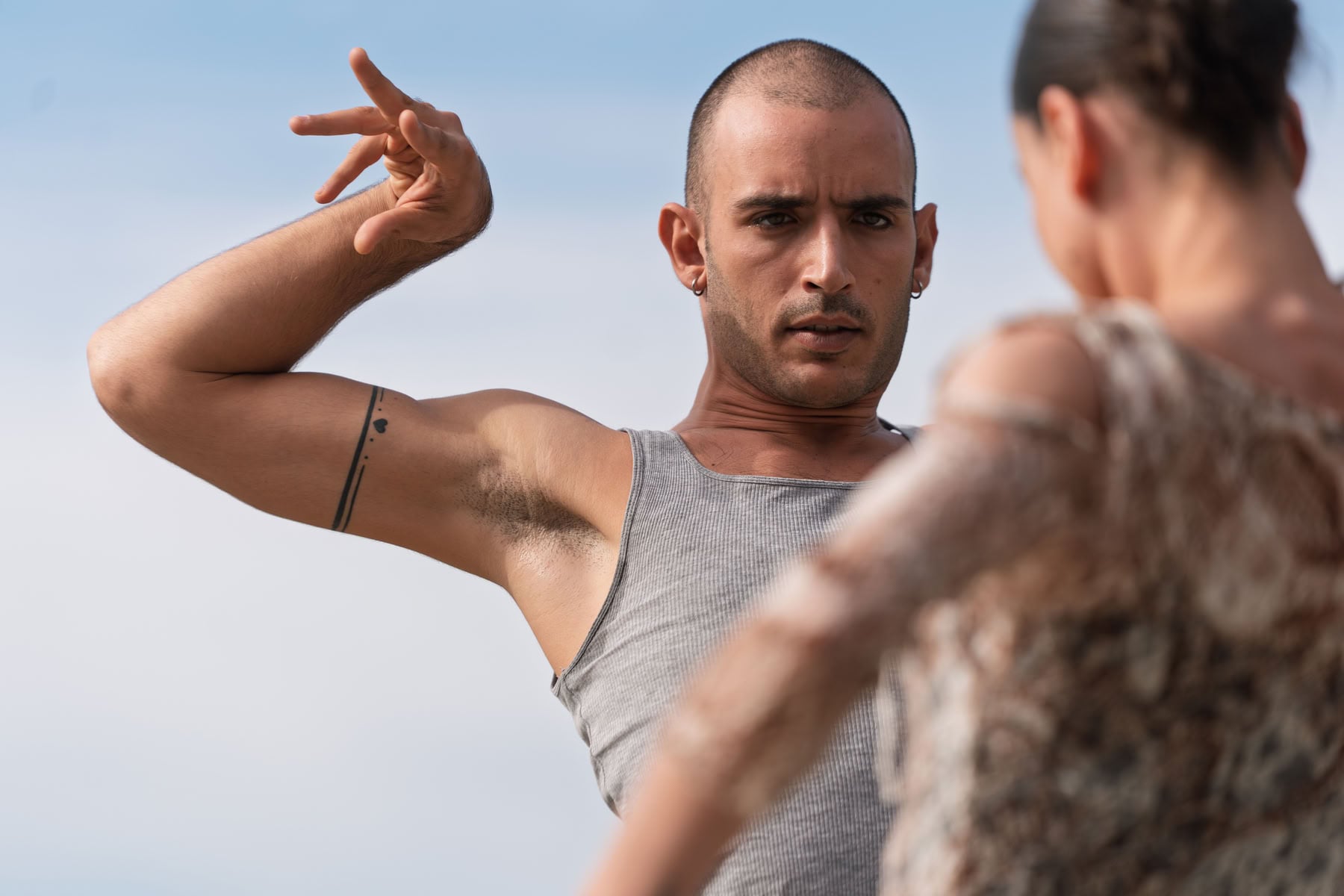
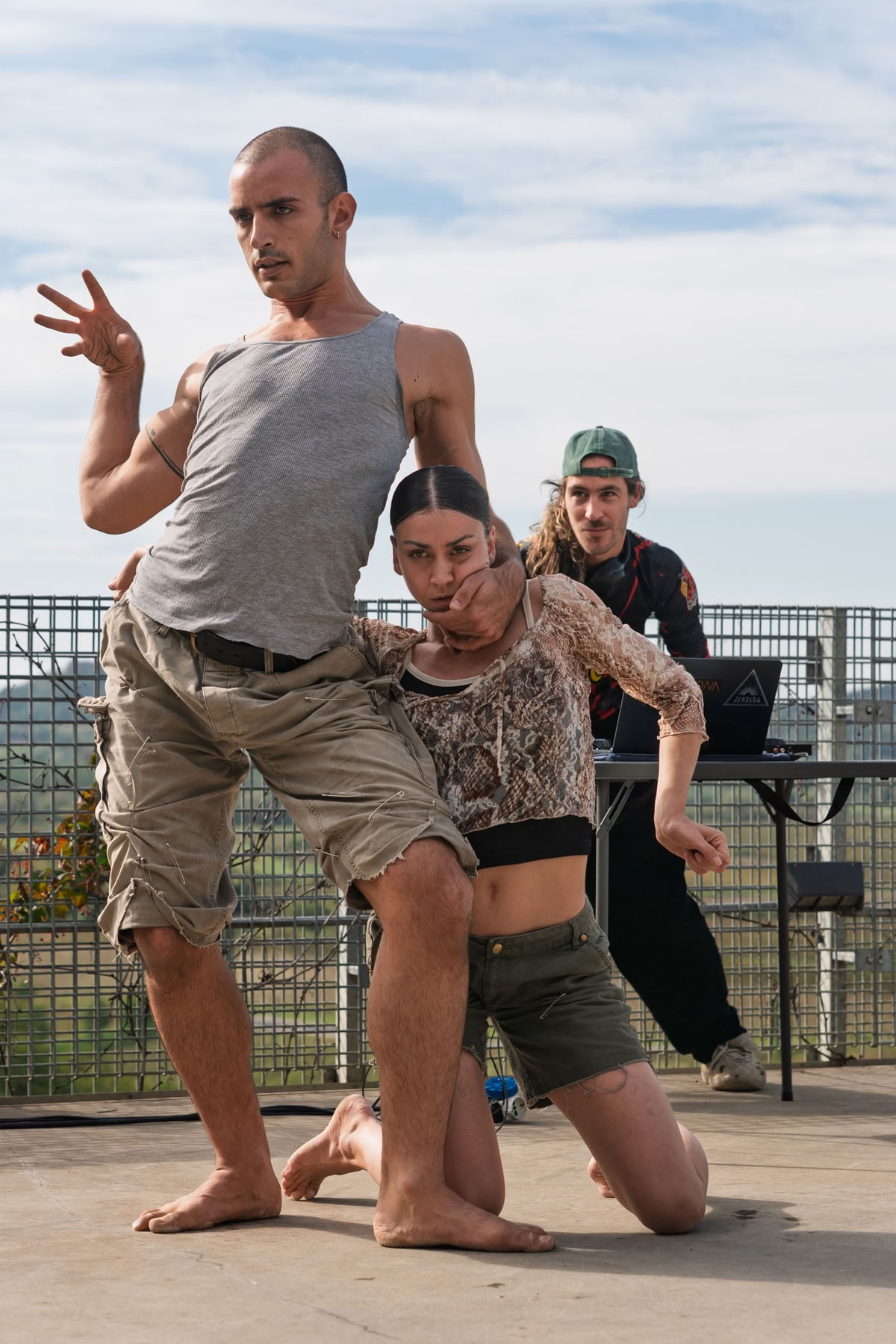
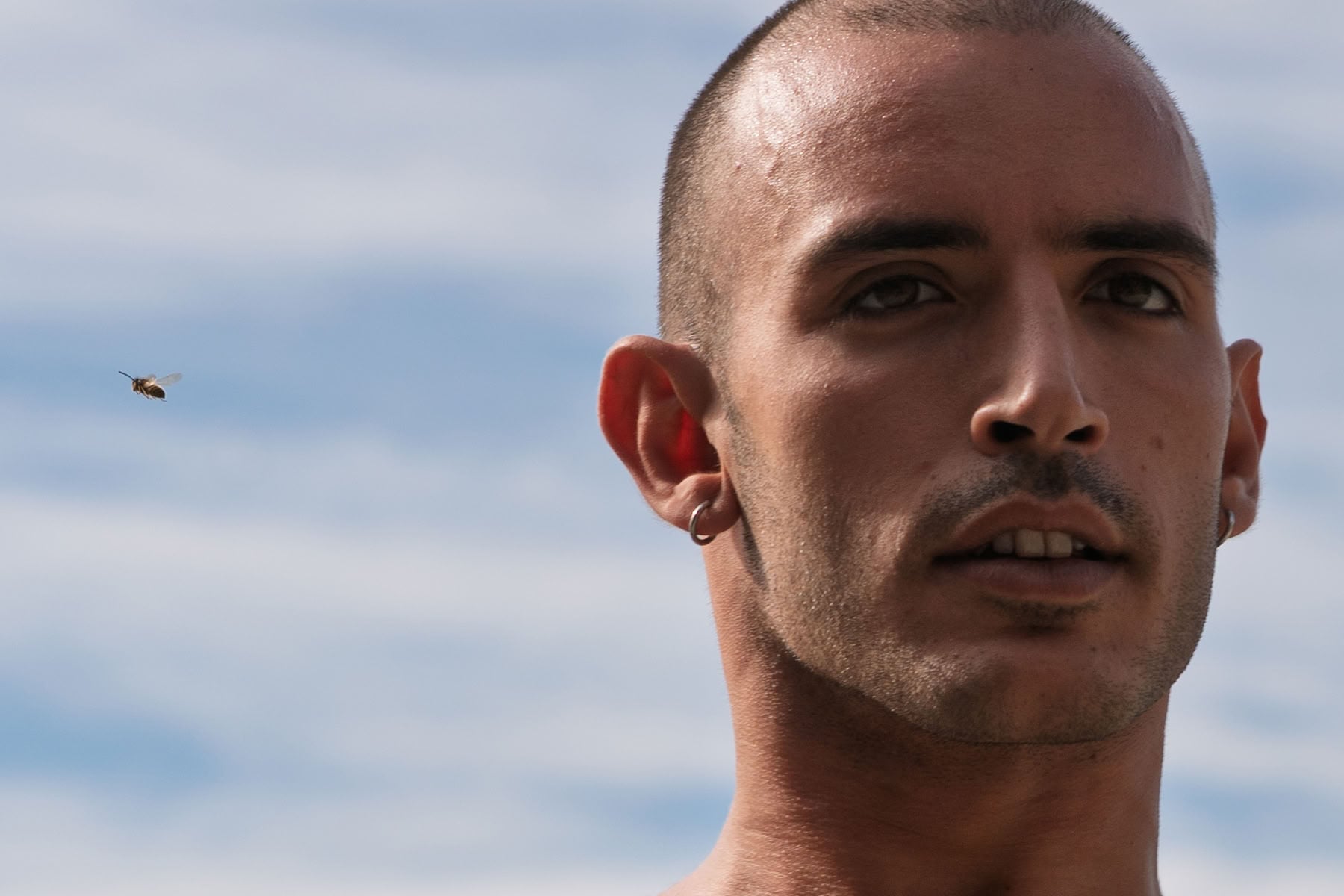
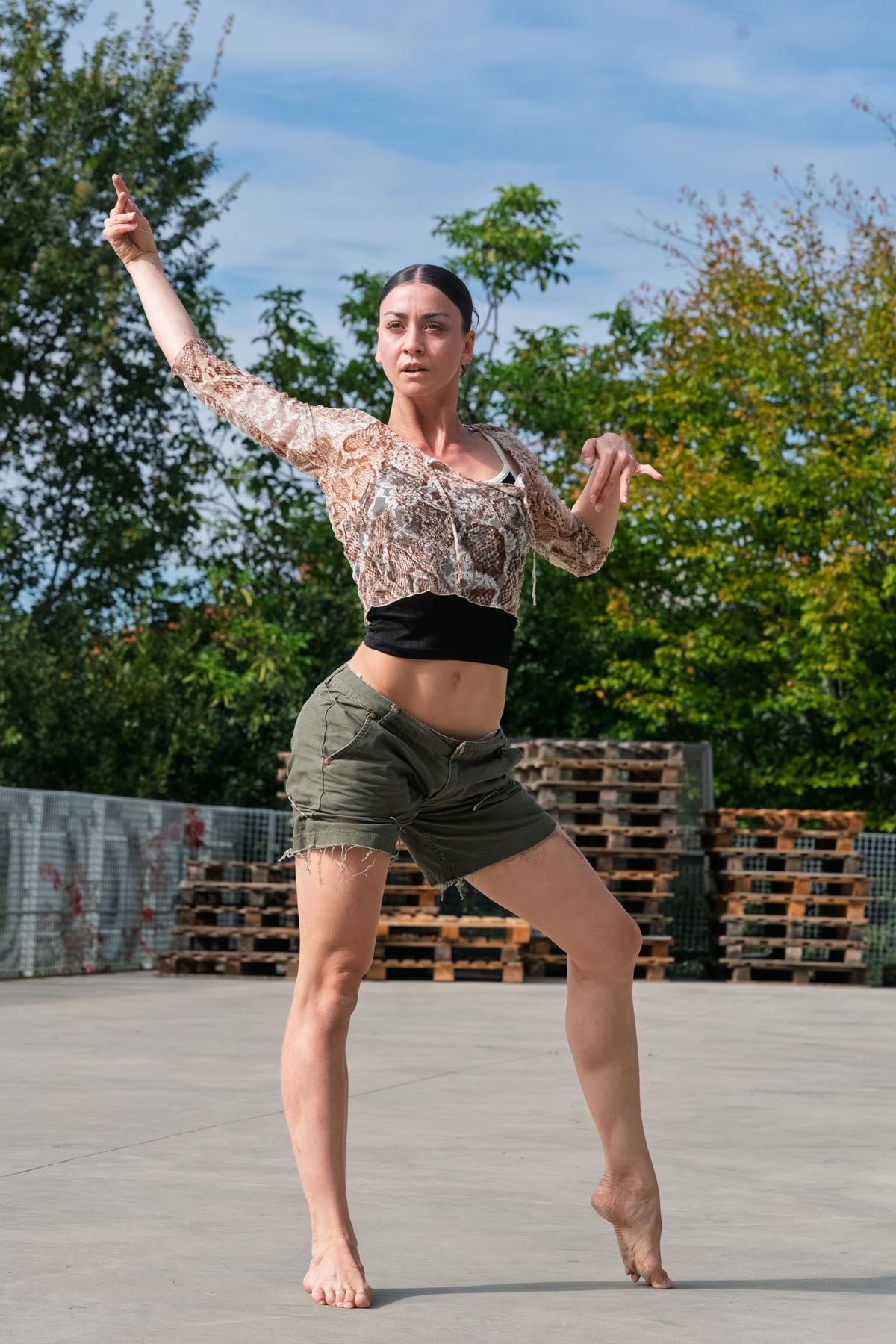
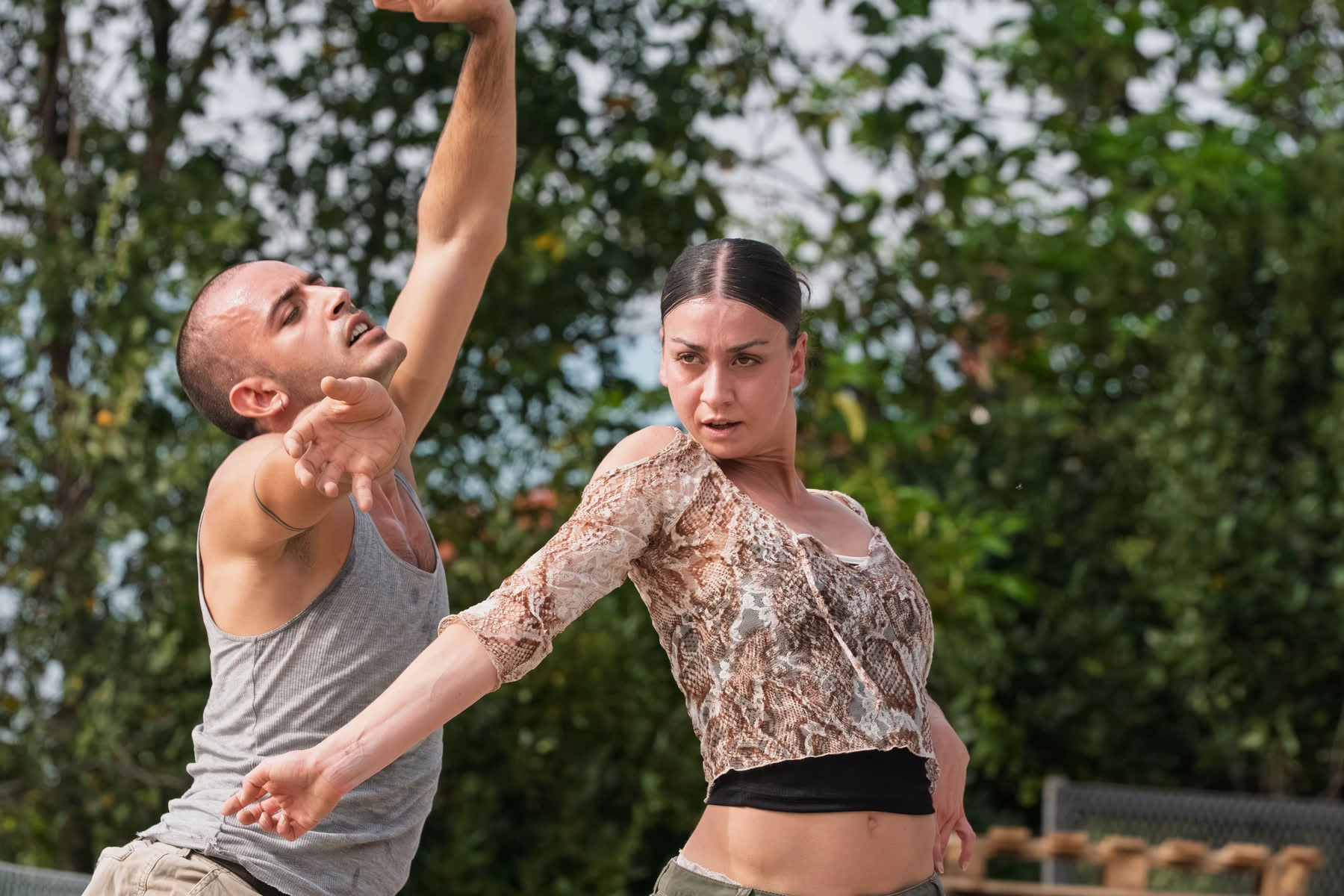
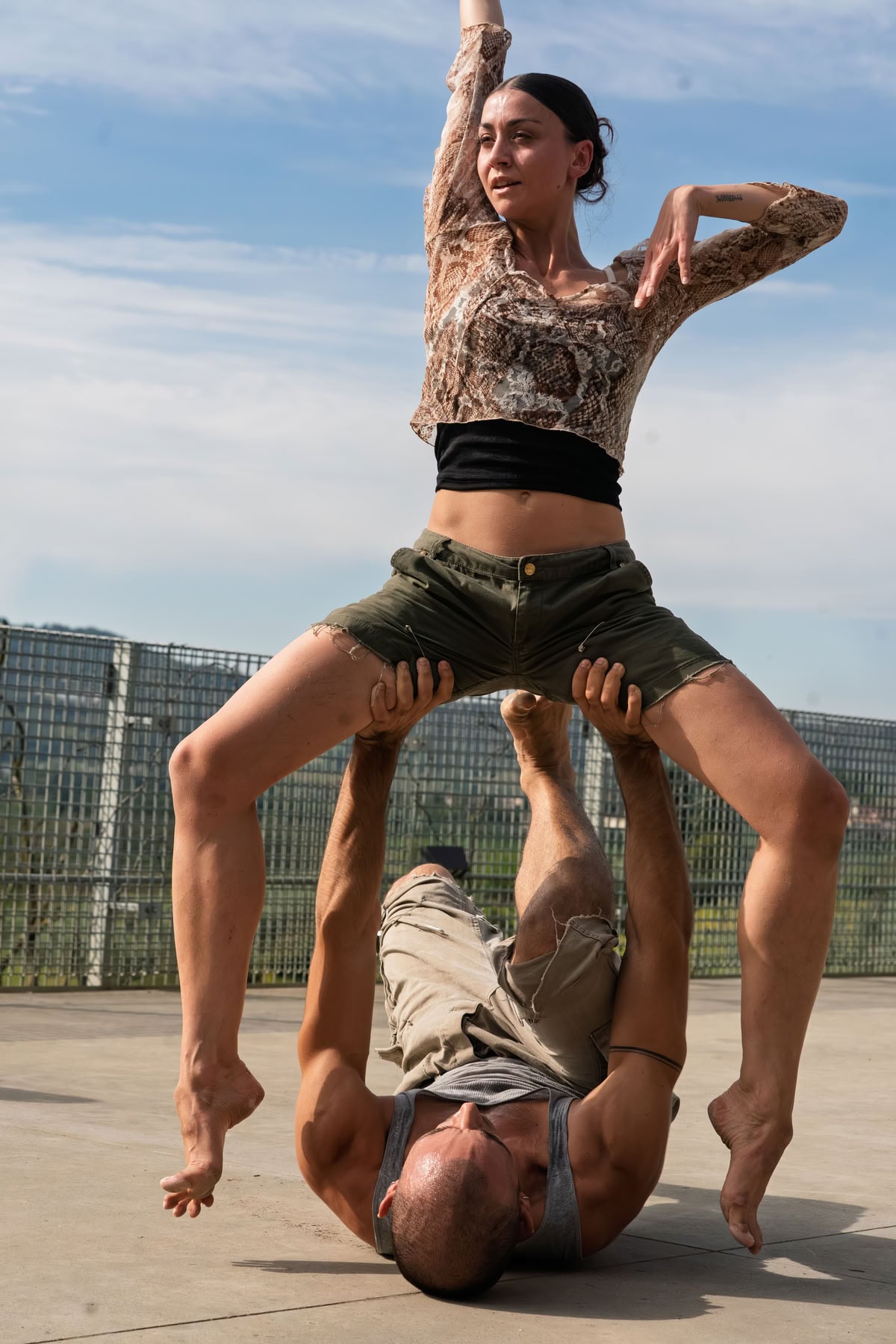
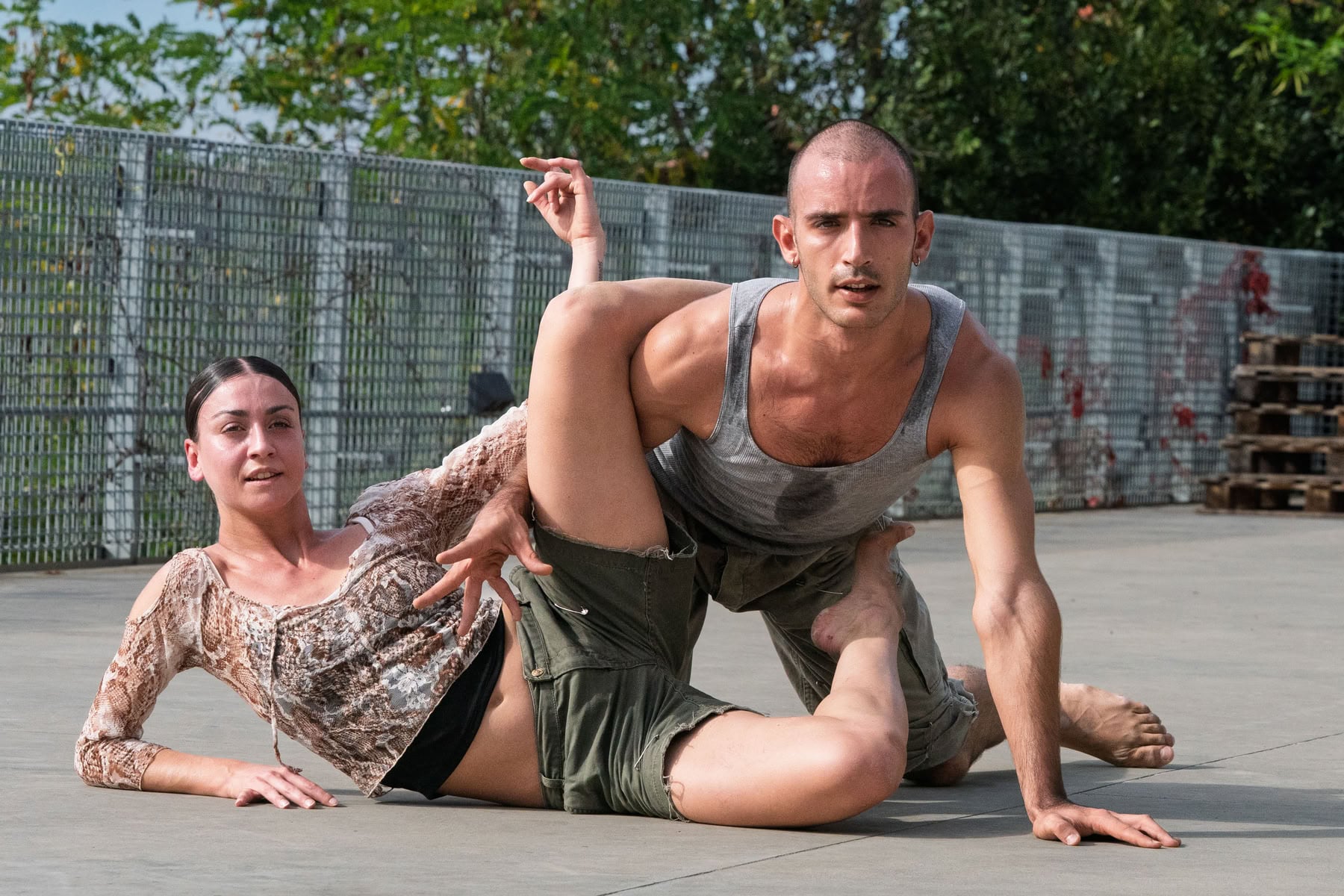
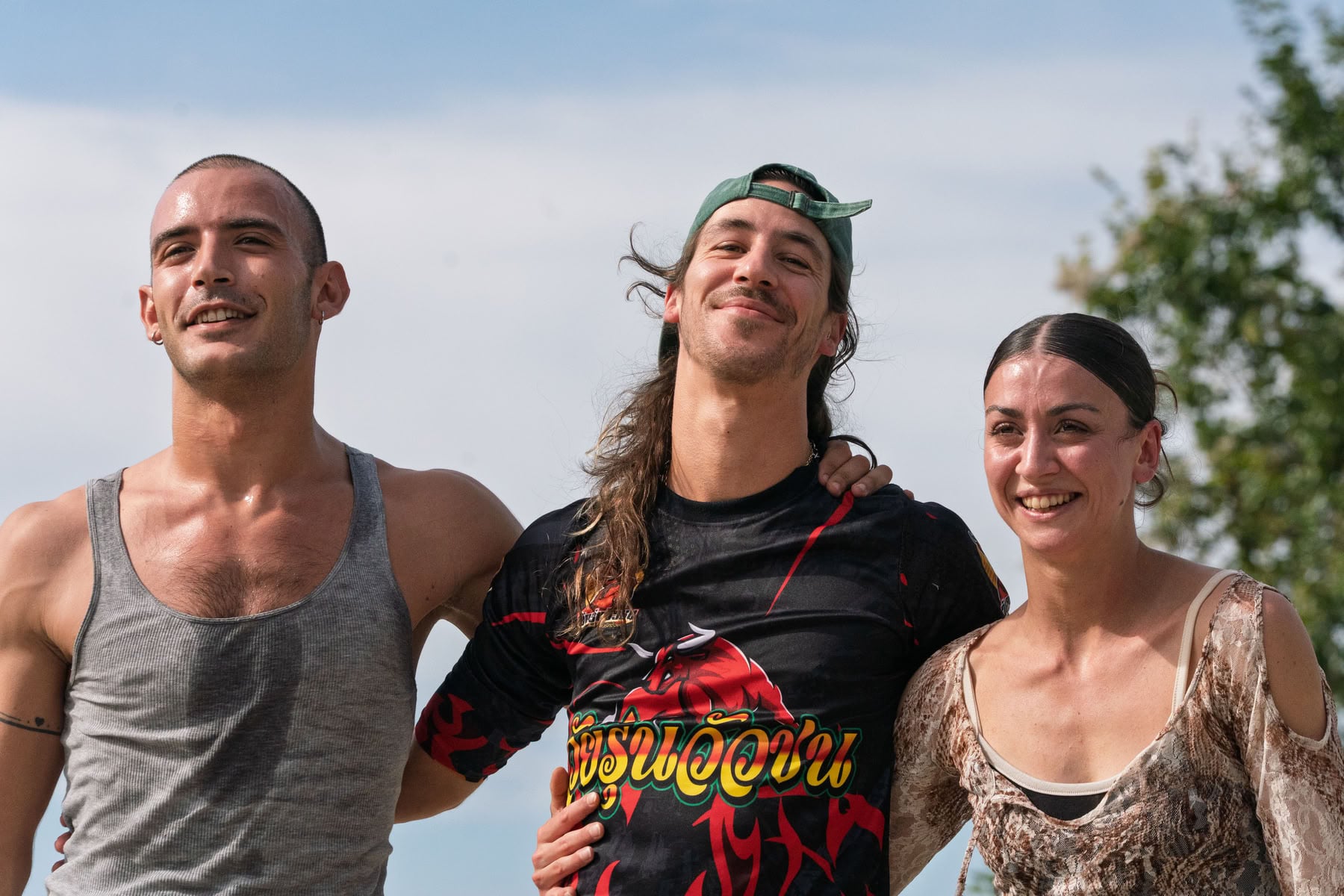
The Austrian poet Rainer Maria Rilke started writing the Duino Elegies cycle while staying at Duino Castle in 1912; the castle is a half-hour drive from Gorizia. The First Duino Elegy begins with ‘Who, if I cried out, would hear me among the angelic orders?’ – neither angels nor mortals can fully absorb human distress. Rilke’s angels are no tender guardians, but radiant forces of beauty and power. Girolami took this as the impetus for his site-responsive dance and electronic music performance, in which he also served as DJ (last year he performed an intriguing solo in the gardens of a former monastery). Matilde Di Ciolo and Matteo Capetola were the superb performers, moving across the open-air concrete terrace with nonchalance, as if their feet were made of leather. Their movements were angular, coming together in coordinated and sometimes athletic sequences before moving apart in, I presume, more improvised sections. The mid-October sun was surprisingly hot, and their intense performance required stamina and concentration in front of an up-close audience. Girolami created something gripping.
Then came the wine and food. The dish was pasticcio (meaning ‘mess’ in Italian), which is the name for lasagne in north-eastern Italy – literally a mess of ingredients layered together – served on wine barrels with various Edi Simčič wines. Even this wine lover sipped carefully instead of guzzling, aware the afternoon was long.
Next, back to Italy to visit the Azienda Agricola Polje near Cormons. The main building, like many of the wineries en route, is modern, but blends skilfully into the countryside, using local materials and a low-key Armani-style approach to design. The performance space was a large room, usually set with tables and chairs for dining and tasting; the backdrop, a view over the vines and trees through a plate-glass wall, was stunning.
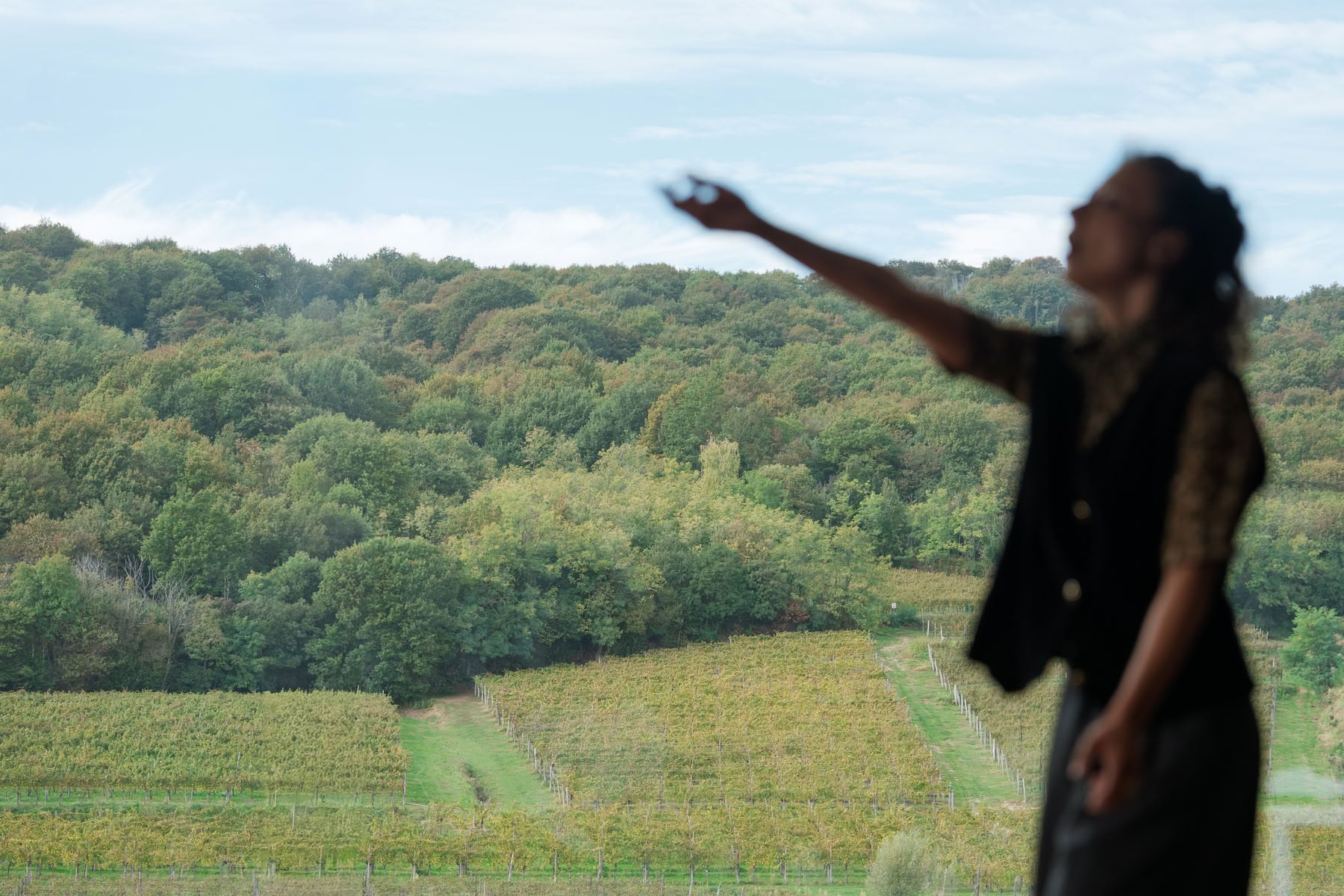
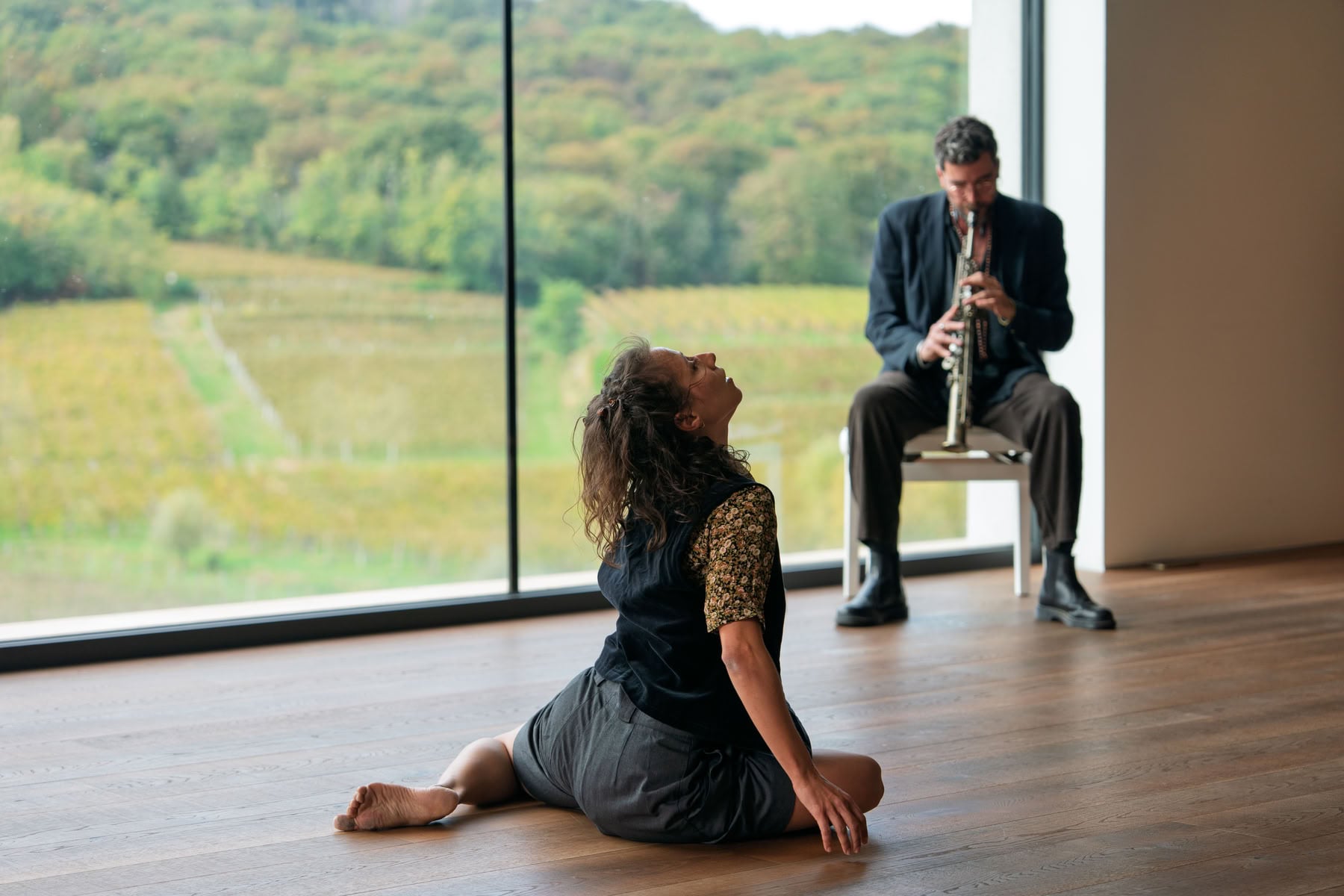
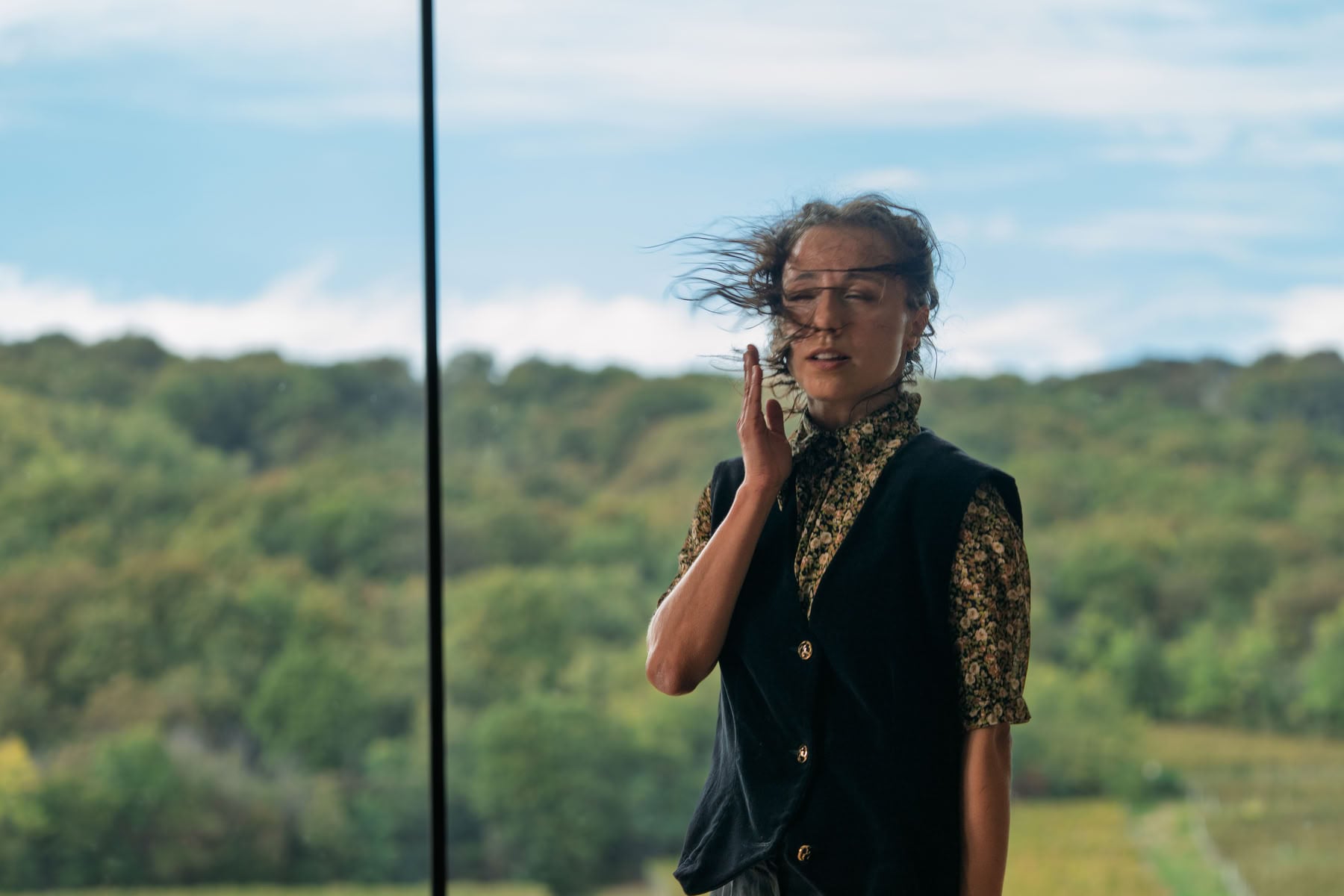
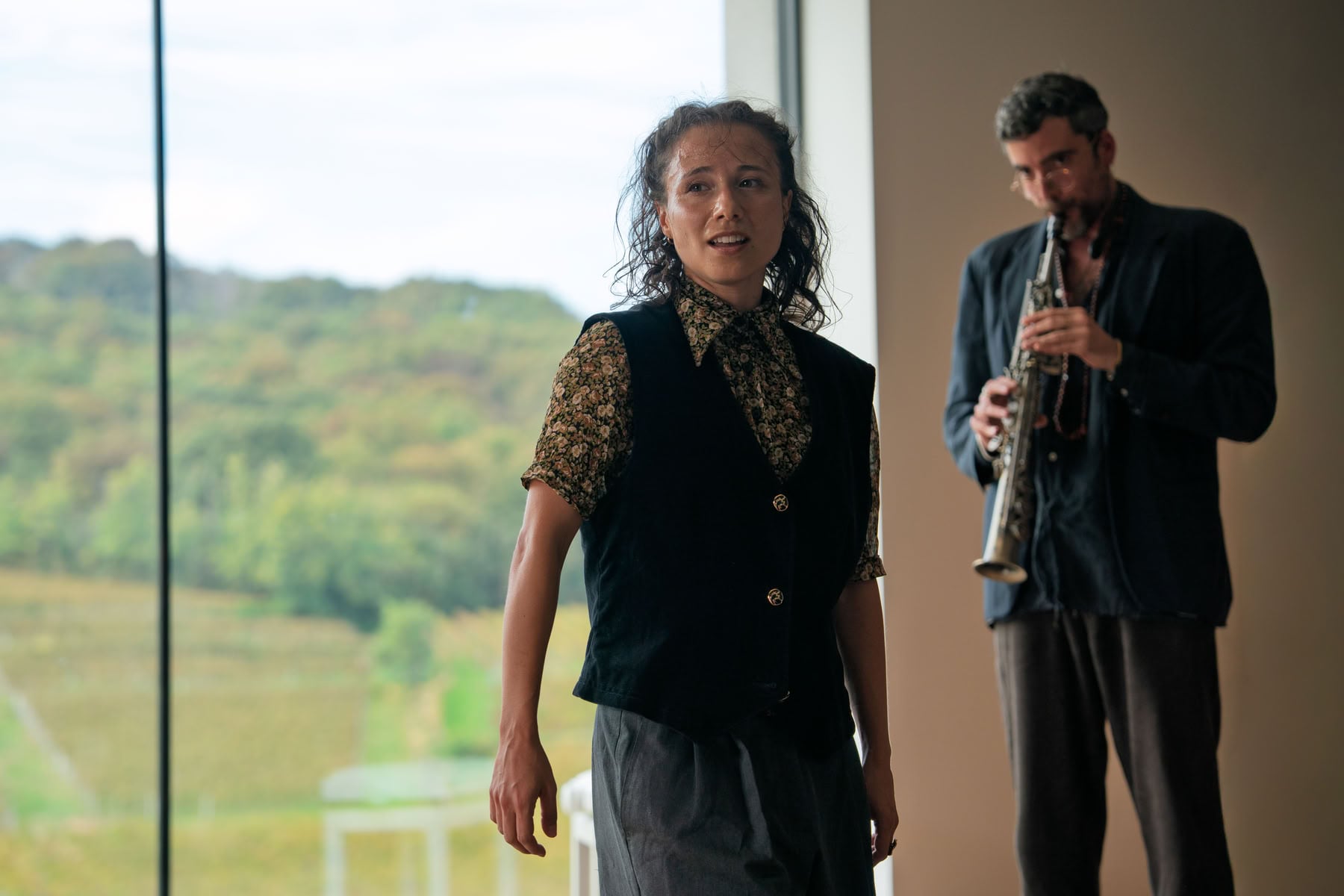
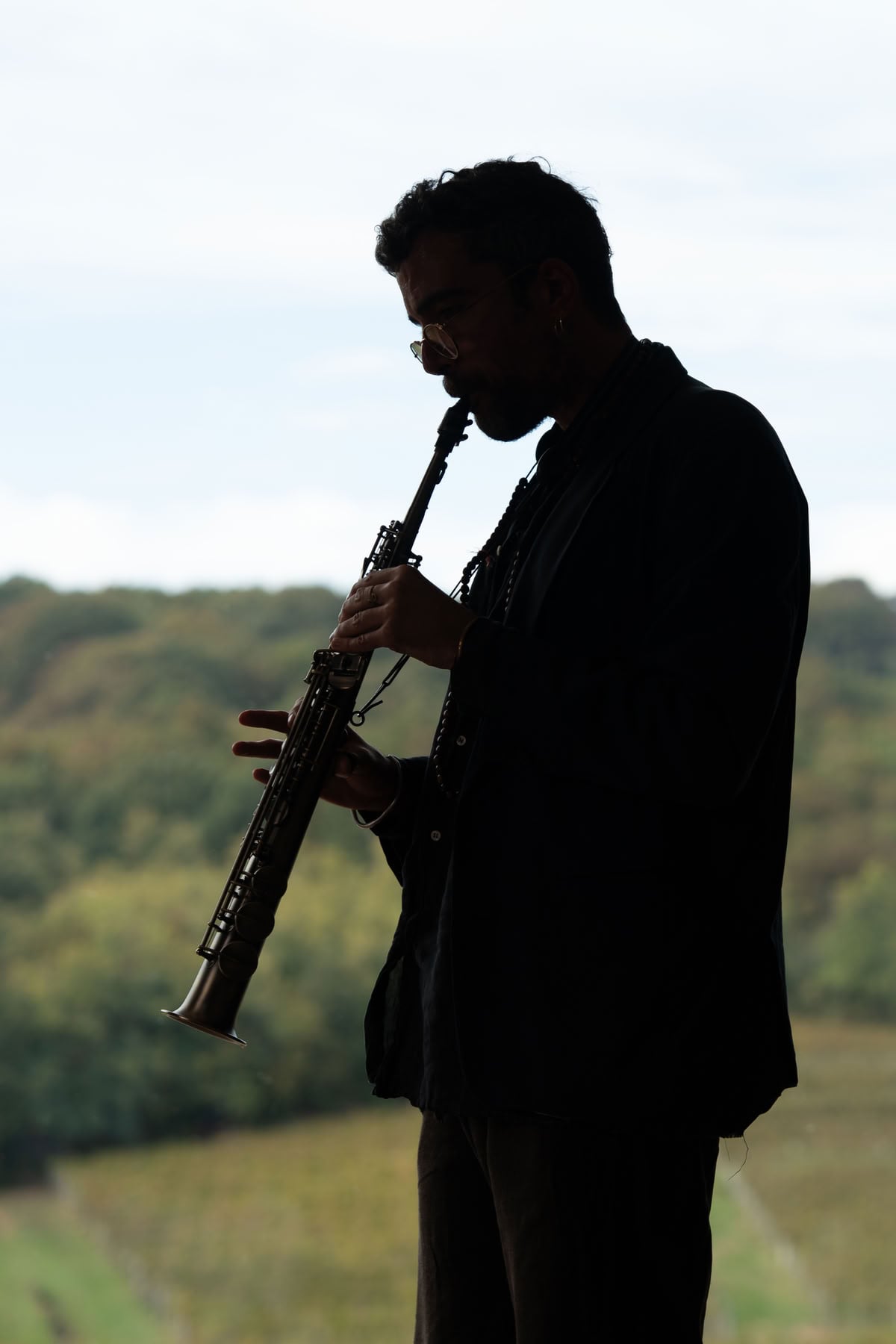
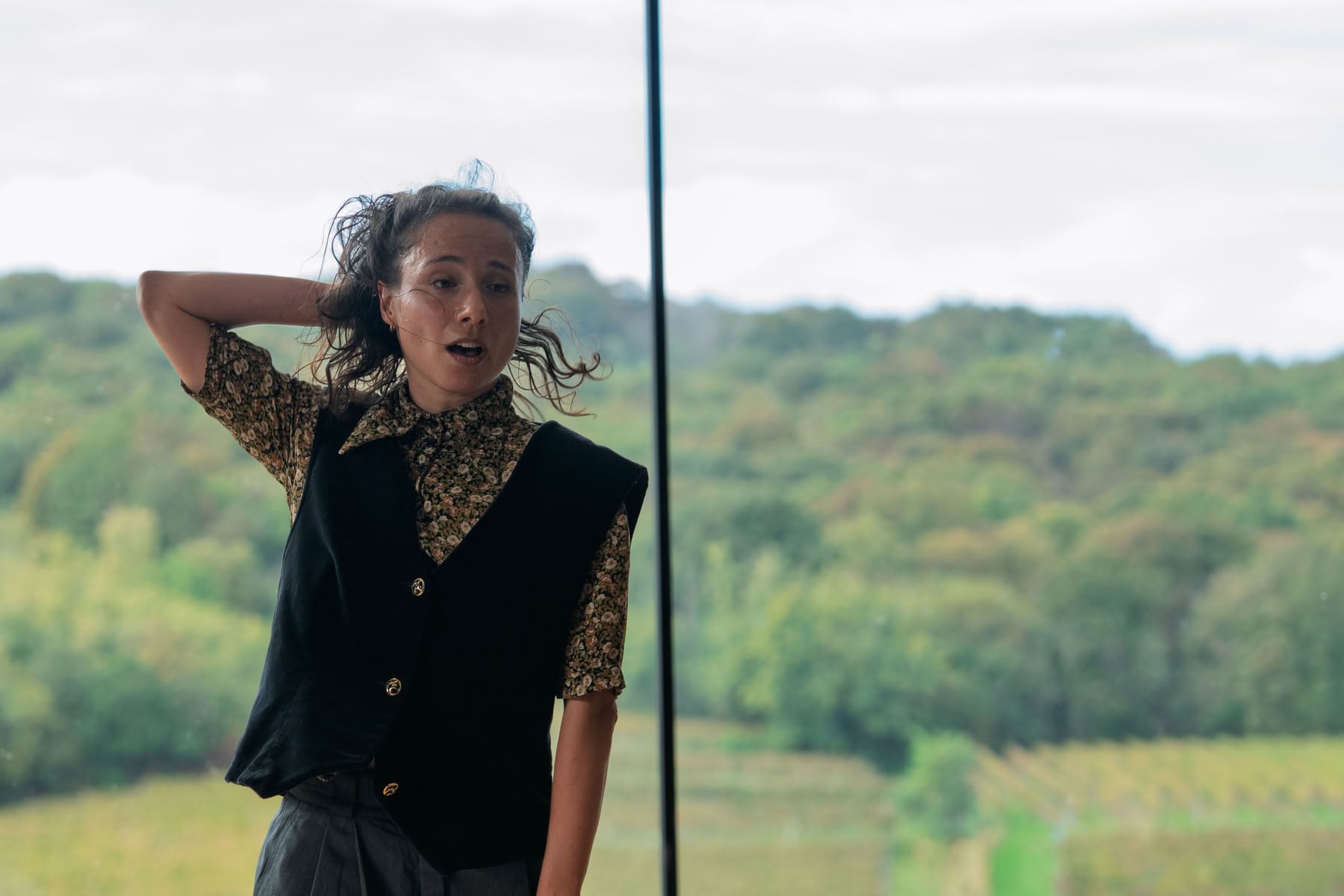
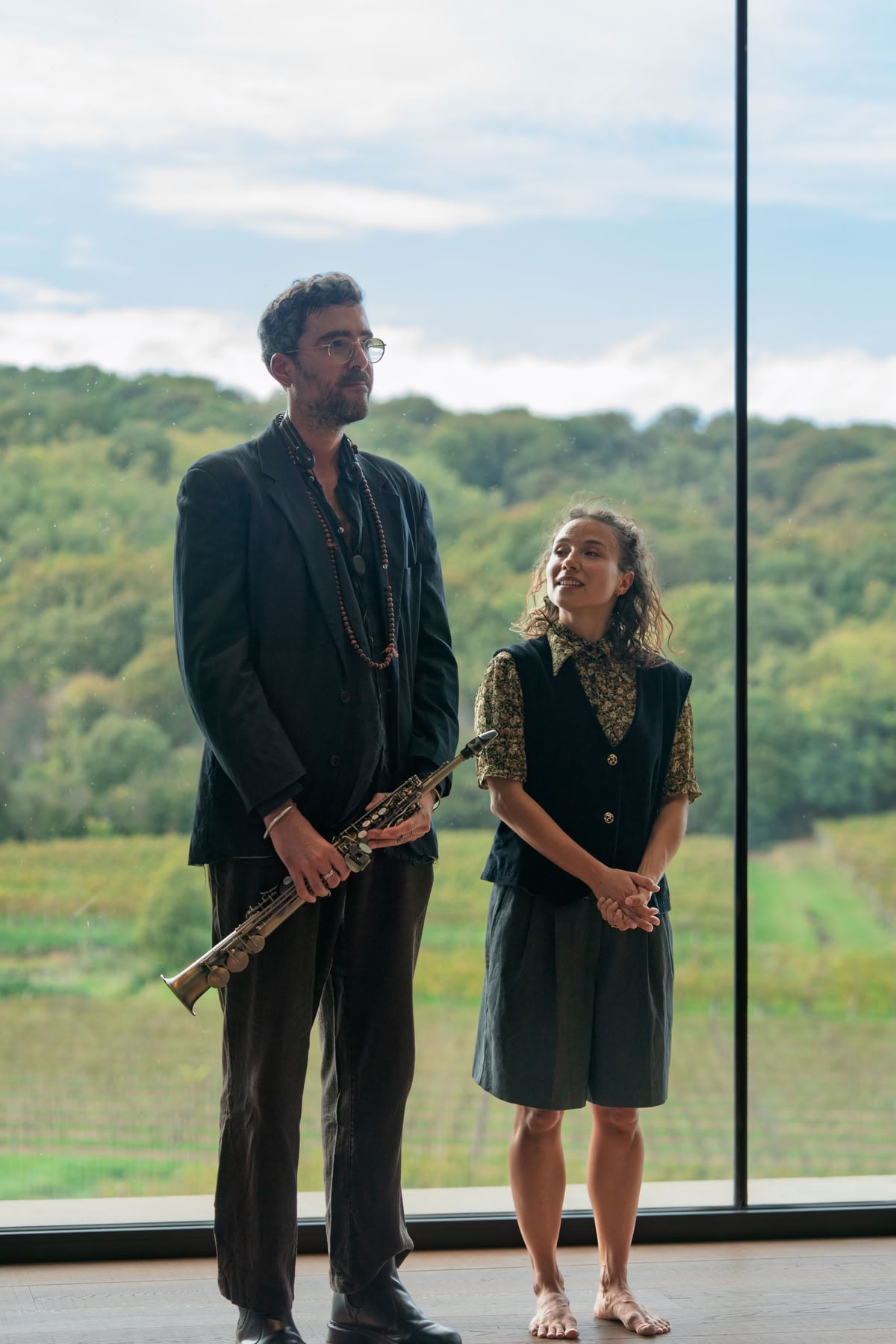
Martina Auddino choreographed and performed Studio per un incontro (Study for a Meeting), accompanied by jazz musician and composer Nicolò Ricci on the saxophone. Dressed in a frumpy skirt, blouse, and waistcoat, she didn’t look like a dancer at all as she handed out sheets of dance notation to some audience members. When the music started, she moved with quick-paced, staccato movements, contrasting with still moments illuminated by her expressive face. The performance came from a collaboration between the Visavì Gorizia Dance Festival and the Jazz & Wine of Peace festival, ‘giving rise to a creative process based on improvisation and connection’.
More Ribolla Gialla before returning to the coach, with volume levels starting to rise.
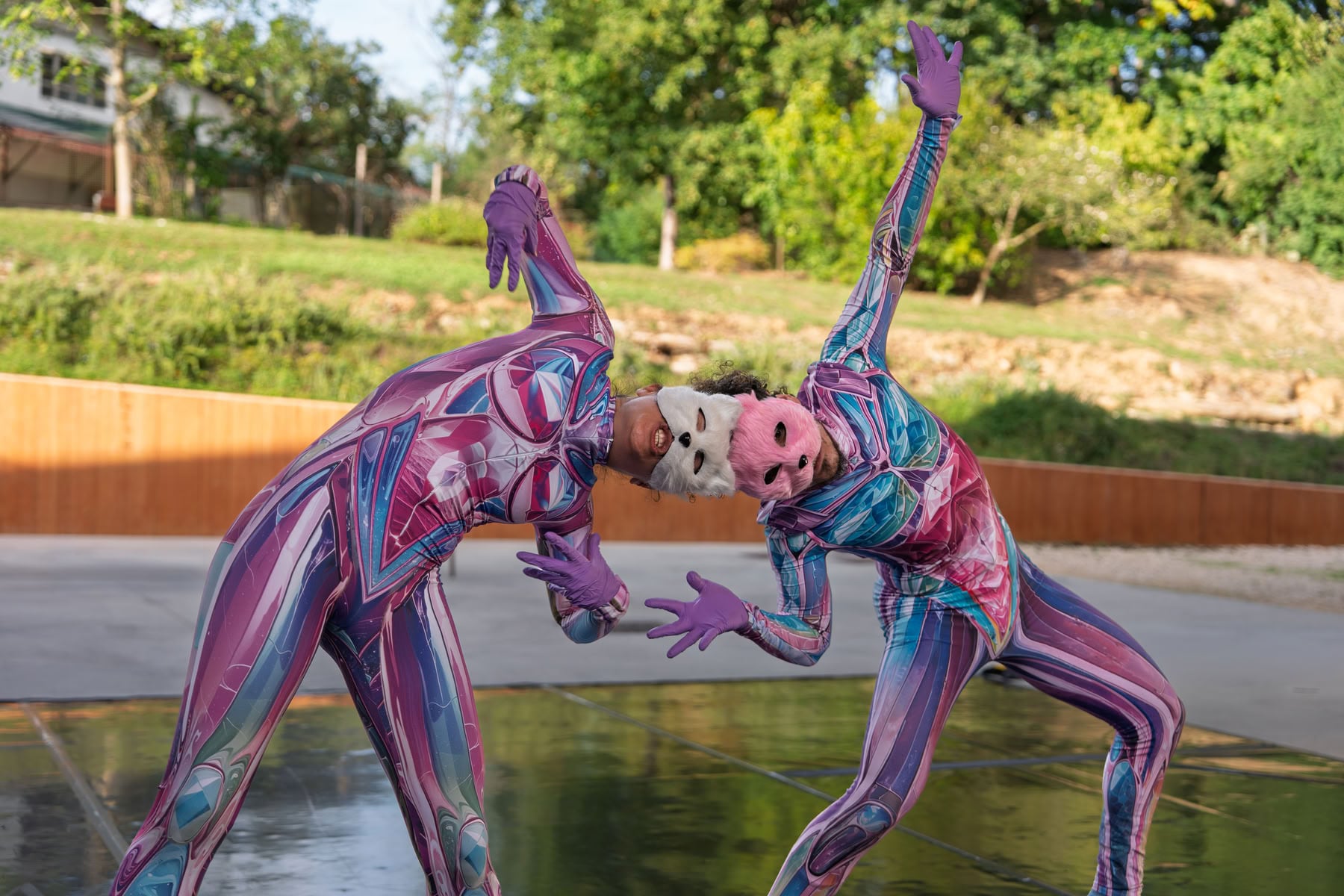
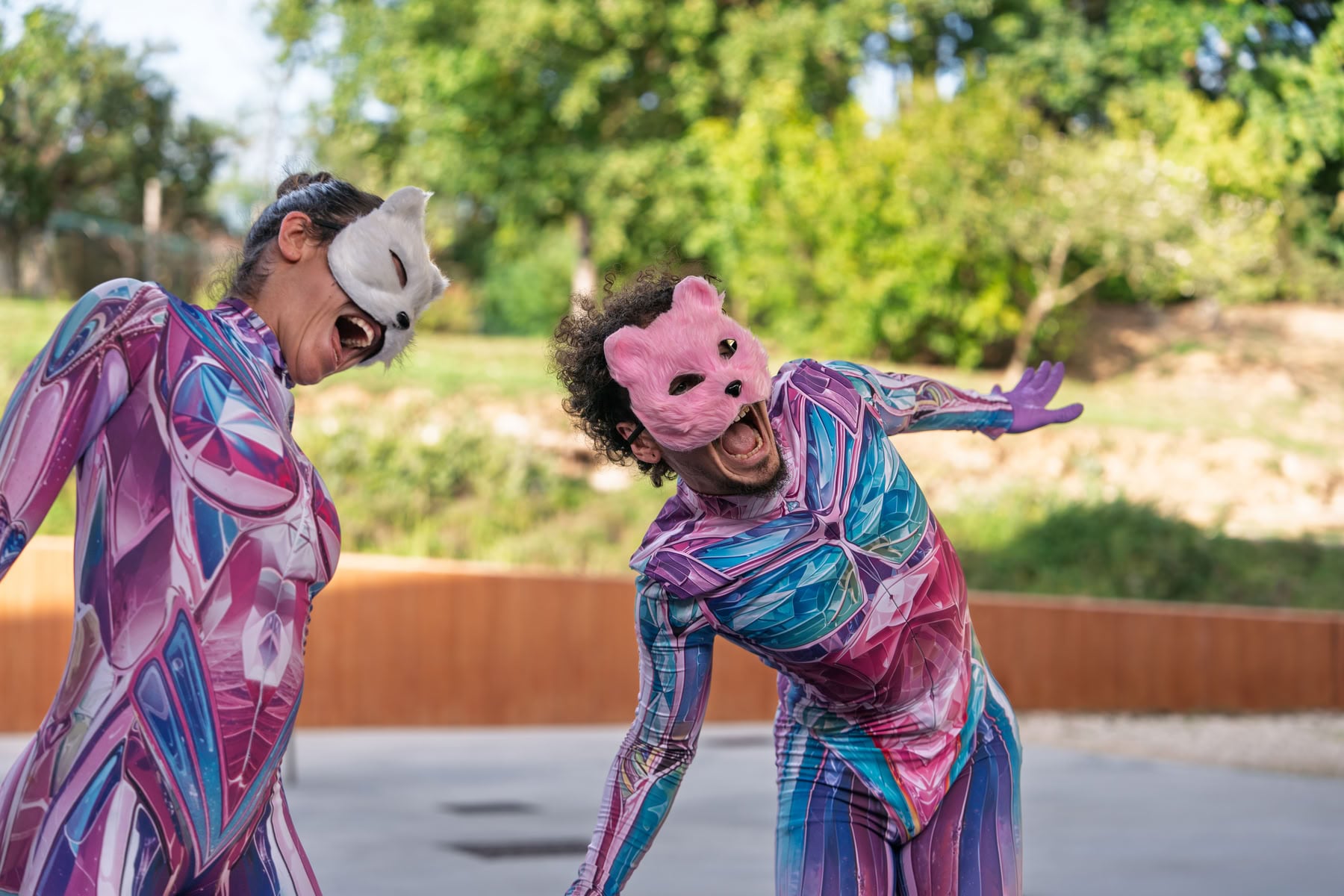
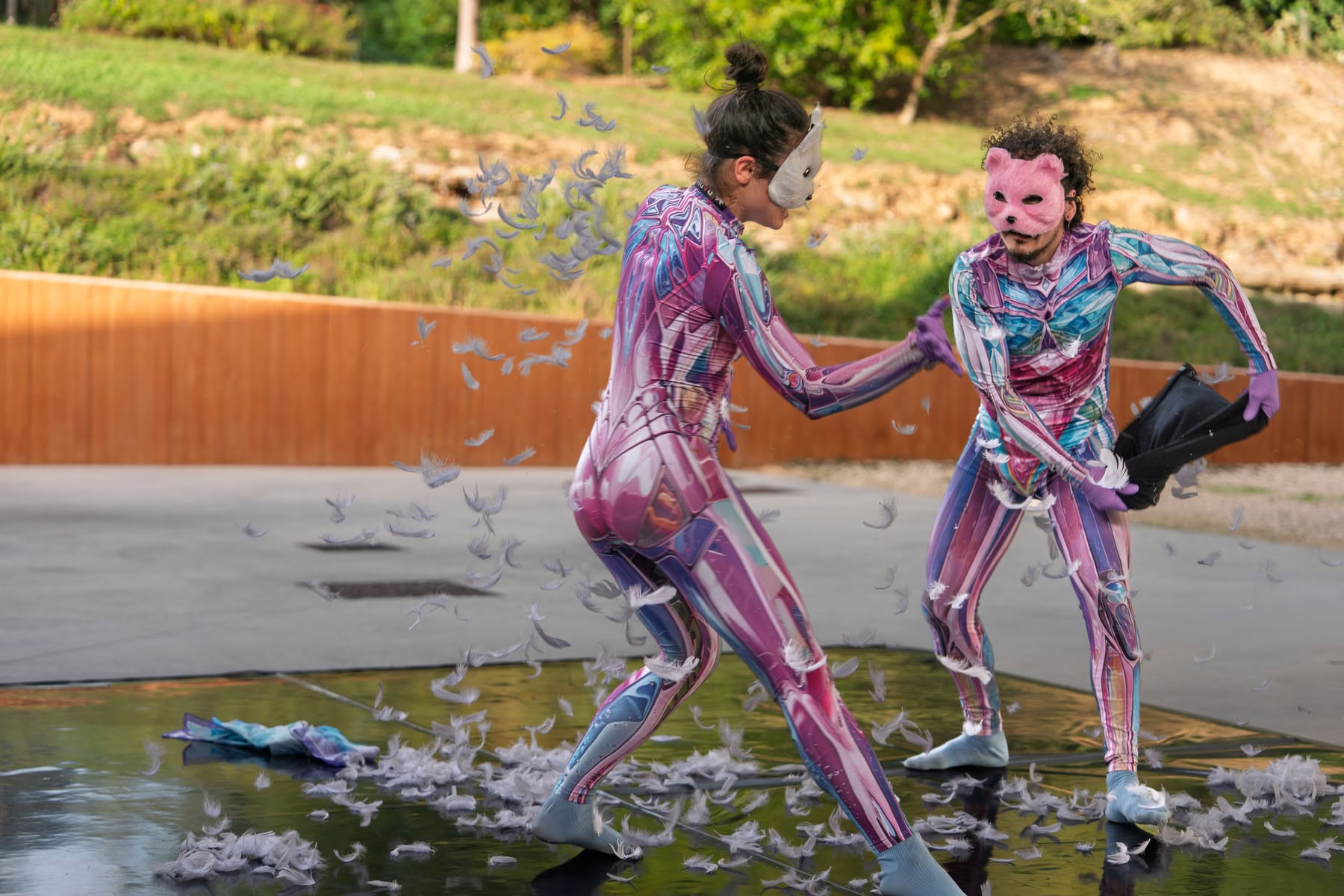
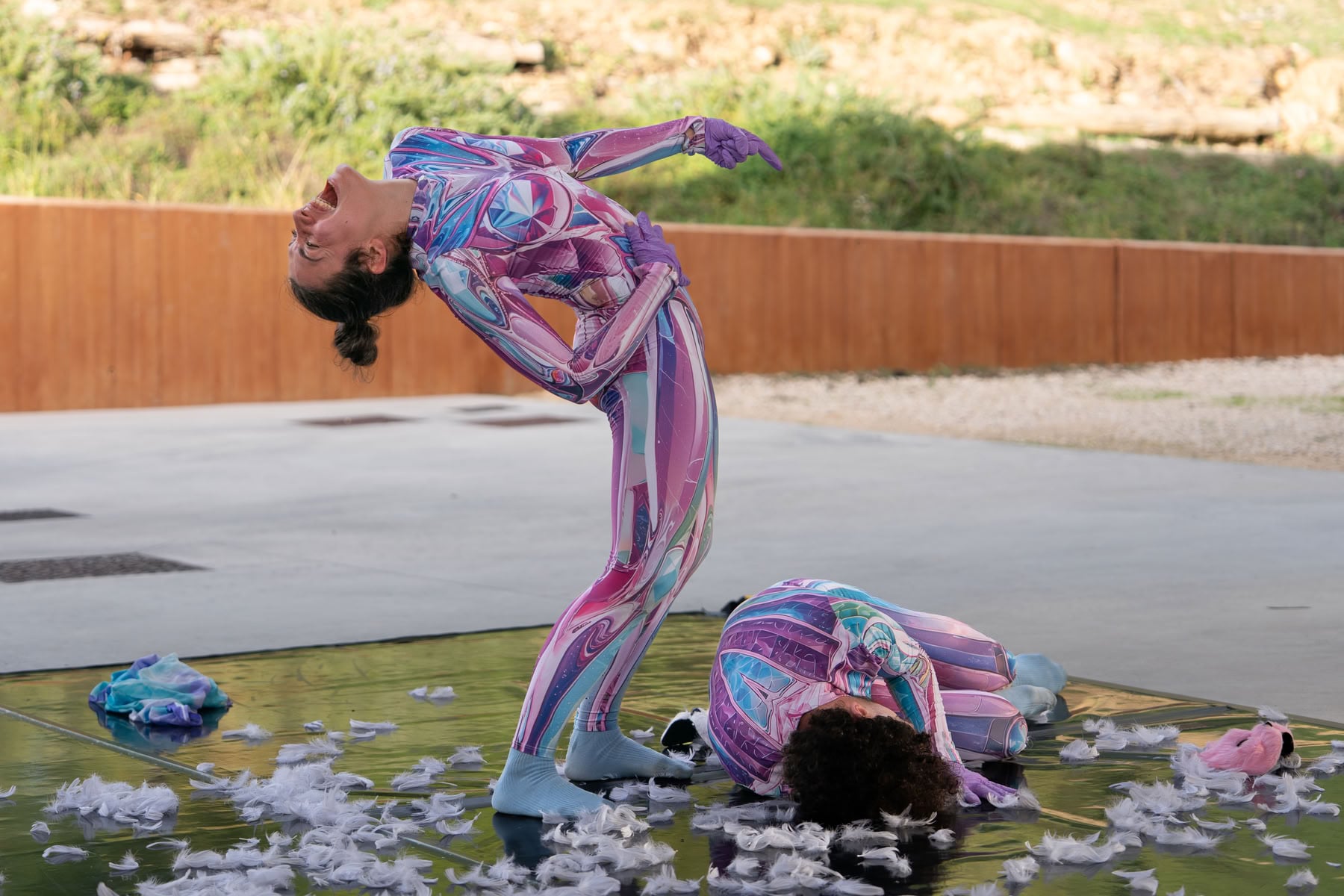
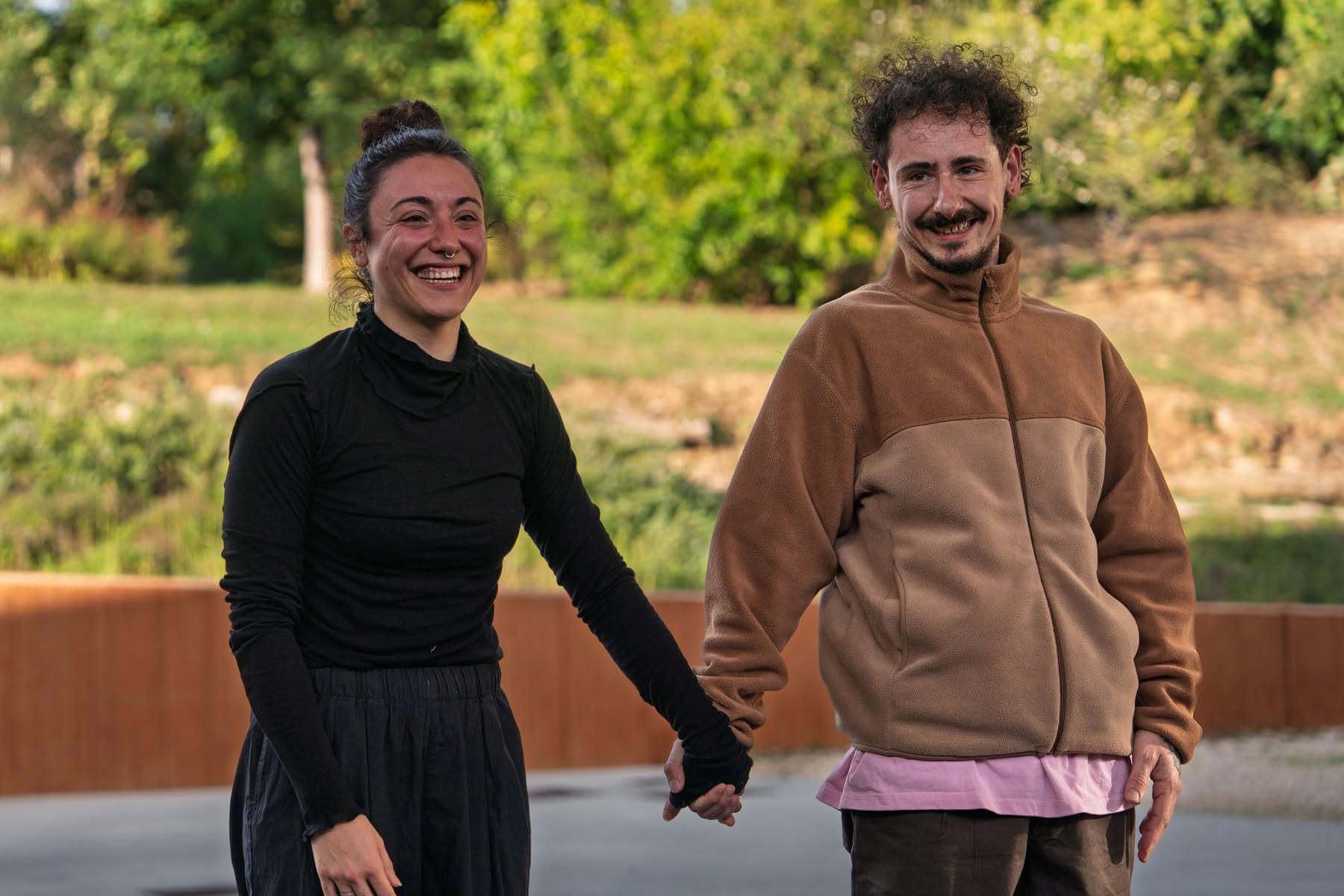
Not far away is Tenuta Della Casa, the most interesting of the three wineries, with a blurb that underlines its ethos of a place ‘rooted in equilibrium, guided by evolution, and lived in harmony’. Its B&B section features modern construction that blends seamlessly with the earlier buildings, and instead of the customary stainless steel fermentation tanks, it uses tulip-shaped concrete tanks that, we were told, are porous, allowing the wine to evolve without adding flavour and without needing heating or air conditioning.
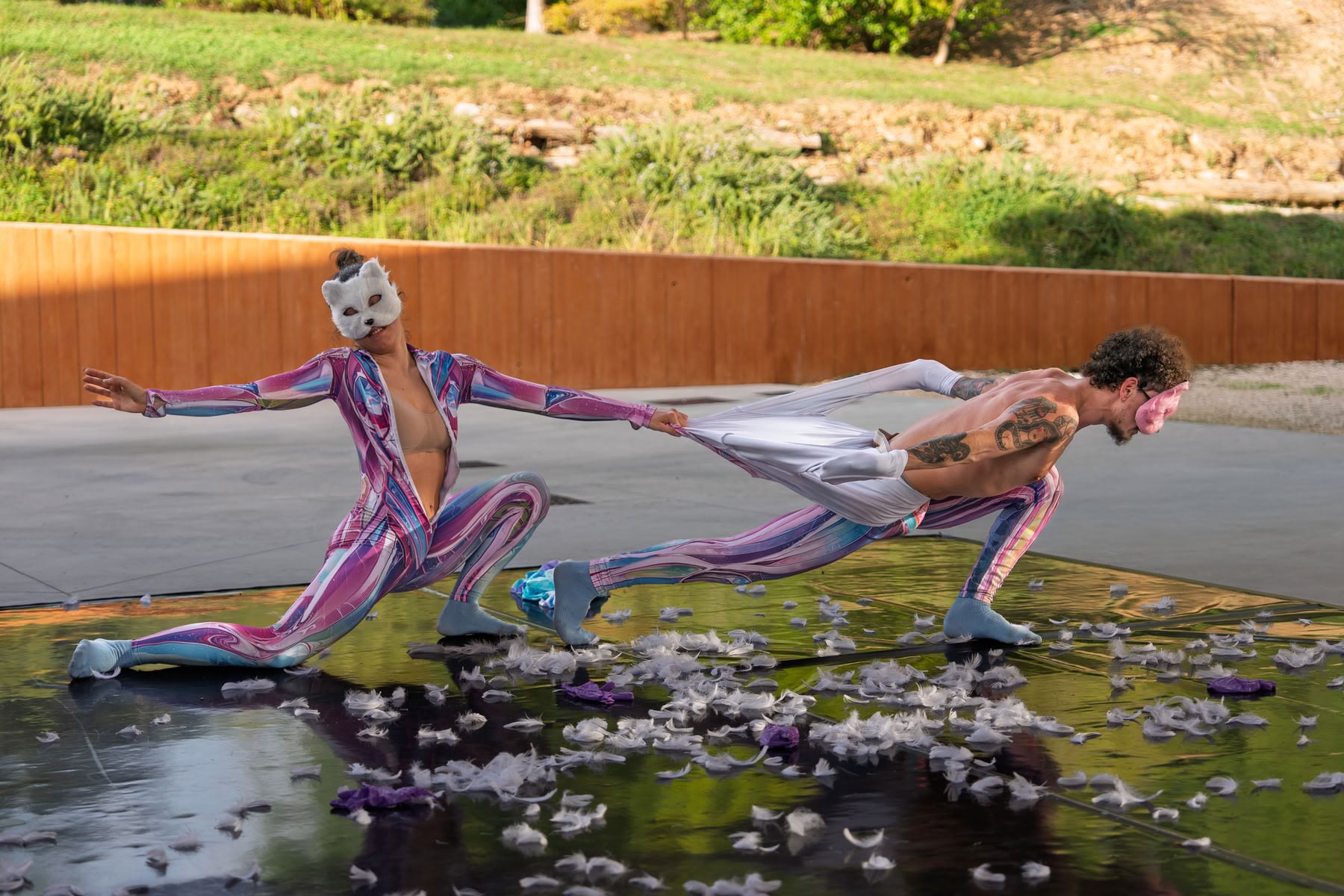
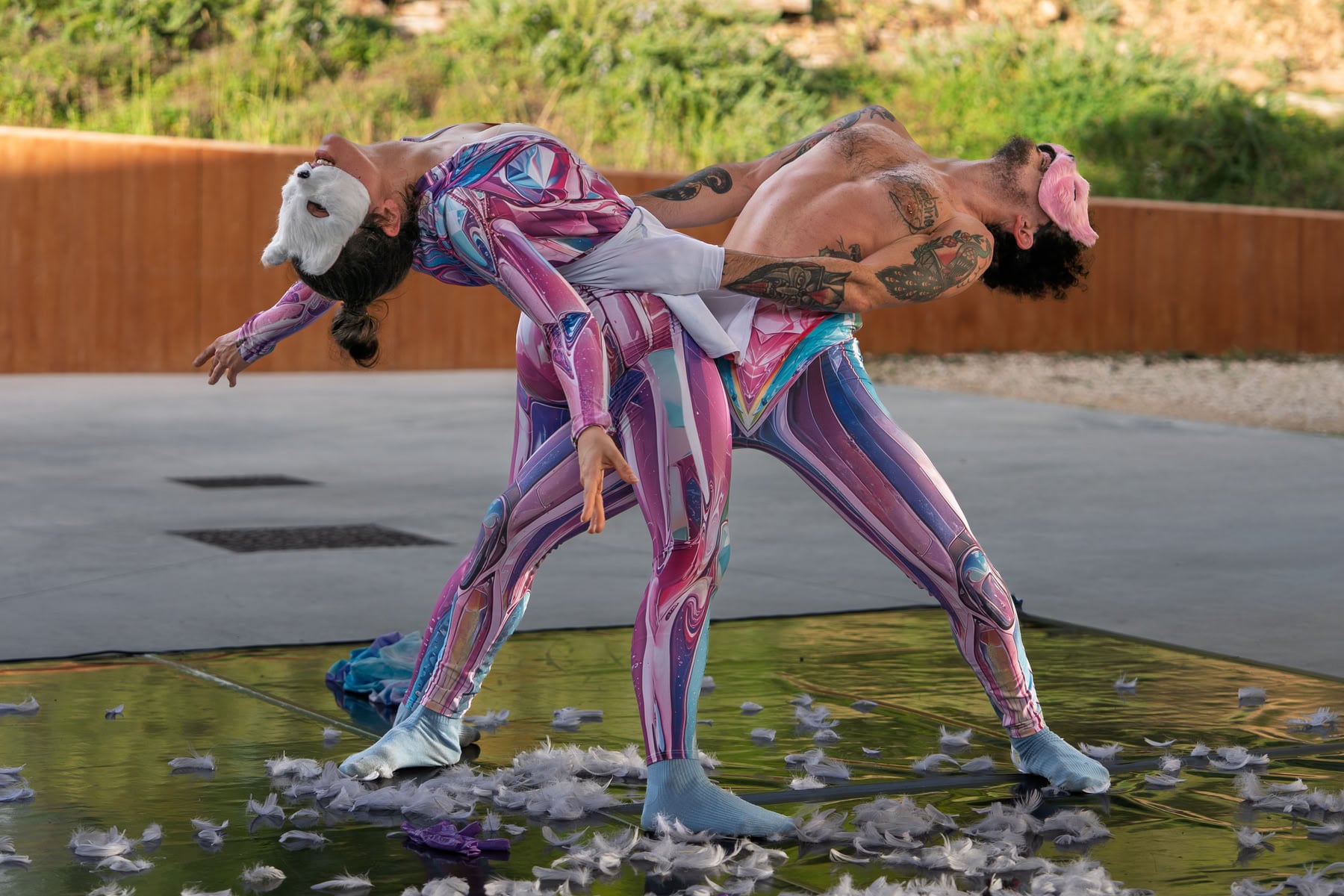
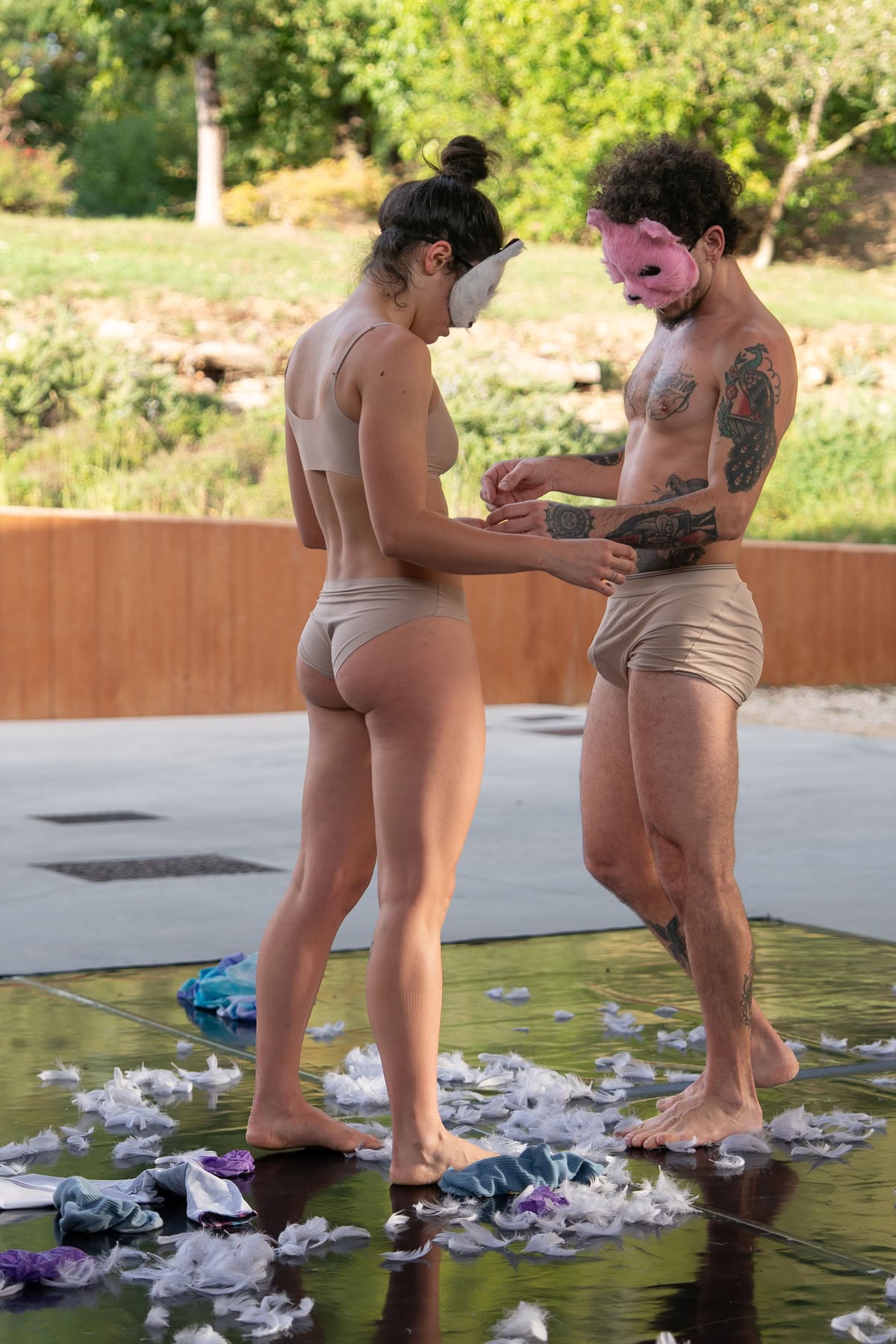
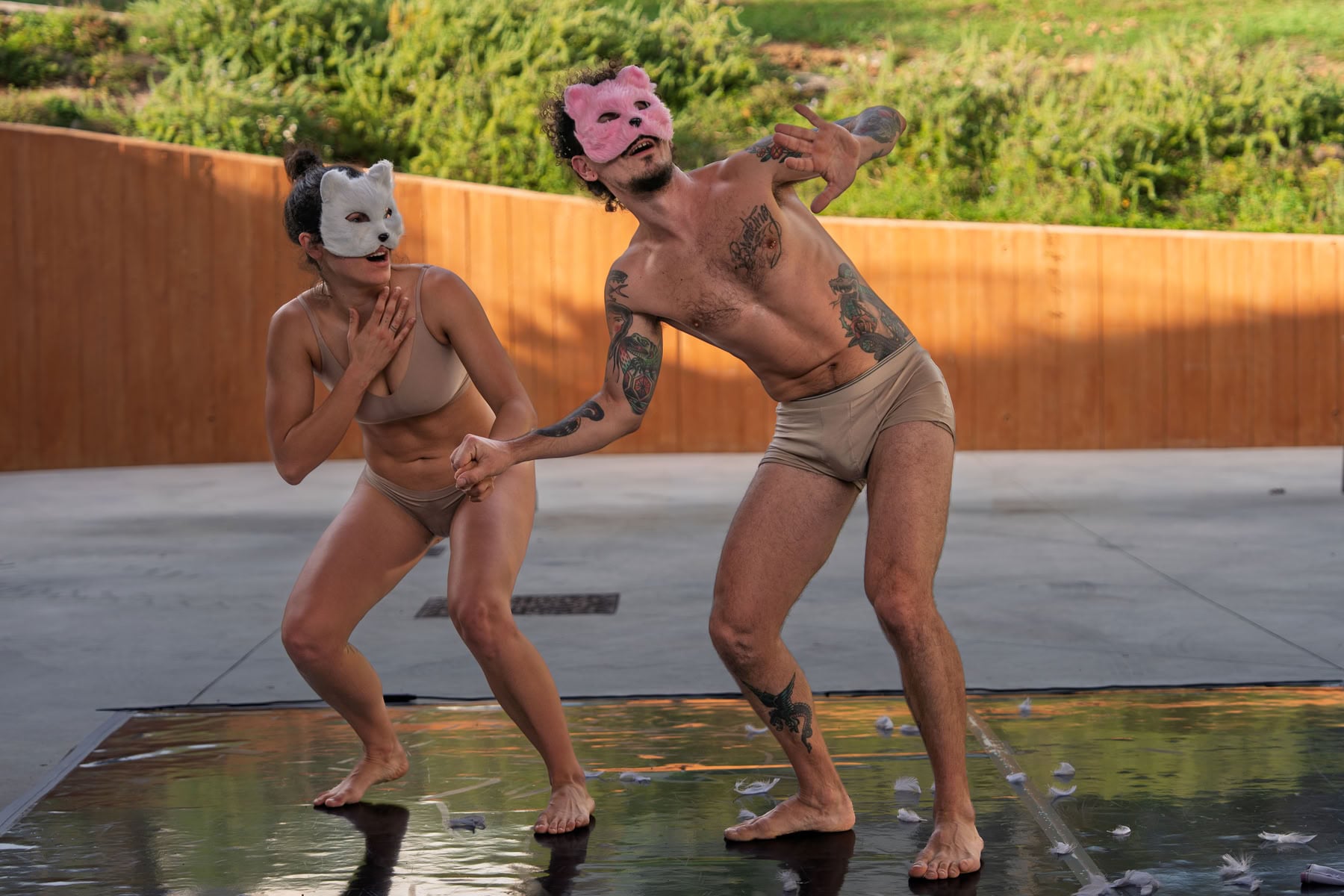
Under the large wooden roof outside the fermentation room, Berlin-based dancers and choreographers Carlos Aller and Cecilia Bartolino presented Nothing Happens, their piece about technology, especially AI, created for their company, La Rinascita. It was slick and meticulously rehearsed, with perfect lip-syncing to AI-generated voices, and body movements timed to sound effects: swooshes, whacks, and other cartoonish noises.
For some reason, they wore garish full-body unitards and cat demi-masks (Schrödinger’s Cat?) as their virtual reality headsets. They fought and caressed, were bold and then timid… the surprising changes were like scrolling through a social media feed. They hid themselves and then revealed themselves, eventually removing their masks, creating chaos by breaking a bag full of feathers, then finally returning to the safety of VR before the big reveal of taking off their unitards. Hesitantly, overwhelmed by all that was revealed in the world around them, they shifted away from the performing area.
After some delicious appetisers designed to accompany three of Tenuta Della Casa’s superb wines, the tour was over, and we were taken to the theatre in Cormons for the next event.
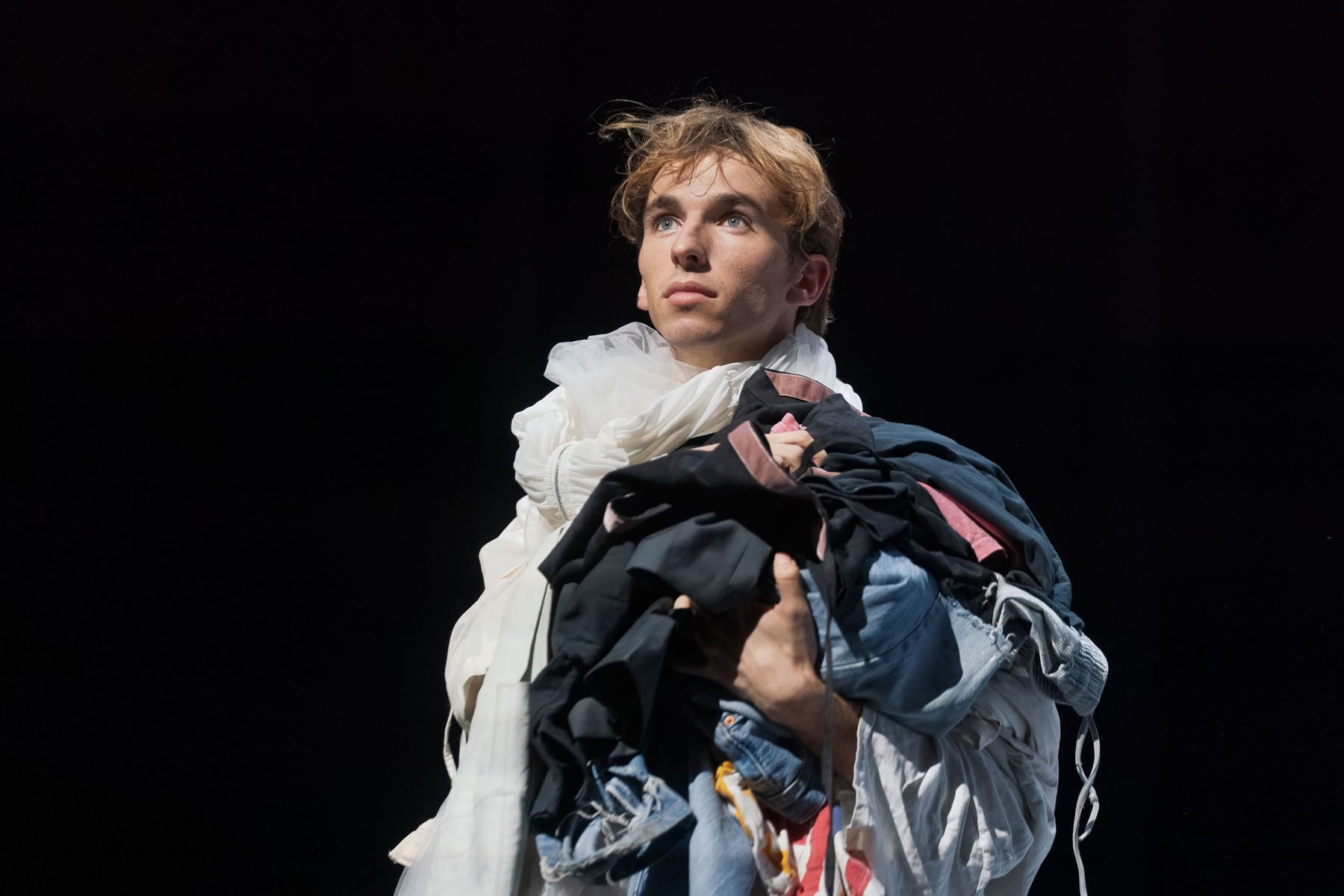
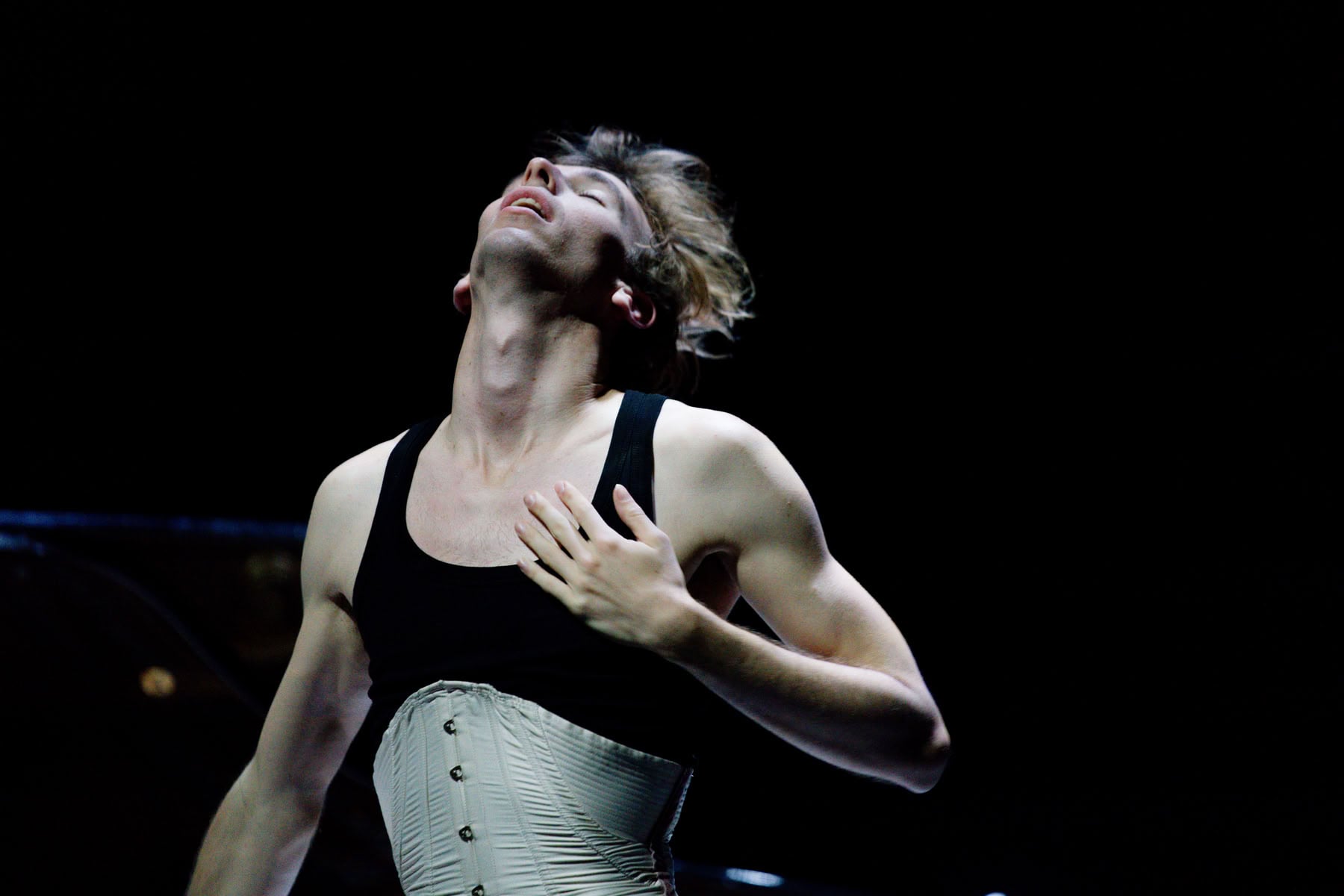
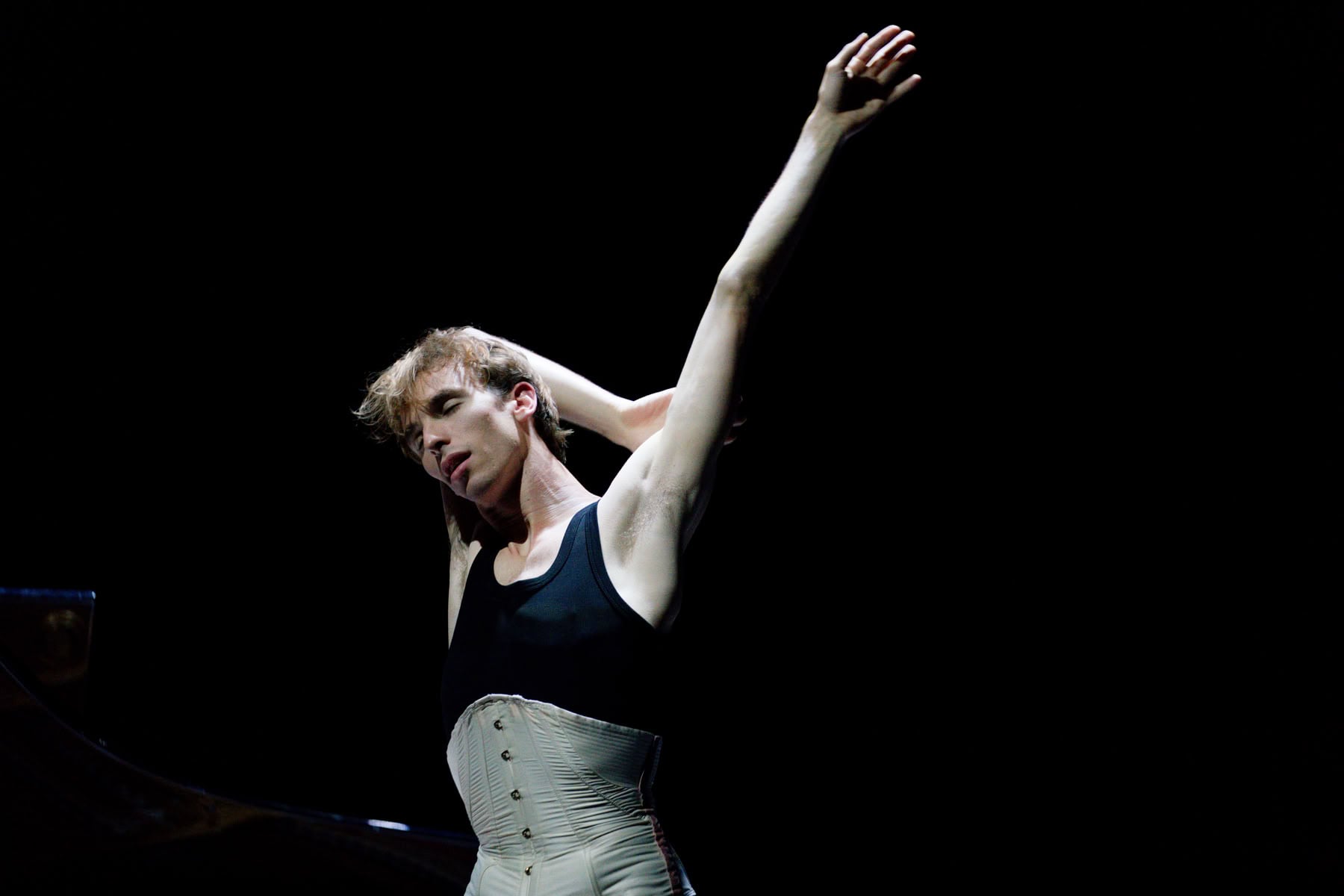
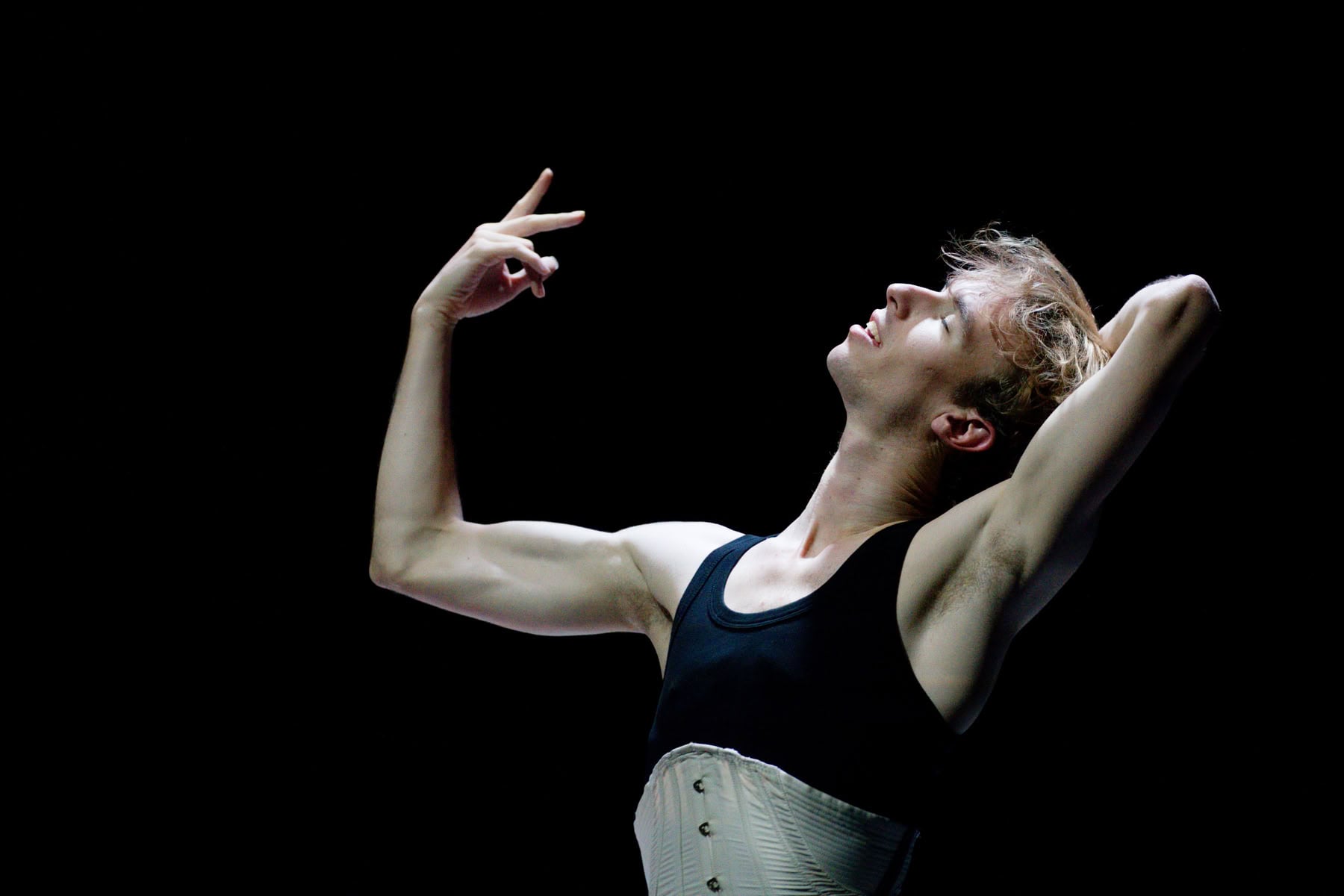
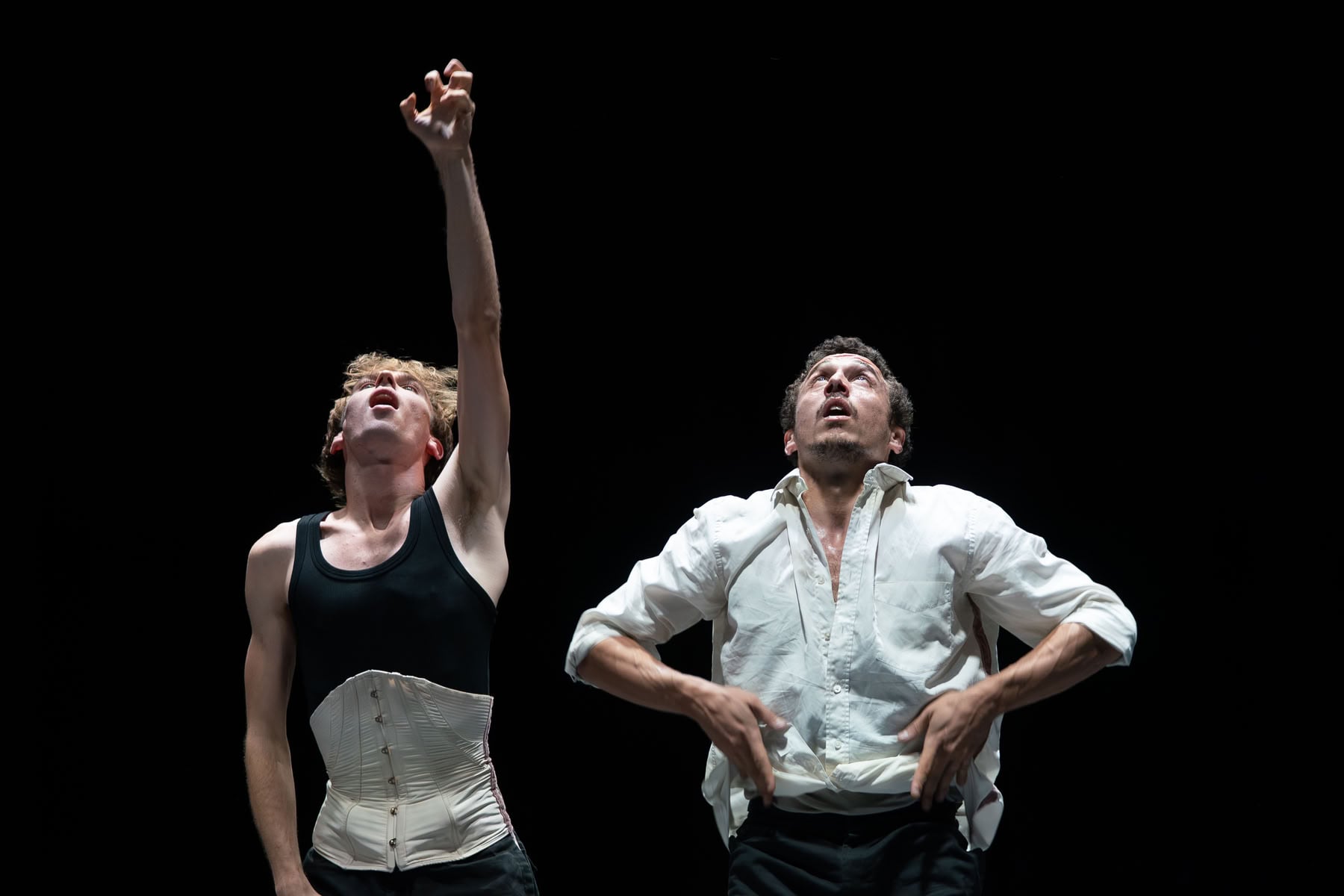
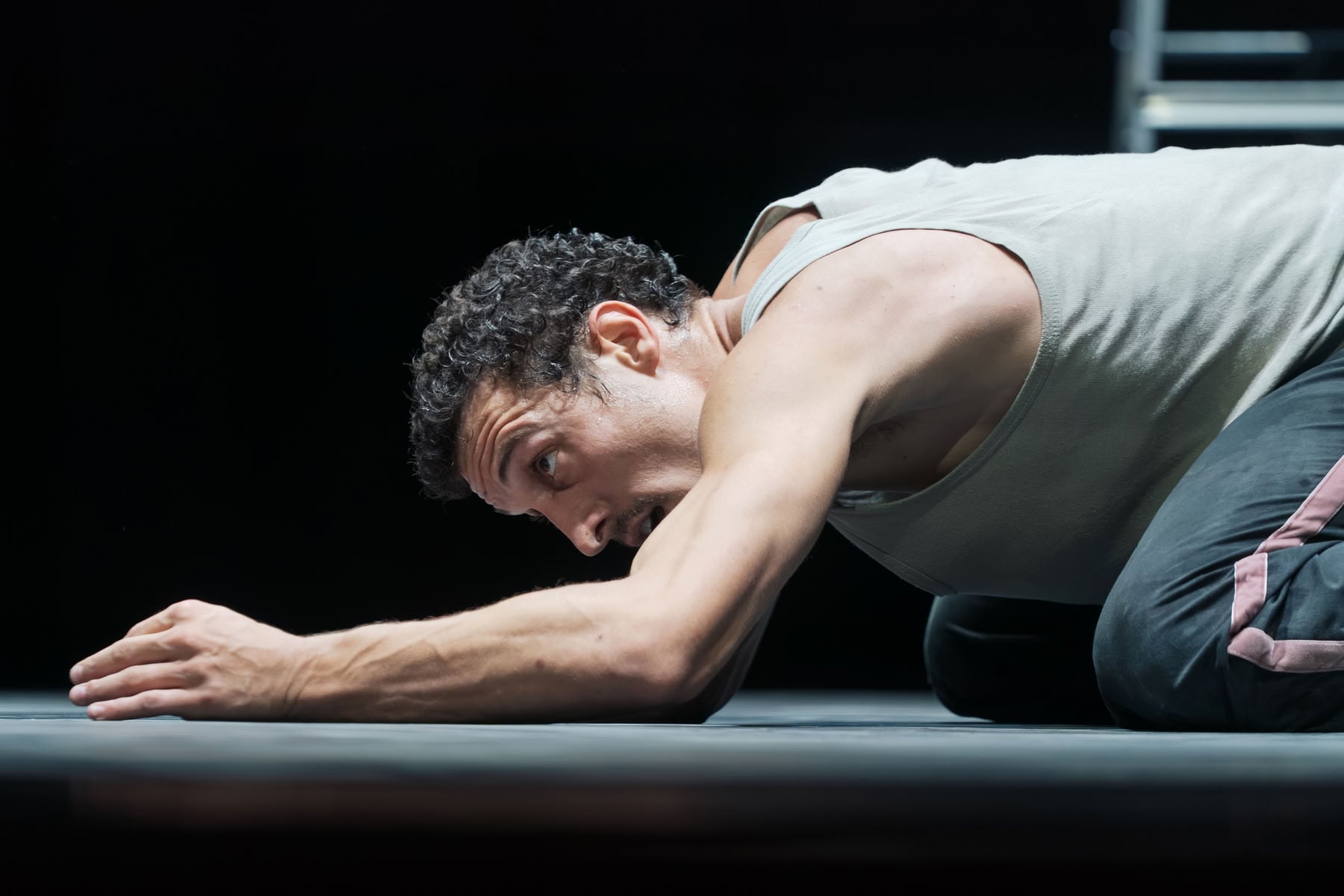
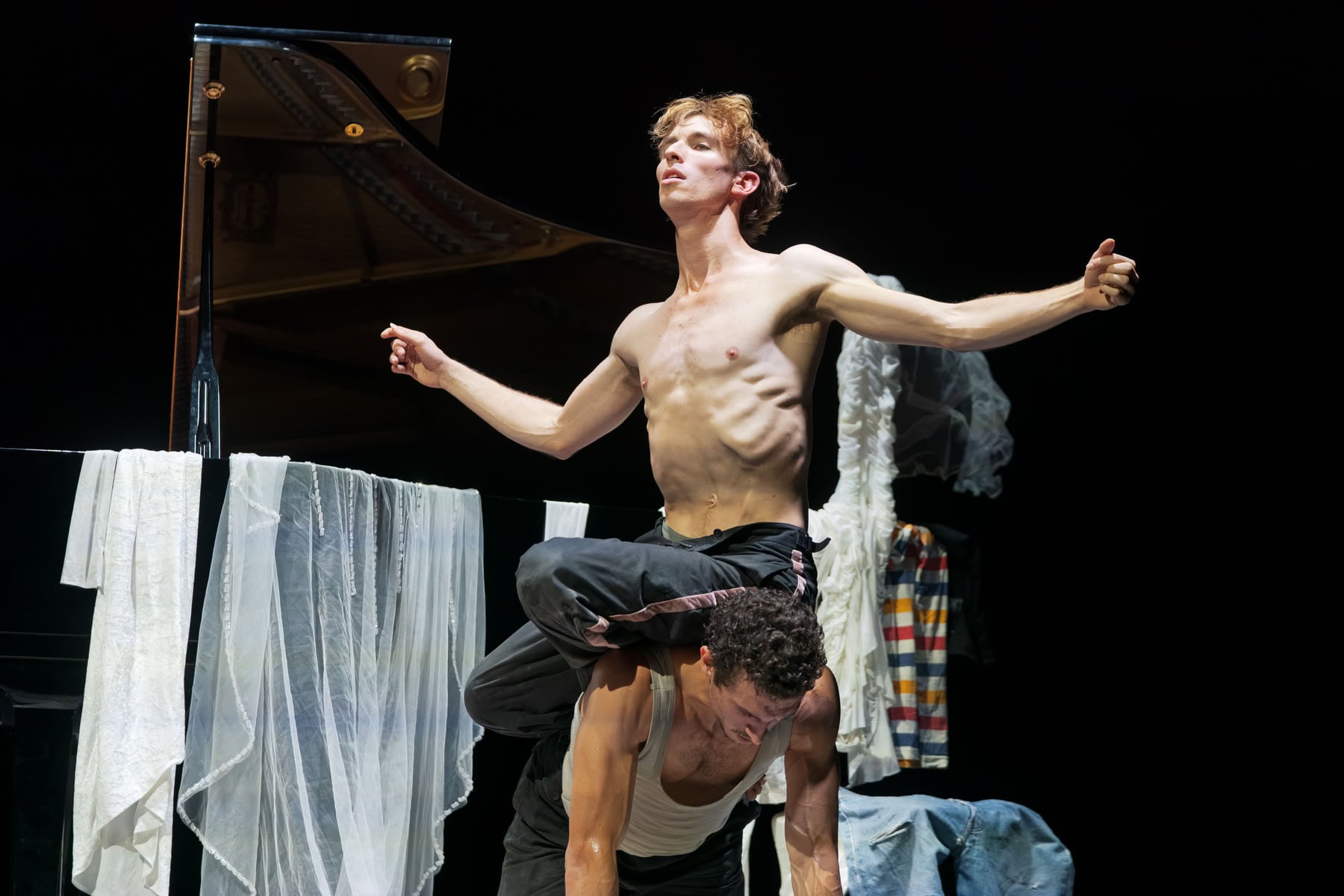
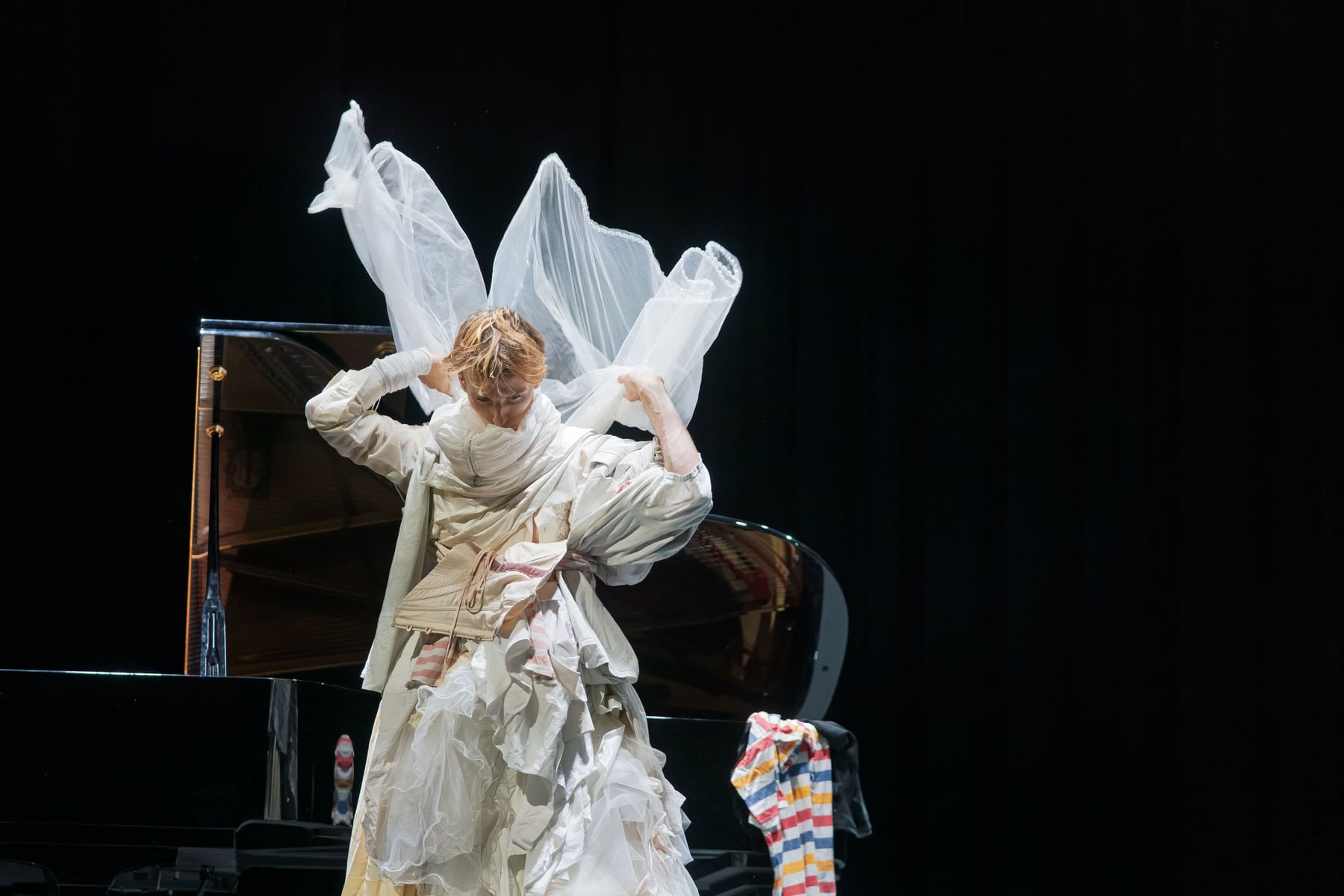
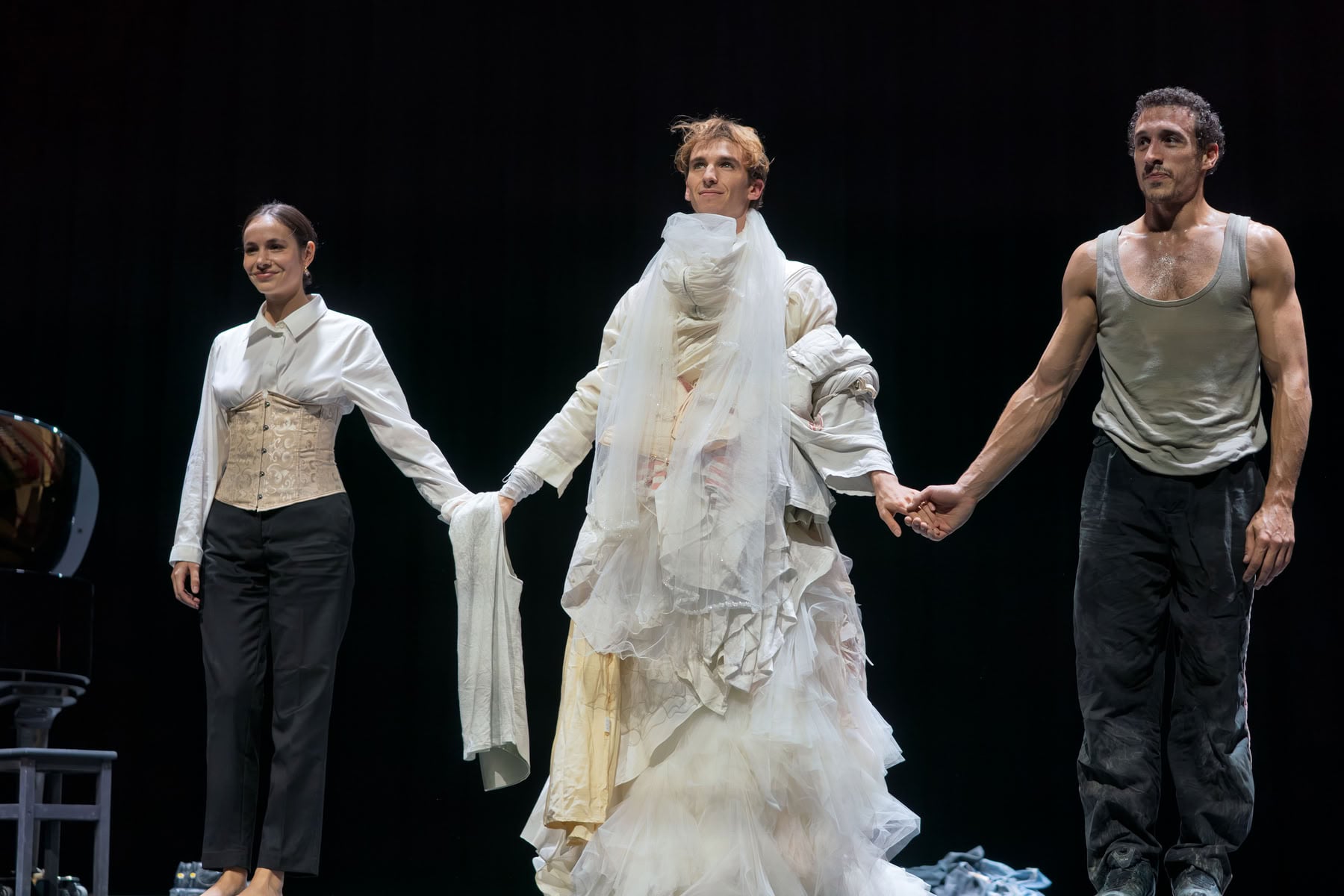
Six hours after the start of the tour, La lalangue began with the pianist Beatrice Barison adjusting her piano stool while a body twitched beneath scattered clothing under the piano.
Lalangue is the unruly world of sounds and wordplay that comes before a language is structured. French psychoanalyst Jacques Lacan coined the neologism in the 1970s. Roland Barthes, a French literary theorist and philosopher who knew Lacan, analysed Robert Schumann’s piano cycle Kreisleriana in his essay ‘Rasch’ in 1975. ‘Rasch’, German for ‘brisk’, was one of Schumann’s indications in the score. In his essay, Barthes introduces the concept of the ‘somatheme’ (somatème), the idea that music can convey physical movement, gesture, and bodily feeling in ways that words cannot. It’s also worth knowing about Florestan and Eusebius, the names Schumann gave to the two sides of his personality: Florestan is the extrovert and Eusebius the introvert; Florestan acts, Eusebius dreams. Schumann gave these alter egos a voice in both his writings and his music, and in his music criticism, they would sometimes ‘argue’ with each other, offering contrasting opinions.
Do you need to know all of this before seeing the 50-minute piece? Sadly, yes. I had no idea what was going on. A plotless neoclassical ballet by Balanchine will suggest stories, but here the actions were confusing, with its opaque title giving no clues. Barison played beautifully while the animalistic Giacomo Luci, who was also the choreographer, ate up the scenery (he was really very good), and fey Pierre Loup Morillon dreamed away dressed in the same corset as the pianist: Florestan and Eusebius.
Morillon did a kind of belly dance while sitting on Luci’s back; a stepladder was brought on, and Luci ascended it with a yellow garment in one hand and a red one in the other; Morillon slowly put on all the clothes scattered around the piano before exiting. More engaging choreography would have helped avoid the piece’s tediousness.
As we were munching on pizza in the foyer, before heading off to the evening show (to be covered in an upcoming review), a woman who knows her dance well came up to me and said, “What the hell was all that about?” Quite. After a little research and with the aid of a press release, I now have an idea, but should that level of work be necessary? A less pretentious approach – perhaps simply calling it Florestan and Eusebius, for example – would have made things much clearer.
A fantastic tour, followed by a disappointing Schumann work – but the day wasn’t finished. The Ballet of the Serbian National Theatre performed Sidi Larbi Cherkaoui‘s mesmerising 2015 work Fall at the Slovenian National Theatre in Nova Gorica…