Review: Onegin in Rome – two exceptional performers in a tear-jerking evening
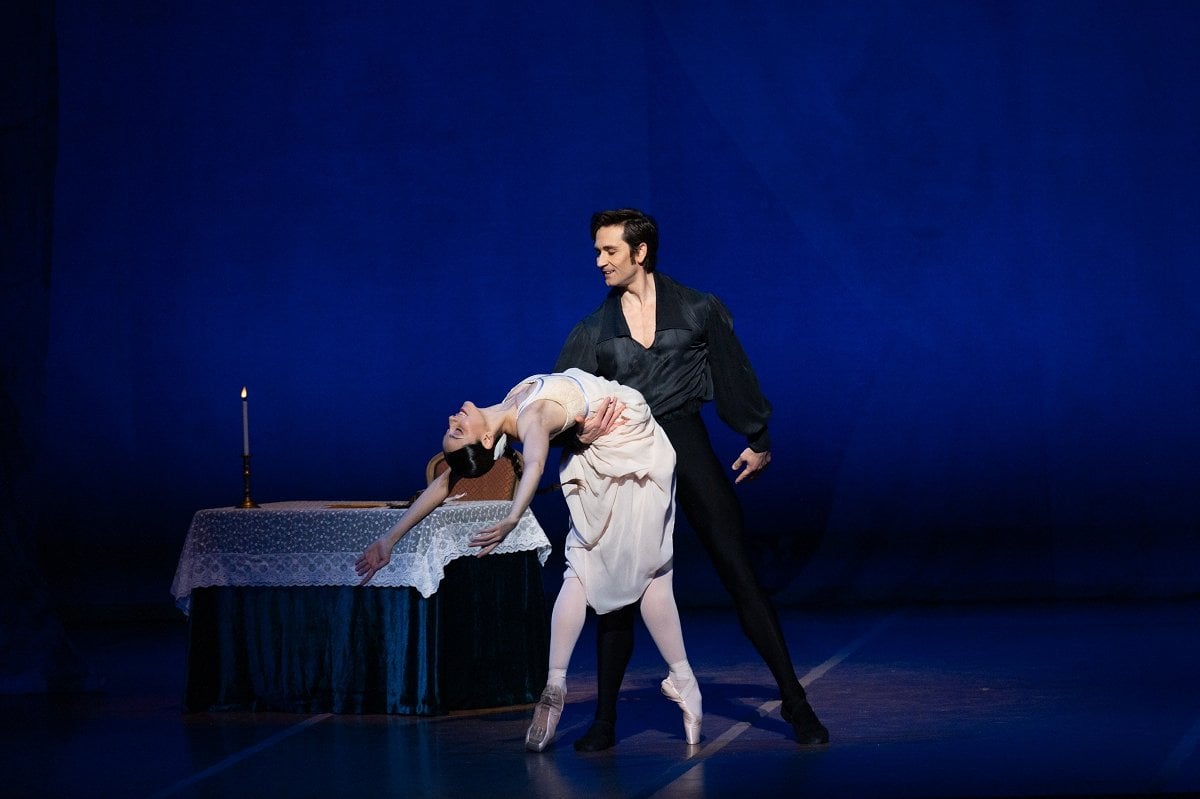
Marta Mele sees the Rome Opera Ballet in John Cranko’s Onegin starring two exceptional performers, Friedemann Vogel and Nicoletta Manni.
| Title | Onegin |
| Company | Rome Opera Ballet |
| Venue | Teatro dell’Opera di Roma |
| Date | 8 Aprile 2025 |
| Reviewer | Marta Mele |
In the history of Russian literature, Pushkin has a special role – he is the most beloved, the most well-known, the most quoted poet. Disliked by the Tsars, he was sent into exile in the Caucasus, and its nature inspired him to write several poems. In his most famous novel in verse, Onegin, written between 1823 and 1831, he demonstrated not only lyricism, but also the ability to create a true encyclopaedia of Russian life of that time. The characters have a universal symbolic value that allows us to identify with them even today.
The duel that occupies such a central place in the work foresaw Pushkin’s own end. At the age of just 37, he clashed with Baron D’Anthès after receiving an anonymous letter insinuating at his wife’s infidelity. The event shocked all of St Petersburg, which went to pay homage to the poet in his house on the Moika embankment. With him, the century of poetry died, and the ground was prepared for the great Russian novels of the second half of the nineteenth century.
Pushkin’s verses cry out to be staged, but this was a time when ballet was given as an interlude between operas, and bored dandies arrived late just to admire the dancers. It was the world of Didelot’s pre-romanticism, and from his exile in the Caucasus, the writer wondered if he would ever see the soulful flight of Russian Terpsichore again.
Already in Russia, the idea of staging some of Pushkin’s poems in the form of ballets such as Ruslan and Lyudmila and The Prisoner of the Caucasus was born. But it was strangely in the era of socialist realism that Pushkin returned to fashion for the creation of a canon of educational ballets aimed, among other things, at showing the paradoxes during the era of the Tsars. Onegin had been a great success as an opera production thanks to the genius of Pyotr Ilyich Tchaikovsky, however for the ballet, the world had to wait until the era of dance drama – the one to stage the ballet, based on a reworking of Tchaikovsky’s score by Kurt-Heinze Stolze, was the choreographer of South African origin, John Cranko. This was during his phase of great successes in Stuttgart exactly sixty years ago.
In his balletic lyrical realism, Cranko naturally does not forget the lesson of the Soviet choreographers of the drambalet era, even if observing the ballet revived in Rome in recent weeks under the supervision of Reid Anderson (with sets and costumes by Elisabeth Dalton from the Dutch National Ballet) among the most used sources we seemed to glimpse the nineteenth-century Giselle. Here too we are in a rural context, although, as the frontcloth dedicated to Pushkin suggests, the world of reading and letters in general prevails. So Tatiana is portrayed on the side of the stage, immersed in a book, as the male protagonists appear on stage. The differentiation of the couples is immediately evident – if the duo formed by Olga and Lensky is marked by great lightness, a pensive Onegin with his wrist often pressed to his forehead leaves very little space for Tatiana’s desires.
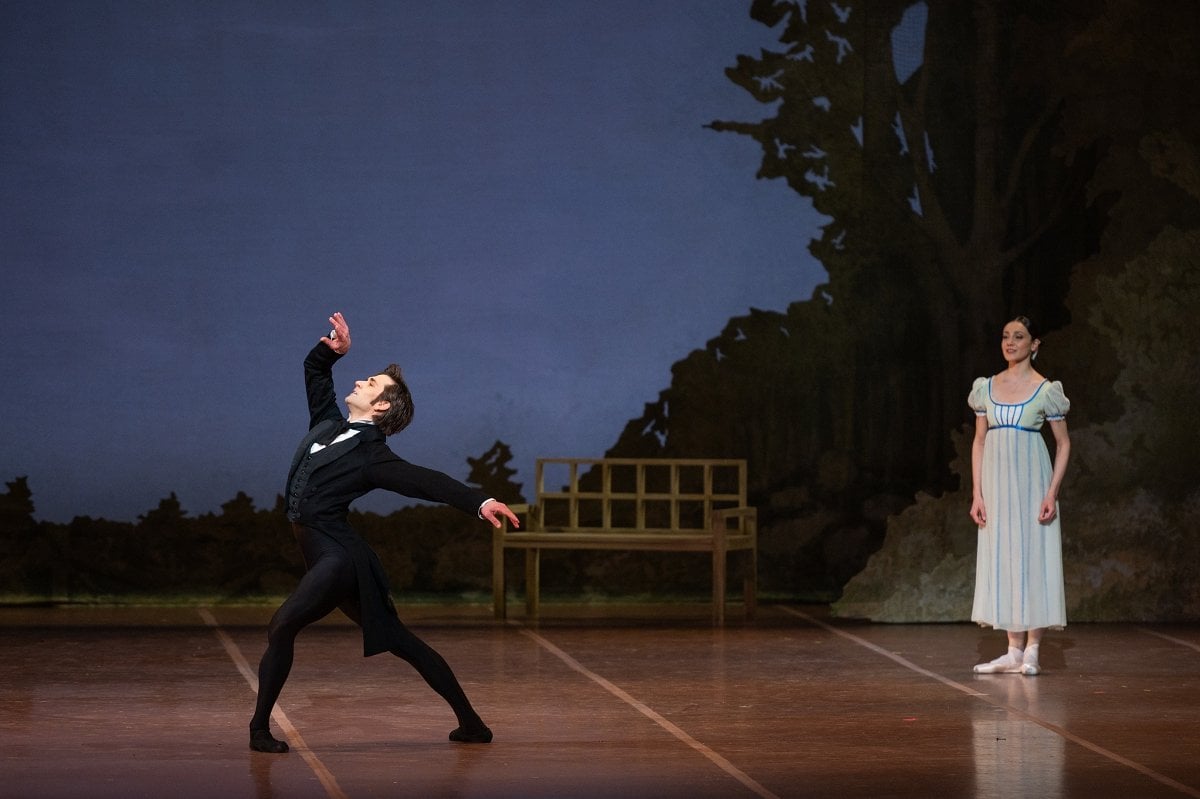

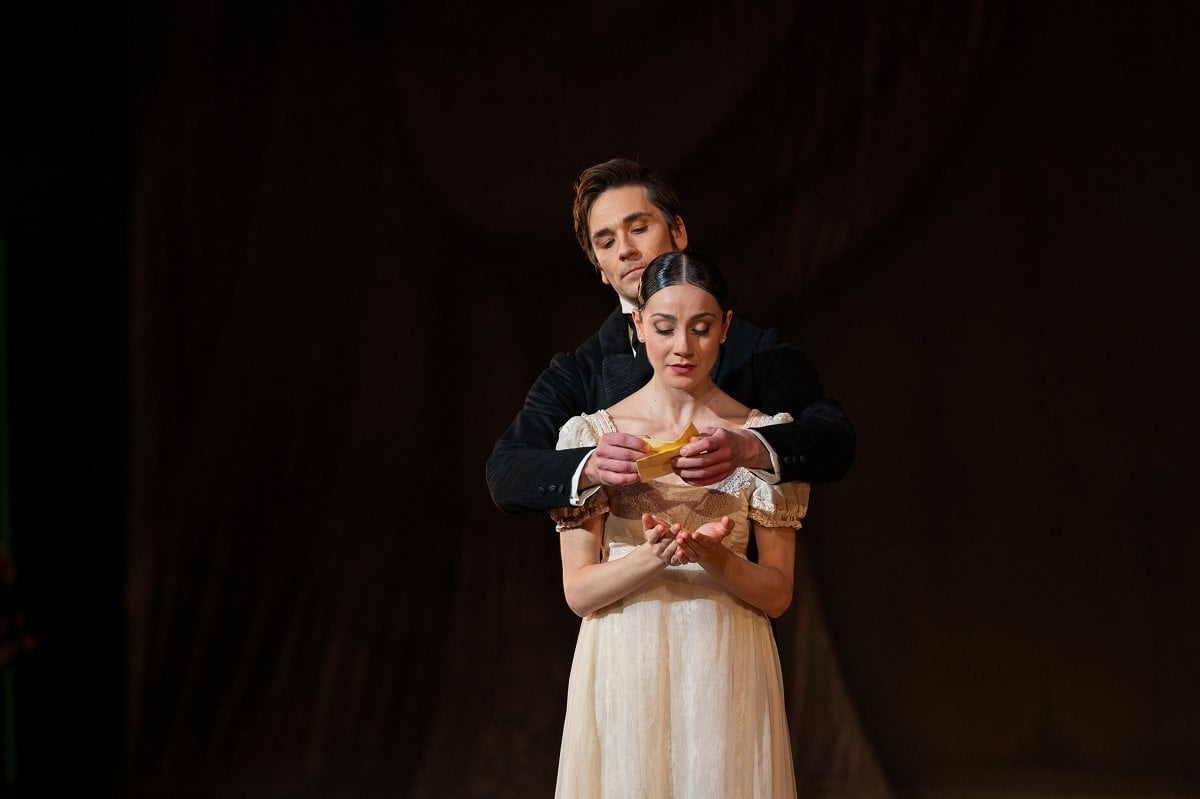

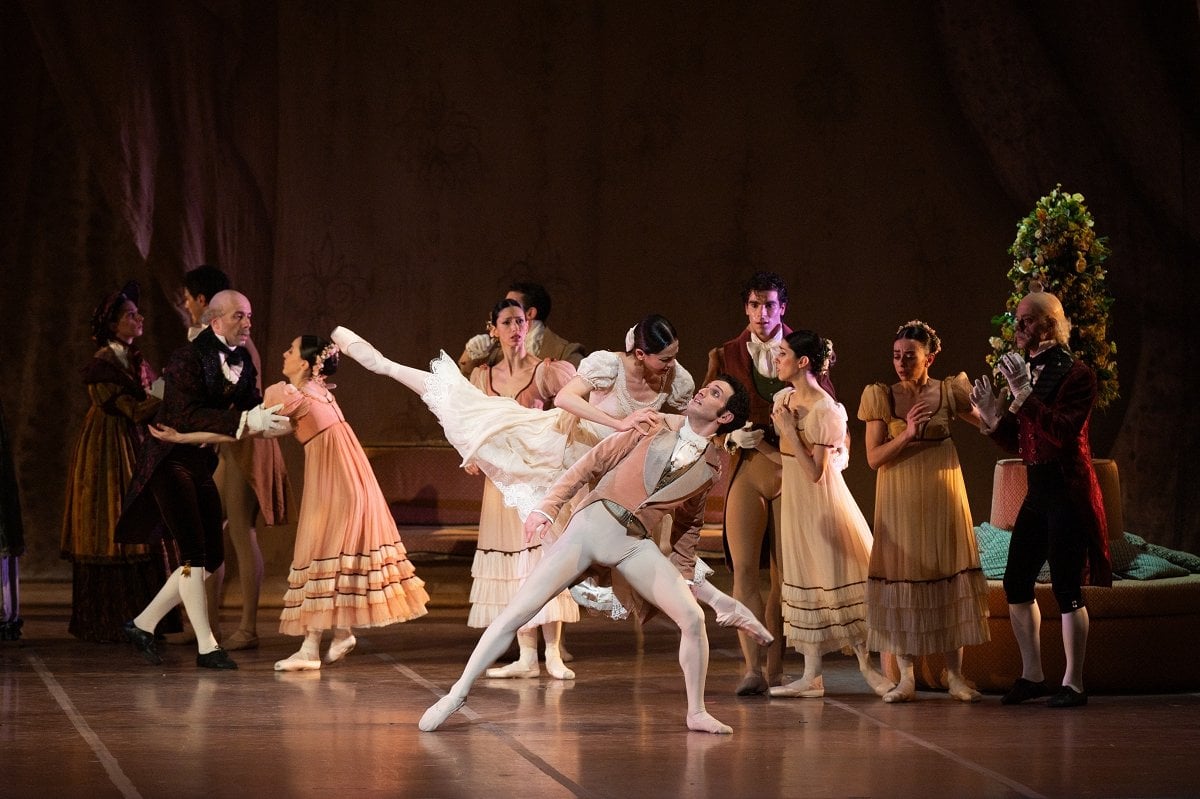
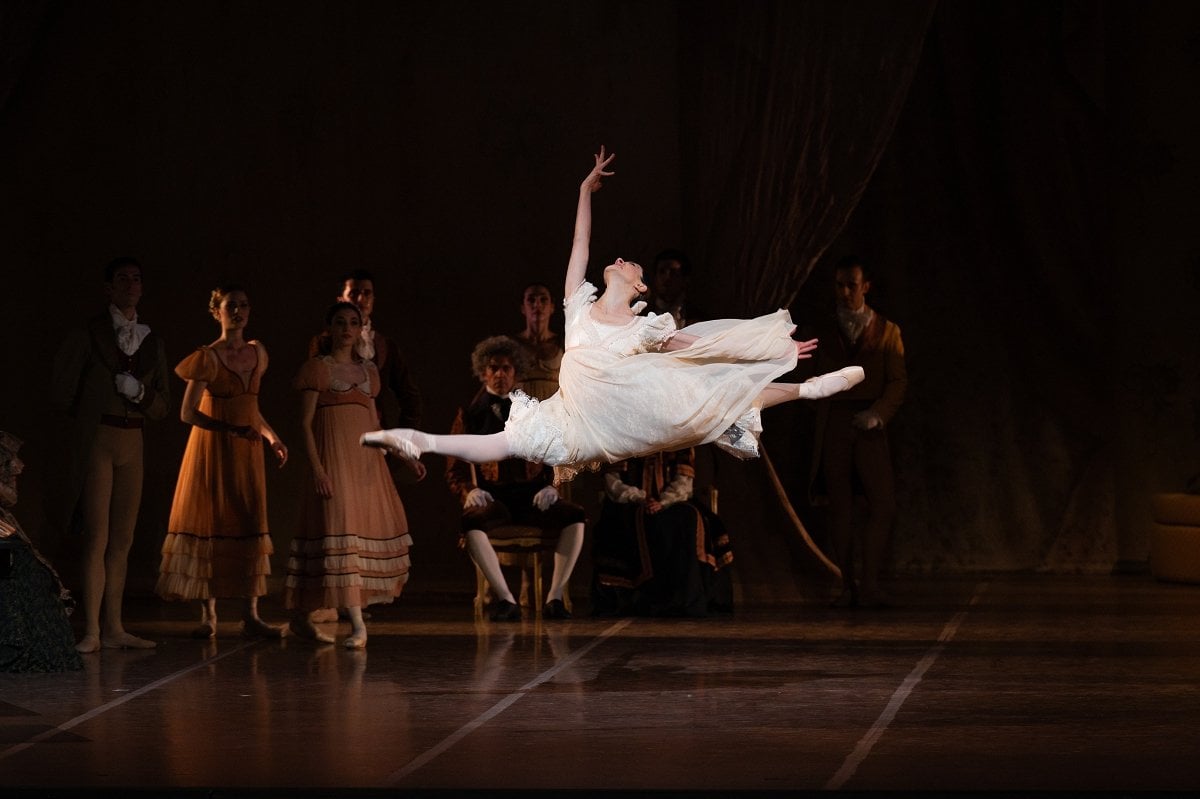
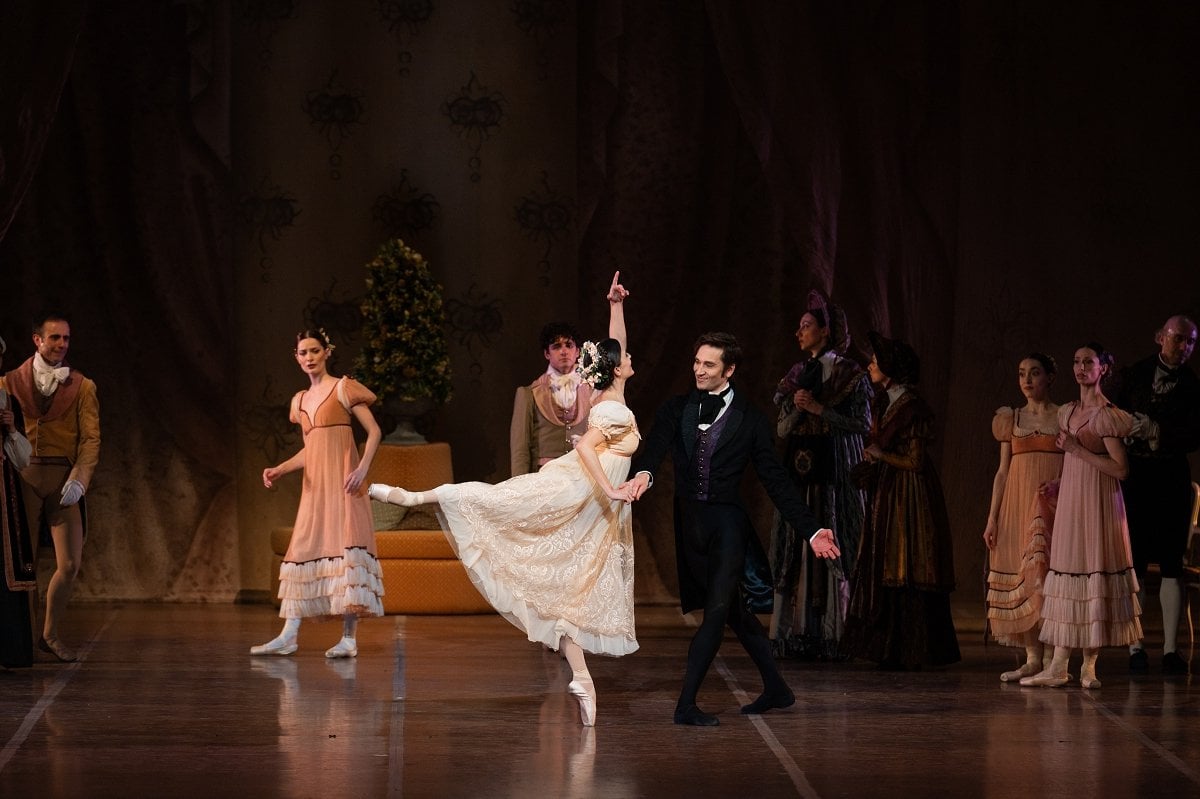
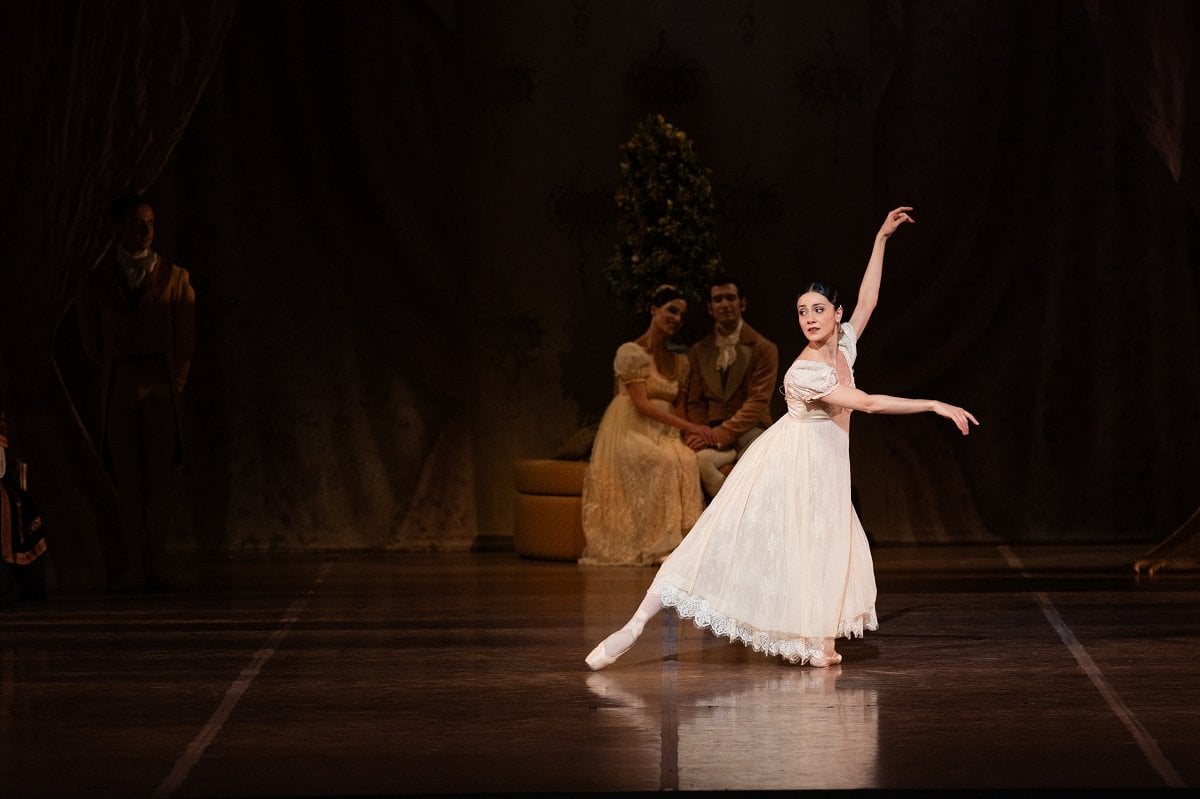

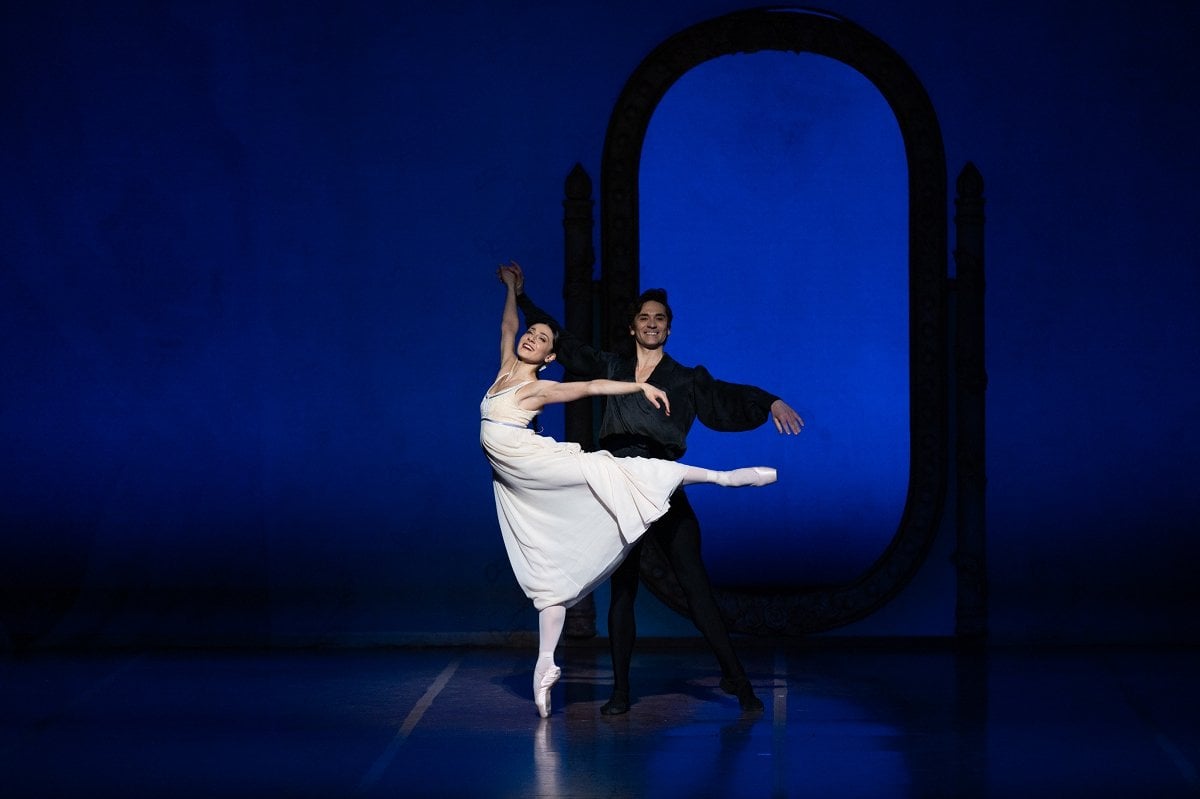
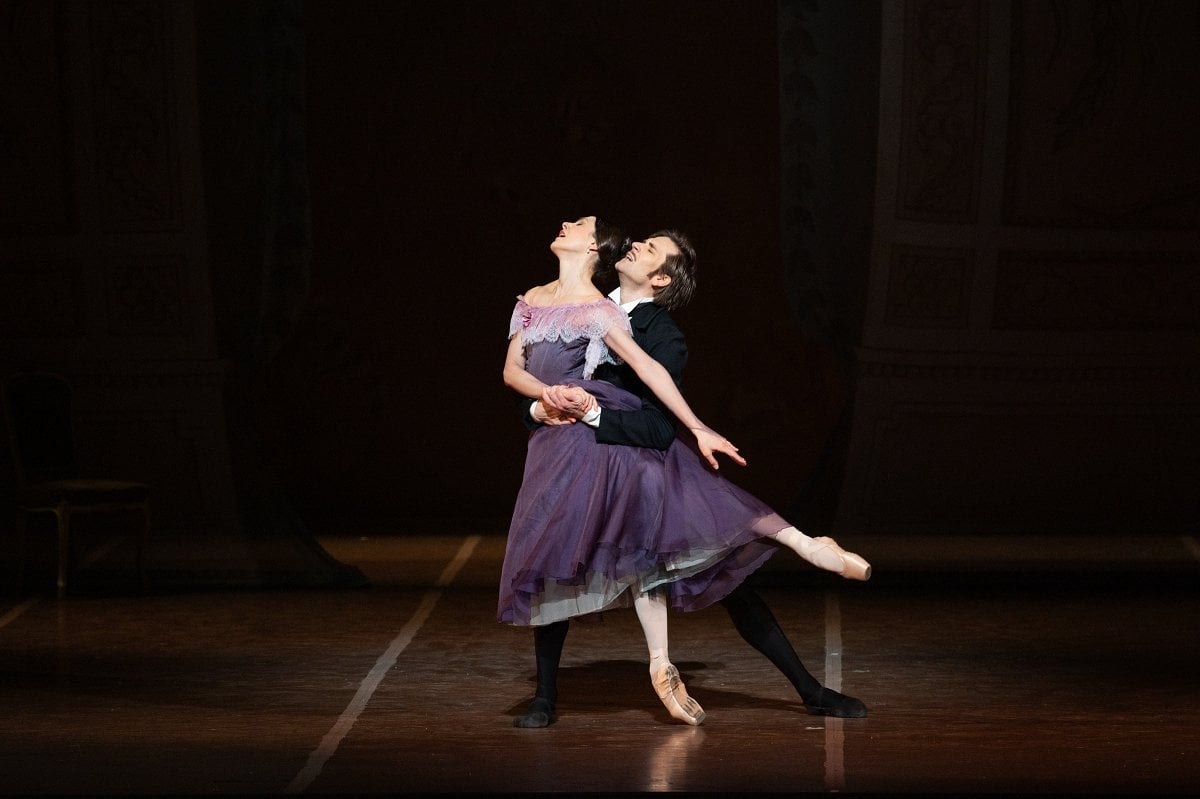
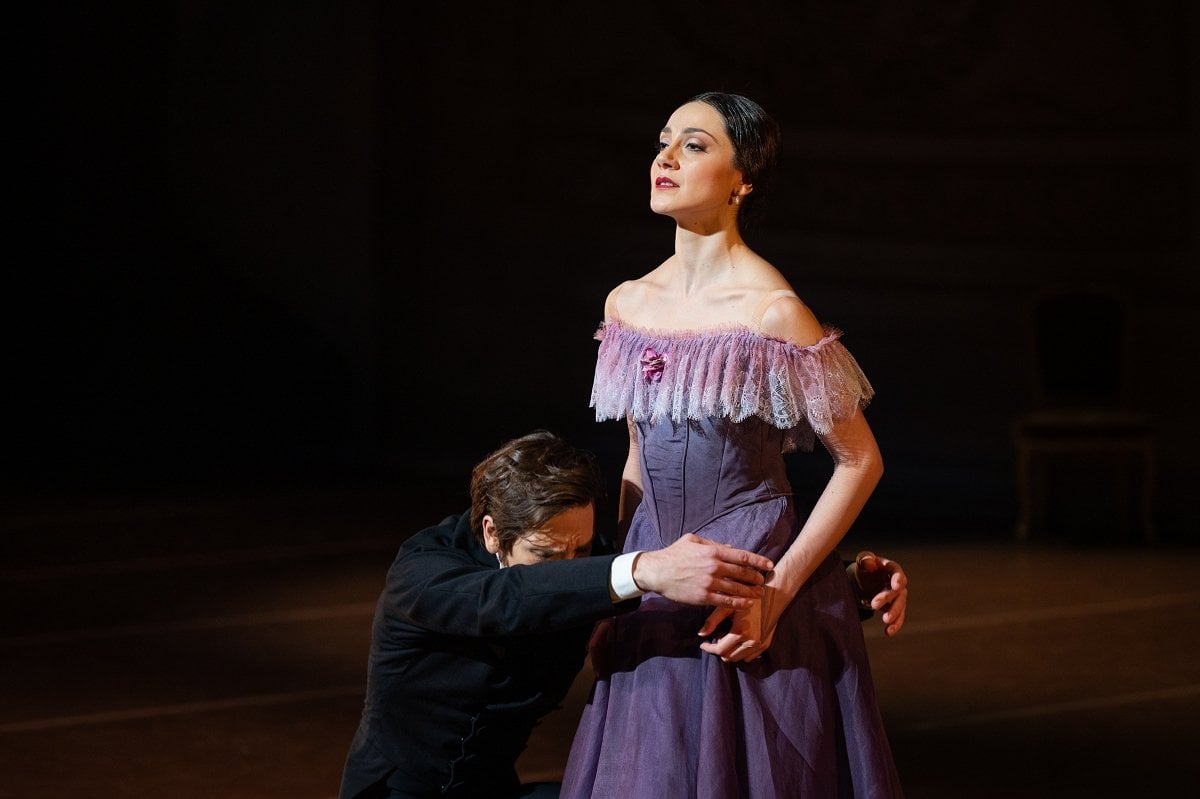
Of utmost importance is the casting of the interpreters. Nicoletta Manni‘s Tatiana is refined and elegant, perhaps a little introverted in her noble demeanour that pairs well with the long lines of the haughty Friedemann Vogel as Onegin. Susanna Salvi‘s Olga is livelier and more extroverted and aligns herself with the eloquent expressiveness of Alessio Rezza‘s Lensky. They are supported by a well-disciplined and dynamic company. Here, the peasant dances of Giselle are replaced by joyful Russian dances and a chorovod, and the company in couples distinguish themselves by exiting the stage with a diagonal of showy grand jetés.
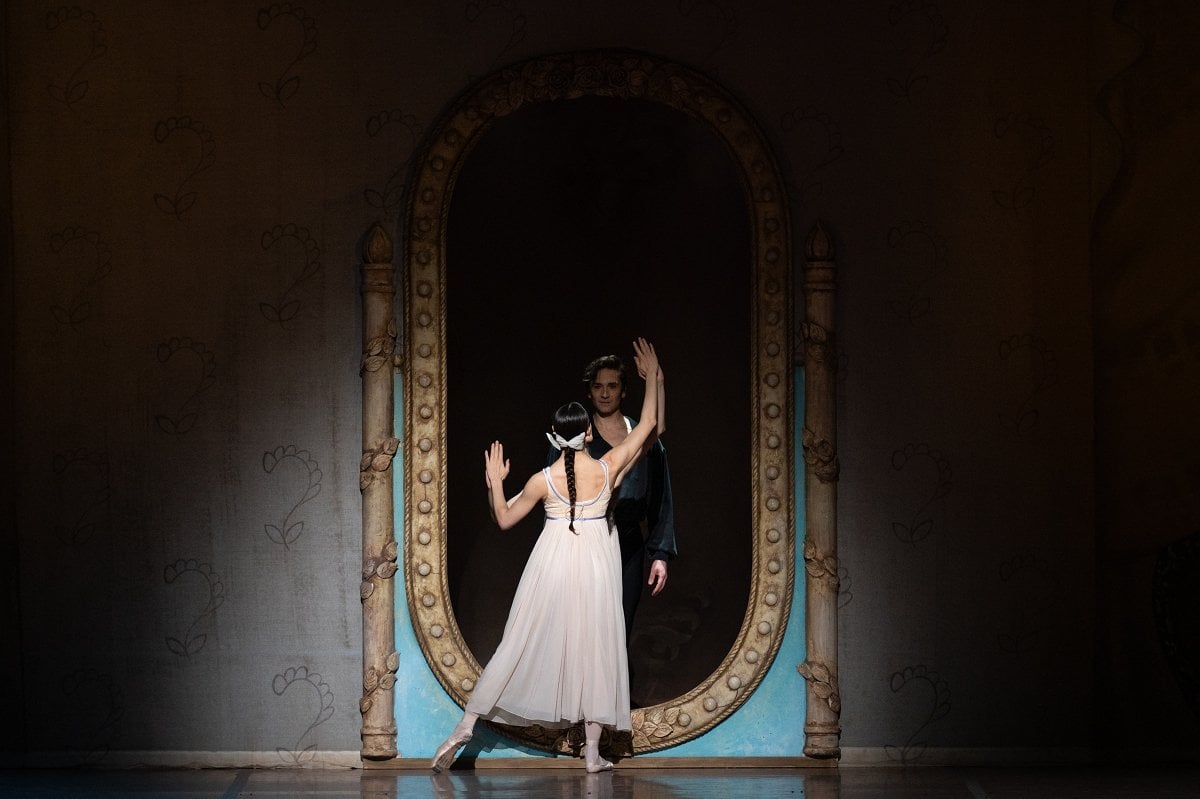
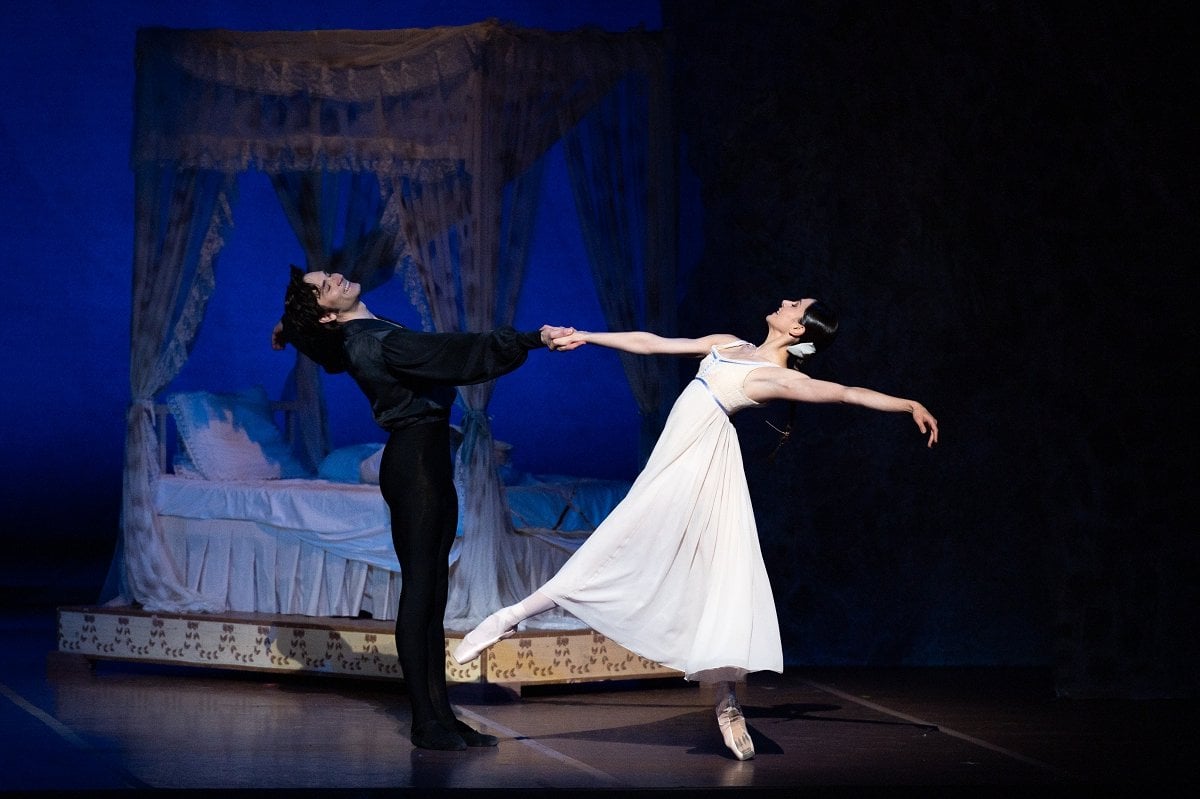
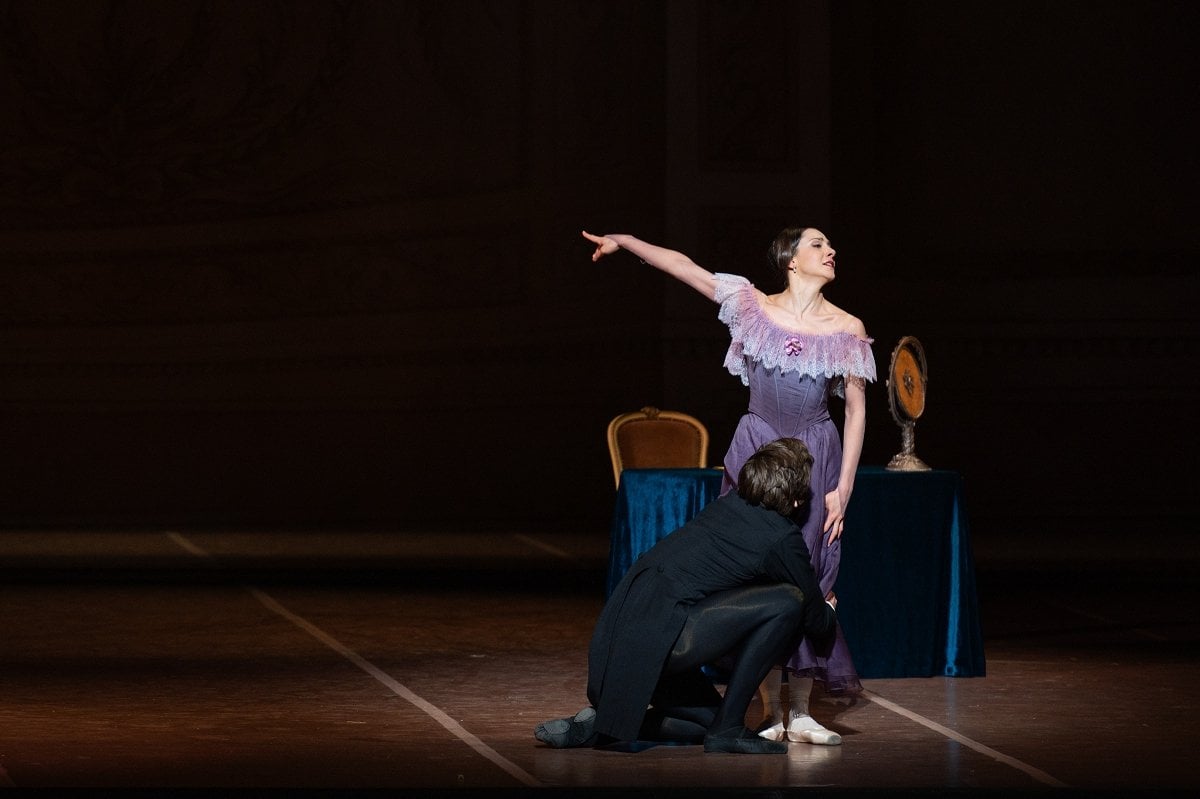
Compared to the romantic masterpiece, the uniqueness of the dance drama allows us to approach the lyrical world not through an otherworldly universe, but in the intimate daily dimension of a bedroom where a symbolic mirror stands out. Tatiana travels with her imagination, and this allows her to finally dance a duet full of passion with the man who occupies her thoughts. Vogel’s solid partnering lets Manni show all of her expressiveness, with the power of her fervent outbursts and the purity of her poses. Taking courage, Tatiana finally completes her love letter and has it delivered to her beloved by a servant, while a beam of light illuminates her hopeful port de bras.
With the change of scene in the second act, among the semi-aristocratic pomp, we observe the dramas of rejection and jealousy. The two women witness the tragedy as spectators, but after a significant exchange of glances, Onegin finally reveals his fragility in a liberating cry. Then, finally, in the third act, the roles of the main characters change completely.
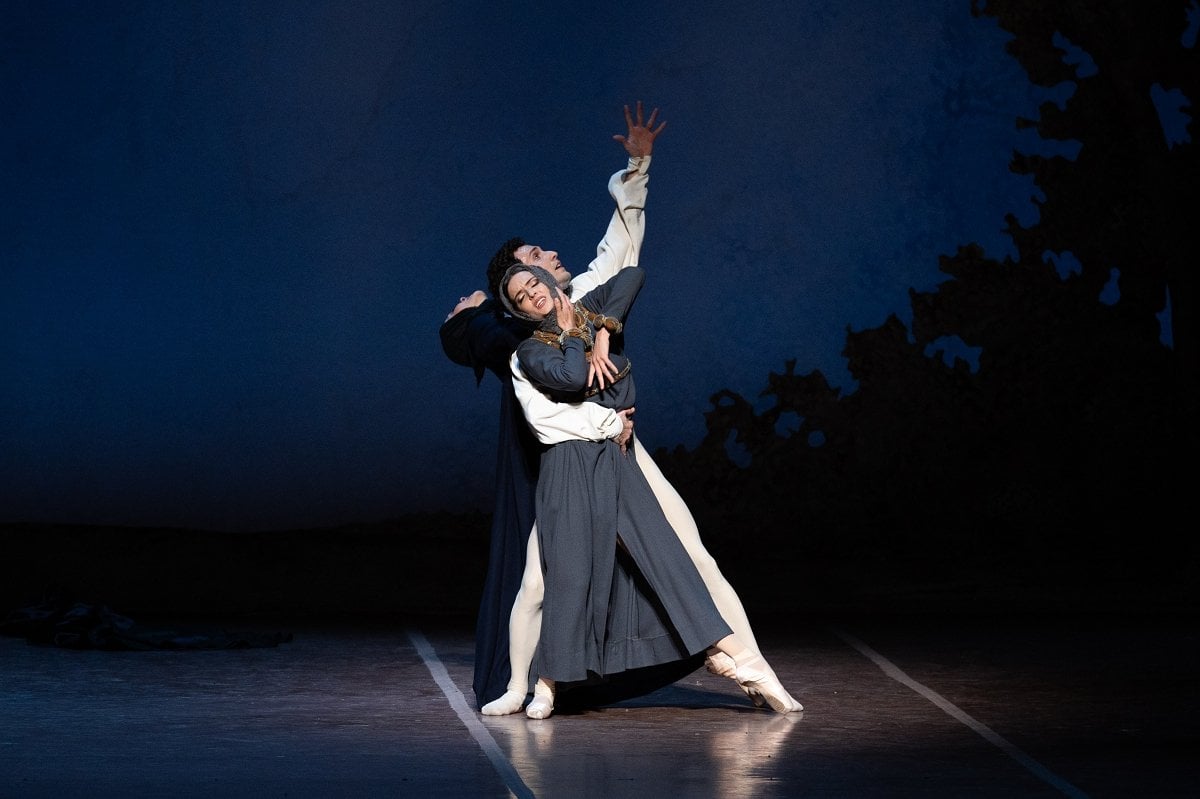
Tatiana is now an adult woman, aware of her marital responsibilities. She faces them with great vigour and incredible aplomb, thanks also to the strong stage personality of Manni. It was after dancing the role of Tatiana with Roberto Bolle that she was nominated étoile at the La Scala Ballet in November 2023. Vogel, coming from the Stuttgart ballet, knows his role well, and in the final act he is increasingly visited by his ghosts and is now certainly aware that he has lost a great love. Naturally, his letter to Tatiana declaring his feelings does not leave her indifferent in the final pas de deux, but she faces reality with courage and determination. By resisting the man she loves, she manages to break free and tear up his letter. After crouching at her feet, Onegin can do nothing but exit the scene. Olga remains at the centre of the stage. She is alone and holds her heart with one hand. A tear-jerking evening for an audience that did not shy away from the story’s emotions.