
[Review] The Royal Ballet and Sarasota Ballet in Ashton Celebrated – Divertissements | Façade
Jonathan Gray sees The Royal Ballet and Sarasota Ballet performing Frederick Ashton short works and Façade as part of Ashton Celebrated.
| Title | Divertissements | Façade |
| Company | The Royal Ballet and Sarasota Ballet |
| Venue | The Royal Opera House, London |
| Date | 7 & 9 June 2024 |
| Reviewer | Jonathan Gray |
There has been a feast of choreography by Frederick Ashton at the Royal Opera House in the past few days, with both The Royal Ballet and Sarasota Ballet taking part in the Ashton Celebrated season on the Main Stage and in the Linbury Theatre. I reported on the opening programmes here and here, but there were also a series of Ashton divertissements to consider for Gramilano, as well as a very welcome revival of Façade, one of the choreographer’s earliest works and now all too rarely seen in the UK.
On the Main Stage, The Royal Ballet presented Five Brahms Waltzes in the Manner of Isadora Duncan, which Ashton made on Lynn Seymour back in 1976, and Hamlet and Ophelia, originally titled Hamlet Prelude and created for Rudolf Nureyev and Margot Fonteyn in 1977. Joining the company on the Main Stage were dancers from Sarasota Ballet in another short dance, The Walk to Paradise Garden, first performed in 1972 by Merle Park, David Wall and Derek Rencher. These works displayed Ashton in serious mode, but also demonstrated his range of creativity and the affection he held for the artists on whom he created them.
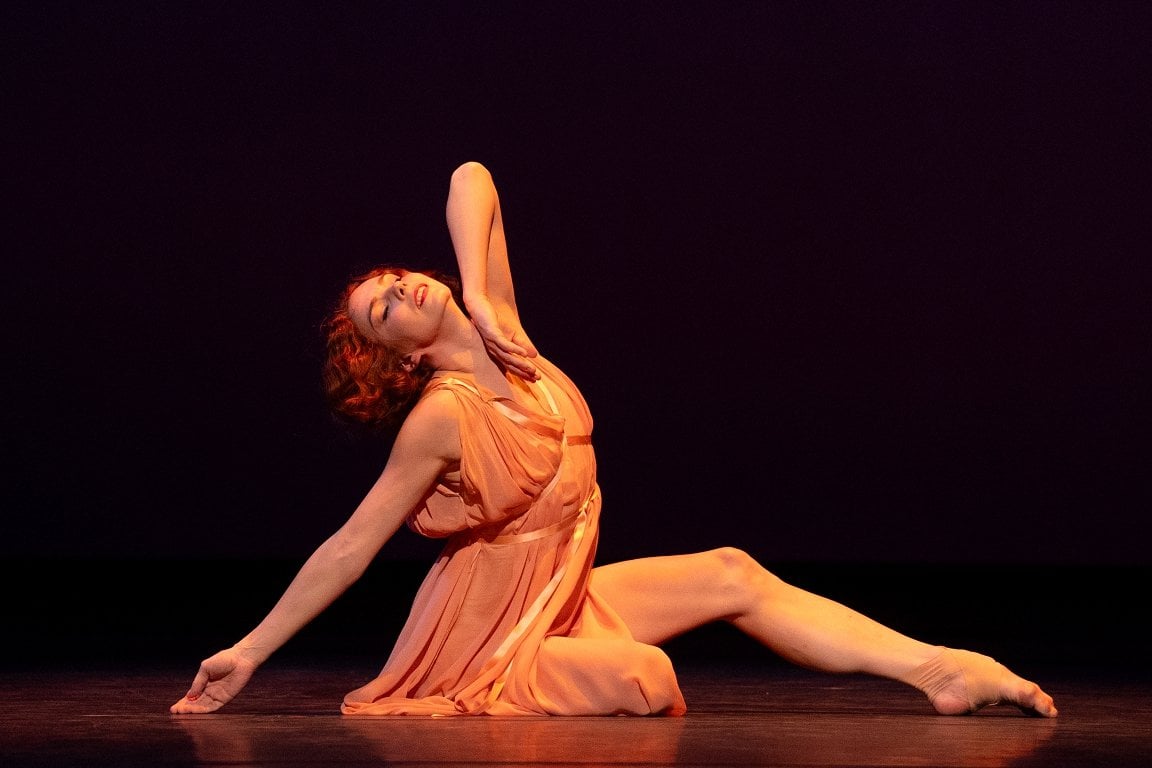
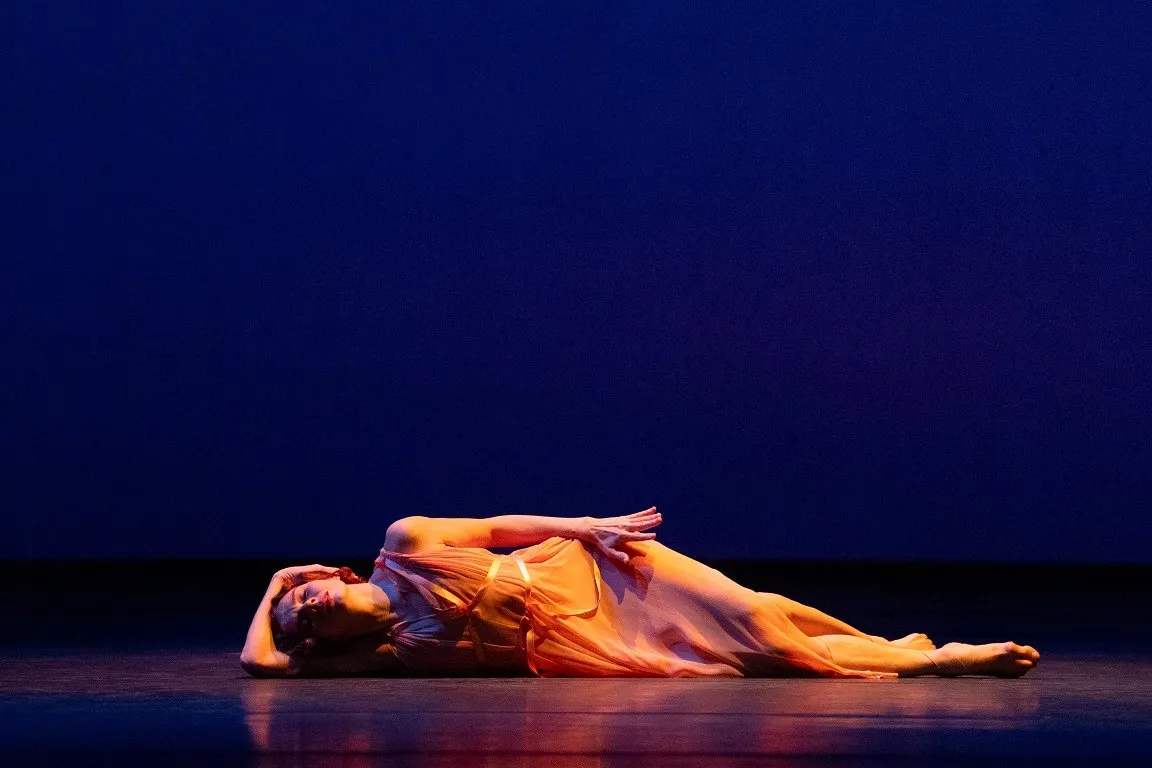
Five Brahms Waltzes was drawn on Ashton’s memory of watching Isadora Duncan dance when he was a young man, and his short vignette is a beautiful evocation of how Isadora must have performed. Ashton also knew Seymour would be the perfect interpreter for his tender recreation of one of modern dance’s great innovators. Performed barefoot and in a pink Greek-style shift, Ashton’s Isadora skips, jumps, turns, tries to capture a butterfly, trails her hand through a stream, falls to the floor and runs around the stage with a scarf billowing behind her. The dances are playful, tender, dramatic and romantic, especially the final waltz in which Duncan scatters rose petals about the stage. Seymour, always so wonderfully idiosyncratic, made Ashton’s dances vivid, and she also suggested both the lightness and the weight behind Duncan’s artistry without making Ashton’s choreography seem at all balletic. Natalia Osipova, another unique and individual artist, gave her own fine impression of Isadora, although she could afford to suggest more forcibly the sense of strength emanating from within Duncan’s torso and limbs whilst she performed.




Both Paradise Garden and Hamlet and Ophelia are lesser works in the Ashton canon, but they are more substantial than initially one might anticipate. Paradise Garden, to music of the same name by Delius, is all luscious swoons and acrobatic lifts and turns performed by a pair of lovers – Sarasota’s wonderful Macarena Gimenez and Ricardo Graziano. At the end, the couple expire in the arms of a bare-chested figure Death (Daniel Pratt), who wraps them up in a long, all-enveloping cloak. Hamlet and Ophelia, danced marvellously by William Bracewell and Francesca Hayward to music by Liszt (one of Ashton’s favourite composers), takes as its starting point Hamlet’s line to Ophelia “Get thee to a nunnery” to create a duet that emphasises his psychological anguish and her mental fragility: he all wild jumps and she all fluttering, tottering footwork. Both works are short but surprisingly effective.
In the Linbury Theatre, Sarasota Ballet presented no fewer than five Ashton dances as the centrepiece of a programme that began with Valses nobles et sentimentales and ended with Façade at the matinée on 9 June. Most of the divertissements were extracted from longer works, including the “Balcony” pas de deux from Romeo and Juliet, which the company will perform in Florida next year. Marijana Dominis and Ricardo Rhodes were sexy in Ashton’s “sexy” Friday’s Child duet from Jazz Calendar, their parti-coloured costumes designed by Derek Jarman. Both Tweedledum and Tweedledee and La Chatte métamorphosée en femme are slight pieces, even a bit twee, but they were well taken by Dominique Jenkins, Evan Gorbell, Yuki Nonaka and Kennedy Falyn Cassada. More substantial choreography was seen in the “Beauteous Being” section from Illuminations, but one has to overlook the hideously dated costumes by Cecil Beaton. Jessica Assef was the lissom ballerina in this pas de cinq, supported by Ivan Spitale, Joshua Fickling, Israel Ellis and Mihai Costache. Jennifer Hackbarth and Maximiliano Iglesias captured the rapture of young love beautifully in the duet from Romeo and Juliet.


Iglesias had impressed earlier in the afternoon with his intensity and authority in Valses nobles, alongside Macarena Gimenez and Daniel Pratt, but the absolute highlight of the performance was the pitch-perfect account Sarasota Ballet gave of Façade, still deliciously funny 93 years after its first performance by the Camargo Society. All of the dancers understood the droll humour of the work, as well as its British music hall roots, but, in particular, I loved Dominique Jenkins, Anna Pellegrino, Israel Ellis and Joshua Fickling in the Foxtrot, and Daniel Pratt and Mischa Goodman absolutely deadpan in Popular Song. Best of all, however, was Ricardo Graziano who, with his be-ringed fingers and monstrous ego, completely stole the show with a wonderfully funny account of the Tango-Pasodoble alongside the ditzy Jennifer Hackbarth. How marvellous it was to see Façade again, and performed so brilliantly. Let’s hope we will see the work back in the UK, alongside even more Ashton ballets, very soon.


